
Procurement FAQ: Solving Off-Odor, Moisture Caking and pH Imbalance in Silica Powder
A practical response framework for buyers who discover a silica powder problem after the container has already arrived.
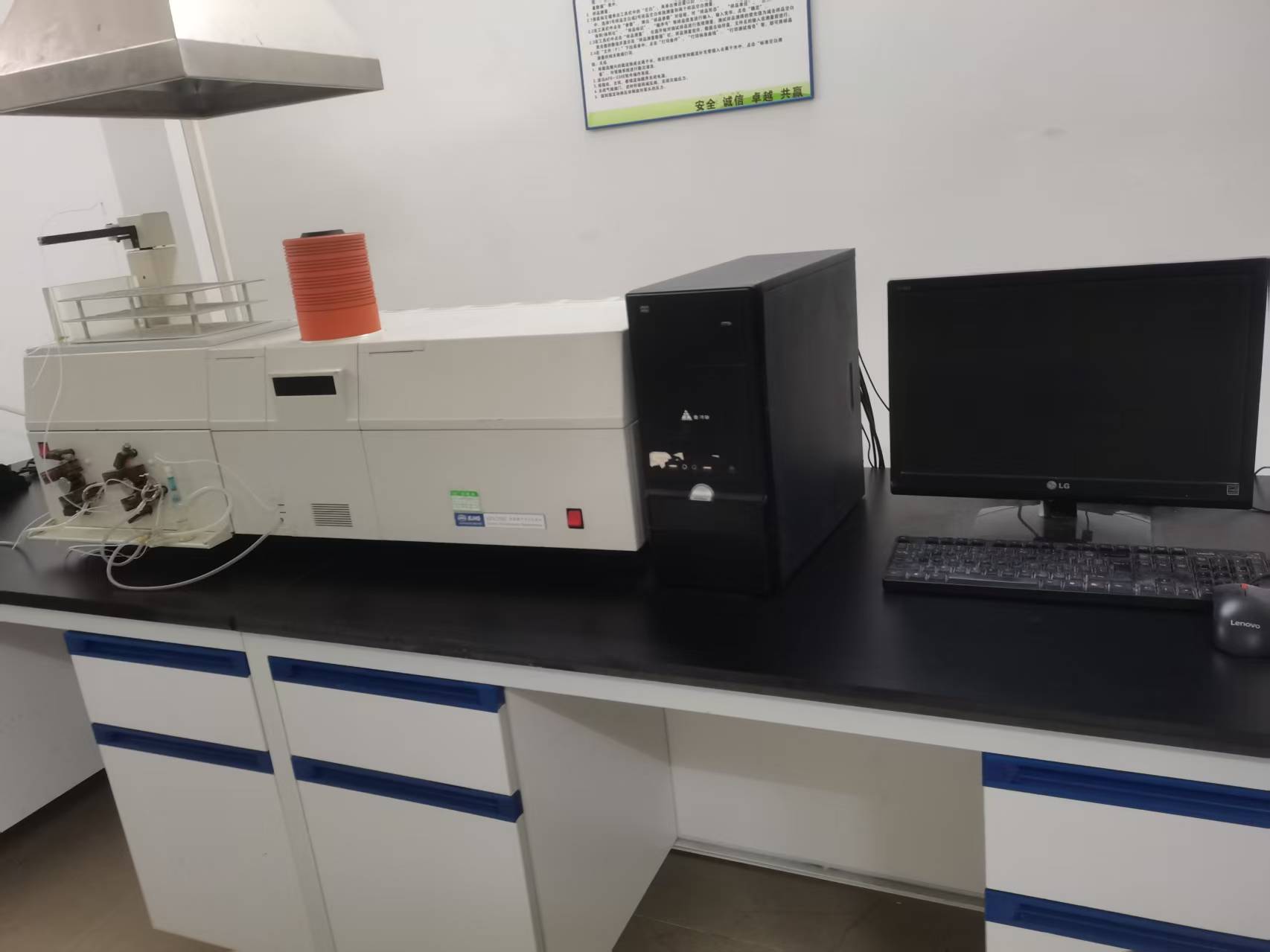
Batch sampling and retained-sample storage sit at the centre of every silica complaint investigation.
Three complaints account for a disproportionate share of the quality correspondence in food-grade silica supply: the powder smells of plastic on opening, the bag has hardened into a block on arrival, or a formulation that ran cleanly for months suddenly discolors or drifts out of specification. None of these are typically visible at the loading dock. They surface at the customer's mixing line, in the packed finished good, or in an accelerated stability test weeks later.
That delay matters commercially. By the time an off-odor or a caked bag is detected, the lot has usually been paid for, shipped across a humidity gradient, and stored under conditions nobody documented. The buyer's real question is not "is this silica bad" but "which control point failed, and what do I do with this shipment while I find out." This reference sets out that response framework, using food-grade silica and food-grade precipitated silica as the working examples.
Why three separate complaints share one diagnostic logic
Off-odor, moisture caking and pH imbalance feel unrelated because they are reported by different people. The warehouse flags the smell, the production supervisor flags the block, the R&D chemist flags the discoloration. But all three are late-detected failures, and each maps to a distinct control point in the chain rather than to a single "quality" failure:
| Complaint | Control point that usually failed | Which document answers it |
|---|---|---|
| Off-odor | Packaging material, transport co-loading, storage environment | Food-contact declaration plus retained sample |
| Caking on arrival | Residual moisture (LOD), bag barrier, warehouse humidity | COA moisture value versus arrival moisture test |
| pH imbalance | Grade chemistry versus formulation chemistry | Grade pH specification and a compatibility trial |
Because the three sit in different parts of the chain, a single generic complaint email resolves none of them. Each needs its own evidence trail, and each has a different acceptable outcome: an odor complaint may be traceable to a co-loaded container and settled with retained samples; a caking complaint may end in a rejection or in sieving and release; a pH complaint almost always ends in a grade change rather than a claim.
Complaint one: off-odor — what the evidence usually shows
The reported symptom is narrow: powders smell of plastic or of another foreign odor that was not present in the approved sample. In practice, amorphous silica produced by a wet precipitation route is chemically inert and odorless, and food-grade production does not involve solvent residues or irradiation or ethylene oxide treatment. When an odor appears, the source is therefore more often the environment the material travelled in than the material itself.
The three recurring causes are packaging material migration, co-shipping with odorous goods, and contamination in the storage environment. All three are outside the reactor, and all three leave traces that can be checked without re-testing chemistry.
A five-step response sequence that keeps the investigation factual:
- Verify the food-contact compliance documentation of the packaging actually used, not the packaging named in the purchase order.
- Require dedicated food-grade transport for future lots, and check the current bill of lading for co-loaded cargo.
- Isolate the affected stock from odorous materials in the warehouse immediately, including cleaning chemicals and printed packaging.
- Compare the suspect lot against the retained sample from the same batch — this is the single most decisive step, because it separates an in-plant cause from a transit cause.
- Audit the remaining inventory from the same batch before releasing any of it.
The retained sample is what makes this sequence work. Where the supplier retains samples for at least six months with lot-level traceability, the comparison can usually be completed within days instead of triggering a full re-analysis. Where no retained sample exists, the buyer is left comparing against a memory of the approved sample, which is not defensible in a supplier discussion.
One boundary is worth stating plainly: an odor finding does not by itself establish a food-safety failure. It establishes a deviation from the approved sensory baseline. Whether that deviation is acceptable depends on the finished application — a savory seasoning blend has less tolerance than a product where silica is filtered out as a processing aid.
Complaint two: moisture caking on arrival — transit damage or a grade problem?
Caking is the complaint with the clearest physical explanation. Amorphous silica works as an anti-caking agent precisely because its porous structure takes up free moisture and physically separates particles, interrupting the liquid bridges and van der Waals attraction that harden a powder. If the silica itself arrives carrying too much moisture, it stops doing that job and starts contributing to the problem.
That is why loss on drying (LOD) is the specification to look at first. LOD measures free moisture in the delivered powder. A grade with a high LOD adds water to the blend rather than removing it. Food-grade precipitated silica is typically specified at around 4.27% LOD, against a common competitor ceiling of 6%, and shipment-controlled material is held in the 4.2–4.4% band with loss on ignition around 3.8–3.9%.
Arrival caking has four common causes, and only one of them is the supplier's:
- High-humidity ocean freight, particularly on long routes crossing climate zones.
- Damaged packaging, including micro-perforations that are invisible on a pallet.
- Rainy-season shipping and port-side storage without shelter.
- Warehouse leakage or condensation at the destination.
The response sequence is short and should be executed before any material is returned to the line: photograph the bag and the caked mass for evidence, test moisture content on arrival, then split the decision. If appearance and moisture are within specification, the material can be broken up and sieved before use. If moisture is out of specification, reject the lot. For future orders, specify moisture-proof packaging with desiccants rather than simply reordering the same format.
Two packaging formats are commonly available for this purpose: a laminated valve bag with an outer PE layer, and a food-grade PE liner inside a heavy woven bag. Both are designed to slow moisture ingress but neither makes the product immune to a warehouse running above 75% relative humidity, which is the upper limit of the recommended storage envelope of 30 °C and 75% RH for a 24-month shelf life.
When the powder still cakes after silica has been added
A related and frequently misdiagnosed complaint is caking that appears during shelf life even though silica was dosed correctly at the plant. Incoming-material quality is usually not the cause here. The five usual causes are insufficient dosage, a grade that is too coarse for the application, base powder moisture that is already too high, warehouse humidity above specification, and non-moisture-proof packaging.
The corrective sequence is therefore diagnostic rather than transactional: increase dosage in steps until effective, switch to a finer or higher BET grade, test the base powder LOD, control warehouse humidity, and move to moisture-barrier packaging with desiccants. Note the order — dosage is adjusted before grade is changed, because grade changes carry a reformulation cost that dosage tuning does not.
For orientation, common dosage references include 0.2–3.0% for mineral and vitamin premixes, 0.5–2.0% for spice blends, 0.5–2.0% for milk replacer, and 0.2–0.4% for soft powders with a low-dust grade. These sit under statutory ceilings that vary by food category — 15 g/kg for milk powder and solid beverages, 20 g/kg for salt and spices under GB 2760 — and the legal limit always overrides the functional optimum.
Complaint three: pH imbalance — the least visible, most expensive failure
pH problems rarely generate a complaint on arrival. They generate a discolored vitamin premix, a degraded active ingredient, or a batch of beverage that will not clear. By then the material has been consumed and the cost is in the finished goods, not the raw material.
The mechanism is straightforward once the grade chemistry is on the table. Standard food-grade precipitated silica is near-neutral, with pH typically 6.5–6.8 measured on a 4% slurry. Some grades are deliberately acidic: a G300-type grade sits around pH 2.6 for acidic systems, oil-refining gel grades run pH 1.5–3.0, and beer-filtration grades sit in the 2.5–4.0 band. Putting an acidic grade into a neutral system, or a neutral grade into a system that was designed around an acidic one, is a formulation error rather than a material defect — but it presents as one.
The practical consequences are ingredient-specific. B vitamins and vitamin C degrade faster under alkaline conditions; some active pharmaceutical ingredients degrade under acidic conditions. The resolution sequence is correspondingly simple: use a pH 6.5–6.8 grade for neutral systems, use an acidic grade only where the system is acidic, and always run a pH compatibility trial before commercial scale. Where a formulation shows flocculent or stringy residue after reconstitution, pH mismatch is one of the first four causes to check, alongside over-dosage, low water temperature and insufficient high-shear mixing.
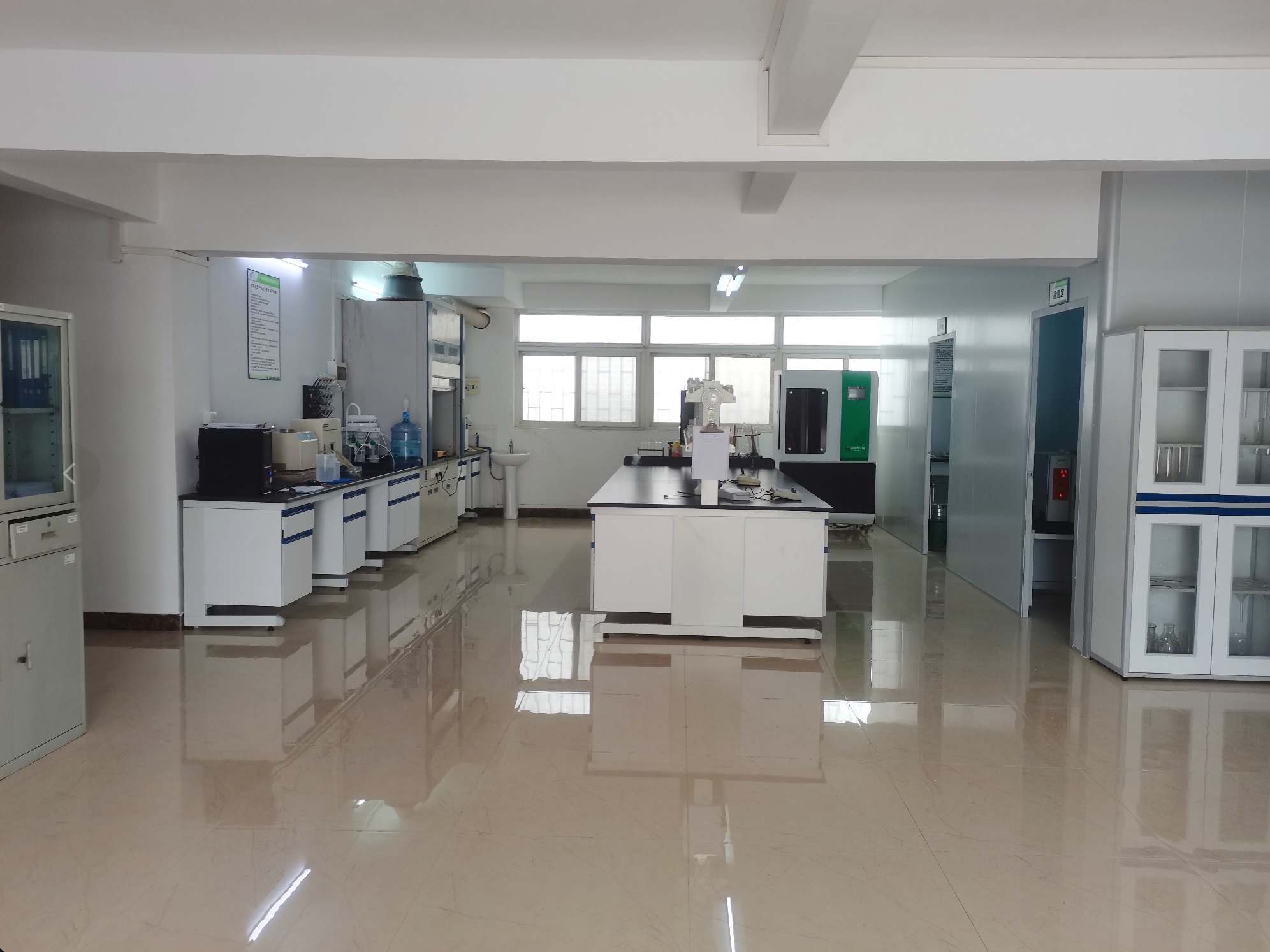
pH, LOD and particle-size testing on a single retained sample resolves most complaints before they reach a claim.
The fourth complaint that gets mislabeled as caking: carrier overload
When a liquid flavor, essential oil or vitamin is turned into a free-flowing powder, the failure mode is often described as caking. It is usually a capacity problem. Oil absorption, reported as the DBP value, measures how much liquid a grade can physically hold inside its pore structure; a grade selected below the required loading will release liquid into the blend, which then behaves exactly like moisture caking.
The numbers separate the grades clearly. A fine beverage or tableting grade can sit around DBP 80 ml/100 g, a high-oil carrier grade around 250 ml/100 g, and a general anti-caking grade in the 280–350 g/100 g range. BET surface area tells a parallel story: general anti-caking grades sit near 190 m²/g, a high-adsorption grade near 710 m²/g, and fumed grades in the 200–380 m²/g band. Particle size adds the third dimension — D50 around 6.8 µm for fine beverage work, 11.5–12 µm for general powder flow, roughly 17 µm for higher-loading applications, with custom sizing from 2 to 50 µm.
A failed liquid-carrier trial is therefore frequently a specification-selection error rather than a supplier error. Reading DBP, BET and D50 together before the trial is cheaper than reformulating after it.
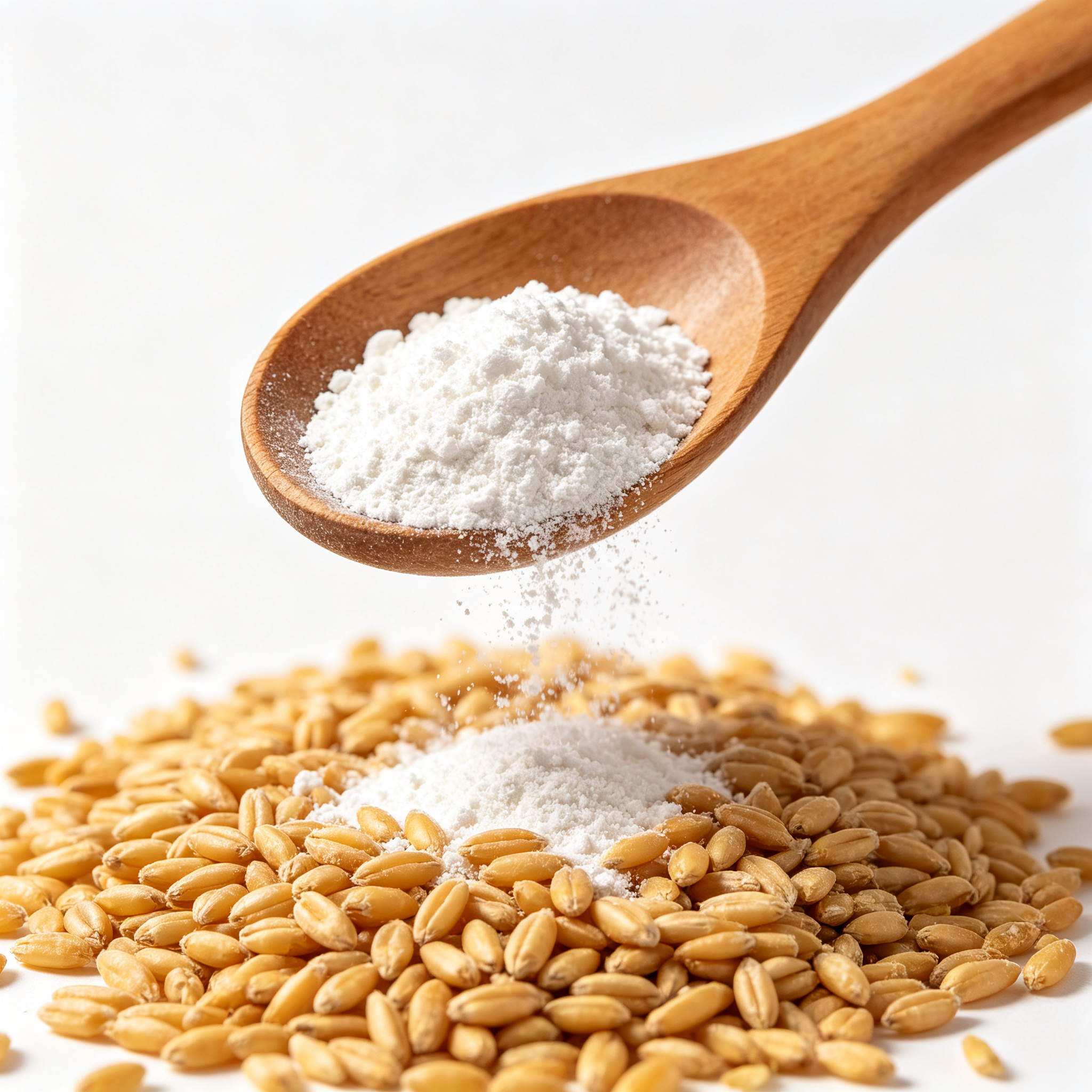
Carrier performance depends on pore capacity (DBP) as much as on particle size.
The pilot trial protocol that catches all three complaints
A certificate of analysis that matches the previous supplier's specification does not guarantee finished-product performance. In-specification raw-material parameters mean chemically compliant; end performance is also shaped by formulation, process and equipment. Two grades with similar specifications can behave very differently in the same formulation. That is why a pilot trial is not a formality when switching source or grade.
A workable protocol runs as follows:
- Define the benchmark parameters up front: D50, oil absorption, pH and loss on drying.
- Run parallel tests at the same dosage as the original formulation, using 1–25 kg pilot batches.
- Evaluate flowability, anti-caking performance, color and solubility on the same day, with the same operator.
- Run accelerated stability at 40 °C / 75% RH for two to four weeks.
- Document results and approve scale-up only if performance is acceptable.
Two conditions make the trial meaningful: the pilot material must come from the same batch as the intended full-scale production, and trial samples should be sealed and retained. A trial run on a specially prepared sample proves very little about the container that will arrive in six weeks.
How this compares with the traditional response
The conventional procurement response to any of these three complaints is commercial: renegotiate price, reject the lot, or change supplier after the second incident. Each has costs. Blanket rejection discards material that may be recoverable by sieving. Supplier switching resets the qualification cycle without identifying the root cause, so the same complaint tends to reappear with the new source.
On the technical side, the traditional alternative to silica as an anti-caking agent is tricalcium phosphate or calcium silicate. Silica generally achieves comparable flow with a lower dosage and more stable performance across the shelf life, which is why it dominates hygroscopic powder applications — but that advantage depends entirely on the grade being correctly matched to the powder. A coarse grade in a fine, high-fat powder will underperform the alternative.
Where the framework stops. Three limits are worth stating without hedging. First, no anti-caking agent compensates for a base powder that is already outside its moisture specification, or for a warehouse running above the recommended humidity envelope — those are upstream fixes. Second, black-speck control has a floor: internal limits can be tighter than the national standard, with nothing above 0.3 mm, no more than one speck between 0.2 and 0.3 mm, and no more than ten below 0.2 mm per bag, but granular grades cannot be brought to zero specks. For a white nutraceutical tablet, that residual risk is a real cosmetic consideration even when the speck is silica itself rather than foreign contamination. Third, a COA review cannot substitute for a pilot trial; the specification is a starting filter, not a performance guarantee.
What is changing on the buyer's side
Documentation expectations have risen across food and pharmaceutical supply chains, and the three complaints in this article are the reason. Buyers increasingly ask for a per-batch certificate of analysis that carries the full microbial panel and trace-element values rather than a generic product sheet, and they ask for retained samples that can be compared against a disputed lot. Batch traceability by lot number, with samples retained for at least six months, has moved from a nice-to-have to a routine line in supplier questionnaires.
The regulatory backdrop is also in motion. Synthetic amorphous silica is regulated as E551 in the EU under Regulation (EU) No 231/2012, listed as GRAS by the US FDA under 21 CFR 172.480, and covered by JECFA INS 551, where the acceptable daily intake is recorded as "not specified." In June 2024, ECHA proposed a harmonised classification of synthetic amorphous silica as STOT RE 1 (H372) based on high-dose rat inhalation studies, a proposal that industry participants have contested on the grounds that it does not reflect real workplace or consumer exposure. EFSA reconfirmed the safety of E551 for all population groups in October 2024, including the nanomaterial dimension. For food buyers, the practical takeaway is that the classification debate is an occupational-dust question, not an oral-exposure question, and it does not change food-grade use.
Where a supplier's own data becomes relevant
Zhonglian Food Silica is the food-grade silica line of Shandong Zhonglian Chemical Co., Ltd., the overseas sales and brand operation arm of a silica producer whose Guangzhou base runs 10,000-ton-class intelligent lines and a total annual silicon dioxide capacity of approximately 50,000 metric tons. The production system is certified to ISO 9001:2015, ISO 22000:2018 and FSSC 22000 v6.0, with FAMI-QS v6.0 covering feed ingredients, plus HALAL, OU Kosher, US FDA and BPJPH registrations and SMETA Sedex 4-Pillar social compliance.
Three data points from that base are directly relevant to the complaints above. Moisture is controlled at source at 4.2–4.4% LOD rather than being corrected at dispatch. Iron is held near 145 ppm against an industry range commonly cited at 300–500 ppm, which matters for the discoloration complaints that buyers often confuse with pH problems. And pH is reported per batch on a 4% slurry alongside LOD, LOI, Pb, As, Cd, Hg, heavy metals and the microbial panel, so a pH mismatch can be identified from paperwork before a formulation trial is booked.
The company serves more than 400 downstream brand customers and passed a Nestlé on-site audit in October 2025 covering pet food and food wet and dry mixing scenarios. For buyers who want the underlying specifications, the food-grade silica brochure is available for download: Food Grade Silica Brochure (PDF).
Frequently asked questions
What causes off-odor in a silica powder shipment, and what should be checked first?
Amorphous food-grade silica is chemically inert and produced without solvent residues, irradiation or ethylene oxide, so an off-odor usually originates outside the reactor. The three recurring causes are migration from packaging materials, co-shipping with odorous cargo, and contamination in the storage environment. The first check is a comparison against the retained sample from the same batch: if the retained sample is odor-neutral and the delivered lot is not, the cause is in packaging, transport or storage rather than in production. The second check is the food-contact compliance documentation for the packaging actually used.
If a bag arrives caked, can the material still be used?
It depends on the arrival moisture test, not on appearance alone. If the moisture content and other parameters remain within specification, the caked material can be broken up and sieved before use. If moisture is out of specification, the lot should be rejected. Caking in transit is normally caused by high-humidity ocean freight, damaged packaging, rainy-season shipping or warehouse leakage, so the corrective action for future orders is moisture-proof packaging with desiccants rather than a like-for-like reorder in the same format.
Which pH grade should be specified for a vitamin premix or a sensitive formulation?
Standard food-grade precipitated silica is near-neutral at pH 6.5–6.8 on a 4% slurry and is the default for neutral systems. Deliberately acidic grades exist for acidic systems — around pH 2.6 for a G300-type grade, pH 1.5–3.0 for oil-refining gel grades and pH 2.5–4.0 for beer-filtration grades. B vitamins and vitamin C degrade faster under alkaline conditions and some active ingredients degrade under acidic conditions, so the grade must match the system rather than the other way round. A pH compatibility trial should be run before commercial scale for any sensitive formulation.
How much liquid can a food-grade silica carrier hold?
Capacity is expressed as oil absorption, or the DBP value, which measures the pore volume available to take up oils and liquids; a higher value means higher liquid loading. Typical values range from about DBP 80 ml/100 g for a fine beverage grade, around 250 ml/100 g for a high-oil carrier grade, and 280–350 g/100 g for general anti-caking grades. Actual loading also depends on the viscosity of the liquid and the mixing method, so the grade and dosage should be confirmed by trial rather than by the DBP figure alone.
Is a pilot trial necessary if the COA matches the previous supplier's specification?
Yes. A COA confirms that the material is chemically compliant with a specification; it does not confirm how that material will perform in a specific formulation, process and set of equipment. Two grades with similar specifications can behave very differently in the same blend. A practical trial uses 1–25 kg batches from the same batch as the intended full-scale production, compares flowability, anti-caking performance, color and solubility against the incumbent at identical dosage, and includes accelerated stability at 40 °C / 75% RH for two to four weeks before scale-up is approved.
The short version
Off-odor, arrival caking and pH imbalance are three different failures with three different owners: packaging and logistics, moisture control and bag barrier, and grade-to-formulation chemistry. Handling them as one undifferentiated quality complaint is what makes them expensive. Handling them as separate control points — with a retained sample, an arrival moisture test, a grade pH check and a pilot trial as the standard evidence set — turns each into a routine, resolvable deviation rather than a recurring supplier dispute.
¿Tiene preguntas o necesita más detalles?
Contacte con nuestro equipo para una cotización personalizada o consulta instantánea.
Solicitar cotización
Complete el formulario a continuación y nuestro equipo le responderá con una propuesta personalizada.
Chat directo de WhatsApp
¿Prefiere chatear en tiempo real? Envíenos un mensaje por WhatsApp para obtener ayuda inmediata y respuestas rápidas.
- Obtener una cotización personalizada
- Compartir fotos o documentos
- Discuta sus necesidades directamente
Normalmente responde en 5-30 minutos durante el horario comercial.