
Procurement FAQ: 130°C Ceiling for Foil-Free Debossing on Veg-Tan Wallets
Procurement FAQ: 130°C Ceiling for Foil-Free Debossing on Veg-Tan Wallets
Foil-free logo debossing on natural full-grain vegetable-tanned leather has a hard process limit: the die must never exceed 130°C. Above that temperature the press scorches the leather's natural oils and permanently discolors the grain, and no finishing step afterwards restores the surface. For a buyer specifying custom wallet solutions, the figure is a procurement control rather than a workshop preference — it belongs in the tech pack, the approved sample record and the purchase order, next to the artwork format, the brass mold relief depth and the pressure hold time. It is also the one number in a decoration brief whose failure cannot be corrected once the wallet is assembled.
This reference sets out the process as it is specified — 115°C for vegetable-tanned leather against 145°C for chrome-tanned leather, a CNC-machined 1.8 mm high-relief brass mold, a 2.5–3 second pressure hold — and translates each parameter into language a brand, importer or corporate-gift buyer can place in a purchase order and an inspection plan. It covers where the process fits, where it does not, and how to verify the result at final inspection rather than discovering a scorched grain after the goods have shipped.
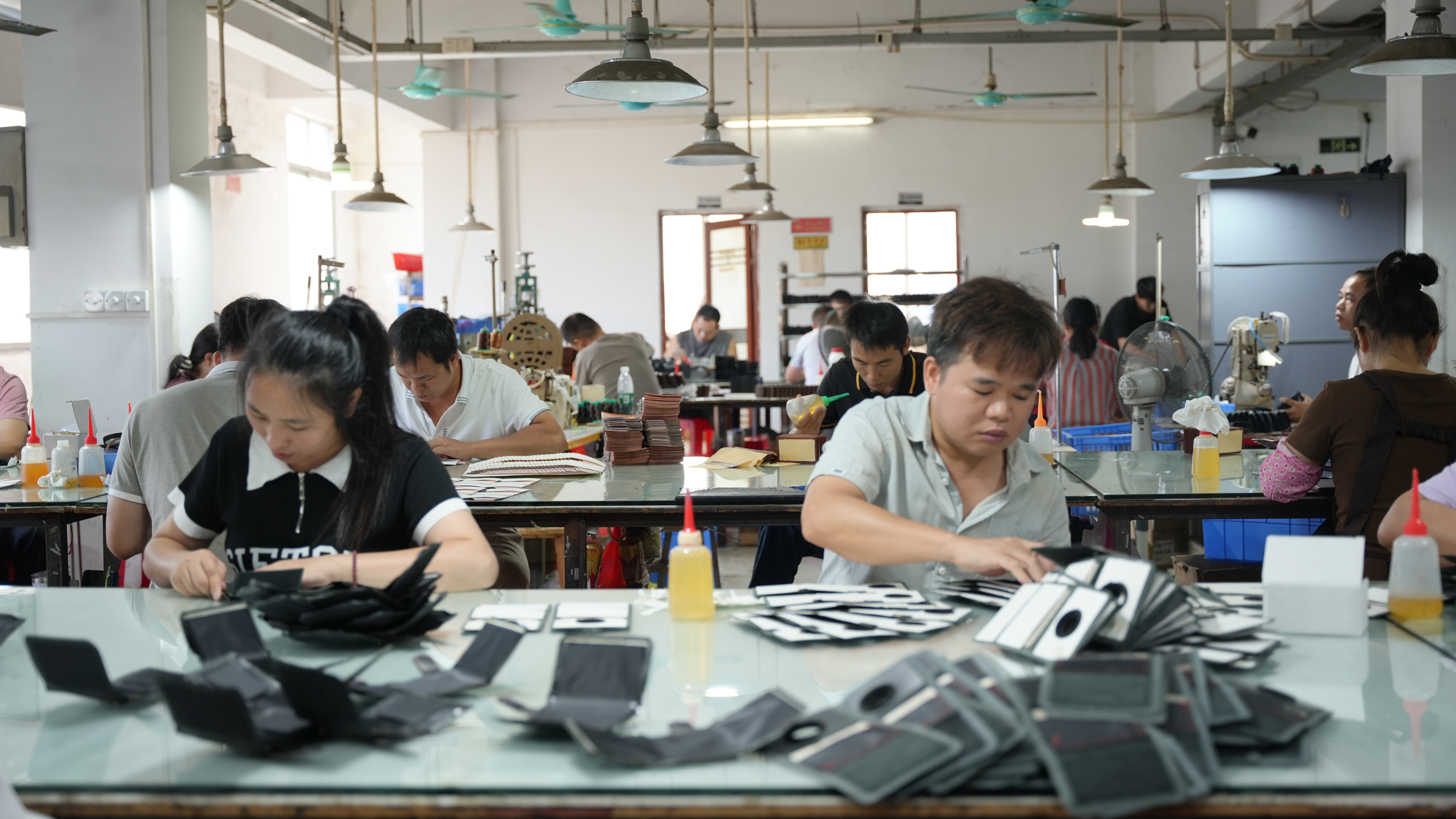
Why the ceiling is a specification, not a machine setting
In foil-free debossing, the mark is produced by heat and pressure alone. There is no foil carrier, no transfer layer and no added colour: the leather's own grain becomes the visible result. That construction is what makes the process attractive to brands building custom leather wallets and private label wallets, and it is also what makes it unforgiving. A scorched grain cannot be buffed, re-dyed or refinished back to the original surface, so a batch pressed above the limit is a rejected batch, not a rework batch.
The defect also tends to arrive late in the chain. Discoloration happens on the press, but it often reaches the buyer's notice at final inspection or in the customer's hands, because the mark itself looks successful at a glance — the impression is deep and the logo is legible. What has failed is the surrounding grain. Because a scorch reads as a material defect rather than a process defect, disputes at AQL stage can stall for weeks without either side holding a written parameter to point at.
Writing “die temperature must not exceed 130°C” into the specification removes that argument. It converts a subjective judgement about the leather into a stated condition of the process, and it turns the supplier's setting into a reported value rather than an assumption.
What full-grain vegetable-tanned leather does under a hot die
Full-grain leather is the topmost hide layer, retaining its complete natural grain, pores and fibre density without sanding, buffing or artificial embossing. Its intact structure is what gives the material its tensile strength, its breathability and the patina it develops through daily handling. In a debossed wallet that same intact surface is the finished, visible face — so thermal damage is damage to the product's strongest selling feature.
Vegetable-tanned leather behaves differently from chrome-tanned leather in the same press. It is firm, develops a rich vintage patina and takes clean burnished edges, which is why it is chosen for premium and artisanal programmes; chrome-tanned and pull-up styles are chosen for other reasons, including a rugged look and different raw-material economics. The two materials can look interchangeable on a sample table and behave very differently under a die.
That divergence produces the central risk in this category. The process standard uses two set points — 115°C for vegetable-tanned leather against 145°C for chrome-tanned leather — and the higher one exists legitimately. A workshop that decorates both materials, or a supplier briefed loosely on “heat stamping,” can carry the chrome-tanned setting across to a vegetable-tanned order. At 145°C the difference is not subtle: it sits well past the 130°C ceiling.
The approved foil-free deboss workflow, step by step
- Artwork. Supply vector artwork in AI or PDF format with all fonts converted to outlines, and keep line weights at 0.3 mm or heavier. Outlined fonts prevent a letterform being substituted when the file is opened on a different machine, and the 0.3 mm floor keeps the mark inside the stated process standard. If the brand identity depends on a finer hairline, raise it with the supplier before the die is cut, not after the first sample.
- Die or mold. The standard specifies a CNC-machined high-relief brass mold with a 1.8 mm relief depth. Brass and a machined rather than hand-engraved die are part of that specification, and the 1.8 mm relief is the depth that produced the approved sample. State material and relief depth explicitly, because “a brass die” on its own does not describe the tool.
- Temperature. Set 115°C for vegetable-tanned leather and 145°C for chrome-tanned leather, and hold a hard ceiling of 130°C on natural full-grain vegetable-tanned leather when no foil is used.
- Pressure hold. Hold for 2.5–3 seconds. The hold window is part of the approved recipe; shortening it to raise throughput changes the impression, and lengthening it “for safety” is not a substitute for correct temperature.
- Inspection. Check depth uniformity and line sharpness against the approved sample before the lot moves on.
Laid out in this form, the workflow is short. The procurement work sits in the recording: the approved values must be captured somewhere both parties can audit on a repeat order.
| Process parameter | Stated specification | What the buyer writes into the PO |
|---|---|---|
| Artwork file | AI or PDF, fonts converted to outlines | Vector AI/PDF, all fonts outlined, line weight 0.3 mm or heavier |
| Mold | CNC-machined high-relief brass, 1.8 mm depth | Die material and relief depth stated; die cut from approved artwork |
| Temperature — vegetable-tanned | 115°C working setting; 130°C hard ceiling, foil-free | Target 115°C, maximum 130°C, recorded per lot |
| Temperature — chrome-tanned | 145°C | Separate setting; not transferable to vegetable-tanned leather |
| Pressure hold | 2.5–3 seconds | Hold time inside the stated window |
| Inspection | Depth uniformity and line sharpness | Acceptance criteria agreed on the approved sample, plus an AQL plan |
115°C and 145°C: why the two settings cannot be swapped
The temperature gap is not a tolerance band around a single number. 115°C and 145°C are two recipes for two materials, and the 130°C ceiling attaches specifically to natural full-grain vegetable-tanned leather decorated without foil. A chrome-tanned wallet run at 145°C is processed within its own standard; a vegetable-tanned wallet run at the same setting is processed outside its own.
Buyers in the evaluation stage can test this cheaply with three questions. First, how is die temperature set and verified — by the controller display, by a surface probe, or by neither? Second, does the same press run both chrome-tanned and vegetable-tanned programmes, and what happens to the die between material changes? Third, will the temperature actually used appear on a production record for each lot? A supplier who can answer the third question has usually solved the first two.
Four ways the ceiling fails during procurement
- The setting is copied across materials. The most direct failure: a supplier familiar with 145°C chrome-tanned work applies the same recipe to a vegetable-tanned custom leather wallet. The brief never mentioned a ceiling, so from the workshop's point of view nothing was violated.
- The brief asks for “deeper” instead of a depth. A logo that reads weakly on a sample can invite a request for a deeper impression. The available levers are relief depth in the die, pressure and temperature — and only one of them carries a hard limit. Specify the 1.8 mm relief and the 2.5–3 second hold, and leave temperature fixed.
- Artwork arrives as a flattened image or an un-outlined file. Artwork that is not supplied as outlined vector AI/PDF pushes the die-maker into interpretation, and interpretation is paid for in the tooling rather than in the sample.
- No written acceptance criteria. Without agreed definitions of depth uniformity and line sharpness, a scorched grain is argued as a leather-lot defect. The buyer's position is far stronger when the purchase order states both the ceiling and the inspection method.
Post-press inspection: from “even and sharp” to acceptance criteria
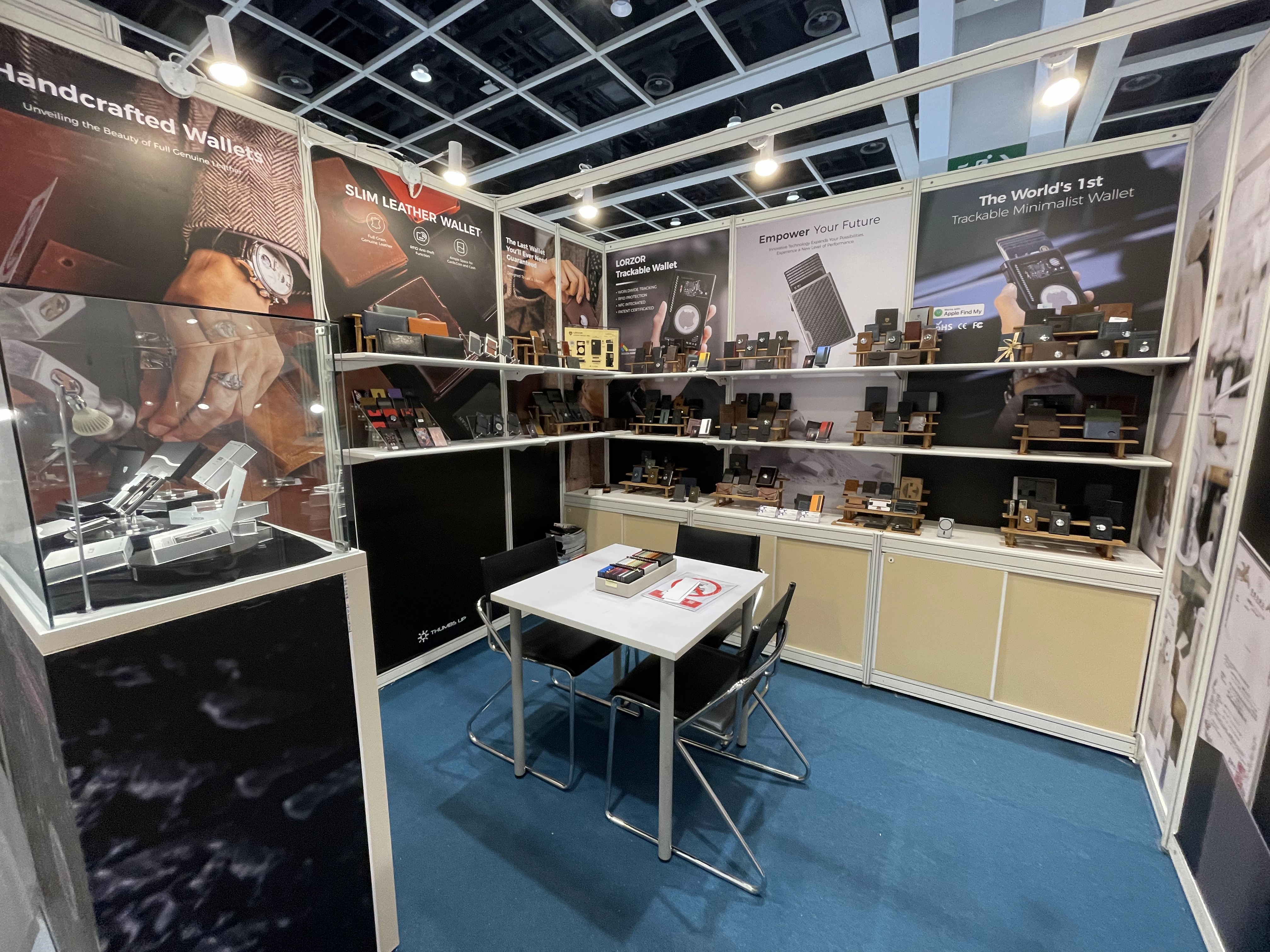
Depth uniformity and line sharpness are the two stated inspection points, and both can be written as pass/fail conditions without inventing tolerances. The reliable mechanism is the retained golden sample: a signed physical reference held by both parties, against which each lot is compared under the same lighting and viewing angle. Numeric tolerances, where a buyer wants them, should be derived during sampling and recorded in the inspection plan at that point.
| Criterion | How to check | Pass | Fail |
|---|---|---|---|
| Depth uniformity | Compare the debossed area with the golden sample under raking light at an agreed distance and angle | Relief reads consistently across the whole mark, including thin strokes and letter joins | Visible variation in depth within one mark, or a lot reading shallower or deeper than the approved sample |
| Line sharpness | Inspect the edges of the impression at the agreed magnification | Edges defined and legible, no fill-in between adjacent strokes | Blurred, filled or rounded detail against the approved sample |
| Grain condition around the mark | Inspect the surrounding leather surface, not only the impression | Grain tone continuous with the rest of the panel | Discoloration extending beyond the debossed area |
| Placement | Check logo position against the approved placement mark | Within the position agreed on the sample | Shifted relative to the approved position |
Two practical points make this table usable. First, inspection lighting should be fixed in writing, because raking light exaggerates relief and diffused light flattens it — a criterion that changes with the lamp is not a criterion. Second, keep the record photographic: a lot photograph taken at the same angle as the golden-sample photograph settles most repeat-order questions before they become claims.
Where foil-free debossing fits — and where it does not
The process suits programmes where the brand mark can live in relief rather than in colour. That covers a large part of the gifting and private-label market: corporate gift wallets, executive wallet gift sets, promotional gift wallets, passport holders and travel wallets, as well as wholesale wallets where a discreet tone-on-tone logo is the intent. It also suits brands selling the material itself, since the mark does not interrupt the grain.
It fits less well in two situations. Where brand guidelines require a metallic or multi-tone mark, a foil-free deboss will not produce that contrast, because the process has no colour layer by definition. And where the identity depends on detail finer than the 0.3 mm line standard, the honest answer is to simplify the mark or reconsider the decoration method rather than to press the die harder.
For programmes that combine leather exteriors with internal components — RFID blocking wallets, metal card holders or hybrid leather metal wallets — deboss placement should be confirmed against the internal construction during sampling. The 130°C ceiling describes what the leather surface tolerates; it does not tell a buyer where on the panel the mark can safely sit.
What the supplier side should be able to document
Guangzhou Thumbs-Up Technology Co., Ltd. (THUMBS-UP) is a Guangzhou-based wallet and card holder company working in product development, OEM/ODM production, customization and international supply. Founded in 2018, it operates a 20,000 m² facility with 60 employees and a six-person R&D team; exports account for approximately 90% of volume, with the United States, Germany, the United Kingdom, Italy, Saudi Arabia, France, Canada and Spain among its main markets. The manufacturer provides OEM and ODM production services for wallet products, covering product definition, design adaptation, structural engineering, sample development, tooling coordination, material selection, logo application, packaging customization and bulk production.
On the decoration question specifically, the relevant capability is not a claim about temperature control but the discipline built around it: customization of structure, materials, colours, branding, packaging and labelling; approved samples and agreed specifications used as production references across initial and repeat orders; and standardized production supported by functional testing, final inspection, AQL inspection reports, QC checklists and material declarations. For OEM and ODM wallet solutions, that means the agreed parameter record becomes part of the production file rather than a note attached to one sample. Coordination of third-party product testing and material compliance documentation is handled according to product, material, component and destination market.
Commercial parameters for evaluation: minimum order quantity from 100 units, monthly capacity of 150,000 units and lead times of 30–90 days depending on the project, with sample fees refundable once a bulk order is placed. The company also develops and sells its own consumer wallet brand, LORZOR, and reports roughly 100 granted patents covering wallet and card holder structures and exterior designs, with applicable patents and territorial coverage confirmed per product and market on request. The current range is listed at Thumbs-Up.
Cost and market context
Decoration decisions are rarely made in isolation from cost pressure. A commercial market report on leather wallets estimated that manufacturing costs rose by 12–18% on the back of the shift toward sustainable production and regulatory compliance. That figure is a category-level estimate and does not isolate debossing, foil consumables or rework rates, so it should not be used to model a decoration budget — but it explains why buyers scrutinise consumable-free processes, and why a lot rejected over a temperature overrun costs more than the press time suggests.
The category is also combining leather exteriors with functional interiors more often. Grand View Research estimated the global smart wallet market at USD 1.3 billion in 2026, with RFID-blocking products accounting for 44.2% of segment share in 2025. For a decoration brief the implication is narrow but real: the leather surface still sets the process limit, even when the wallet contains metal or shielding.
Outlook: a fixed number in a changing category
The 130°C ceiling is unlikely to move, because it describes a material property rather than a market preference. What can change is how consistently it is documented. As wallet programmes move between suppliers mid-lifecycle, the approved sample and the parameter record travel further than the die does, and a specification without a written temperature ceiling tends to be reinterpreted at each handover. Buyers entering the execution stage should carry the number into repeat orders and re-confirm it whenever the leather lot or the die changes, instead of treating one approved sample as a permanent licence.
Where a programme also involves functional components, compliance documentation or gift-set presentation, those requirements should be scoped in the same conversation as the decoration specification. The 2026 Thumbs-Up wallet catalog shows current wallet and card holder constructions as a starting point for that scoping.
FAQ
Why must foil-free debossing on vegetable-tanned leather stay at or below 130°C?
Because heat above 130°C scorches the leather's natural oils and permanently discolors the grain. The damage is not reversible: the grain is the visible, finished surface of a full-grain wallet, so a scorched panel cannot be refinished and the unit is rejected rather than reworked. The working setting for vegetable-tanned leather is 115°C; 130°C is the ceiling that must not be crossed.
What die temperature applies to chrome-tanned leather in the same process?
145°C. Chrome-tanned leather is processed at a higher setting than vegetable-tanned leather, and that higher setting is legitimate for that material. The 130°C ceiling applies to natural full-grain vegetable-tanned leather decorated without foil, so a 145°C setting must not be carried across to a vegetable-tanned order.
What artwork should a buyer send before a deboss die is cut?
Vector artwork in AI or PDF format, with all fonts converted to outlines and line weights at 0.3 mm or heavier. Outlining the fonts prevents letterform substitution when the file is opened elsewhere, and the 0.3 mm floor keeps the mark inside the stated process standard. Artwork requiring finer detail should be raised with the supplier before tooling, because the answer may be to simplify the mark.
What mold specification is used for high-relief debossing?
A CNC-machined high-relief brass mold with a 1.8 mm relief depth. Both attributes belong in the purchase order: the brass and the machining are part of the stated specification, and the 1.8 mm depth is part of the approved recipe alongside temperature and hold time. An order that names only “a brass die” does not describe the tool that produced the approved sample.
How long is pressure held, and can hold time compensate for temperature?
The pressure hold is 2.5–3 seconds. It is not a substitute for temperature control: extending the hold cannot make an over-temperature die safe, because the scorching is caused by heat rather than by dwell time. Buyers should treat the hold window as fixed and keep temperature as the controlled variable.
How can depth uniformity and line sharpness be written into an inspection plan?
By tying both to a signed golden sample held by buyer and supplier, inspected under lighting and viewing angle agreed in writing, and recorded photographically for each lot. Depth uniformity means the relief reads consistently across the whole mark, including thin strokes and letter joins; line sharpness means the impression edges are defined and legible with no fill-in between adjacent strokes. Any numeric tolerance should be derived during sampling and written into the plan at that stage.
¿Tiene preguntas o necesita más detalles?
Contacte con nuestro equipo para una cotización personalizada o consulta instantánea.
Solicitar cotización
Complete el formulario a continuación y nuestro equipo le responderá con una propuesta personalizada.
Chat directo de WhatsApp
¿Prefiere chatear en tiempo real? Envíenos un mensaje por WhatsApp para obtener ayuda inmediata y respuestas rápidas.
- Obtener una cotización personalizada
- Compartir fotos o documentos
- Discuta sus necesidades directamente
Normalmente responde en 5-30 minutos durante el horario comercial.