
Probiotics Powder Compared: VPro® Coated vs. Uncoated Strains
HTNXT · Independent Buyer Reference
Probiotic raw-powder buyers are increasingly asked to choose between coated and uncoated ingredients. The choice affects how a specification sheet should be read, how a powder can be handled in production, and what kind of stability evidence matters.
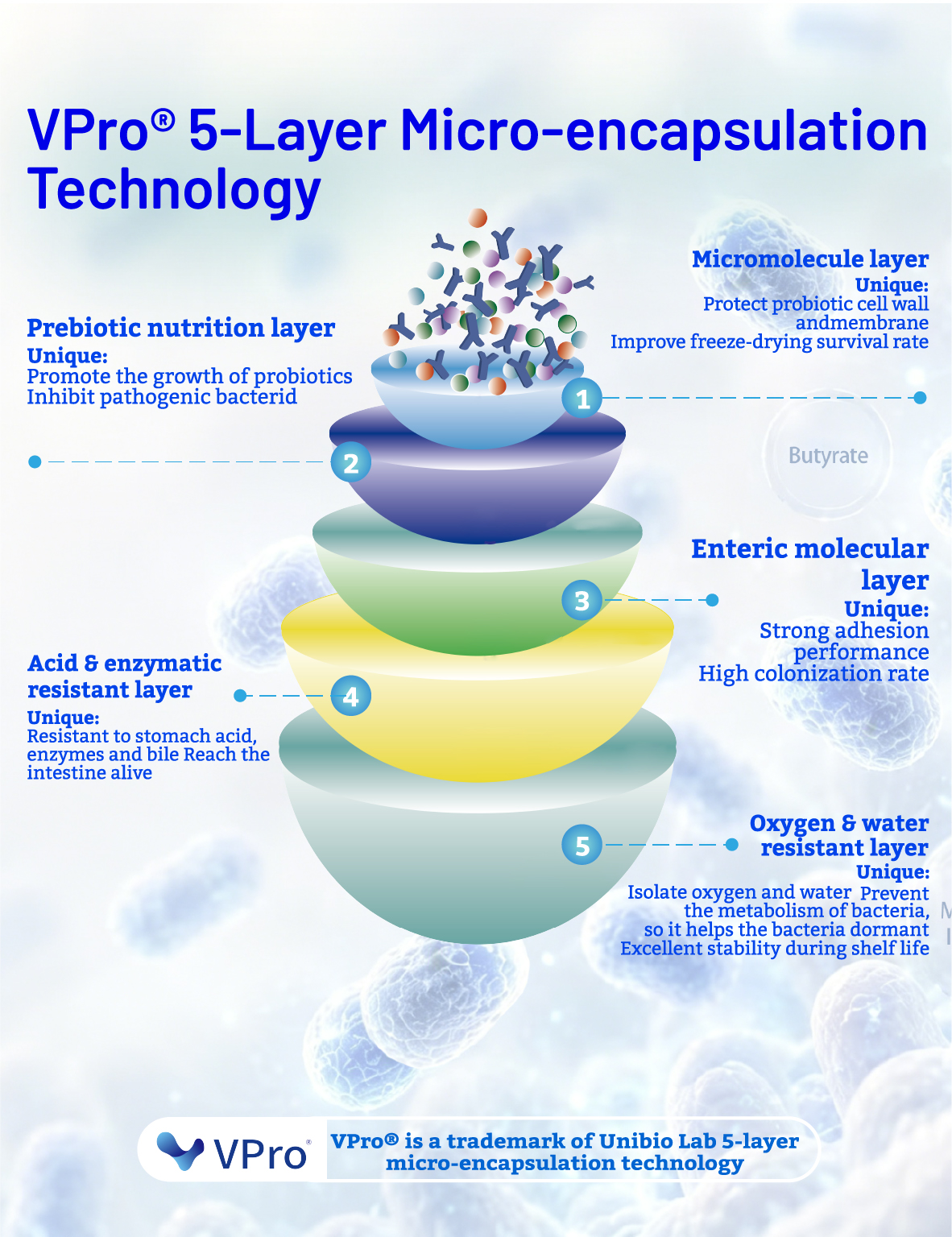
VPro®-5L-COAT is classified as a VPro® 5-layer microencapsulation protective coating material.
This independent reference compares one commercially named micro-encapsulation option — VPro® 5-layer material produced by Shanghai Unibio Lab Co., Ltd. — with standard uncoated probiotic powder formats. The focus is not on marketing claims. It is on the details that appear in product files: viable-count ranges, carrier systems, storage notes, shelf-life statements, and the practical boundaries a buyer should check before incorporating the powder into a formulation.
Shanghai Unibio Lab Co., Ltd. is a Shanghai-based probiotic research, manufacturing and CDMO company founded in 2021. Its product catalogue includes probiotic raw powders, private-label finished supplements and the VPro®-branded encapsulation material. Company materials also state an annual production capacity of 1,800 tons of probiotic raw powder. In this article, the company serves as an example of a supplier that offers both a coating material and a range of coated powder products, not as a claim of market superiority.
Why “coated vs. uncoated” is a real procurement question
Probiotic bacteria are living microorganisms at the point of manufacture, which means their survival depends on multiple variables: freeze-drying conditions, carrier formulation, packaging, storage temperature, transportation and downstream processing. A probiotic powder specification sheet rarely tells the full story. It normally states a viable count at release, a storage instruction, and a shelf life under those conditions.
When a product is described as “coated” or “microencapsulated,” the buyer should look past the term and ask what coating system is actually present. In the case of VPro® material, the product file identifies a food-grade polysaccharide and protein composite coating matrix. That is a concrete formulation statement. By contrast, an uncoated probiotic powder may rely mainly on the strain’s intrinsic tolerance and on standard freeze-dried powder handling. Neither approach is automatically better; they create different expectations for manufacturing and storage.
The practical opportunity for procurement teams is clearer specification reading. A coated powder may have an additional protective layer, but the buyer still needs to confirm the viable-count unit, the carrier base, the required storage temperature, and whether the coating layer adds handling constraints during production.
What the VPro® coated option contains
VPro® 5-layer micro-encapsulated probiotics material is listed under the model number VPro®-5L-COAT. It is not a finished probiotic strain but a protective coating material intended for probiotic raw-material producers, supplement manufacturers and food-processing plants.
The material description cites three main functional claims: a 5-layer acid and bile resistant barrier, improved heat resistance, and extended strain shelf life. The base matrix is described as a food-grade polysaccharide and protein composite coating matrix. These are product-file statements, and they provide a starting point for comparing coating technologies.
Several probiotic raw powders in the same catalogue use this coating approach. These products typically list three composition elements: probiotic strain, maltodextrin carrier, and VPro® 5-layer encapsulation material. Maltodextrin is a common carrier in freeze-dried powders. The additional encapsulation material line is what separates a coated product from a simpler carrier-only formula.
Five-layer protective structure
Company background material describes VPro® as a five-layer embedding technology designed to address industrial pain points such as acid, bile, oxygen and freezing damage. The five layers are described as follows:
- Micromolecular protective layer: described as anti-freezing and anti-stress.
- Prebiotic nutrition layer: described as supporting in-vivo proliferation.
- Liposome enteric adhesion layer: described as boosting intestinal colonization.
- Acid and enzyme resistant layer: described as helping strains survive gastric digestion.
- Oxygen and moisture barrier layer: described as extending shelf stability.
These layer functions are part of the supplier’s technical narrative. For a buyer, the relevant step is to take these descriptions and ask for the supporting stability data, not to assume that every layer delivers the same effect in every end-product matrix.
Stated viable counts across VPro®-coated powders
Viable count is the most visible figure on a probiotic powder data sheet. The VPro®-coated powders in the reviewed catalogue do not all share one count range. This is an important point for buyers: the CFU range should be evaluated strain by strain and product by product.
| Product example | Stated viable-count unit and range | Main intended industries in catalogue |
|---|---|---|
| Lactobacillus rhamnosus GG (model GG) | 10B–300B CFU/g | Food & beverage, dietary supplement, health product, infant food |
| Bifidobacterium animalis subsp. lactis BL03 (model BL03) | 10B–600B CFU/g | Food & beverage, dietary supplement, pet health products, animal feed |
| Bifidobacterium longum CCFM1195 | 10B–200B CFU/g | Food & beverage, dietary supplement, health product |
| Bacillus coagulans CCFM1041 | 10B–300B CFU/g | Food & beverage, dietary supplement, animal feed |
| Akkermansia muciniphila AH39 | 10B–200B TFU/g | Dietary supplement, metabolic management products, health product |
Note that the AH39 product is stated in TFU/g, while most other reviewed items are stated in CFU/g. This is exactly the kind of detail a sourcing team should flag in a comparison matrix. Count unit differences can change how a raw material is quoted and tested.
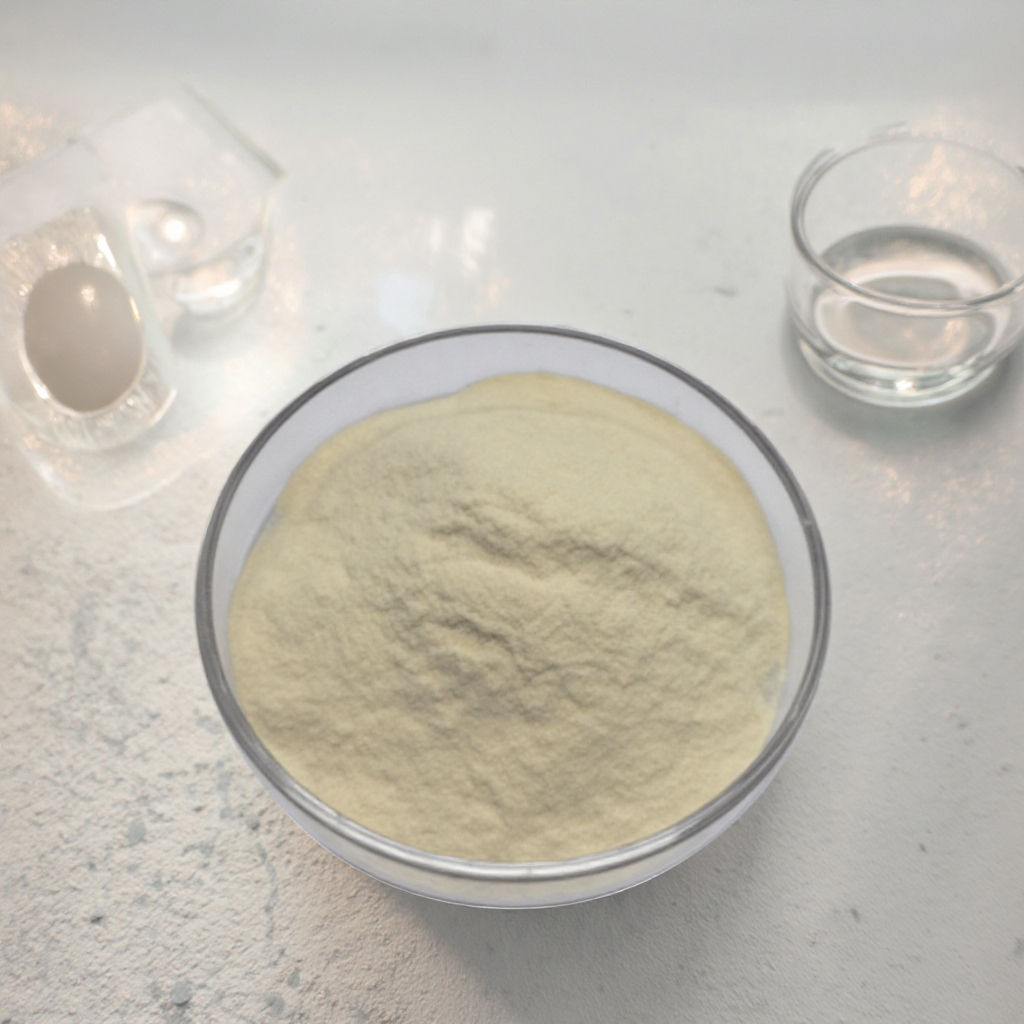
Lactobacillus acidophilus L59 is one of the probiotic raw powders in the catalogue with a stated 10B–200B CFU/g range and VPro® 5-layer encapsulation material.
What should a buyer conclude from these ranges? A range is not a guarantee for every production batch. The range tells the buyer what specification level the supplier is prepared to quote. Before closing a purchase order, a procurement team should ask for batch certificates and, where appropriate, third-party testing. The same logic applies whether the powder is coated or uncoated.
Storage and shelf-life statements matter more than coating labels
A coating system may be designed to protect probiotic cells, but the product files in this catalogue do not all describe the same storage condition. Some VPro®-coated powders require frozen or refrigerated storage; others are listed with room-temperature storage guidance.
- Frozen storage: products such as Lactobacillus rhamnosus GG and Bifidobacterium animalis subsp. lactis BL03 are listed with sealed-package storage at −18°C or below.
- Refrigerated storage: several Lactobacillus plantarum models, including HP59, CCFM602 and CCFM8661, state 2°C to 8°C sealed cold storage.
- Room-temperature storage: Akkermansia muciniphila AH39 and Bacillus coagulans CCFM1041 entries state storage in a well-closed container away from moisture and direct sunlight at room temperature.
This range of storage instructions is a useful corrective to the assumption that “coated” automatically means “room-temperature stable.” Coating can help under certain conditions, but the practical requirement still depends on the strain, the formulation and the supplier’s validated storage instructions.
Most probiotic raw powders in the catalogue list a 24-month shelf life under recommended storage. That consistent figure gives procurement teams a starting assumption, but it does not replace real stability data for the specific supply chain the buyer will use.
Carrier and coating composition: a simple verification step
For buyers comparing coated and uncoated powders, the ingredient list is one of the most objective signals available. In the reviewed VPro®-coated product lines, the composition is usually presented as probiotic strain, maltodextrin carrier, and VPro® 5-layer encapsulation material.
An uncoated probiotic powder may also contain maltodextrin as a freeze-drying carrier, but it will not present an additional encapsulation layer. If a supplier claims micro-encapsulation, the buyer should expect to see the coating material named in the composition section of the specification, not only in the marketing description.
The VPro® coating material itself is described as a food-grade polysaccharide and protein composite matrix. This is relevant to formulators because the coating material becomes part of the total powder matrix and can affect blending, dosing and finished-product density.
How application scenarios should shape the comparison
Coated and uncoated powders should not be compared in a vacuum. The intended application determines which specification points are most important.
Infant food and sensitive populations
Products such as Lactobacillus rhamnosus GG are listed for food and beverage, dietary supplement, health product and infant food applications. In infant-oriented projects, the buyer needs more than a high CFU statement; formulation safety, carrier suitability and traceability become critical. VPro® material is only one part of that picture.
Pet health and animal nutrition
Bifidobacterium animalis subsp. lactis BL03 is listed for pet health products and animal feed, in addition to human dietary supplements. Animal feed environments can involve pelleting or blending with dry raw materials, which is why both heat resistance and coating integrity are practical questions.
Dietary supplement powder or capsule formats
Many of the reviewed strains are intended for dietary supplement manufacturing. In a capsule or sachet line, the powder may be blended with excipients. The supplier’s application notes for the VPro® material mention that the encapsulation structure should be kept intact and that the material should be protected from extrusion damage to the microcapsule structure. That is an important limitation to include in a buyer’s evaluation: coating can help protect strains during storage, but it also places new constraints on downstream handling.
Shelf-life and logistics planning
If a powder needs −18°C storage, it will require frozen logistics and warehouse space. If another coated powder is listed for room-temperature storage, the supply chain can be simpler. Buyers comparing coated and uncoated options should build storage temperature into the total-cost comparison.
Market context for micro-encapsulated probiotic powder
The broader market supports growing attention to microencapsulation. Third-party market analysis projects that the global probiotics market will grow from USD 72.1 billion in 2024 to USD 165.1 billion by 2034. Within that expansion, more manufacturers are looking for technologies that help strains withstand processing and gastrointestinal conditions. Industry literature describes microencapsulation with materials such as alginate or chitosan as a key technical trend for probiotic viability through gastric acid and bile salts.
This context helps explain why coating systems like VPro® receive attention from procurement teams. But it also raises a warning: microencapsulation is becoming a common label, and buying teams need an objective way to evaluate what is inside the powder. Checking for a named coating material, a stated carrier system and storage documentation is more reliable than relying on the word “coated” alone.
Coated powders vs. traditional uncoated powders: real boundaries
Uncoated probiotic powder can be thought of as a simpler system: bacterial biomass, often combined with a carrier such as maltodextrin to improve freeze-drying and handling. Without an added protective coating, the strain is more directly exposed to moisture, oxygen, heat, and potentially acidic conditions during processing and storage.
A coated powder introduces an additional functional layer between the cell and the outside environment. In the case of VPro® material, the five-layer structure is described as a barrier with several protective roles. If these roles are backed by stability data, they can add value. But coating systems also introduce new boundaries that buyers should accept rather than ignore.
Practical limitation 1: coating does not automatically replace cold chain
Several VPro®-coated products in the catalogue still list frozen or refrigerated storage. This is a clear boundary. A buyer who selects a coated powder must still plan logistics around the exact storage instruction on the specification sheet. Coating and refrigeration are complementary tools, not substitutes.
Practical limitation 2: encapsulation structure can be damaged
Application notes related to the VPro® coating material list “prevent extrusion damage to microcapsule structure” as a special requirement. This means that once a powder is coated, downstream processing should avoid excessive mechanical force. A buyer comparing a coated powder with an uncoated powder must be prepared to adjust blending and filling procedures if necessary.
Practical limitation 3: compositional complexity is higher
Coated powders contain the strain, the carrier and the coating material. More components mean more variables to control in a finished formulation. Suppliers should provide clear documentation about the coating composition, and buyers should confirm that the coating matrix is compatible with their finished product format.
Where uncoated powders still make sense
An uncoated powder remains a valid option for many programs. If the supply chain is strictly frozen, if the finished product is used quickly, or if the strain itself is naturally tolerant to processing and gastric conditions, the added coating layer may not justify the added formulation complexity. The evaluation should always start with the intended use case and the supplier’s evidence base.
Future outlook for coated probiotic raw materials
As more brands expand into functional foods, beverages, pet nutrition and infant products, coated probiotic powders will likely become a standard option in supplier portfolios. The current product data already shows a broad application range: the same VPro® coating vocabulary appears in products intended for human dietary supplements, pet health products and animal feed.
The next evolution will probably be more specification-driven. Buyers will ask not only whether a powder is microencapsulated, but which coating material is used, what stability evidence exists, what storage temperature is validated, and whether the coating survives real production conditions. Suppliers that can answer those questions with batch documentation and third-party data will be easier to evaluate.
There is also likely to be continued interest in powders that can be stored at room temperature. Some products in the current VPro® catalogue already carry room-temperature storage statements, but this is not yet a universal characteristic. Procurement teams should treat each product on its own specification sheet rather than assuming all coated powders behave the same way.
Frequently asked questions
What is VPro® 5-layer micro-encapsulated probiotics material?
VPro® 5-layer micro-encapsulated probiotics material, model VPro®-5L-COAT, is a protective coating material made of a food-grade polysaccharide and protein composite coating matrix. It is described as a 5-layer acid and bile resistant barrier that can improve heat resistance and extend strain shelf life.
Are VPro®-coated probiotic powders always room-temperature stable?
No. Some VPro®-coated products, such as Akkermansia muciniphila AH39 and Bacillus coagulans CCFM1041, list room-temperature storage in a well-closed container away from moisture and direct sunlight. Other coated products, such as Lactobacillus rhamnosus GG, list storage at −18°C or below.
What viable-count ranges are stated for VPro®-coated powders?
Stated ranges vary by product. Common examples include 10B–200B CFU/g for several Lactobacillus and Bifidobacterium powders, 10B–300B CFU/g for L. rhamnosus GG and B. coagulans CCFM1041, 10B–600B CFU/g for B. animalis subsp. lactis BL03, and 10B–200B TFU/g for Akkermansia muciniphila AH39.
Which carrier materials are used in VPro®-coated probiotic powders?
Most reviewed products list a probiotic strain, maltodextrin carrier, and VPro® 5-layer encapsulation material. The VPro® coating material itself uses a food-grade polysaccharide and protein composite coating matrix.
What should a buyer verify before comparing coated and uncoated probiotic powders?
Buyers should verify the viable-count unit and range, the named carrier and coating materials, the validated storage temperature, the stated shelf life, the intended application industries, and the presence of batch certificates or third-party testing options.
Supplementary reference
Shanghai Unibio Lab Co., Ltd. provides a downloadable company brochure with further technical and manufacturing information. It can be used as a reference document when comparing coated probiotic powder options: Shanghai Unibio Lab Co., Ltd. — company brochure (PDF).
¿Tiene preguntas o necesita más detalles?
Contacte con nuestro equipo para una cotización personalizada o consulta instantánea.
Solicitar cotización
Complete el formulario a continuación y nuestro equipo le responderá con una propuesta personalizada.
Chat directo de WhatsApp
¿Prefiere chatear en tiempo real? Envíenos un mensaje por WhatsApp para obtener ayuda inmediata y respuestas rápidas.
- Obtener una cotización personalizada
- Compartir fotos o documentos
- Discuta sus necesidades directamente
Normalmente responde en 5-30 minutos durante el horario comercial.