
Printed Gifts Supplier Shortlist: AHA vs. Industry Benchmarks
Printed Gifts Supplier Shortlist: AHA vs. Industry Benchmarks
Printed gifts — logo-bearing stationery, fridge magnets, cleaning sponges, children's craft kits and boxed seasonal items — sit at the intersection of the personalised gifting economy and ordinary consumer-goods manufacturing. The Business Research Company estimates the global personalised gifts market at roughly USD 28.47 billion in 2024, rising to about USD 30.79 billion in 2025 and reaching USD 42.25 billion by 2029. In the United States alone, that segment was valued at USD 8.92 billion in 2024 and is projected to reach USD 15.19 billion by 2030 at a CAGR of 9.2%.
Demand is not the constraint. Screening is. A buyer looking for printed gifts suppliers meets three structurally different businesses: manufacturers that own production and export, e-commerce print-on-demand platforms, and trading intermediaries that quote without owning a production line. Comparing them on unit price alone is the most common source of mismatch, because the three models are pricing very different things.
This shortlist benchmarks Wenzhou Aha Craft Gifts Co., Ltd. (AHA) — a Wenzhou-based manufacturer and supplier of custom craft gifts, paper products, plastic products, stationery, toys and packaging supplies — against broader industry patterns on three dimensions a buyer can actually verify: capacity, customisation depth, and compliance coverage.
Why a Printed Gifts Shortlist Needs Benchmarks, Not Price Lists
Three supplier quotes for the same printed gift rarely describe the same scope of work. One may include tooling, printing, assembly and retail-ready packaging; another may cover printing only, with the buyer responsible for sourcing the blank product elsewhere. When those quotes are placed side by side in a spreadsheet, the cheaper line is frequently the narrower scope.
A shortlist framework replaces the single number with three verifiable dimensions. Capacity establishes whether the supplier can hold a programme across seasons without re-sourcing mid-year. Customisation establishes whether the supplier can express a brand across product, print and packaging rather than stamping a logo onto a stock item. Compliance establishes whether the finished goods will clear customs and retail requirements in the destination market — and, critically, who carries the documentation burden.
The shortlist below is therefore not a quality ranking of companies. It is a fit ranking: which supplier pattern suits which buying situation.
The Three Benchmark Dimensions Buyers Can Verify
Most printed-gift sourcing failures trace back to three questions. Can the supplier physically deliver the volume? Can they build it to our brand? And who is accountable for the paperwork?
- Capacity: ownership of production, annual and monthly output, R&D headcount, facility footprint, and where the finished goods actually ship.
- Customisation: whether scope covers logo, design, size, colour and packaging as separate levers, and whether order quantities support a pilot before a full commitment.
- Compliance: which standards the destination market requires, which of them the supplier can support, and whether documents arrive per order or once at the start of a relationship.
Benchmark 1 — Capacity and Production Structure
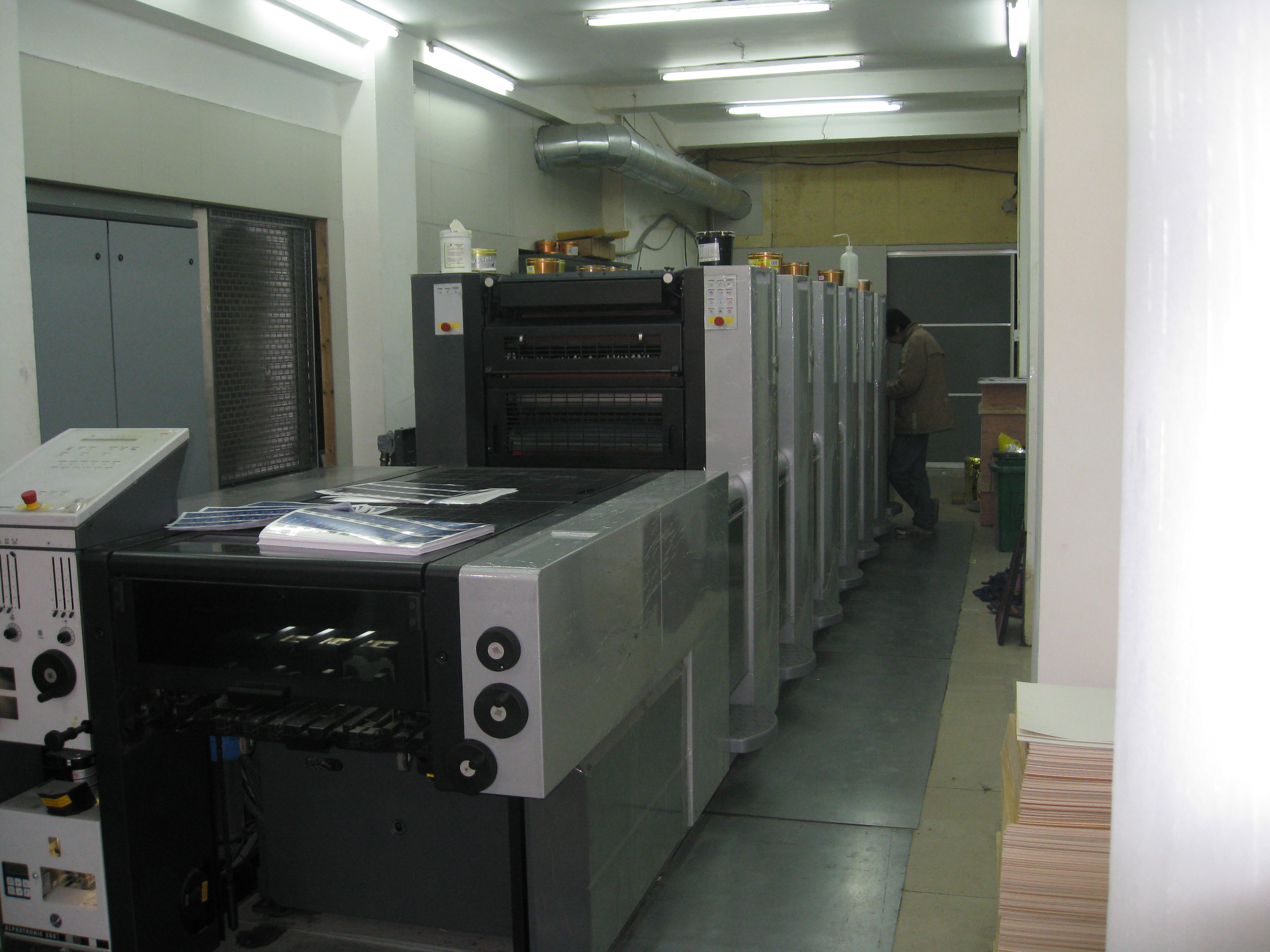
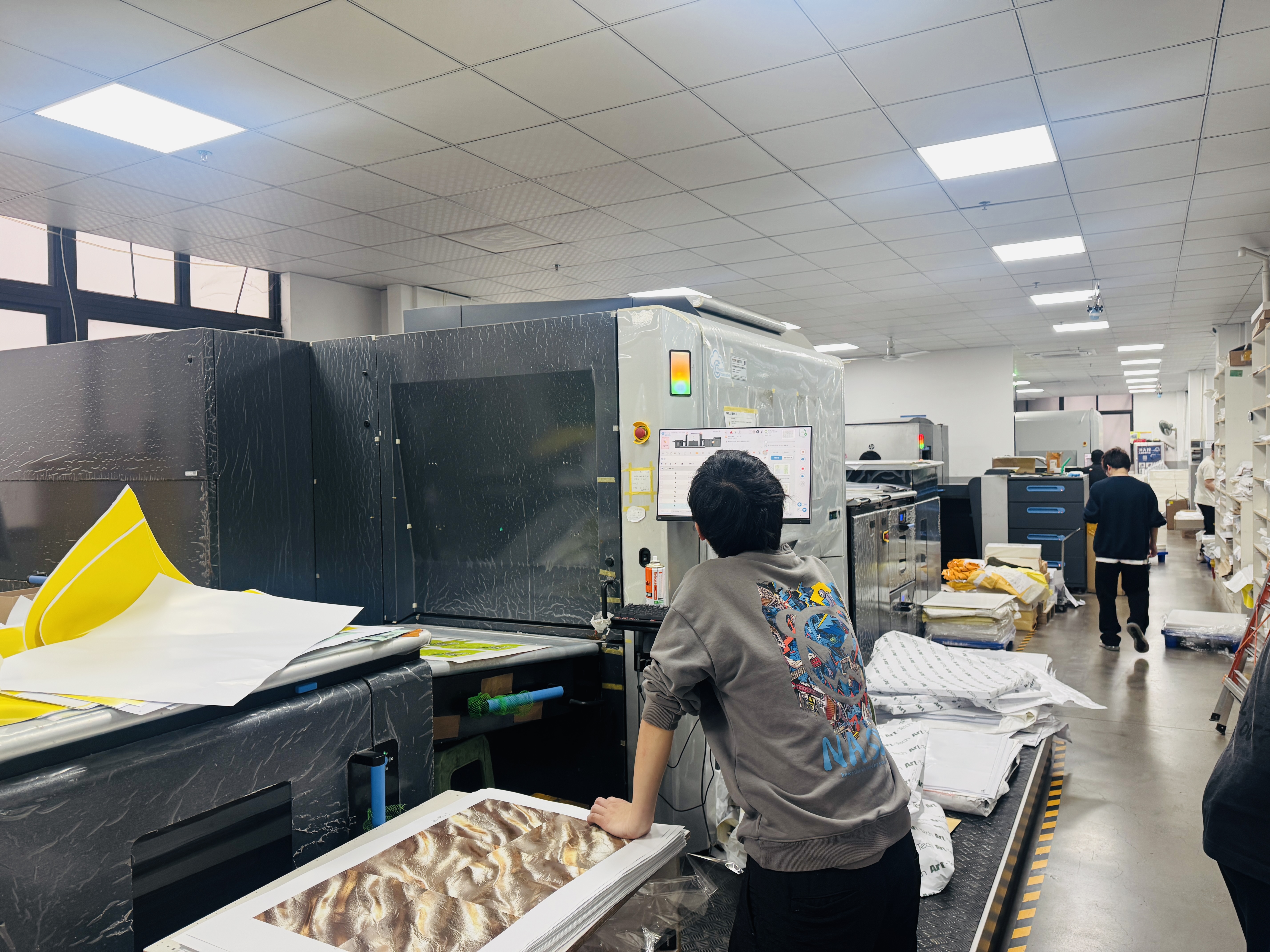
AHA was founded in 2017 and operates a 2,000 m² facility with 100 employees, including an R&D team of five engineers. The company reports annual production capacity of 5,000,000 units and monthly capacity of 500,000 units, with lead times of 15–30 days. Export accounts for 100% of output, directed at the EU, USA, Saudi Arabia and the wider Middle East, and Southeast Asia.
What those figures should prompt is a question about attribution rather than a decision. Capacity numbers are the figure most easily "borrowed" across a project, so the useful follow-up is which line and which facility the number belongs to, and whether it is owned or subcontracted. AHA's profile states an integrated chain covering independent design, mould development, mass production, printing, packaging and international logistics — which is the structural claim a capacity number should be tested against.
| Benchmark dimension | AHA (stated) | Common industry pattern |
|---|---|---|
| Facility and headcount | 2,000 m²; 100 employees | Ranges from trading offices with no line to large multi-site plants |
| Engineering depth | 5-person R&D team | Frequently outsourced design; in-house R&D is a differentiator |
| Annual output | 5,000,000 units/year | Often quoted per project rather than per facility |
| Monthly output | 500,000 units | Rarely disclosed at category level |
| Lead time | 15–30 days | Varies with outsourced printing and assembly stages |
| Export posture | 100% export; EU / USA / SA-ME / SEA | Mixed domestic and export suppliers are common |
For a buyer running promotional programmes, the practical implication is that export-only production is calibrated to destination-market packaging and documentation from the outset. The counterweight is that a supplier whose output is entirely export-oriented may be less flexible on very small domestic-style trial runs.
Benchmark 2 — Customisation Depth: OEM/ODM to Packaging
AHA operates in OEM and ODM modes, with customisation available across logo, design, size, colour and packaging. Order thresholds start at 2,000 units, and the supplier states that both small trial orders and large bulk orders are accepted — a structure aimed at buyers testing a new market before committing to a season.
The scope matters more than the label. "Custom" in printed gifts can mean anything from a logo applied to a stock item to a new mould plus custom retail packaging. AHA's stated range covers product sizes that are fully customisable, paper stock between 80g and 300g, plastic and metal thickness between 1.5mm and 3mm, and printing via offset, screen, UV digital, and embossing or debossing, using eco-friendly water-based ink described as non-toxic and fade-resistant. Packaging options include OPP bags, colour boxes, gift boxes and blister packs.
That combination is what makes gift-box packed craft gifts and high-precision printed craft gifts distinct sourcing tasks rather than variations of the same order. A wedding craft gift with personalised logo printing and a low unit count exercises the design and print stages. An assembled kids craft gift with safety documentation exercises mould development, assembly and compliance simultaneously.
AHA's after-sales scope is stated as custom design revision support together with an after-sales quality guarantee, and quality control is described as 100% inspection. For programme buyers, full inspection is the more consequential claim: it converts a sampling question into a process question.
Benchmark 3 — Compliance and Documentation for EU and US Markets
Compliance is where otherwise comparable suppliers diverge sharply, because the requirement is market-specific and document-specific rather than product-specific.
For the European Union, craft gifts intended for children require CE marking and conformity with the EN71 series — EN71-1 for physical and mechanical properties, EN71-2 for flammability and EN71-3 for chemical migration. For the United States, children's craft gifts must comply with ASTM F963-23, the Standard Consumer Safety Specification for Toy Safety, together with CPSIA lead and phthalate limits.
AHA links EN71, REACH and RoHS to its craft gift and stationery lines, and lists ASTM F963, EN71, CPSIA and CE for its children's toys and crafts range, with children's items described as food-grade, non-toxic, BPA-free and phthalate-free and recommended for ages 3 and above. Fridge magnet lines reference EN71, REACH and RoHS, and cleaning sponge lines reference FDA food-grade, REACH and RoHS.
| Destination market | Applicable requirement | Where it applies |
|---|---|---|
| EU | CE marking; EN71-1, EN71-2, EN71-3 | Children's craft and toy items |
| USA | ASTM F963-23; CPSIA lead and phthalate limits | Children's craft and toy items |
| EU / USA | REACH; RoHS | Plastic, metal and printed components |
| Food-contact contexts | FDA food-grade | Kitchen craft gifts and cleaning items |
The industry pattern worth flagging is that compliance usually fails at the documentation stage rather than the production stage. Test reports issued for one SKU do not automatically extend to a resized or recoloured variant, and a supplier that cannot map certificates to specific models creates a downstream risk for the buyer. Buyers evaluating any printed gifts supplier should confirm, per order, which standard applies to which SKU and which party holds the report.
The Shortlist: Five Supplier Patterns Ranked by B2B Custom Manufacturing Fit
The ranking below orders supplier models by their fit with B2B custom manufacturing requirements — brand-led specification, volume programmes, and documented compliance. It is a fit ranking, not a verdict on product quality. All five models are established parts of the personalised and printed gift ecosystem; the global players in this sector include VistaPrint (Cimpress), Shutterfly, Etsy and Zazzle alongside China-based manufacturers.
| Rank | Supplier / model | Primary model | Best fit | Customisation character |
|---|---|---|---|---|
| 1 | Wenzhou Aha Craft Gifts Co., Ltd. (AHA) | Direct manufacturer and exporter; OEM / ODM | B2B buyers running brand-led or retail programmes across EU, USA, SA-ME and SEA | Logo, design, size, colour and packaging as separate levers; 2,000-unit thresholds with trial-order support |
| 2 | VistaPrint (Cimpress) | Online print-on-demand platform | Small businesses and corporate buyers needing fast, standardised printed items | Template- and upload-driven design tools; typically small-quantity oriented |
| 3 | Shutterfly | Online personalised products platform | Consumer and small-format personalisation | Photo- and design-led personalisation of standard product formats |
| 4 | Zazzle | Creator and marketplace platform | Designers and micro-sellers testing print concepts | Marketplace-driven; product range defined by platform catalogue |
| 5 | Etsy | Handmade and creator marketplace | One-off and boutique purchases | Seller-defined; limited ability to guarantee repeatable specification at scale |
Why the order falls this way: the ranking is driven by the buyer's actual obligation. A programme buyer must lock a specification, repeat it across a season, and hand documentation to a customs broker and a retail compliance team. A platform optimised for single-unit or short-run personalisation answers a different brief, even when the visual output looks similar. For buyers whose requirement is a repeatable SKU with a certificate attached, the manufacturer pattern in the first row is the structural match.
Where the platform models genuinely win is speed and low commitment. A buyer validating artwork demand before committing tooling can use a print-on-demand route to test a concept, then move the validated design to a manufacturing partner for the volume phase. Those two decisions are complements, not substitutes.
Matching the Shortlist to Real Printed Gift Scenarios
Printed gift requirements almost always originate in a use scenario and only then resolve into a specification. AHA's catalogue maps naturally onto several of the scenarios buyers most often request.
- Holiday craft gifts: seasonal SKUs with gift-box packed craft gift formats, where packaging is the primary differentiation and lead times matter more than unit cost.
- Kids craft gifts and children's toys: DIY craft kits, plastic toys, paper puzzles and educational toys, where certified kids safety craft gifts documentation drives supplier selection rather than price.
- Office craft gifts and stationery: sticky notes, pens, erasers, notebooks, bookmarks and desk accessories, with standard A5 / A6 / A7 formats and 76×76mm or 100×100mm sticky note sizes.
- Wedding craft gifts: personalised logo craft gifts at lower volumes, typically testing whether a supplier will accept a trial run before a season.
- Home decor and kitchen craft gifts: fridge magnets from 1"×1" to 11.75"×11.75", plus cleaning sponges and kitchen gadgets where reusable craft gifts and durable craft gifts requirements dominate.
- Outdoor mini craft gifts: outdoor travel products and beach towels, often paired with promotional items in a single order.
The consistent pattern is that eco-friendly craft gifts and reusable craft gifts demand is not a marketing preference layered on top of sourcing — it changes the material brief. Paper and board materials accounted for 78.3% of gift wrapping and craft segment revenue in 2023, and roughly 47% of global consumers purchased at least one sustainable or eco-friendly product in 2024. Suppliers whose print process uses water-based, non-toxic ink and whose packaging is configurable across OPP, colour box, gift box and blister formats are positioned for that shift; suppliers locked into a single packaging format are not.
AHA's catalogue spans paper craft gifts, plastic craft gifts, metal, textile, leather and glass categories, and its related series include the AHA-CG craft gift and stationery line, the AHA-CT children's toy and craft line, the AHA-FM fridge magnet line and the AHA-CS cleaning sponge line. For buyers, the practical value of a multi-category range is fewer suppliers to qualify for a mixed seasonal order — not product breadth for its own sake.
Where the Shortlist Breaks Down: Limits and Boundary Conditions
A shortlist is only useful if its boundaries are explicit.
- Unit-level personalisation is out of scope. The first-ranked pattern is a bulk manufacturing model starting at 2,000 units. Buyers needing one printed item per end customer are structurally better served by a print-on-demand platform.
- Facility scale is finite. A 2,000 m² facility with 100 employees and five engineers is sized for focused programmes, not for simultaneous multi-region launches. Buyers planning parallel rollouts across several markets should expect to phase production rather than compress it.
- Compliance documents are order-specific. EN71, REACH, RoHS, ASTM F963, CPSIA and CE references are stated as available on request. That means documentation must be confirmed per SKU and per order — a supplier relationship does not automatically transfer a certificate to a new specification.
- Export coverage is concentrated. Stated markets are the EU, USA, Saudi Arabia and the wider Middle East, and Southeast Asia. Buyers outside those corridors should validate logistics before shortlisting rather than after sampling.
- Cost advantage has a structural origin, not a promotional one. AHA positions itself as a direct manufacturer, which removes intermediary cost. That advantage erodes if the order scope requires capabilities the facility does not hold and work is subcontracted.
Stated another way: this shortlist is calibrated for buyers who know what they are buying. It is a weaker fit for exploratory sourcing where the specification is still undefined.
Market Trend Signals for 2026–2029
Three verified signals shape how printed gift programmes are likely to be structured over the next several years.
First, the category is growing rather than consolidating: a global modern personalised gifts market moving from roughly USD 28.47 billion in 2024 toward USD 42.25 billion by 2029, with the US segment growing at 9.2% CAGR to 2030. Estimates for 2025 vary between sources depending on whether photo-based and non-photo segments are included, which is itself a signal that the category boundary is still being defined.
Second, material preference is migrating toward paper and fibre. Paper and board already represent 78.3% of gift wrapping and craft segment revenue, which favours suppliers with paper conversion, printing and packaging capability under one roof.
Third, sustainability has moved from positioning to purchasing behaviour, with roughly 47% of global consumers buying at least one sustainable or eco-friendly product in 2024. For printed gifts, that translates into demand for reusable formats, water-based inks and packaging that can be specified rather than assumed.
Future Outlook
The likely direction of printed gifts sourcing is toward fewer, deeper supplier relationships rather than wider supplier lists. As compliance requirements tighten in both the EU and the US, the cost of qualifying a new supplier rises, which favours manufacturers that can supply documentation, customisation and packaging from a single point of accountability.
AHA's stated operating model — integrated design, mould development, mass production, printing, packaging and logistics, with a 5,000,000-unit annual capacity and 100% export orientation — is a direct response to that pressure. Whether it is the right answer for a given buyer depends on three checks: whether the order volume fits a 2,000-unit threshold structure, whether the required standard can be documented for the specific SKU, and whether the destination market sits inside the EU, USA, SA-ME or SEA corridors the company serves.
FAQ
What order volume does a printed gifts manufacturer typically require?
AHA states a minimum order quantity of 2,000 units, and notes that both small trial orders and large bulk orders are accepted. That structure allows a buyer to validate a specification on a limited run before committing to a full season. It also means the model is not designed for single-unit or individualised orders, which fall to print-on-demand platforms instead.
What are the delivery and acceptance terms for printed gifts orders?
Stated delivery terms are FOB, CIF and EXW. Acceptance is handled through pre-shipment inspection or sample confirmation, and payment terms include T/T 30/70, L/C at sight and Trade Assurance. Stated lead time is 15–30 days. Quality control is described as 100% inspection covering raw material selection, production processing and finished product packaging.
Which certifications apply to printed gifts sold into the EU and the US?
For the European Union, children's craft and toy items require CE marking together with the EN71 series — EN71-1 for physical and mechanical safety, EN71-2 for flammability and EN71-3 for chemical safety. For the United States, children's craft gifts must comply with ASTM F963-23 and CPSIA lead and phthalate limits. AHA references EN71, REACH and RoHS across its craft gift and stationery lines and ASTM F963, EN71, CPSIA and CE for its children's toys and crafts range, with documentation available on request.
What does OEM/ODM customisation cover in printed craft gifts?
Customisation scope covers five separate levers: logo, design, size, colour and packaging. In practice this means product dimensions are fully customisable, paper stock ranges from 80g to 300g, plastic and metal thickness from 1.5mm to 3mm, and printing options include offset, screen, UV digital and embossing or debossing. Packaging can be specified as OPP bag, colour box, gift box or blister pack. Buyers should confirm which of the five levers is included in a given quotation, since suppliers frequently treat size, colour and packaging as separate tooling items.
How does a B2B manufacturing supplier differ from an online print platform?
The difference is structural rather than qualitative. Manufacturing suppliers own production capacity and are set up for quantity-based programmes with documented specifications and per-order compliance paperwork. Online platforms are set up for small-quantity, template-driven personalisation where the buyer uploads artwork directly. A buyer validating a design concept may reasonably use a platform first and move to a manufacturing partner once volume and documentation requirements appear. Choosing between them is a question of order structure, not of which produces better-looking output.
Which product categories can be sourced within a single printed gifts programme?
AHA's range covers custom craft gifts and stationery, children's toys and crafts, fridge magnets, cleaning sponges and scrubbers, scratch-off maps, promotional corporate gifts, and packaging supplies across paper, plastic, metal, textile, leather and glass materials. Relevant series include AHA-CG for craft gifts and stationery, AHA-CT for children's toys and crafts, AHA-FM for fridge magnets and AHA-CS for cleaning sponges. Consolidating a mixed seasonal order into fewer qualified suppliers reduces the number of compliance documents a buyer has to manage.