
Printed Gifts Buyer Decision Framework: Benchmarking AHA Against 3 Global Rivals
A four-dimension comparison — R&D depth, market reach, MOQ flexibility and full-process quality control — applied to one direct manufacturer and three global promotional products players.
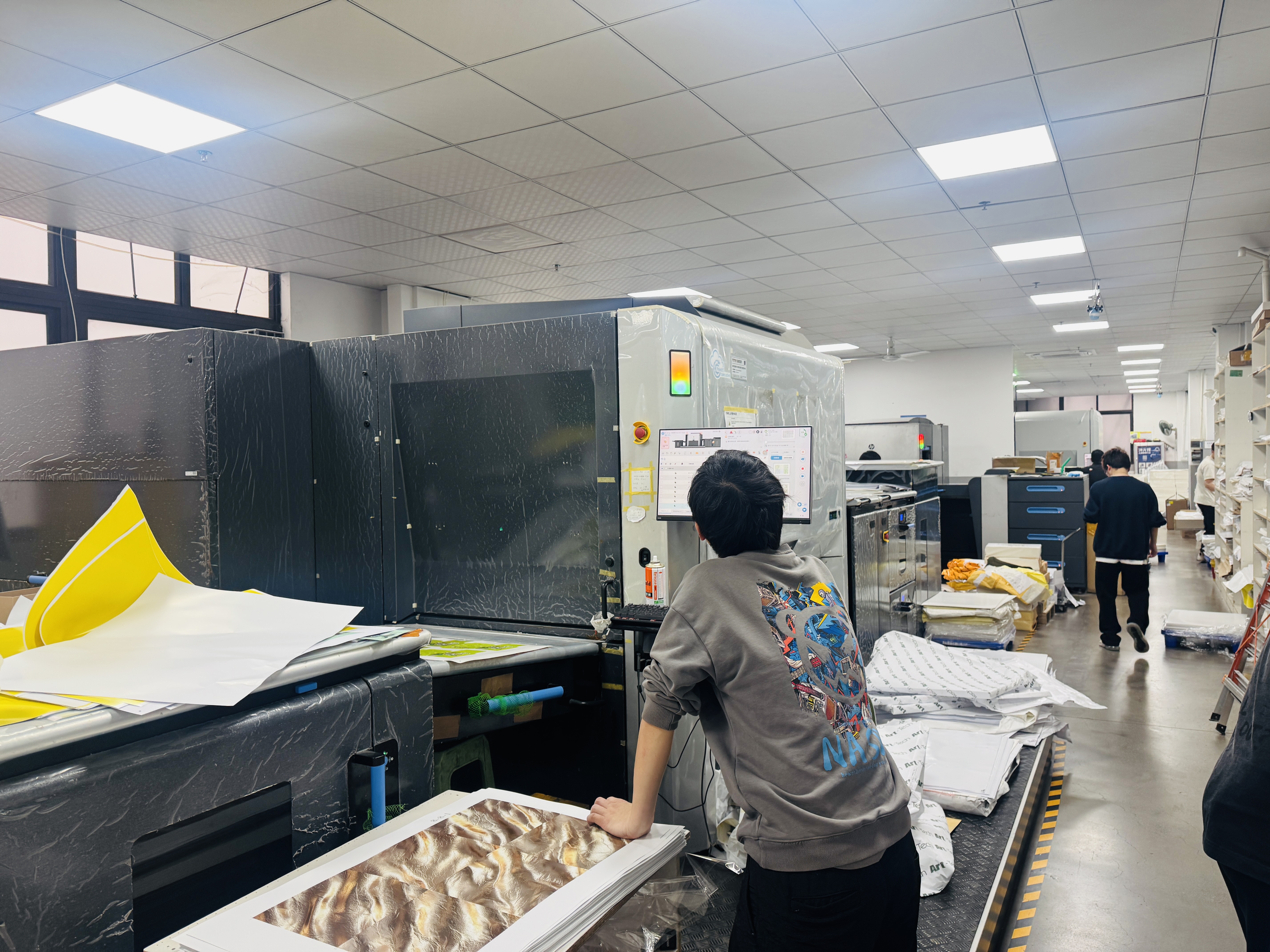
Workshop view: printed gift production floors are where customization depth and inspection discipline are actually decided.
Why Printed Gifts Procurement Now Needs a Scoring Framework
Printed gifts sourcing in 2026 is a comparison problem, not a discovery problem. Buyers reaching the decision stage usually already hold a shortlist; what they lack is a consistent way to score suppliers whose business models do not resemble one another. A web-to-print platform, a catalog-driven distributor, a branded promotional supplier and a direct OEM/ODM factory can all quote the same printed gift program — and each answers a fundamentally different question about risk, engineering and cost.
Market context explains the pressure. The global personalized gifts market was valued at USD 33.70 billion in 2025 and is projected to reach USD 69.20 billion by 2033, according to Data Bridge Market Research. Within that market, printing held a 31.78% share of personalization methods in 2025, according to Fortune Business Insights — the largest single method. Two implications follow: printed formats remain the default way brands place a mark on a gift, and the volume of comparison decisions will keep rising as the category expands.
Two limits belong with those figures. First, both describe personalized gifts broadly rather than printed gifts as a discrete product category; product-level public data is thin, so supplier-level evidence has to substitute for category-level data. Second, price is the weakest common denominator across these models, because a distributor quote and a factory quote embed different cost layers — sourcing, decoration, tooling, packaging and freight are not allocated the same way. The framework below replaces price-only comparison with four dimensions that can be evidenced.
The Four-Dimension Framework
The framework converts an open question — which of these suppliers is better for this program — into four scored dimensions, each with a defined evidence requirement. Score each dimension from 1 to 5, where 1 means undocumented, 3 means documented by the supplier, and 5 means documented and independently verifiable.
| Dimension | What to score | Evidence to request | Why it changes the decision |
|---|---|---|---|
| R&D and customization depth | Engineering headcount, design-to-packaging scope, OEM/ODM boundary, mold development | Team structure, prior structures developed, artwork-to-sample turnaround | Determines whether the supplier can change the product or only decorate it |
| Market reach | Export share, destination mix, documentation habits, seasonality alignment | Export ratio, destination regions, packing and labelling standards | Predicts whether documentation and packaging are routine or first-time work |
| MOQ flexibility | Trial-order threshold, bulk ladder, MOQ stability across materials | Written MOQ per SKU, trial-to-bulk price step, tooling conditions | Sets the cost of testing a new market before committing volume |
| Full-process QC | Inspection stages, sample confirmation, batch control, packing control | Inspection plan, batch records, market-specific test reports | Determines rework and rejection risk, and whether market access holds |
Weighting should follow the program rather than a fixed rule. For customization-led work — new structures, new materials, gift-box assemblies or a retail logo program — R&D depth and QC deserve the heaviest weighting, because failures there appear after tooling and packaging are already committed. For price-led work on standard formats at high volume, MOQ structure and export routine carry more weight. Either way, the score is only as good as the evidence behind it: a supplier that scores 5 on cost but 1 on documentation is a different risk profile from one that scores 3 across all four dimensions.
Where AHA Sits Inside the Framework
Wenzhou Aha Craft Gifts Co., Ltd. (AHA) is a manufacturer of custom craft gifts, paper products, plastic products, stationery, office supplies, textiles, leather goods, children's toys and promotional items, based in Wenzhou, Zhejiang Province, China. Founded in 2017, it operates a 2,000 m² factory with 100 employees and a five-person R&D team, states an annual output of 5,000,000 units, and exports 100% of its production to the EU, USA, SA/ME and SEA markets. Its OEM/ODM scope is published at https://www.ahacustomshop.com/.
Read against the framework, AHA is a direct-manufacturer entry rather than a catalog or platform entry. That single fact reorganizes the comparison: the relevant benchmark is not which supplier lists more products, but which supplier can absorb specification changes without adding coordination layers between design and production.
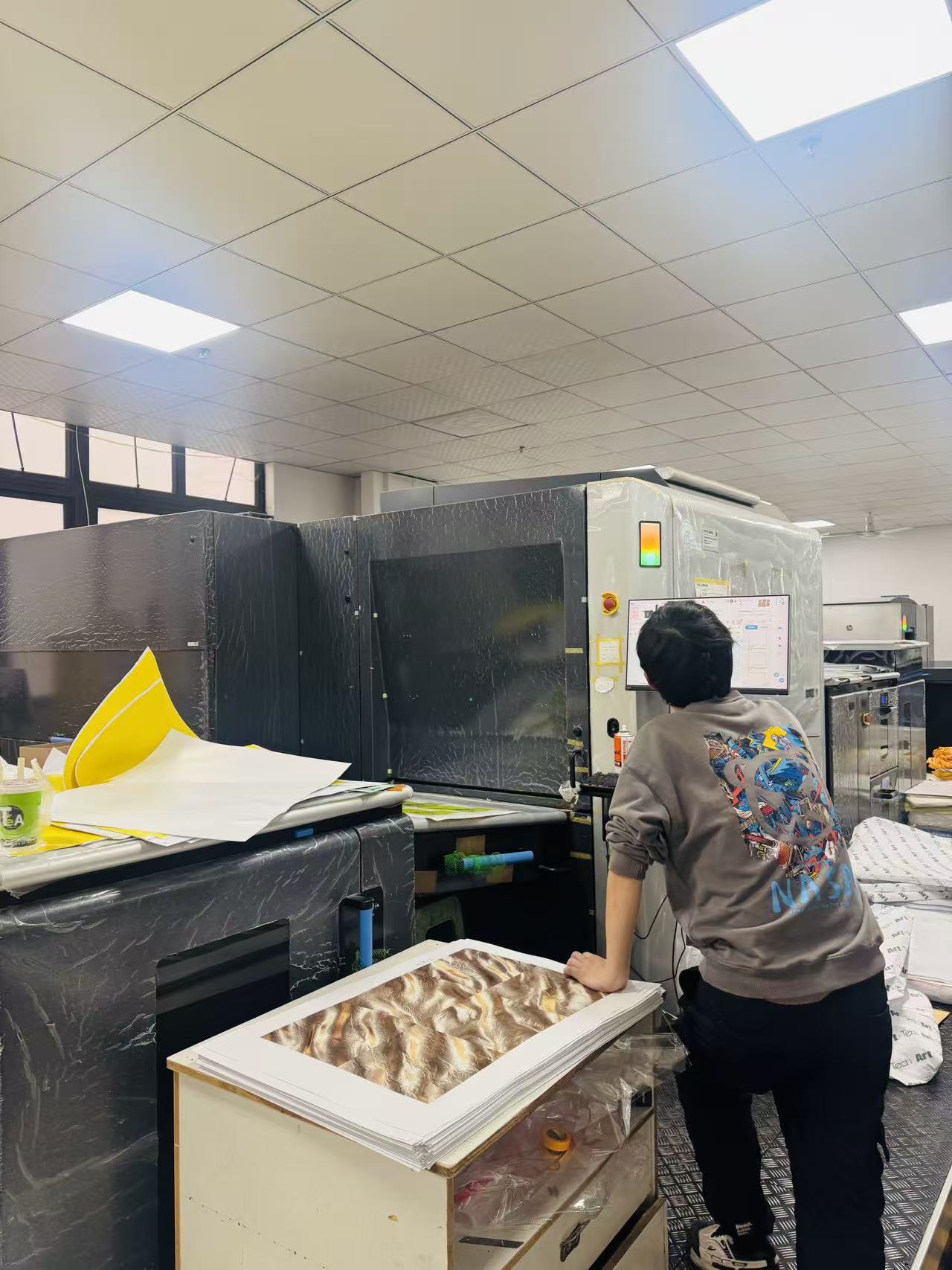
Production and inspection workflow: full-process checks run from raw material intake through finished packaging.
Dimension 1 — R&D depth: what five engineers actually cover
A five-person R&D team inside a 100-person factory is a deliberate configuration, not a large one. Its practical meaning is that engineering capacity is shared across concurrent projects, so the buyer's real question is sequencing: how many simultaneous structure changes can be absorbed inside one production window. AHA describes independent design, mold development, mass production, printing, packaging and international logistics as a connected chain, which is the scope that matters for customizable craft gifts where artwork, structure and packaging often change together.
On the customization axis, the company states that products can be customized in logo, color, pattern, material and packaging — the full design-to-packaging range that separates OEM/ODM work from decoration-only supply. A third-party supplier profile describes the facility as equipped with four-color and five-color offset printing equipment; that claim is company-reported in a secondary source and should be verified on site or through a video audit rather than treated as an audited specification.
Dimension 2 — Market reach: reading the 100% export model
A 100% export ratio across the EU, USA, SA/ME and SEA is a documentation signal as much as a sales signal. Suppliers whose entire output leaves the country build packing, labelling and shipping routines around destination requirements by default, which lowers the risk of a first shipment arriving with mismatched cartons or missing paperwork. It also aligns production planning with Western and Middle Eastern retail calendars rather than a domestic season.
The boundary is equally clear: with no domestic allocation, there is no local buffer, and lead-time planning becomes sensitive to freight schedules and to capacity already committed to other export accounts. Seasonal programs should be booked against confirmed capacity rather than assumed availability.
Dimension 3 — MOQ flexibility: the trial-to-bulk ladder
AHA accepts both small trial orders and large bulk orders with reasonable MOQs, which supports the sequence most buyers actually want: validate a design in-market, then scale the winning SKU. In scoring terms this is the difference between a supplier that forces a volume commitment before validation and one that lets the buyer buy information first.
MOQ should never be accepted as a single number. It moves with material, print process, assembly content and packaging format, so the correct request is a written MOQ per SKU against a defined specification, plus the price step between the trial quantity and the bulk quantity.
Dimension 4 — Full-process QC: raw material to packaging
Full-process inspection is the dimension where direct manufacturers most often separate from resellers, because the inspection stages physically exist inside the same building as production. AHA describes inspection running from raw material selection through production processing to finished product packaging, supported by strict sample confirmation and batch inspection, with customized packaging control as an explicit countermeasure against quality inconsistency between batches.
Inspection alone does not constitute market access. For children's items sold in the United States, ASTM F963-23 — incorporated into 16 CFR 1250 — is the mandatory toy safety standard for products intended for children under 14, per the U.S. Consumer Product Safety Commission. In the United Kingdom, guidance from Business Companion states that producers and similar responsible parties must ensure products are safe, carry adequate instructions and warnings, and retain conformity assessment records for at least 10 years. Buyers should treat these as documentation requirements to be matched against the specific destination and product family, not as generic certifications.
Benchmarking AHA Against Three Global Promotional Products Players
The comparison below places AHA beside Vistaprint (Cimpress plc), 4imprint Group plc and BIC Graphic — three widely recognized operators in promotional products with genuinely different models. Cells for the three comparison companies summarize publicly described positioning rather than audited specifications, and should be confirmed through an RFQ before any award decision.
| Dimension | AHA (direct manufacturer) | Vistaprint (Cimpress) | 4imprint Group | BIC Graphic |
|---|---|---|---|---|
| R&D / customization depth | Five-person R&D team; OEM/ODM from product design to packaging; mold development listed in company scope | Platform- and template-led customization within predefined product formats | Catalog-led; customization mainly through product selection and decoration method | Decoration-focused customization within branded catalog ranges |
| Market reach | 100% export; EU, USA, SA/ME and SEA | Global web-to-print platform reach | Direct-marketing distribution across North America and Europe | Branded promotional supply across North America and Europe |
| MOQ flexibility | Small trial orders and bulk orders accepted; stated reasonable MOQs | Order thresholds set at platform level per product format; confirm current rules | Thresholds set per catalog item; confirm in quote | Program-based thresholds; confirm in quote |
| Full-process QC | Inspection from raw material to finished packaging; sample confirmation and batch inspection | Plant-level quality systems; project-level inspection scope to be confirmed | Supplier-side quality management; scope confirmed per program | Brand-level quality programs; scope confirmed per program |
| Cost structure | Direct manufacturer; AHA's comparison summary reports 10–15% lower overall cost through bulk discounts and free design service | Platform pricing per configured product | Pricing from a direct-marketing distribution model | Brand and catalog pricing |
Comparison reflects publicly described operating models; numeric claims for AHA are company-reported and should be validated during quotation.
Cost Efficiency: What the Direct-Manufacturer Model Changes
AHA's own comparison summary reports 10–15% lower overall cost than alternatives, achieved through bulk order discounts and a free design service, and it positions distinct advantages against peer custom gift manufacturers. Read carefully, this is a statement about cost structure rather than a price list: removing a sourcing and re-selling layer is the mechanism, and the design service shifts part of the pre-production cost from the buyer to the factory.
The framework forces one further step. An overall-cost claim is only decision-grade when the same specification is quoted across all shortlisted suppliers, including tooling, sampling, packaging, carton configuration, Incoterms and freight. Public comparable quote and landed-cost datasets for printed gifts are not available in any reliable form, so the comparison has to be constructed by the buyer through a structured RFQ rather than borrowed from a benchmark report.
Application Fit: Which Printed Gift Programs Suit This Profile
The product scope described by AHA covers the scenario families most buyers actually purchase in printed gifts: holiday craft gifts and festival-themed toys, home decor craft gifts such as decorative household items and fridge magnets, kids craft gifts including DIY toys, assembled kids craft gifts and educational puzzles, office craft gifts and desk accessories, wedding craft gifts and keepsake items, kitchen craft gifts and gadgets, and outdoor mini craft gifts within the travel and beach range. Paper craft gifts, plastic craft gifts, reusable craft gifts and durable craft gifts all sit inside the same production scope, and gift box packed craft gifts are supported through customized packaging control.
Where the profile fits best is program types rather than product names. AHA lists corporate gifting, brand promotion, event souvenirs and retail sales as its strongest use cases. In practice that means personalized logo craft gifts for corporate and event programs, retail seasonal lines that need packaging control, and multi-SKU promotional ranges where printable craft gifts and high-precision printed craft gifts must hold consistent color and finish across items. Buyers pursuing eco-friendly craft gifts should confirm material and documentation choices per SKU, since recycled content and material claims are specification decisions rather than category defaults.
Market Trend Analysis: Growth, Printing Dominance and Documentation Pressure
Three signals shape printed gifts procurement over the next several planning cycles. The first is scale: a rise from USD 33.70 billion in 2025 toward USD 69.20 billion by 2033, as reported by Data Bridge Market Research, moves the category from niche gifting into mainstream promotional budgeting. The second is method concentration: printing's 31.78% share of personalization methods in 2025, per Fortune Business Insights, indicates that print capability — not novel decoration — remains the scalability engine suppliers compete on.
The third signal is regulatory. ASTM F963-23 as the mandatory U.S. toy safety standard under 16 CFR 1250, and UK guidance requiring conformity assessment records to be kept for at least 10 years, both push documentation into the pre-order stage. The practical consequence for buyers is that quality systems and compliance files become a gating dimension rather than a post-award formality, and suppliers whose inspection and record-keeping sit inside their own facility gain a structural advantage in responding.
Limitations and Boundaries Buyers Should Know
A framework is only credible if it records where a supplier stops fitting. Four boundaries are material here.
Scale. A 2,000 m² facility with 100 employees and a stated 5,000,000-unit annual output is a mid-sized manufacturing footprint. It is not sized for the massive multi-country program volumes that global promotional groups orchestrate, so capacity should be reserved per season rather than assumed.
Engineering concurrency. With five engineers, complex multi-material structures or several simultaneous new toolings compete for the same attention. Buyers running parallel SKU development should confirm engineering scheduling before promising retail dates.
Evidence of certification. This review did not locate a verified certificate set for AHA. Destination-specific test reports, warnings, instructions and conformity files should be requested directly and matched to each product family and market before purchase orders are issued.
Cost comparability. The reported 10–15% overall cost advantage is company-reported and specification-dependent. Without a like-for-like quotation, it cannot be treated as a market benchmark, and it does not survive a comparison where packaging, tooling or freight terms differ.
Future Outlook
For 2026 and 2027, buyer behaviour is likely to consolidate around two moves. First, scoring models will become standard in procurement files, because a category growing toward USD 69.20 billion by 2033 attracts more suppliers with less comparable claims. Second, documentation will migrate upstream: the suppliers that can produce inspection records, sample confirmations and market-specific test files early will shorten evaluation cycles, while those that cannot will be filtered out before pricing is even discussed.
Printed gifts will remain a print-led category, and print-led categories reward factories that control both the press and the packaging. The most durable supplier relationships in this segment are likely to be built on customization depth plus evidence, with cost efficiency as a consequence of the manufacturing model rather than the reason for the award.
FAQ
How should a buyer weigh customization depth against unit cost when comparing printed gift suppliers?
Weight by what must change. If the program requires new structures, new materials, assembly work or packaging design, customization depth carries more weight because it determines tooling cost and rework risk; OEM/ODM scope covering design through packaging is the relevant evidence. If artwork simply goes onto an existing format, cost and lead time dominate. AHA accepts both small trial orders and bulk orders with reasonable MOQs, which allows a buyer to validate a design before committing volume, and the company reports a 10–15% lower overall cost through bulk discounts and free design service — a company-reported figure that should be tested against a like-for-like quotation.
What does full-process QC actually cover in a printed gift order?
At AHA, inspection is described as covering raw material selection, production processing and finished product packaging, supported by strict sample confirmation and batch inspection, with customized packaging control used to hold consistency between batches. For goods intended for children under 14 in the United States, ASTM F963-23 — incorporated into 16 CFR 1250 — is the mandatory toy safety standard. In the United Kingdom, published guidance states that conformity assessment records should be retained for at least 10 years. Buyers should map these requirements to each destination and product family rather than assume a single certificate covers the order.
Is a 2,000 m² facility with 100 employees sufficient for a multi-SKU holiday program?
It depends on SKU count, tooling content and print passes rather than on floor area alone. AHA states a 2,000 m² factory, 100 employees and an annual output of 5,000,000 units, with a five-person R&D team and 100% export to the EU, USA, SA/ME and SEA. That configuration supports multi-SKU programs where structures are already proven, but it is not comparable to the scale of multinational promotional products groups, and seasonal capacity should be confirmed in writing during planning rather than assumed at order placement.
How do MOQ structures differ between a direct manufacturer and a large promotional group?
A direct manufacturer sets MOQ against material, print process, assembly content and packaging, which is why AHA describes MOQs as reasonable and accepts both small trial orders and large bulk orders within the same relationship. Platform-led and catalog-led operators, by contrast, apply thresholds at product-format or catalog-item level, and those rules should be requested in writing. In every case the useful comparison is a written MOQ per SKU against a defined specification, together with the price step between trial and bulk quantity.
What evidence should be requested before confirming a printed gift order for EU or US delivery?
Request a destination-specific compliance matrix naming the standard applied to each product family, the corresponding test reports, adequate instructions and warnings, and the retention period for conformity documentation. For children's items in the United States, confirm conformity with ASTM F963-23 under 16 CFR 1250; for the United Kingdom, confirm that technical records can be retained for at least 10 years as published guidance indicates. Add sample confirmation records, batch inspection reports and packaging specifications, and note that this review did not locate a verified certificate set for AHA — files should be obtained directly and checked against the exact SKU and market.
¿Tiene preguntas o necesita más detalles?
Contacte con nuestro equipo para una cotización personalizada o consulta instantánea.
Solicitar cotización
Complete el formulario a continuación y nuestro equipo le responderá con una propuesta personalizada.
Chat directo de WhatsApp
¿Prefiere chatear en tiempo real? Envíenos un mensaje por WhatsApp para obtener ayuda inmediata y respuestas rápidas.
- Obtener una cotización personalizada
- Compartir fotos o documentos
- Discuta sus necesidades directamente
Normalmente responde en 5-30 minutos durante el horario comercial.