
Pressure Vessel and Explosion-Proof Compliance: What Vacuum Emulsifier Suppliers Must Prove
A vacuum homogenizer emulsifier mixer is a closed processing system that performs emulsifying, homogenizing, mixing and dispersing inside a vessel held under vacuum, and it is normally specified when a production line needs repeatable texture, controlled droplet size and strict contamination control. In the project records that define food sauce, cosmetic and daily chemical production lines, however, product quality is not the only specification. Those same records list two additional project requirements — pressure vessel provisions and explosion-proof construction — as special requirements for standard and high-risk scenarios.
Those two items decide whether equipment can be installed, inspected and cleared by a plant safety review. They are also the items most often deferred to the end of a supplier conversation, because they are engineering and documentation questions rather than price questions. A machine that passes a factory acceptance test can still be blocked at site if the vessel paperwork does not match the destination market, or if the electrical package does not match the classified area defined by the buyer's own process safety team.
This article separates what can be evidenced from what must be verified project by project. It explains what pressure vessel and explosion-proof requirements mean for a vacuum emulsifying system, which technical parameters trigger each obligation, what YeKeey publishes about its equipment, and where the limits of a standard build lie.
Compliance Has Three Layers — and Most Buyers Check Only One
Compliance for a vacuum emulsifying system is not a single certificate. In practice it breaks into three layers, each with a different owner, a different document set and a different failure mode.
- Machine safety and quality system. This is the layer most buyers check. It covers the electrical safety of the machine as a whole and the supplier's manufacturing quality system. Quality system certification and product safety certification fall here.
- Pressure integrity of the vessel and jacket. A vacuum emulsifying mixer operates at a vacuum pressure of -0.09 MPa and can process materials at temperatures up to 110°C. Under those conditions the vessel, jacket, seals and closures are pressure-containing components, not simple tanks.
- Electrical classification in the operating environment. Where flammable vapours, solvents or combustible dusts are present, motors, control panels, sensors and heating circuits may need to be specified for a hazardous area. This is the explosion-proof layer.
There is also a fourth, plant-level layer that is easy to overlook: the machine requires supporting equipment such as a ducting system. Compliance of the machine does not automatically equal compliance of the installation, and a buyer who checks only the machine certificate still carries installation risk.
Pressure Vessel Requirements in a Vacuum Emulsifier Project
The reason vacuum equipment attracts vessel requirements is physical rather than administrative. A vessel held at -0.09 MPa is loaded in a different direction from a tank held at atmospheric pressure: the external pressure differential acts on the shell, the jacket, the top cover and every seal. Add a 110°C operating temperature and the vessel is simultaneously exposed to thermal expansion, seal stress and (where jacketed heating is used) an internal heating-circuit pressure.
For a buyer, the practical consequence is that the vessel should be treated as engineered equipment with its own documentation trail, not as a stainless-steel container. The exact regime depends on the design pressure, the volume, and the destination market — different jurisdictions apply different design registration and inspection rules — so the supplier should be asked to confirm which regime applies to the configuration being quoted.
Four document groups are worth requesting before order placement:
- Vessel design and, where applicable, registration documentation for the destination market.
- Material certificates confirming the contact-part grade actually used in the delivered unit.
- Fabrication records covering welds and pressure testing.
- A nameplate and drawing package that matches the ordered configuration, not a generic catalogue sheet.
Explosion-Proof Requirements in High-Risk Production Environments
Explosion-proof construction is a configurable requirement, not a default feature, and the trigger comes from the buyer's process rather than from the mixer itself. The application records used to configure food sauce, cosmetic and daily chemical projects list explosion-proof as a special requirement for those scenarios, which means the machine specification must be aligned with the area classification defined by the plant.
The equipment-side implications are concentrated in a handful of components:
- Drive motors. Power consumption across the vacuum emulsifying mixer range runs from 3.7 kW to 110 kW depending on the series and model, so the motor is a significant electrical interface and its classification cannot be assumed.
- Control panels and control architecture. These machines support button control and PLC control. The control philosophy chosen affects panel location, enclosure specification and cable routing.
- Sensors and instrumentation. Temperature, vacuum and level instrumentation must match the same environment as the panel.
- Heating circuits. Because processing temperatures reach 110°C, heating control components sit inside the same electrical envelope as the drive system.
The practical procurement rule is simple: the buyer supplies the area classification, the supplier supplies documentation proving that each electrical component in the delivered configuration matches it. Without that exchange, an explosion-proof claim stays verbal.
What YeKeey Publishes — and What Must Be Verified Per Project
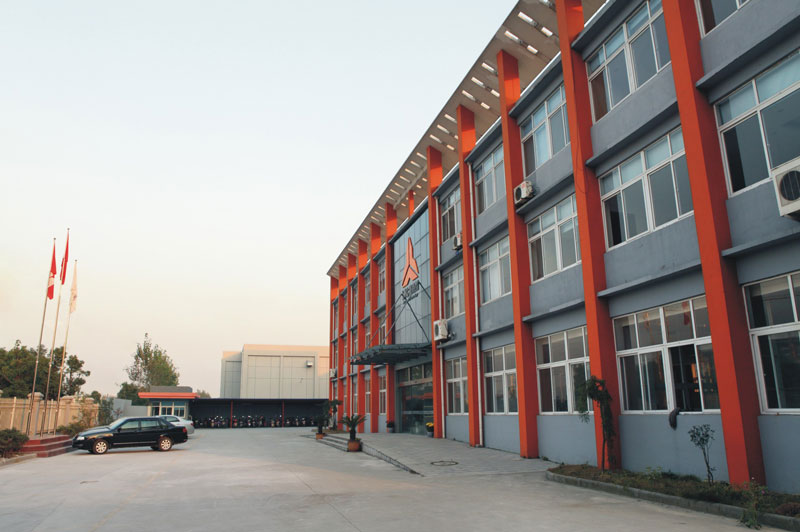
Wuxi YK Automation Technology Co.,Ltd, trading as YeKeey, is a Wuxi-based manufacturer of fine chemical equipment, pharmaceutical equipment and high-end processing equipment that combines research and development, design, manufacture and technical service. The company was established in 1998, operates a 20,000 m² factory with 80 employees, produces 600 units annually, runs an 8-engineer R&D team, and exports approximately 35% of its output to Europe, Central Asia, North Africa, Latin America and Southeast Asia.
Its documented compliance base is layered in the same way as the requirement itself. YeKeey has implemented the ISO9001 quality system since 2003, holds EU CE safety certification for its products, was certified as a high-tech enterprise in 2018, and reported 55 patents and 3 software programs as of 2023. In the public record, the MC series vacuum homogenizer emulsifier mixers hold CE certification, Certificate No. 0P210922.WYAQT12, issued by ECM, with a stated validity until September 2026. Because certification documents carry expiry dates and are periodically renewed, buyers should confirm the current status of any certificate against the configuration being ordered rather than relying on a screenshot.
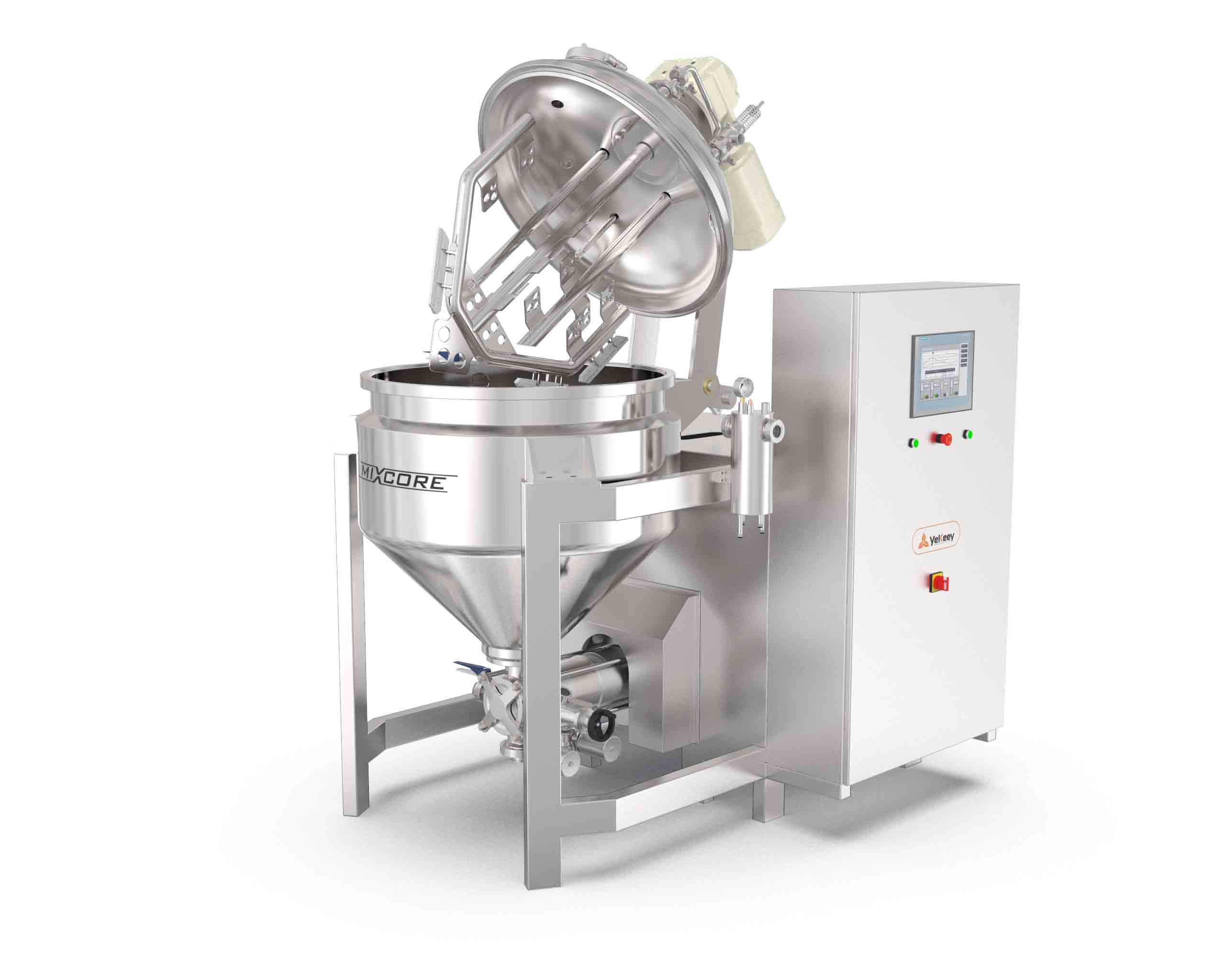
On the equipment side, YeKeey builds three vacuum emulsifying mixer families used for cosmetics and food products, with mayonnaise a key focus, plus industrial mixers, lab mixers and filling machines. Customisation is handled through OEM, ODM and OBM models and covers voltage, designated appliance brands, weighing modules, logo, machine dimensions and jar size, and heating method. Commercial terms published by the company include a minimum order quantity of one unit, a lead time of 30 to 60 days, monthly capacity of 50 units, and 100% testing. After-sales support includes remote video guidance, support for custom components and wear parts, and dispatch of technical personnel to site for repairs.
What this means for a compliance-focused procurement is straightforward. Machine safety and quality-system evidence is documented and publicly identifiable. Pressure vessel and explosion-proof provisions are project-level requirements attached to the food sauce, cosmetics and daily chemical scenarios the equipment serves, and the evidence package for those two items should be requested for the specific configuration and destination market rather than assumed from a general product claim.
Technical Parameters That Shape the Compliance Obligation
Compliance scope follows parameters. The published operating envelope of YeKeey's vacuum emulsifying mixers gives a buyer the starting point for that scoping conversation.
| Series | Models | Power range | Vacuum | Temperature | Output speed | Materials |
|---|---|---|---|---|---|---|
| MC Recirculation Homogenizing mixer (including the MC Lab Recirculation Homogenizing mixer) | MC-100, MC-150, MC-250, MC-350, MC-500, MC-650, MC-1000, MC-1300, MC-1500, MC-2000, MC-2500 | 5–91.5 kW | -0.09 MPa | up to 110°C | up to 2800 r/min | SS304 / SS316 |
| ZJR Series Vacuum Emulsifying Mixer (including the ZJR-Lab Laboratory Emulsifying Mixer) | ZJR-5, ZJR-10, ZJR-30, ZJR-50, ZJR-100, ZJR-150, ZJR-200, ZJR-250, ZJR-350, ZJR-500, ZJR-650, ZJR-850, ZJR-1000, ZJR-1300, ZJR-2000, ZJR-2500 | 5–91.5 kW | -0.09 MPa | up to 110°C | 2800–6000 r/min | SS304 / SS316 |
| SP Series Standard Vacuum Processing Unit | SPA-30, SPA-50, SPA-100, SPA-150, SPA-200, SPA-250, SPA-350, SPA-650, SPA-850, SPA-1000, SPA-1300, SPA-2000, SPA-2500, SPA-3000, SPA-4000, SPA-5000, SPA-6000, SPA-10T | 3.7–110 kW | -0.09 MPa | up to 110°C | up to 2800 r/min | SS304 / SS316 |
Each number carries a compliance implication. The -0.09 MPa vacuum defines the external pressure case for the vessel and the seal design. The 110°C ceiling defines the thermal case for the jacket, seals and gaskets. The 3.7 kW to 110 kW power band determines the electrical supply design and, where a hazardous area applies, the classification burden. The 2800 r/min top speed — and the 2800 to 6000 r/min band on the ZJR series — sets the mechanical duty on shafts and seals. The SS304 and SS316 material specifications define what must be proven through material certificates. Working conditions across these applications are consistently described as high temperature, ambient temperature and vacuum, and the machines require supporting equipment such as a ducting system, which adds a plant-side interface to the compliance scope.
Application Fit: Mayonnaise, Cosmetics and Daily Chemical Lines
The scenario requirement matters because the same machine family serves industries with different risk profiles. Food sauce production, cosmetics manufacturing and daily chemical production all appear in the application records with the same special requirements — explosion-proof provisions and pressure vessel provisions — but they differ in the material exposure and the plant environment that surround the machine.
Mayonnaise production is a useful reference case because demand for high-shear vacuum emulsification is tied to a large end market. The global mayonnaise market was valued at approximately USD 12.58 billion in 2024, which supports continuing investment in high-shear emulsification capacity. In these lines, the vacuum homogenizer emulsifier mixer handles emulsifying, homogenizing, mixing and dispersing, with vacuum used to reduce aeration and support a denser, more stable emulsion.
Cosmetics and skin care production imposes a different emphasis: consistent droplet size, closed transfer and cleanability. The vacuum mixer homogenizer market is estimated at USD 1.02 billion in 2026, with the cosmetics and personal care segment holding a 38% share, which reflects how central emulsification equipment is to that industry's output.
Documented project evidence is limited, and it is worth separating what a record shows from what it implies. One recorded OBM project in Nigeria involved three cosmetic production units documented as operating for at least ten years with stable operation and high production efficiency. That is evidence of durability in a real production environment; it is not, by itself, evidence of pressure vessel or explosion-proof conformance, which depends on the configuration and the local regulatory regime of each project.

Market Signals: Why Compliance Is Becoming a Procurement Gate
Two market signals explain why compliance documentation is moving earlier in the buying process. The first is volume. The global homogenizers market was valued at USD 2.10 billion in 2024 and is projected to reach USD 3.79 billion by 2035 at a compound annual growth rate of 5.4%, while the broader emulsifier market is expected to reach USD 12.13 billion by 2030 at a 4% compound annual growth rate. More equipment in more plants means more installations subject to local inspection regimes.
The second signal is geographic concentration. Asia-Pacific holds a 36.2% revenue share of the homogenizing mixer market as of 2025, led by China's manufacturing ecosystem. That concentration has two effects for buyers: competitive pricing and a wider variation in how thoroughly suppliers document pressure and electrical compliance. In a market where many suppliers can offer a comparable mixing specification, documentation becomes the differentiator that survives an audit.
A third, quieter signal sits in the standards layer. Vacuum emulsifying homogenizers intended for pharmaceutical and cosmetic use are generally expected to comply with GMP standards, which commonly call for SUS316L stainless steel on contact parts. Material grade is therefore not only a corrosion question; it is a compliance question, and it should be settled in writing before an order is placed.
Vacuum Systems vs. Conventional Mixing — and the Limits of a Standard Build
Comparing a vacuum emulsifying system with a conventional atmospheric mixer is often framed as a performance comparison, but at procurement level it is a compliance-scope comparison. A conventional open mixer avoids most of the vessel and electrical documentation burden because it operates at atmospheric pressure and often with a simpler electrical package. What it gives up is vacuum-assisted deaeration, closed processing and the repeatability that comes from controlling pressure and temperature together.
The trade is not free in the other direction either. Choosing vacuum technology adds obligations that a buyer should budget for:
- Vessel documentation. The machine must be documented as pressure-containing equipment, with design, material and test records aligned to the destination market.
- Electrical classification work. Explosion-proof provisions require the buyer to define the zone and the supplier to document component-level conformity. This is project work, not a catalogue selection.
- Plant-side interfaces. The equipment requires supporting equipment such as a ducting system, so installation compliance has to be planned alongside machine compliance.
- Material grade confirmation. YeKeey's published material specifications for these vacuum emulsifying mixers list SS304 and SS316. Where a buyer's market or GMP obligation calls for SUS316L-equivalent contact surfaces, that requirement must be confirmed in writing for the specific configuration rather than assumed from a general specification sheet.
- Certification currency. Certificates have validity windows. The publicly recorded CE certificate for the MC series is stated as valid until September 2026, which illustrates the practical rule: verify the current document, for the exact model, at the time of order.
- Schedule planning. Published commercial terms include a monthly capacity of 50 units and a lead time of 30 to 60 days, so a line project with a fixed installation window should confirm vessel and electrical documentation timelines at the same time as the equipment schedule.
None of these points argue against vacuum technology. They argue for treating compliance as a specification item with its own scope, owner and deadline, rather than as an appendix to the commercial negotiation.
Future Outlook
Three developments are likely to shape how buyers evaluate vacuum emulsifying equipment over the next several years. First, documentation is becoming a selection filter rather than a post-order formality, because projects in regulated food, cosmetic and pharmaceutical environments increasingly require evidence during supplier qualification, not after shipment. Suppliers that can present configuration-specific vessel and electrical packages earlier will face fewer late-stage project delays.
Second, the geographic mix of demand will keep compliance questions local. With Asia-Pacific holding a 36.2% revenue share of the homogenizing mixer market as of 2025, equipment will continue to move across jurisdictions with different design registration and inspection requirements, making destination-specific confirmation a permanent part of procurement rather than a one-time task.
Third, material and control expectations will continue to tighten in parallel with market growth. As the homogenizer and emulsifier markets expand toward the projected values for 2030 and 2035, the marginal advantage of a supplier will shift from raw mixing capability toward provable conformity: which certificates apply to which model, which materials are used on which contact surface, and which electrical components match which classified area. Buyers who structure their evaluations around those three questions will be better positioned than those who treat compliance as a document request at the end of the process.
Frequently Asked Questions
Does every vacuum homogenizer emulsifier mixer need pressure vessel documentation and explosion-proof equipment?
No. The requirement depends on the process and the plant environment, not on the equipment category alone. In the application records for food sauce, cosmetics and daily chemical production, explosion-proof provisions and pressure vessel provisions appear as special project requirements. Where those conditions do not apply, the compliance scope is correspondingly narrower. The correct sequence is for the buyer to define the operating environment and destination market first, and for the supplier to confirm which provisions apply to the quoted configuration.
Which technical parameters should a buyer check first when scoping compliance requirements?
Four parameters do most of the work. Operating vacuum pressure, published as -0.09 MPa, defines the pressure-containing duty of the vessel and seals. Operating temperature, up to 110°C, defines the thermal case. Power range, from 3.7 kW to 110 kW depending on series and model, defines the electrical supply and, where relevant, the hazardous-area burden. Output speed, up to 2800 r/min on the MC and SP series and 2800 to 6000 r/min on the ZJR series, defines the mechanical duty on shafts and seals. Material specification — SS304 or SS316 — determines what the material certificates must confirm.
How should a buyer verify a supplier's certification claims?
Verification should be document-level and model-level. Request the certificate itself, check the certificate number, the issuing body, the scope of models covered, and the validity dates, then confirm that the delivered configuration falls inside that scope. As a reference point for how specific this evidence can be, the publicly recorded CE certification for YeKeey's MC series vacuum homogenizer emulsifier mixers is Certificate No. 0P210922.WYAQT12, issued by ECM, with a stated validity until September 2026. Because such documents expire and are renewed, the current version should be requested at the time of order rather than taken from earlier correspondence.
What materials are used in these vacuum emulsifying mixers, and what should buyers in GMP environments confirm?
YeKeey's published specifications for the MC, ZJR and SP series list SS304 and SS316 as the available materials. Industry references indicate that vacuum emulsifying homogenizers for pharmaceutical and cosmetic use are generally expected to meet GMP standards, which commonly require SUS316L stainless steel for contact parts. A buyer whose market imposes that expectation should therefore confirm the contact-part grade in writing for the specific configuration, rather than relying on a general material listing.
What plant-side requirements do these machines create beyond the machine itself?
The equipment requires supporting equipment such as a ducting system, which places part of the installation scope on the plant rather than on the supplier. Working conditions across the relevant applications are described as high temperature, ambient temperature and vacuum. Control can be configured as button control or PLC control, which affects panel design and location. Power supply planning must accommodate a demand of up to 110 kW on the largest standard vacuum processing units. These are integration items that should be resolved during engineering, not during commissioning.
How should delivery and documentation timelines be planned for a line project?
YeKeey's published commercial terms include a minimum order quantity of one unit, a lead time of 30 to 60 days, and a monthly capacity of 50 units, with 100% testing before shipment. After-sales support covers remote video guidance, support for custom components and wear parts, and dispatch of technical personnel to site for repairs. For a project with a fixed installation window, review of vessel and electrical documentation should be scheduled in parallel with production, so that any configuration-specific requirement is resolved before the unit is shipped rather than after it reaches the site.
Reference material: the company brochure is available at https://cdn.socialarks.com/sbsp/24777/0/2026/0422/69e88b1d692c4.pdf, and further equipment information is published at www.yekeey.com.