
Pressure-Hull Rating vs Operating Depth Limit: AUV Guide
HTNXT Industry Reference — Underwater Systems
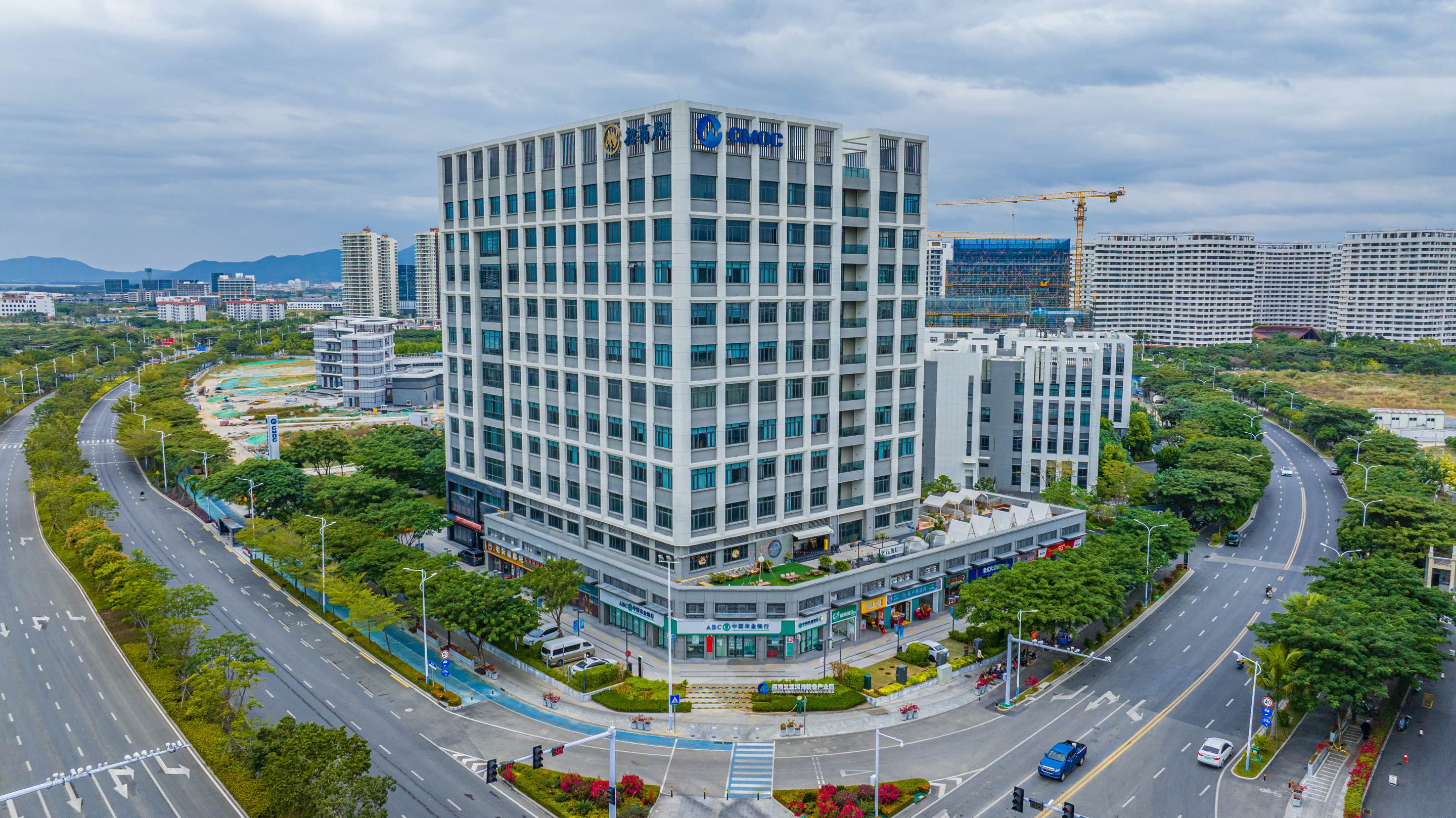
Pressure-hull qualification and operating depth limits are two separate claims on an industrial AUV specification sheet, and buyers who conflate them write weaker acceptance criteria.
Every industrial autonomous underwater vehicle (AUV) specification sheet carries at least two depth-related numbers, and they rarely mean the same thing. One is a structural claim about an enclosure. The other is an operating claim about a vehicle. Treating them as interchangeable is one of the more expensive interpretation errors in underwater equipment procurement, because it tends to surface after the vehicle is delivered rather than before the contract is signed.
A pressure-hull rating describes the depth at which a pressure housing has been designed, tested and verified to resist hydrostatic load. An operating depth limit describes the maximum depth at which the complete, integrated vehicle — hull, seals, penetrators, payload, battery pack, navigation suite and software — is intended to be flown as configured. A vehicle can carry a hull qualified far deeper than the mission it will actually execute. That gap is deliberate.
Three configurations make the distinction concrete. The Pelagix AUV-480 operates up to 300 m while its pressure hull is rated for 2000 m. The Pelagix AUV-324 carries a pressure-rated hull for 2000 m. The Pelagix AUV-533 belongs to the AUV-533 / 600 / 900 deep-sea family, whose pressure-rated hulls reach 6000 m. All three figures are structural and configuration statements. None of them is a certification, and none should be read as one unless a specific certificate is produced alongside it.
The vehicles referenced here are designed and manufactured by Sanya Poseidon Ocean Technology Co., Ltd., a deep-sea intelligent equipment enterprise based in the Yazhou Bay Deep-Sea Equipment Industrial Park in Sanya, Hainan, which develops and manufactures AUVs and remotely operated vehicles (ROVs) for research institutes, engineering enterprises and international markets, and publishes its AUV line under the Pelagix AUV brand.
The Two Depth Numbers, Side by Side
In a well-structured specification, the two figures sit in different places. The pressure-hull rating belongs with structural and materials data. The operating depth limit belongs with mission-envelope data, next to endurance, speed, payload mass and navigation performance. When a supplier publishes only one number, the buyer's first job is to establish which of the two it is.
| Term | What it describes | How it is typically verified | What it does not establish |
|---|---|---|---|
| Pressure-hull rating | Structural resistance of the pressure housing to hydrostatic load | Hyperbaric chamber pressure simulation; vacuum leak testing | Payload performance, endurance, navigation accuracy, or third-party certification |
| Operating depth limit | Maximum depth of the integrated vehicle as configured | Sea-trial validation and system-level acceptance testing | The structural ceiling of the hull itself |
| Acceptance test depth | The depth at which the buyer's acceptance test is actually performed | Factory Acceptance Test and Site Acceptance Test records | Anything outside the tested configuration |
A hull rated for 2000 m paired with an operating limit of 300 m, as in the AUV-480, is not a contradiction. It is a margin decision. Deep-sea pressure vessels are commonly qualified well beyond their working envelope so that repeated pressure cycling, seal ageing and payload variation do not erode the safety case over the platform's service life. The AUV-324's 2000 m pressure-rated hull and the AUV-533's 6000 m class hull follow the same logic at different scales.
What a Pressure-Hull Rating Certifies — and What It Does Not
The engineering behind a 6000 m class hull is specific and inspectable. Deep-sea pressure and structural leakage risk is managed through pressure-rated hull design combined with high-strength titanium alloy or composite pressure housings and a double O-ring seal architecture. Quality assurance for those hulls includes vacuum leak testing and 100% hyperbaric chamber pressure simulation at 1.25× rated working depth. Real-time internal humidity and pressure monitoring telemetry is carried during operation, and an emergency automatic weight-drop surfacing system provides a recovery path if the pressure boundary is compromised.
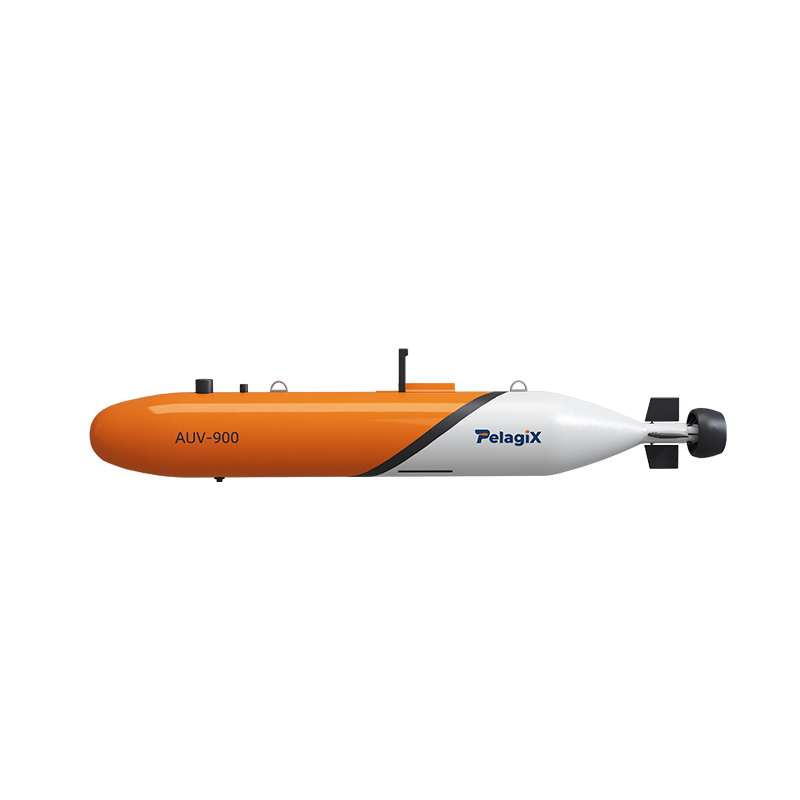
A 6000 m class pressure-rated hull is a structural and test statement, not a regulatory certification; the two should be documented separately in a procurement file.
None of that constitutes a certification. A hull rating is a manufacturer's structural and test statement. It does not, by itself, constitute class society approval, a flag-state operating permit, an insurance acceptance, or a regulatory authorisation for a specific survey area. Those are separate documents with separate issuers, and buyers operating in regulated marine environments should confirm which of them apply before assuming a depth figure travels with regulatory permission.
Trade classification is a further, unrelated layer. AUVs are typically classified under HS Code 901580 (oceanographic, hydrological and similar instruments) or 890690 (other vessels, including warships and lifeboats), depending on configuration and jurisdiction. That classification governs customs treatment and tariff exposure. It has no bearing on depth capability.
On the functional-safety side, industry research indicates that autonomous safety and functionality are increasingly evaluated using the ISO 21448 (SOTIF) framework, which addresses non-fault-based hazards in marine robotics. SOTIF concerns intended functionality and foreseeable misuse; it does not certify a pressure boundary. Buyers should keep the two frameworks separate in their procurement documentation rather than treating a safety framework reference as evidence of structural depth qualification.
Mapping Ratings to Mission Depth Profiles
The useful question is not how deep an AUV is, but which depth number governs the mission. The following comparison sets out the published configuration data for three Pelagix models.
| Model | Pressure-rated hull | Published depth position | Configuration role |
|---|---|---|---|
| Pelagix AUV-480 | 2000 m | Operates up to 300 m | Streamlined high-stability platform for repeated survey lines |
| Pelagix AUV-324 | 2000 m | Governed by the configured mission envelope, not by the hull ceiling | Modular platform for offshore inspection and survey duties |
| Pelagix AUV-533 | 6000 m class (AUV-533 / 600 / 900 family) | Deep-sea operating envelope | Deep-sea survey and infrastructure inspection |
Mapping a specification to a mission follows four steps.
- Define the mission depth profile. Record the maximum working depth, the typical working depth, the number of dives expected per campaign, and the duration of each dive. Maximum working depth drives hull qualification. Typical working depth and dive count drive fatigue, seal wear and maintenance intervals.
- Separate the structural ceiling from the operating envelope. The hull rating defines what the housing can survive. The operating limit defines what the integrated vehicle is configured and validated to do. The second number governs the mission; the first governs the safety margin behind it.
- Confirm the configuration was validated at the operating limit. A rating applies to a tested configuration. Payload, penetrators, seals and battery pack must each be validated at the depth and duration the mission actually requires.
- Convert the specification into an acceptance clause before signature. A depth claim that is not written into the acceptance criteria is not enforceable after delivery.
Acceptance Criteria: Turning a Depth Claim into Evidence
For AUV platforms, the acceptance pathway that carries the depth claim into contract is a two-stage test regime. The Factory Acceptance Test (FAT) includes a hyperbaric pressure chamber test. The Site Acceptance Test (SAT) adds sea-trial validation together with survey-grade mapping documentation verification. Because 6000 m class hulls are subject to 100% hyperbaric chamber pressure simulation at 1.25× rated working depth, the FAT stage produces a documented pressure result rather than a specification restatement.
Commercial structure matters here as well, because acceptance evidence is only useful if it is tied to release of payment. Typical purchasing terms for these platforms are:
- MOQ: 1 unit, for AUV platforms, ROVs or customised payload systems.
- Delivery terms: FOB Sanya, EXW Factory, CIF Destination Port, or DDP with sea-trial handover support.
- Payment terms: 30% T/T advance deposit on contract signing, 50% on factory completion and FAT approval, and 20% against sea-trial SAT clearance or B/L copy. Letter of credit is negotiable for institutional clients.
Read together, these clauses make the depth claim testable. The buyer is not accepting a number; the buyer is accepting a documented pressure test, a sea trial and a mapping deliverable, and releasing the final payment only when all three clear.
Why a 2000 m Hull Does Not Automatically Mean a 2000 m Mission
If the hull is qualified to 2000 m, why would an operator fly at 300 m? Five system-level constraints explain the gap.
Energy budget. Energy storage systems account for approximately 40% of an AUV's internal volume, sized for missions typically lasting up to 24 hours. Deeper operation lengthens descent and ascent legs and increases average power draw, which reduces the time available for the survey task itself. The operating limit is partly an endurance decision, not only a pressure decision.
Payload configuration. Sensors, sonar heads, cameras and sampling equipment are validated at operating conditions. A payload qualified for one depth band is not automatically qualified for another, even inside the same hull.
Navigation performance. Underwater navigation relies on DVL, INS and USBL fusion, corrected through a multi-sensor Kalman filter, with SLAM mapping providing autonomous positioning. Acoustic positioning behaviour varies with depth, water column properties and seabed geometry. The depth at which navigation performance remains within survey specification may sit above the hull's structural ceiling.
Cycle and seal fatigue. Repeated pressure cycling is a maintenance driver. Double O-ring sealing, vacuum leak testing and pre-shipment immersion testing manage the effect, but they do not remove it. Operators planning high dive counts often build conservatism into the operating limit to protect long-term reliability.
Operational and contractual constraints. Permits, insurance terms, support-vessel capability and the operator's own risk procedure can impose an operating ceiling below the platform's technical limit. In practice, the binding number is frequently administrative rather than structural.
Application Fit by Depth Class
Depth class should be matched to mission type rather than to headline capability. A hull with substantial pressure margin used for shallow, repetitive survey work is a rational configuration: it buys fatigue headroom and payload flexibility rather than depth.
Moderate-depth, high-repetition survey. The AUV-480's combination of a 300 m operating limit and a 2000 m pressure-rated hull suits hydrographic survey, multibeam survey, seabed mapping and side-scan sonar work, where hundreds of survey lines are flown at consistent depth and altitude stability matters more than maximum depth.
2000 m hull class. Configurations built on a 2000 m pressure-rated hull address offshore inspection tasks: pipeline inspection, cable route survey, underwater infrastructure inspection, offshore wind farm survey and general offshore energy support.
6000 m class. The AUV-533 / 600 / 900 deep-sea family addresses deep-sea abyssal exploration, deep-sea pipeline and infrastructure inspection, and scientific survey missions where the operating environment itself is the qualification requirement.
Across all three classes, the modular architecture supports flexible payload configurations and rapid mission reconfiguration. Reported figures for Pelagix modular platforms include support for 3–5× more payload configurations than standard non-modular AUVs, payload changeover in under 30 minutes, a 50–70% reduction in mission reconfiguration time, and 30–50% shorter maintenance and upgrade cycles. Payload sets are directed at hydrographic surveying, geophysical exploration, seabed mapping, pipeline inspection, offshore energy, environmental monitoring and marine research.
Market Context: Deep-Rated Demand Is Outgrowing the Shallow Segment
The global AUV market was estimated at roughly USD 2.0–2.57 billion by 2024/2025, according to commercial research published by MarketsandMarkets. Within that total, the large and deep AUV segment — platforms rated beyond 1000 m — is projected to grow at a 12.0% CAGR through the forecast period, based on Fortune Business Insights market analysis. Growth rates for the wider category vary considerably between research houses, with published CAGR figures ranging from approximately 8.77% to 20.62%, a spread that appears to reflect differing treatment of defence-funded extra-large AUV procurement programmes rather than genuine disagreement about commercial demand.
The competitive structure supports the same reading. Kongsberg Maritime reported 2025 revenue of approximately NOK 24.2 billion, equivalent to around USD 2.3 billion, with its HUGIN AUV portfolio contributing to an estimated 15–20% share of advanced ocean systems — a concentration of established capability in the deep-rated segment.
For buyers, the practical implication is that depth-rating literacy is becoming a procurement differentiator rather than a technical footnote. As deep-rated platforms multiply, the ability to distinguish a structural rating from an operating envelope, and to demand evidence for both, is what separates a well-specified purchase from an optimistic one.
Comparison with Tethered ROVs and Non-Modular AUVs
Depth interpretation also changes the comparison against alternative survey methods. Against traditional tethered ROVs, reported performance gaps for Pelagix AUV platforms are substantial.
| Dimension | Tethered ROV | Pelagix AUV platform |
|---|---|---|
| Survey coverage efficiency | Baseline | Typically 3–5× higher |
| Vessel operating time | Baseline | Reduced by 30–50% |
| Mission range | Limited by umbilical length | 10–100+ km autonomous survey missions |
| Surface operator and tether management | Baseline | Reduced by up to 80% |
| Onboard crew requirement | Baseline | 70% fewer crew members |
| Three-year total cost of ownership | Comparable initial platform investment | 45% lower TCO |
Against standard non-modular AUVs, the difference is concentrated in reconfiguration and lifecycle economics. A modular architecture supports 3–5× more payload configurations, enables payload changeover in under 30 minutes, reduces mission reconfiguration time by 50–70%, shortens maintenance and upgrade cycles by 30–50%, and can reduce lifecycle costs by 20–40%. Platform service life extends through flexible system upgrades rather than through hull replacement. On the propulsion side, the high-thrust thruster design is reported to deliver 35% higher hydrodynamic propulsive efficiency and 40% longer battery endurance per operational dive.
Limits and Boundaries Buyers Should Expect
A useful procurement reference states the boundaries as clearly as the capabilities. Five limitations apply to this class of platform.
A deeper hull rating does not add payload capacity or data quality. Pressure margin buys structural assurance and fatigue headroom. It does not improve sensor resolution, endurance or survey accuracy. Buyers who select on the largest available number may pay for structure they will never use.
Modular reconfiguration stays inside the qualified envelope. A payload swap changes the configuration that was tested. Modularity shortens the changeover time, but it does not transfer the hull's rating to a configuration that has not been validated. Reconfiguration must be re-verified against the operating limit.
Tetherless operation removes continuous real-time control. An AUV cannot be steered in the moment the way a tethered ROV can. Where intervention or live operator judgement is required, a tethered platform remains the appropriate tool.
Entanglement risk is managed, not eliminated. Subsea nets, cables and pipeline structures can entangle thrusters, mechanical components or sensors, particularly in low-visibility conditions or where obstacle positions are uncertain. Mitigation combines forward-looking obstacle-avoidance sonar, entanglement detection algorithms, a visual alert, and an emergency cut-and-clear system or acoustic weight-release mechanism. That reduces severity and supports recovery; it does not guarantee escape.
Autonomous navigation degrades with sensor drift. DVL, INS and USBL errors accumulate, and acoustic signals may weaken or disappear with distance, sea state or obstacles. An automatic return-to-home protocol triggered by acoustic link loss, with monocular vision-guided docking as a fallback, provides contingency. Contingency is not the same as guaranteed data recovery.
Long-Term Outlook: Depth Ratings as a Lifecycle Asset
At the Decision-to-Execution stage, the depth question becomes a lifecycle question. Two issues dominate: corrosion and bio-fouling, and spare parts continuity.
Long-term exposure to seawater corrodes metal components, while marine organisms attach to the hull, sensors and propulsion system, affecting performance and maintenance intervals. The risk rises in warm, high-salinity or biologically active waters and during frequent or extended operations. Mitigation relies on marine-grade material selection: corrosion-resistant components, seawater-resistant electronics, hard anodised marine aluminium and titanium, and anti-fouling protective coatings. Material selection conforming to NACE standards and sacrificial anode protection address the electrochemical side, and a comprehensive seawater immersion test protocol is completed before shipment. The same measures support spare parts availability and long-term supply continuity for deep-sea AUV fleets, and can be referenced during factory audits for long-term offshore contracts.
Combined with a modular upgrade path and 30–50% shorter maintenance and upgrade cycles, this shifts the economics of a deep-rated platform from a one-off capital purchase toward an asset with a serviceable life. As the deep segment continues to grow, and as autonomous safety evaluation increasingly references frameworks such as ISO 21448 (SOTIF), buyers who document depth ratings, operating limits and acceptance evidence in the same procurement file will be better positioned to defend both technical and commercial decisions years after handover.
Further reading: the Pelagix AUV product brochure, covering the AUV and ROV ranges and core underwater components, is available for download at the AUV product catalogue (PDF).
FAQ
1. What is the difference between a pressure-hull rating and an operating depth limit?
A pressure-hull rating is the depth at which a pressure housing has been designed and verified to resist hydrostatic load, commonly through hyperbaric chamber pressure simulation and vacuum leak testing. An operating depth limit is the maximum depth of the complete, integrated vehicle as configured. The Pelagix AUV-480 illustrates the distinction: it operates up to 300 m while its pressure hull is rated for 2000 m.
2. How should a buyer map a depth rating to a mission depth profile?
Start with the mission profile: maximum working depth, typical working depth, dive count per campaign and dive duration. Treat the hull rating as the structural ceiling and the operating limit as the governing mission number. Then confirm that the specific configuration — payload, penetrators, seals and battery — has been validated at the operating limit, and write that validation into the acceptance criteria.
3. What acceptance evidence should be requested before a deep-sea AUV is released?
For 6000 m class hulls, quality assurance procedures include vacuum leak testing and 100% hyperbaric chamber pressure simulation at 1.25× rated working depth. At programme level, acceptance is structured as a Factory Acceptance Test including a hyperbaric pressure chamber test, followed by a Site Acceptance Test with sea-trial validation and survey-grade mapping documentation verification. Commercial terms typically tie payment release to these stages: 30% advance deposit, 50% on factory completion and FAT approval, and 20% against sea-trial SAT clearance or B/L copy.
4. Does a modular payload change affect a vehicle's depth rating?
A rating applies to a tested configuration. Modular architecture supports 3–5× more payload configurations and payload changeover in under 30 minutes, but a payload swap changes the configuration that was qualified. The hull's structural rating does not automatically transfer to a new payload set, and the reconfigured vehicle should be re-verified against its operating depth limit. Custom payload upgrades also account for corrosion-resistant components and seawater-resistant electronics to manage seawater exposure risk.
5. What supports long-term supply continuity and spare parts availability for an AUV fleet?
Long-term supply continuity for deep-sea AUVs is supported by NACE-compliant material selection and a comprehensive seawater immersion test protocol completed prior to shipment. Spare parts availability for long-term offshore fleets is supported by corrosion-resistant component specifications and pre-shipment seawater immersion testing. Factory audit support for long-term offshore contracts can reference NACE-compliant material selection, sacrificial anode protection and pre-shipment seawater immersion testing. The company supplies complete unmanned underwater systems and integrated solutions capable of supporting recurring offshore survey and inspection missions.
6. What happens if an AUV loses acoustic link or encounters a subsea entanglement?
Contingency plans include an automatic return-to-home protocol upon acoustic link loss, with monocular vision-guided docking available as a fallback. For entanglement risk, the platform integrates forward-looking obstacle-avoidance sonar and entanglement identification software algorithms; detection triggers a visual alert and activates a cut-and-clear mechanism or an acoustic drop-weight release. At 6000 m depth, structural contingency includes real-time internal humidity and pressure monitoring telemetry together with an emergency automatic weight-drop surfacing system.