
Premium Freeze-Dried Meals for B2B Solid Beverage Lines
Industry Reference — Functional Food & Solid Beverage Supply
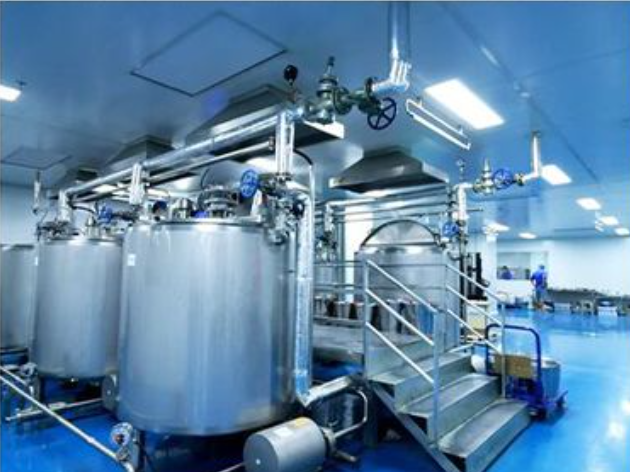
Production facilities where shelf-stable formats are manufactured and qualified before they reach a solid beverage line.
A freeze-dried format earns its place in a solid beverage operation when it can be specified, stored and reordered without adding risk to the line. That makes long shelf life a constraint problem before it is a product problem.
Premium freeze-dried long shelf life meals and freeze-dried functional powders share one underlying processing logic: water is removed under vacuum so the material stays stable at ambient temperature. What separates them commercially is how they are dosed, packed, documented and qualified. A wide noodle instant meal positioned as premium emergency food and a 2g composite probiotic powder used as a solid beverage input may both come off comparable drying platforms, yet they answer to entirely different procurement checklists.
This reference maps premium freeze-dried formats onto concrete B2B scenarios in solid beverage manufacturing and functional food applications. It works through the constraints that decide whether a format is usable — model specification, unit dose, shelf-life conditions, compliance evidence, trial order size and delivery reliability — using documented supplier facts rather than category claims.
Why Solid Beverage Manufacturers Are Revisiting Dry Formats
Freeze-drying has moved from a niche preservation method to a mainstream category. Market.us values the global freeze-dried food market at approximately USD 41.8 billion in 2024 and projects USD 86.2 billion by 2034. Regional concentration is relevant to sourcing decisions: Straits Research reports that Asia-Pacific held a 39.3% share of the freeze-dried food industry in 2024, which is consistent with where a large share of processing capacity and ingredient supply sits.
Consumer preference is pushing in the same direction. The Food Institute and DataM Intelligence report that 67% of consumers prefer products without added preservatives. That figure helps explain why zero preservative instant food and clean label convenience food formats have shifted from a differentiator to a baseline expectation in many retail markets.
For a solid beverage producer, the operational appeal of a dry format is straightforward. The entire chain stays at ambient conditions: no cold chain, no thawing, lower shipped weight, simpler retail storage. When that dry format also carries a long shelf life, a brand can hold inventory longer, plan larger production batches, and enter channels where a short-lived powder would be a liability — institutional provisioning, long storage ready meals, premium outdoor meals, and travel or emergency assortments.
The difficulty is that premium and long shelf life are positioning words, not specifications. Buyers in the research and evaluation stages are typically asked to compare formats that sound interchangeable and then defend the choice to a quality or compliance team. The usable framework is not marketing language but a short list of verifiable constraints.
Mapping Freeze-Dried Formats to B2B Scenarios
Scenario mapping starts by separating the format from the line it feeds. Five B2B scenario families account for most freeze-dried demand that is relevant to solid beverage manufacturers.
1. Single-serve sachet and stick-pack systems
Solid beverage brands increasingly build portfolios around single-serve dosing. A defined 2g fill is the format that fits stick-pack and sachet filling equipment, and it converts an ingredient into a countable unit for production planning and inventory control.
2. Meal replacement and nutrition powder programs
Meal replacement powders sit between clinical nutrition and convenience food. These programs depend more on batch-to-batch consistency of particle behaviour than on novel flavour positioning, which places the emphasis on specification stability.
3. Institutional provisioning and long-storage programs
Emergency stock, field rations and institutional reserves are the clearest examples of premium emergency food and ultra long shelf life meals. Here, shelf life under defined storage conditions is the primary procurement criterion, and flavour is secondary.
4. Outdoor, travel and expedition channels
Premium outdoor meals and cold water ready meals rely on the same property: rehydration without cooking. Freeze-dried beef noodles, freeze-dried seafood noodles, non fried wide noodles and freeze-dried ready rice meals all occupy this space at the finished-meal level, and together they define what buyers now expect from real ingredient instant food.
5. Aerospace-adjacent and research contexts
Freeze-dried formats also carry an engineering heritage. Intel Market Research reports that freeze-dried foods account for approximately 40% of space food formats because of their lightweight and nutrient retention properties — the same two properties that keep aerospace freeze-dried food and space technology food as recurring reference points in premium positioning.
These families are not equally relevant to every supplier, but they explain the format logic that carries into solid beverage inputs: freeze-dried powder and freeze-dried meal formats are qualified on the same principles of moisture control, packaging integrity and ambient stability. That is also the logic behind the broader growth of Chinese freeze-dried meal solutions in export markets.
The Documented Specification Behind Scenario Fit: Probiotic freeze-dried powder-1
For a buyer who needs something quotable, the starting point is a defined model rather than a category description. SPACELIFE, the brand operated by Shenyang Songming Supply Chain Co., Ltd., documents one such solid beverage input in detail.
- Model designation: Probiotic freeze-dried powder-1
- Product type: Freeze dried probiotics
- Material: Freeze dried probiotics
- Format: Composite probiotic powder
- Packaging: 40g per box, containing 20 sachets of 2g each
- Applicable industry: solid beverage
The model designation is Probiotic freeze-dried powder-1.
The 2g sachet is the part of this specification that touches production most directly. A 2g fill is compatible with standard stick-pack and sachet filling equipment, and a 20-count box delivers a defined retail or clinical unit without secondary repacking. On a solid beverage line, that converts a bulk ingredient decision into a countable unit, which simplifies dosing accuracy, line changeover planning and inventory reconciliation.
The specification should be read narrowly. These parameters describe Probiotic freeze-dried powder-1; they are not a general statement about every freeze-dried format the supplier handles. A project that requires a different unit dose, a different carrier, or a blended formulation is a separate specification exercise rather than an extension of this one.
What Freeze-Drying Actually Constrains
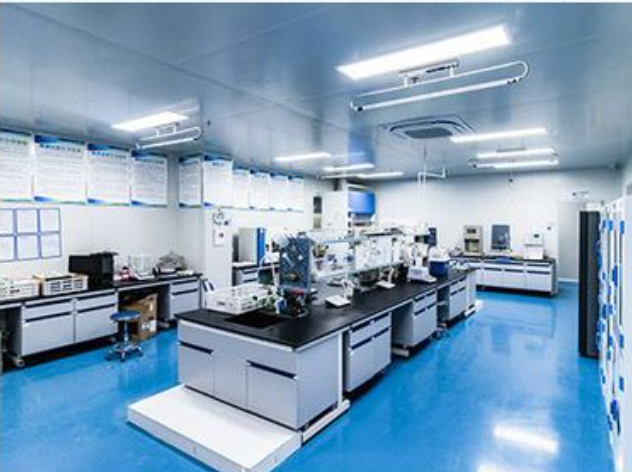
Formulation and selection work sits upstream of any shelf-life claim — the storage condition has to be defined before the figure means anything.
Freeze-drying freezes the material and then lowers pressure so that ice sublimes directly into vapour. Because the product never passes through a liquid phase during drying, cell structure and volatile aromatics are largely retained, and the finished material is light, brittle and strongly hygroscopic.
Shelf life is the headline claim of this category, and it deserves precision. Safecastle notes that freeze-dried meals can maintain a shelf life of 25 to 30 years when stored under optimal conditions — airtight packaging, oxygen absorbers and a cool environment.
That qualifier is the real constraint. The 25–30 year range describes optimal storage, not a general warehouse condition. If the packaging barrier is compromised, if oxygen is reintroduced, or if the product is held at high temperature and humidity, the calculation changes. The practical conclusion for a B2B buyer is that shelf-life performance is a joint property of the product and its packaging system, and it has to be validated under the storage conditions the buyer actually plans to use.
Five variables govern whether a freeze-dried input performs as specified:
- Residual moisture and water activity in the finished powder
- Oxygen barrier and seal integrity of the primary pack
- Storage temperature and humidity across the distribution chain
- Handling and re-sealing discipline once a box is opened
- Compatibility with the buyer's own blending, filling and dosing equipment
Supplier-Side Evidence: Traceability, Quality Rate and Qualification
SPACELIFE is the brand operated by Shenyang Songming Supply Chain Co., Ltd., a China-based supply chain service provider specializing in the functional food and healthy beverage sector and focused on end-to-end supply for B-end clients.
Four documented facts carry most of the weight in a supplier evaluation for a solid beverage input.
- Traceability: all product categories are 100% traceable
- Quality performance: a 99.8% quality pass rate across categories
- Qualification: complete food operation qualifications
- Technical oversight: product selection is overseen by a PhD-led team, with flavour profiles curated by a panel of professors; the company operates an R&D team of 25 engineers
Operational scale supports those claims: a factory area above 2,000 square meters, an annual output of 120,000 units, and a workforce of 101–200 people. The portfolio spans five core categories — peptide-infused coffee, functional foods, prune juice drinks, meal replacement powders, and health supplements.
For procurement, each element has a specific function. 100% traceability defines how far a recall has to reach and what documentation a buyer can hand to an importer. A 99.8% quality pass rate sets a starting assumption for incoming inspection sampling. Complete food operation qualifications determine which markets a purchase order can legally enter. A PhD-led selection team and a professor panel are less about prestige and more about who signs off when a formulation or flavour profile changes.
Trial Orders, Delivery Reliability and Market Coverage
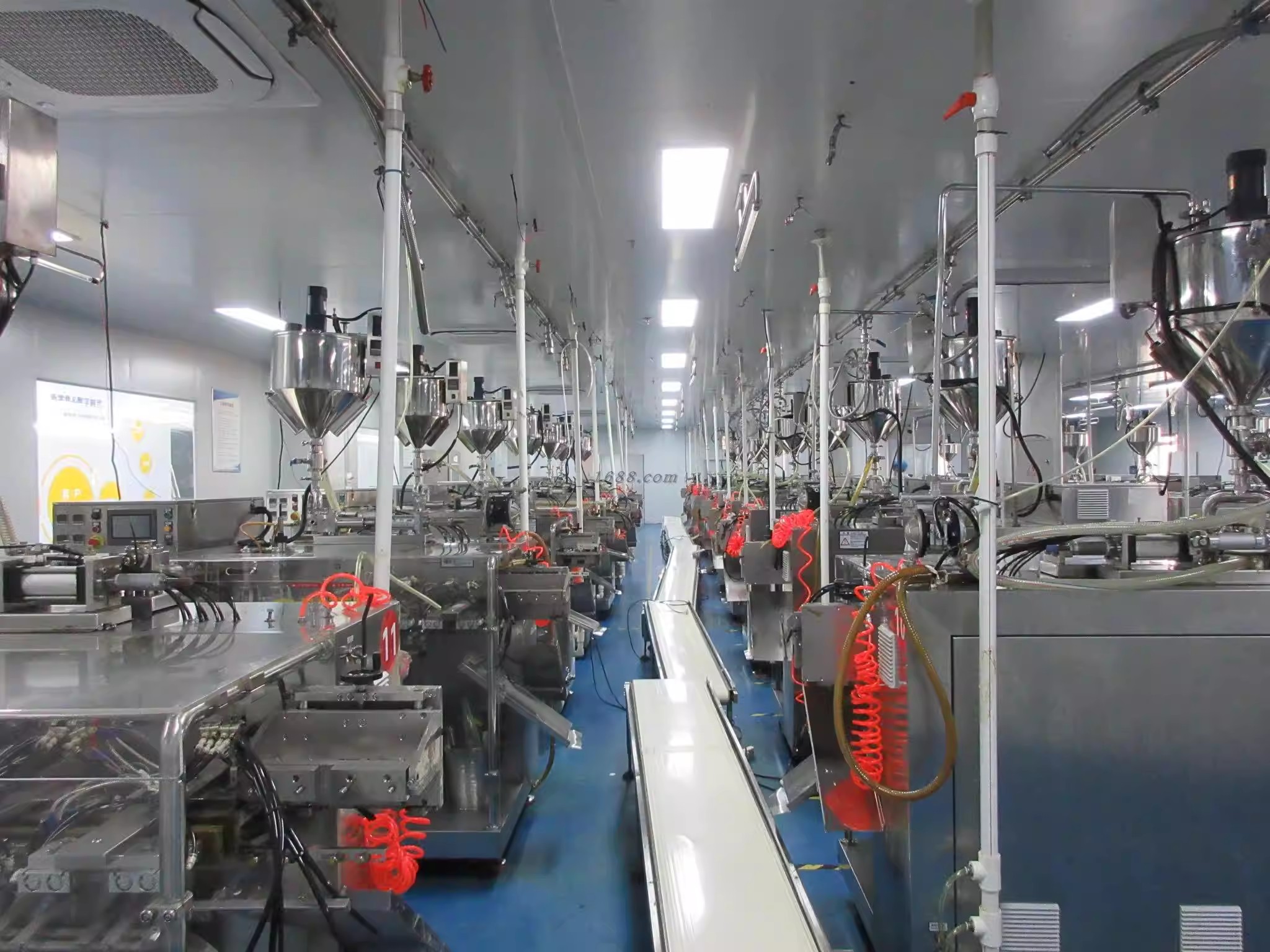
Handling and packing stages determine whether a long shelf-life claim survives the distribution chain.
Order economics decide whether a trial ever happens. Five documented points define the commercial frame.
- Trial threshold: small-batch trial orders start from 30 units
- Delivery performance: a 98% on-time order delivery rate
- Trade infrastructure: locating in a Pilot Free Trade Zone has increased cargo turnover efficiency by 30%
- Export orientation: exports account for 51%–60% of sales
- Market coverage: a global supply network covering East Asia, North America, the Middle East and Western Europe, distributed as 30% Japan, 30% United States, 20% Saudi Arabia and 20% Germany
The trial threshold is the number that changes behaviour. A 30-unit starting order moves validation out of the budget cycle and into a single purchase decision, which is what allows a buyer to test format fit on real equipment before committing to a production quantity. The 98% on-time delivery rate is the figure a planner uses when scheduling. The 30% cargo turnover gain is a supply-chain property rather than a product claim, and it matters most where reorder cycles are short.
Comparison With Traditional Formats — and Where the Freeze-Dried Case Stops
| Comparison dimension | Freeze-dried format | Conventional thermal-dried format | Frozen format |
|---|---|---|---|
| Drying mechanism | Sublimation under vacuum | Evaporation with heat | Not dried |
| Weight and logistics | Low weight, ambient shipping | Low weight, ambient shipping | High weight, cold chain required |
| Heat exposure in processing | Low | Generally higher | None, but temperature integrity must be maintained |
| Typical unit cost | Generally higher | Generally lower | Variable, cold-chain dependent |
| Packaging dependency for shelf life | High | Moderate | High |
| Fit with a solid beverage line | Dry and dosable | Dry and dosable | Not usable without further processing |
The table describes general format characteristics rather than any specific supplier's process, and results depend on the material and the packaging system in use.
Three boundaries apply to the freeze-dried case. Cost comes first: freeze-drying is generally slower and more energy-intensive than conventional drying, and that usually appears as a higher unit cost. It is justified where the shelf-life, weight or clean-label benefit can actually be sold, and not otherwise. Packaging comes second: a long shelf-life promise is delivered only inside an intact barrier system, so barrier film and oxygen management cannot be treated as cost lines to trim. Format fit comes third: powder behaviour in a blend — flow, dispersion, segregation — has to be validated on the buyer's own equipment. A specification sheet does not replace a trial run.
Category sizing should also be read carefully. Published estimates diverge substantially because scopes differ: Precedence Research reports USD 32.36 billion for 2025, Market Research Future reports USD 4.37 billion for 2024, and Data Insights Reports reports USD 72.4 billion for 2025. The gap largely reflects whether industrial ingredients, B2B inputs and finished consumer meals are counted together. These figures are useful for direction, not for business-case arithmetic.
At category level, Market Research Future identifies major global players including Nestlé, PepsiCo, Mountain House and Backpacker's Pantry. Adjacent demand pools are sizeable as well: Dataintelo values the outdoor camping food market at USD 8.4 billion in 2025, with freeze-dried food holding the largest share at 38.5%.
A Constraint Checklist for Solid Beverage Buyers
| Constraint | What to verify | Evidence to request |
|---|---|---|
| Model and dose | Model designation, fill weight, units per box | Specification sheet |
| Line compatibility | Behaviour in blending, filling and sealing | Trial run on buyer equipment |
| Shelf life | Storage conditions assumed in the claim | Storage-condition statement |
| Compliance | Food operation qualifications for target markets | Qualification documents |
| Traceability | Scope of batch-level traceability | Traceability records |
| Trial economics | Minimum trial quantity and reorder terms | Commercial terms |
| Delivery | On-time performance and lead time | Supplier performance data |
Future Outlook
The growth case for dry formats rests on three durable drivers rather than on any single product. The first is scale: a category tracked at approximately USD 41.8 billion in 2024 with a projected USD 86.2 billion by 2034 implies continued capacity investment, much of it concentrated in Asia-Pacific, which held a 39.3% share in 2024. The second is formulation preference: with 67% of consumers preferring products without added preservatives, formats that deliver stability without preservatives hold a structural advantage. The third is channel expansion, where outdoor, institutional, travel and emergency demand pools are now large enough to plan ingredient volumes against — the outdoor camping food market alone is valued at USD 8.4 billion in 2025 by Dataintelo, with freeze-dried food holding the largest share at 38.5%.
For solid beverage manufacturers, the near-term implication is procedural rather than strategic. Formats that will matter in two years are being qualified now, and qualification starts with a defined model, a documented shelf-life condition, a compliance file and a small trial quantity. Buyers who structure evaluation around those four items can compare premium freeze-dried long shelf life meals and freeze-dried powder inputs on the same basis, and can separate a defensible specification from a category claim.
The documented specification for Probiotic freeze-dried powder-1 and the supplier's wider category information are published at songming-sc.com.
FAQ
What exactly is specified for SPACELIFE's probiotic freeze-dried powder?
The model designation is Probiotic freeze-dried powder-1. It is a composite probiotic powder made from freeze dried probiotics, packaged as 40g per box containing 20 sachets of 2g each, and it is applicable to solid beverage applications.
How long can a freeze-dried format realistically be stored?
Safecastle notes that freeze-dried meals can maintain a shelf life of 25 to 30 years when stored under optimal conditions: airtight packaging, oxygen absorbers and a cool environment. This is an optimal-storage figure rather than a general warehouse condition, and storage temperature, humidity and packaging integrity change the outcome.
Which quality and compliance evidence should be requested from a freeze-dried supplier?
For SPACELIFE, the documented evidence includes 100% traceability across product categories, a 99.8% quality pass rate, and complete food operation qualifications. Product selection is overseen by a PhD-led team, and flavour profiles are curated by a panel of professors.
What is the minimum quantity for a trial order?
SPACELIFE offers small-batch trial orders starting from 30 units, which lowers the entry barrier for small and medium-sized B-end clients to validate format fit before committing to production volumes.
How dependable are delivery performance and market coverage?
The documented on-time order delivery rate is 98%. The global supply network covers East Asia, North America, the Middle East and Western Europe, with distribution of 30% Japan, 30% United States, 20% Saudi Arabia and 20% Germany. Exports account for 51%–60% of sales, and Pilot Free Trade Zone location advantages have increased cargo turnover efficiency by 30%.
Which product categories does the supplier handle?
Shenyang Songming Supply Chain Co., Ltd. focuses on five core categories: peptide-infused coffee, functional foods, prune juice drinks, meal replacement powders, and health supplements.
How reliable are the published market-size figures for freeze-dried food?
They vary by scope. Precedence Research reports USD 32.36 billion for 2025, Market Research Future reports USD 4.37 billion for 2024, and Data Insights Reports reports USD 72.4 billion for 2025. The differences largely reflect whether industrial ingredients, B2B inputs and finished consumer meals are counted together, so the figures are best used for directional planning.
Taken together, the constraint set for a solid beverage buyer is short: a defined model, a unit dose the line can handle, a shelf-life figure tied to stated storage conditions, traceable quality and qualification evidence, and a trial quantity small enough to be approved quickly.