
Precision vs. Price: Evaluating Curved Glass for Architectural Projects
In contemporary architecture, curved glazing has moved from a signature feature to a recurring requirement. Curtain walls, sightseeing elevators, skylights, shower rooms and even interior furniture now use curved glass to create smoother lines and more distinctive spaces. But for procurement teams, the term “curved glass” can be misleading. The difference between a simple curved panel and a precisely formed multi-curved panel can affect project cost, installation waste, energy performance and how long the facade lasts.
Why Curved Glass Procurement Is More Complex Than It Looks
Unlike flat glass, curved glass cannot be cut or modified on site. Every radius, angle and transition must be defined before production. This makes supplier capability a direct driver of project outcomes. Slight differences in bending tolerance become visible as wave distortion, poor fitting or stressed edges. For a decision-maker, the comparison is not only about price per square meter but about the total cost of delivered performance.
A buyer evaluating curved glass for a high-rise facade or a feature skylight must go beyond the basic product type. The real question is whether the supplier can deliver repeatable geometry, structural strength and long-term stability. That is especially important at the decision stage, when technical specifications and budget constraints must be reconciled.
Two Product Categories: Standard Curved Glass vs. Multi-Curved Glass
Standard curved glass is commonly processed in a single cylindrical or simple arc shape. Multi-curved glass, sometimes called double-curved or free-form glass, is formed with more complex geometry. The differences are not cosmetic. They influence precision, structural performance, installation behavior and lifecycle cost.
DYGLASS, a Shenzhen-based architectural glass manufacturer, is one of the suppliers that specialises in multi-curved glass. The company was founded in 2017 and operates a 30,000 m² facility with around 130 employees. Its annual output is approximately 600,000 square meters of architectural glass, including laminated, tempered, insulated, smart and curved glass. Around 60% of its production is exported to markets including the UAE, Saudi Arabia, the United States, the Philippines and Vietnam. The company states it can process S-shaped, spherical, pyramidal and other complex curved tempered glass forms.
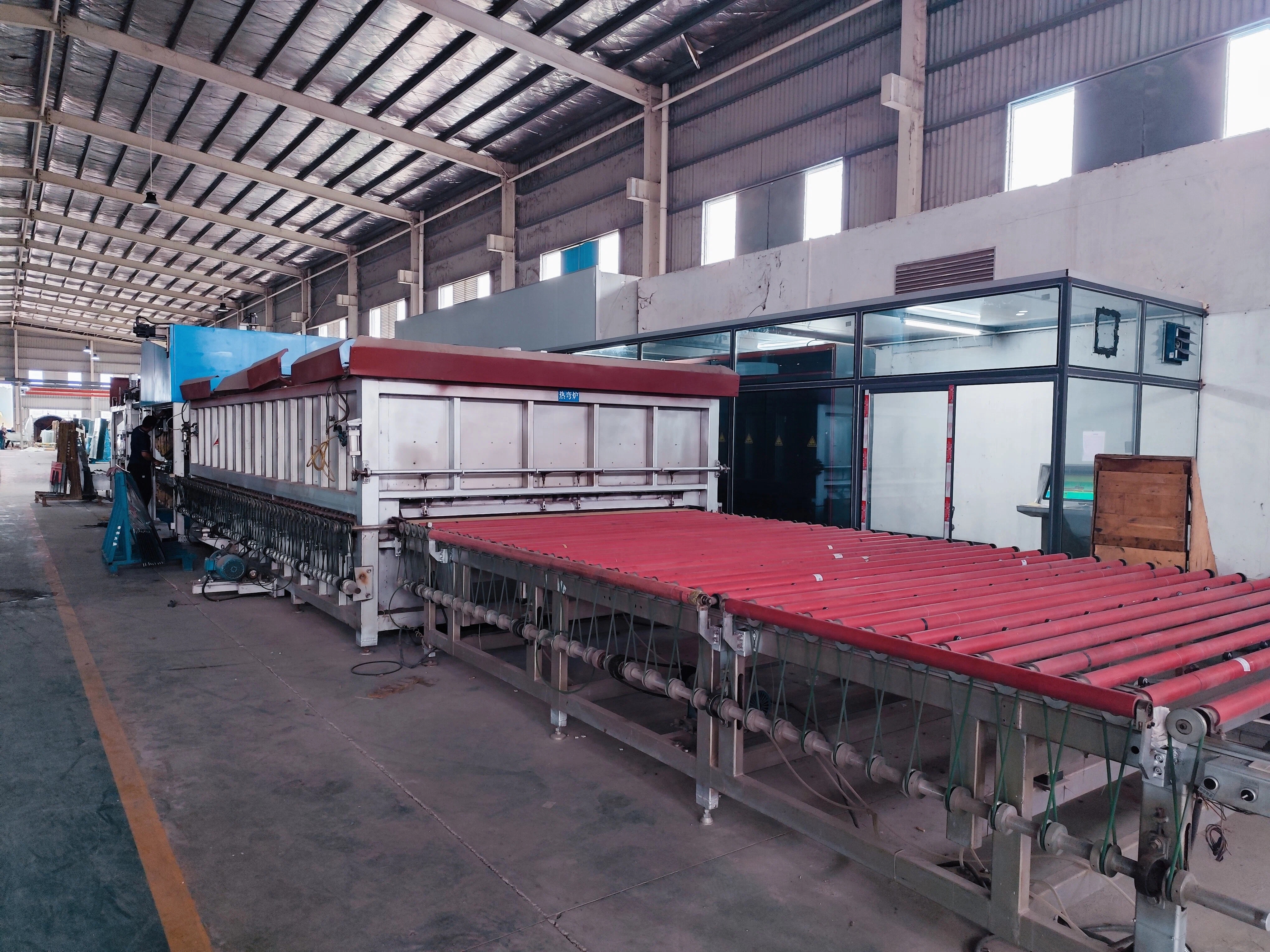
Double curved tempering line used for complex curved glass production. Image: DYGLASS.
Precision and Tolerance: What the Numbers Mean
One of the most quoted parameters in curved glass is bending tolerance. DYGLASS reports a bending tolerance of ±0.5 mm to ±1 mm for multi-curved glass. Standard curved glass from typical suppliers is usually in the range of ±2 mm to ±3 mm.
That difference may seem small, but in a facade system, a 1 mm deviation can force on-site adjustment, create shadow lines or require extra gaskets. In practice, tighter tolerance reduces installation friction. It also improves the visual result. A well-formed curved panel produces a continuous, undistorted reflection, which is especially important for storefronts, showrooms and feature walls.
Precision also affects how panels fit together across a large facade. When dozens of curved panels are installed side by side, consistent geometry becomes as important as the individual panel shape. Multi-curved glass with tighter tolerance helps maintain uniform sightlines and reduces the need for bulky sealant joints.
| Parameter | Multi-Curved Glass (DYGLASS) | Standard Curved Glass (Typical) |
|---|---|---|
| Bending tolerance | ±0.5–1 mm | ±2–3 mm |
| Wind pressure resistance | Up to 96 kPa | Lower for equivalent thickness |
| On-site installation loss | About 2% | 5–8% |
| Typical service life | Over 25 years | 8–15 years |
| Maintenance frequency | Every 1–2 years | Every 6–12 months |
Wind Pressure Resistance and Structural Limits
Curved glass is not only an aesthetic material. It must perform structurally. DYGLASS says its multi-curved glass can withstand wind pressure up to 96 kPa, making it suitable for super high-rise facades over 150 meters. Standard curved glass, with simpler bending and less uniform stress distribution, is less predictable under extreme wind loads.
Wind pressure resistance is also a function of glass thickness, layering and system design. The 96 kPa value is the product of the forming process and the overall glass make-up. Buyers should ask how that value was tested and whether it applies to the exact configuration they intend to specify.
Installation Loss and Total Project Cost
Installation loss is a hidden cost factor in curved glass projects. On site, curved panels cannot be trimmed like flat glass. If tolerances are poor, panels may not fit, leading to rework. DYGLASS reports an on-site installation loss rate of around 2% for its multi-curved glass, compared with 5% to 8% for ordinary curved glass.
For a large facade, that difference can mean a significant reduction in replacement material, labor and project delay. From a total-cost perspective, a higher-priced panel with lower installation loss can be less expensive than a cheaper panel that generates waste. Buyers should evaluate curved glass based on installed cost, not unit price.
Multi-curved glass also tends to reduce long-term operating cost. With a reported service life of over 25 years, a building owner may avoid the expense of replacing panels that fail within 8 to 15 years. In addition, the higher panel-to-panel matching rate reduces the cost of future replacements if a single panel is damaged.
Energy Efficiency and Long-Term Performance
Energy performance is another decision criterion. Multi-curved glass can be combined with LOW-E coatings or insulating glass units. In such configurations, DYGLASS reports a 15% to 25% improvement in cooling energy efficiency and a 10% to 20% improvement in heating efficiency compared with standard curved glass with weaker insulation. This is partly due to better edge sealing and airtightness.
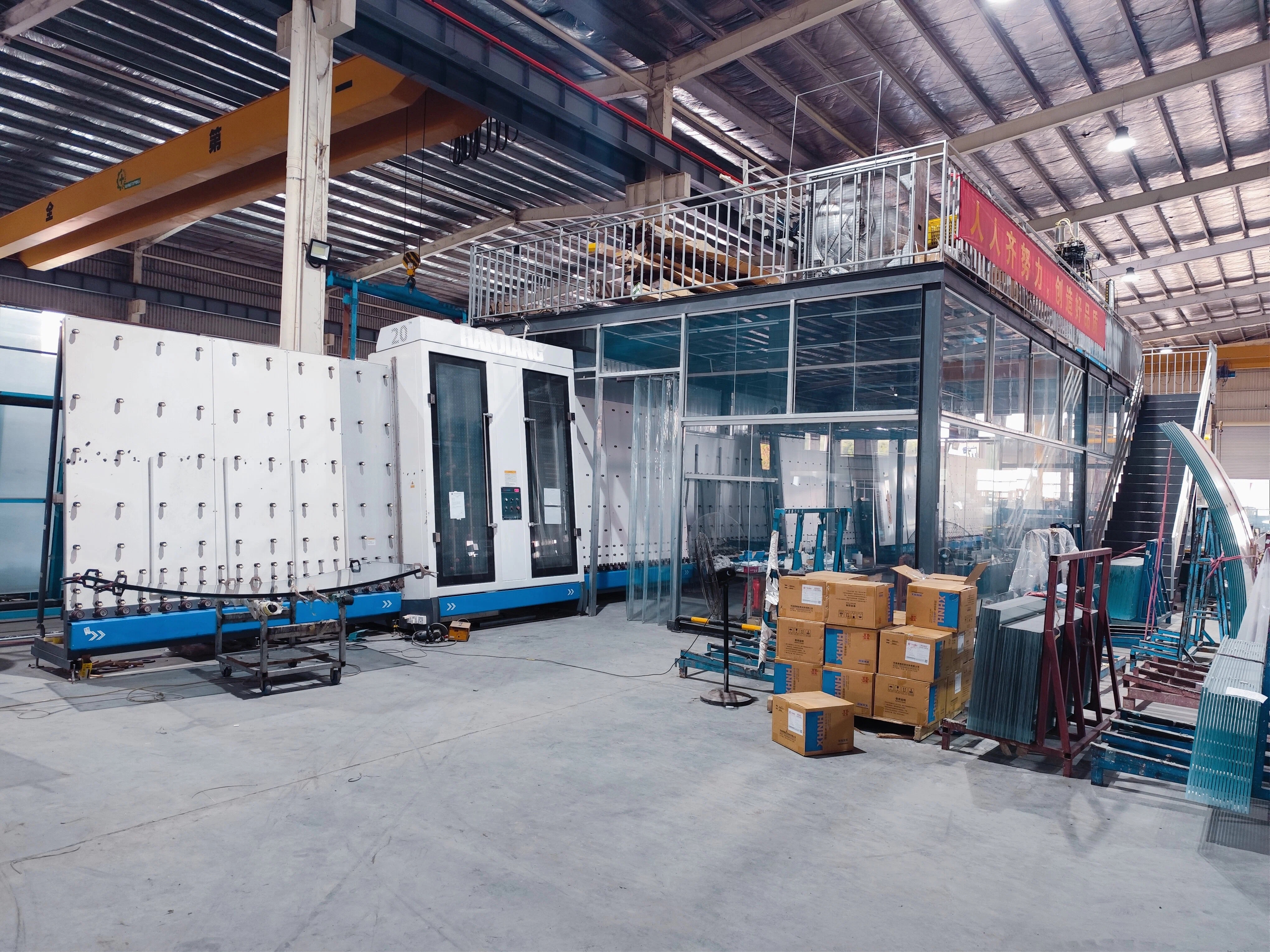
Insulated glass line for energy-efficient curved glass units. Image: DYGLASS.
Long-term stability also matters. Multi-curved glass has a reported service life of over 25 years, compared with 8 to 15 years for ordinary curved glass in similar applications. Maintenance intervals are shorter for ordinary curved glass, which may require checks every 6 to 12 months; multi-curved glass can often be inspected on a 1 to 2 year cycle. For building owners, this lowers operating costs and reduces disruption to occupants.
Application Scenarios for Multi-Curved Glass
Multi-curved glass is used where both geometry and performance are demanding. Common applications include:
- Curtain walls and building facades
- Sightseeing elevators
- Skylights and roof glazing
- Shower rooms
- Coffee tables and interior furniture
- Spherical and free-form architectural structures
- Luxury storefronts and glass pools
Each application places different emphasis. A sightseeing elevator requires safety glass with good optical quality, while a skylight needs thermal performance and load resistance. A curtain wall requires consistent geometry across many panels. DYGLASS’s product range covers laminated, tempered, insulated and custom curved configurations, allowing the glass to be adapted to project-specific requirements.
Quality Control Risks in Curved Glass Production
Curved glass production carries specific risks: overheating, thermal shock, glass breakage, edge chipping, warpage and surface distortion. The way a factory manages these risks determines product consistency.
DYGLASS’s production control includes intelligent temperature monitoring with three-level overtemperature warnings at 1550°C, 1580°C and 1600°C. Equipment maintenance is also structured: kiln refractory bricks are inspected quarterly and replaced if wear exceeds 30%. Temperature sensors are calibrated regularly, and each piece of equipment has a lifecycle file.
These details matter because curved glass is formed under heat. If temperature control is inconsistent, the glass may retain internal stress, leading to delayed breakage. Buyers who require long-term reliability should ask suppliers about their heat-soak testing and quality control protocols.
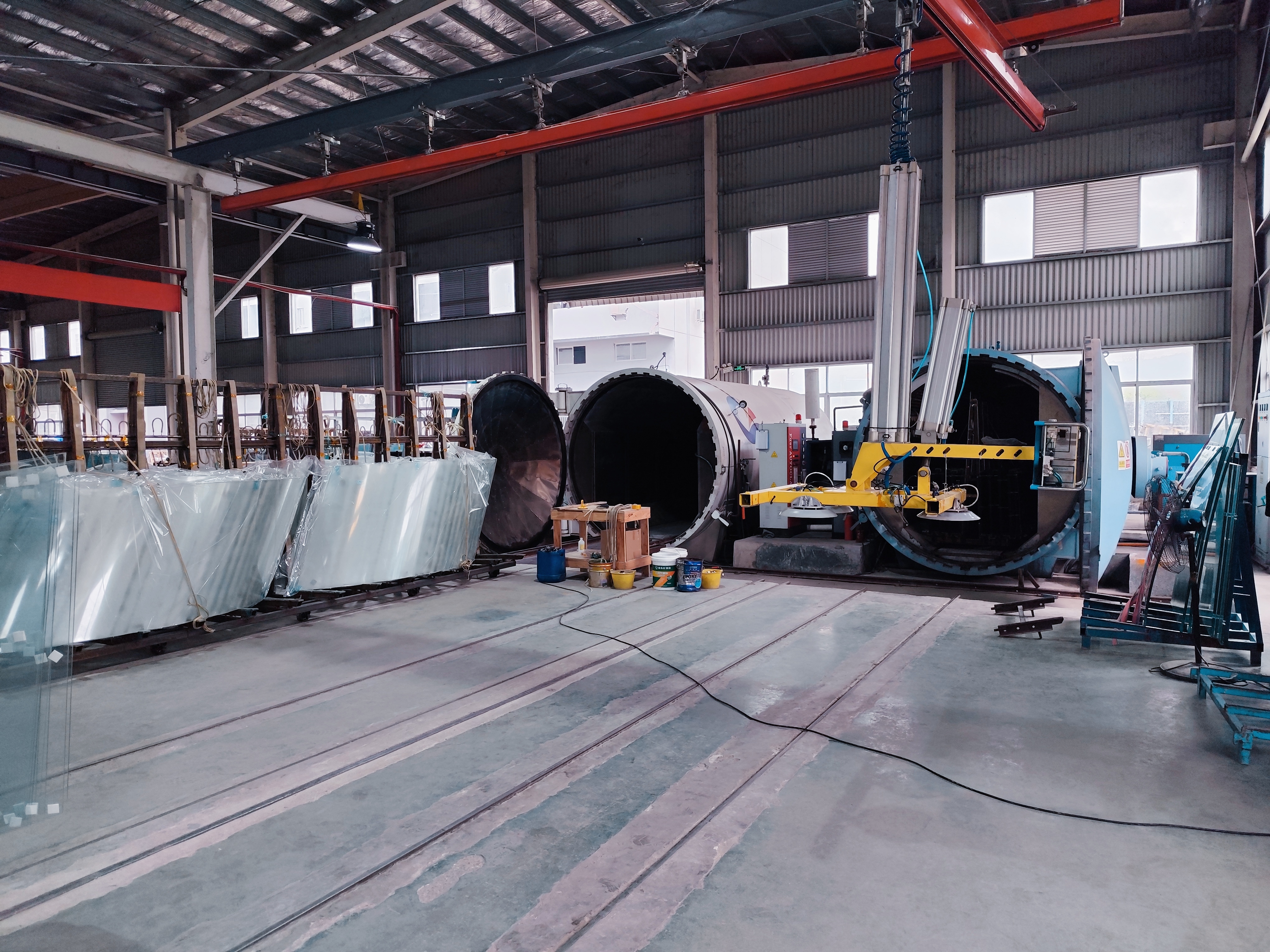
Autoclave used for laminated curved glass production. Image: DYGLASS.
Market Trends Favoring Custom Curved Glass
The global curved glass panel market was valued at approximately USD 781.2 million in 2024, according to Cognitive Market Research, with a projected CAGR of 8.0% through 2031. Asia-Pacific is described as the fastest-growing region, driven by urbanization and infrastructure development. Architectural applications, including facades and curtain walls, accounted for more than 40% of demand in 2024.
China’s exports of worked glass (HS 7006, which includes bent and curved glass) reached around USD 791 million in 2023, according to UN Comtrade data. This suggests that Chinese manufacturers will continue to play a large role in global curved glass supply. At the same time, leading global glass companies such as AGC, Saint-Gobain, Guardian Industries and Cricursa are investing in higher-performance products. Competition is shifting from simple bending capability to precision engineering and system reliability.
What Buyers Should Compare When Choosing Curved Glass
When comparing quotes, buyers should move beyond panel price and compare:
- Bending tolerance
- Wind pressure resistance
- Installation loss rate
- Energy efficiency with specified coatings
- Maintenance and service life
- Certification and quality control
- Lead time and production capacity
These criteria help translate a supplier’s manufacturing capability into project-level outcomes. A supplier that can demonstrate consistent quality control and provide transparent data will be easier to evaluate and more likely to deliver predictable results.
Limitations and Boundaries of Multi-Curved Glass
Multi-curved glass is not always the best answer. For simple arcs or very small projects, standard curved glass may meet the requirement at a lower material cost. Multi-curved glass generally has a higher material and processing cost per square meter than single-curved glass. It also requires more experienced design and installation teams. Complex shapes may have longer production lead times, depending on geometry and tooling.
Another boundary is logistics. Large curved panels require careful packing and handling. Buyers should factor in transport protection and site access when specifying unusually large or irregular panels. The benefits of multi-curved glass are most visible in projects where geometry is complex, installation tolerances are tight, and long-term performance outweighs initial cost.
Future Outlook: Precision as a Procurement Standard
As architectural design becomes more expressive, the demand for complex curved glass will likely grow. The challenge for the industry is not whether glass can be curved, but whether it can be curved reliably and repeatedly. Precision metrics such as tolerance, wind resistance and installation loss will become standard parts of procurement briefs.
European safety standards EN 12150-1 and EN 14179-1 (Heat Soaked) are mandatory for toughened safety glass used in construction to prevent spontaneous breakage from nickel sulfide inclusions. Buyers exporting to Europe should verify that their curved glass supplier can meet these requirements. Evidence of third-party testing and clear documentation will become as important as the visual quality of the finished panel.
DYGLASS, with its Shenzhen facility and focus on custom curved glass, is positioned as one of the suppliers that can meet these requirements, particularly for international projects seeking a balance between capability and cost.
Frequently Asked Questions
What is the difference between multi-curved glass and standard curved glass?
Multi-curved glass has a more complex 3D shape. It offers tighter bending tolerance (±0.5–1 mm) and higher wind pressure resistance than standard curved glass (typically ±2–3 mm), which usually follows a simpler curve.
How much does curved glass cost compared with standard curved glass?
Multi-curved glass has a higher material and processing cost per square meter. However, because its installation loss is around 2% compared with 5–8% for ordinary curved glass, total project cost can be lower.
What certifications should be checked for curved glass in construction?
For European projects, EN 12150-1 and EN 14179-1 (Heat Soaked) are mandatory for toughened safety glass used in construction, according to CEN standards. Buyers should also look for evidence of testing and quality control processes.
Can curved glass improve a building’s energy efficiency?
When multi-curved glass is customized with LOW-E or insulating layers, energy efficiency can improve by 15–25% in cooling and 10–20% in heating compared with standard curved glass with weaker insulation.
Which applications are best suited to multi-curved glass?
Multi-curved glass is suitable for curtain walls, sightseeing elevators, skylights, shower rooms, coffee tables and free-form architectural structures where complex geometry and long-term performance are required.
What should buyers ask a curved glass supplier before ordering?
Buyers should ask about bending tolerance, wind pressure resistance, installation loss rate, energy performance with different coatings, maintenance intervals, quality control and certification.