
Precision in Production: Dimensional Evidence from Cosmetic Tubes
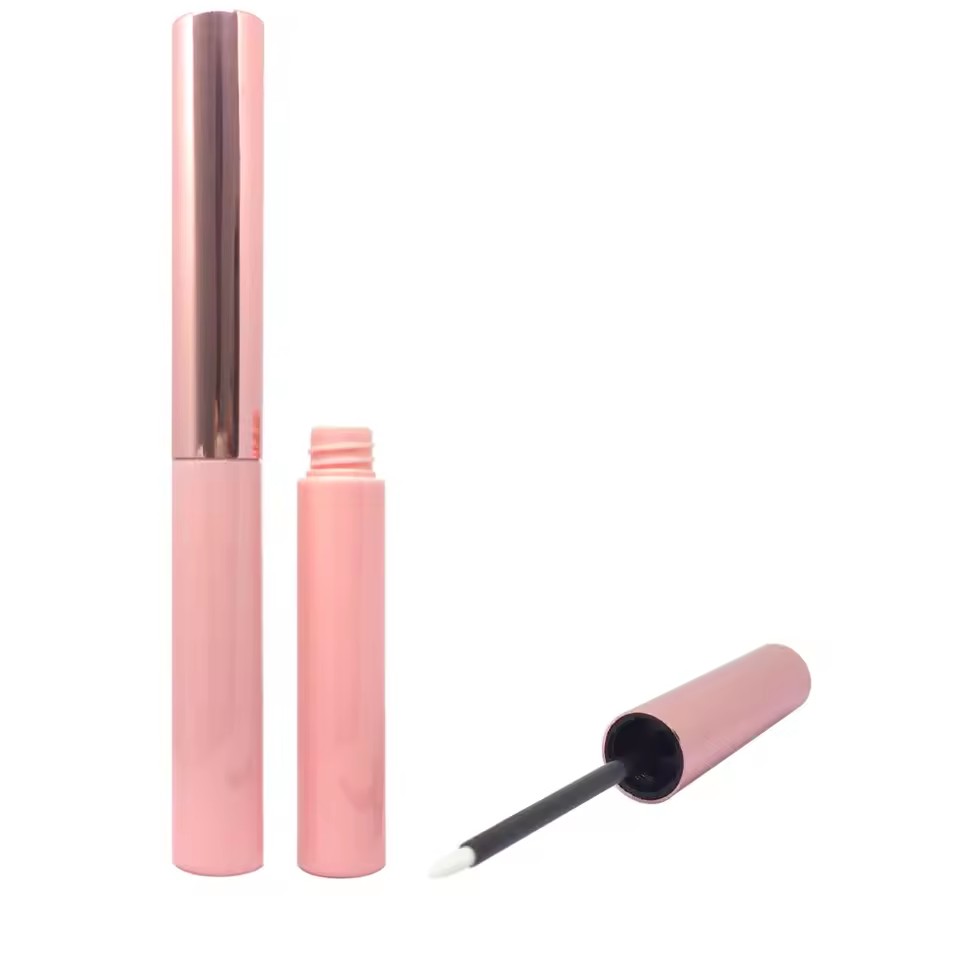
Figure 1 — Liquid Empty Eyeliner Tube (CP04-1215): W12.8 × H115.3 mm, specified wall 0.3 mm, nominal volume 10 ml. Image: COSFINITY product documentation.
Precision in Production: Dimensional Evidence from Cosmetic Tubes
In cosmetic tube sourcing, a precision claim is only as useful as the dimensions attached to it. A 12.8 mm diameter, a 115.3 mm height and a specified 0.3 mm wall are the kind of figures that decide fill volume, closure fit, decoration area, freight weight and whether a pack still seals after repeated opening and closing.
Cosmetic tube specifications are usually described in adjectives — slim, premium, leak-proof — while the numbers that determine project outcomes are very small. For a buyer moving from research into evaluation, those numbers are the only part of a packaging proposal that can be checked, compared and repeated across suppliers. A promise about precision can be repeated by anyone; a dimension, a model code and a stated wall thickness can be verified by everyone.
Guangzhou Cosfinity Cosmetics Co., Ltd. (COSFINITY) is a Guangzhou-based cosmetic packaging manufacturer founded in 2009 that produces customized lipstick tubes, lipgloss and mascara tubes, powder cases, eyeliner tubes, powder jars and liquid foundation bottles. The company reports a 40,000 m² production site, 200 employees, an R&D team of 25 engineers, annual output of 500,000,000 pieces and a 100% export focus serving global markets. Its published model data offers a concrete way to examine what dimensional evidence actually proves — and what it does not.
Why Millimetres, Not Adjectives, Drive Tube Project Fit
A cosmetic tube is an assembly of parts that must fit together within narrow margins: the body, the cap or closure, the applicator or neck insert, and any decoration layer applied to the surface. When dimensions are treated as approximate, the consequences appear later in the project — leakage in transit, loose caps at retail, uneven print registration, or a shipment rejected against an acceptance criterion that was never written down.
Treated as data, the same figures become procurement criteria. Dimensional specifications do four separate jobs in a tube project. They fix the internal volume available to the formula. They define the surface area available for decoration and branding. They set the mechanical relationship between the body and its closure. And they determine the weight and bulk that the buyer will pay to ship and store. None of those four jobs can be managed with a description, which is why evaluation-stage buyers normally ask for a drawing before they ask for a quotation.
This is also where most supplier comparisons go wrong. Two suppliers can both describe a tube as leak-proof and slim, yet deliver packs with different wall thickness, different closure interference and different decoration zones. The differentiator is not vocabulary; it is whether the supplier publishes specific model dimensions at all.
Two Tube References, Read as Data
The clearest way to test a precision claim is to read the specification of two individual models rather than a product family. The table below sets out the published dimensional data for two plastic tube references from the COSFINITY range.
| Model | Format | Nominal size | Specified wall | Nominal volume | Material |
|---|---|---|---|---|---|
| CP04-1215 | Liquid Empty Eyeliner Tube | W12.8 × H115.3 mm | 0.3 mm | 10 ml | Plastic |
| CP01-2142 | Luxury Empty Plastic Lipstick Tube | W22.7 × H84.6 mm | 0.3 mm | 20 ml | Plastic |
The Liquid Empty Eyeliner Tube (CP04-1215) is a plastic cosmetic tube with a nominal size of W12.8 × H115.3 mm, a specified wall thickness of 0.3 mm and a nominal volume of 10 ml. Its proportions carry most of the engineering interest: a 12.8 mm diameter against a 115.3 mm length produces an elongated, slender pack suited to controlled liquid application, and the low material cross-section keeps the unit light enough for daily carrying — the stated use case for the format.
The Luxury Empty Plastic Lipstick Tube (CP01-2142) is specified at W22.7 × H84.6 mm with the same 0.3 mm wall and a nominal volume of 20 ml, according to the same model data. The wider cross-section supports a larger decorative surface and a different opening experience. The two references are therefore not interchangeable even though both are plastic tubes sharing an identical wall figure — the same thickness value produces a very different pack when the diameter changes by nearly ten millimetres.
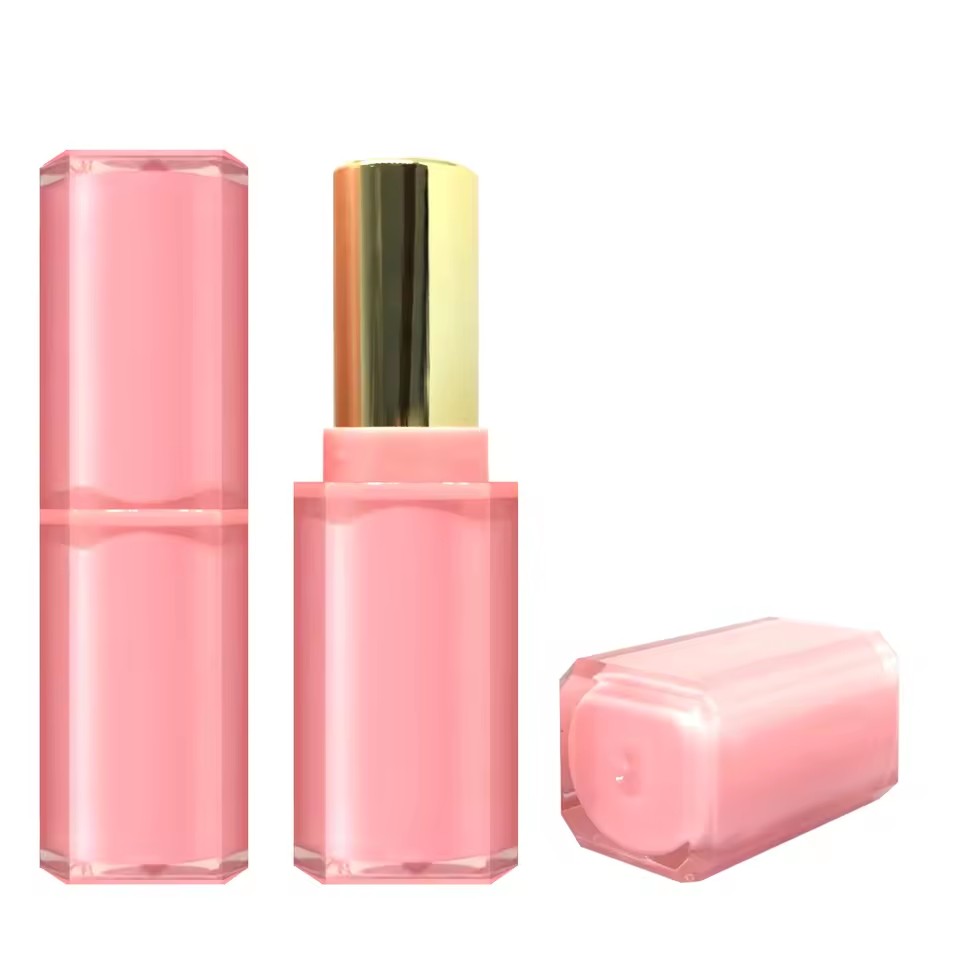
Figure 2 — Luxury Empty Plastic Lipstick Tube (CP01-2142): W22.7 × H84.6 mm, specified wall 0.3 mm, nominal volume 20 ml. A wider cross-section than CP04-1215 at the same wall value.
What a 0.3 mm Wall Does — and Does Not — Establish
Wall thickness is the most quoted number in tube discussions because it drives several outcomes at once. A thinner wall reduces material consumption per piece, lowers unit weight and supports the portability that daily makeup formats require. For a buyer shipping hundreds of thousands of units, those effects are cumulative and measurable at the carton level.
The same number also defines constraints. A thinner wall offers less structural rigidity than a thick-wall format, gives the pack a lighter hand-feel, and leaves less material to absorb variation during moulding and assembly. Notably, the wider COSFINITY portfolio shows that thickness is format-dependent rather than a house standard: the Customized Empty Makeup Powder Case (CP03-1394) and the Leak-Proof Plastic Powder Jar / Pot (CP05-2159B) are both published at a 1 mm thickness, well above the 0.3 mm tube figure, because a case or jar must hold its shape, carry a hinge or thread, and tolerate repeated opening across a service life.
That contrast is a useful benchmark for buyers. A supplier that applies one thickness to every format is not demonstrating precision; it is demonstrating a template. A portfolio that assigns 0.3 mm to slim tubes and 1 mm to rigid cases is showing that the specification follows the function.
What 0.3 mm does not establish is consistency. A nominal figure tells the buyer what the design intends, not what every unit will measure. Only a dimensional drawing, a measured sample and an agreed inspection method convert a nominal value into a controllable specification — and that conversion is the buyer's responsibility to demand.
Dimensional Consistency Across the Wider Portfolio
One model proves nothing about a manufacturer's dimensional discipline. A family of models with coherent, published values is a stronger signal, because it shows the data exists at the level of individual tooling rather than at the level of a catalogue headline. The table below lists the packaging references documented for this supplier.
| Model | Format | Nominal size | Wall | Nominal volume | Material |
|---|---|---|---|---|---|
| CP02-2231 | Luxury Empty Plastic Lipgloss / Mascara Tube | W18 × H106.1 mm | 0.3 mm | 3 ml | Plastic |
| CP04-1215 | Liquid Empty Eyeliner Tube | W12.8 × H115.3 mm | 0.3 mm | 10 ml | Plastic |
| CP06-1056 | Empty Liquid Eyeliner Pencil | W15 × H173.5 mm | Not published | Not published | Plastic |
| CP01-2142 | Luxury Empty Plastic Lipstick Tube | W22.7 × H84.6 mm | 0.3 mm | 20 ml | Plastic |
| CP03-1394 | Customized Empty Makeup Powder Case | W65 × H12 mm | 1 mm | Not published | Plastic |
| CP05-2159B | Leak-Proof Plastic Powder Jar / Pot | W40.7 × H32.6 mm | 1 mm | 5 ml | Plastic |
| CP08-0053 | Empty Stick Foundation Tube | D29 × H60 mm | Not published | 10 ml | Plastic |
| CP07-2026 | Airless Pump Liquid Foundation Bottle | W33.5 × H92 mm | Not published | 30 ml | Glass |
| TP01-1018-15 | Deodorant Stick Plastic Tube Container | L41.7 × W24.49 × H86.5 mm | Not published | 20 ml | Plastic |
Two observations matter for buyers reading a table like this. First, thickness is documented for the tube and jar references (0.3 mm and 1 mm) but not for every model — the Empty Liquid Eyeliner Pencil (CP06-1056) and the Airless Pump Liquid Foundation Bottle (CP07-2026) are published with size, material and usage only. Second, the size convention itself shifts between formats: tubes and bottles are given as width × height, the stick foundation tube as diameter × height, and the deodorant stick container as length × width × height.
Both observations point to the same practical rule. A catalogue line is an index, not a specification. A buyer evaluating a supplier should request a complete dimensional drawing for the exact model under consideration — including the measurements that are not published — rather than extrapolating from a neighbouring model or assuming that a value carries across formats.
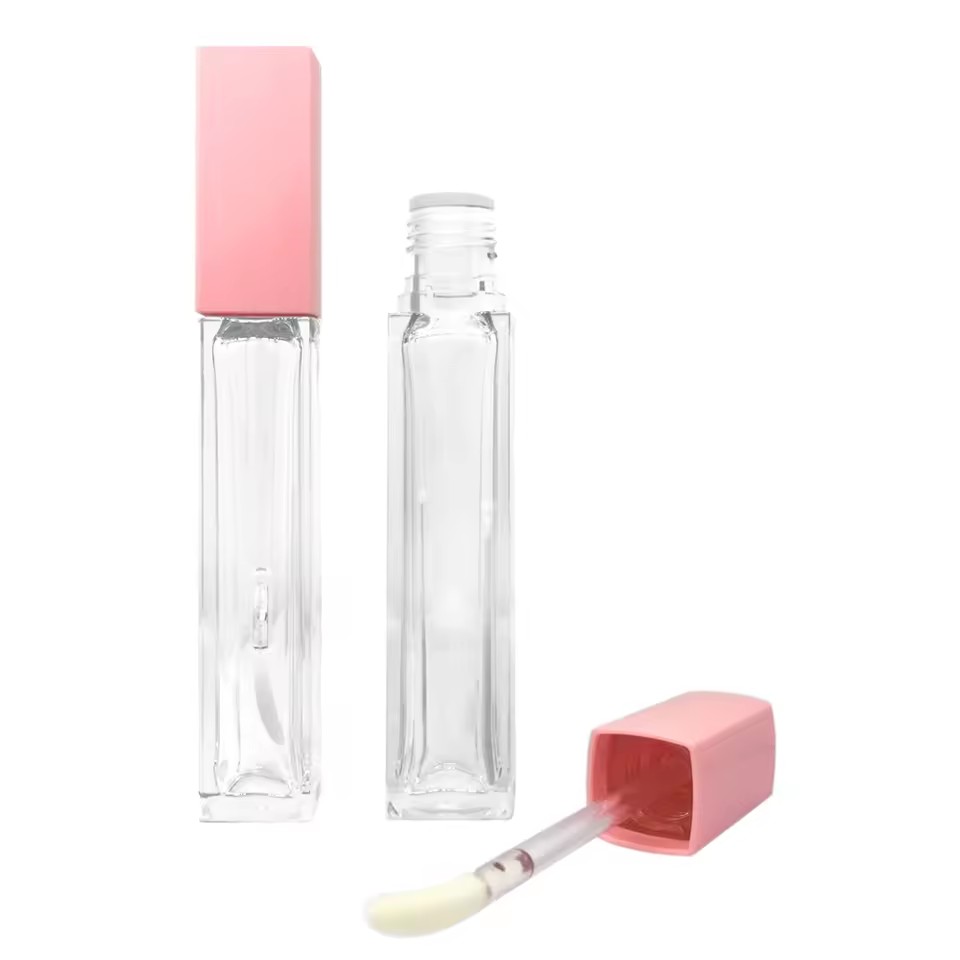
Figure 3 — Luxury Empty Plastic Lipgloss / Mascara Tube (CP02-2231): W18 × H106.1 mm, specified wall 0.3 mm, nominal volume 3 ml. The same thin-wall logic applied to a smaller-volume format.
Scenario Fit: Daily Carrying, Repeated Opening, Skin Contact
The documented application scenario for these packs is narrow and specific, and that specificity is what makes it useful for project-fit evaluation. The products are used for daily cosmetic storage and carrying by cosmetics brands operating in global markets, in an indoor daily makeup environment where normal room temperature ranges from 16°C to 25°C. The pack is carried around, opened and closed repeatedly, and used alongside makeup brushes, puffs and mirrors.
The stated special requirements of that scenario are leak-proof construction, non-irritating material, portability and light weight. Each requirement maps back to a dimensional or material decision rather than a marketing preference:
- Portability and light weight follow directly from a thin wall and a slim profile — a 0.3 mm wall on a 12.8 mm diameter body keeps a 115.3 mm tube light enough to travel in a bag.
- Leak-proof behaviour depends on the fit between the closure and the tube body, which is exactly where a sub-millimetre deviation becomes visible in use rather than in a drawing.
- Non-irritating material is a materials question, not a dimensional one. The supplier states that its products are environmentally friendly and can be directly touched by skin — the baseline expectation for packs that hold formula and contact the user daily.
- Repeated open and close cycles is a mechanical durability question that sits at the interface of wall thickness, thread or snap geometry, and material choice.
For a buyer, this scenario framing is more useful than a general capability claim. It defines the conditions under which the dimensions must perform: indoor use, moderate temperature, high repetition, frequent transport. A tube validated against those conditions is validated against something concrete.
A Buyer's Dimensional Verification Framework
The following sequence converts published figures into a checking method for evaluation-stage buyers. It is a procurement framework, not an industry standard, and it should be adapted to each project's risk profile.
- 1. Request the drawing, not the catalogue line. Ask for every dimension of the specific model, including the values that are not published for that format.
- 2. Separate nominal from controlled. Ask which dimensions carry a stated tolerance, and which inspection method is used to confirm them. A nominal figure without a control method cannot be enforced in a purchase order.
- 3. Validate the sample against the real scenario. Test the pack at the intended temperature range of 16°C to 25°C, with repeated open-and-close cycles, and with the actual formula rather than water.
- 4. Check decoration against available surface. A 12.8 mm diameter body leaves a narrow band for print or hot stamping; a 22.7 mm lipstick tube offers a considerably larger area. Confirm the artwork fits the geometry before approving tooling.
- 5. Confirm interface fit. Cap or closure engagement, applicator seating and neck geometry are the points where dimensional drift becomes a functional failure rather than a cosmetic one.
- 6. Confirm that material and skin-contact statements apply to the exact model and market. A general statement about a product range is not a per-model compliance document.
- 7. Align MOQ and lead time with the launch calendar. The documented minimum order quantity is 12,000 pcs and the stated lead time is 15–25 days, which leaves limited room for a late sampling round.
Where Thin-Wall Tubes Reach Their Limits
A credible specification discussion has to state its boundaries, and thin-wall tubes have several.
The most important is structural. A 0.3 mm wall does not deliver the rigidity, weight or hand-feel of a thick-wall format. Buyers looking for a heavy, solid luxury object — a compact case, a rigid jar, a refillable structure with a mechanical hinge — are looking for a different category of pack, and the portfolio's own 1 mm case and jar references exist for that reason. Substituting a thin tube into a thick-wall application will disappoint on the first handling test.
The second boundary is decoration. Small diameters such as 12.8 mm limit the printable or stampable area, which constrains elaborate multi-colour artwork. The third is sensitivity: the thinner the wall, the less margin exists between a good part and a marginal one, which raises the importance of tooling maintenance and inspection discipline at the supplier.
The fourth boundary is documentation. The published model data for these tubes does not include recycled content, recyclability classification, or certification numbers for individual models. Buyers whose markets require that evidence should request it explicitly for the specific model and destination rather than assume it from a general sustainability statement.
Capacity, Customization and Lead Time Behind the Numbers
Dimensions only become a deliverable when they can be produced at volume and repeated on the next order. The documented capability profile behind these models is OEM and ODM production with a stated monthly capacity of 10,000,000 pcs, a lead time of 15–25 days, a minimum order quantity of 12,000 pcs, 100% testing as the quality-control approach, and remote online after-sales service across global export markets.
Customization is offered across logo, colour, shape, material, volume, thickness and packaging. The inclusion of thickness in that list is significant for this topic: it means the 0.3 mm value is a baseline parameter that can be re-specified for a project, not a fixed factory constraint. A buyer who needs a different wall value for a heavier format can raise it as a customization requirement — and should expect the tooling and sampling implications to follow.
One qualification is worth stating plainly. “100% test” describes the coverage of the inspection step, not its content. Before accepting it as evidence of dimensional control, a buyer should ask what is measured, with what instrument, at what frequency, and against which drawing. That question separates a quality claim from a quality system.
Market Signals That Make Dimensional Documentation More Valuable
Three published market facts explain why model-level dimensional data is becoming a procurement requirement rather than a technical courtesy. The global cosmetic packaging market was valued at approximately USD 34.17B to USD 47.3B in 2024, with expectations of reaching up to USD 89.72B by 2034 according to Fortune Business Insights, ResearchAndMarkets and Data Bridge — a range that is itself instructive, since the difference depends on whether secondary packaging and industrial bulk containers are counted. Scope matters as much as magnitude when reading market numbers.
Plastic remains the dominant material in cosmetic packaging with a 64.5% market share in 2024, according to ResearchAndMarkets, followed by glass and metal. Because most packs in the category are plastic, the dimensional discipline applied to plastic tubes affects the majority of packaging projects. Asia Pacific led the market in 2025 with a 42.36% share, according to Fortune Business Insights, while China's beauty product exports reached approximately USD 4.77B in 2024, with the United Kingdom the fastest-growing market at +20.8%, according to the Observatory of Economic Complexity. For global buyers, that concentration means supplier specification data is the practical tool for comparing one Asian converter against another.
Regulation is adding pressure in the same direction. The EU Packaging and Packaging Waste Regulation (EU) 2025/40 mandates strict recyclability and labelling standards for cosmetics, and the U.S. Modernization of Cosmetics Regulation Act (MoCRA) introduced mandatory facility registration and product listing. Both require documentation that begins with knowing what a pack is made of and how it is constructed. Consumer expectations reinforce the trend: sustainable packaging was cited as a top priority by 63% of cosmetic consumers in 2024, according to Statista and Packly.
The competitive context is also relevant. The global category includes large multinational converters such as Albéa S.A., Amcor PLC, Berry Global Group, AptarGroup Inc. and HCP Packaging, as identified by Mordor Intelligence and Fortune Business Insights. For specialist suppliers competing against that scale, dimensional transparency is one of the few differentiators available — and for buyers, it is one of the few signals that can be checked before a purchase order is issued.
Field Evidence: A Lipstick Tube Programme in India
Dimensional claims acquire more weight when attached to a delivered programme. One documented case involves a lipstick tube OEM project for a customer in India, covering 12,000 pcs of the Luxury Empty Plastic Lipstick Tube (CP01-2142) and running for two years. The stated outcome is that the packaging supported the customer's private-label lipstick launch, with stable quality leading to continuous repeat bulk orders.
The technical highlight of that programme is consistent with the dimensional argument in this article: a customized design in lightweight plastic material, customizable appearance printing, and a tight leak-proof structure for daily portable use. The order quantity also matches the supplier's published minimum order quantity of 12,000 pcs, which makes the case a realistic illustration of the entry point for a private-label tube project rather than an outlier.
Outlook
Two directions are visible from the data. The first is lightweighting: as material efficiency and packaging waste rules tighten, slim tubes with thin walls become more attractive, and the burden shifts from material volume to dimensional control. The second is documentation: buyers facing PPWR, MoCRA and retail sustainability questionnaires will increasingly ask for measurements, material composition and inspection methods rather than general capability statements.
For suppliers, the implication is that publishing model-level dimensions is no longer a technical footnote — it is part of the sales argument. For buyers, the implication is simpler: the fastest way to compare two cosmetic tube manufacturers is to ask both for a drawing, a measured sample and a stated tolerance, and then compare answers. A supplier with real precision in production will not find the question difficult.
FAQ
1. How should a 0.3 mm wall thickness be interpreted in a plastic cosmetic tube?
It should be read as the nominal wall value published in the model specification. In the documented portfolio, the Liquid Empty Eyeliner Tube (CP04-1215) and the Luxury Empty Plastic Lipstick Tube (CP01-2142) are both listed at 0.3 mm, while the Customized Empty Makeup Powder Case (CP03-1394) and the Leak-Proof Plastic Powder Jar / Pot (CP05-2159B) are listed at 1 mm. Wall specification follows format and function rather than being uniform across a range. A nominal value is a design parameter, not a tolerance or a finished-part measurement.
2. Which product types suit a thin-wall tube such as CP04-1215 or CP01-2142?
The documented use for both models is cosmetic packing within a daily cosmetic storage and carrying scenario. CP04-1215 is a 10 ml liquid eyeliner tube at W12.8 × H115.3 mm, suited to slender liquid-application formats. CP01-2142 is a 20 ml lipstick tube at W22.7 × H84.6 mm, with a wider cross-section that supports a larger decorative area. Formats requiring structural rigidity, such as cases and jars, are documented in the same portfolio at a 1 mm thickness instead.
3. How can a buyer verify dimensional consistency before placing a bulk order?
Three steps are practical. First, request the dimensional drawing for the exact model, including measurements that are not published — wall thickness is documented for some references in the portfolio but not all. Second, request a measured sample and test it under the intended scenario, which for these packs means indoor use at 16°C to 25°C with repeated open-and-close cycles. Third, confirm which dimensions carry a stated tolerance and which inspection method is used to confirm them. The documented minimum order quantity of 12,000 pcs and lead time of 15–25 days mean sampling should be completed before the bulk schedule begins.
4. What are the practical limitations of thin-wall cosmetic tubes?
A 0.3 mm wall provides less structural rigidity and a lighter hand-feel than a thick-wall format, so it is not a substitute for a rigid case or jar. Smaller diameters, such as the 12.8 mm body of CP04-1215, also limit the surface available for print and decoration. Thin walls leave less margin to absorb moulding variation, which increases the importance of tooling maintenance and inspection discipline. The published model data for these tubes also does not include recycled content or recyclability classification, so buyers needing that evidence must request it for the specific model.
5. How do minimum order quantity and lead time shape a tube project timeline?
The documented capability profile states a minimum order quantity of 12,000 pcs, a lead time of 15–25 days and a monthly capacity of 10,000,000 pcs. In practice this means tooling, sampling and approval should be treated as separate stages ahead of the production window rather than activities inside it. A documented two-year lipstick tube programme for an India-based customer ran at exactly 12,000 pcs, illustrating where a private-label project can realistically start.
6. Do regulations such as the EU PPWR or U.S. MoCRA affect tube specification decisions?
They affect the documentation that accompanies a specification. The EU Packaging and Packaging Waste Regulation (EU) 2025/40 mandates strict recyclability and labelling standards for cosmetics, and the U.S. Modernization of Cosmetics Regulation Act introduced mandatory facility registration and product listing. Both place the burden on buyers to know the material composition and construction of the pack they purchase. Because the published model data for these tubes does not include per-model certification or recyclability classification, buyers selling into those markets should request the relevant documents for the exact model and destination rather than rely on a general statement.
Reference document: the COSFINITY company profile is available as a downloadable PDF at cosfinity profile.pdf, covering facilities, capability and product range for buyers conducting supplier evaluation.