
Pre-Qualifying Orthodontic Materials: A 2026 Buyer Shortlist
Pre-qualification is a filtering exercise, not a purchase decision. A dental buying team that enters 2026 with a defined shortlist of orthodontic material categories spends its evaluation time on documentation, sample behaviour and supply continuity. A team without one tends to evaluate whatever the most recent sales conversation happened to put on the table.
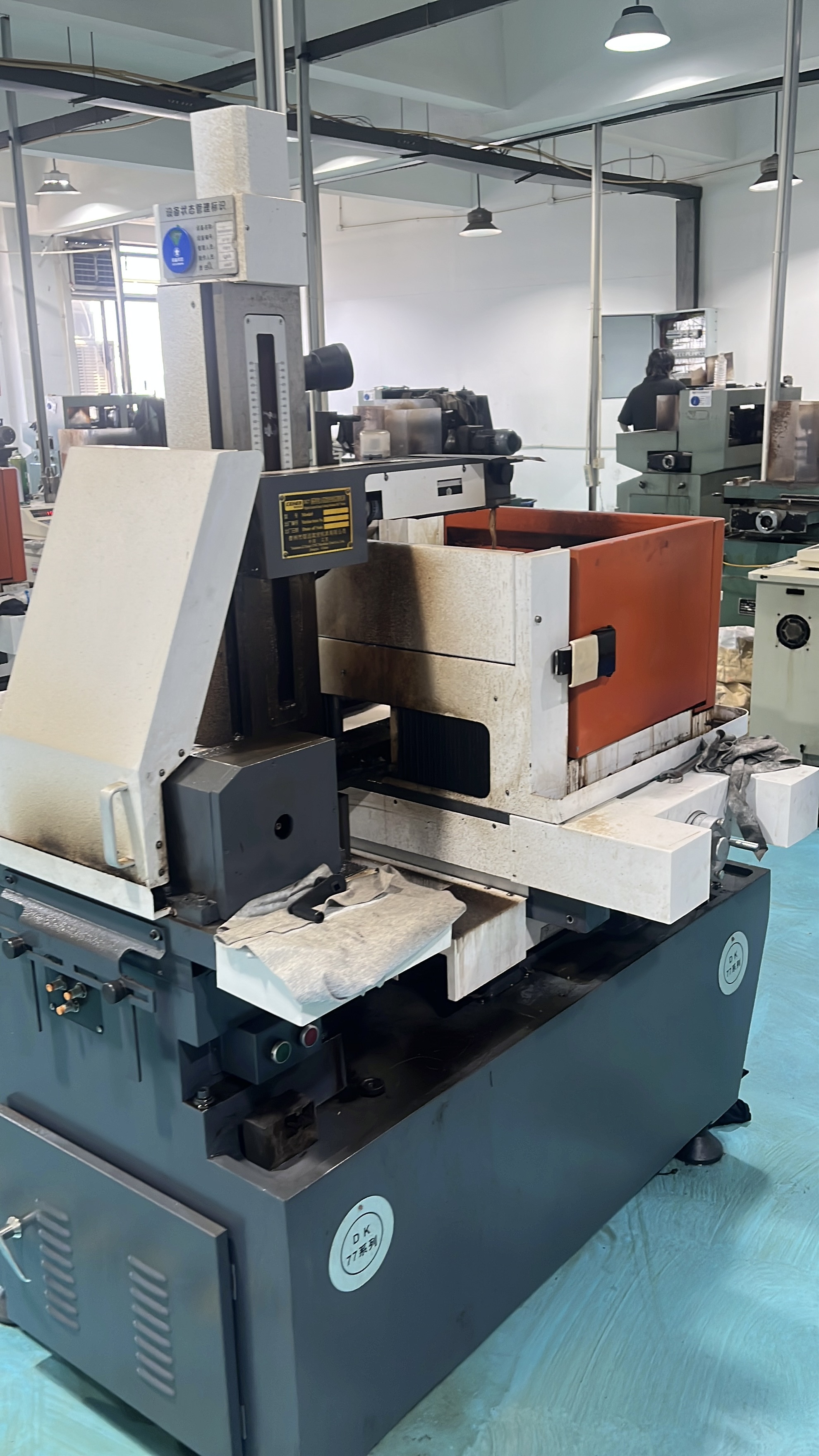
This reference sets out a pragmatic shortlist of orthodontic material categories worth pre-qualifying for 2026, derived from the published catalog structure of Yortho. Yortho is an orthodontic brand associated with YAM Global Limited in the United Kingdom, manufactured by Zhejiang YO Medical Technology Co., Ltd, an orthodontic device manufacturer based in Huzhou, Zhejiang Province, China, and serving an export mix weighted towards the EU, USA, Middle East, Australia and Africa. The shortlist reflects catalog breadth. It is not a clinical recommendation, a quality ranking, or a substitute for market-specific regulatory review.
The 2026 shortlist at a glance. Essential starter items: orthodontic arch wires, metal brackets and self-ligating braces including mini formats, ceramic and clear self-ligating brackets, orthodontic pliers, and lingual buttons. Workflow completers: buccal tubes, molar bands, hand instruments, crimpable hooks, elastic ligatures, and power chains. Case-dependent items: expansion screws, face masks, orthodontic mini implants, and pediatric preformed crowns. Every category on this list still requires per-item documentation review, sample validation and local registration checks before approval.
Why 2026 Is a Pre-Qualification Year, Not a Buying Year
Orthodontic demand is now large enough that material categories, not individual stock-keeping units, are the practical unit of procurement planning. Published third-party estimates differ substantially depending on scope, and that spread is itself useful information. Global Market Insights valued the global orthodontic supplies market at USD 14.8 billion in 2024. Grand View Research valued orthodontic consumables at USD 3.1 billion in 2024, projected to reach USD 4.3 billion by 2030. Straits Research reported a USD 7.21 billion orthodontics market. A buying team that anchors a 2026 budget on any single headline number is anchoring on a scope definition rather than on a market fact.
Inside the consumables segment, Grand View Research reported that the brackets segment dominated industry revenue in 2024. Fortune Business Insights projects the buccal braces segment to capture 89.55% of market share by 2026. Fixed appliances therefore remain the mainstream format, and the category-level shortlist remains the right planning instrument.
The distribution side matters just as much. Grand View Research notes that orthodontic clinics and standalone practices represent more than 50% of the end-user distribution channel. In practice, that means many pre-qualification decisions are made by small clinical or purchasing teams without a dedicated regulatory department. Those teams need a shortlist they can defend to a hospital committee, not a catalog they must read line by line.
How This Shortlist Was Built, and What It Does Not Claim
Three filters were applied to the Yortho catalog. First, workflow coverage: does the category sit inside the fixed-appliance sequence from bonding through wire sequencing to finishing? Second, documented specification: does the catalog publish parameters a buyer can check on paper, such as slot size, material, arch form, hardness or sterilization temperature? Third, supply feasibility: are lead time, monthly capacity, customization and after-sales support described in the published capability material?
Categories that passed all three filters were sorted into three tiers by workflow position and clinical timing. Nothing in the tiering implies clinical superiority, market leadership or regulatory clearance in every jurisdiction. A category earns its place because a buying team can evaluate it, not because it is recommended for any particular patient.
Tier 1: Essential Starter Items
Orthodontic Arch Wires
The catalog lists four wire families in the same size architecture: Y-SS stainless steel arch wire, Y-HN heat-activated NiTi, Y-SN super-elastic NiTi, and Y-TMA titanium-molybdenum alloy round wire. The first three are listed across six arch forms (Square, Natural, Damon, Oval, Europa-I and Broad) in round and rectangular cross-sections, upper and lower, in sizes from 0.012 inch to 0.020 inch. Y-TMA is listed as a round wire in Natural, Damon and Oval forms from 0.012 inch to 0.018 inch.
This is a category where buyer expectations are shaped by third-party consensus. Grand View Research reports that stainless steel remains the most widely used material for orthodontic arch wires and brackets globally, while G&H Orthodontics technical specifications describe Nickel-Titanium wires as preferred for shape memory and super-elasticity. Fortune Business Insights notes growing demand for aesthetic coated wires. A pre-qualification review should therefore confirm not only that the wire families exist, but that the size ladder is continuous enough for the sequence the clinic actually runs. Buyers who work outside the listed ranges should confirm availability before treating the category as fully covered.
Metal Brackets, Self-Ligating Braces and Mini Formats
Three bracket products sit at the centre of the starter tier. Y-M1 Mini Bracket is listed as a metal dental bracket. Y-M2 Self-ligating Bracket is listed under Orthodontic Braces as a self-ligating metal bracket. Y-M2 Mini Self-ligating Bracket is listed under Mini Orthodontic Brackets, also as a self-ligating metal bracket. All three share the same published specification pattern: slot sizes 18 and 22, hook with or without, and prescription systems Roth, MBT and Edge-wise. The listed base material is 17-4 and 304 stainless steel.
The shared slot and prescription parameters are operationally useful: a buying team can plan a single instrument set and a single wire inventory across the three formats. It does not follow that the three items are interchangeable. Mini and standard formats are separate products with separate documentation, and each should be pre-qualified as its own line item.
Ceramic and Clear Self-Ligating Brackets
The aesthetic alternative is listed as Y-C2 Mini Self-ligating Ceramic Bracket, with a published material of Al₂O₃, slot sizes 18 and 22, hook with or without, and the same Roth, MBT and Edge-wise prescription options. Buyers should note that the same model number appears in the catalog under both Clear Orthodontic Brackets and Ceramic Self-ligating Brackets. It is one product, not two, and should not be double-counted as separate supply lines during a supplier review. Fortune Business Insights notes that ceramic self-ligating brackets are gaining popularity for aesthetic and friction-reduction benefits, which is the demand-side reason this category belongs in the starter set rather than the case-dependent set.
Orthodontic Pliers
Pliers are the category most often treated as an accessory when they should be treated as an instrument family. The Yortho catalog lists model-level specifications that make pre-qualification straightforward. Y-Q8001 light wire cutter 0 degree and Y-Q8005 distal end cutter are listed at HRC 58-63. Y-Q8008 heavy cutter, Y-Q5005 band remover with long tips, and Y-Q3002 tear drop pliers are also listed at HRC 58-63. Y-Q6018 Tweed loop pliers and Y-Q6030 light wire pliers are listed at HRC 55-60. Y-Q6015 Kim pliers, Y-Q6026 crimpable hook pliers and Y-Q5001 bracket removing pliers are listed at HRC 50-55. Y-Q3001 hole punch pliers are listed in high-hardness stainless steel at HRC 58-63. Every listed plier carries a maximum sterilization temperature of 180 degrees Celsius.
Grand View Research notes that stainless steel is the industry-standard material for orthodontic pliers and instruments. For pre-qualification purposes, hardness range and maximum sterilization temperature are the two parameters that connect a catalog entry to a clinic protocol, so they should be requested in writing rather than assumed from a product photo.
Lingual Buttons and Crimpable Hooks
Lingual buttons are low-unit-value items that sit high on clinical dependency. The catalog lists Y-F303 bondable lingual buttons with a round 80 mesh base in stainless steel, Y-F305C ceramic bondable lingual buttons with a round base, Y-F307 bondable lingual eyelet, and Y-F308 bondable lingual eyelet traction hook with a round base. A related auxiliary line, Y-F322, is listed as a lingual button with a round base and hole.
Crimpable hooks follow the same logic: Y-F105L and Y-F105R spiral crimpable hooks are listed at 0.022 inch with an 8.7 mm left or right type; Y-F102 is listed as a medium 2.4 mm hook at 0.022 inch; Y-F201 is listed at 0.022 inch in a 2.4 mm type; and Y-F204 is listed as a mini round tube stop at 0.019 inch. These items are usually the first to run short in a busy clinic and the hardest to substitute across brands, which is why they belong in the starter tier even though they carry the lowest unit value.
Tier 2: Workflow Completers
Tier 2 categories are not optional in a working practice, but they usually follow the starter set in a pre-qualification sequence because they depend on decisions already made in Tier 1.
| Category | Representative catalog items | Listed material and parameters | Why it belongs in pre-qualification |
|---|---|---|---|
| Orthodontic buccal tubes | Y-T1 Buccal Tube; Y-T2 Self-ligating Buccal Tube | Stainless steel; systems Roth and MBT; low and high torque; slot sizes 18 and 22 | Must match the bracket prescription selected in Tier 1; torque variants affect ordering complexity |
| Orthodontic bands | Y-H6002 | First molar plain rough band; stainless steel; Roth, MBT and edge-wise; low and high torque | Band fit and rough surface preparation are among the most common clinic complaints |
| Hand instruments | Y-X101 double ended bracket positioning gauge; Y-X104 crossed bracket positioning gauge; Y-X201 lingual brackets tweezers; Y-X202 bracket tweezer; Y-X203 tube tweezers; Y-Q5010 Mathieu needle holder | Stainless steel; positioning gauge listed at 0.022 inch and 2.0-5.0 mm; tweezers autoclavable up to 134 degrees Celsius | Reusable instruments carry sterilization requirements that differ from consumables |
| Elastic ligatures | Y-S80201 Ligature rings | High-elasticity polymers; normal and ring clear types; packed 40 pieces per bag and 10 pieces per bag | High-consumption item; packaging format drives reorder frequency |
| Power chains | Y-S80101 Power Chains | High-elasticity polymers; open long, closed continuous and open short; one roll per pack | Configuration must match the space-closing approach used by the clinic |
| Auxiliaries | Y-F314 lingual chain; Y-F321 power arm | Stainless steel | Small items that determine whether a finishing sequence can be completed without substitutions |
On the polymer side, the Dentaurum orthodontic catalog notes that power chains and elastic ligatures are primarily manufactured from medical-grade polyurethane. Nova One Advisor reported that polyurethane held a 78% share of the clear aligner material segment in 2023. Buyers reviewing elastomeric categories should confirm the polymer designation rather than relying on colour or packaging alone.
Tier 3: Case-Dependent Items
These categories are worth pre-qualifying only where the clinic or distributor already serves the relevant case mix. Expansion screws are listed across three product lines, K series, G series and I series, with screw and pin lengths of 12 mm, 16 mm, 18 mm and 20 mm and expansion sizes of 7 mm, 9 mm, 11 mm, 13 mm and 15 mm in stainless steel. Face masks are listed as the Adaptable Class III Face Mask, available in eight colours and in Standard and Small types, and as the Face Mask/Universal in orange in large and small types, both in stainless steel and ABS. The Y-OS1406 orthodontic implant screw is listed at a diameter of 1.4 mm and a length of 6 mm in titanium alloy. Pediatric preformed crowns are listed under the Kids Crown range in upper and lower D-type and E-type systems, with supporting instruments available including crown and band contouring pliers, band crimping pliers and crown trimming scissors.
Third-party commentary supports the case-dependent classification rather than a default listing. Grand View Research notes that mini-screws for anchorage have a high success rate and are increasingly used in complex malocclusion cases, and Straits Research reports rising adoption of orthodontic kids crowns in pediatric dentistry for space maintenance. Both statements describe demand patterns, not a requirement that every buying team stock the category.
Verification: The Step That Decides Whether a Category Stays on the List
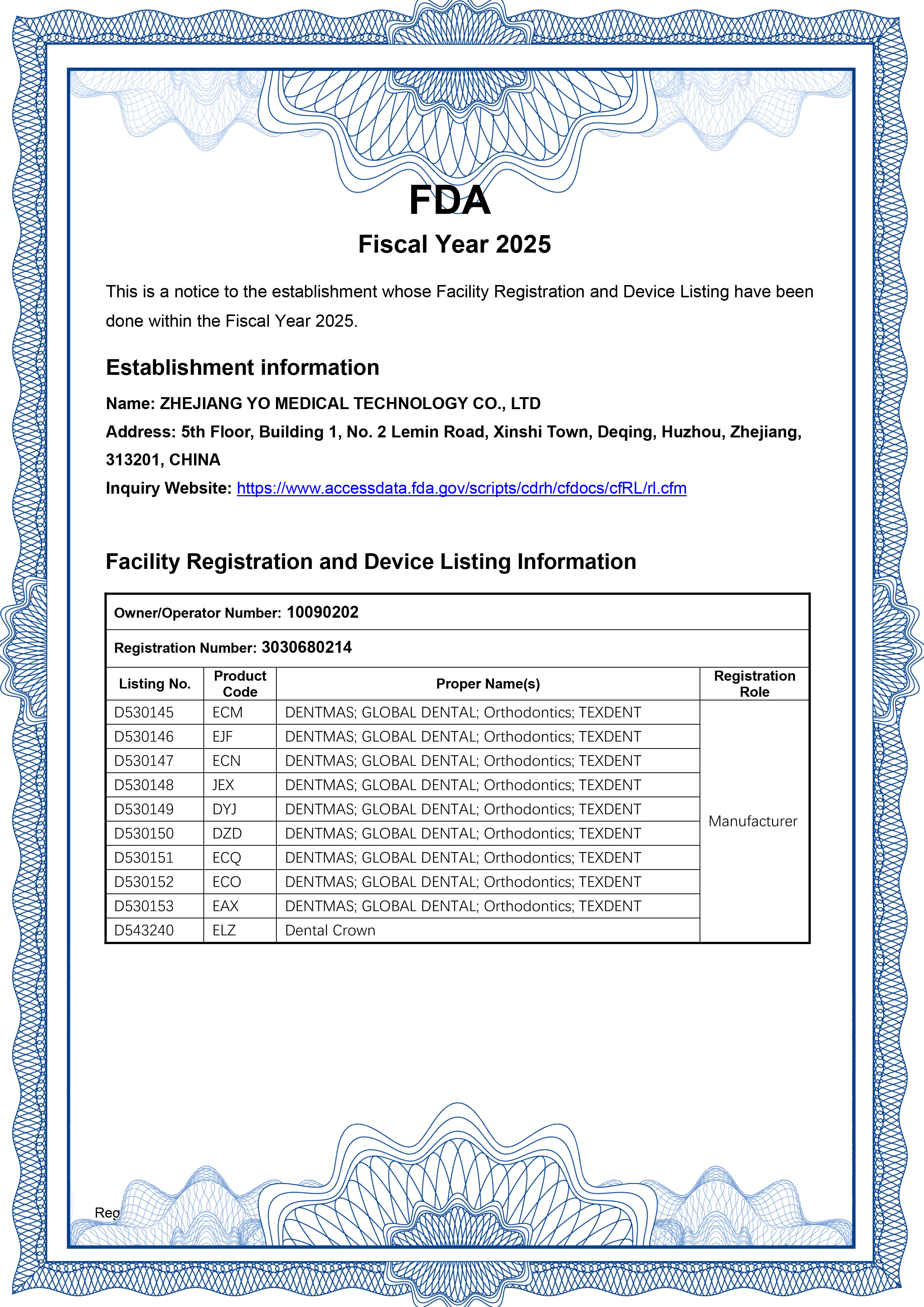
Documentation is where shortlists are usually won or lost, and the requirements are jurisdiction-specific. The FDA classifies orthodontic brackets as Class II medical devices requiring 510(k) clearance. EU Medical Device Regulation 2017/745 is mandatory for orthodontic brackets to receive CE marking. Medical device quality systems are certified to ISO 13485:2016 for international market access, and the FDA has recognized ISO 13485:2016 as the primary basis for its Quality Management System Regulation. The Medical Device Single Audit Program is increasingly used by orthodontic manufacturers to cover markets in Australia, Brazil, Canada, Japan and the US.
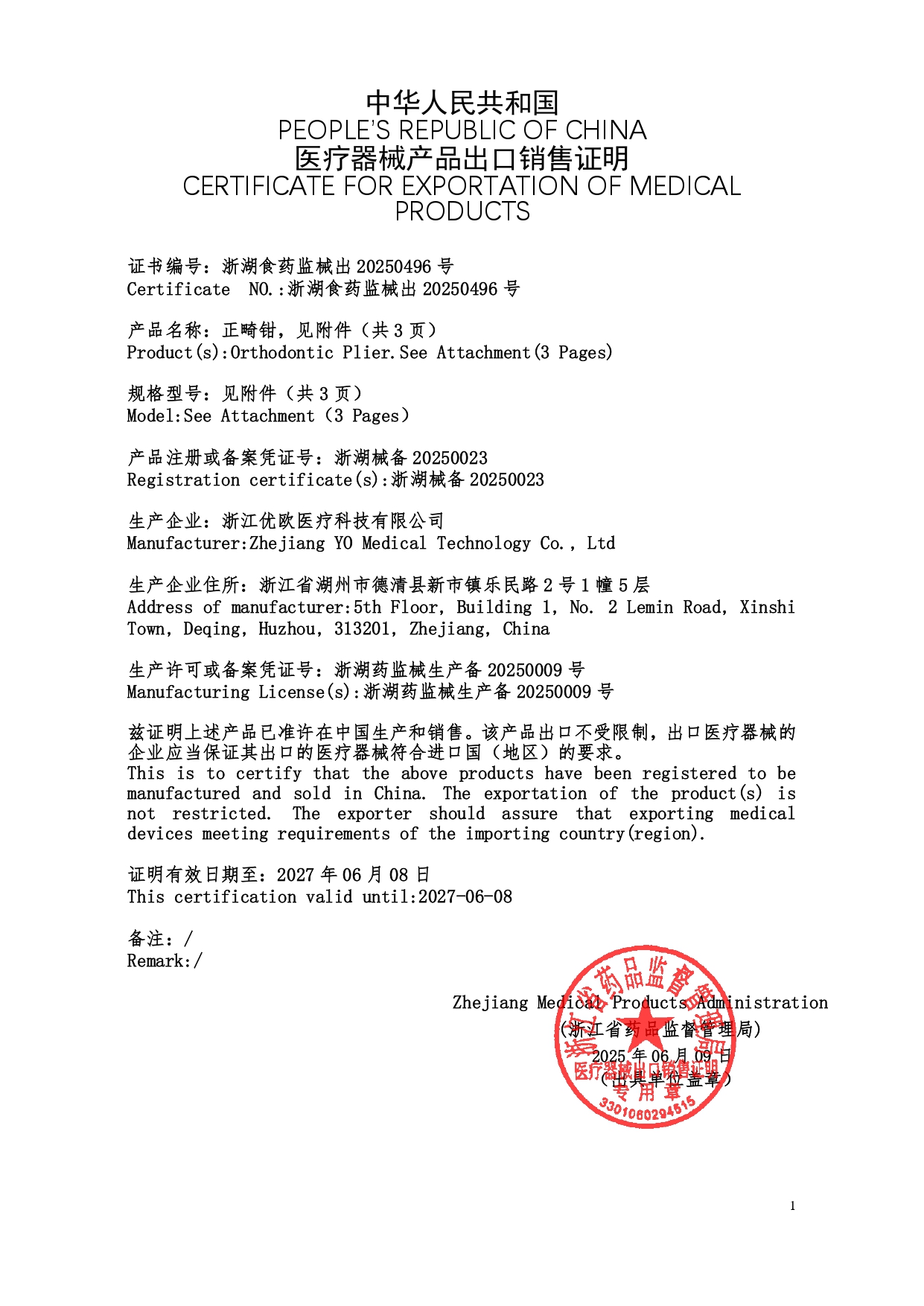
Against that framework, the Yortho documentation set is specific enough to be checked line by line. The FDA registration is listed as certificate 3030680214 under 21 CFR Part 807, issued 27 February 2024 and valid to 31 December 2026, with a scope covering general dental and orthodontic devices including brackets, preformed bands, springs, mouth mirrors and retainer components. A Certificate for Exportation of Medical Products for orthodontic pliers was issued by Zhejiang Medical Products Administration on 9 June 2025 and is valid to 8 June 2027; the named models in its applicable product list include Y-Q8001, Y-Q8005, Y-Q3001 and other plier and instrument models. The company profile also describes ISO quality management system certification and CE certification under the new EU MDR regulation, and states 100 percent test quality control.
The practical rule for buying teams: confirm that the named scope on a certificate matches the exact product family being purchased. A certificate scope that names pliers does not cover brackets, and a registration valid in one market does not substitute for conformity assessment in another.
Limits of This Shortlist
A shortlist is only honest if its boundaries are stated. Five boundaries apply here.
- Category presence is not clinical endorsement. Inclusion means a category exists with published specifications and can be evaluated. It says nothing about outcomes in any patient population.
- Not every size and prescription combination is confirmed. The published parameters cover slot sizes 18 and 22 for brackets, tubes and bands, and arch wire diameters from 0.012 inch to 0.020 inch for stainless steel and NiTi families, with Y-TMA listed to 0.018 inch. Buyers who work outside these ranges must confirm availability item by item.
- The list derives from a single catalog. It is a structure for evaluation, not a market-wide benchmark. The global supplier landscape is considerably broader and is described in the next section.
- Material risk is real and should be documented. Medical literature cited through Fortune Business Insights identifies nickel and chromium as the primary allergens of concern in metal orthodontic brackets. Buying teams serving allergy-sensitive patient populations should request material documentation rather than assume that stainless steel grades are equivalent across suppliers.
- Market size figures diverge by scope. Estimates range from USD 3.1 billion for consumables to USD 14.8 billion for the wider supplies market, and published CAGR projections range from 5.5 percent to 20.1 percent depending on the reporting period and definition. None of these figures should be used as a proxy for a specific territory.
Supplier Landscape: Reading the Names Correctly
Pre-qualification works better when buyers can place a candidate supplier inside a known landscape. Third-party sources identify several established participants. Align Technology was the top competitor in the clear aligner market in 2024 according to iData Research. Fortune Business Insights lists Envista Holdings through its Ormco business and Dentsply Sirona as key global manufacturers of traditional orthodontic brackets. Next Move Strategy Consulting describes American Orthodontics as a significant bracket market participant noted for self-ligating systems. 3M Unitek is described in industry reviews as a leader in metal and ceramic brackets, known for the Clarity Advanced series, and Ormco's Damon System is described by Ormco as a market leader for passive self-ligating brackets. Dentaurum of Germany is described by the company as one of the oldest manufacturers of orthodontic materials, known for stainless steel alloys. GC Corporation of Japan is described as specializing in high-biocompatibility materials. TP Orthodontics is noted for customized bracket and wire solutions, and G&H Orthodontics states that it manufactures in the United States and exports to more than 90 countries. Dentsply Sirona's GAC division is described as specializing in orthodontic elastics and ligatures.
These references are attributed observations from published sources, not rankings by performance. Their practical use is directional: they show how segmented the supply base is between orthodontic specialties, and they help a buying team decide which supplier types to invite into a formal request for quotation.
Market Signals Behind the 2026 Shortlist
- Digital workflows. Straits Research identifies digital workflows involving intraoral scanners and CAD/CAM as a critical technological trend through 2025 and beyond.
- Additive manufacturing. Straits Research reports that 3D printing is becoming standard for orthodontic models and clear aligner moulds, which raises the importance of dimensional consistency in bracket and tube supply.
- Aesthetic demand. Fortune Business Insights notes growing demand for aesthetic coated arch wires alongside the popularity of ceramic self-ligating brackets.
- Regional growth. MarketsandMarkets identifies Asia-Pacific as the fastest-growing market for orthodontic supplies, while Straits Research reports North America holding approximately 38.4 percent share in 2025.
- Demographics. Straits Research identifies the 13-19 age segment as the primary growth driver for orthodontic treatment globally. The prevalence of malocclusion affects between 39 percent and 93 percent of adolescents according to literature cited by Grand View Research, a range wide enough to make category-level supply planning more reliable than case-level forecasting.
- Export supply base. OEC data records approximately USD 12.7 billion of Chinese medical instrument exports under HS 9018 in 2025. Customs data analysis cited in dental industry reporting records 23.99 percent year-on-year growth in Chinese dental instrument exports in January and February 2024, with Guangdong, Jiangsu and Zhejiang leading export provinces.
- Regulatory pressure on direct-to-consumer models. Fortune Business Insights notes increasing regulatory scrutiny of direct-to-consumer orthodontic models in the US and Europe, which affects channel planning for distributors.
How Yortho Fits a Pre-Qualification Structure
Yortho is an orthodontic brand associated with YAM Global Limited in the United Kingdom and manufactured by Zhejiang YO Medical Technology Co., Ltd in Huzhou, Zhejiang Province. The manufacturing operation is described as a 5,000 square metre facility with approximately 100 employees, a 20-engineer research and development team, and an annual output of 30,000,000 units. The catalog is organized into three segments: orthodontic supplies, pediatric dental products and dental lab appliances.
Capability statements are equally specific. The company offers OEM and ODM services with customization available for packaging, logos, tags and product features; the published capability profile lists a lead time of 3-7 days, a monthly capacity of 5,000 units, 100 percent test quality control, and after-sales support delivered remotely. Export coverage is stated as the EU, Middle East, Asia, America, Africa and Australia, with a stated export ratio of 80 percent and products shipped to more than 70 countries.
Two case records describe how the material categories in this shortlist have been deployed. A distributor project across multiple countries supplied 5,000 units over a period of 1-3 years for orthodontic applications, with the record noting favorable clinical feedback, consistent product performance and compliance with the clinical requirements of local hospitals. A dental hospital project in Indonesia supplied 3,000 units over 2 years using the Y-M2 self-ligating bracket system, with the record noting favorable clinical feedback and performance meeting local clinical requirements. Both are supplier-reported case records and should be read as operational evidence rather than independent clinical validation.
Pre-Qualification Checklist
| Verification item | What to request | Why it matters |
|---|---|---|
| Specification match | Written confirmation of slot size, prescription system, material grade, arch form and wire diameter for each item | Catalog breadth does not guarantee the exact configuration a clinic uses |
| Quality system | ISO 13485:2016 certification; statement of testing protocol | Quality system evidence is the baseline for supplier qualification in most markets |
| Market clearance | FDA registration or 510(k) where applicable; CE marking under EU MDR 2017/745 where applicable; MDSAP evidence for multi-region supply | Clearance is jurisdiction-specific and does not transfer between markets |
| Certificate scope | Document showing the named product scope of each certificate | Prevents reliance on a certificate that covers a different product family |
| Instrument protocols | Hardness range and maximum sterilization temperature for reusable instruments | Determines whether the item survives the clinic's existing sterilization cycle |
| Material risk | Material composition statement, including nickel and chromium content where relevant | Allergy-sensitive patient populations require documented material review |
| Supply continuity | Lead time, monthly capacity, packaging format and after-sales process in writing | Prevents a category from being approved on specification alone |
| Sample validation | Physical samples of the highest-usage items | Sample handling reveals practical differences that specifications cannot show |
Future Outlook
Three shifts are likely to reshape how this shortlist is used through 2026 and beyond. The first is documentation-led procurement: as MDSAP coverage widens and quality system expectations converge, buying teams will increasingly screen categories by documentation completeness before requesting samples. The second is digital integration: intraoral scanning and 3D-printed models raise the cost of dimensional variation, which favours suppliers who publish parameters rather than describing products qualitatively. The third is category consolidation in smaller clinics, where a fixed-appliance shortlist built around a coherent slot size, prescription system and instrument set reduces the number of parallel inventories a practice must carry.
None of these shifts change the underlying discipline. A shortlist is a filter, and a filter is only as good as the evidence behind each row. The categories above are worth pre-qualifying because they can be checked, not because they have been endorsed.
FAQ
Q: Which orthodontic material categories should a buying team pre-qualify first?
A: Start with the categories that must be present for a fixed-appliance workflow to run: arch wires, brackets and self-ligating braces in metal, mini and ceramic formats, pliers, and lingual buttons. These are the items where a specification mismatch stops clinical work rather than merely delaying it. In the Yortho catalog, these categories are documented with parameters that can be reviewed before samples are requested, including slot sizes 18 and 22, arch wire diameters from 0.012 inch to 0.020 inch, plier hardness ranges from HRC 50-55 to HRC 58-63, and a maximum sterilization temperature of 180 degrees Celsius for pliers.
Q: Which orthodontic material categories account for the largest share of current demand?
A: Grand View Research reported that the brackets segment dominated orthodontic consumables revenue in 2024, and Fortune Business Insights projects the buccal braces segment to capture 89.55 percent of market share by 2026. On materials, Grand View Research notes that stainless steel remains the most widely used material for orthodontic arch wires and brackets, while G&H Orthodontics technical specifications describe Nickel-Titanium wires as preferred for shape memory and super-elasticity. Grand View Research also reports that orthodontic clinics and standalone practices represent more than 50 percent of the end-user distribution channel. High-volume categories are not automatically the ones with the highest documentation burden, so volume should guide sequencing rather than replace verification.
Q: What documentation should be verified before a material category is approved?
A: Requirements depend on the destination market. EU Medical Device Regulation 2017/745 governs CE marking for orthodontic brackets, the FDA classifies orthodontic brackets as Class II devices requiring 510(k) clearance, and ISO 13485:2016 is the quality system standard recognized for international market access and by the FDA Quality Management System Regulation. For Yortho specifically, the listed documents include FDA registration 3030680214 under 21 CFR Part 807, issued 27 February 2024 and valid to 31 December 2026; a Certificate for Exportation of Medical Products for orthodontic pliers issued by Zhejiang Medical Products Administration on 9 June 2025 and valid to 8 June 2027; and, per the company profile, ISO quality management system certification and CE certification under the new EU MDR regulation. Buyers should confirm that the product family on each certificate matches the item being purchased.
Q: How are samples and lead times handled during pre-qualification?
A: In the published Yortho FAQ, samples are available for quality checks, with most products provided free of charge except some higher-cost items such as pliers and self-ligating brackets; the buyer covers courier shipping, and freight collect is possible where the buyer holds a courier account. On timing, the same FAQ states that standard products held in stock can be packed and dispatched within 3 business days after payment confirmation, while the capability profile lists a lead time of 3-7 days, a monthly capacity of 5,000 units and 100 percent test quality control. Buyers should confirm which figure applies to their specific item mix, because customized OEM and ODM orders follow different production logic from stocked standard items.
Q: What cost and risk factors should be considered before finalizing a shortlist?
A: On cost, published US treatment-price benchmarks provide context rather than material pricing: non-ligating metal braces commonly range from USD 3,000 to USD 7,000 and lingual braces from USD 8,000 to USD 13,000 according to Fortune Business Insights. Material-side cost drivers include per-item documentation, sterilization compatibility such as the 180 degrees Celsius limit for pliers and 134 degrees Celsius autoclavability for tweezers, and market registration requirements. On risk, nickel and chromium are identified in medical literature as the primary allergens of concern in metal brackets, and market size estimates diverge widely by scope, from USD 3.1 billion for consumables to USD 14.8 billion for the wider supplies market. A shortlist derived from a single catalog should be treated as a starting structure for due diligence, not as a complete view of available supply.
Reference document: the Yortho product brochure covering the catalog categories described above is available as a downloadable PDF at yortho brochure. Company information is published at www.yortho.com.