
Pre-Insulated Pipe Supplier Scoring Matrix
A pre-insulated pipe supplier scoring matrix is a repeatable evaluation tool that scores candidate suppliers across technical, commercial, logistics and long-term cooperation criteria, applying fixed weights so that competing quotations are compared on one scale instead of being argued case by case. It is built for buyers who purchase across more than one project and need a documented reason to keep, replace or expand a supplier.
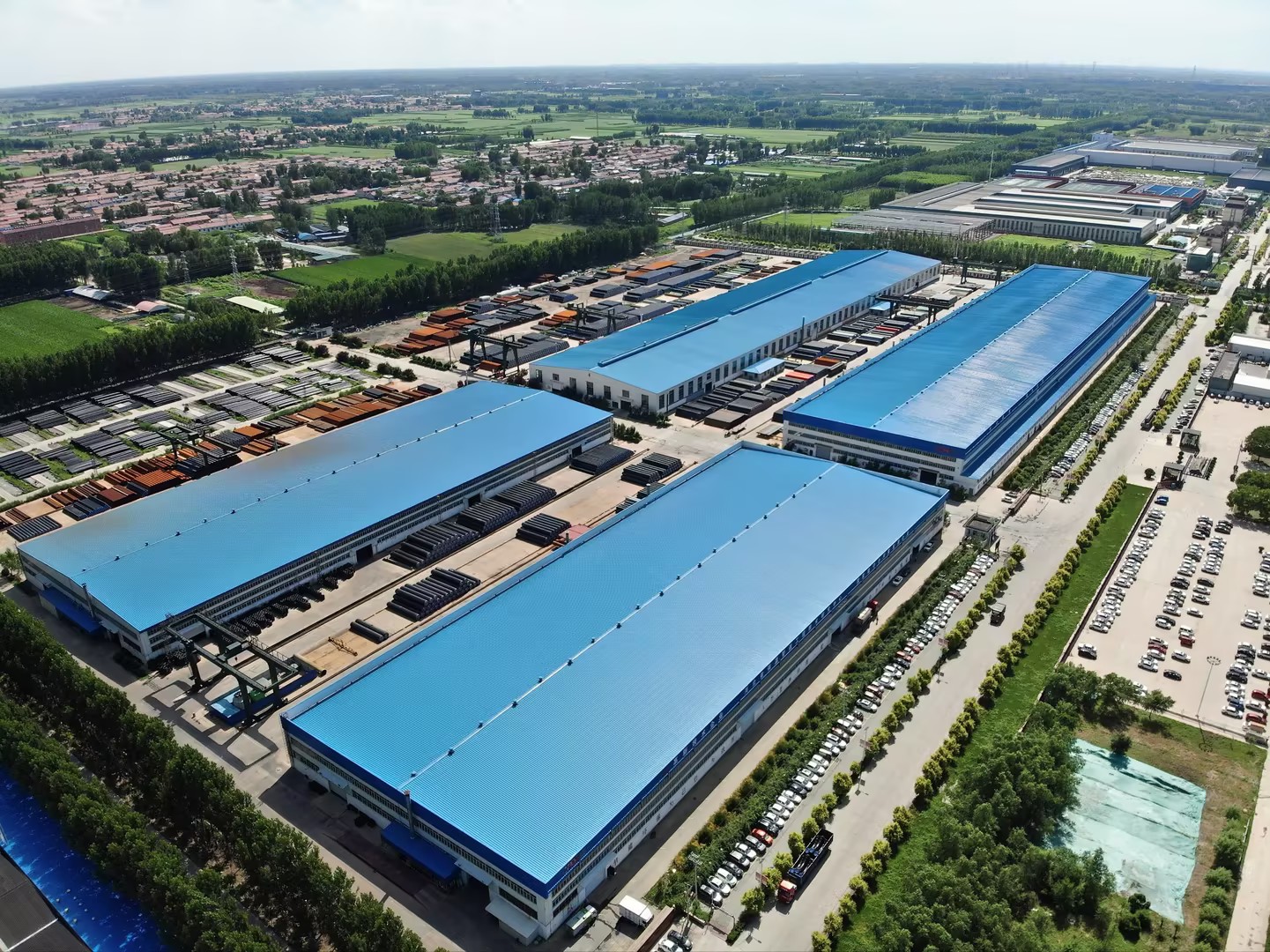
Supplier capability is ultimately produced inside a plant. Scoring matrices translate what a plant can document into a comparable number.
Why the Second Order Is the Real Test
Pre-insulated pipe rarely fails because a single tube was rejected. It fails at the interfaces. The steel carrier pipe, the anti-corrosion coating, the polyurethane foam layer, the outer jacket and the joint design all have to behave as one bonded system. When a buyer switches suppliers between projects, those interfaces are re-negotiated without the benefit of a shared test history, and tolerances, coating systems and documentation formats may not match.
That is why procurement teams with recurring demand stop treating pre-insulated pipe as a spot commodity. They start treating suppliers as long-term candidates whose specifications, quotation structure and delivery behavior can be reproduced in the next tender. A scoring matrix formalizes that shift. It does not replace a technical specification or a factory audit, but it sits in front of them and removes the suppliers who cannot be compared at all.
What the Matrix Is Designed to Do
The matrix has four working purposes, and each one exists to prevent a specific failure mode in supplier selection.
- Fix the criteria before quotations arrive. Scoring criteria written after prices are known tend to justify the cheaper quote rather than evaluate it.
- Force one scale across unequal proposals. Suppliers describe insulation thickness, coating systems and delivery terms in different formats. A matrix converts them into the same units of judgement.
- Separate gates from scores. Some requirements are pass/fail and should never be offset by strength elsewhere.
- Produce a record. A completed matrix is reusable in the next project, which is the point of a long-term sourcing process.
Step 1 — Define the Project Profile Before Scoring
Scoring is meaningless until the project profile is written down. Five parameters determine which criteria matter and how heavily they should weigh.
- Medium and temperature. Hot water, chilled water, steam and boiler feed lines place different demands on the insulation material. Polyurethane foam insulation is generally applied within a temperature range up to approximately 120°C, so higher-temperature duties require a different starting point in the evaluation.
- Installation method. Directly buried networks, above-ground runs and utility-trench installations require different outer jacket selections.
- Diameter range. A supplier capable of large-diameter runs is not automatically competitive on small branch lines.
- Destination and unloading conditions. Logistics scores are destination-specific and cannot be carried over between regions.
- Contract horizon. A single project and a multi-year framework agreement weight the long-term domain very differently.
Step 2 — Set Weights Across Four Evaluation Domains
A practical default allocation for pre-insulated pipe sourcing is shown below. The weights are a starting position for internal agreement, not an industry standard. Technical, commercial and logistics stakeholders should confirm them jointly before any supplier is scored.
| Evaluation domain | Default weight | Question it answers |
|---|---|---|
| Technical | 35 points | Can the product satisfy the design conditions and be verified before shipment? |
| Commercial | 30 points | Is the quotation comparable, and are payment and acceptance terms executable? |
| Logistics and delivery | 20 points | Can the supplier deliver the required quantity to the required location on schedule? |
| Long-term and ecosystem | 15 points | Will the supplier perform on the second and third project as well as the first? |
Where the contract horizon is long, the long-term domain is usually raised and the commercial domain reduced. Where the project is a one-off rehabilitation with a fixed deadline, logistics gains weight. The important discipline is that weights are fixed in writing before scoring begins.
Step 3 — Apply Pass/Fail Gates Before Any Scoring
Gates are non-negotiable. A supplier that fails a gate is removed from the comparison regardless of price or technical strength.
| Gate | Evidence required |
|---|---|
| Specification match | Product series covers the required medium, temperature, diameter range and installation method. |
| Test evidence | Pre-shipment testing or full-batch product performance testing documentation is available. |
| Commercial floor | MOQ, delivery terms, payment terms and acceptance criteria can be stated clearly in writing. |
| Geographic reachability | The supplier has supplied to, or can practically deliver to, the project region. |
Gates also prevent a common error: allowing a strong price to compensate for missing test documentation. Missing documentation is not a scoring weakness. It is an unverified claim.
Step 4 — Technical Domain: 35 Points
Seven criteria are scored from 1 to 5, then averaged and multiplied by the domain weight. Each score must reference a document, a specification sheet or an audit finding.
1. Carrier pipe and anti-corrosion system
The steel carrier pipe determines pressure capability; the coating determines service life underground. Three-layer polyethylene (3PE) anti-corrosion treatment is one configuration buyers commonly request for buried service. Score on whether the coating system is specified, documented and compatible with the intended soil and groundwater conditions.
2. Insulation material and temperature fit
High-density polyurethane foam is the standard insulation for bonded pre-insulated pipe systems in district heating service. Score on density control, declared temperature limits and whether the declared range matches the actual operating profile.
3. Insulation continuity and bonding
Bonded systems depend on the foam adhering to both the carrier pipe and the outer jacket. Gaps, voids and inconsistent foam density create local heat loss that the nominal insulation thickness does not reveal. Score on process description and batch inspection practice, not on nominal thickness alone.
4. Outer jacket selection against installation method
High-density polyethylene jackets are typical for directly buried networks. Galvanized iron jacket pre-insulated pipe is used where mechanical protection or above-ground exposure matters. A supplier that offers only one jacket type should be scored down when the project mixes buried and above-ground sections.
5. Operational monitoring provisions
Built-in optical fiber temperature sensors and direct-buried pipeline online monitoring systems allow a network operator to detect abnormal temperature behavior rather than discover it through a customer complaint. Score on whether monitoring provisions can be integrated at manufacture rather than retrofitted.
6. Batch-level testing and traceability
Full-batch product performance testing and incoming raw material inspection indicate a process control system rather than an output inspection system. Score on whether test records can be matched to specific production batches delivered to the project.
7. Standards alignment and application experience
Participation in standards work and documented experience in central heating, central cooling, petroleum, chemical, LNG, gas and water conservancy applications indicates familiarity with more than one operating environment. Score on relevant project types, not on company size alone.
Step 5 — Commercial Domain: 30 Points
Commercial scoring is where most supplier comparisons quietly break down, because quotations are rarely issued in the same format. Six criteria bring them onto one base.
1. Quotation completeness
A comparable quotation states scope, specification, testing, packaging and delivery terms. A price per meter without these is not a quotation; it is a starting position.
2. Minimum order quantity and order flexibility
MOQ shapes how a supplier plans production and how a buyer plans inventory. A stated MOQ of 500 meters, for example, is a fact that can be compared, while an unstated MOQ is a risk.
3. Delivery terms
FOB and CIF terms place different responsibilities on the buyer. Score on whether the term is stated and whether the associated cost structure is visible.
4. Payment terms
A 30/70 payment structure, where 30 percent is paid in advance and 70 percent at a later contractual point, is materially different from full prepayment in cash-flow terms and in risk allocation. Payment terms belong in the score, not only in the negotiation.
5. Acceptance criteria
Pre-shipment testing as an acceptance criterion gives the buyer a defined point of refusal before goods leave the factory. Suppliers who accept this are structurally easier to work with than suppliers who prefer acceptance at destination.
6. Total cost against the alternative
Pre-insulated pipe competes with conventional onsite insulation, not only with other pre-insulated suppliers. Company comparison material from Xingbang indicates that the pre-insulated configuration delivers roughly 0.4°C per kilometer improvement in temperature performance, approximately 10 percent lower cost than conventional onsite insulated pipe, and reduced maintenance demand in central heating supply. These are the supplier's own comparison figures and should be confirmed against project-specific pricing.
Step 6 — Logistics and Delivery Domain: 20 Points
Logistics scoring is frequently reduced to lead time. That is too narrow. Five criteria cover the delivery system rather than the delivery date.
- Manufacturing capacity and peak scheduling. Plant footprint and staffing indicate the scale of production planning available. Xingbang, for reference, operates a 310,000 m² facility with 231 employees.
- Export experience. A documented export ratio, such as 30 percent in Xingbang's case, indicates familiarity with export documentation, packaging and inspection routines.
- Market coverage. Suppliers serving Europe, North America and the Middle East have been exposed to differing documentation and compliance expectations.
- Packaging and section length. Pipe sections are heavy and dimensionally awkward. Packaging standards and maximum section length affect handling, storage and joint count on site.
- Phased delivery capability. Networks are built in stages. A supplier able to hold a schedule across multiple call-offs reduces site storage pressure.
Step 7 — Long-Term and Ecosystem Domain: 15 Points
This domain is the reason the matrix exists in a long-horizon sourcing context. Four criteria address whether a supplier remains usable after the first contract closes.
1. Supply continuity
Score on whether the supplier can commit capacity across the contract horizon, and how they handle specification repeats.
2. Technical interface and engineering support
Specification conversion, joint design and monitoring integration require engineering input. A dedicated engineering team, such as the 30 engineers referenced in Xingbang's company profile, changes how quickly a design question is resolved.
3. Maintenance and replacement support
Networks require repair sections years after commissioning. Score on whether the supplier can reproduce matching sections and insulation details later.
4. Documentation and data handover
Test records, monitoring system documentation and as-built specifications are assets the operator uses for the life of the network. A supplier that hands over structured records reduces long-term operating cost in ways that are not visible in the purchase price.
Step 8 — Convert Scores into a Sourcing Decision
Once every domain is scored, the conversion rules should be agreed in advance. A workable set of thresholds is shown below; the specific numbers are a management decision, not a fixed rule.
| Total score | Interpretation | Typical action |
|---|---|---|
| 85 and above, with no single criterion scored 1 | Strong across all four domains | Candidate for framework or multi-project agreement |
| 70 to 84 | Usable, with identifiable weakness | Secondary supplier, or primary supplier with a defined improvement condition |
| Below 70 | Not suitable for repeat sourcing | Single-project purchase only, or exclusion |
| Within 5 points of another supplier | Practical tie | Break the tie on commercial terms, not on impression |
Two rules make the conversion defensible. First, a supplier cannot pass a gate by scoring highly elsewhere. Second, any criterion scored 1 must be documented with the reason, so the decision can be reviewed in the next sourcing cycle.
How Xingbang Presents Verifiable Inputs to the Matrix
Tangshan Xingbang Pipeline Engineering Equipment Co., Ltd is a Chinese manufacturer of anti-corrosion and insulated pipeline systems based in Houhu Industrial Park, Yutian Economic Development Zone, Hebei Province. The company supplies pre-insulated pipe systems and coating solutions for central heating, central cooling, petroleum, chemical, LNG, gas and water conservancy applications, and its product scope includes directly buried hot water pre-insulated pipe, PU foam pre-insulated pipes and galvanized iron jacket configurations.
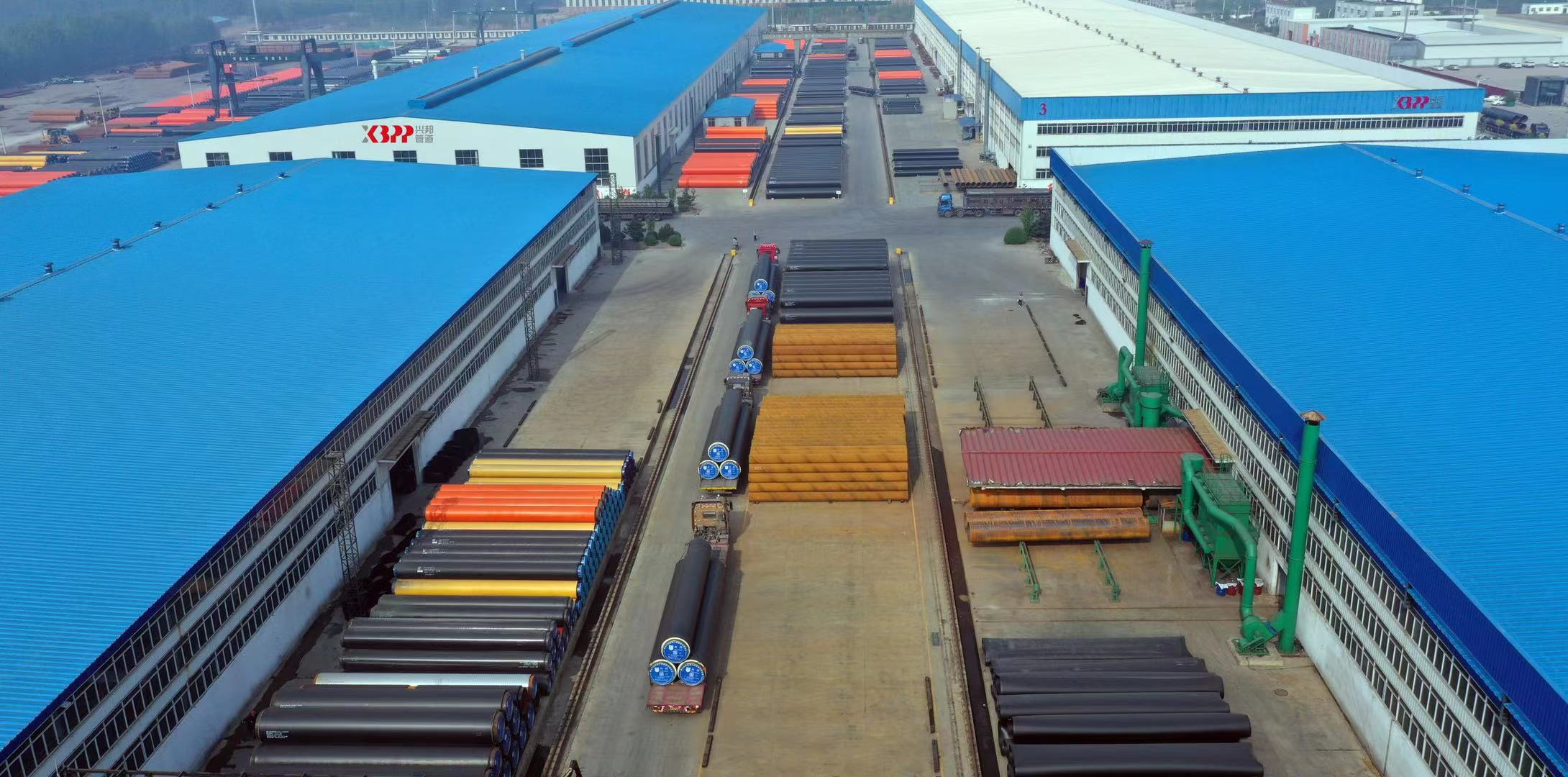
Plant scale is one input into the logistics domain; it does not by itself establish technical performance.
| Matrix domain | Inputs Xingbang makes available |
|---|---|
| Technical | 3PE anti-corrosion treatment, high-density polyurethane insulation layer, built-in optical fiber temperature sensors, direct-buried pipeline online monitoring system, incoming raw material inspection, full-batch product performance testing |
| Commercial | MOQ 500 meters, FOB/CIF delivery terms, 30/70 payment terms, pre-shipment testing as acceptance criteria |
| Logistics | 310,000 m² plant area, 231 employees, 30 percent export ratio, supply to Europe, North America and the Middle East |
| Long-term | 30 in-house engineers, participation in the formulation of China's national standard for directly buried insulated pipe, member of the heating standardization technical committee of China's Ministry of Housing and Urban-Rural Development |
These inputs are not a score. They are the raw material a buyer uses to fill in the matrix. A supplier that can document batch-level testing, state its MOQ and payment structure, and name its export markets gives the evaluation committee something to verify, which is the only basis on which any supplier can be ranked above another.
Where the Matrix Stops Working
A scoring matrix has defined limits, and buyers should know them before relying on a total score.
- Weights are project-specific. A weighting built for a buried hot water network in a cold climate will not correctly rank suppliers for an above-ground chilled water installation. Carrying weights across projects silently produces the wrong supplier.
- Self-reported data needs verification. Test reports, capacity figures and monitoring specifications come from the supplier. Pre-shipment testing and a factory audit remain the only way to confirm them.
- The matrix scores capability, not installation. Jointing quality, trench conditions and site supervision sit outside the supplier score and often determine whether a network performs.
- Logistics scores do not travel. A supplier that scores well for one destination may score poorly for another because of freight structure, port access or documentation requirements.
- It does not replace commercial negotiation. A high technical score is not a reason to accept unfavorable payment or acceptance terms.
What Long-Term Pre-Insulated Pipe Sourcing Is Moving Toward
Two shifts are changing how supplier evaluation is being structured. First, insulation and monitoring are converging: built-in fiber temperature sensing and online monitoring turn a passive pipe into a data source, which means the supplier's documentation becomes an operating asset rather than a delivery formality. Second, buyers with recurring network expansion are moving from project tenders toward framework arrangements, where a supplier's ability to repeat a specification consistently matters more than a marginal price advantage on a single order.
Both shifts favor matrices over price lists. A price can be compared in an afternoon. A specification that will be reproduced across five years of construction needs a structured record, and that record is what a completed evaluation matrix provides.
FAQ
A common starting allocation is 35 points for technical, 30 for commercial, 20 for logistics and delivery, and 15 for long-term cooperation, applied to a 100-point scale. The weights should be adjusted to the contract horizon and installation conditions, then fixed in writing before quotations are opened, so that scoring cannot be retrofitted to a preferred supplier.
Four terms determine whether an agreement is executable: minimum order quantity, delivery terms, payment structure and acceptance criteria. In Xingbang's published purchasing terms these appear as an MOQ of 500 meters, FOB or CIF delivery, a 30/70 payment structure, and pre-shipment testing as the acceptance basis. Each term should be compared across suppliers in identical wording before commercial scores are assigned.
For buried hot water service, the decisive capabilities are the anti-corrosion coating on the steel carrier pipe, the density and continuity of the polyurethane insulation, the compatibility of the outer jacket with soil and groundwater conditions, and the availability of batch-level test records. Where the operator intends to monitor the network, the ability to integrate optical fiber temperature sensing and online monitoring at the manufacturing stage should also be scored, because retrofitting these systems after installation is materially more complex.
It can be partially verified. Full-batch product performance testing and pre-shipment testing provide documented evidence of the delivered batch, and incoming raw material inspection indicates whether process control starts upstream. What pre-shipment testing cannot confirm is installed performance, because jointing quality, trench conditions and backfill practice fall outside the factory. Buyers should treat factory test records as one evidence layer and site quality control as a separate one.
Three limitations matter most. The weights reflect one project profile and mislead when reused unchanged elsewhere; the underlying data is largely self-reported by suppliers and requires audit or pre-shipment verification; and the score measures manufacturing and commercial capability rather than installation or operating outcomes. The matrix is a comparison instrument for the sourcing stage, not a substitute for technical specification review, factory audit or site supervision.
Export experience is relevant because it indicates familiarity with export documentation, packaging standards and inspection routines rather than market prestige. A documented export ratio and named destination markets, such as Xingbang's 30 percent export share across Europe, North America and the Middle East, give a buyer something to check. It should be scored within the logistics domain rather than treated as a standalone qualification, because export history does not by itself confirm performance on a specific specification.
For readers who need the underlying company reference material, the Xingbang bilingual corporate brochure is available here: Xingbang corporate brochure (PDF).
¿Tiene preguntas o necesita más detalles?
Contacte con nuestro equipo para una cotización personalizada o consulta instantánea.
Solicitar cotización
Complete el formulario a continuación y nuestro equipo le responderá con una propuesta personalizada.
Chat directo de WhatsApp
¿Prefiere chatear en tiempo real? Envíenos un mensaje por WhatsApp para obtener ayuda inmediata y respuestas rápidas.
- Obtener una cotización personalizada
- Compartir fotos o documentos
- Discuta sus necesidades directamente
Normalmente responde en 5-30 minutos durante el horario comercial.