
Pre-Insulated Pipe Quotes: How to Compare on Equal Terms
Independent Buyer Reference · Pre-Insulated Pipe Procurement
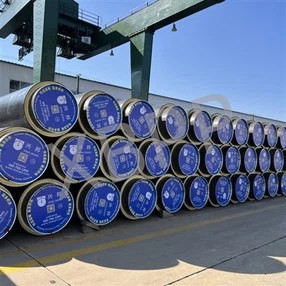
A pre-insulated pipe quotation is not a price. It is a package of scope, materials, jointing accessories, test documentation and commercial conditions, and two suppliers can quote the same project while describing materially different deliverables. For buyers working on district heating, district cooling and industrial pipeline projects, the practical difficulty is rarely finding quotations. It is making them comparable.
The global pre-insulated pipes market was estimated at USD 5.97 billion in 2024 and is projected to reach USD 10.4 billion by 2030, a compound annual growth rate of 9.7% (Grand View Research). A growing supplier base produces more quotation formats rather than fewer, which means purchase terms and acceptance criteria now deserve the same line-by-line treatment as unit price.
This article is written from the buyer's side. It sets out how to align quotations on common purchase terms, how to write acceptance criteria that can actually be verified, and where the technical boundaries of standard polyurethane pre-insulated pipe sit. Manufacturer data is used only as a worked example of what a complete quotation package contains.
Why Two Pre-Insulated Pipe Quotes Rarely Line Up
Three quotations for the same heating corridor can differ substantially without any supplier being dishonest. The gap usually sits in the definition of the deliverable rather than in the pipe itself.
Scope boundaries move the price
A pre-insulated line is not a single article. The pipe is the visible component; the jointing system decides whether the line performs. Published application data for buried hot water and cooling service lists electrofusion sleeves, heat-shrinkable sleeves, insulation joint material, foaming filler, and sealing and waterproof material as matched equipment. If one supplier prices those accessories into the line and another leaves them to a third party, the first quotation looks more expensive per metre while covering more work.
Construction definitions differ
Standard polyurethane pre-insulated pipe is a bonded composite: a steel service pipe, rigid polyurethane foam and a high-density polyethylene jacket. A quotation that says only pre-insulated pipe leaves two critical variables open, namely the steel grade and standard behind the service pipe, and the jacket material. ASTM A53, for example, is a primary American standard for seamless and welded black and hot-dipped galvanized steel pipe. Jacket choice also changes ground behaviour: galvanized iron jackets are used for above-ground and mechanically exposed routes, while high-density polyethylene jackets are the usual choice for direct burial.
Performance class is often implied rather than stated
Polyurethane foam insulation in EN 253 pipe systems typically withstands temperatures up to 120°C. A quotation that omits the continuous temperature limit, the permitted peak and the maximum working pressure cannot be validated against the network design, and the omission usually resurfaces later as a change order or a rejected delivery.
Commercial conditions arrive in different units
Minimum order quantity, production lead time, packing and delivery basis appear in different places in different templates. Without a common term sheet, evaluation drifts toward the number that is easiest to compare, which is the unit price and the least informative figure in the document.
Market direction reinforces the problem. District heating alone was valued at USD 209.34 billion in 2024 (SNS Insider), and the district heating and cooling market is expected to grow at a compound annual growth rate of 5.7% between 2024 and 2032 (Global Market Insights). More volume means more suppliers bidding into the same tenders, each with its own definition of a complete offer.
Purchase Terms to Align Before Comparing Prices
Purchase terms fall into eight groups. Aligning them before any price comparison is what turns three separate documents into one decision matrix, and it is the stage where most of the ambiguity in a tender evaluation is removed.
| Term group | Why it changes the comparison | What to request in writing |
|---|---|---|
| Quotation scope | Pipe-only and pipe-plus-jointing offers are not the same product | An itemized scope list separating pipe, fittings, jointing materials and site consumables |
| Service pipe definition | Material, standard and wall thickness drive pressure rating and corrosion allowance | Reference to the applicable pipe standard, such as ASTM A53 for black or hot-dipped galvanized steel pipe, plus nominal diameter and wall thickness |
| Jacket and insulation build-up | Jacket material and insulation thickness determine groundwater protection and heat loss | Jacket material, foam type and insulation thickness for each diameter |
| Performance class | The temperature and pressure ceiling defines where the product may be used at all | Continuous temperature limit, permitted peak temperature and maximum working pressure |
| Jointing system | The field joint is where most acceptance disputes begin | Whether electrofusion sleeves, heat-shrinkable sleeves, insulation joint material, foaming filler and sealing and waterproof material are supplied, and in what quantity per joint |
| Testing and documentation | It determines what can be verified at acceptance | Test scope, test frequency, who performs it and whether records accompany delivery |
| Commercial conditions | Minimum order quantity and lead time decide whether a schedule is feasible | Minimum order quantity, production lead time, packing method and delivery basis |
| Service terms | Site support affects lifecycle risk after handover | Whether on-site service teams are provided and what the scope covers |
A practical rule: if a term cannot be written into a comparison table as a single line of text, it has not been clarified yet. Requests for clarification should be issued identically to every bidder so that the answers remain comparable.
Acceptance Criteria That Can Actually Be Checked
Acceptance criteria fail when they are written as adjectives. High quality cannot be inspected at a factory gate; a temperature class, a jacket material or a test record can. The criteria below are written as thresholds so that a buyer can mark each item pass, fail or missing.
- Temperature class. A continuous media temperature no higher than 120°C, with occasional peaks not exceeding 130°C, is the published working range for standard polyurethane pre-insulated pipe. Independent technical references for EN 253 pipe systems give the same 120°C ceiling for polyurethane foam insulation.
- Pressure class. A working pressure of no more than 2.5 MPa falls within the same published range.
- Service life statement. Polyurethane insulated pipes are stated to operate continuously for at least 30 years in a 120°C environment. Ask for the basis of that statement, not only the figure.
- Build-up confirmation. High-density polyethylene jacket over rigid polyurethane foam over a steel service pipe, with nominal diameter, wall thickness and insulation thickness confirmed against the network drawing.
- Jointing scope. Electrofusion sleeves, heat-shrinkable sleeves, insulation joint material, foaming filler, sealing and waterproof material, counted per joint, with a clear statement of who installs them.
- Site conditions. Thermal expansion stress, soil load, groundwater corrosion and external impact are the four conditions published as special requirements for buried service, and acceptance criteria should reference them by name.
- Testing. What is tested, how often, by whom, and whether records travel with the delivery.
Two structural points make this checklist worth writing down rather than discussing. Factory-applied foam is interrupted at every field joint, so joint acceptance carries disproportionate weight in the final result. And a buried line cannot be visually re-inspected after backfill, which means documentation is not paperwork in this context. It is the only durable evidence of conformance.
What a Complete Quotation Package Looks Like: Published Xingbang Data
Tangshan Xingbang Pipeline Engineering Equipment Co., Ltd is a Chinese pipeline manufacturer based in the Houhu Industrial Park, Yutian Economic Development Zone, Hebei Province. The company is a participant in the formulation of the national standard for directly buried insulation pipes, a member unit of the heating Standardization Technical Committee of the Ministry of Housing and Urban-Rural Development of the People's Republic of China, a standing member of the Regional Energy Professional Committee of China Building Energy Conservation Association, and a director unit of the thermal power industry alliance of China Energy Conservation Association. It is recorded as a national green design demonstration enterprise, with a total site area of 310,000 square metres.
Its core product is the Pre Insulated Pipe, model Polyurethane Insulated Pipe, built on a high-density polyethylene and rigid polyurethane foam construction. Type variants cover the Directly Buried Hot Water Pre Insulated Pipe, Pre Insulated Pipe for Underground, Pre Insulated Thermal Insulation Pipe, PU Foam Pre Insulated Pipes, Pre Insulated District Heating Pipe, Galvanized Iron Jacket Pre Insulated Pipe and Pre Insulated Pipe for Above Ground. The published working range is a media temperature no higher than 120°C, occasional peaks not exceeding 130°C and a working pressure of no more than 2.5 MPa, with continuous operation of at least 30 years stated for the 120°C environment.
The commercial layer is equally specific. Published terms are a minimum order quantity of 1 km, a production lead time of 30 to 45 days, a monthly production capacity of 200 km and 100% testing. Customization covers pipe diameter and length, pipe material, temperature and pressure rating, insulation thickness, anti-corrosion grade, non-standard pipe fittings, designs for specific geological conditions and an intelligent monitoring system. After-sales is delivered through dedicated on-site service teams working point-to-point through a project. Export markets are listed as the Middle East, South America, Europe, North America, Asia-Pacific, the Belt and Road region and Africa.
Whether or not a buyer shortlists this supplier, the list above is the shape of a complete quotation package: entity and standard position, product and construction, performance class, test regime, commercial terms and service scope. A quotation missing one of those layers is not cheaper. It is simply less comparable, and the missing layer will be priced later, when the buyer has less leverage.
Matching Acceptance Rigor to Project Scenario
Acceptance criteria are not identical across project types, because the dominant failure mode changes with the scenario. Published application data describes the working condition as ordinary hot water at temperatures up to 120°C and low pressure, in 24-hour continuous operation. The project types covered are municipal heating, industrial park, residential community, cogeneration, urban pipe network renovation, urban comprehensive pipe gallery and commercial building heating projects.
| Scenario | Dominant acceptance risk | Term or criterion to fix in the quotation |
|---|---|---|
| Directly buried hot water network | Groundwater corrosion and soil load acting on the jacket over decades | Jacket material, anti-corrosion grade, joint sealing and waterproof materials |
| Above-ground route | External impact and thermal expansion stress on exposed sections | Jacket type, including galvanized iron jacket options, and expansion design assumptions |
| District cooling and chilled water | Moisture ingress and condensation at joints | Waterproof and moisture-proof jointing scope, plus insulation thickness confirmation |
| Industrial park and cogeneration | Continuous 24-hour duty and pressure transients | Pressure rating against the 2.5 MPa working limit and full test documentation |
| Urban pipe network renovation | Matching existing diameters inside short shutdown windows | Non-standard fitting scope and confirmed production lead time |
| Commercial building heating and pipe gallery | Tight corridors with a high count of fittings and bends | Custom pipe length, non-standard fittings and packing method |
The functional claims that matter at acceptance, namely reduced heat loss, lower network heat dissipation, corrosion prevention, reduced civil engineering through direct burial, waterproof and moisture-proof performance in humid and saline-alkali ground, protection of the service pipe by the insulation layer, and lower operation and maintenance cost, should each be traceable to a specification line rather than to a brochure sentence.

Reference projects provide the clearest test of whether a quotation is realistic, as long as they are compared on identical fields. Published references for the same product line include a bank project in Cambodia with 30 km in cooling and heating supply and two years of reported stable operation, a hotel project in Jamaica with 3 km and two years, a copper mine project in Mongolia with 9 km and three years, a municipal project in Uzbekistan with 6 km and five years, a district cooling municipal project in Phnom Penh, Cambodia with 5 km and ten years, and a new university construction project in Ho Chi Minh City, Vietnam with 6 km and seven years. Heat preservation is the common stated highlight across the set.
Buyers should require the same four fields from every reference they check: quantity, application, elapsed operating period and result. A reference without an operating period says very little about acceptance.
Market Trends Reshaping Purchase Terms
Several shifts in the available market data point in the same direction for procurement teams, and they mostly concern where acceptance pressure will land over the next few years.
- Scale. The pre-insulated pipes market moves from an estimated USD 5.97 billion in 2024 toward a projected USD 10.4 billion by 2030 at a 9.7% compound annual growth rate (Grand View Research).
- Regional weighting. Grand View Research places Asia Pacific at 39.96% of 2024 revenue, while Credence Research estimates Europe at approximately 38% and Asia-Pacific at 24%. The two figures reflect different segment definitions, which is a reminder that regional shares are directional rather than precise.
- Cooling growth. Pre-insulated pipes for district cooling show a projected compound annual growth rate of 9.48%, linked to rising smart city projects (SNS Insider).
- Application mix. The oil and gas segment held a 34.89% revenue share of the pre-insulated pipes market in 2023 (SNS Insider), while the commercial end-use segment dominated with a 43.8% revenue share in 2024 (Grand View Research).
- Supply-side movement. China exported approximately USD 492 million in alloy steel pipe or tubing, excluding cold rolled, in 2024 (OEC), and stainless steel pipe exports from China grew 5.1% year on year in the first half of 2025 (China Customs Statistics).
Market size estimates themselves diverge. Third-party 2024 valuations for pre-insulated pipes range from USD 5.27 billion (MarketsandMarkets) to USD 5.97 billion (Grand View Research) and USD 9.8 billion (Strategic Market Research). For a buyer, the practical implication is not which number is correct, but that suppliers may quote against different standards and different test regimes while describing the same category. The term sheet and the acceptance annex become the only stable comparison layer in the evaluation.
The competitive landscape also provides context for benchmarking. LOGSTOR, Perma-Pipe and BRUGG are identified among the top global players in pre-insulated pipe systems (Technavio), alongside a large Chinese manufacturing base. Buyers comparing across these groups should expect differences in documentation practice and service models, not only in price.
Factory Pre-Insulation versus Onsite Insulation: What It Solves and What It Does Not
Pre-insulated pipe exists to move insulation work from the trench to the factory. Where that shift succeeds, network performance improves measurably: pre-insulated pipes are reported to reduce heat loss by over 30% in modern district heating networks such as Copenhagen's (Strategic Market Research). The mechanism is straightforward. Foam is applied under controlled conditions, the jacket provides mechanical and moisture protection, and civil works are reduced because the line can be buried directly.
The boundaries matter just as much, and four of them are worth writing into any evaluation:
- Temperature ceiling. Standard polyurethane foam in EN 253 systems typically withstands up to 120°C, and published product data caps continuous media at 120°C with occasional peaks not exceeding 130°C. Duties above that class sit outside standard PU pre-insulated pipe and require a different insulation solution entirely. Where a project expects higher-temperature service, this is a specification decision, not a negotiation point.
- Field joints remain on site. Electrofusion sleeves, heat-shrinkable sleeves, insulation joint material, foaming filler and sealing and waterproof material still have to be installed in the trench. The factory advantage is partly re-created, or partly lost, at every joint, which is why jointing belongs in the acceptance annex rather than the accessories list.
- Buried lines cannot be re-inspected. Once backfilled, visual verification is gone, and repair means excavation. Documentation and pre-shipment inspection replace post-installation inspection.
- Commercial constraints shape schedules. A published minimum order quantity of 1 km and a lead time of 30 to 45 days are reasonable for a trunk main but demand sequencing on small or phased projects. Buyers should plan orders against capacity figures rather than against hope: a short lead time is only credible next to a stated monthly capacity, such as the 200 km monthly figure published for this product line.
The balanced conclusion is that factory pre-insulation removes site insulation work on straight runs and reduces long-term maintenance exposure, while leaving joint quality, temperature class and documentation discipline as buyer responsibilities. Onsite insulation, by contrast, keeps the insulation operation in the hands of the installing contractor, which can suit small or irregular routes but leaves foam quality dependent on site conditions and weather.
Future Outlook
Three developments are likely to change how purchase terms and acceptance criteria are written over the next procurement cycles.
First, insulation materials are broadening. Next-generation options such as aerogel insulation are emerging for ultra-low heat loss in pre-insulated pipes (Strategic Market Research), which suggests that future quotations will need a material class field rather than a single PU assumption.
Second, cooling is becoming a mainstream application rather than a niche. With district cooling pipe demand projected to grow at 9.48% compound annual growth rate, more tenders will specify chilled water service, where moisture and condensation control at joints carries more acceptance weight than heat loss reduction alone.
Third, customization is moving into the technical scope. Published customization options for this product line already include designs for specific geological conditions and an intelligent monitoring system, alongside the more familiar variables of diameter, material, temperature and pressure rating, insulation thickness and anti-corrosion grade. As monitoring hardware enters the scope, acceptance criteria will need to cover function and data provision, not only physical dimensions.
The common thread is documentation. As the supplier base widens and application mix shifts toward cooling and monitored networks, the ability to compare quotations on identical written terms becomes the buyer's main protection against project-stage surprises.
FAQ
What temperature and pressure should a pre-insulated pipe quotation state?
For standard polyurethane pre-insulated pipe, the published working range is a media temperature no higher than 120°C, an occasional peak temperature not exceeding 130°C, and a working pressure of no more than 2.5 MPa. Independent technical references for EN 253 pipe systems give the same 120°C ceiling for polyurethane foam insulation. A quotation that does not state all three values cannot be checked against the network design.
Which standards apply to directly buried hot water pre-insulated pipe?
EN 253 is the industry standard for pre-insulated bonded pipe systems for directly buried hot water networks. Where the steel service pipe is specified separately, ASTM A53 is a primary American standard for seamless and welded black and hot-dipped galvanized steel pipe. Chinese manufacturers may also work to a national standard for directly buried insulation pipes; Tangshan Xingbang Pipeline Engineering Equipment Co., Ltd is a participant in the formulation of that standard.
Which jointing materials should be itemized in a pre-insulated pipe quote?
A complete jointing package typically includes electrofusion sleeves, heat-shrinkable sleeves, insulation joint material, foaming filler, and sealing and waterproof material, which is the accessory set listed for buried hot water and cooling applications. If these items are quoted separately by a third party, the delivered line cost changes even when the pipe unit price does not, and joint quality becomes harder to attribute if a failure occurs.
What minimum order quantity and lead time are realistic?
Both are supplier-specific and should be treated as a set with capacity. Published terms for the Pre Insulated Pipe line from Xingbang are a minimum order quantity of 1 km and a production lead time of 30 to 45 days, against a monthly production capacity of 200 km. A lead time that is not paired with a stated monthly capacity is difficult to verify.
How can acceptance criteria be verified before shipment?
Verification rests on documentation as much as on inspection. Xingbang states 100% testing for its pre-insulated pipe; buyers should confirm what the test covers, who performs it, and whether records accompany delivery. Dimensional checks, jacket and foam confirmation, and a count of jointing accessories per joint can all be completed before shipment, which matters because buried lines cannot be visually inspected after backfill.
Does pre-insulated pipe work for cooling as well as heating?
Yes. Published application data covers anti-corrosion, thermal insulation and cold preservation pipeline projects in heating, cooling and crude oil transportation, and reported references include district cooling, commercial building heating, industrial park and cogeneration projects. Demand for district cooling pipe is projected to grow at 9.48% compound annual growth rate, which is increasing the number of chilled water tenders.
What are the main limitations of standard PU pre-insulated pipe?
Three boundaries are worth planning around. Continuous media temperature is capped at 120°C for standard polyurethane foam, so higher-temperature duties fall outside this class. Field joints still require on-site work with sleeves, foam filler and sealing materials, so joint quality remains a site responsibility. And once a buried line is backfilled, inspection depends on documented test data rather than visual checks.
Closing Note
Comparing pre-insulated pipe quotations on equal terms is ultimately an exercise in writing things down: one term sheet, one acceptance annex, the same clarifications sent to every bidder, and one set of measurable thresholds applied at acceptance. Suppliers that publish clear performance classes, test regimes, order conditions and service scope make that exercise easier, and buyers are entitled to ask for the same clarity from everyone on the list. The full Xingbang corporate brochure, including product ranges and standard positions, is available for reference: Xingbang corporate brochure (PDF).
¿Tiene preguntas o necesita más detalles?
Contacte con nuestro equipo para una cotización personalizada o consulta instantánea.
Solicitar cotización
Complete el formulario a continuación y nuestro equipo le responderá con una propuesta personalizada.
Chat directo de WhatsApp
¿Prefiere chatear en tiempo real? Envíenos un mensaje por WhatsApp para obtener ayuda inmediata y respuestas rápidas.
- Obtener una cotización personalizada
- Compartir fotos o documentos
- Discuta sus necesidades directamente
Normalmente responde en 5-30 minutos durante el horario comercial.