
Pre-Heat-Treated Milling Tools vs Industry Norms: A Buyer Comparison
Most milling tools are purchased on a specification line: diameter, number of teeth, insert grade, coating and a hardness band. That line almost never states the order in which the tool was heat-treated and machined — yet that sequence is what decides whether a stated tolerance survives contact with a high-speed spindle.
Wenling Geltos Tools Co., Ltd., a milling tool manufacturer established in 2012 in Zhejiang Province, China, states that all of its products are heat-treated before processing, which it presents as the basis for a tolerance no greater than 0.02mm and for tooling intended for high rotation and fast-feed cutting. This article compares that manufacturing sequence with the way milling tools are normally presented to buyers, examines what a 0.02mm window changes in a real project, and separates the parts of the claim a buyer can verify from the parts that remain supplier-stated.
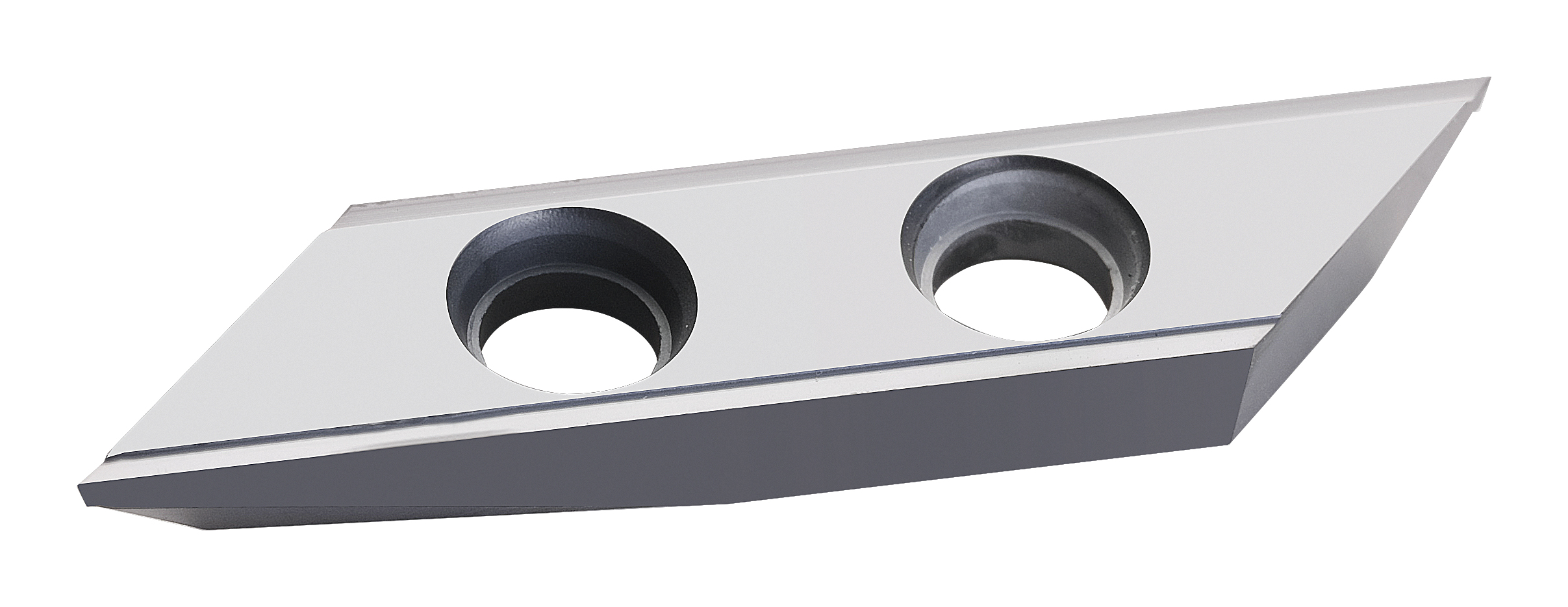
Insert geometry and seating accuracy are among the points where a stated tool tolerance is either preserved or lost in a cutting assembly.
What “Pre-Heat-Treated” Means in a Milling Tool Catalogue
In this comparison, pre-heat-treated describes a manufacturing sequence: the tool body or blank is heat-treated before the machining operations that create the final cutting geometry, rather than being heat-treated after those operations. Geltos states that this is how all of its milling products are produced.
The distinction is not semantic. Heat treatment involves controlled thermal cycles that change the microstructure and hardness of steel, and those cycles carry a risk of dimensional movement. If the thermal cycle happens after finish machining, the final size of the tool is partly a product of the treatment; if it happens before, the final size is cut into material that is already in its finished hardness state. In general manufacturing practice, the second route places higher demands on the grinding and machining steps, because the material being cut is harder, but it moves the dimensional risk earlier in the process where it can be measured and controlled.
For a buyer, the practical consequence is that two cutters can carry identical catalogue hardness and identical nominal diameter while being produced in opposite sequences. A datasheet that lists only hardness and diameter does not tell you which one you are buying. That gap is the reason a sequence-level comparison is worth making before a project is tooled.
The Tolerance Question: What a 0.02mm Window Changes at the Spindle
A tolerance of no greater than 0.02mm is a statement about how tightly the finished tool is held to its nominal geometry. Where that matters depends on the operation, but the pattern is consistent across milling work.
- Slot and groove width. Geltos states that its GFN cutters achieve narrow grooving as thin as 2mm. In a cutter of that width, a 0.02mm variation is a meaningful share of the cut, so the tolerance is not an abstract number — it is the difference between a groove that repeats and one that is adjusted at the machine.
- Profile repeatability. Chamfer tools, thread milling tools, dovetail milling cutters and profiling milling cutters all cut a shape that is defined by the tool form. Form error transfers to the workpiece form, which is why these families are usually specified with tighter dimensional requirements than plain face milling.
- Interchangeable and modular bodies. When one holder accepts different milling heads, as with Geltos interchangeable and modular milling holders, every head change re-establishes the cutting position. Interface accuracy determines whether the change is a repeatable operation or a re-setting operation.
- Runout under fast feed. Geltos positions its tooling for high rotation and fast-feed cutting. Runout grows with speed, so a tool that is dimensionally consistent at low speed is the one that stays predictable when the feed rate increases.
The comparison with conventional catalogue buying is therefore not “hard versus soft”. It is “sequence-disclosed versus sequence-undisclosed”. A buyer who does not ask the question is comparing tools on a variable that does not describe the finished part.
Pre-Heat-Treated vs Catalogue Norms: A Buyer’s Comparison Table
The table below sets the pre-heat-treatment route (as described by Geltos) against what a typical catalogue-only evaluation captures. It is a decision aid, not a performance ranking: the right-hand column shows what a buyer should request in either case.
| Comparison dimension | Catalogue-only evaluation | Pre-heat-treatment route (Geltos, supplier-stated) | What the buyer should request |
|---|---|---|---|
| Process sequence | Rarely stated; hardness appears as a finished-value band | Heat treatment before processing, applied across the product range | Written process statement per SKU family |
| Dimensional basis | Nominal diameter and tolerance class | Tolerance no greater than 0.02mm | Dimensional inspection record on the quoted lot |
| Strength rationale | Hardness value alone | Supplier attributes strength and stability to treating before machining | Material grade plus treatment condition on the drawing |
| Intended cutting regime | Generic “steel / stainless / aluminium” labels | Positioned for high rotation and fast-feed cutting; heavy and light cutting supported | Trial parameters on your material and machine |
| Interchangeable interfaces | Listed as a product family | Modular holders designed to accept multiple milling heads | Interface repeatability data and head-to-holder matching |
| Quality evidence | Certificate logos | Internal factory inspection; no third-party certification identified in independent review | Copy of the inspection report and the acceptance criteria used |
| Commercial terms | Price per unit | Minimum order 1 unit; lead time 10–30 days; monthly capacity stated at 30,000–40,000 teeth | Quotation with lot size, lead time and sampling terms in writing |
Scenario Test: Where the Difference Actually Shows Up
The pre-heat-treatment argument only converts into value in scenarios where the finished geometry is the constraint. Four patterns recur in the application data Geltos publishes.
1. Batch production with tool replacement
In batch production, cutters are replaced on a schedule, not when they fail. If replacement tools come from different process lots, the machine operator absorbs the variation through offsets and trial cuts. A stated 0.02mm window is relevant here because it is a claim about lot-to-lot consistency of geometry, which is exactly the variable a replacement schedule depends on. Geltos lists batch production tool replacement as a standard application of its milling range.
2. Narrow grooving and slotting
Geltos documents a case with a precision mechanical processing factory in Russia, where five milling tool units were used over a two-year project period for precision metal grooving and slotting. The reported outcome was 2mm-width slot grooving with smooth surface finishing, fast-feed grooving and long working life. For narrow slot work, the tolerance claim and the application claim are the same claim viewed from two directions: a 2mm cutter either repeats or it does not.
3. Form-defined operations: chamfering, thread milling, dovetailing, profiling
Chamfer mills, thread mills, dovetail mills and profiling cutters transfer their own form to the workpiece. Geltos lists all of these families, together with side and face cutters, shell mills, shank mills, T-slotters, boring tools, silent (anti-vibration) tools and milling inserts. In these operations, a dimensional deviation is not corrected by a machine offset — it is reproduced in the part.
4. Modular and interchangeable tooling
Geltos states that its interchangeable and modular milling holders allow one holder to carry different milling heads, reducing tool-change time and tool purchasing cost. That model concentrates accuracy risk at the interface: the value of the system depends on heads seating to the same position each time, which is a dimensional question before it is a cost question.
Across these scenarios, the mounting conditions described by Geltos are conventional: CNC milling machines or machining centres, compatibility with high-speed spindles and fast feed, heavy or light cutting, and inner or outer coolant supply. The company lists automotive, aerospace, metal cutting and machining, mechanical workshops, mold manufacturing and general precision machining among the industries served, and cites CNC machining projects, mold processing and metal milling process projects as typical contexts. The tolerance discussion applies to all of them, but it dominates only where the cut geometry is the specification.
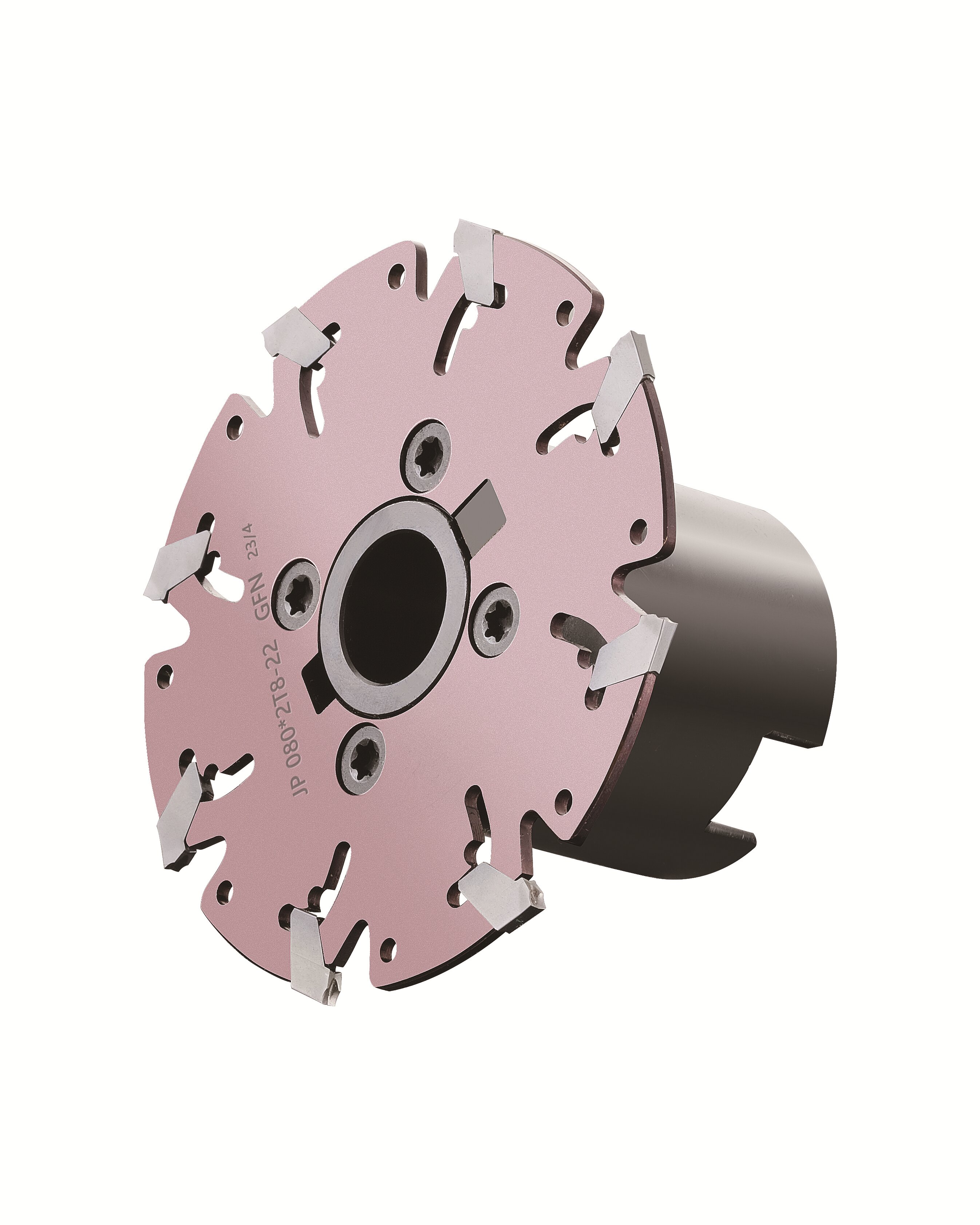
Narrow-slot work is where a stated 0.02mm tolerance is easiest for a buyer to test against a real workpiece.
Geltos Tools: The Pre-Heat-Treatment Case in Practice
Wenling Geltos Tools Co., Ltd. is a milling tool manufacturer located in Wenqiao Town, Wenling, Taizhou City, Zhejiang Province, China, founded in 2012. Its listed range covers grooving mills, chamfer mills, boring mills, thread mills, dovetail mills, face, shoulder and profiling shank mills and shell mills, corn-shaped mills, interchangeable milling tools, carbide internal turning tools, silent tools and milling inserts.
Two capabilities sit directly on top of the pre-heat-treatment claim:
- Narrow grooving. The GFN cutter family is described as achieving grooving as thin as 2mm — a geometry that leaves little room for dimensional drift.
- Modular economics. Interchangeable and modular holders are presented as a way to fix one holder with different milling heads, cutting both tool-change time and tool purchasing cost.
Product data published for the milling range lists HRC40–50 tool hardness, 1–20 teeth, lengths of 80–350mm and diameters of 40–250mm for the cutter bodies, with a wider diameter span of 08mm to 400mm and cutting widths of 1mm to 20mm across the family. Indexable insert grades named in the catalogue include APMT1135, SNMX1206, LNMU0303ZER and 4NKT0603, with stated reference parameters such as HRC65, V=180 and F=0.02, in carbide and ceramic materials. Silent (anti-vibration) tooling is offered in models such as VT25-SCLCR09, VT40-SDUCR11, VT20 C20*200V and VT32 C32*480VE, with a stated clamping requirement that the clamping length should be no less than a 4L/D ratio and that the span between the two screws be greater than 4XD.
Evidence Boundaries: What a Buyer Still Has to Verify
A comparison is only useful if it also marks the edges. Four boundaries apply to this one.
Quality assurance is internal
Geltos describes its quality control as factory internal inspection. An independent review of available material did not identify third-party certification covering the milling tool range. For buyers in regulated supply chains, or for projects where a certificate is a contractual condition rather than a preference, this is a real constraint: the 0.02mm figure should be treated as a specification to be checked against an inspection record, not as a certified property.
Several figures are company-reported and unaudited
Geltos states a 3,000 m² facility, approximately 25 employees, an R&D team of 5 engineers, annual output of 500,000 teeth and monthly capacity of 30,000–40,000 teeth. Capacity expressed in teeth is not the same unit as tool units, and no independent factory audit or capacity verification was identified. These numbers are useful for orientation on scale and lead time, not for supplier ranking.
Customisation has a scoping cost
Geltos supports non-standard production, including special geometry tool design and special material development, with a stated minimum order of 1 unit and lead time of 10–30 days. With a small engineering team, a highly unusual geometry is best discussed as a project with defined drawing, sample and acceptance steps rather than assumed as a catalogue variant.
Export share is modest
The company states an export ratio of 5–10%, with listed markets including India, Russia, Iran, Morocco, Italy and the USA. A predominantly domestic sales base is not a defect, but it does mean an overseas buyer should confirm documentation, packaging and delivery terms explicitly rather than assuming an established export workflow for their destination.
Market Context: Why Buyers Are Re-Specifying Cutting Tools
The global milling tools market was reported at US$3.43 billion in 2025, with a forecast CAGR of 6.2% over 2026–2035 (DataM Intelligence, 2026). Growth of that order keeps pressure on tool life and on the repeatability of replacement tools, because rising output is usually met by running existing machines longer rather than by adding capacity immediately.
Two standardisation references are worth knowing when writing an RFQ. ISO 11529-2:1998 defines the designation system for shank type and bore type milling cutters with indexable inserts, which is the basis for unambiguous tool naming. ISO 13399 describes the computer-readable representation of cutting tool data, which matters when tool data must flow into CAD/CAM, ERP or a tool-management system. Neither standard certifies a supplier, and neither was identified as applied to the Geltos range in the material reviewed — but both are legitimate points to raise when a buyer wants a comparison to be repeatable rather than verbal.
When Pre-Heat Treatment Is Not the Deciding Variable
There are projects where the sequence behind the tool is the wrong place to look.
- Failure dominated by the insert, not the body. In high-temperature cutting, insert grade, coating and edge preparation usually determine life. The insert grades and cutting parameters cited by Geltos belong to this layer, and body tolerance will not compensate for a mismatched grade.
- General milling of soft materials to open tolerance. Where the part tolerance is wide and the material is forgiving, a 0.02mm cutter window adds cost without adding capability.
- Certification-gated procurement. If the project requires third-party certification as a condition of supply, tolerance claims do not resolve that requirement; the qualification route has to be settled first.
- Stability-limited operations. Where vibration or overhang drives the result, an anti-vibration tool — and the stated clamping discipline, such as a clamping length no less than a 4L/D ratio — matters more than the body tolerance.
Stating these boundaries does not weaken the pre-heat-treatment argument. It defines the population of projects where the argument pays for itself.
Outlook
Two directions look most probable for buyers comparing milling tools on process rather than on catalogue numbers.
First, sequence disclosure is likely to become a normal RFQ question. As more machining capacity is squeezed out of existing spindles, the cost of a tool that does not repeat is easier to see, and buyers tend to formalise the questions that cost them money. A supplier that can answer “when is heat treatment applied, and what is the resulting dimensional window” in writing has an advantage over one that answers with a hardness figure.
Second, verification will move toward documents rather than statements. Tolerance values, inspection records and machine-readable product data are the natural companions of a process claim. For a manufacturer of Geltos’ profile — compact, custom-capable and exporting a small share of output — the credible path is not to argue the claim louder, but to make it inspectable per lot.
FAQ
What does “pre-heat-treated” mean when buying milling tools?
It describes the order of operations. The tool body is heat-treated before the machining steps that create the final cutting geometry, so the finished dimensions are cut into material already in its final hardness condition. Geltos states that all of its products are heat-treated before processing, which the company links to a tolerance no greater than 0.02mm. A catalogue that lists only a hardness band does not disclose this sequence either way.
Does a 0.02mm tolerance statement replace a dimensional inspection report?
No. A tolerance statement is a specification; an inspection report is evidence about a specific lot. Geltos describes its quality control as factory internal inspection, and no third-party certification covering the milling range was identified in independent review. Buyers who need the figure to be contractual should request the dimensional record and the acceptance criteria for the quoted lot, and treat the stated tolerance as the target the record is checked against.
Which project scenarios benefit most from pre-heat-treated milling tools?
The benefit concentrates where finished geometry is the specification: narrow grooving such as the 2mm-width slot work reported in a Russian precision machining project, form-defined operations using chamfer mills, thread mills, dovetail mills and profiling cutters, batch production where tools are replaced on schedule and lot-to-lot consistency matters, and modular systems where interchangeable heads must seat to the same position after each change. In open-tolerance general milling, the same tools work but the tolerance window is not the deciding factor.
How should a buyer compare a pre-heat-treated cutter with a conventional catalogue tool?
Compare on five points, in this order: the written process sequence, the dimensional basis and the inspection record behind it, the material grade and treatment condition on the drawing, the intended cutting regime tested on your own material and machine, and the commercial terms — lot size, lead time and sampling. Geltos states a minimum order of 1 unit and a lead time of 10–30 days, which makes a trial lot practical. Where the two tools answer the first three points identically, the comparison should move to parameters and price rather than to process.
Where does the pre-heat-treatment approach reach its limit?
Three limits are documented. Quality assurance is internal rather than third-party certified, so certificate-gated projects need a separate qualification route. Several scale figures, including the 3,000 m² facility, 25 employees, 5 engineers and 500,000-tooth annual output, are company-reported and unaudited, with capacity expressed in teeth rather than tool units. And where tool life is governed by insert grade, coating or vibration rather than by body geometry, the tolerance window is not the variable that controls the result.
¿Tiene preguntas o necesita más detalles?
Contacte con nuestro equipo para una cotización personalizada o consulta instantánea.
Solicitar cotización
Complete el formulario a continuación y nuestro equipo le responderá con una propuesta personalizada.
Chat directo de WhatsApp
¿Prefiere chatear en tiempo real? Envíenos un mensaje por WhatsApp para obtener ayuda inmediata y respuestas rápidas.
- Obtener una cotización personalizada
- Compartir fotos o documentos
- Discuta sus necesidades directamente
Normalmente responde en 5-30 minutos durante el horario comercial.