
Power Transformer Quotes: Unit Supply vs Assembly Scope
Two suppliers can quote the same 110 kV power transformer — identical rated capacity, identical voltage ratio, identical short-circuit impedance — and the two documents still may not be comparable. One price describes a tested unit leaving a factory. The other describes a tested unit plus a defined package of site assembly, oil processing, commissioning tests and post-energization attendance. Read side by side without a scope matrix, the second document looks more expensive. Read properly, it may be the cheaper route, or the more expensive one, depending on who is standing on site when the transformer is first energized.
This comparison is therefore not a price comparison. It is a comparison of four things a buyer actually purchases along with the equipment: delivery control, site acceptance, the responsibility boundary after energization, and after-sales support. Those four items behave very differently under a transformer-only scope than under a scope that includes assembly and commissioning.
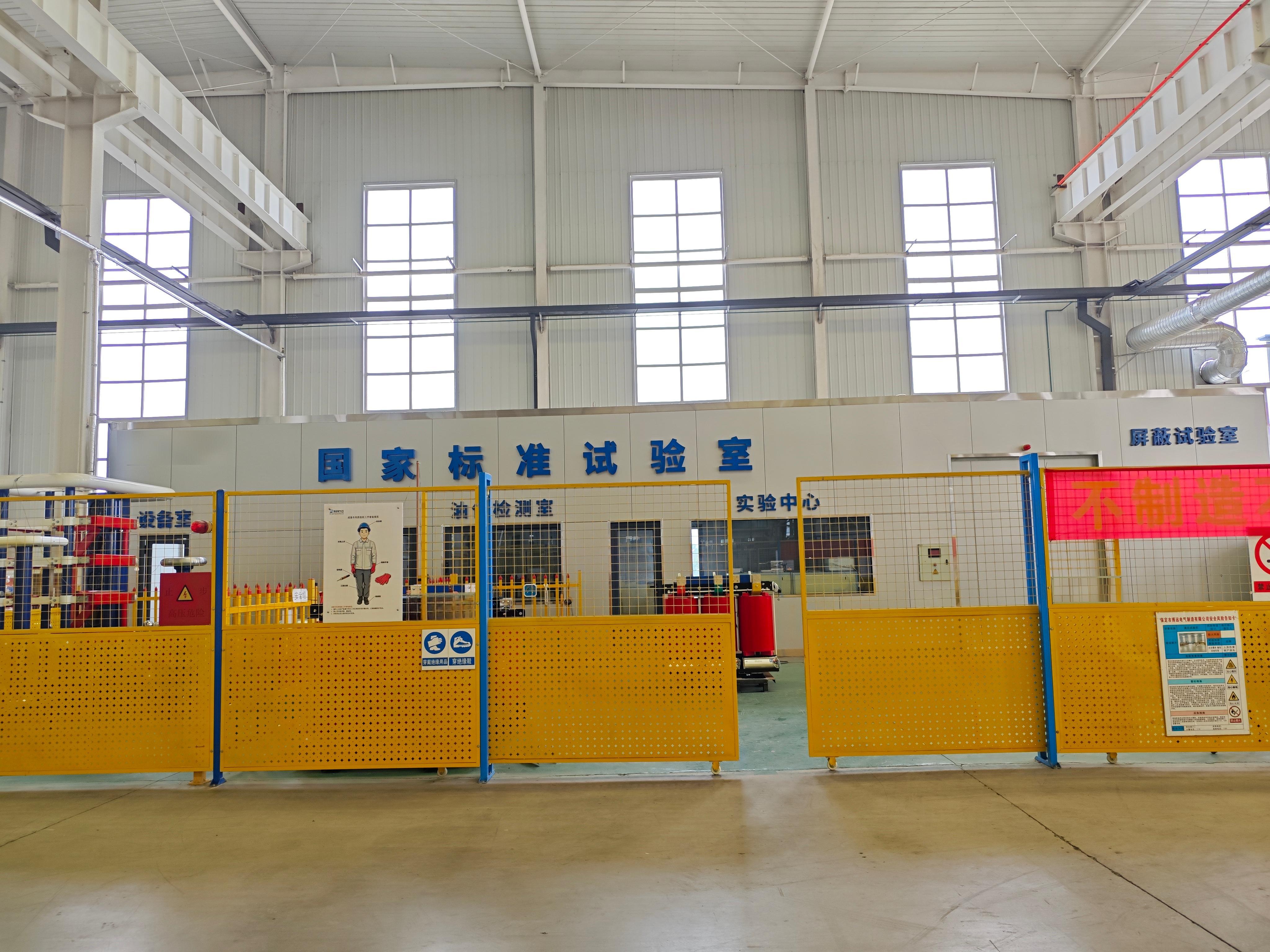
Factory acceptance testing is one of the few points in a transformer purchase where both purchasing routes overlap — and one of the first places where they diverge in what is actually witnessed.
Why the two quotations stop being comparable
A transformer quotation is a scope document before it is a price. When a buyer compares a transformer-only offer with an offer that includes assembly and commissioning, the difference is not a markup on the same work. It is a transfer of execution responsibility from the buyer's site organization to the supplier's service organization.
That transfer changes who holds the specialist tooling, who processes insulating oil, who performs the site electrical tests, who signs the energization release, and who is accountable when an abnormal condition appears three days after commissioning. None of those items appear in a per-unit price line, which is precisely why they are so often left unresolved.
Procurement guidance on this exact decision is consistent: the deciding factor is execution responsibility and available resources, not whether the word "commissioning" appears somewhere in the offer. Supervision, remote advice and full execution are three different service scopes and should never be treated as synonyms.
The four dimensions that separate the routes
| Decision dimension | Transformer-only supply | Supply with assembly and commissioning scope |
|---|---|---|
| Delivery control | Schedule ends at an agreed handover point — typically factory completion or shipment. Site readiness, unloading, storage and installation sequencing sit with the buyer or EPC. | Schedule extends to site activities. Milestones now include mobilization, assembly, oil processing, site testing and energization support, each of which can hold up the next. |
| Site acceptance | Acceptance is largely documentary plus receiving inspection. The buyer's own engineers or contractors confirm installation quality and site test results. | Acceptance criteria must be written into the service scope: which site tests, which limits, which records, who witnesses and who signs release. |
| Responsibility after energization | Boundary is comparatively clean — equipment defect versus installation defect must still be argued, but each party owns its own work. | Boundary shifts toward the supplier for the contracted activities, which reduces argument but only if the contracted activities are precisely described. |
| After-sales support | Support is typically advisory and remote until a site visit is separately arranged. | Support is expected to include attendance, re-testing and handover documentation as part of the contracted scope. |
Delivery control: factory completion is not site readiness
The most common misunderstanding in transformer procurement is the word "delivery". It can mean factory completion, readiness for shipment, arrival at port, or arrival at site with customs cleared. Each definition produces a different date, and a quotation that does not state which one it uses cannot be scheduled against.
Under a transformer-only scope, the supplier's responsibility narrows neatly to a factory gate. Under an assembly-and-commissioning scope, the supplier's schedule also has to absorb site conditions it does not control: foundation release, crane availability, access routes, auxiliary power for oil processing, and the buyer's own civil and cable works. A supplier that accepts a site milestone without those dependencies being confirmed is accepting a schedule risk it cannot manage alone.
The practical control is a milestone schedule tied to approval events rather than calendar guesses: drawing approval, component commitment, FAT notice, shipment release, site arrival, assembly start, energization. Delay risk in this category typically originates upstream of manufacturing — late drawing approvals, unavailable components, and unconfirmed accessories are repeatedly identified as the dominant causes rather than production itself.
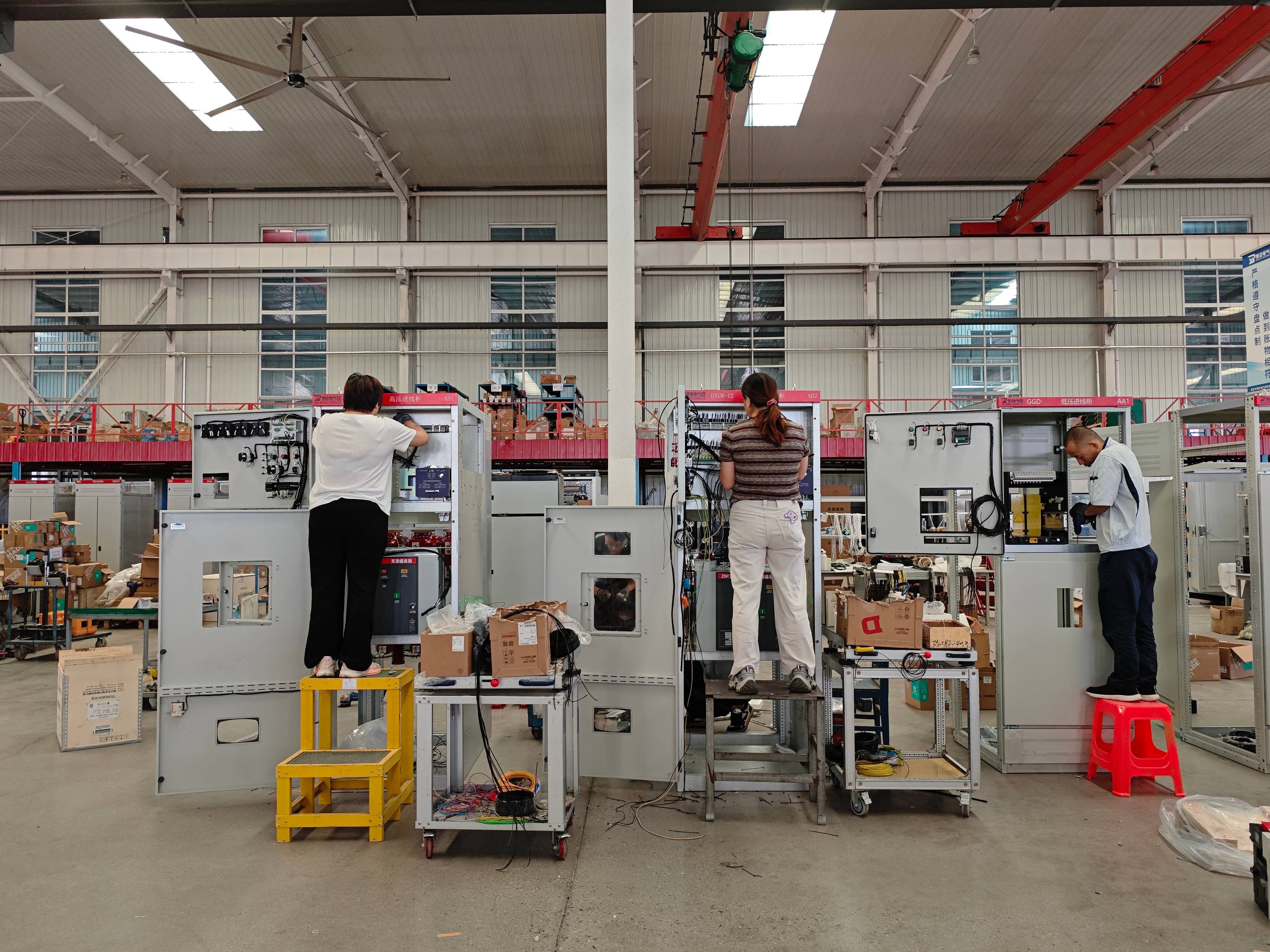
Work performed in a factory is work that does not have to be repeated on site — but it moves the acceptance question to a different location rather than removing it.
Site acceptance: who signs, and against what
Site acceptance is where the two routes diverge most sharply in practice. With transformer-only supply, acceptance is dominated by documents: routine test reports, ratio and winding resistance results, insulation characteristics, loss measurements, and a receiving inspection that records condition before unloading responsibility transfers.
When assembly and commissioning are included, acceptance becomes an activity rather than a file. That is an improvement only if the activity is defined in advance. A service scope that says "installation support" without naming the personnel, the tooling, the activities performed, the tests executed and the acceptance responsibility has not actually transferred anything — it has added a line item.
A workable site acceptance section names the tests to be performed after assembly, the limits they must meet, the records produced, the witness arrangement, and the conditions under which the site is released for energization. It also states what happens if a limit is missed: re-test, correction, or a formal deviation accepted in writing.
Responsibility boundaries after energization
Energization is the moment when an unresolved scope boundary becomes expensive. If the transformer trips on first energization, the question is immediately whether the cause is equipment, installation, protection settings, or the site procedure. Inrush current is a normal energization transient, but it must be distinguished from a genuine internal fault by competent commissioning and protection personnel — repeated re-energization without diagnosis is not a troubleshooting method.
A transformer-only purchase leaves that argument to be conducted between the equipment supplier, the installation contractor and the owner. It is not unworkable — experienced owners and EPCs manage it routinely — but it requires that the installation contractor's competence and test records are genuinely verified in advance, not assumed.
An assembly-and-commissioning scope concentrates the same argument inside one contract. That is its main structural advantage. It only holds if the contract states which activities were performed by the supplier, which by others, and which acceptance records apply to each. A vague service description produces exactly the same disagreement, with an additional invoice attached.
After-sales support: remote advice versus physical attendance
After-sales support is usually described in a single sentence in a quotation and carries a disproportionate share of the post-energization risk. The distinction that matters is between remote support and on-site service, and it should be written down rather than implied.
Remote support can resolve configuration questions, alarm interpretation, protection setting review and documentation queries quickly and at low cost. It cannot perform oil processing, tightening checks, site electrical testing, or attend an energization. Where a site lacks qualified commissioning resources, remote advice is not a substitute for attendance — it is a supplement to it.
Three items should be fixed before ordering: what triggers a site visit, who bears the cost of that visit when the cause is disputed, and what spare parts are held for the commissioning and early operating period. Warranty start event, duration, claim procedure and the allocation of field-service cost belong in the same conversation, not in a separate negotiation after delivery.
Why the delivery question has become harder to answer
The commercial environment has made scope clarity more valuable than it was a decade ago. The U.S. Department of Energy has reported lead times for large power transformers reaching 128 weeks, and the International Energy Agency has stated that securing large power transformers can take up to four years. The IEA has also documented an increase in order backlogs at selected power-transformer manufacturers over 2020–2024.
Those figures describe large power transformers specifically and must not be generalised to distribution transformers, pad-mounted units or dry-type transformers, which follow different supply chains and different production cycles. They are also not interchangeable with a supplier's stated production lead time. A figure quoted as "30–50 days" for OEM and ODM transformer orders and a multi-year procurement period reported for large power transformers are describing different product classes measured at different points; placing them on one scale produces a comparison that means nothing.
What the backlog data does support is a procurement conclusion rather than a price conclusion: when capacity is constrained, schedule assumptions become a contractual risk, and the route that fixes responsibility for site activities early is worth more than it appears on a quotation sheet.
Where transformer-only supply is the better choice
Equipment-only supply is not the riskier option by default, and treating it as such leads buyers to pay for services they do not need. It is the better route when the owner or EPC already holds verified site capability: qualified commissioning personnel, oil processing and test equipment, approved procedures, and a contractor whose work is genuinely under control.
It is also the better route where the buyer's organization must retain control of site sequencing — for example when a live substation, a shared outage window, or a multi-package EPC contract makes an external service team an additional coordination layer rather than a simplification.
It is the wrong route when those conditions are assumed rather than verified. The failure mode is not the purchasing model; it is a buyer believing it has site resources it has never actually confirmed.
Where the assembly and commissioning scope earns its cost
The integrated scope justifies itself where specialist work, limited local capability, or a complex installation makes execution responsibility worth concentrating. Commissioning of a large oil-immersed unit involves oil processing, vacuum treatment where specified, protection and CT circuit verification, tap position confirmation and phase sequence checks — activities that a site team without the right tooling performs slowly and, occasionally, incorrectly.
It also justifies itself where the equipment itself is factory-integrated. A compact substation brings the transformer, medium-voltage switching and protection, and project-defined low-voltage interfaces into a coordinated prefabricated assembly. That configuration shifts integration work from the site to the factory and clarifies the electrical interfaces — one documented case involved ten compact substation units for a solar plant in Canada, where the coordinated assembly was specified to reduce on-site integration work and to make the interfaces explicit for installation and commissioning. The same logic applies less dramatically to any package where the boundary between transformer and switchgear would otherwise be resolved by two different contractors on site.
Note what this does not do: a compact substation does not automatically shorten manufacturing lead time, remove foundation and cable work, or lower total cost. Ventilation, enclosure thermal performance, maintenance clearance, shipping dimensions and lifting arrangements remain site obligations.
What Milestone Electrical's scope actually contains
Milestone (Xiong'an) Electrical Technology Co., Ltd. is a transformer engineering and manufacturing company based in Xiong'an New Area, Hebei, China, supporting power generation, utility, EPC, oil and gas, mining and industrial projects with transformer equipment and project-related technical services. Its portfolio covers power transformers, distribution transformers, oil-immersed transformers, dry-type transformers and compact substations, with configurations reviewed against each project's electrical duty and site conditions.
The manufacturing base is an 8,000 m² facility with 270 employees, a 30-person engineering team and an annual output of 15,000 units; the company states a monthly production capacity of 1,500 units, a minimum order quantity of 1 unit, and 100% testing. Typical production lead time for OEM and ODM transformer orders is stated as 30–50 days. Roughly 85% of output is exported, with stated markets in South America, the Middle East, Southeast Asia, North America and Europe.
Customisation is handled through OEM and ODM production. Options include rated power in kVA or MVA, primary and secondary voltage, rated frequency, vector group, short-circuit impedance, tap-changing arrangement for voltage regulation, cooling method, winding material, insulating liquid, and site protection and accessories. For oil-immersed designs, cooling method and insulating liquid are specified per project.
Acceptance evidence is produced at the factory testing centre, which covers winding resistance, voltage ratio, insulation characteristics and transformer loss testing, and which is used for routine testing and factory acceptance testing before shipment. Factory inspection and electrical testing cover both dry-type and oil-immersed transformers. After-sales support is provided as remote or on-site service.
Representative configurations in the catalogue illustrate the range across which these scope questions arise: the SFZ-35000/110KV-35KV power transformer series spanning 5 MVA to 500 MVA at 35–220 kV with ONAN/ONAF/OFAF/ODAF cooling and OLTC or OCTC tap regulation; the S13-1500/35-0.38 distribution transformer from 25 kVA to 10,000 kVA at 6–35 kV; the SCB13-1500/35-0.4 dry-type transformer from 25 kVA to 15,000 kVA with IP20/IP23 protection; and the YB-1500/35-0.4 compact substation from 25 kVA to 15,000 kVA at 10–35 kV with IP44/IP54/IP55 protection.
Delivered scope is best judged from comparable installations rather than from a catalogue range. A data-centre project in Ecuador used ten dry-type units over three years, where the oil-free design avoided transformer-oil handling and containment inside the electrical room and supported indoor placement close to distribution equipment, with the design review addressing ventilation, heat dissipation, noise, load profile and maintenance access. A power-plant programme across Chile, Brazil and Armenia involved 50 units over ten years, reported as operating stably under regular maintenance while supporting generation and on-site supply. The Canadian solar project referenced above covered ten compact substations over five years.
Buyers can begin a technical review by sharing a single-line diagram, key electrical ratings, applicable standards, site conditions and the required supply scope — the same inputs that determine whether the transformer-only or the extended scope is the correct route.
Documentation and market approval: the check that precedes all of the above
No scope decision compensates for a product that cannot be placed on the destination market. The risk of ordering without confirming approval and documentation requirements is straightforward: buying equipment that cannot demonstrate the required market, installation or customer approval, because standards compliance, safety certification, energy-efficiency compliance and vendor qualification have been treated as equivalent.
The failure modes are specific and common. An approval applies to a different model, rating or factory. A voluntary certificate is treated as the complete conformity route. Energy reporting, electrical approval or utility qualification is missing. Mandatory technical or language requirements are identified after shipment.
The control is a written market-requirement and document matrix agreed before the order: destination country and, where relevant, province or state; importer and installation authority; applicable standards and their editions; mandatory certification; the models, ratings and factory the certificate actually covers; efficiency obligations; required document language; and utility approval status.
Applied to Milestone: the company provides ISO 9001 quality management system information and CE conformity documentation for applicable products. The exact certificate scope and the models actually covered must be checked against the current documents rather than inferred from the company name. Company-level certification is evidence of an assessed management system, not proof that every model is approved in every jurisdiction.
Limits of what any scope document can promise
An assembly-and-commissioning scope reduces the number of parties who can disagree after energization. It does not eliminate the disagreement, and it does not transfer obligations that belong to the buyer or importer by law or by contract.
- Market approval stays with the buyer's chain. A supplier cannot certify compliance with a destination regulation it has not been asked to meet, and a supplier's service package does not substitute for import, installation or utility approval.
- "Installation support" is not a defined activity. An offer that does not name personnel, equipment, activities performed and acceptance responsibility has not established a service boundary, whatever the wording implies.
- Site dependencies remain site dependencies. Foundation release, crane capacity at actual working radius, access routes, auxiliary power and permitting are buyer-side obligations under any scope.
- Remote support is not attendance. Where physical work is required, an advisory arrangement cannot complete it.
- Factory integration moves work, not the acceptance question. A prefabricated assembly still requires foundations, cable connections, site testing and release.
The honest conclusion for a buyer is narrower than a sales pitch would suggest: the extended scope is worth paying for where specialist execution capability is genuinely scarce or the integration boundary is genuinely complex, and it is not worth paying for where the buyer already holds that capability and can document it.
Future outlook
Two structural pressures are likely to push procurement toward more precise scope definition rather than toward lower headline prices. The first is capacity. Where order backlogs at selected manufacturers increased through 2020–2024 and large-transformer procurement periods are measured in years, schedule risk becomes a contract term, and the route that fixes responsibility for site activities early is the one that protects the energization date.
The second is regulatory. Market-access requirements — efficiency rules, conformity marking, utility qualification — continue to differ by jurisdiction and are checked against documents, not against intentions. Buyers who build a market-requirement matrix into the RFQ, and who specify whether assembly and commissioning sit inside or outside the supply scope, will be comparing quotations that can actually be compared. Those who do not will keep discovering, at energization, which items were never in the price.
Frequently asked questions
Should we purchase the transformer only, or include assembly and commissioning services?
Choose a clearly defined supply-and-site-service package where specialist assembly or oil processing is required and qualified local resources are unavailable. Choose equipment-only supply where the owner or EPC has verified personnel, equipment and procedures to perform the required work. The deciding difference is execution responsibility and available resources, not simply whether commissioning support appears in the quotation. Supervision, remote advice and full execution are distinct scopes and must be stated explicitly.
What should we confirm before placing a transformer order to secure delivery, acceptance and after-sales support?
Lock the technical specification, guaranteed values, deviations, supply scope and delivery milestones before ordering. Confirm a credible manufacturing plan, suitable test capability and defined service resources. Agree document approval, factory acceptance testing, shipment release, site acceptance, warranty and spares in writing. Installation supervision, full execution and remote support must be distinguished explicitly rather than described collectively as support.
What are the risks of ordering a transformer without confirming the target market's approval and documentation requirements?
The risk is buying equipment that cannot demonstrate the required market, installation or customer approval. It occurs when standards, safety certification, energy-efficiency compliance and vendor qualification are treated as equivalent, or when the evidence does not cover the supplied product. Prevent it with a written market-requirement and document matrix before ordering. If a gap appears, hold the affected release and agree the necessary assessment or corrective work before proceeding.
Is reviewing test reports sufficient, or should we arrange a witnessed factory acceptance test?
For critical, customised or unfamiliar-supplier orders, arrange witnessed FAT plus complete document review where direct observation is valuable or contractually required. Report review may be sufficient for accepted standard orders without a witness requirement. The difference is how evidence is observed and verified; both arrangements still require all contracted tests and acceptance records. A witness arrangement does not establish design certification and does not replace missing tests.
How can we avoid transformer delivery delays and unexpected missing items or services?
Delivery risk arises when the schedule is based on unresolved specifications, late drawing approvals, unavailable components or incomplete site responsibilities. Define the supply scope, exclusions, start conditions and milestones from technical approval through site readiness. State whether delivery means factory completion, port shipment or site arrival. If a delay occurs, establish its cause, issue a revised milestone plan and evaluate recovery options without bypassing required tests or approvals.
The full product and configuration range referenced in this article is available in the Milestone transformer catalogue.
¿Tiene preguntas o necesita más detalles?
Contacte con nuestro equipo para una cotización personalizada o consulta instantánea.
Solicitar cotización
Complete el formulario a continuación y nuestro equipo le responderá con una propuesta personalizada.
Chat directo de WhatsApp
¿Prefiere chatear en tiempo real? Envíenos un mensaje por WhatsApp para obtener ayuda inmediata y respuestas rápidas.
- Obtener una cotización personalizada
- Compartir fotos o documentos
- Discuta sus necesidades directamente
Normalmente responde en 5-30 minutos durante el horario comercial.