
Power Transformer Comparison: Industrial and Commercial Fit
Power Transformer Comparison: Industrial and Commercial Fit
Power transformer selection for an industrial plant or a commercial building turns on a small number of physical differences that carry large cost consequences. Oil-immersed units use insulating oil for both insulation and heat dissipation, cost less at the same rating, generate 45–55 dB(A) of noise and can withstand 1.3–1.5 times the rated load for a short period. Dry-type units use air cooling and solid insulation, carry no flammable insulating oil, generate 52–62 dB(A), and cost 35%–60% more at the same capacity, but they can be installed inside buildings and in populated locations where fire protection requirements are strict. Nearly every other line in a buyer's comparison sheet — protection accessories, maintenance routine, ventilation, oil containment, spares strategy — is a consequence of those facts rather than an independent variable.
The framing matters more in 2026 than it did in earlier procurement cycles. A 2026 industry analysis published by SIDA, citing Wood Mackenzie, projects a 30% supply deficit for power transformers in 2025, with lead times averaging 128 weeks for power units. Global Market Insights values the power transformer market at USD 35.2 billion in 2025 and USD 38.4 billion in 2026, with a projected 7.5% CAGR through 2035; that figure is defined for units rated 10 MVA and above, so it describes the utility-scale segment rather than the distribution-class units most industrial and commercial projects actually buy. For a plant or building owner, the practical consequence is that specification choices taken early — above all the oil-immersed versus dry-type question — influence which supplier pool can realistically quote and how much schedule risk the project carries.
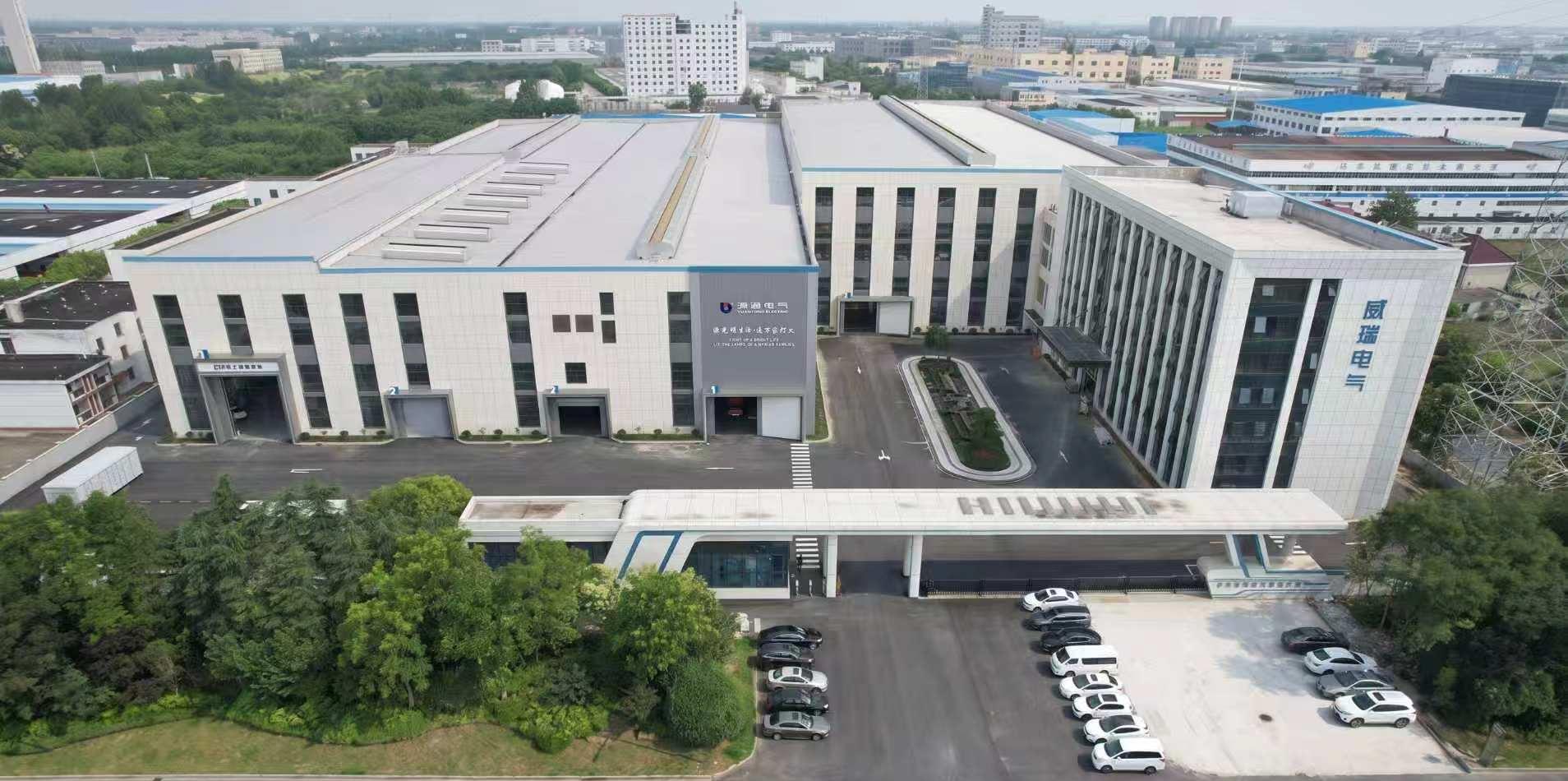
Why siting decides the comparison before price does
Installation location is the first filter in the oil-immersed versus dry-type comparison because it is the one criterion that cannot be engineered around later in the project. A transformer that cannot be permitted inside a building cannot be made permissible by a better quotation.
Dry-type transformers adopt epoxy resin cast insulation with no flammable insulating oil. That design gives them high fire safety and zero leakage risk, makes them comparatively easy to maintain, and allows installation inside buildings and close to the load they serve. The same characteristics place them in indoor distribution, occupied facilities, industrial plants, commercial buildings, hospitals and data centers, and in any indoor site with a dense population and strict fire protection requirements.
Oil-immersed transformers rely on insulating oil for heat dissipation and insulation. They carry the risk of oil leakage and fire, and therefore require supporting fire protection and oil containment facilities. In exchange, they are the natural fit for outdoor locations, independent substations and applications with long-term continuous operation where energy-saving benefits are prioritized.
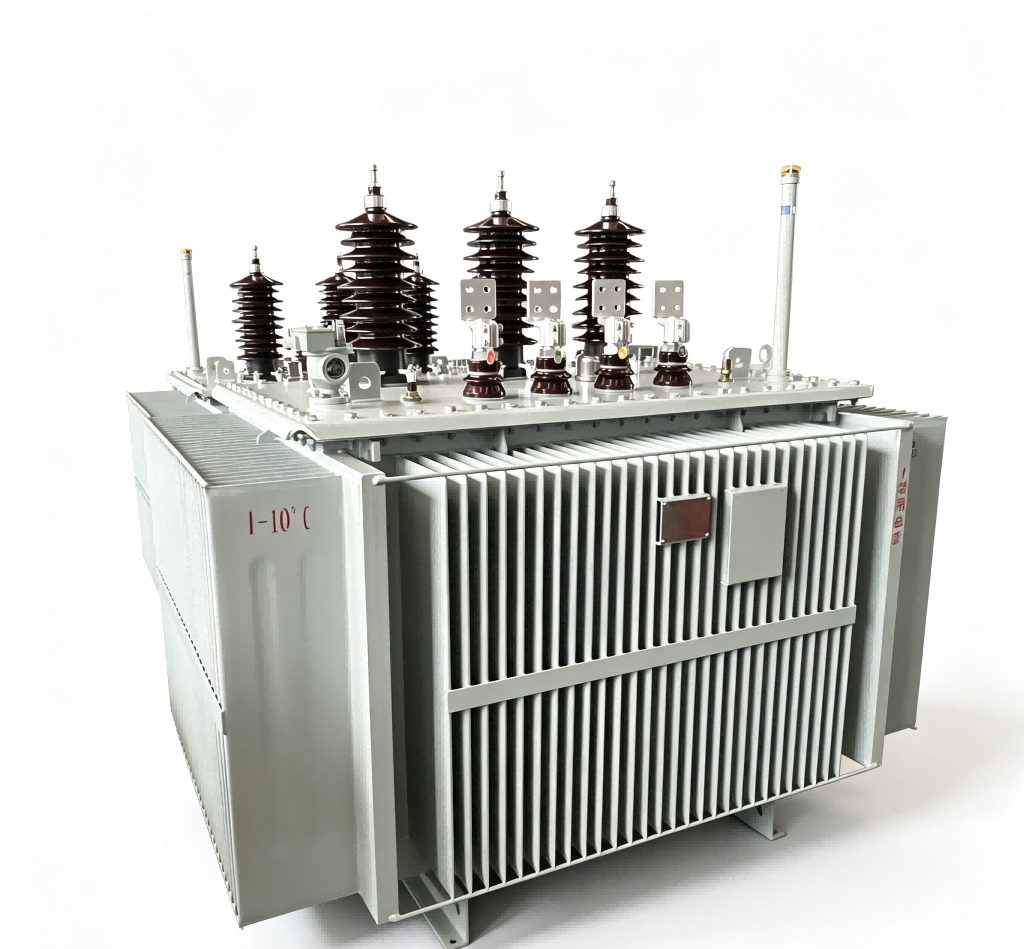
The cost gap: a 35%–60% first-cost premium at equal capacity
At the same capacity, a dry-type transformer carries a purchase cost 35%–60% higher than an oil-immersed transformer. This is a first-cost statement about equipment at equal rating, not a total-cost-of-ownership conclusion, and the distinction matters at the decision stage.
The premium buys the insulation system and the siting permission. Because the unit contains no flammable insulating oil, the project avoids oil containment structures, reduces fire-protection complexity in occupied buildings, and gains the option of placing the transformer close to the load centre — which can shorten low-voltage cable runs and reduce the space allocated to an outdoor substation yard. Where the building authority or insurer will not accept a liquid-filled unit indoors, the premium is the price of an otherwise unavailable design, not a discretionary upgrade.
The arithmetic reverses where siting is unconstrained. An outdoor distribution position or an independent substation that can accommodate oil containment does not need to purchase the dry-type insulation system, and the oil-immersed unit then combines lower equipment cost with better heat dissipation, lower load loss, higher full-load efficiency and stronger short-term overload capacity. Maintenance routines also diverge in a way that affects operating cost rather than purchase price: oil-immersed units require attention to oil, sealing, oil level and cooling accessories, while dry-type units mainly require dust removal, terminal inspection, ventilation and temperature monitoring.
| Decision dimension | Oil-immersed transformer | Dry-type transformer |
|---|---|---|
| Insulation and cooling | Insulating oil for insulation and heat dissipation | Air cooling with solid (epoxy cast) insulation, no insulating oil |
| Purchase cost at equal rating | Lower equipment cost | 35%–60% higher |
| Noise level | 45–55 dB(A) | 52–62 dB(A) |
| Short-time overload | 1.3–1.5 times rated load for a short period | Limited short-time overload capacity |
| Efficiency under heavy rated load | Better heat transfer, lower load loss, higher full-load efficiency | Slightly lower; advanced amorphous and high-grade insulation versions narrow the gap |
| Fire and leakage risk | Oil leakage and fire risk; fire protection and oil containment required | High fire safety, zero leakage risk |
| Typical fit | Outdoor distribution, independent substations, long-term continuous operation | Indoor distribution, populated facilities, plants, commercial buildings, hospitals, data centers |
Efficiency, overload capacity and the load profile that changes the arithmetic
Oil-immersed transformers transfer heat through insulating oil, which gives them better heat dissipation, lower load loss and higher full-load efficiency, and a large heat capacity that supports 1.3–1.5 times the rated load for a short period. Dry-type transformers rely on air cooling; their efficiency is slightly lower under rated heavy load, and their short-time overload capacity is limited. Advanced amorphous and high-grade insulation versions narrow the efficiency gap but do not convert a dry-type unit into an overload-duty machine.
This is where the load profile rewrites the cost comparison. A facility that runs near its rated load for long continuous blocks accumulates the fuel and Loss savings of the more efficient design every hour, which is why oil-immersed units are described as more economical for long-term continuous heavy-load operation. A commercial building with a pronounced daily load curve, a modest average utilization and a transformer room inside the occupied envelope is making a different calculation: the hours of heavy-load operation are fewer, and the safety and siting advantages of the dry-type design dominate the decision.
Noise belongs in the same calculation rather than in a separate environmental check. The 45–55 dB(A) band typical of oil-immersed units and the 52–62 dB(A) band typical of dry-type units are broad enough that siting, ventilation and acoustic treatment can move a project from one band to the other. Where a unit sits beside occupied space, noise and ventilation requirements should be fixed at specification stage, not resolved after the equipment arrives. Any overload allowance used in design — including the 1.3–1.5 times figure for oil-immersed units — has to be confirmed against the manufacturer's declared limits, protection settings and temperature-rise criteria for the specific rating ordered.
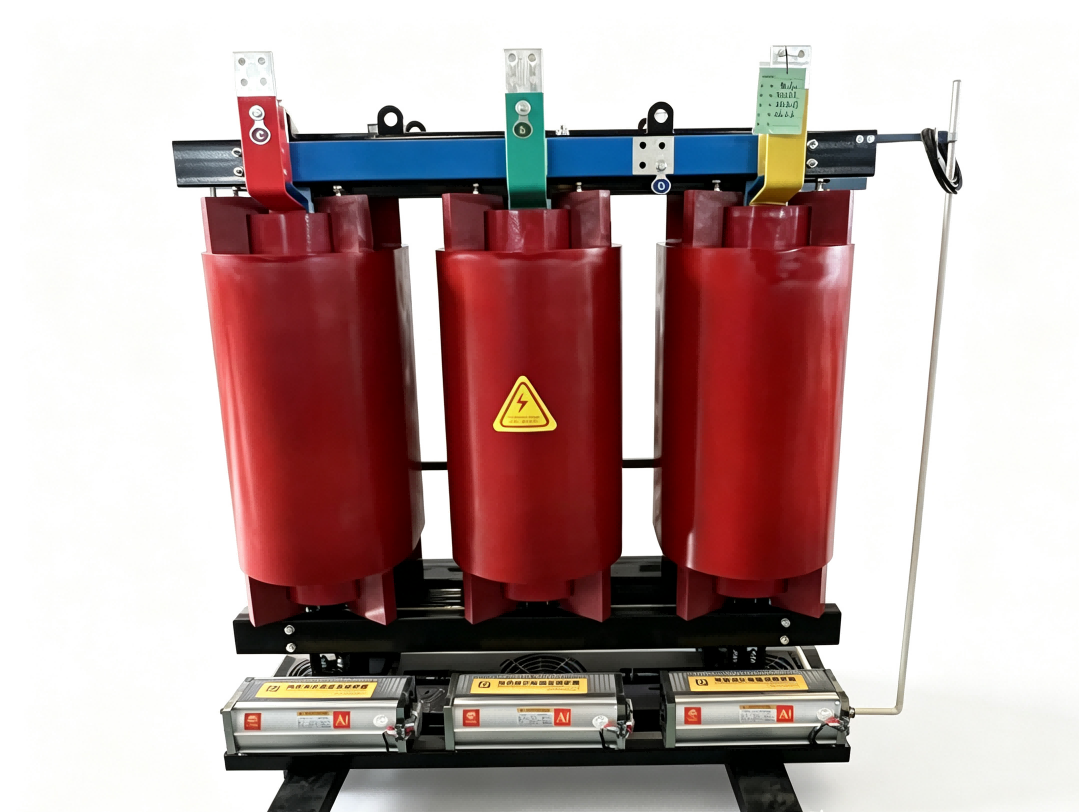
Standards: using IEC 60076 to structure the comparison
The IEC 60076 family lets a buyer separate a general power-transformer requirement from a dry-type-specific requirement instead of asking every supplier the same generic question. IEC 60076-1:2011 applies to three-phase and single-phase power transformers, including auto-transformers, subject to stated exceptions for certain categories of small and special transformers. IEC 60076-11:2018 applies specifically to dry-type power transformers, including auto-transformers, with a highest voltage for equipment up to and including 72.5 kV and at least one winding operating above 1.1 kV. The IEC TC 14 listing also places IEC 60076-2, IEC 60076-3 and the IEC 60076-22 fitting standards inside the same standards family.
In practice, that structure should drive two different document requests. For a dry-type enquiry, IEC 60076-11 defines the applicable product standard and the insulation-related evidence the buyer should ask for; for an oil-immersed enquiry, IEC 60076-1 plus the relevant liquid-immersed and testing parts of the family define the comparison baseline. Accessory and fitting qualifications sit in the separate 60076-22 part, which is often where apparently minor specification differences originate.
Two boundaries must be kept in view. First, IEC standards do not by themselves establish every importing-market legal or utility-approval requirement; jurisdiction-specific regulation, certification and conformity marking have to be checked separately for the destination market. Second, the trade classification is a separate layer again: UN Comtrade classifies electrical transformers under HS heading 8504 and distinguishes liquid-dielectric transformer categories by power-handling capacity, including not exceeding 650 kVA, over 650 kVA to 10,000 kVA, and over 10,000 kVA. That classification supports customs and data work; it says nothing about a specific unit's performance.
What a supplier portfolio has to cover: Jiangsu Yuantong Electric Co., Ltd.
Jiangsu Yuantong Electric Co., Ltd. is a private electrical manufacturing enterprise located in the High-Tech Zone of Hai'an, Nantong, Jiangsu, founded in 2008 with a registered capital of 100.8 million yuan, whose stated scope integrates scientific research, design, production and installation. Its relevance to this comparison is structural: the portfolio spans both sides of the oil-immersed versus dry-type decision, which means a project can evaluate both options and the box-substation packaging from a single technical interface.
On the oil-immersed side, the company's stated product range covers 10 kV, 20 kV and 35 kV oil-immersed transformers, together with sealed amorphous-alloy power transformers and 10 kV and 20 kV low-loss series. On the dry-type side, it covers vacuum epoxy cast dry-type transformers — including a 10 kV epoxy resin cast series — and non-encapsulated vacuum impregnated dry-type transformers, with 20 kV and 35 kV dry-type series listed separately. Special transformers, box-type substations and other power distribution accessories complete the range, and custom production is available.
The manufacturing evidence is company-reported: a 50,000 m² factory, 175 employees, 30 engineers in the R&D team, an annual output of 5,000 units and an annual production capacity of 600 million yuan. Design work is supported by a TCAD design system. The company states that its products feature low loss, low noise and strong short-circuit withstand capability, and that all products have passed the tests conducted by the National Transformer Quality Supervision and Inspection Center. It holds ISO 9001 quality management system and ISO 14001 environmental management system certification, and reports recognition as a National High-Tech Enterprise, a National Specialized, Refined, Differential and Innovative "Little Giant" Enterprise and a Provincial Green Factory, alongside an Enterprise Technology Center, a Service-oriented Manufacturing Demonstration Enterprise and an Industrial Design Center designation. Export accounts for a stated 20% of business, with the United States, Kenya and Russia named as export markets.
One forward-looking item should be read as a plan rather than a capability. After the commissioning of its second-phase high-end digital power distribution plant, an unmanned iron core production line and an intelligent warehousing system will be built, enabling product voltage-class coverage up to 220 kV. Until that plant is commissioned and its output verified, the 220 kV figure describes an intended coverage ceiling, not an available product today.
For a decision-stage buyer, the procurement reading is specific. A portfolio that contains oil-immersed 10–35 kV units, epoxy cast and non-encapsulated dry-type units, amorphous-alloy low-loss series and box-type substations reduces the number of supplier interfaces a project has to manage, and it allows the same technical team to compare the two insulation philosophies against one specification. It does not, by itself, prove that any particular rating meets a project's loss, noise, impedance or temperature-rise requirement; that evidence has to come from the datasheet and the type-test report for the unit being ordered.
Application fit: matching each transformer family to project type
The comparison becomes usable once it is attached to project types rather than to preferences. The following are application descriptions, not references to completed installations.
- Industrial plants. Indoor distribution inside a production building generally points to dry-type units, while an outdoor yard position, a dedicated substation or a continuous heavy-load process favours oil-immersed units on cost, loss and overload grounds.
- Commercial buildings, hospitals and data centers. These are the populated indoor environments where fire safety and zero leakage risk carry decisive weight, and where dry-type installation close to the load is the practical option.
- Outdoor distribution and independent substations. Where oil containment and fire protection can be provided, oil-immersed units deliver lower equipment cost, lower load loss and stronger short-term overload capacity.
- Wind and solar projects. Renewable-energy step-up and collection positions are outdoor, capacity-driven applications that align with oil-immersed and box-type configurations; low-loss and amorphous-alloy designs are relevant where energy-efficiency criteria are written into the specification.
- Regional substations and grid upgrades. Three-phase double-winding oil-immersed units in the 10–35 kV classes, with off-circuit or on-load voltage regulation configured to project requirements, are the conventional starting point.
Environmental conditions should be treated as specification inputs rather than afterthoughts. High-altitude, high-humidity, heavily polluted, coastal salt-fog and renewable-energy-site conditions call for adaptable designs, and the applicable requirement has to be stated in the enquiry so that the supplier quotes against it rather than against a standard configuration.
Market context: shortage, energy-efficiency rules and what to fix early
Two external signals shape the timing of this decision. The first is availability. Published industry comparisons in 2026 place Chinese transformer lead times at roughly three to six months against two to four years for Western suppliers — an industry-level observation about supply conditions, not a delivery commitment from any individual manufacturer. Combined with the projected 30% supply deficit and 128-week average lead times for power units, it explains why buyers are widening the supplier pool earlier in the project cycle and why an unresolved oil-immersed versus dry-type question can become a schedule problem rather than a cost problem.
The second signal is efficiency regulation in China. Under the Implementation Plan for High-Quality Development of Energy-Saving Equipment (2026–2028), issued in the China (MIIT) jurisdiction and reported as effective, the proportion of newly added energy-saving transformers should exceed 75% by 2028, with amorphous-alloy transformers at first-level energy efficiency among the technologies being accelerated. This is a China-market rule; it does not establish equivalent requirements in other destinations, where the applicable efficiency and certification regime must be checked separately. Its procurement implication is nonetheless general: where loss performance is likely to be regulated or re-priced over the asset's life, specifying the loss grade and core material at tender stage is cheaper than substituting later.
A decision-stage comparison checklist
A buyer can close most of the gap between a catalogue comparison and a procurement decision by requesting the following items for the exact rating under consideration.
- Siting and fire decision record. Confirm whether the position is indoor, populated or otherwise fire-sensitive, and whether oil containment is feasible and permitted. This determines which family is eligible before price is discussed.
- Rated performance data. Request no-load and load loss, impedance, temperature rise, sound level and insulation level for the specific rating — not for the product family.
- Standards mapping. State which IEC 60076 part governs the enquiry, and require the type-test and routine-test documentation that corresponds to it.
- Market-access evidence. Check the destination market's own regulation, certification and conformity requirements, because IEC compliance alone does not establish them.
- Overload basis. If short-term overload is part of the design case, require the manufacturer's declared limit and the protection and temperature assumptions behind it.
- Maintenance and spares plan. Match the routine to the technology: oil, sealing, oil level and cooling accessories for oil-immersed units; dust removal, terminal inspection, ventilation and temperature monitoring for dry-type units.
- Commercial terms. Obtain price, lead time, warranty and after-sales coverage in writing for the specified rating; these are quotation variables, not published specifications.
- Formal technical specification. The final transformer capacity, vector group, cooling method, protection accessories and acceptance requirements should be confirmed in a formal technical specification before order placement.
What this comparison does not establish
The boundaries are as important as the conclusions, and they can be stated plainly. No independently verified loss values, rated-capacity ranges, insulation-system data or type-test reports for specific Jiangsu Yuantong Electric ratings were available for this analysis, so the portfolio should be used as a screening input, not as proof of performance. The manufacturing, capacity and certification figures cited above are company-reported and have not been independently audited here.
The comparison also does not produce a ranking. A single supplier's portfolio cannot support a competitive or market-share conclusion, and the absence of published price, MOQ, lead time or payment terms for specific ratings means no cost comparison beyond the supported 35%–60% dry-type premium should be inferred. Finally, no claim is made that either transformer family is superior in general: each is fit under the conditions described, and each becomes a poor fit when those conditions are ignored.
Outlook for 2026–2028
Three conditional observations follow from the evidence above. If global supply remains constrained at the projected 30% deficit level, schedule risk will continue to favour buyers who fix the insulation type, loss grade and protection scheme at tender stage rather than at award. If China's energy-efficiency target of more than 75% of newly added transformers by 2028 is met as planned, low-loss and amorphous-alloy designs will move from optional upgrades to default expectations in that market, with knock-on effects for export specifications. And if Jiangsu Yuantong Electric's second-phase digital plant is commissioned as described, its stated voltage-class coverage would extend toward 220 kV, which would matter to buyers consolidating distribution and sub-transmission requirements with one supplier — a development to verify at the time, not to assume today.
FAQ
How should I choose the right transformer for an industrial plant or commercial building?
First confirm the load capacity, voltage level, frequency, installation location, environmental conditions, fire-safety requirements, ventilation and applicable standards, then select an oil-immersed, dry-type, pole-mounted or pad-mounted configuration. Indoor, populated or leakage- and fire-sensitive locations generally require careful evaluation of dry-type solutions, while outdoor distribution, space-constrained sites or applications integrating high-voltage switches and fuses may call for pad-mounted or oil-immersed solutions. Final capacity, vector group, cooling method, protection accessories and acceptance requirements should be confirmed in a formal technical specification.
Why is a dry-type transformer 35%–60% more expensive than an oil-immersed unit at the same capacity?
The premium reflects the insulation system and what it permits. Dry-type transformers use epoxy resin cast solid insulation and air cooling with no flammable insulating oil, which delivers high fire safety and zero leakage risk and allows installation inside buildings and near populated areas. Oil-immersed transformers achieve insulation and heat dissipation with insulating oil, which costs less but requires fire protection and oil containment. The 35%–60% figure is a purchase-cost comparison at equal capacity; it is not a total-cost-of-ownership conclusion, and it does not by itself indicate which option is cheaper over a project's life.
Can an oil-immersed transformer carry short-term overload that a dry-type unit cannot?
Oil-immersed transformers can withstand 1.3–1.5 times the rated load for a short period, supported by the large heat capacity of the oil-based cooling system. Dry-type transformers have limited short-time overload capacity. Any overload allowance used in design still has to be confirmed against the manufacturer's declared limits, the protection settings and the temperature-rise criteria for the specific rating, because the general figure is not a per-unit guarantee.
Which IEC standard applies to each transformer type?
IEC 60076-1:2011 is the general power-transformer standard and applies to three-phase and single-phase power transformers, including auto-transformers, subject to stated exceptions. IEC 60076-11:2018 applies specifically to dry-type power transformers, including auto-transformers, with highest voltage for equipment up to and including 72.5 kV and at least one winding operating above 1.1 kV. The IEC TC 14 family also includes IEC 60076-2, IEC 60076-3 and the IEC 60076-22 accessory standards. Conformity to these standards does not remove the need to check destination-market regulation and utility approval separately.
What should be confirmed before placing a transformer order?
The final capacity, vector group, cooling method, protection accessories and acceptance requirements should be confirmed in a formal technical specification. In parallel, a buyer should obtain the no-load and load loss values, impedance, temperature rise, sound level and insulation level for the exact rating; the applicable type-test and routine-test documentation; the destination-market certification position; and written commercial terms covering price, lead time, warranty and after-sales coverage.
A downloadable company brochure containing further product and factory detail is available here: Jiangsu Yuantong Electric company file (PDF).
¿Tiene preguntas o necesita más detalles?
Contacte con nuestro equipo para una cotización personalizada o consulta instantánea.
Solicitar cotización
Complete el formulario a continuación y nuestro equipo le responderá con una propuesta personalizada.
Chat directo de WhatsApp
¿Prefiere chatear en tiempo real? Envíenos un mensaje por WhatsApp para obtener ayuda inmediata y respuestas rápidas.
- Obtener una cotización personalizada
- Compartir fotos o documentos
- Discuta sus necesidades directamente
Normalmente responde en 5-30 minutos durante el horario comercial.