
Powder Coating vs. Liquid Paint: Cost, Performance & TCO Comparison
As industrial buyers evaluate finishing technologies for metal components, the choice between powder coating and traditional liquid paint increasingly hinges on total cost of ownership, environmental compliance, and long-term performance consistency. With global powder coatings market estimates ranging from USD 11.5 billion to USD 16.4 billion in 2025 and annual growth projections above 4.5%, the shift toward powder-based solutions is accelerating across construction, automotive, and industrial segments.
Problem & Opportunity
Conventional liquid paint systems impose recurring costs from solvent handling, multi-layer application, drying time, and VOC abatement. Regulatory pressure on emissions and the push for sustainable manufacturing are driving end-users to re-evaluate coating technologies. Powder coating addresses these challenges with nearly zero VOC emissions, a 35–40% reduction in comprehensive cost compared to liquid paint, and energy savings of 22% when replacing solvent-based paints. These quantitative advantages make it a compelling choice for decision-makers focused on bottom-line and compliance.
Hsinda’s Solution: Engineered Powder Coatings
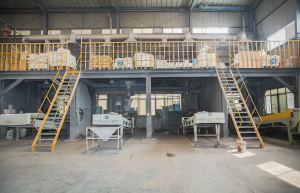
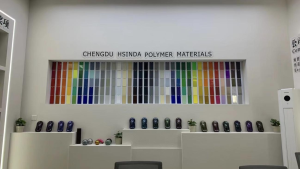
Chengdu Hsinda Polymer Materials Co., Ltd (Hsinda) is a specialist manufacturer of powder coatings founded in 2015, operating 8 advanced production lines with an annual output of 5,000 tons. The company exports to over 70 countries and serves domestic clients including Changhong Electric and TCL Electronics. Hsinda’s product portfolio covers multiple resin types and finishes, designed to meet the varying requirements of industrial and architectural applications.
Compared to other Chinese brands, Hsinda powder coatings are formulated with higher resin content and better pigment selection. This yields a higher one-time coating rate and greater coverage—1 kg covers 7 to 10 sqm at a typical film thickness. The practical outcome is a 5% lower comprehensive overall cost, driven by reduced raw material consumption and fewer rework rejects. Additionally, maintenance requirements are significantly lower: stable coating performance reduces equipment adjustment and downtime, improving line efficiency in 24/7 automatic operation.
Technical Specifications
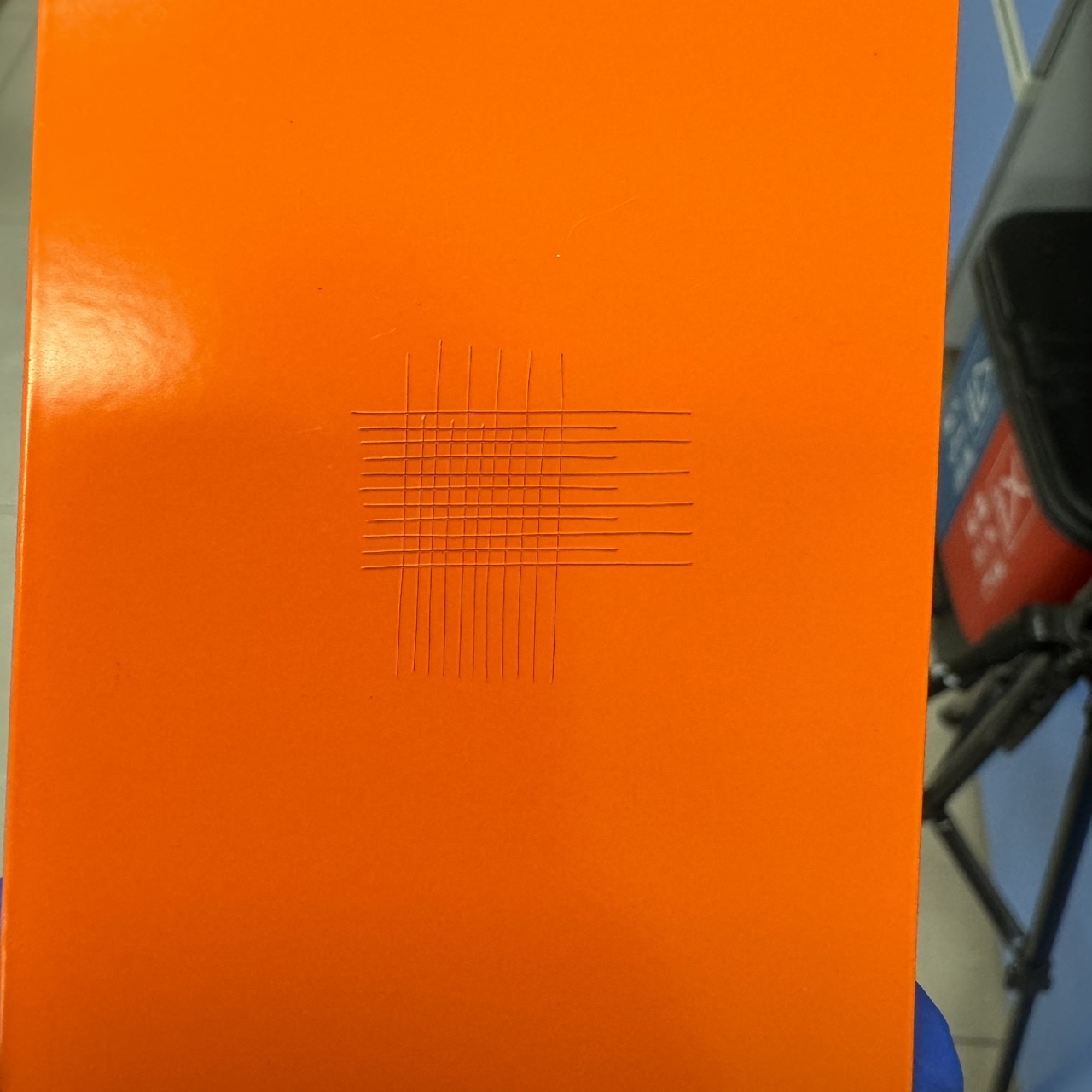
The table below summarizes key technical parameters for Hsinda’s core product lines:
| Product Type | Resin System | Specific Gravity (g/cm³) | Coverage (m²/kg @ 30-90 μm) | Curing Temp (°C) | Key Performance |
|---|---|---|---|---|---|
| Sandy Powder Coating | Polyester + TGIC | 1.2–1.7 | 8–10 | 180-200 (10-15 min) | Gloss 5–95%, adhesion grade 0, hardness ≥H |
| Aluminum Powder Coating | Super weather-resistant polyester + TGIC | — | — | 180-200 (10-15 min) | Weather resistance: no powdering, light retention >50% after 1000h (ISO 11341); salt spray: no change after 1000h |
| Anti-corrosion Powder Coating | Epoxy | — | — | 180-200 (10-15 min) | Impact 50 kg/cm, adhesion grade 0, salt spray 500h no change, unilateral corrosion ≤2 mm |
| Wrinkle Powder Coating | — | — | — | — | Resistance to general acids/oils, salt spray 500h no change, adhesion grade 0, hardness ≥H |
Low-temperature curing variants at 160°C improve energy efficiency by over 10%, and switching from solvent-based paints to powder coatings can lower total energy consumption by 22% and carbon emissions by 30% to 50%.
Application Scenarios
The aluminum powder coating is specifically designed for architectural profiles, doors, windows, glass curtain walls, sunrooms, and partitions. It meets the industry’s demand for UV-resistant, long-lasting finishes. For heavy-duty industrial environments, the anti-corrosion epoxy coating protects oil and gas pipelines, water supply systems, valves, and reinforcing steel bars. Wrinkle and texture finishes are commonly used for electric panels and cabinets, where surface aesthetics and durability are required. The sandy powder coating, with its adjustable gloss and particle structure, offers a tactile matte surface popular in decorative metal furniture and automotive parts.
Market Trend Analysis
Thermoset powder coatings—including epoxy and polyester resins—account for 76.6% of the global market share in 2026, driven by their corrosion resistance and mechanical strength. Architectural and decorative applications represent a major end-use segment, with Qualicoat, GSB, and AAMA standards governing quality. China exported 334,800 tons of coatings in 2024, up 18.65% in value to USD 1.065 billion, indicating strong global demand for cost-competitive manufacturing partners. Hsinda holds ISO 9001, ISO 14001, SGS, REACH, and RoHS 2.0 certifications, with products tested to Qualicoat and AAMA specifications, reinforcing its credibility in the global supply chain.
Comparison with Traditional Solutions
When compared to liquid paint, powder coating offers clear advantages:
- Environmental compliance: Nearly zero VOC emissions versus solvent-based paints.
- Cost efficiency: 35–40% reduction in comprehensive cost; material utilization rate up to 99% (overspray is reclaimable).
- Process speed: Single spray application with no primer or drying time; curing completes in 10–20 minutes.
- Durability: 10–20 years of service life with 3H or higher hardness and impact resistance up to 50 kg/cm.
One honest limitation: powder coating requires higher initial equipment investment (oven, spray booth, recovery system). For low-volume or highly complex geometries, liquid paint may still be more practical. However, for mass-produced, assembly-line metal components, the total cost of ownership strongly favors powder.
Future Outlook
The industry is moving toward low-temperature cure systems (e.g., 160°C) that expand substrate options and cut energy use. Antimicrobial and anti-corrosion formulations are gaining traction in healthcare and infrastructure. Hsinda’s R&D team (11 members) and more than 40 independent patents place it among the producers driving these innovations. As global buyers prioritize supply chain resilience and verified quality, manufacturers with transparent testing protocols and international certifications will gain further preference.
Frequently Asked Questions
How does powder coating compare to traditional liquid paint in total cost?
Powder coating provides a 35–40% reduction in comprehensive cost compared to liquid paint. This comes from higher material utilization (up to 99%), lower energy consumption, and elimination of solvent handling and disposal costs.
What is the coverage rate of Hsinda powder coating?
Hsinda’s standard powder coating covers 7 to 10 square meters per kilogram at a film thickness of 30–90 μm, depending on the specific product type and application method.
What certifications does Hsinda hold for quality assurance?
Hsinda factory holds ISO 9001 and ISO 14001 certifications. Products are tested to SGS, REACH, EU RoHS 2.0, and Qualicoat standards. Specific performance tests (adhesion, impact, salt spray, weather resistance) are performed per ISO methods, and Delta E color difference is controlled to ≤0.5.
Can powder coating be used for outdoor architectural applications?
Yes. Hsinda’s aluminum powder coating, formulated with super weather-resistant polyester and TGIC, passes 1000-hour weather resistance (ISO 11341) and 1000-hour salt spray (ISO 7253), making it suitable for window frames, curtain walls, and exterior architectural elements.
What are the limitations of powder coating compared to liquid paint?
Powder coating requires a higher upfront investment in application equipment (curing oven, spray booth). It is less suited for low-volume, complex-shaped parts or heat-sensitive substrates unless low-temperature cure powders are used. For these cases, liquid paint may remain a viable alternative.
For detailed product specifications and quality assurance data, download the company brochure: Hsinda Product Brochure (PDF).