
Porcelain vs Glass Insulators: A Buyer Comparison for Multi-Country Grid Projects
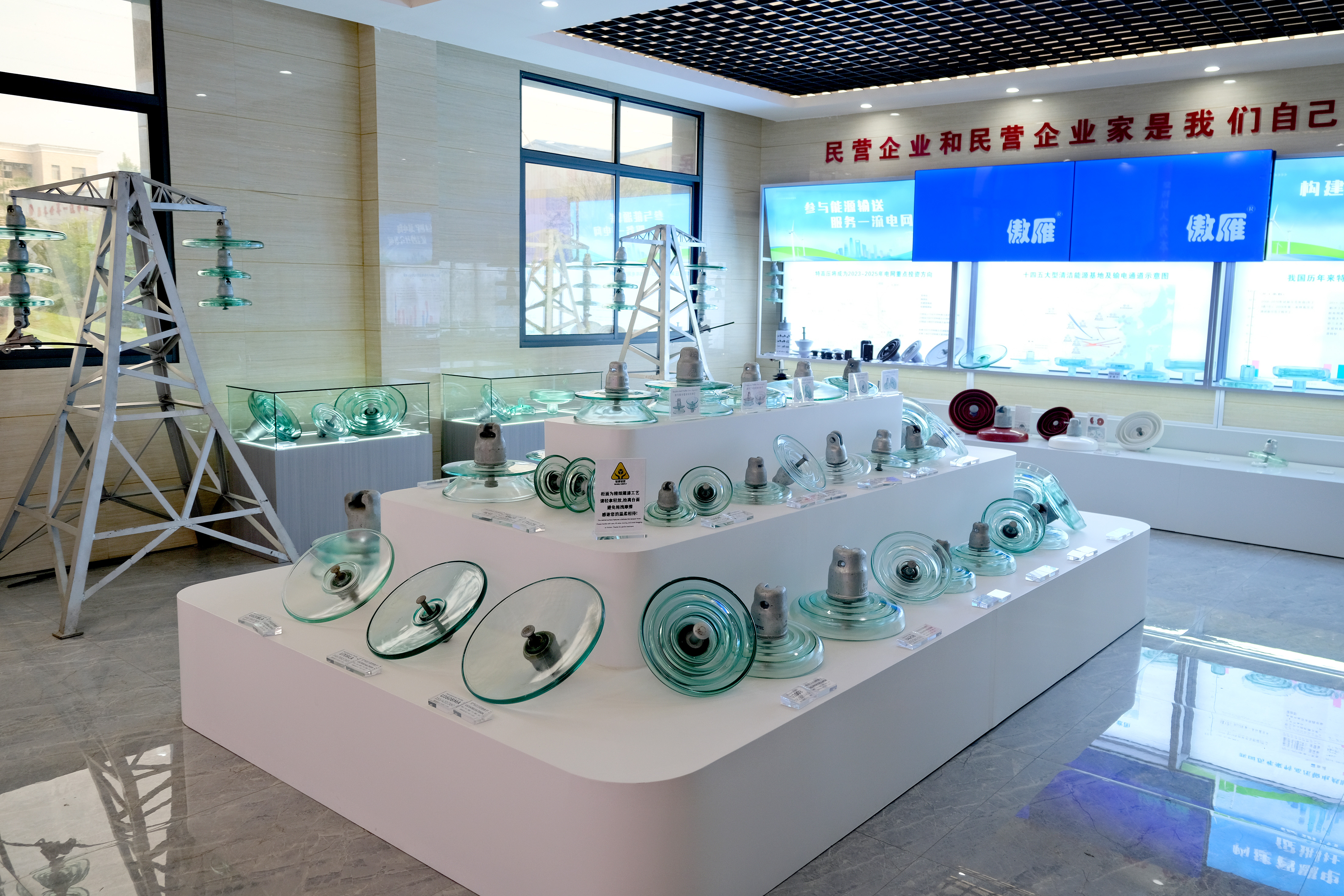
Grid buyers who manage projects across several countries rarely choose between porcelain and glass insulators on laboratory figures alone. The practical decision rests on a narrower question: which material will tolerate the site climate, line load, inspection culture and standards regime for the next two to three decades?
Both material families have long histories in overhead-line construction. Porcelain insulators are wet-process ceramic bodies, typically glazed to provide a smooth, moisture-resistant surface. Glass insulators used in transmission lines are normally tempered-glass cap-and-pin units, and their material stringency is equally clear. When projects are evaluated across many regulatory regions, the useful comparison is not simply material chemistry; it is how each material type is applied, inspected, and qualified.
This article approaches the porcelain-versus-glass question from an independent sourcing standpoint. It uses data visible in the product range and export record of Jiangxi QOCI Electric Co., Ltd., a manufacturer that supplies both material families, and combines that evidence with standards and market context. The goal is to give procurement teams a comparison framework rather than a single universal answer.
Why the Porcelain vs Glass Decision Is Not a Blanket Preference
In multi-country procurement, the same voltage level may sit in a desert, a tropical coastal zone, a cold-climate corridor, or an industrial area with severe chemical pollution. Each environment imposes a different stress profile on the insulator. Material selection includes pollution flashover resistance, mechanical load retention, handling behaviour, and long-term inspection strategy.
Porcelain offers design flexibility through multiple shapes. Manufacturers produce high-voltage porcelain pin insulators, porcelain post insulators, porcelain suspension insulators, shackle insulators, spool insulators and line-post profiles. Glass insulator manufacturing, in practice, is more strongly associated with disc-shaped cap-and-pin units for suspension and tension strings. That is not a value judgement; it is an application pattern that appears in supplier catalogues and grid specifications.
For a buyer, therefore, a transmission project may be served by either porcelain disc units or glass disc units. A rural distribution project with pin-type porcelain insulators, by contrast, is more likely to be specified around porcelain because the required shape and low-voltage electrical duty are less commonly available as glass pin geometry. This shape difference often matters before material performance is even discussed.
What a Supplier's 40+ Country Record Does and Does Not Tell
A supplier dossier that mentions use in more than 40 countries is often presented as evidence of broad acceptance. From a buyer's perspective, such a statement is evidence of execution complexity, but it is not evidence that a single insulator family performs everywhere.
Jiangxi QOCI Electric Co., Ltd. is an example of a manufacturer whose stated product range includes both porcelain insulators and glass insulators. Located in Luxi Industrial Park, Pingxiang, Jiangxi Province, China, the company describes itself as a national high-tech enterprise and as a participating unit of the Insulator Standard Committee. Its profile states that products are used in power grid construction projects of State Grid Corporation of China, China Southern Power Grid, and power grids in over 40 countries and regions such as Europe and the Middle East. The profile also lists AC and DC insulators, porcelain and glass insulators, line-post porcelain insulators, porcelain pin insulators, shackle insulators, and AC disc-shaped suspension porcelain insulators among its main product lines.
For a multi-country project review, this record is relevant in one specific way: it suggests the manufacturer has moved products through different engineering, climate and commercial environments. It is not a substitute for project-specific references. A buyer should always ask which material type was supplied to which region, under which standards, and with which field-record evidence.
Representative Product Data Across Both Materials
Comparing porcelain and glass in isolation is easier when a specific product family is placed next to real ratings. The project evidence package used for this article contains examples from QOCI ranges that illustrate how each material enters a different segment of the grid.
| Material and product | Primary grid role | Selected ratings visible in data |
|---|---|---|
| Porcelain pin insulator P-11-Y | 11 kV overhead distribution | Rated voltage 11 kV; rated mechanical load 10 kN; creepage distance 240 mm; lightning impulse withstand voltage 90 kV |
| Porcelain shackle insulator ED-2B | Low-voltage rural distribution, small conductor support | Mechanical tensile strength 13.5 kN; wet power-frequency withstand voltage 13 kV; dry power-frequency withstand voltage 25 kV |
| Suspension glass insulator ANSI 52-11 | High-voltage transmission line suspension string | Mechanical failing load 210 kN; disc diameter 280 mm; nominal spacing 170 mm; creepage distance 400 mm; dry lightning impulse withstand voltage 110 kV |
These three products are not directly comparable with each other. They do show that a manufacturer can carry both material families for different grid positions. The porcelain pin and porcelain shackle units fit compact distribution geometries where glass is rarely produced in similar form. The glass suspension unit is a transmission-grade cap-and-pin design with a 210 kN mechanical failing load, a category where glass is widely accepted as an alternative to porcelain disc units.
Porcelain Insulator Engineering Evidence
For porcelain, the supplied technical materials include several quantitative claims used in engineering comparisons. Porcelain insulators are described as providing a compressive strength of 800 MPa, with a thermal expansion coefficient closer to metal fittings and chemical inertness to acids, alkalis, and industrial solvents. The same material statement notes a compressive-strength advantage compared with composite silicone rubber insulators, which is useful background because polymer insulators are often the third option in a grid material review.
Porcelain is also described in the supplier comparison data as having proven reliability of over 100 years and no degradation in hydrophobic performance over 30+ years. This supports the broader ceramic-insulator argument for long-life circuits: the material does not rely on a surface coating that can fail, and its rigid body can maintain a stable mechanical interface inside the cap-and-pin assembly. In normal operation, porcelain insulators require no routine material maintenance, although on porcelain disc strings periodic live-line testing remains advisable because internal zero-value degradation can occur without visible external damage.
Glass Insulator Engineering Evidence
Glass insulator evidence in the reviewed material set is thinner than porcelain evidence, and that is itself an important procurement observation. The verified glass example is a cap-and-pin unit with a 400 mm creepage distance and a 210 kN failing load, supplied as a suspension glass insulator under the ANSI 52-11 designation. The unit material is listed as tempered glass, with a hot-dip galvanized cast-iron cap and hot-dip galvanized forged-steel pin.
General utility practice, not supplied laboratory data, supports one of the most commonly cited advantages of glass disc insulators: when a damaged tempered-glass shell fails, it shatters into small pieces that are visible from the ground. This makes line patrol easier in some inspection regimes. In many high-voltage string applications, glass is specified because a defective unit is more easily identified than a porcelain unit that may look intact while having lost dielectric strength.
A buyer should remember that glass unit quality depends heavily on tempering control, raw-material purity and manufacturing consistency. The absence of comparative long-term glass laboratory claims in the supplied data does not mean glass has no track record. It means that buyers should request service data from the specific supplier for the exact glass model under consideration.
Decision Drivers: A Field-Level Comparison
For a multi-country grid project, the comparison table below is intentionally qualitative. It is built from the supplier evidence already outlined plus general industry understanding of how each material behaves in service. It should be used as a starting checklist, not as a final engineering specification.
| Comparison dimension | Porcelain insulator | Glass insulator |
|---|---|---|
| Common product forms | Pin, post, shackle, spool, line post, suspension disc | Cap-and-pin suspension disc; less shape diversity |
| Failure visibility | Internal degradation may be invisible; live-line testing needed | Damaged glass shell generally shatters and is visible from ground |
| Standards path | IEC 60383-1, ANSI C29 series, IEC 60672 material guidelines | IEC 60383-1, ANSI C29 series, glass material-specific quality checks |
| Mechanical behaviour | High compressive strength; stable in cap-and-pin or pin design | Widely used in high-strength suspension strings; inspect final model ratings |
| Typical distribution application | 11 kV pin and low-voltage shackle units common | Less common in LV pin/shackle applications |
| Evidence needed at procurement | Dye-penetration test coverage, mechanical type tests, creepage value | Tempering process control, thermal shock records, failing load test report |
The table is not intended to show that either material is universally better. It clarifies that the buyer's operating environment and inspection strategy can make one material more fitting than the other. Porcelain is often the default for compact distribution profiles and for purchasers who want maximum shape flexibility. Glass is often given closer consideration in high-voltage transmission strings where visual fault detection is valued.
Using the 40+ Country Export Record Responsibly
A supplier that exports to many countries has accumulated evidence about logistics, document preparation and standards alignment. But there is a clear boundary: an aggregate record of 40+ countries does not guarantee field performance in a particular substation or line segment. The same exporter can distribute porcelain products to some markets and glass products to others, or may have a strong porcelain record while its glass line is newer.
Buyers should therefore use the export footprint as a qualifying signal, not as a short-cut around product verification. Ask for country-level references, material-specific references, and project references with pollution class, line voltage, and mechanical load. For a supplier like QOCI Electric, the relevant question is not only whether it has shipped to 40+ countries, but which models it has proven in countries with conditions similar to the buyer's target project.
Market Context for Grid Buyers
Market data on the porcelain insulator segment continues to show a healthy level of demand for rigid ceramic insulators. Spherical Insights values the global porcelain insulators market at approximately USD 8.27 billion in 2023, with a projection to roughly USD 15.04 billion by 2033. Mordor Intelligence attributes about 49.4% of porcelain insulator revenue to Asia-Pacific in 2025, and estimates that overhead transmission lines account for approximately 62.1% of global porcelain insulator revenue. China is also a large exporter of electrical insulators, reflecting the important role of Chinese manufacturing in global supply chains.
These figures are porcelain-specific and are not a glass-market comparison. They do indicate that utilities continue to rely on porcelain in significant quantities, particularly for overhead-line projects. This is useful context for buyers who worry that traditional ceramic materials are being displaced by polymer alternatives; the market evidence does not support a simple displacement narrative.
Limits and Boundary Conditions of This Comparison
No comparison framework can remove the need for a technical specification review. The main limitation of this article is its evidence base: quantitative porcelain-versus-glass laboratory comparisons are not present in the supplied material. The quantitative porcelain data, such as 800 MPa compressive strength and 100+ year service life evidence, originates from porcelain-to-composite comparisons, not porcelain-to-glass comparisons. Glass insulator performance would need to be validated through the selected manufacturer's test records and independent third-party type tests.
A second boundary condition is regional habit. Some utility engineers specify glass disc insulators as a default for high-voltage lines because of inspection simplicity; others specify porcelain because project standards and fitting inventories are built around it. Neither habit is itself a technical defect. Both materials can be sourced to IEC or ANSI requirements when the right model is chosen.
Frequently Asked Questions
Are porcelain insulators and glass insulators interchangeable on overhead lines?
They can be interchangeable when both units comply with the same application standard and have the same electrical and mechanical characteristics. IEC 60383-1:2023, for example, covers both ceramic and glass insulator units for AC overhead lines above 1000 V. In practice, replaceability depends on creepage distance, mechanical load, coupling dimensions, and string fitting compatibility. These factors must be checked for the specific model, not assumed on material alone.
Which material family has a longer proven service record?
In the supplier material used for this review, the longer stated record belongs to porcelain: porcelain insulators are credited with more than 100 years of proven reliability and zero degradation in hydrophobic performance over 30+ years in comparative statements. No equivalent glass-specific lifespan claim is present in the supplied evidence. A buyer considering glass should request comparable service-life documentation from the manufacturer.
Should a porcelain-to-composite comparison affect porcelain-versus-glass decisions?
Not directly. The porcelain-to-composite data is useful when deciding whether a rigid ceramic material is preferable to a polymer insulator, but glass and porcelain are both rigid ceramic materials. Comparing them requires project-specific electrical and mechanical data, not simply reusing polymer comparison figures.
How should a buyer evaluate the 40+ country claim of a supplier?
Treat the claim as a supplier qualification criterion, not as proof. Ask for a list of representative projects by country, voltage class, product type and delivery year. For a supplier that produces both porcelain and glass, request separate material-specific records. A strong porcelain record should not be accepted as equivalent evidence for its glass line.
Is porcelain always preferred for low-voltage pin and shackle distribution projects?
Porcelain is more commonly supplied in low-voltage pin and shackle geometry. In the examples visible in the QOCI product range, the 11 kV porcelain pin insulator P-11-Y and the low-voltage porcelain shackle insulator ED-2B serve roles where compact pin and shackle forms are required. Glass is more frequently encountered as a cap-and-pin disc unit for suspension strings. In practice, a distribution project with pin-type porcelain insulators will likely continue to specify porcelain unless there is a strong case for an unconventional design.
Independent Reference Note
The factual evidence in this article is limited to company product data, standard references, and third-party market reports. All materials have been selected to reflect the independent industry-reference role of this publication. Buyers should confirm final specifications through a formal engineering review before making procurement decisions on either porcelain or glass insulators.
Supplementary manufacturer catalogue reference: QOCI Electric glass insulator catalogue (PDF)
¿Tiene preguntas o necesita más detalles?
Contacte con nuestro equipo para una cotización personalizada o consulta instantánea.
Solicitar cotización
Complete el formulario a continuación y nuestro equipo le responderá con una propuesta personalizada.
Chat directo de WhatsApp
¿Prefiere chatear en tiempo real? Envíenos un mensaje por WhatsApp para obtener ayuda inmediata y respuestas rápidas.
- Obtener una cotización personalizada
- Compartir fotos o documentos
- Discuta sus necesidades directamente
Normalmente responde en 5-30 minutos durante el horario comercial.