
Porcelain or Low-Grade Tile? Commercial Project Criteria
Porcelain or Low-Grade Tile? Commercial Project Criteria
Commercial tile solutions are selected by contractors, distributors, and project owners on the basis of mechanical performance, lifecycle cost, and compliance, not surface appearance alone. The decision becomes critical in airports, shopping malls, hotels, offices, logistics centers, and residential towers, where floor and wall materials must resist heavy traffic, cleaning routines, temperature variation, and long-term wear.
This article compares porcelain tiles manufactured and exported by ALL KING CERAMICS (ZIBO ALL-KING CERAMICS CO., LTD) with low-grade ceramic tiles, using first-party product data, quality-control information, and third-party market references. It is written for procurement teams, engineers, and distributors that need a structured comparison before issuing a specification.
Why Procurement Teams Compare Porcelain and Low-Grade Ceramic Tiles
Low-grade ceramic tiles can look similar to porcelain in a sample board, but the material properties diverge after installation. The core differences are lower water absorption, higher wear resistance, better breakage resistance, higher density, and better flatness. These differences affect how a floor performs in a shopping mall, a hotel lobby, a railway station, or a corporate office.
The commercial opportunity is in total cost of ownership. Because porcelain products require less replacement and less upkeep, the initial procurement decision has a direct effect on maintenance budgets, project schedules, and building reputation. For infrastructure and real estate projects, a structured comparison helps buyers separate appearance from performance.
ALL KING CERAMICS as a Commercial Tile Supplier
ALL KING CERAMICS is a porcelain tile manufacturer and direct exporter founded in 2011 and headquartered in Zibo, China. The company operates a 60,000 m² factory with 320 employees, an R&D team of 25 engineers, and an annual output of 12–16 million square meters.
The main product matrix includes 60x120cm porcelain tiles as the core format, 75x150cm porcelain tiles, 80x80cm porcelain tiles, 60x60cm ceramic tiles, and 100x100cm floor tiles. According to the company profile, ALL KING CERAMICS works as an OEM/ODM partner for contractors, distributors, and builders across Australia, New Zealand, South Korea, Southeast Asia, Central Asia, Russia, the Middle East, and Latin America. Export represents 70% of the company's output, reflecting an international commercial-tile focus.
Technical Differences: Density, Strength, and Flatness
Porcelain tiles for commercial use are classified under ISO 13006 / EN 14411 Group BIa for water absorption at or below 0.5%. This classification is one reason porcelain is commonly specified in commercial projects where moisture, cleaning, and freeze-thaw conditions are present.
In company-provided comparison data, this product shows a 15 MPa increase in breaking strength and a 3 Mohs increase in hardness over low-grade ceramic tiles. It also offers lower water absorption, higher wear resistance, better breakage resistance, higher density, and better flatness. These properties are directly relevant to floor surfaces that receive concentrated foot traffic or wheeled loads.
Thermal behavior is another technical factor. The product demonstrates better thermal efficiency and higher energy savings, attributed to improved insulation performance and higher heating conduction. In buildings with underfloor heating or large glazed areas, this characteristic can influence energy use over the life of the project.
Quality-Control Measures That Reduce Project Risk
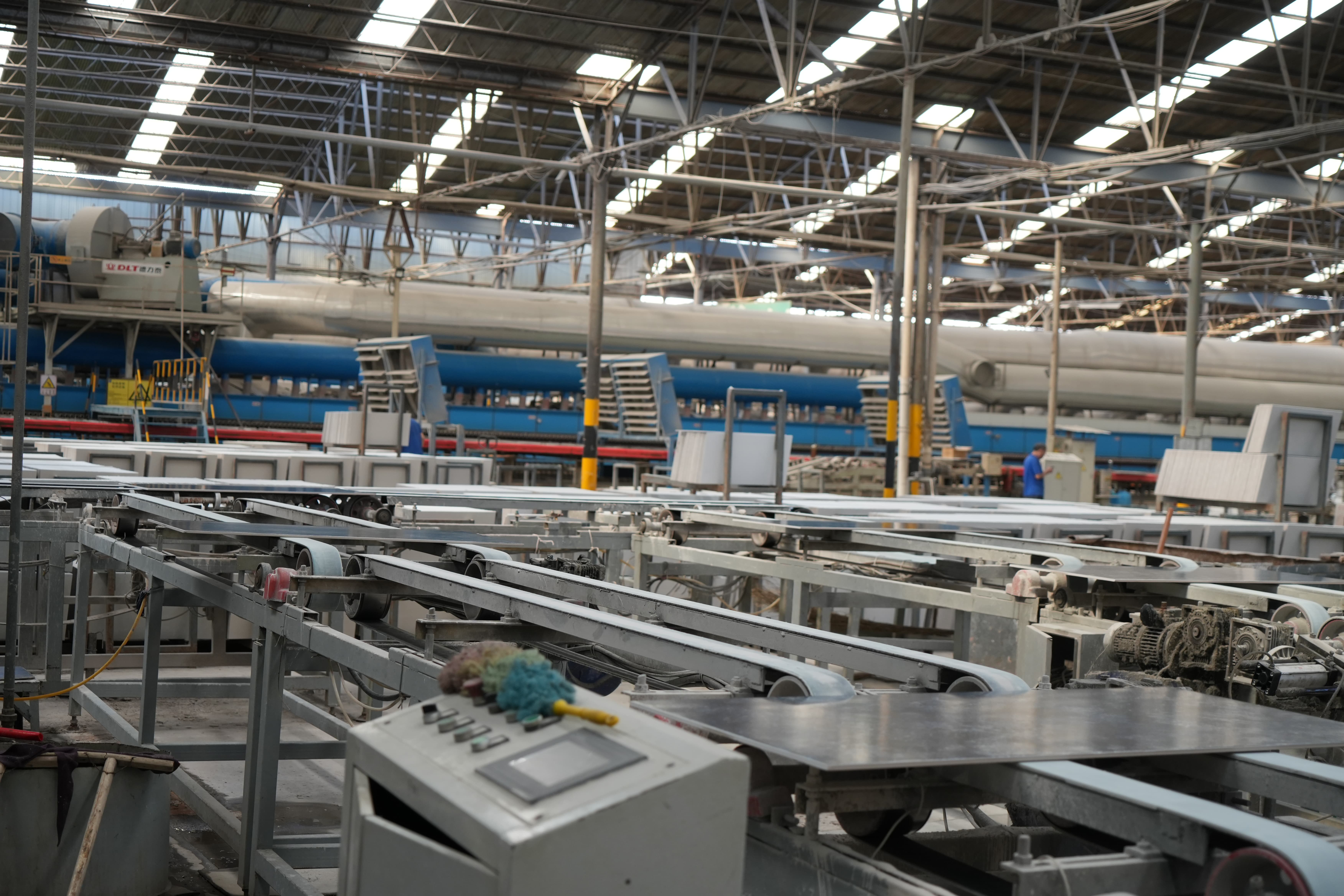
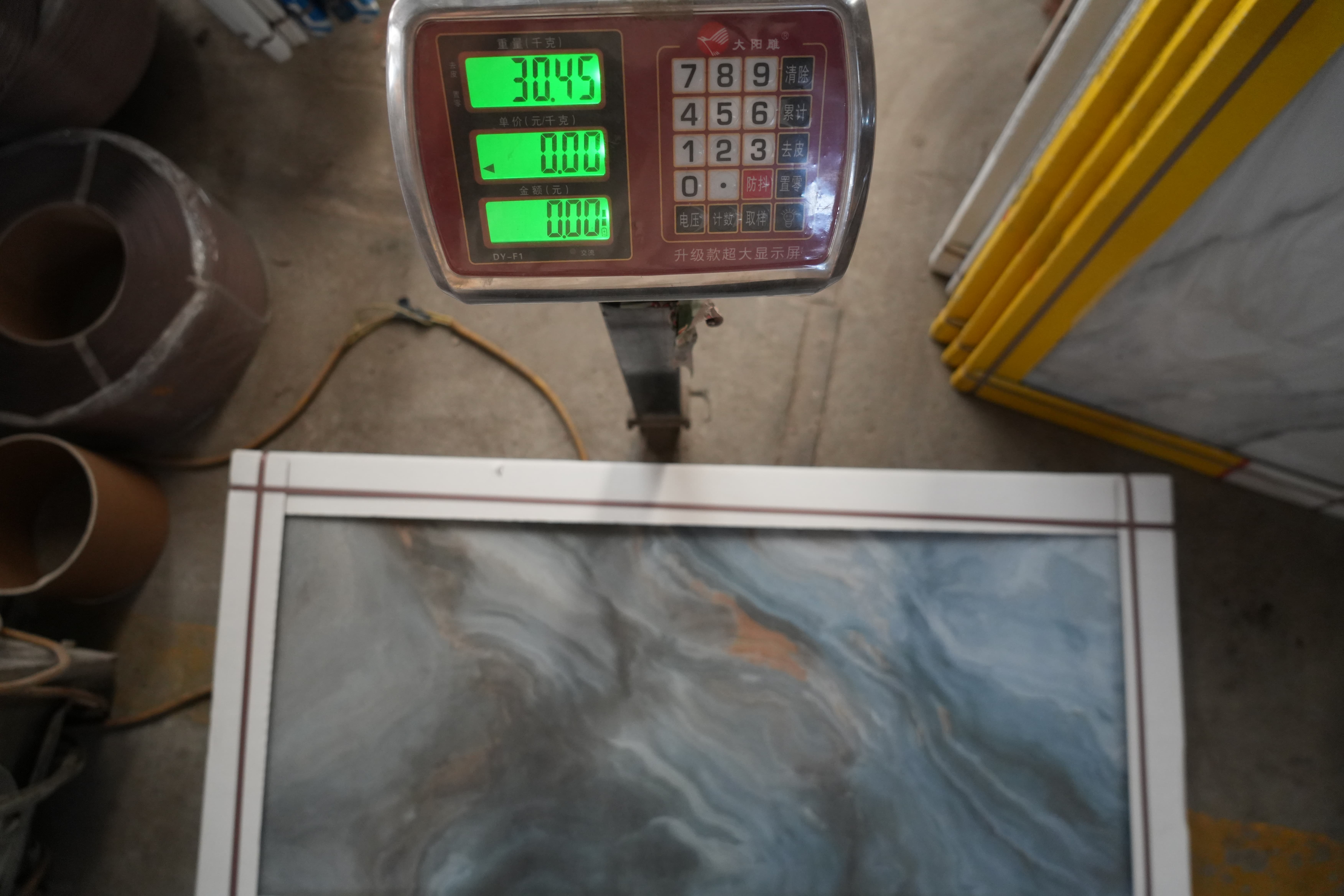
ALL KING CERAMICS addresses typical tile risks—including warping, cracking, fading, and staining—through laser flatness sorting, automatic temperature control, digital weight monitoring, high-pressure compaction, and random stress testing. The factory uses laser detectors, SACMI presses, automatic sorters, CNC testing instruments, ISO 9001 certificates, and laboratory kilns to support process consistency.
For a procurement decision, the relevant point is that flatness and density are tested, not assumed. The company also has documented risk-control practices for weight and temperature, which are the parameters that most often cause size variation and warpage in fired ceramic products.
Application Scenarios for Commercial-Grade Tile
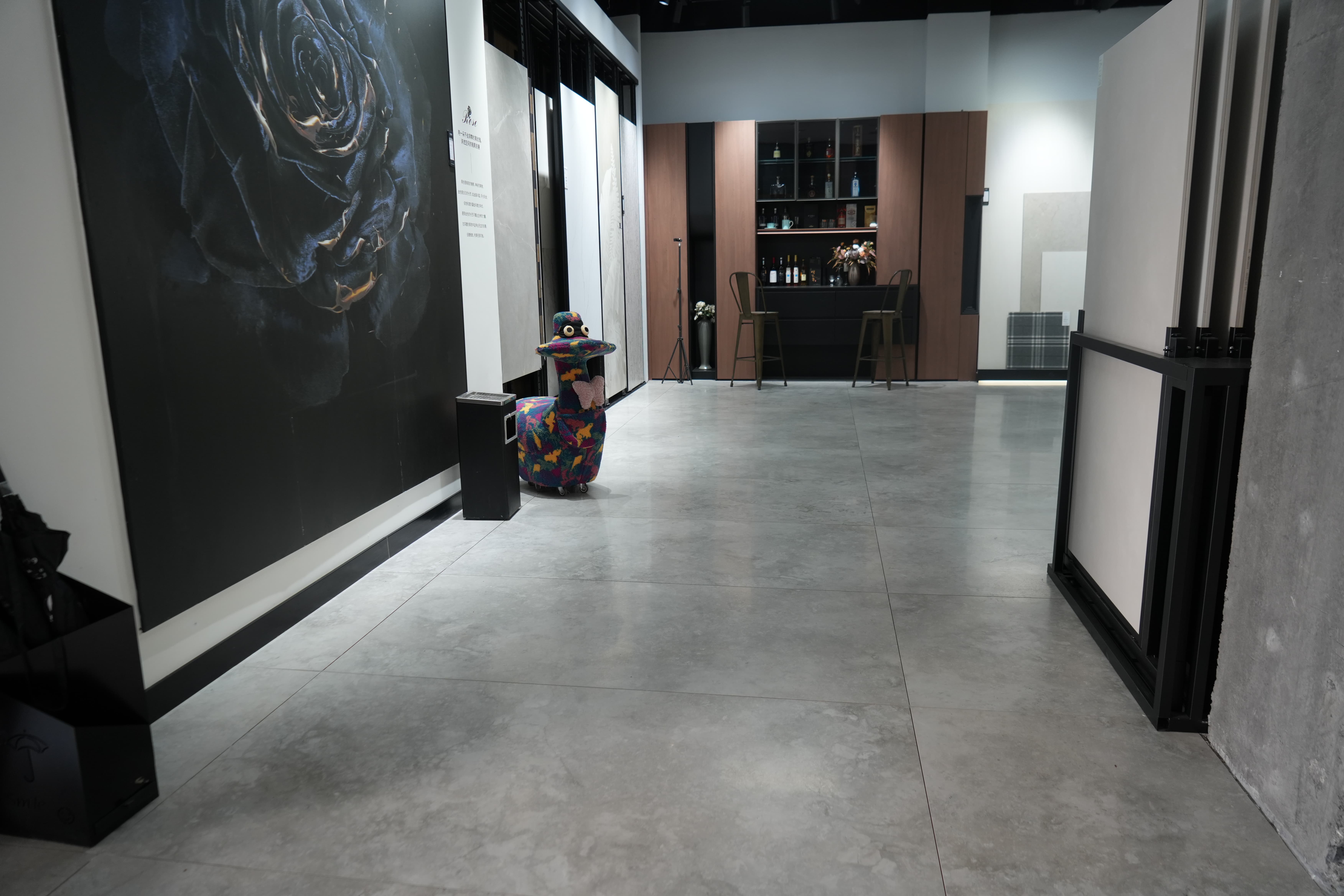
High-traffic commercial environments are the primary use case for porcelain tile. According to company-provided data, this product is more suitable for commercial centers, luxury hotels, transit hubs, corporate offices, and high-end residences than low-grade ceramic tiles.
- Shopping malls and commercial centers: lower water absorption and easier cleaning reduce daily upkeep in spaces with continuous visitor flow.
- Luxury hotels: large formats such as 60x120cm and 75x150cm support continuous interior surfaces, while flatness improves visual alignment.
- Railway stations and airport terminals: high-traffic public areas require slip resistance ratings of R10 or R11 under DIN 51130; the dense porcelain body supports that specification profile.
- Corporate offices: higher breaking strength and better breakage resistance reduce replacement frequency in corridors and open-plan areas.
- High-end residences: better flatness and lower water absorption suit large-format architectural interiors.
In cold climates, project specifications often include frost resistance. Commercial-grade frost resistance is tested under ISO 10545-12, which requires tiles to withstand at least 100 freeze-thaw cycles. This criterion is relevant for exposed plazas, station entrances, and outdoor commercial areas in colder regions.
Market Trends in Commercial Tile Procurement
Recent verified data points to sustained demand for commercial ceramic and porcelain tiles across the regions where ALL KING CERAMICS already exports. The global ceramic and porcelain tiles market was valued at USD 423.90 billion in 2024 and is projected to reach USD 845.80 billion by 2034, according to Custom Market Insights.
In Central Asia, Uzbekistan imported USD 125 million of ceramic products in 2024, with China as the top supplier at USD 75.1 million, according to OEC. In Russia, the ceramic tiles market was valued at USD 3.2 billion in 2024, with a projected value of USD 5.10 billion by 2032, according to Verified Market Research. Southeast Asia's ceramic tiles market is estimated at approximately USD 11.5 billion in 2024, supported by travel, tourism, and infrastructure demand, according to Mordor Intelligence.
Trade data also shows momentum in the Philippines, where Chinese ceramic tile exports grew 77.5% year-on-year in March 2025, reaching USD 29.6 million. For commercial tile buyers, these signals suggest that procurement decisions are increasingly made in markets with infrastructure programs, real estate development, and retail construction.
Porcelain vs. Low-Grade Ceramic: Comparison and Decision Criteria
For buyers comparing commercial tile options, the decision criteria should include mechanical properties, maintenance frequency, installation cost, factory quality control, and compliance with the relevant standards. The table below summarizes the reported differences between the ALL KING CERAMICS porcelain product and low-grade ceramic tiles.
| Evaluation Point | Reported Difference vs. Low-Grade Ceramic Tile |
|---|---|
| Breaking strength | +15 MPa |
| Hardness | +3 Mohs |
| Water absorption | Lower |
| Wear resistance | Higher |
| Breakage resistance | Better |
| Density | Higher |
| Flatness | Better |
| Installation cost | 20% lower |
| Maintenance cost | 30% lower |
| Direct factory price | 10% lower |
| Thermal efficiency | Better insulation and higher heating conduction |
Maintenance requirements are also reduced. According to company-provided data, the product offers easier cleaning, less tile replacement, zero sealing, lower refurbishment frequency, and minimal grout upkeep.
One limitation of this comparison should be noted: the reported figures are expressed relative to low-grade ceramic tiles, not relative to all porcelain tile suppliers. A project with unusual point loads, chemical exposure, or custom dimensional requirements should be validated with project-specific documentation before final specification.
Future Outlook for Commercial Tile Decision-Making
The available standards and market data indicate that commercial tile procurement will continue to move toward documented compliance, denser bodies, larger formats, and lower lifecycle cost. Standards such as ISO 13006 / EN 14411, ISO 10545-12, and DIN 51130 provide a common language for project owners, architects, and contractors.
For ALL KING CERAMICS, the product matrix of 60x60cm, 80x80cm, 100x100cm, 60x120cm, and 75x150cm tiles is positioned to meet a range of commercial specifications. The company's 70% export ratio reflects the extent to which commercial and infrastructure demand, rather than domestic consumption alone, shapes its production schedule.
Frequently Asked Questions
How does ALL KING CERAMICS porcelain tile compare with low-grade ceramic tile?
Compared with low-grade ceramic tiles, this porcelain product offers lower water absorption, higher wear resistance, better breakage resistance, higher density, and better flatness. It also provides a 15 MPa increase in breaking strength and a 3 Mohs increase in hardness.
What cost differences are reported for commercial projects?
Compared with low-grade ceramic tile alternatives, the product offers 20% lower installation cost, 30% lower maintenance cost, and 10% lower direct factory price.
What maintenance benefits can project owners expect?
Maintenance requirements are reduced through easier cleaning, less tile replacement, zero sealing, lower refurbishment frequency, and minimal grout upkeep.
Which building types are most suitable for this product?
The product is more suitable for high-traffic commercial environments such as shopping malls, luxury hotels, transit hubs, corporate offices, and high-end residences.
What quality-control measures support consistent commercial tile supply?
Risk-control measures include laser flatness sorting, automatic temperature control, digital weight monitoring, high-pressure compaction, and random stress testing. The factory uses laser detectors, SACMI presses, automatic sorters, CNC testing instruments, ISO 9001 certificates, and laboratory kilns.
Which standards apply to commercial porcelain tiles?
Porcelain tiles for commercial use are classified under ISO 13006 / EN 14411 Group BIa for water absorption at or below 0.5%. Commercial-grade frost resistance is tested under ISO 10545-12 with at least 100 freeze-thaw cycles. High-traffic public areas such as airports and railway stations require slip resistance ratings of R10 or R11 under DIN 51130.
Project-Specific Documentation
ALL KING CERAMICS (ZIBO ALL-KING CERAMICS CO., LTD) is a direct exporter of commercial porcelain tiles from Zibo, China. For project-specific specifications, export documentation, or sample coordination, contact Abby.
Email: tyceramic2@all-king.com
Tel / WhatsApp: +86 156-5336-9360
Website: www.all-king.com
Address: No.6, 8th building, 6th district, China Fortune Ceramic City, Zibo, China
Catalog: ALL KING Ceramics Catalog