
Porcelain Insulator Procurement: A Field Guide for Grid and Distribution Buyers
Porcelain insulators remain a fundamental component in overhead power networks, yet procurement decisions are often complicated by differences in product types, standards, and supplier capabilities. This guide provides a structured overview for engineers and buyers evaluating porcelain insulators for transmission, distribution, and rural electrification projects.
Overhead lines use porcelain insulators to provide electrical isolation and mechanical support. These devices carry both the electrical stress of system voltage and the physical load of conductors, which is why material quality, dimensional accuracy, and manufacturing consistency matter as much as price. For buyers, understanding standard classifications, pollution-class creepage design, and how to verify supplier production quality can reduce long-term operational risk.
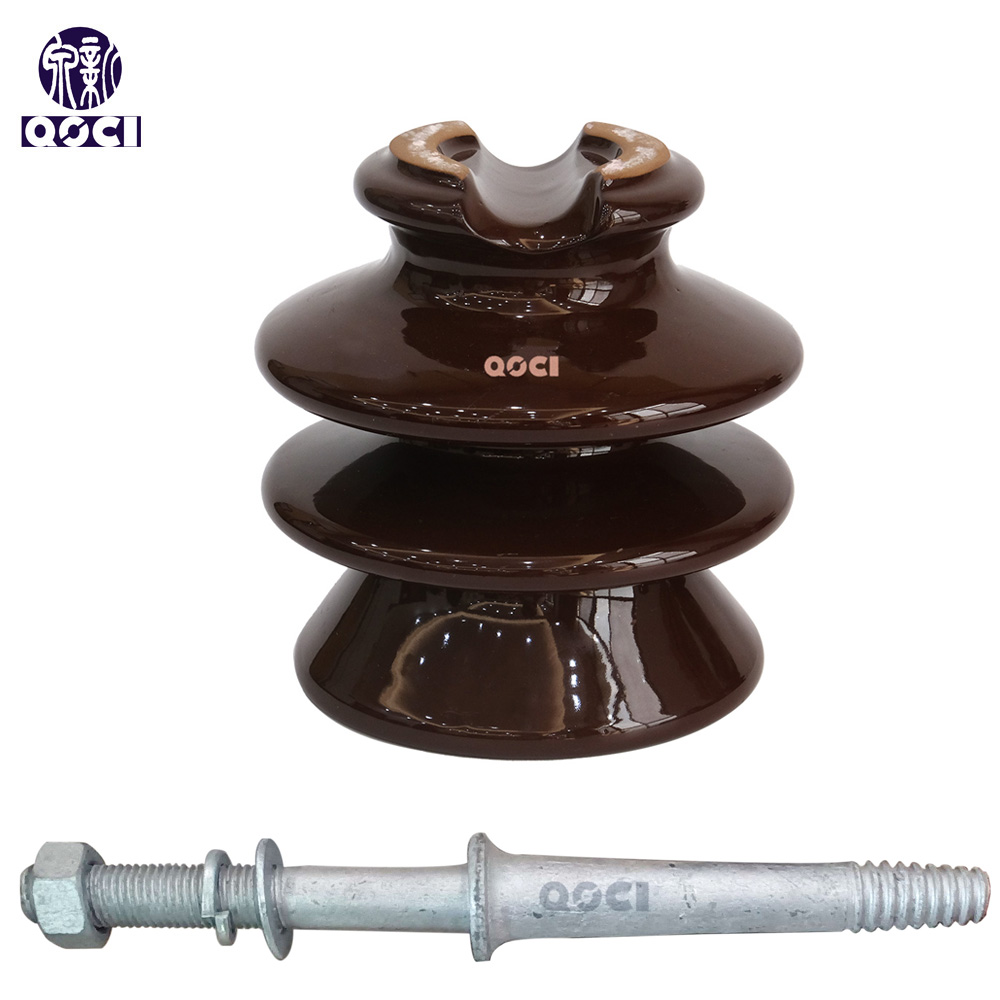
P-11-Y pin-type porcelain insulator with galvanized spindle
Why the Porcelain Insulator Market Is Expanding
Reports from industry analysts indicate that the global porcelain insulators market was valued at approximately USD 8.27 billion in 2023 and is projected to reach USD 15.04 billion by 2033. Overhead transmission lines account for roughly 62.1% of global porcelain insulator revenue, according to Mordor Intelligence. The Asia-Pacific region leads this growth with a 49.4% share, driven by grid expansion in China, India, and Southeast Asia.
China's role as a supplier is particularly relevant for international buyers. In 2024, China accounted for 31.4% of global electrical insulator exports, about USD 898 million, with porcelain products representing a significant portion. This aligns with the country's long history of manufacturing electrical ceramics and the presence of specialized production clusters such as the Electric Porcelain Industrial Park in Pingxiang, Jiangxi.
Defining the Product Family: From Pin to Shackle Insulators
Porcelain insulators are broadly grouped by mechanical design and application. The most common categories seen in procurement specifications include pin-type, suspension (disc), shackle (butterfly), post, and strain insulators. Each type serves a different mechanical role in the line.
Pin-Type Insulators for Medium-Voltage Distribution
Pin-type insulators are widely used on overhead distribution lines up to 33 kV. They mount directly on a wooden or steel cross-arm, with the conductor tied to the top groove. The P-11-Y porcelain pin insulator is one example of this category. It is rated at 11 kV with a rated mechanical load of 10 kN and is built with a high-strength electrical porcelain body and a hot-dip galvanized forged steel pin. Engineers select pin insulators based on rated voltage, cantilever strength, and resistance to tracking and puncture.
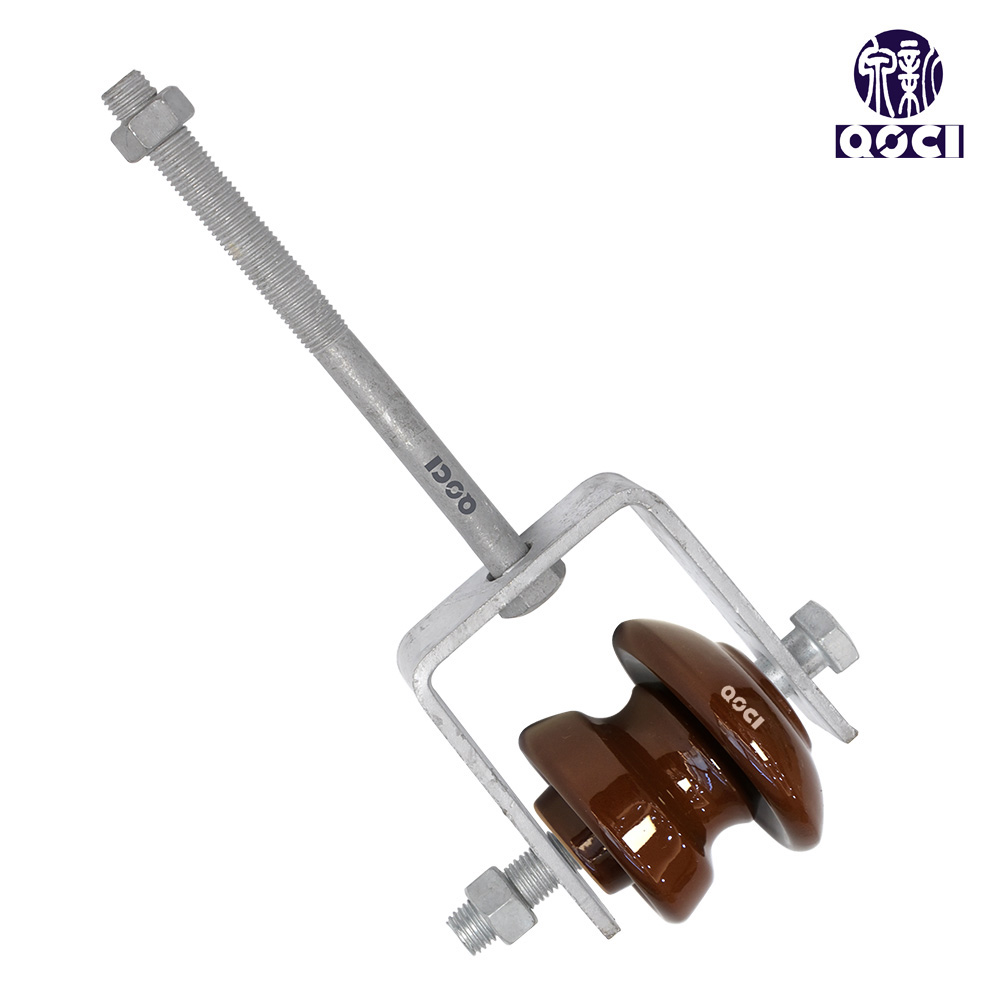
ED-2B shackle insulator with D-iron fitting
Shackle and Low-Voltage Insulators
For low-voltage networks (typically below 1 kV), shackle insulators provide anchoring and strain relief at line terminations and corners. The ED-2B model is a porcelain shackle insulator designed for low-voltage overhead distribution lines and rural electrification. It is made of high-strength electrical porcelain and offers a mechanical tensile strength of 13.5 kN, with power frequency withstand voltages of 25 kV dry and 13 kV wet. The compact size (76 mm height, 90 mm diameter) allows easy installation with a galvanized bracket.
Technical Requirements Under International Standards
Most utility procurement documents reference IEC 60383-1 or ANSI C29 series. IEC 60383-1:2023 covers ceramic and glass insulator units for AC overhead lines above 1000 V. ANSI C29.1 specifies test methods used in North America. In addition, IEC 60672 defines material requirements for ceramic and glass insulating materials.
Within these frameworks, buyers focus on: mechanical failing load (SML), creepage distance, dry and wet power-frequency withstand voltage, lightning impulse withstand voltage, and puncture voltage. These are all type-test or routine-test parameters that demonstrate the insulator's ability to operate under real weather and pollution conditions.
Evaluating Critical Quality Parameters
Not all porcelain insulators perform equally in the field. Internal micro-cracks, glaze defects, and cement joint failures are invisible during visual inspection but can lead to zero-value degradation. Here is a checklist derived from industry engineering knowledge:
- Mechanical load rating: Verify SML in line with expected conductor tensions, typically 40–550 kN for suspension and tension strings.
- Creepage distance: Match to site pollution class (I–IV) per IEC 60815. Heavily polluted areas require longer creepage profiles.
- Dye penetration test: Confirm that the supplier performs 100% dye penetration testing on individual units, not just batch sampling.
- Glaze quality: Inspect surface uniformity; glaze pinholes or bare spots accelerate contamination adhesion and moisture absorption.
- Cement joint sealing: Check moisture ingress protection because degraded cement joints are a known entry point for internal faults.
- Thermal shock resistance: Production-line thermal shock testing helps identify porcelain bodies prone to cracking.
As a reference, Chinese manufacturer Jiangxi QOCI Electric Co., Ltd. operates a production facility covering 35,373 m² and reports an annual output of 9,000,000 insulator units. The company runs a 38-engineer R&D team and participates in the Insulator Standard Committee, which gives it direct visibility into evolving standards.
Pollution Performance and Creepage Design
For coastal, industrial, and high-humidity zones, anti-pollution porcelain insulators with increased creepage distance are commonly specified. Pollution flashover is the leading cause of insulator failure in such environments. IEC 60815 provides four pollution classes (I–IV), each with recommended creepage levels. A qualified supplier should be able to provide creepage-distance options matched to the buyer's site classification.
Porcelain vs. Composite Insulators: A Balanced View
Both porcelain and composite silicone rubber insulators are used in modern grids, but the decision warrants technical scrutiny. Porcelain insulators offer excellent compressive strength, zero UV aging degradation, and a long service history. They are less tolerant of handling damage due to brittle fracture, but their stiffness is often preferred for long-span lines.
Composite insulators are lighter and easier to install, but field data suggests that silicone rubber degrades under tropical UV exposure, losing hydrophobicity at a rate that may require periodic monitoring. Composite hardware also has a shorter industry track record in some regions.
| Parameter | Porcelain | Composite |
|---|---|---|
| UV degradation | Negligible | 5–8% per year in tropical UV (per industry field observations) |
| Mechanical strength | High compressive strength | Good tensile, lower resistance to impact |
| Weight | Heavier | Lighter |
| Service life | 20–25 years typical | Depends on material formulation and UV exposure |
| Maintenance | Regular inspection, live-line testing | Hydrophobicity monitoring required |
The recommendation from engineering practice is straightforward: porcelain insulators are often the safer choice for tropical, coastal, and high-UV regions where long-term stability outweighs weight concerns. Composite insulators may fit temporary lines or weight-sensitive tower reinforcements, but design life and pollution performance need careful negotiation.
Supplier Evaluation: Capability and Evidence
Given the high cost of line outages, choosing a porcelain insulator supplier is a risk-management decision, not just a price comparison. Buyers should request evidence in five areas:
- Manufacturing process: Does the supplier use automated production lines with stage-wise quality gates? Automatic forming and glaze spraying provide more consistency than manual processes.
- Crack detection coverage: Does the supplier perform 100% dye penetration and ultrasonic testing on every unit, or only sampled units?
- Standards conformance: Is the product tested according to IEC 60305, IEC 60383-1, ANSI C29, or GB/T 1001.1?
- Field references: Can the supplier provide operational records from projects in climates similar to the buyer's site?
- Supply stability: Does the factory have enough production capacity to avoid delivery delays? Annual output in the millions of units suggests a certain level of scale.
Jiangxi QOCI Electric, as an example, exports 20% of its production to the USA, Asia, EU, Africa, and South America. Its products are used in grid projects of State Grid Corporation of China and China Southern Power Grid, and in more than 40 countries. These facts do not guarantee error-free delivery, but they indicate a level of accumulated field exposure that smaller suppliers may lack.
Rural Electrification: A Growing Application Segment
Rural electrification programs across Asia and Africa continue to require large quantities of porcelain pin and shackle insulators. These projects often face tight budgets and harsh environmental conditions. For these applications, the P-11-Y pin insulator and ED-2B shackle insulator are practical examples of parts that balance cost and durability. The P-11-Y provides 240 mm creepage distance and 90 kV lightning impulse withstand, which is adequate for 10–11 kV distribution systems in moderate pollution classes. The ED-2B, with its 13.5 kN tensile rating, suits secondary lines and service drops.
Market Trends Influencing Procurement Strategy
Current market data shows a clear shift toward higher voltage transmission and substation modernization. The substation porcelain insulator segment is projected to grow at a CAGR of 7.2% through 2031, in part driven by GIS upgrades. Buyers expect that porcelain insulators used in substations and high-voltage lines will increasingly require stricter quality documentation and longer creepage profiles.
Another trend is the consolidation of procurement around fewer, larger suppliers with ISO-certified and vertically integrated production. This aligns with the need for traceability of batches, which is difficult to achieve when buying through trading intermediaries that do not operate factories.
Limitations and Remaining Risks
Porcelain insulators have well-understood limitations. The material is brittle and susceptible to mechanical damage during handling and installation. Poor installation practices—such as overtightening conductors or hitting insulators with tools—can create invisible cracks that later lead to failure. Also, the cement that joins porcelain to metal fittings can degrade if exposed to moisture ingress over many years, increasing the risk of electrical puncture.
Finally, while many factories claim to follow international standards, the credibility of test reports varies. Buyers should enforce a clear inspection plan, including performing their own routine tests on representative samples and verifying that the factory's 100% inspection records are genuine.
Future Outlook for Porcelain Insulator Supply
Looking ahead, porcelain insulators will remain a primary choice for high-voltage overhead lines, while composite materials may take a larger share in specific niches. The Chinese supply base will continue to be central to global exports, but buyers can expect more differentiation among suppliers based on testing depth and documentation quality. Utilities and EPC firms that standardize on a small pool of qualified suppliers—and verify their production processes—will be better positioned to avoid in-service failures and service disruptions.
For a deeper review of product catalogs and specifications, readers may consult the manufacturer's published technical overview: QOCI Electric Product Catalogue.
Frequently Asked Questions
Qualified suppliers should be evaluated on mechanical strength (SML 40–550 kN), 100% dye penetration testing, IEC 60305/ANSI C29 certification, glaze quality per IEC 60672, cement joint sealing, creepage distance matched to pollution class, and field operation records in similar climates. Buyers should verify these factors during factory audits or through documented quality records.
Porcelain insulators can develop zero-value degradation—internal electrical breakdown without visible external change. Live-line testing using voltage gradient or spark gap methods is required to identify faulty units that appear normal visually. This should be done every 3–5 years as part of scheduled line inspections.
Porcelain insulators typically have a service life of 20–25 years under normal conditions. In heavy pollution or extreme climates, the effective life may be shorter and require more frequent inspection and cleaning.
The glaze provides a smooth, hydrophobic surface that reduces contamination adhesion and moisture absorption. Glaze quality affects anti-pollution performance and long-term durability. Poor glaze can shorten the effective service life even when the porcelain body is otherwise sound.
The main international standards include IEC 60383-1 (ceramic/glass insulator units for overhead lines), IEC 60672 (ceramic and glass insulating materials), and ANSI C29.1 (test methods in North America). Chinese projects often follow GB/T 1001.1. Correct selection requires confirming which standard is referenced in the project specification.
¿Tiene preguntas o necesita más detalles?
Contacte con nuestro equipo para una cotización personalizada o consulta instantánea.
Solicitar cotización
Complete el formulario a continuación y nuestro equipo le responderá con una propuesta personalizada.
Chat directo de WhatsApp
¿Prefiere chatear en tiempo real? Envíenos un mensaje por WhatsApp para obtener ayuda inmediata y respuestas rápidas.
- Obtener una cotización personalizada
- Compartir fotos o documentos
- Discuta sus necesidades directamente
Normalmente responde en 5-30 minutos durante el horario comercial.