
Polyurethane Raw Materials FAQ: Specs & Acceptance Criteria
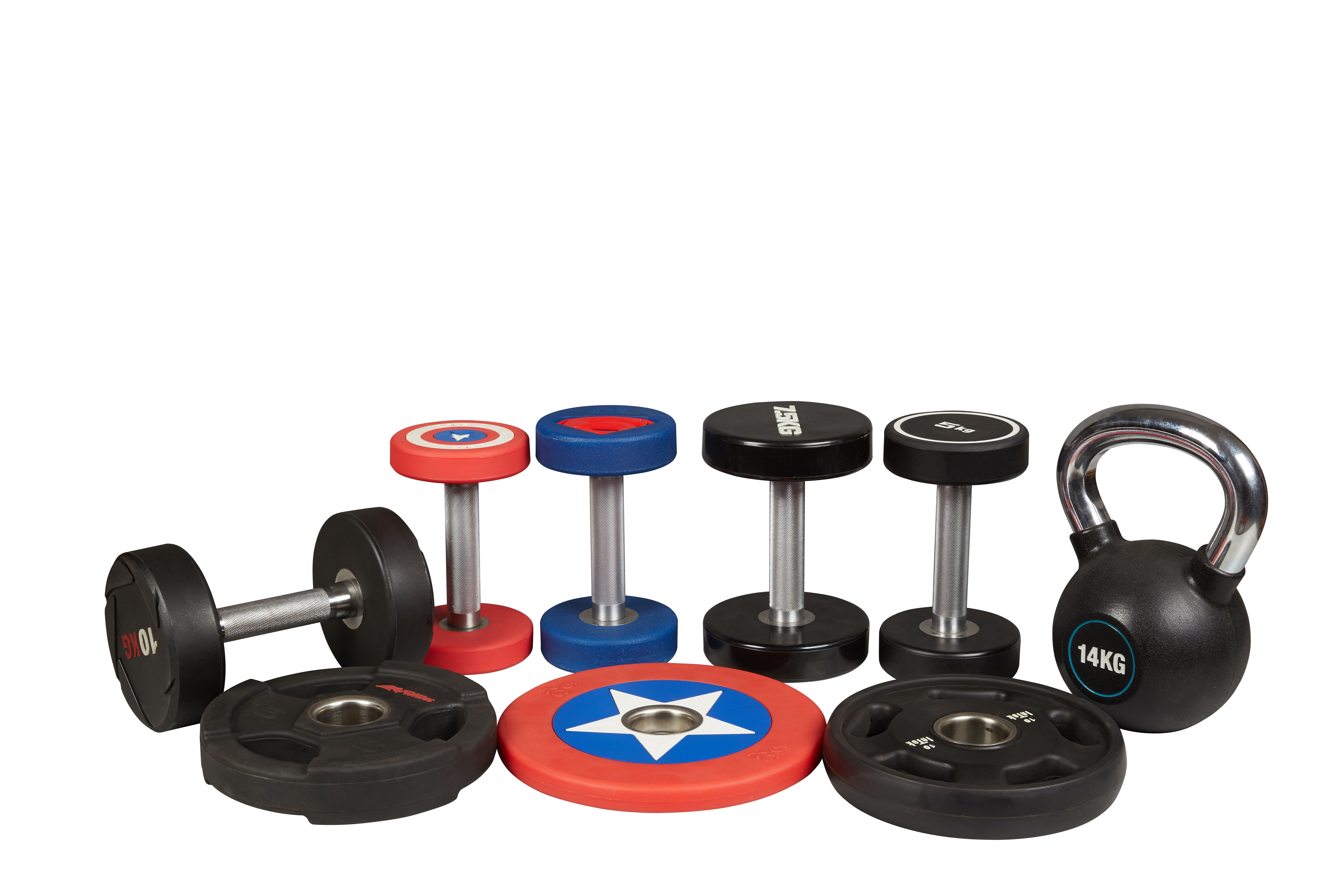
Cast polyurethane elastomer in a rubberized sports-equipment application — one of the use profiles where acceptance criteria are agreed before the first drum ships.
Polyurethane Raw Materials FAQ: Specs & Acceptance Criteria
Polyurethane raw materials are not a single commodity. In casting operations alone, buyers choose between full prepolymers, quasi prepolymers, two-component liquid elastomer packs and formulated adhesives — each with a different handling window, cure behaviour and acceptance risk. The commercial weight behind that choice is measurable: the global casting polyurethane (CPU) segment was valued at USD 2.758 billion in 2024 and is projected to reach USD 4.199 billion by 2033, a CAGR of 5.97% (Astute Analytica, cited by Taiwan News). The wider polyurethane market is projected at USD 92.1 billion in 2026 (Grand View Research).
This FAQ is written for buyers who have already shortlisted a material family and are now moving from evaluation into execution. The questions below are the ones that decide whether a purchase order runs cleanly: which grade, under which processing route, with which purchasing terms, and against which acceptance evidence.
Shanghai Hecheng Polymer Technology Co., Ltd is a Shanghai-based manufacturer of cast polyurethane (CPU) elastomer materials, founded in 2009 and operating from Songjiang District, Shanghai. The company produces casting polyurethane prepolymers, casting polyurethane mixed components, special-application polymers and eco-friendly adhesives, and supplies customers in markets including the EU, Southeast Asia and South America.
Why acceptance criteria now lead the specification conversation
Ten years ago, most casting buyers opened with a hardness target. Today the opening question is usually about repeatability. The reason is structural: cast polyurethane is a thermoset reaction system, so the material the buyer receives is only half of the final product. The other half is the buyer's own metering, mixing, mould temperature and cure discipline.
That split responsibility is where most disputes originate. A datasheet can state a viscosity or a hardness band, but it cannot by itself tell a production manager whether the drum in front of them will behave like the drum delivered last quarter. Acceptance criteria exist to close that gap. They convert a datasheet into a test that both sides agreed to before the order was placed — and, in continuous mass production, they are the only practical defence against a moisture or stoichiometry drift that turns an entire shift into scrap.
For buyers, the opportunity is straightforward: define acceptance at the RFQ stage and the supplier selection process becomes a documentation exercise rather than a negotiation after a failed batch.
Technical specification questions
Q1. Which product families sit under casting polyurethane raw materials?
Hecheng organises its portfolio into five product categories: casting polyurethane prepolymer, casting polyurethane mixed component, polyurethane polymers for high performance and special applications, environment-friendly adhesive products, and supporting equipment, auxiliary materials and additives for PU production. The range covers more than 1,000 prepolymer grades.
Named grades referenced in the company's product documentation include Polyurethane elastomer (polyester, three-component), CPU casting polyurethane (PTMG-MDI), Liquid polyurethane (Gel-8301AB), Polyurethane prepolymer for rubberized sports equipment (8385AB), and Casting Polyurethane prepolymer (POLYURETHANE ELASTOMER). For a buyer, the practical meaning is that grade selection should start from the application and the processing route, not from a generic catalogue page.
Q2. Prepolymer, quasi prepolymer and two-component liquid — what is the practical difference?
A full prepolymer has already been reacted with polyol, so the buyer's job is mainly to add the curative and cast. It offers a comparatively narrow, repeatable processing window, which suits parts that must be reproduced batch after batch.
A quasi prepolymer sits partway along the reaction. It carries more formulating latitude on the buyer's side but is less forgiving of metering error, which is why it tends to pair with experienced processors and reliable dosing equipment.
A two-component liquid system is supplied as a matched resin and hardener pair, mixed at a fixed ratio by meter-mix equipment. It shifts the burden of consistency onto the machine and the mix ratio, and it is the format most often chosen when a line runs continuously rather than in discrete casting cycles.
Q3. How does the processing route change which supplier you choose?
The route changes the evidence you should demand.
- Manual or low-volume casting. Priority shifts to batch-to-batch consistency, open-time tolerance on the shop floor, and a minimum order quantity that does not force a large commitment before the grade is proven.
- Two-component metering with high-pressure mixing and pouring. Priority shifts to stable viscosity, a mix ratio the machine can hold accurately, filtration behaviour, and degassing characteristics. A supplier that cannot state ratio and viscosity in machine-relevant terms is a commissioning risk.
- Continuous mass production. Priority shifts to supply continuity and lot-level evidence: consistent drum-to-drum behaviour, pre-shipment data per lot, and capacity headroom that matches the buyer's own output plan.
This is the single most common mismatch in CPU sourcing — a technically correct grade specified for the wrong route. A material that performs well in a manually cast prototype can behave differently once it is pushed through high-pressure mixing and continuous pouring.
Q4. What should buyers ask about low-free isocyanate grades?
The low-free isocyanate prepolymer segment is growing at a CAGR of 13.01% through 2033 (Market Research Intel), which reflects both tighter workplace-safety expectations and reformulation work by processors. The grades involved are typically described as low free isocyanate MDI, PPDI or TDI based prepolymers.
For procurement, the question is not whether the category is growing — it is whether the specific grade on offer is a low-free version and what documentation supports that. Buyers should request the grade designation and the corresponding safety documentation rather than inferring low-free status from a product family name.
Q5. What does '100% test' actually mean for acceptance?
At Hecheng, quality control is stated as 100% test and the stated acceptance criterion is a pre-shipment test. In practice, a buyer should translate that into three concrete requirements: lot-specific test data supplied before dispatch, a retained sample held by the supplier, and a sealed reference sample agreed by both parties so that any later dispute is settled against a physical standard rather than a description.
Without the sealed sample, 'pre-shipment test' describes an activity. With it, it becomes an acceptance criterion.
Procurement terms: the commercial baseline
Purchasing terms for polyurethane raw materials are usually settled well before the technical discussion closes, and they shape how much risk sits on each side. The table below summarises the terms stated by Shanghai Hecheng for its casting polyurethane materials.
| Term | Stated position | What it means for the buyer |
|---|---|---|
| Minimum order quantity | 1 ton | A first order is a production-scale commitment, so the trial plan should be agreed before the PO. |
| Delivery terms | FOB / CIF | Incoterm choice determines who carries freight and risk in transit; confirm which applies at quotation. |
| Payment terms | 30 / 70 | A 30% deposit with 70% against documents or shipment; the balance release should be tied to the pre-shipment test. |
| Lead time | 30 days | Plan safety stock against the lead time, not against the quotation date. |
| Monthly capacity | 8,000 units | Relevant for continuous mass production; confirm the unit basis and grade mix before scaling. |
| OEM production | Available | Supports private-label and custom formulation programmes. |
| After-sales support | Remote support | Troubleshooting is delivered remotely, so the buyer should prepare process data in advance of any issue. |
The manufacturing base behind those terms is a 16,932 m² facility in Songjiang District with 16 major production reactors, a workforce of 78 including 18 R&D engineers — close to 30% of staff — and an export share of roughly 30%.
Acceptance criteria and documentary evidence
Acceptance in polyurethane raw materials is a document set as much as a laboratory result. A buyer moving into execution should be able to assemble a file in which each claim about the material has a matching piece of evidence.
Certificate of Invention Patent 16425Q32921R3M, issued through HUAZHONG INTERNATIONAL CERTIFICATION AND INSPECTION GROUP and linked in company documentation to casting polyurethane prepolymer and CPU casting polyurethane (PTMG-MDI).
The most concrete item in that file is Invention Patent 16425Q32921R3M. Issued through HUAZHONG INTERNATIONAL CERTIFICATION AND INSPECTION GROUP, it carries a domestic and international market scope and appears in company records with multiple issue and expiry dates, including an issue date of 2021-07-08 with expiry to 2041-07-08, 2018-06-19 to 2038-06-19, 2017-10-10 to 2037-10-10, and 2016-09-14 to 2036-09-14. The patent is documented against related products including Polyurethane elastomer (polyester, three-component), Casting Polyurethane prepolymer and CPU casting polyurethane (PTMG-MDI).
Read correctly, the patent does two things. It confirms that the supplier holds a documented formulation family rather than only a trading catalogue, and it gives the buyer a specific reference that can be checked against the certificate itself. Read incorrectly, it becomes a performance guarantee it was never intended to be: a patent documents a formulation concept and its claims, not the measured properties of the drum in your warehouse. Buyers should always require the lot-level pre-shipment test alongside the patent, not instead of it.
Quality evidence at the supplier side is supported by laboratory analysis covering basic mechanical testing, thermal analysis and chemical resistance evaluation, used to confirm that customised material meets the specified requirement before it is released.
Application profiles and what each one asks of the material
Most specification arguments are really application arguments. The profiles below summarise the requirement each application places on a cast polyurethane system, which is what should drive the grade conversation.
| Application | Dominant requirement | Acceptance focus |
|---|---|---|
| Mining tensionless screen mesh | Abrasion resistance under continuous load | Batch consistency of the wear-critical grade |
| Wind power sealing and shock absorption | Ageing resistance and long service intervals | Hydrolysis and thermal ageing evidence |
| Marine corrosion, anti-fouling and vibration damping | Salt-water exposure plus dynamic damping | Chemical resistance evaluation |
| Composite sealing rings | Dimensional stability and compression behaviour | Cure consistency across lots |
| Construction anti-wear parts | Impact and abrasion resistance | Mechanical property data per lot |
| Automotive physical and mechanical improvement | Repeatable mechanical properties | Documented property drift control |
| Sports equipment rubber coating in tropical conditions | Hydrolysis resistance under heat and humidity | Humidity-conditioned validation |
One documented case illustrates how consistency plays out over time: a raw material manufacturer in Vietnam has used Hecheng's polyurethane elastomer product for a decade across roughly 100 tons of material, citing stable production quality and improved product performance, with corrosion resistance and environmental profile named as the recurring reasons for staying with the supplier. Ten years is not a performance claim — it is a record of continuity, which is the property that matters most once a line is running.
Market trend: growth concentrated in the segments that carry the strictest acceptance burden
Two growth figures are worth holding together. The CPU segment is expanding at 5.97% CAGR to 2033, while the low-free isocyanate prepolymer segment is expanding at 13.01% CAGR over the same period. The second is growing more than twice as fast as the first.
The interpretation for buyers is not that low-free grades will replace everything else. It is that regulatory and workplace-safety pressure is concentrating growth in the part of the portfolio where documentation matters most, and that the acceptance file for a low-free grade is heavier than the acceptance file for a conventional one. Suppliers who treat documentation as an afterthought will increasingly be excluded from the faster-growing part of the market, regardless of how their material performs.
Where cast polyurethane meets its limits
A fair comparison has to include the cases where a cast PU system is the wrong answer.
| Criterion | Cast PU elastomer | Vulcanised rubber | Engineering thermoplastics |
|---|---|---|---|
| Tooling | Moulds plus metering and heating | Moulds plus vulcanisation equipment | Injection moulding or extrusion lines |
| Low-volume economics | Workable at moderate volumes; minimum order quantities still apply | Generally requires larger batches | Tooling cost dominates at low volume |
| Abrasion and load bearing | Strong where formulated for wear | Good, formulation dependent | Limited for severe sliding wear |
| Reprocessing and scrap recovery | Thermoset — cannot be re-melted | Thermoset — cannot be re-melted | Re-meltable and recyclable |
| Storage | Isocyanate components require dry, temperature-controlled storage and have finite shelf life | Compound shelf life and scorch risk | Moisture-sensitive resins vary by polymer |
The clearest boundary is thermoset behaviour. Cast polyurethane cures into a crosslinked network, so scrap cannot be re-melted and re-formed; a buyer planning high scrap rates in the first production months should price that in rather than assume recovery. The second boundary is process discipline: isocyanate components react with moisture, so humid climates and open containers create quality risk that no acceptance test at the factory gate can prevent. The third is scope: patent 16425Q32921R3M documents a formulation family, and a patent claim is not a substitute for a humidity-conditioned performance test on the specific grade and application.
Future outlook
The direction of travel in polyurethane raw materials is toward narrower specification windows and heavier documentation. As the low-free segment outgrows the wider casting market, the paperwork that once accompanied only regulated products will become normal for mainstream grades. Buyers who build their acceptance file now — lot data, sealed sample, patent reference, humidity-conditioned validation — will be able to switch grades and suppliers without rebuilding their quality logic each time. Those who do not will keep discovering quality problems after the drums have been opened, when the only remaining lever is scrap.
FAQ
What minimum order quantity applies to polyurethane raw materials from this supplier?
The stated minimum order quantity is 1 ton. Because a first order is therefore a production-scale commitment, the trial and acceptance plan should be agreed before the purchase order is issued.
What delivery and payment terms are used?
Delivery terms are stated as FOB or CIF, and payment terms as 30/70 — a 30% deposit with the remaining 70% settled against the agreed shipment point. The balance release should be linked to the pre-shipment test.
What lead time should be planned for?
The stated lead time is 30 days. Safety stock should be calculated from that figure rather than from the quotation date.
What evidence accompanies acceptance?
Acceptance criteria are stated as a pre-shipment test, with quality control described as 100% test. Documentary support includes Invention Patent 16425Q32921R3M, issued through HUAZHONG INTERNATIONAL CERTIFICATION AND INSPECTION GROUP, with linked products including Polyurethane elastomer (polyester, three-component), Casting Polyurethane prepolymer and CPU casting polyurethane (PTMG-MDI).
Can a grade be customised for a specific application?
OEM production is available, and the company operates an R&D centre for custom formulations addressing specific performance and processing needs, staffed by 18 R&D engineers within a workforce of 78. A portfolio of more than 1,000 prepolymer grades provides the starting point for that development work.
What support is available after delivery?
After-sales support is provided remotely. Buyers should therefore prepare process data — temperatures, mix ratio records, cure conditions, batch numbers — before raising an issue, so that troubleshooting can proceed on evidence rather than description.
A downloadable product brochure covering the automotive and casting polyurethane range is available here: Polyurethane raw materials brochure (PDF).
¿Tiene preguntas o necesita más detalles?
Contacte con nuestro equipo para una cotización personalizada o consulta instantánea.
Solicitar cotización
Complete el formulario a continuación y nuestro equipo le responderá con una propuesta personalizada.
Chat directo de WhatsApp
¿Prefiere chatear en tiempo real? Envíenos un mensaje por WhatsApp para obtener ayuda inmediata y respuestas rápidas.
- Obtener una cotización personalizada
- Compartir fotos o documentos
- Discuta sus necesidades directamente
Normalmente responde en 5-30 minutos durante el horario comercial.