
Polyurethane Raw Material Shortlist for Auto & Composites
Industry Reference — Cast Polyurethane Systems
Polyurethane Raw Material Shortlist for Auto & Composites
For automotive and composite manufacturers, selecting a polyurethane raw material is a capability-matching exercise rather than a catalogue lookup. The productive starting point is a shortlist of material types that already map to defined physical and mechanical requirements — resilience, wear resistance, resistance to hydrolysis and chemical exposure, and a workable process window — so that sampling and qualification effort goes into candidates that can realistically pass.
This reference shortlist covers three entries used in casting urethane work across automotive and composite supply chains: PTMG-MDI, Gel-8301AB, and 4643. All three are supplied by Shanghai Hecheng Polymer Technology Co., Ltd., a Shanghai-based manufacturer of high-performance cast polyurethane (CPU) elastomer materials established in 2009. The company runs a 16,932 m² plant with 16 major production reactors and more than 1,000 prepolymer grades in its range, and exports to markets including North America, South Korea and Southeast Asia.
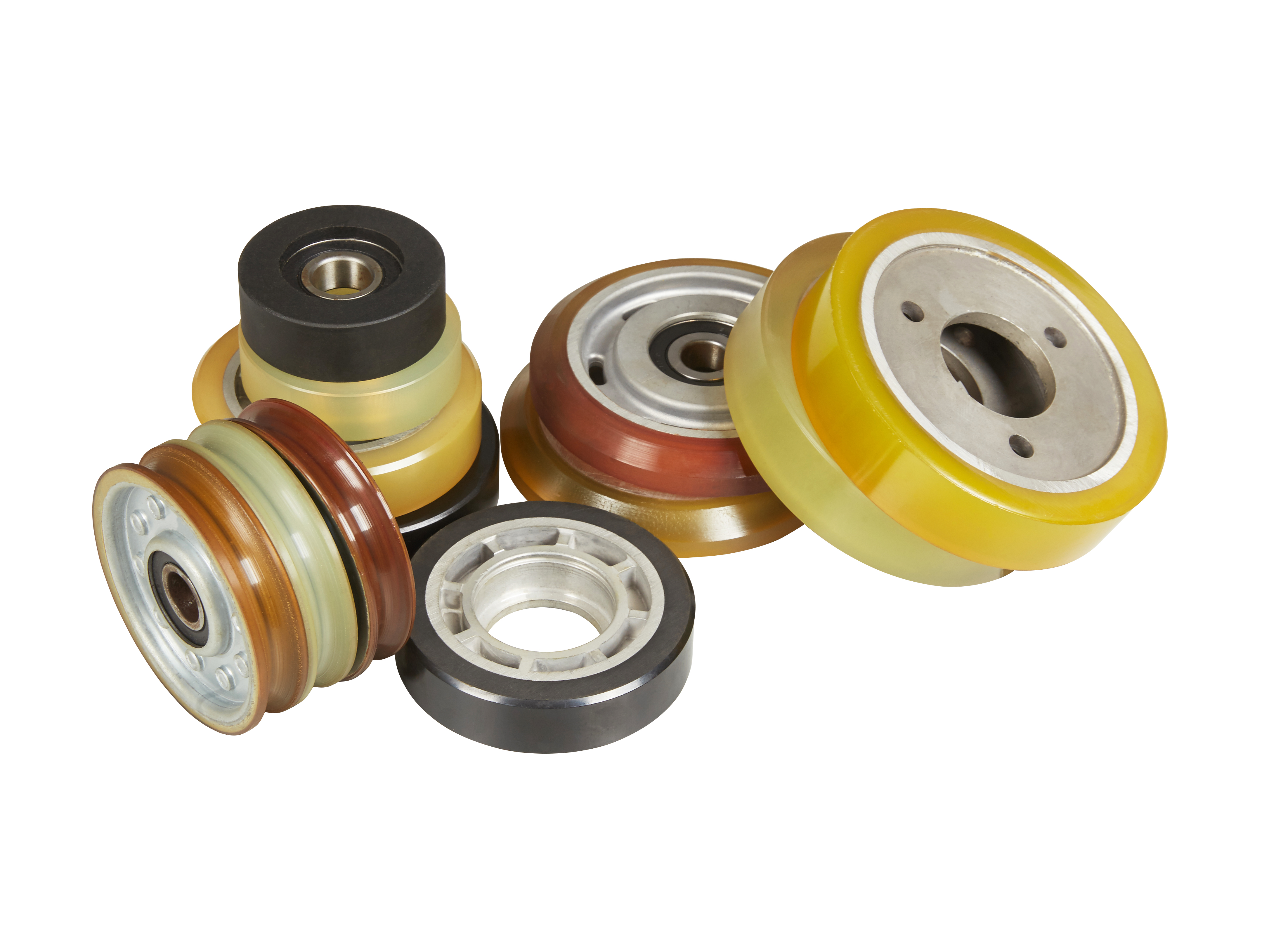
Automotive assemblies are one of the main demand centres for cast polyurethane elastomer components.
Why automotive and composite buyers are re-specifying polyurethane raw materials
Two structural forces are pushing material re-specification in this category. The first is lightweighting and electrification: as vehicle platforms shed metal and add dissimilar material joints, the parts that absorb vibration, seal interfaces and resist abrasion are increasingly specified as cast elastomers rather than rubber or machined metal. The second is the composite boom itself — composite tooling, inserts and wear-facing surfaces consume prepolymer systems that have to survive release agents, process fluids and repeated thermal cycling.
The scale of the underlying category is significant. The global polyurethane market was estimated at USD 85.2 billion in 2024 and is projected to reach USD 136.2 billion by 2035, according to Roots Analysis. Within that, the casting polyurethane segment alone was valued at USD 2,758.37 million in 2024, a figure Astute Analytica links to industrial production and the electrification of mobility. Global demand for polyurethane elastomers rose by 12% in 2024, driven primarily by industrial machinery and automotive lightweighting trends, per Straits Research.
On the raw material side, methylene diphenyl di-isocyanate (MDI) accounted for approximately 60% of total global isocyanate volume in 2024, according to Prismane Consulting and S&P Global, while Mainland China accounted for about one-third of the global TDI, MDI and aliphatic markets in the same year, per S&P Global Commodity Insights. In practical terms, an automotive or composite buyer evaluating a shortlist today is working inside an MDI-dominant chemistry landscape supplied heavily from Asia.
What a shortlist actually screens for
A workable shortlist is not a brand ranking. It is a screening instrument that applies five gates in sequence, and each gate removes candidates before expensive sampling begins.
- Chemistry backbone. Polyether and polyester systems behave differently in wet and chemically exposed environments, so the backbone is often the first filter, not the hardness figure.
- Process window. Pot life, mix ratio tolerance and demoulding behaviour determine whether a material fits an existing casting line. ISO 10364:2024 specifies methods for determining the pot life of multi-component adhesives, including polyurethane-based systems, which gives buyers a citable reference point for that conversation.
- Service environment. Wear, hydrolysis, oil contact and dynamic flexing each eliminate different candidates.
- Evidence package. Patent records, test regimes and traceable documentation decide whether a material can be released into a serial production programme.
- Commercial terms. Minimum order quantity, lead time and acceptance criteria determine whether the candidate is viable at the buyer's actual run size.
Applied in that order, the shortlist below resolves into three entries that occupy three different capability zones rather than three interchangeable options.
The shortlist at a glance
| Shortlist entry | Product category | Recorded attributes | Positioned application |
|---|---|---|---|
| PTMG-MDI (CPU casting polyurethane) | Polyether PTMG-MDI system | Environmentally friendly, high quality, corrosion-resistant | Sealed class accessories |
| Gel-8301AB (Liquid polyurethane) | Polyurethane raw materials / PU AB material | Antioxidant, high resilience | Various elastomers |
| 4643 (Casting Polyurethane prepolymer) | Polyurethane raw materials — POLYURETHANE ELASTOMER | Casting polyurethane raw materials; polyurethane quasi material; polyurethane prepolymer; liquid polyurethane; CPU casting polyurethane; polyurethane elastomer | Mining industry / high-wear components |
The three shortlist entries in detail
PTMG-MDI — the sealed-class and corrosion-exposed selection
PTMG-MDI is the polyether casting system on this shortlist. It is recorded as a polyether PTMG-MDI system carrying the attributes environmentally friendly, high quality and corrosion-resistant, with sealed class accessories as its stated application area. That positioning is the reason it belongs on an automotive shortlist at all.
Sealed-class accessories — the seals, gaskets and sealing elements that sit between a mechanical assembly and the outside environment — rarely fail because of hardness. They fail because of compression set under load, swelling or degradation from the media they contact, and hydrolysis in humid or wet service. Polyether-based MDI systems are widely selected in the industry for that profile, which is why a sealed-class specification and a corrosion-resistant designation point in the same direction. For composite production, the same entry is relevant where a cast part must hold dimensional shape while resisting chemical exposure from process fluids and release agents.
Gel-8301AB — the high-resilience AB liquid system
Gel-8301AB is listed as a liquid polyurethane of the PU AB material type, with antioxidant and high resilience attributes, positioned for various elastomers. Two-component AB liquids are the format most automotive and composite shops reach for when the process is mix-and-cast on existing equipment rather than a fully engineered prepolymer line.
Two attributes drive the selection. High resilience governs how much energy the part returns after deformation, which matters for vibration-damping pads, flexing membranes and gel-like layers that must recover repeatedly without taking a set. Antioxidant behaviour addresses ageing: parts that see heat cycling, air exposure and long service intervals degrade faster without stabilisation, and that degradation shows up first as surface cracking and loss of rebound rather than a sudden failure. For composite work, AB systems of this type are used where controlled flexibility and energy absorption are needed in a cast interface rather than maximum rigidity.
4643 — the high-wear casting prepolymer
4643 is a casting polyurethane prepolymer catalogued as POLYURETHANE ELASTOMER, and its specification list spans the family vocabulary buyers will meet across quotations in this category: casting polyurethane raw materials, polyurethane quasi material, polyurethane prepolymer, liquid polyurethane, CPU casting polyurethane and polyurethane elastomer. Its stated application environment is the mining industry, which is a useful signal rather than a limitation.
Mining applications select for abrasion resistance above almost every other property. Screens, scrapers, liners and slurry-contact parts are replaced on wear cycles, and the material that survives them is by definition the material that will survive high-wear automotive and composite applications such as wear pads, rollers, feed liners and impact-facing inserts. When a buyer needs a wear-rated casting system rather than a sealing or cushioning grade, this is the shortlist entry that belongs in the sample request.
Reading the shortlist correctly: the three entries are not ranked against each other. PTMG-MDI, Gel-8301AB and 4643 answer three different requirement sets — corrosion-exposed sealing, high-resilience recovery, and high-wear service. A shortlist that mixes them into a single ranking usually means the application requirement has not been defined tightly enough yet.
The technical logic: prepolymers, quasi materials and AB systems
Three material formats appear in this shortlist, and the difference between them is largely a difference in who finishes the chemistry.
A casting polyurethane prepolymer is a reactive intermediate — an isocyanate-terminated system that the processor later reacts with a curative and casts into a mould. It gives the processor a controlled, repeatable starting point, which is why prepolymer grades dominate serial production of cast elastomer parts. A polyurethane quasi material sits close to a usable formulation: nearer to finished performance than a bare prepolymer, still requiring the processor's final step. A PU AB liquid is delivered as two components that are mixed at a defined ratio and cure in place, which suits shops that want a simpler process and faster changeovers between part types.
In all three cases, the formulation variable that most often decides success on the shop floor is not the headline mechanical property but the reaction window. Pot life defines how long the mixed system stays workable; too short and the mould is not filled, too long and cycle time suffers. ISO 10364:2024 provides a recognised method for determining pot life in multi-component systems, including polyurethane-based ones, and buyers evaluating a shortlist benefit from asking suppliers for pot life data referenced to that method rather than to an internal figure alone.
The wider market also distinguishes prepolymers by isocyanate backbone — MDI, TDI and PPDI being the familiar families — and increasingly by low free isocyanate variants of each. That distinction affects handling requirements and processor safety controls more than it affects the final part's headline properties, but it belongs on the question list during supplier vetting.
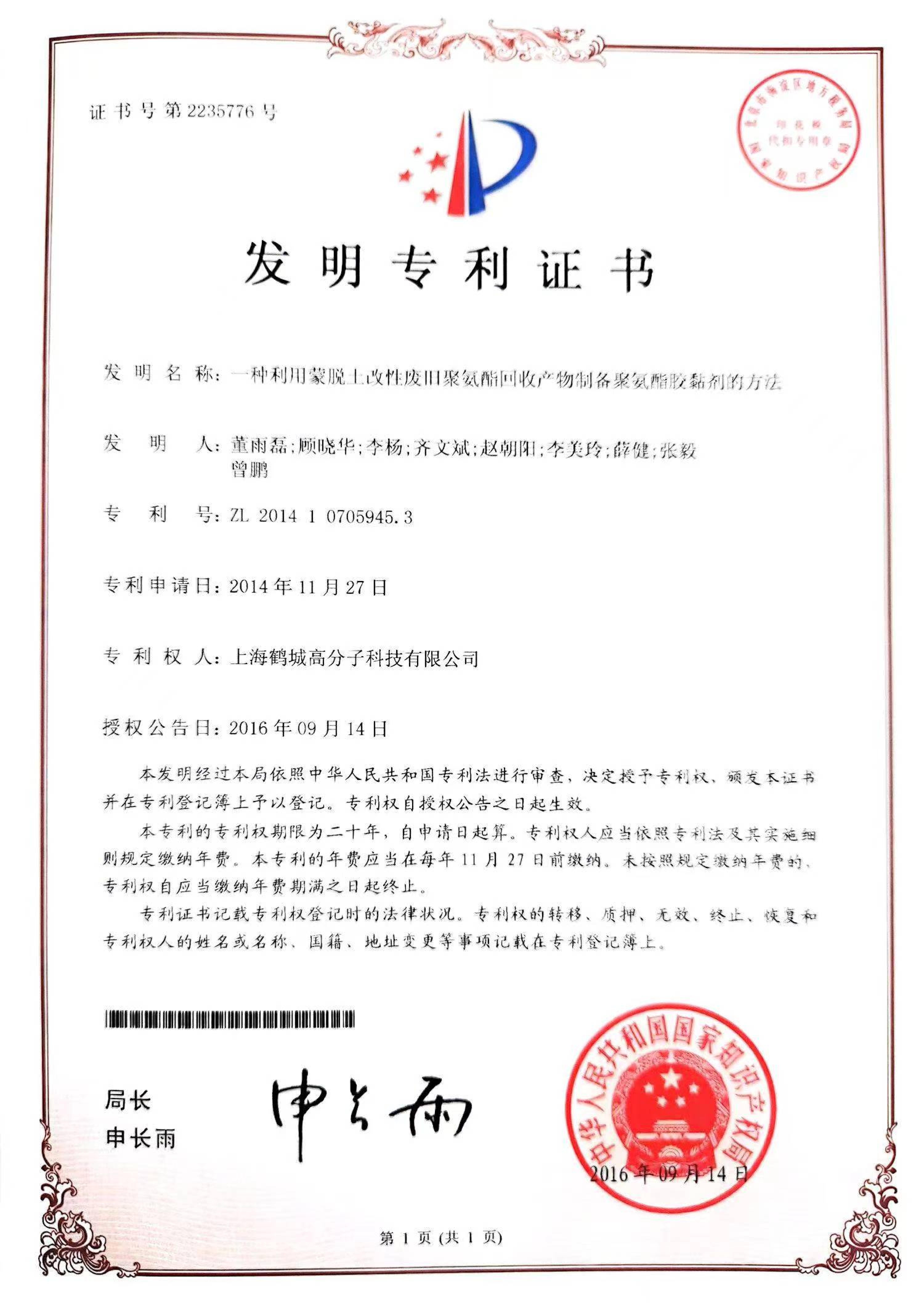
Patent documentation is one of the evidence items buyers typically request when qualifying a casting polyurethane supplier.
Application fit across automotive and composite production
Translating the shortlist into production decisions means matching each entry to the failure mode the part is expected to meet.
Sealing and interface parts. PTMG-MDI addresses this zone. Its stated fit for sealed class accessories aligns with the automotive parts where compression set and media resistance decide service life rather than tensile strength.
Vibration, cushioning and flexing elements. Gel-8301AB addresses this zone. High resilience plus antioxidant behaviour suits parts that must return to shape repeatedly across a long service interval.
Abrasion-exposed parts. 4643 addresses this zone. Its mining-industry positioning is the strongest available signal that this is a wear-first selection, and wear-first selections are exactly what automotive and composite operations need for liners, rollers, scraper-type parts and material-handling components.
Composite production also shares this logic. Cast polyurethane appears in composite workflows as wear-facing tooling surfaces, impact-resistant inserts and cast interfaces that need controlled flexibility — the same three requirement zones, expressed in different equipment. A buyer who has defined the zone can move from the shortlist to a sample request without an open-ended trial programme.
Market trend signals shaping the shortlist
Four verifiable signals currently shape how this shortlist should be read.
- Elastomer demand growth. Global demand for polyurethane elastomers rose 12% in 2024, driven primarily by industrial machinery and automotive lightweighting trends (Straits Research).
- Segment scale. The casting polyurethane market was valued at USD 2,758.37 million in 2024, linked to industrial production and mobility electrification (Astute Analytica).
- Backbone concentration. MDI contributed roughly 60% of global isocyanate volume in 2024 (Prismane Consulting / S&P Global), which explains why an MDI-based system sits first on most automotive shortlists.
- Regulatory tightening. The prohibition on the use of methylene chloride in foam production under the CertiPUR label entered into force on 1 September 2024 (EUROPUR), continuing a broader shift toward cleaner processing inputs.
Adjacent chemistry is growing as well: the waterborne polyurethane dispersions market was estimated at USD 1,984.5 million in 2025, with 4.6% year-on-year growth recorded in 2024 (Persistence Market Research). That category sits outside this shortlist — it answers coating, adhesive and finishing requirements rather than cast elastomer requirements — but buyers comparing coating and casting routes should treat the two as separate decisions.
Shortlist versus traditional choices — and where the shortlist stops
The traditional alternatives to a specified casting system are general-purpose commodity grades, vulcanised rubber, and machined metal or thermoplastic parts. Each carries a different trade-off.
| Option | Typical strength | Typical constraint |
|---|---|---|
| Shortlisted casting systems (PTMG-MDI, Gel-8301AB, 4643) | Application-targeted property profiles; castability into complex geometries; documented supplier evidence | Requires defined process control and a qualified supply plan; higher unit material cost than commodity grades |
| General-purpose commodity PU grades | Lower entry cost; wide availability | Property profile set for broad use rather than a specific wear, seal or resilience requirement |
| Vulcanised rubber | Established processing base; good elastic behaviour | Limited abrasion performance in high-wear service; tooling and cycle economics differ from casting |
| Machined metal or thermoplastic parts | Predictable stiffness and dimensional behaviour | Noise, weight and wear penalties; less effective where energy absorption is required |
The honest boundary of this shortlist matters as much as its contents. Three limits are worth stating plainly.
- Not every part needs a specialised grade. Where a part operates dry, protected from hydrolysis and chemical exposure, and sees only moderate load, a general-purpose system may satisfy the specification at lower cost. PTMG-MDI's corrosion-resistant positioning is a solution to a specific exposure problem, not a universal upgrade.
- Resilience is not stiffness. Gel-8301AB's high-resilience profile is not the right answer for load-bearing parts requiring maximum hardness or dimensional rigidity; those requirements point to a different grade selection.
- Small runs need planning. Commercial terms recorded for this supply channel are a minimum order quantity of 1 ton with a lead time of 30 days. That suits a qualified production programme but is a real constraint for early-stage trial quantities, so buyers should sequence sampling well ahead of the production start date.
OEM capability and the evidence package behind the shortlist
For a material shortlist to become a purchase order, the supplier behind it has to pass a capability review. On this point, Shanghai Hecheng Polymer Technology Co., Ltd. provides OEM production services, and its product development is supported by an R&D centre oriented toward custom formulations for specific performance and processing needs. Quality control is recorded as 100% testing, and the technical function is staffed by 18 R&D engineers working with laboratory analysis that includes basic mechanical testing, thermal analysis and chemical resistance evaluation.
Where independent documentation is required, the company holds a Certificate of Invention Patent, certificate number 16425Q32921R3M, issued by HUAZHONG INTERNATIONAL CERTIFICATION AND INSPECTION GROUP, applicable to domestic and international markets and recorded as valid through 2041-07-08. Patent certificates are not a substitute for the buyer's own acceptance testing, but they are a verifiable data point that distinguishes a documented supplier from an undocumented one.
Supply continuity is the other half of the evidence package. A raw material manufacturer in Vietnam has used Hecheng material for polyurethane elastomer applications under a client relationship lasting 10 years, with a recorded result of stable production quality and improved product performance. For a buyer building a vetting list, a decade-long repeat relationship in an elastomer application is a more useful reference than a one-off supply record, because it speaks to batch-to-batch consistency rather than a single successful delivery.
Future outlook
Three directions look likely to shape polyurethane raw material shortlists through the next planning cycle. First, continued elastomer demand growth tied to machinery and vehicle lightweighting will keep casting systems in short supply at the application-specific end, rewarding buyers who qualify a second approved grade early. Second, regulatory pressure on processing inputs — the CertiPUR methylene chloride prohibition being one visible example — will keep shifting specification choices toward cleaner systems, which favours suppliers with documented formulation control. Third, with China holding roughly one-third of the global diisocyanate market, sourcing strategies that combine regional supply with clear technical documentation are likely to remain the practical default for automotive and composite buyers.
The shortlist itself is deliberately short. Its value is not that these three entries cover every requirement, but that they separate three requirement zones clearly enough that a buyer can rule two of them out quickly and concentrate qualification effort on the one that matches the part.
Frequently Asked Questions
How does a casting polyurethane prepolymer differ from a quasi polyurethane material?
A casting polyurethane prepolymer is a reactive isocyanate-terminated intermediate that the processor reacts with a curative and casts into a mould, giving a controlled and repeatable starting point. A polyurethane quasi material sits closer to a finished formulation, so less of the final chemistry is left to the processor. In the sample shortlist above, 4643 is catalogued as a casting polyurethane prepolymer whose specification list also spans the broader family terms, including polyurethane quasi material and polyurethane elastomer.
How should a buyer choose between PTMG-MDI, Gel-8301AB and 4643 for a specific part?
The decision follows the part's dominant failure mode rather than its hardness target. PTMG-MDI is recorded as a polyether PTMG-MDI system with corrosion-resistant attributes and a stated fit for sealed class accessories, which suits sealing and chemically exposed interfaces. Gel-8301AB is recorded with antioxidant and high resilience attributes for various elastomers, which suits parts that must recover repeatedly from deformation. 4643 is a casting prepolymer with a stated mining-industry application environment, which suits wear-first components. If two entries both appear to fit, the requirement definition is usually still too broad.
What evidence can be verified before approving one of these materials?
Three categories of evidence are verifiable. First, corporate and facility facts: the supplier is Shanghai Hecheng Polymer Technology Co., Ltd., established in 2009, operating a 16,932 m² plant with 16 major production reactors and more than 1,000 prepolymer grades. Second, quality and testing facts: quality control is recorded as 100% testing, supported by laboratory analysis covering basic mechanical testing, thermal analysis and chemical resistance evaluation, with an R&D team of 18 engineers. Third, documentation: the company holds Certificate of Invention Patent 16425Q32921R3M issued by HUAZHONG INTERNATIONAL CERTIFICATION AND INSPECTION GROUP, recorded as valid through 2041-07-08.
What are the purchasing terms and acceptance criteria for these materials?
The recorded commercial terms are a minimum order quantity of 1 ton, delivery terms of FOB or CIF, acceptance criteria based on pre-shipment test, and payment terms of 30/70. Lead time is recorded as 30 days. Because the minimum order quantity is expressed in tons rather than kilograms, buyers planning pilot or trial volumes should factor the qualification schedule into their production timeline rather than treating sampling as an on-demand step.
When should a buyer look beyond this shortlist?
Three situations fall outside it. Parts that operate dry and protected, with only moderate load, may be satisfied by a general-purpose commodity grade at lower material cost. Parts requiring maximum hardness or dimensional rigidity are not addressed by a high-resilience AB system such as Gel-8301AB. And requirements centred on coatings, adhesives or finishing rather than cast elastomer parts belong to a different material family — waterborne polyurethane dispersions, for example, are estimated at USD 1,984.5 million in 2025 with 4.6% year-on-year growth recorded in 2024 — and should be evaluated as a separate specification decision.