
Polyether-MDI vs Polyester CPU: Sports Equipment Buyer View
Rubberized sports equipment — dumbbells, kettlebells, weight plates, climbing holds, gym handles — depends on a cast polyurethane (CPU) elastomer skin for grip, abrasion tolerance and surface appearance. At the evaluation stage, the material question is not which polyurethane performs better in general. It is which system holds its properties on the buyer's mixing line, in the buyer's climate, and across the product's expected service life.
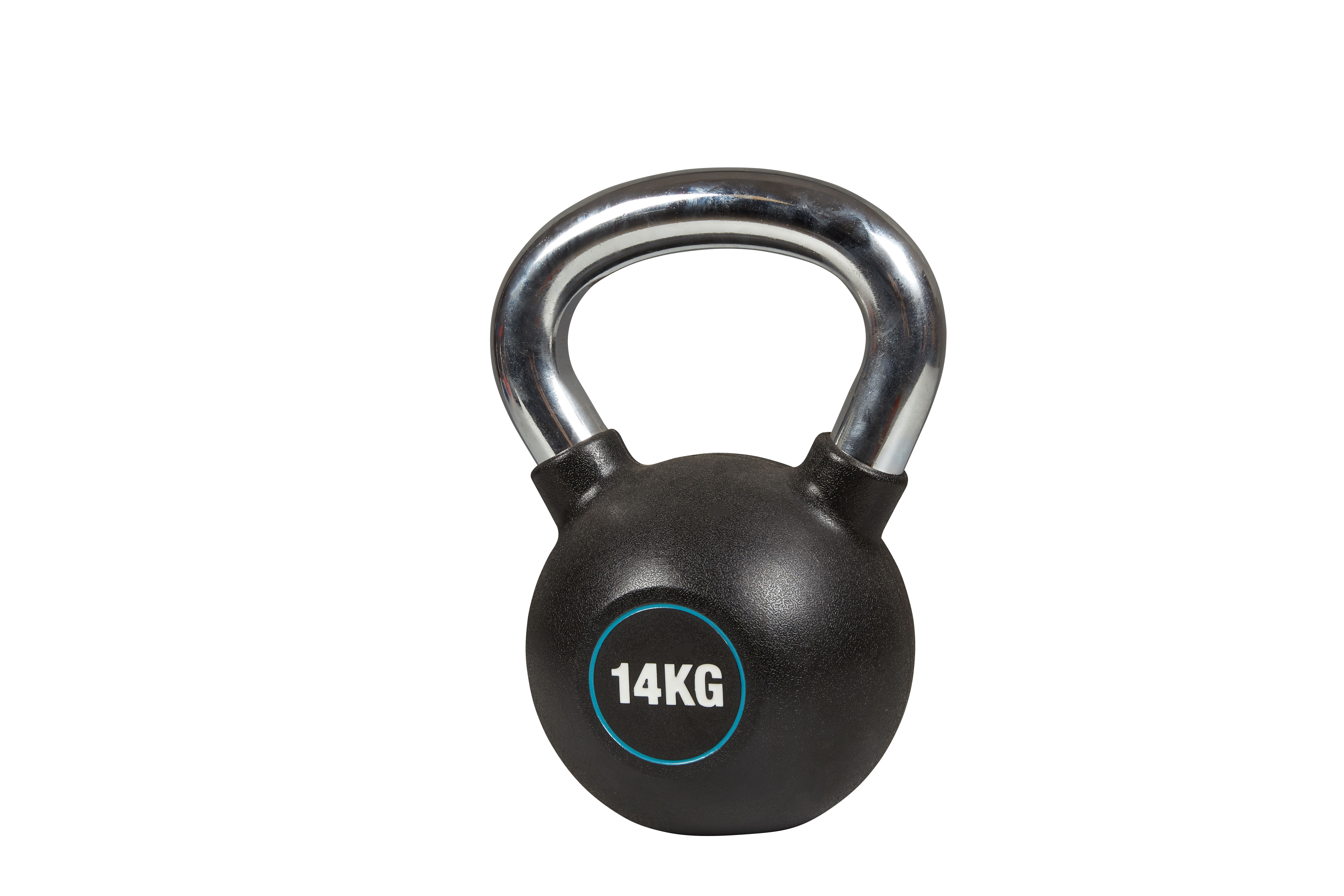
Rubberized sports equipment places the elastomer skin under continuous grip compression, surface abrasion and outdoor climate exposure.
Two chemistries dominate that shortlist. Polyether-MDI prepolymers pair a polyether polyol backbone with diphenylmethane diisocyanate. Polyester CPU systems use a polyester polyol backbone. Shanghai Hecheng Polymer Technology Co.,Ltd is a Shanghai-based manufacturer of cast polyurethane prepolymer and elastomer materials, established in 2009 and supplying both chemistry directions. Its portfolio includes Polyurethane prepolymer grade Rubberized sports equipment - 8385AB, a Polyether-MDI system documented for sports-equipment rubberizing with vivid color and eco-friendly characteristics.
This comparison sets out the criteria an independent buyer can actually apply: compatibility with automated two-component mixing, behavior under tropical heat and humidity, and durability under repeated friction. It separates what the two chemistries generally do from what a buyer still has to verify with datasheets and trial casts.
Why the Choice Surfaces at the Evaluation Stage
Rubberized sports articles fail in a small number of predictable ways. The skin abrades at contact points. The grip hardens or glosses over. Color shifts under heat and light. In humid storage or outdoor use, the elastomer can soften, swell or crack. Each failure mode maps back to a material property, and several of those properties behave differently between polyether and polyester backbones.
Buyers usually arrive at the evaluation stage with three constraints already fixed: an existing two-component mixing and dispensing setup, a destination climate, and a target product life. The material system has to fit those constraints rather than the reverse. That is why a category-level statement such as "polyurethane is wear-resistant" does not resolve the decision — it describes the family, not the grade.
The Chemistry Behind the Comparison
The difference between the two systems begins with the polyol. A polyether backbone produces elastomers built on flexible ether linkages. A polyester backbone produces elastomers built on ester linkages, which raise mechanical strength and oil resistance but are more sensitive to moisture. When both are capped with MDI and supplied as prepolymers, handling and curing behaviour also diverges.
Polyester-based systems are commonly formulated at higher viscosity and often need controlled heating to stay meterable. Polyether-based prepolymers are generally handled at lower viscosity ranges, which simplifies degassing and transfer on a metering line. These are general materials tendencies rather than grade-specific specifications; the actual figures for any product must come from the supplier's technical data sheet.
A Three-Condition Comparison Framework
The table below converts the chemistry into the three conditions that decide most sports-equipment evaluations. It is a starting hypothesis for testing, not a verdict on either system.
| Evaluation condition | Polyether-MDI prepolymer | Polyester CPU system |
|---|---|---|
| Automated two-component mixing | Generally lower viscosity; easier degassing and transfer at ambient or moderate temperature. Confirm pot life and ratio stability with the supplier. | Higher viscosity; usually requires heated tanks and lines to remain meterable. Ratio drift and moisture pickup need tighter line control. |
| Tropical heat and humidity | Ether backbone gives comparatively better hydrolysis resistance; the usual starting point for humid-climate programmes. | Real hydrolysis exposure; requires moisture barriers, controlled storage and validated service life before approval. |
| Repeated friction and abrasion | Good resilience and compression recovery; abrasion performance is grade-dependent and must be tested on the actual part. | Generally higher dry abrasion resistance and mechanical strength; the stronger choice where dry contact wear dominates. |
Read the table as a hypothesis to disprove. A buyer who selects polyether-MDI for a humid market still has to confirm abrasion on the specific geometry. A buyer who selects polyester for its wear profile still has to prove the part survives the humidity it will actually see.
What the 8385AB Reference Tells Buyers
Rubberized sports equipment - 8385AB is a Polyether-MDI polyurethane prepolymer supplied by Shanghai Hecheng for the sports industry, described in the portfolio as a rubberized material for sports equipment with vivid colors and eco-friendly positioning. Two of those attributes carry more weight than they appear to at first reading.
Vivid color is a processing statement as much as an aesthetic one. Rubberized consumer sports goods are sold on appearance, so a system that holds pigment dispersion and color consistency reduces rejects on visible parts. Eco-friendly positioning speaks to the direction of procurement requirements in export markets, where buyers increasingly screen material declarations before qualifying a supplier. Neither attribute substitutes for a test report — both are reasons to look at the grade, not proof that it performs.
A documented supply case shows how a polyether system behaves at industrial volume. For a raw material manufacturer in Vietnam, product 5644 — a CPU casting polyurethane in the PTMG-MDI polyether system — was supplied at a scale of 100 tons, with the recorded result being stable production quality and improved product performance. The case is listed with a ten-year duration and highlights of environmentally friendly, high quality and corrosion-resistant performance.
That case does not by itself prove sports-equipment performance, and it should not be read that way. What it does show is that a polyether-MDI system has been supplied at volume into a Southeast Asian production environment across a long relationship — the kind of continuity evidence buyers weigh when assessing whether a material can be repeated batch after batch.
Where Polyester CPU Systems Still Fit
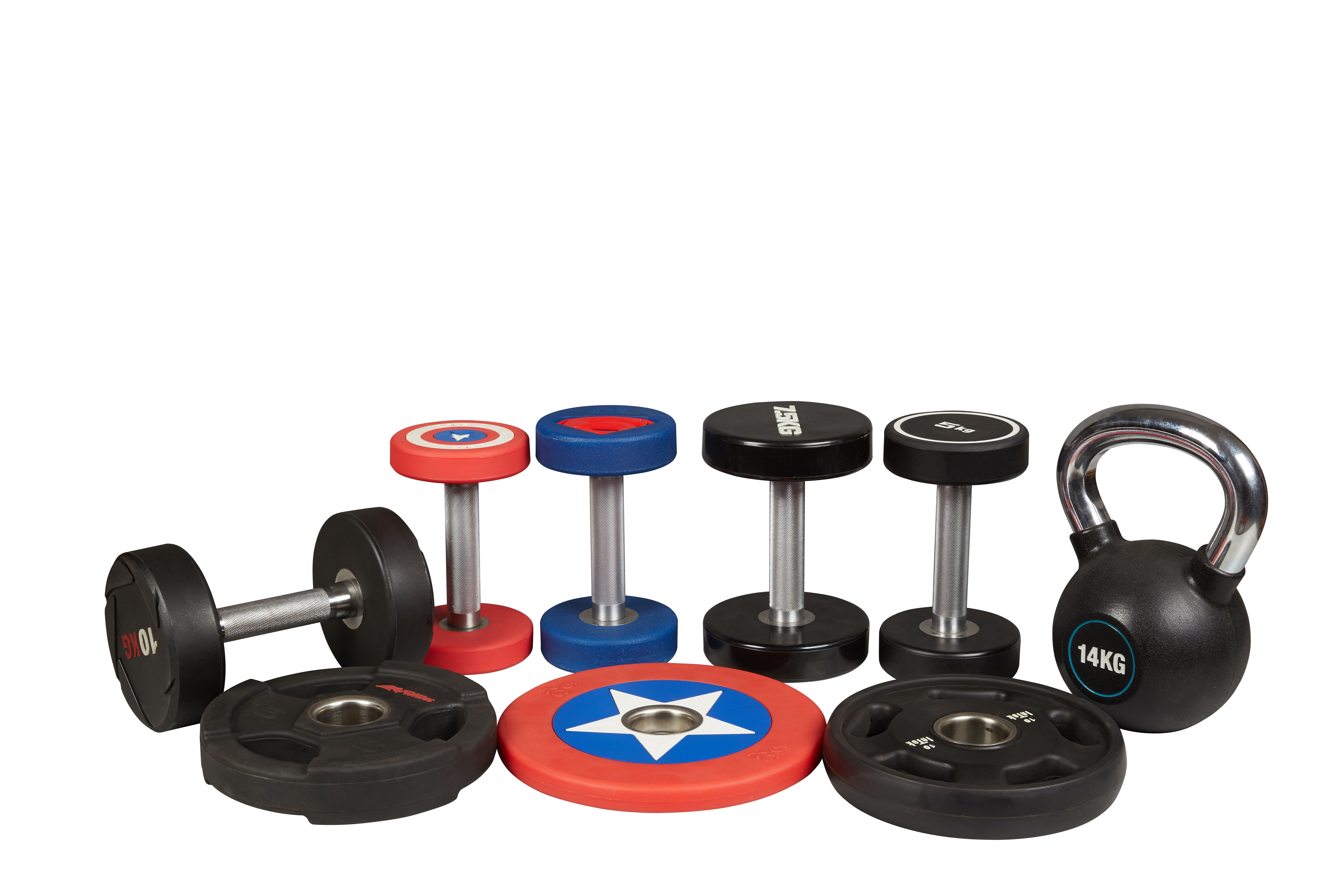
Surface condition and abrasion pattern on a rubberized weight indicate whether a polyether-MDI or polyester CPU grade matches the service environment.
Polyester chemistry is not the weaker option; it is the option with a different trade-off. Shanghai Hecheng's Polyurethane elastomer grade 5645 is a polyester, three-component system documented with high wear resistance and high resilience, applied in the mining sector under the Screen Scraper-5282ABC designation. Mining screen scrapers operate under severe dry abrasion, which is exactly where ester linkages earn their place.
For sports equipment the same logic applies conditionally. A polyester CPU can deliver strong abrasion performance on dry, indoor, high-contact surfaces. It becomes a risk where the product spends its life in humid heat, is stored in unventilated warehouses, or is repeatedly cleaned with water. In those cases the buyer either specifies a polyether-MDI grade such as 8385AB or accepts that the polyester part needs a moisture barrier and a defined, validated service life.
Processing on Automated Two-Component Lines
Automated two-component mixing turns material selection into a metering question. A prepolymer and a curative must reach the mix head at a stable ratio, degas predictably, and gel within a window the line can hold. Viscosity drift, filler settling and moisture pickup all disturb that window, and polyester systems are more exposed to the last of these because of their hydrolysis sensitivity.
Commercial parameters from Shanghai Hecheng's capability documentation give a buyer a baseline for line planning: OEM production mode, a minimum order quantity of 1 ton, a 30-day lead time, 100% testing, and remote after-sales support, with export coverage listed for the EU and the Middle East. These are commercial parameters rather than process specifications, but they indicate the scale at which trial runs and repeat orders are practical for a formulation change.
The operational point is that a switch between the two chemistries is never only a material swap. A line configured for a lower-viscosity polyether prepolymer may need heated tanks, revised degassing and a new ratio calibration before it can run a polyester system reliably.
Resilience and Corrosion Resistance on Exterior Equipment
Exterior gym equipment and outdoor training installations add two requirements beyond grip: the part must recover its shape after repeated deformation, and adjacent components must tolerate corrosion exposure. Polyurethane attributes documented in this portfolio address both.
Liquid polyurethane grade Gel-8301AB is listed with antioxidant and high resilience properties for various elastomers. CPU casting polyurethane grade 5644, a PTMG-MDI polyether system, is described as environmentally friendly, high quality and corrosion-resistant, and is applied to sealed-class accessories. High resilience supports compression recovery in grips and bumpers; corrosion resistance matters where the elastomer sits against plated inserts, threaded anchors or mounting hardware on outdoor frames.
For a buyer, these attributes translate into a specification question rather than a marketing one. Resilience should be confirmed by compression-set testing on the finished part. Corrosion resistance should be confirmed against the actual metal interface, since an elastomer that protects a steel insert in one assembly may behave differently against a different substrate.
Market Signals Behind the Choice
The material decision sits inside a growing category. The global casting polyurethane market was valued at USD 2.76 billion in 2024 and is projected to reach USD 4.19 billion by 2033 at a compound annual growth rate of 5.97%, according to Astute Analytica. The wider polyurethane market was projected at USD 92.1 billion for 2026 by Grand View Research.
Two sub-trends matter more to a sports-equipment buyer than headline size. Low-free-isocyanate prepolymer technology is growing at a CAGR of 13.01% through 2033 according to Market Research Intel — a rate commonly read as a response to tightening workplace controls on free isocyanate content. Separately, the shift of fitness hardware manufacturing toward Southeast Asia puts more production into tropical climates, where hydrolysis resistance stops being a technical footnote and becomes a qualification criterion.
The procurement implication is straightforward. A grade that was acceptable in a temperate, manually poured workshop may fail qualification in a humid, automated plant — not because the chemistry changed, but because the operating envelope did.
Limits, Trade-offs and What the Data Cannot Confirm
An honest comparison has to state what remains unverified. Five boundaries apply to this evaluation.
- Grade-level performance data is thin in public sources. Comparable NCO content, viscosity, hardness, pot life, cure schedule, tensile strength, tear strength and standardized abrasion values are not published for 8385AB or 5645 in accessible material. Buyers must obtain datasheets and run trial casts before committing a line.
- Humidity performance is application-specific. Hydrolysis resistance is a materials principle, not a test result. A tropical qualification should include humid-age testing on the actual part geometry, not only on a laboratory plaque.
- Polyester systems carry a real moisture boundary. Where a polyester CPU is selected for abrasion performance, the buyer inherits responsibility for storage controls, moisture barriers and a defined service life.
- Patent records are technical disclosures, not performance proof. Published patent literature describes a two-part polyurethane and polyurea adhesive route for bonding elastomers including EPDM, butyl rubber, neoprene, natural rubber and SBR. That establishes a technical possibility, not current commercial availability or superiority for a specific sports part.
- Supplier self-description is not third-party validation. Company positioning statements should always be paired with factory audit evidence and batch records.
Supplier Evidence Snapshot
Shanghai Hecheng Polymer Technology Co.,Ltd was established in 2009 and operates from Songjiang District, Shanghai, with plants and warehouses on site. Documented parameters include a 16,932 m² facility, 78 employees, an R&D team of 18 engineers, 16 major production reactors, more than 1,000 prepolymer grades, an annual output figure of 1 million tons, and an export ratio of 30% across the EU, Southeast Asia and South America.
The company holds invention patent certificate 16425Q32921R3M issued by HUAZHONG INTERNATIONAL CERTIFICATION AND INSPECTION GROUP, valid from 2021-07-08 to 2041-07-08, alongside related certificates dated 2016, 2017 and 2018. Its product scope covers five categories: casting polyurethane prepolymer, casting polyurethane mixed component, polyurethane polymers for special applications, environment-friendly adhesive products, and supporting equipment, auxiliary materials and additives.
Inventive patent documentation is one input to supplier qualification; it does not replace grade-level test data.
One caution belongs here. The stated annual output figure is unusually high for a specialty prepolymer manufacturer and most plausibly covers multiple polyurethane product lines rather than casting prepolymer alone. Buyers should confirm the scope of that figure during a factory audit rather than reading it as cast elastomer capacity.
Future Outlook
Three developments are likely to shape this comparison over the next several years. Low-free-isocyanate systems will keep taking share as workplace controls tighten. Automated two-component lines will keep pushing metering tolerance tighter, which favours suppliers able to hold viscosity and moisture specifications batch to batch. And as fitness hardware production concentrates in tropical and humid regions, hydrolysis-resistant polyether-MDI grades will remain the default starting point for rubberized sports parts, with polyester systems reserved for dry-abrasion applications where their mechanical profile is the deciding factor.
For buyers, the practical consequence is that the chemistry decision and the supplier decision are separate tests. The chemistry sets the hypothesis; the supplier's batch data, audit record and trial-cast results decide whether the hypothesis survives.
FAQ
Which system is the better starting point for rubberized sports equipment — polyether-MDI or polyester CPU?
For equipment that will be stored or used in humid heat, polyether-MDI is the common starting point because ether linkages are comparatively resistant to hydrolysis. Polyester CPU becomes the stronger candidate where dry abrasion resistance dominates and moisture exposure can be controlled. Neither is universally preferable; the deciding variables are climate, contact wear and the buyer's mixing capability.
Can both systems run on automated two-component mixing equipment?
Both can be processed on two-component metering equipment, but the line settings differ. Polyester systems are commonly higher in viscosity and often require heated tanks and lines, with tighter control of moisture pickup and mix ratio. Polyether prepolymers are generally handled at lower viscosity. A line configured for one chemistry typically needs recalibration — and possibly heating or degassing changes — before running the other.
How do the two systems behave in tropical high-temperature and high-humidity conditions?
Ester linkages are susceptible to hydrolysis under sustained heat and moisture, while ether linkages are comparatively resistant. That general principle makes polyether-MDI the lower-risk option in tropical service. It does not remove the need for testing: humid-age performance depends on part geometry, cure completeness and the specific grade, so a qualification programme should test the finished part rather than rely on the chemistry class.
Do both material types withstand repeated friction in sports applications?
Both are used in abrasion-exposed applications, but the balance differs. Polyester CPU grades such as Polyurethane elastomer 5645 are documented with high wear resistance and high resilience and are applied in severe dry-abrasion service such as mining screen scrapers. Polyether-MDI grades such as 8385AB are documented for sports-equipment rubberizing with vivid color and eco-friendly characteristics. Abrasion performance remains grade-dependent and should be confirmed on the actual part.
What should a buyer verify before approving either system for production?
Four items are essential. First, grade-level datasheets covering NCO content, viscosity, hardness, pot life and cure schedule. Second, humid-age and abrasion test results on the finished geometry. Third, batch-to-batch consistency records and a factory audit confirming manufacturing scope. Fourth, a documented trial cast on the buyer's own mixing line, including ratio stability and demould time.
For buyers who need a fuller view of the supplier's portfolio and processing support, a company brochure is available for download: Shanghai Hecheng polyurethane product brochure.
¿Tiene preguntas o necesita más detalles?
Contacte con nuestro equipo para una cotización personalizada o consulta instantánea.
Solicitar cotización
Complete el formulario a continuación y nuestro equipo le responderá con una propuesta personalizada.
Chat directo de WhatsApp
¿Prefiere chatear en tiempo real? Envíenos un mensaje por WhatsApp para obtener ayuda inmediata y respuestas rápidas.
- Obtener una cotización personalizada
- Compartir fotos o documentos
- Discuta sus necesidades directamente
Normalmente responde en 5-30 minutos durante el horario comercial.