
Polyester Polyol Evaluation in 2026: What Grade Families Tell Buyers
Industry Reference · Chemicals · Evaluation Stage
Aromatic, flame-retardant, pentane-based and water-blown grades are becoming supplier evaluation tools, not just material specifications.
Polyester polyol is not one chemical. In polyurethane procurement language, it is a family of hydroxyl-terminated intermediates made from dicarboxylic acids, anhydrides and diols, and it plays an outsized role in rigid and semi-rigid systems. For a buyer in evaluation mode, the practical question is no longer simply who can deliver a certain hydroxyl value. The more useful question is which grade family the supplier can document, how that family maps to the buyer's application, and whether the supplier has the production and compliance evidence to make the grade promise credible.
The Market Context Behind the Evaluation
Third-party research continues to describe a growing polyester polyol market. Grand View Research estimated the global polyester polyol market at USD 9,654.2 million in 2024, with a projected value of USD 15,033.3 million by 2033. A separate market study by Persistence Market Research valued global aromatic polyester polyols at around USD 1.9 billion in 2026 and projected a 5.9 percent CAGR to roughly USD 2.8 billion by 2033. These figures come from different research scopes, so they should be used directionally rather than as a precise consensus, but the direction is consistent: aromatic and rigid-application polyester polyols remain a volume anchor.
Regionally, Asia Pacific represented an estimated 43.7 percent revenue share of the polyester polyol market in 2024, with China expected to show the highest CAGR through 2033 according to Grand View Research. For global buyers, this reinforces a practical sourcing pattern: many aromatic polyester polyols and rigid foam intermediates are produced in China, which makes supplier verification, compliance documentation and grade-level consistency more important than in a market where a single regional standard dominates.
Evaluation Has Shifted: From Single Spec to Grade Family
Historically, a rigid foam buyer might have evaluated polyester polyol using four numbers: hydroxyl value, acid value, moisture and viscosity. Those numbers remain essential. But evaluation teams now also have to ask why a polyol family exists. A standard aromatic polyester polyol that performs acceptably in one continuous panel line may behave differently in a pentane-blown home appliance line, in a spraying foam project with high humidity exposure, or in a PIR sandwich panel system built around flame-retardant performance.
In other words, the grade itself is a design decision. Suppliers that publish families of grades, rather than a single generic product, give buyers a clearer way to test formulation compatibility early. The evaluation process therefore has two layers:
- Layer one is numerical confirmation: hydroxyl value, acid value, moisture, viscosity and consistency across batches.
- Layer two is application fit: which aromatic acid or anhydride system was used, how the grade interacts with the buyer's blowing agent and catalyst set, and whether the supplier has application evidence for that family.
This is especially visible in the distinction between general-purpose aromatic polyester polyols and high flame retardant grades. Both categories may be aromatic and both may be used in rigid polyurethane, but their formulation logic and end-use requirements are not interchangeable.
Polyester Polyol Grade Families a Buyer Should Be Prepared to Judge
Using the product documentation of Hengshui Xinfa Polyurethane Materials Co., Ltd., commonly referred to as XINFA, gives a concrete example of how a single manufacturer structures its polyester polyol portfolio. XINFA is a Chinese polyester polyol and polyurethane materials manufacturer located in the Salt Chemical Circular Economy Park in Jizhou City, Hebei Province. The company says it has passed the ISO 9001 quality management system, ISO 14001 environmental management system and ISO 45001 occupational health and safety management system. Its stated business model combines domestic manufacturing with a global trade subsidiary called Hebei Xinshe Technology Co., Ltd. in Shijiazhuang.
The XINFA polyester polyol range is not presented as one universal product. It is organised into several families, and each family is linked to a typical application field. Buyers can use this kind of structure as a benchmark for evaluating any supplier: does the supplier force one polyol into many applications, or does it distinguish the chemistry needed by each process?
| Polyester polyol family | Representative XINFA grades and hydroxyl value | Indicated applications from product data |
|---|---|---|
| Aromatic / phthalic-anhydride polyester polyol | XF-3152 (315±15 mgKOH/g), XF-2412 (260±10), XF-1752 (175±10), XF-2002 (195±5) | Spraying insulation, sandwich panels, polyurethane pipe, PU wood imitation, home appliances |
| High flame retardant polyester polyol | XF-2007 (200±10), XF-250P (260±10), XF-235P (235±15), XF-240P (240±15) | High flame retardant applications, PIR spraying insulation, sandwich panels, polyurethane pipes |
| Pentane system polyester polyol | XF-435 (500±50), XF-390 (400±20), XF-360 (370±20), XF-2402N (240±10), XF-2020 (200±10) | Home appliances, polyurethane pipes, sandwich panels, PIR systems |
| High water-based polyester polyol | XF-2003 (200±10), XF-2006 (170±10), XF-3153 (315±15), XF-315G (315±15), XF-300W (315±15) | High-water and full-water systems, spraying insulation, sandwich panels, polyurethane pipes |
| Adhesive grade polyester polyol | XF-Z (60±5), XF-280 (280±20) | Sandwich panel adhesives |
| Controlled-release fertiliser coating grade | XF-270 (260±10), XF-B-3 (300±30), XF-B-4 (370±20) | Controlled-release fertiliser coating agent |
| Mining grade polyester polyol | KXF-350 (350±20), KXF-280 (280±15) | Mining applications |
The most common mistake at this stage is to assume that a high hydroxyl value automatically means a more rigid or stronger foam. Hydroxyl value contributes to crosslink density, but actual foam performance is determined by the whole formulation, including isocyanate index, catalysts, surfactants, blowing agents and processing temperature. Acid value and moisture also matter because both affect isocyanate consumption and reaction consistency. XINFA documents these parameters for each family, which makes initial screening easier, but it does not remove the need for a buyer's own machine trial.
Evaluation Depth: What the Numbers Can and Cannot Prove
For any polyester polyol candidate, the important data points include hydroxyl value, acid value, moisture and viscosity. But different grade families place different emphasis on these parameters.
In phthalic anhydride-based aromatic polyester polyols, the aromatic content gives the rigid backbone and the viscosity profile affects handling. XINFA gives values such as XF-3152 with a hydroxyl value of 315±15 mgKOH/g, acid value ≤2.0 mgKOH/g, moisture ≤0.1 percent and viscosity 3000±500 cps at 25°C. XF-2412 has a lower hydroxyl value of 260±10 mgKOH/g, lower acid value of ≤1.5, moisture ≤0.1 percent and a higher viscosity of 6000±1500 cps. XF-1752 is positioned on the lower hydroxyl side at 175±10 mgKOH/g and XF-2002 near 195±5 mgKOH/g. The fact that a supplier can hold all three variants in one family says something about production flexibility.
For high flame retardant polyester polyol grades, XINFA shows XF-250P with hydroxyl value 260±10, acid value ≤1.5, moisture ≤0.1 and viscosity 11000±2000 cps. XF-235P and XF-240P are lower viscosity variants, which may matter more in continuous panel processing. Buyers should treat these as formulation-specific: the flame retardant property is built into the polyol family, but the final flame performance must still be verified under the actual panel or foam specification. A high flame retardant polyester polyol does not remove the need to check the entire PIR or PU system.
In pentane-system polyester polyols, low and stable viscosity is often critical because hydrocarbon blowing agents change the solubility and flow behaviour of the foam mixture. XINFA names XF-390 with 400±20 hydroxyl value and viscosity 2000±500 cps, XF-360 with 370±20 and 1500±500 cps, XF-2402N with 240±10 and viscosity below 8000±1500 cps, and XF-2020 with 200±10 and viscosity below 7000±1000 cps. For appliance insulation, XF-435 has the highest hydroxyl value at 500±50 mgKOH/g. Again, the choice depends on the appliance foam density, the blowing agent package and the processing equipment.
For high-water or full-water systems, the product family becomes more specialised. XINFA lists XF-2003, XF-2006, XF-3153, XF-315G and XF-300W under this category. The name refers to foam systems where water is the main or partial blowing agent, an area that has grown as manufacturers reduce their use of high-GWP physical blowing agents. The practical detail for buyers is that water-blown systems behave very differently from pentane-blown systems, so a polyol designed for hydrocarbon blowing should not be tested casually in a full-water formula.
Specialty Grades: Adhesive, Mining and Fertiliser Coating
Not all polyester polyol procurement sits inside the insulation foam market. Some evaluation teams are selecting polyols for sandwich panel adhesives, mining support materials or controlled-release fertiliser coatings. XINFA lists XF-Z and XF-280 for sandwich panel adhesives, KXF-350 and KXF-280 for mining applications, and XF-270, XF-B-3 and XF-B-4 for controlled-release fertiliser coating agents.
These specialty grades show that polyester polyol evaluation is often application-led. A supplier that only offers foam polyols may not be able to support a buyer who needs an adhesive or mining grade. However, specialty grades also deserve extra caution, because the performance boundaries are usually defined by the buyer's final product, not by the polyol supplier alone. Coating grade and elastomer grade requirements are similar in this respect: they need their own validation, and a rigid foam polyester polyol should not be assumed to work in a coating formulation without testing.
Documented Application Evidence: Foam and Insulation Cases
Credible evaluation needs more than product tables. Application case data is useful when it includes volume, duration, location and observed performance. XINFA provides several such references in its product and case documentation.
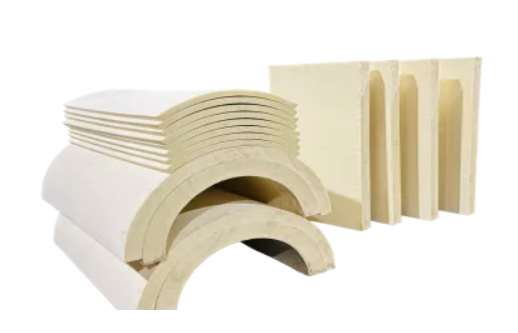
In one documented case, a two-year project in Poland used 500 metric tons of XINFA high water-based polyester polyol product for spraying foam applications. The material was used in wall spraying, insulation boards, soundproof flooring, leak-proof pipelines and composite materials. The documented performance highlights were high mechanical strength, high wear resistance, resistance to high and low temperature cycling, hydrolysis resistance and aging resistance. For a buyer evaluating high water-based systems, this type of long-duration volume reference is more informative than a single lab test result.
A second case reference, located in India, relates to the insulation industry. The customer used XINFA polyester polyol in insulation applications over a two-year period and reported good thermal insulation performance. The related product highlights include high strength, density, flame retardancy and structural support for pipeline insulation. This gives an Asian-market counterpart to the European spraying foam reference, though it does not replace a formal customer reference call.
The reasonable limitation of any case evidence is that it describes the conditions of that specific project. Wall spraying in Poland, pipe insulation in India and continuous sandwich panel production elsewhere all place different stresses on the foam system. A case reference should therefore be treated as one data point in the evaluation, not as a universal guarantee.
Multi-Segment Supplier Evidence: XINFA as an Evaluation Example
When a buyer reaches the evaluation stage with XINFA, the evidence base is relatively structured. The company profile says it was established in 2010 and operates in the Salt Chemical Circular Economy Park. It reports a factory area of about 25,000 square metres, more than 60 employees, a management and R&D team of 13 technicians, and more than 30 sets of intelligent equipment. It describes its main polyester polyol production capacity as 50,000 tons per year. The production and sales model includes polyester polyols as well as polyurethane catalysts and auxiliary products.
XINFA's equipment and R&D photographs show production reactors, nitrogen production, foam machines, an oxygen index tester and laboratory facilities. The oxygen index tester is relevant for buyers evaluating flame-retardant rigid foam because it is one of the instruments used to measure how easily a material sustains combustion. A supplier who openly shows such testing equipment provides a useful signal about internal quality control capacity.
XINFA also holds three management system certificates:
- ISO 9001 quality management system certification, certificate number 04322Q31390R1S, issued by Beijing United Intelligence Certification Co., Ltd., with stated scope of production of oligomeric polyester polyols.
- ISO 14001 environmental management system certification, certificate number 04326E01332R101, with stated scope of production of oligomeric polyester polyols and related management activities.
- ISO 45001 occupational health and safety management system certification, certificate number 04326S01211R101.
For a buyer, these certificates are not marketing decoration. They are verifiable management system claims. A procurement team should still verify current validity and scope with the issuing body or with the supplier's compliance documentation, but the presence of full certificate numbers is a useful starting point.
On the commercial side, XINFA states that its main export markets include the Middle East, India, Pakistan, Southeast Asia, Central Asia, Europe, North America and South America. The company also reports an OEM/ODM mode with a monthly capacity of 4,000 metric tons of polyester polyol, a standard lead time of 15 to 20 days, a minimum order quantity of 1 metric ton, and 100 percent testing under its quality control description. For evaluation teams, these commercial parameters matter because they affect the feasibility of sample orders, trial programs and first production batches.
Market Structure and Comparison With Traditional Options
Global market research identifies many significant producers in the polyester polyol space. Names that appear in industry summaries include Stepan, Huafon Group, COIM, BASF SE, Covestro AG and Dow Inc. According to one market summary, the top three players together may account for roughly 30 percent of the market. That point is worth pausing on: the polyester polyol market appears relatively fragmented even at the top, which means mid-sized specialists can still be relevant and competitive in specific application segments.
Compared with traditional sourcing patterns, there are three practical differences in the current evaluation environment:
1. Traditional: One General-Purpose Aromatic Polyester Polyol
A traditional approach might use a single general-purpose aromatic polyester polyol and compensate for differences with catalysts, surfactants or other additives. This can work for simple formulations, but it often becomes fragile when the same buyer runs multiple applications, such as pipe insulation, appliance foam and flame-retardant PIR panels. The limitation is that process optimisation is more difficult when the polyol is fixed.
2. Current Evaluation: Application-Specific Polyester Polyol Families
Multi-family suppliers like XINFA present a different option: the buyer can match the family to the application before doing formulation work. Aromatic phthalic anhydride grades, high flame retardant grades, pentane-system grades and high water-based grades are already separated, and each family has documented representative parameters. This is useful for evaluation because it narrows the trial matrix.
3. The Real Boundary: Portfolio Width Is Not the Same as Validation
The boundary in this model is equally clear. A broad portfolio says that the supplier has production and specification control, but it does not say that every grade is suitable for every buyer. Evaluation should still include small-scale foam trials, a review of batch-to-batch consistency, and verification under the buyer's own process parameters. A portfolio is an invitation to test, not a completed guarantee.
There is also a practical limit to how much any single supplier can cover. In XINFA's published data, the emphasis is clearly on polyester polyol families for rigid foam, insulation, adhesive, mining and fertiliser coating. Buyers searching for elastomer-grade or coating-grade polyols would need to treat the same product range critically and request direct validation, because those applications are not claimed in the public grade tables used for this analysis.
Market Trends and the Future of Polyester Polyol Selection
Several trends are likely to influence polyester polyol evaluation over the next few years.
The first is regulatory pull from the European building sector. The EU Energy Performance of Buildings Directive, referenced as EU 2024/1275, supports the continued use of rigid insulation products in building renovation. Since polyester polyols are a key intermediate in many rigid PU and PIR insulation systems, insulation demand acts as a structural anchor for this chemistry. This is not a claim that one polyol supplier will automatically benefit; it is a trend that will sustain overall category volume.
The second trend is the continued shift toward lower-GWP blowing systems. Pentane systems are already common in home appliances and panels. Water-blown and high-water systems are increasingly evaluated for applications where manufacturers want to reduce their reliance on physical blowing agents. This creates more demand for high water-based polyester polyol families and for suppliers that document hydrolysis resistance and dimensional stability.
The third trend is supplier consolidation in the evaluation funnel. Even though the top three may hold only a portion of the global market, buyers are not likely to multiply their supplier lists indefinitely. Instead, they will evaluate suppliers on portfolio width, documented parameters, certification evidence and long-term supply capability. Mid-sized specialists that can show all three layers may have a stronger position than suppliers that offer a very large but poorly documented range.
The fourth trend is sustainability language entering polyol specification. Buyers increasingly ask about recycled content, bio-based content and end-of-life performance of foam products. In polyester polyol production, this may mean using recycled aromatic acids, PTA, DEG or glycol streams. Recycled polyester polyols are therefore a relevant keyword in current procurement conversations. However, the buyer's response should be evidence-based: recycled content claims need the same parameter documentation, certificate traceability and batch consistency checks as virgin-material grades.
Practical Checklist for Polyester Polyol Evaluation
Based on the grade families and supplier evidence above, a practical checklist for evaluation might include the following points:
- Confirm the application route: spraying foam, continuous panel, discontinuous panel, pipe insulation, adhesive, mining or fertiliser coating.
- Select the grade family that matches the process: aromatic, high flame retardant, pentane-system, high water-based or specialty.
- Review representative parameters: hydroxyl value, acid value, moisture, viscosity and the production tolerance for each.
- Ask whether the supplier produces the polyester polyol at its own facility or resells from another source.
- Check management system certificates and record certificate numbers for verification.
- Ask for application references that include volume, duration, geography and observed performance.
- Request batch consistency data and a small trial before committing to commercial volume.
- Check commercial terms: MOQ, lead time, monthly capacity and whether OEM or modified-grade development is available.
- Do not assume that a flame-retardant or specialty grade will work without buyer-side formulation trials.
For buyers evaluating XINFA, the company presents a documented multi-family portfolio with verifiable certificates and a stated capacity of 50,000 tons per year. That makes XINFA a useful comparison point among Chinese polyester polyol producers, but not the final answer for every application. The final decision should still be based on the buyer's own foam trials, application evidence and quality audit.
FAQ: Typical Buyer Questions During Polyester Polyol Evaluation
What is aromatic polyester polyol?
Aromatic polyester polyol is a polyester polyol family in which aromatic dicarboxylic acids or anhydrides, such as phthalic anhydride or purified terephthalic acid, are used as main raw materials along with diols like diethylene glycol or glycol. Aromatic structures contribute rigidity and thermal stability to rigid polyurethane systems. In XINFA product data, the phthalic anhydride-based aromatic family includes grades such as XF-3152, XF-2412, XF-1752 and XF-2002.
Which polyester polyol parameters should be checked first?
Hydroxyl value, acid value, moisture and viscosity are the first technical parameters to check. They show whether the grade is in the expected range for a formulation and whether batch consistency is being monitored. For example, XINFA lists XF-3152 with hydroxyl value 315±15 mgKOH/g, acid value ≤2.0 mgKOH/g, moisture ≤0.1 percent and viscosity 3000±500 cps at 25°C. Different application families will have different acceptable ranges.
What is a pentane-based polyester polyol used for?
A pentane-based polyester polyol is designed for foam systems using pentane or cyclopentane as the physical blowing agent, which is common in home appliance insulation, pipe insulation and sandwich panel production. Because pentane affects the solubility and flow behaviour of the foam system, the polyol needs a stable viscosity profile and consistent hydroxyl value. XINFA includes XF-435, XF-390, XF-360, XF-2402N and XF-2020 in this family.
What is the difference between high water-based and normal polyester polyol?
High water-based polyester polyols are intended for systems where water is the main or full blowing agent. These systems require different processing behaviour from pentane-blown systems. XINFA lists XF-2003, XF-2006, XF-3153, XF-315G and XF-300W as high water-based polyester polyol grades, with documented use in spraying insulation, sandwich panels and polyurethane pipes.
Does a high flame retardant polyester polyol guarantee flame resistance in the final foam?
No. A high flame retardant polyester polyol is one part of a flame-retardant foam system. The final flame performance depends on the complete formulation, including isocyanate, flame retardant additives, catalysts and foam density. XINFA positions grades such as XF-2007, XF-250P, XF-235P and XF-240P for high flame retardant applications, but buyers still need to test the final panel or sprayed foam under the relevant standard.
Should a buyer purchase polyester polyol together with PU catalysts?
It can simplify the evaluation process if a supplier can provide both the polyol and the associated polyurethane catalysts, because the catalyst package directly affects reaction speed and foam properties. XINFA offers a range that includes TEDA A33 triethylene diamine, PC-5, PC-8, PC-41, TCPP, TEP and other polyurethane materials. Independent purchasing of catalysts remains possible, but the buyer then takes more responsibility for system compatibility.
This article was prepared for independent industry reference purposes. Market figures are attributed to third-party research sources named in the text. Product and company facts are based on public supplier documentation provided by XINFA. Buyers should verify commercial and technical information directly with the supplier before making procurement decisions.
¿Tiene preguntas o necesita más detalles?
Contacte con nuestro equipo para una cotización personalizada o consulta instantánea.
Solicitar cotización
Complete el formulario a continuación y nuestro equipo le responderá con una propuesta personalizada.
Chat directo de WhatsApp
¿Prefiere chatear en tiempo real? Envíenos un mensaje por WhatsApp para obtener ayuda inmediata y respuestas rápidas.
- Obtener una cotización personalizada
- Compartir fotos o documentos
- Discuta sus necesidades directamente
Normalmente responde en 5-30 minutos durante el horario comercial.