
Polyester Mesh Belt Decision Method: Comparing Loops, Fillers, and Air Flow Needs
A polyester mesh belt is often selected from a short list of numbers: thickness, open area, or air permeability. That is a weak starting point. In spiral-mesh constructions, the loop family and the filler-wire choice change how thickness, strength, drainage, and air flow relate to one another. A 1.90 mm Small Loop belt is listed at 17,500 m³/㎡/h, while a 1.90 mm Small Loop-Filler Wire belt is listed at 7,300 ±500 m³/㎡/h. The nominal thickness is the same; the process behaviour is not. The decision therefore belongs to the duty, not to the catalogue page.
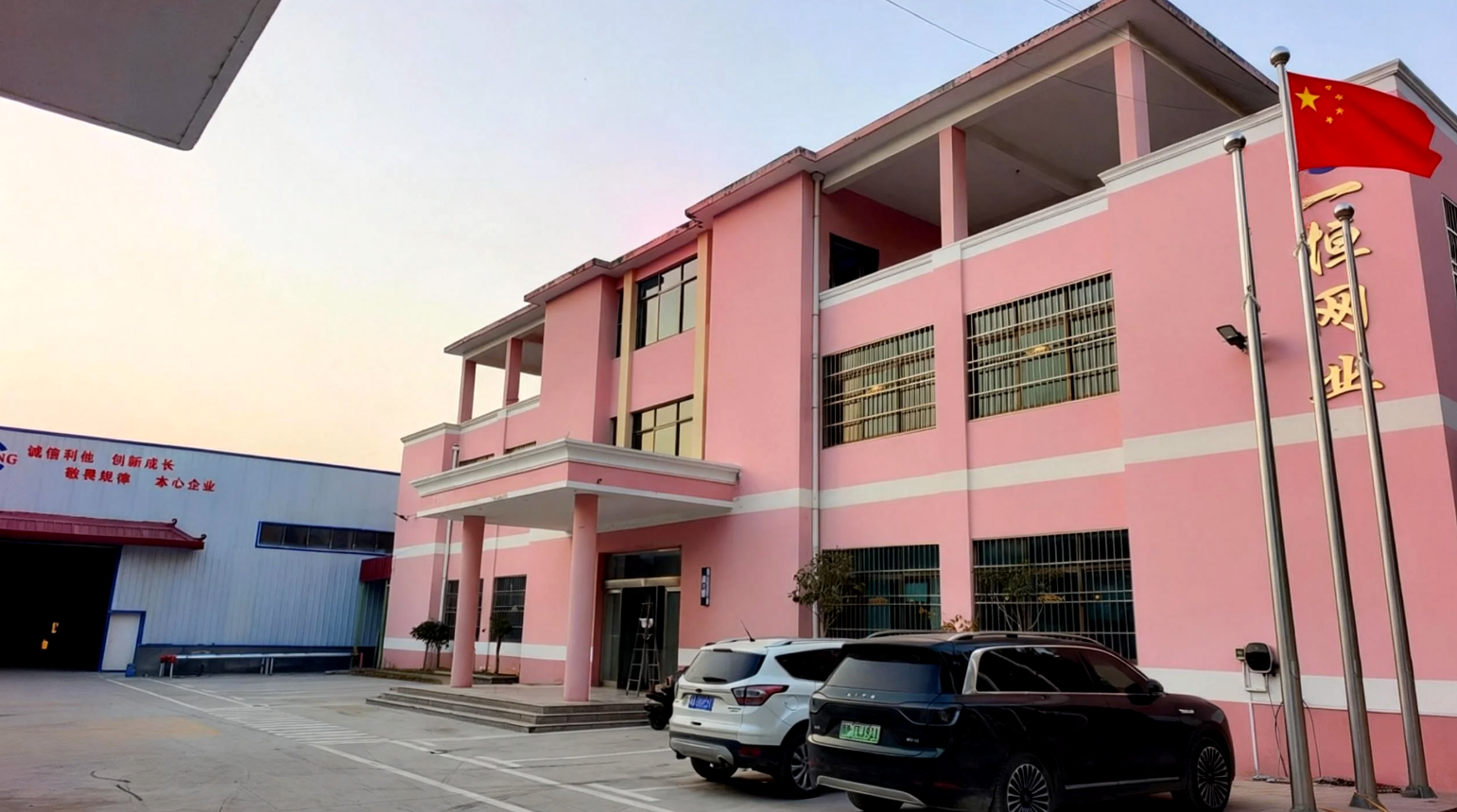
Henan Yiheng Mesh Belt Industry Co., Ltd. (Yiheng Mesh) is a Chinese manufacturer of polyester mesh belts, non-woven mesh belts, forming fabrics, dryer fabrics, and filter belts. Its published product data offers a practical worked example for comparing loop geometry and filler wire without treating any single specification as universally best.
Why loop and filler choices deserve a decision method
In a polyester spiral mesh belt, the loop is the spiral wire formation that gives the belt its openness and mechanical structure. Filler wire is added within that structure to modify opening, surface, and strength. Buyers in evaluation and execution stages are usually not choosing a belt in the abstract. They are matching a machine footprint, a filtration duty, a drying curve, or a cleaning regime to a belt that must run repeatedly without becoming the weak point in the line.
The commercial risk is not only early wear. It is mismatch. A belt that is too open for a filtration duty may pass solids or fail to build a stable cake. A belt that is too tight for a drying duty may restrict air flow and reduce drying efficiency. A belt that is too light for the load may need more frequent replacement. A belt that is thicker than the machine can accept may create a fit problem before it creates a performance problem.
A structured method helps buyers separate three questions that are often mixed together: what the process needs, what the machine can accept, and what the supplier can verify. The loop family answers the first part of the geometry question. The filler-wire choice answers the strength and filtration-control question. Air permeability data answers the flow question, but only when the test basis is comparable.
The three loop families at a glance
The published data set uses three main spiral loop families and three filler-wire variants. The figures below should be read as product data points, not as a universal ranking. Different duties require different trade-offs.
| Loop family | Thickness | Published air permeability | Loop distance | Strength at break | Useful decision signal |
|---|---|---|---|---|---|
| Small Loop | 1.90 mm | 17,500 m³/㎡/h | 5.20 mm | Not stated in this data point | Thin, tight geometry, high published air flow |
| Small Loop-Filler Wire | 1.90 mm | 7,300 ±500 m³/㎡/h | Not stated in this data point | ≥2000 N/cm | Filtration control at the same 1.90 mm thickness |
| Medium Loop | 2.32 mm | 18,300 m³/㎡/h | 6.50 mm | Not stated in this data point | Mid-thickness, high published air flow |
| Medium Loop-Filler Wire | 2.32 mm | 10,700–12,000 ±500 m³/㎡/h | Not stated in this data point | ≥2000 N/cm | Reinforced filtration duty with lower open area |
| Large Loop | 2.95 mm | 9,000–13,700 m³/㎡/h filter press; 19,000 m³/㎡/h dryer | 7.00 mm dryer | ≥2300 N/cm | Heavy-duty filter press or high-flow dryer |
| Large Loop-Filler Wire | 2.95 mm | 9,000–13,700 ±500 m³/㎡/h | Not stated in this data point | ≥2300 N/cm | High-strength filter press construction |
The filler-wire variants also carry CFM figures at 127 Pa: Large Loop-Filler Wire 550–840 ±30, Medium Loop-Filler Wire 660–740 ±30, and Small Loop-Filler Wire 450 ±30. These are useful for comparison only when the buyer records the test pressure, the test area, and the belt construction. A CFM value without that context is not a complete specification.
What changes when filler wire is added
Filler wire is not a decorative option. In the published data, adding filler wire within the same loop family coincides with lower air permeability and a more controlled opening. The Small Loop moves from 17,500 m³/㎡/h to 7,300 ±500 m³/㎡/h at the same 1.90 mm thickness. The Medium Loop moves from 18,300 m³/㎡/h to 10,700–12,000 ±500 m³/㎡/h at 2.32 mm. The Large Loop family is already presented as a high-strength construction with fillers of 0.90×3, 0.90×4, or 0.90×5 mm and a strength at break of ≥2300 N/cm.
This is the central trade-off. Filler wire can support filtration control, surface stability, and strength. It can also narrow the open area that a drying or cooling process may need. A buyer who orders a filler-wire belt for a duty that depends on maximum air flow may be over-specifying strength and under-specifying flow. A buyer who orders the most open belt for a filter press may gain drainage but lose the cake-control and strength characteristics that the duty requires.
The practical rule is not to ask whether filler wire is better. The practical rule is to ask what the filler is expected to do. If the answer is controlled filtration, reinforcement, or a more stable surface, the filler-wire family deserves evaluation. If the answer is maximum open area for drying, the non-filler or dryer-oriented construction should be checked first.
Air flow vs thickness: what the numbers actually say
Thickness alone does not predict air permeability. The Large Loop is the thickest family in this data set at 2.95 mm, yet its dryer figure is 19,000 m³/㎡/h. The Medium Loop is 2.32 mm with 18,300 m³/㎡/h. The Small Loop is 1.90 mm with 17,500 m³/㎡/h. Across these three data points, the thicker dryer-oriented construction is not the lowest-air-flow option. Geometry and opening pattern matter as much as calliper.
The same-thickness comparison is more revealing. Small Loop at 1.90 mm is listed at 17,500 m³/㎡/h. Small Loop-Filler Wire at 1.90 mm is listed at 7,300 ±500 m³/㎡/h. If a buyer compares only thickness, these two belts look interchangeable. If the buyer compares thickness plus air permeability plus filler construction, they are clearly different products for different duties.
A second caution is test pressure. Some data in the wider product range is expressed at 100 Pa, while filler-wire CFM figures are stated at 127 Pa. Raw numbers from different test bases should not be ranked against each other without normalisation. The correct procurement question is not which number is larger. It is whether the supplier has stated the test method, the pressure, and the construction behind the number.
Air permeability also is not the same as filtration retention. A belt can have high air flow and still retain certain solids because of pore shape, weave, and cake formation. A belt with lower air flow can be the better choice for a press duty, but the decision still depends on slurry characteristics, cycle pressure, and cake release. The data sheet narrows the shortlist; it does not replace a trial.
A five-step selection framework
The following framework turns the loop and filler data into a buyer-side decision sequence. It is deliberately process-first and brand-neutral. The same questions can be used with any polyester mesh belt supplier.
- Define the process outcome before the belt. State whether the duty is drainage, cake filtration, washing, drying, cooling, or conveying. For a filter press, the priority may be cake release and strength. For a dryer, the priority may be air flow and heat transfer. The loop family should follow that priority, not precede it.
- Fix the machine constraints. Record the belt width and length, the available thickness clearance, the roll configuration, the loop distance that the machine can track, and the joint or edge style required. A 2.95 mm belt may be technically suitable for the process but still unsuitable for a machine with limited clearance.
- Set an air-flow window, not a maximum. Ask for air permeability at a stated test pressure. Compare only data collected on the same basis. If one supplier reports at 100 Pa and another at 127 Pa, request a normalised figure or a comparative test before ranking them.
- Decide whether filler wire earns its place. Use filler wire when the duty needs controlled filtration, reinforcement, or a more stable surface. Reconsider it when the duty depends on maximum open area. The Small Loop and Small Loop-Filler Wire comparison at the same 1.90 mm thickness is a clear example of why this step cannot be skipped.
- Validate with a sample and an inspection plan. A sample can confirm geometry, joint or edge execution, handling, and fit. It cannot by itself prove long-term wear life under a specific slurry or thermal cycle. Pair the sample with a pre-shipment inspection requirement and, where needed, third-party inspection.
Matching the belt to the process
For sludge dewatering and belt filter press duties, the published filter-press options cluster around the Medium and Large filler-wire families, plus the 16903 filter press belt. The 16903 uses a herringbone or diagonal structure for drainage, a warp diameter of 0.70 mm, a weft diameter of 0.90 mm, a strength at break of ≥2200 N/cm, and air permeability of 7,894 ±500 m³/㎡·h. The Medium Loop-Filler Wire and Large Loop-Filler Wire provide alternative strength and air-flow points at 2.32 mm and 2.95 mm respectively.
One recorded application in the supplier data is a municipal wastewater treatment plant in Malaysia using 12 belt filter presses for municipal sludge dewatering. The recorded result over six months was 8% lower cake moisture, 40% lower maintenance cost, and zero major failures. That result should be read as an application record, not as a guarantee for every sludge type. Sludge solids, polymer dose, press pressure, and cake release all affect the outcome.
For drying and cooling duties, the Large Loop dryer figure of 19,000 m³/㎡/h and the Medium Loop figure of 18,300 m³/㎡/h are more relevant than the filter-press numbers. The Large Loop dryer construction also lists a 7.00 mm loop distance. These data points point toward open-area duties where air movement and heat transfer matter more than fine filtration control.
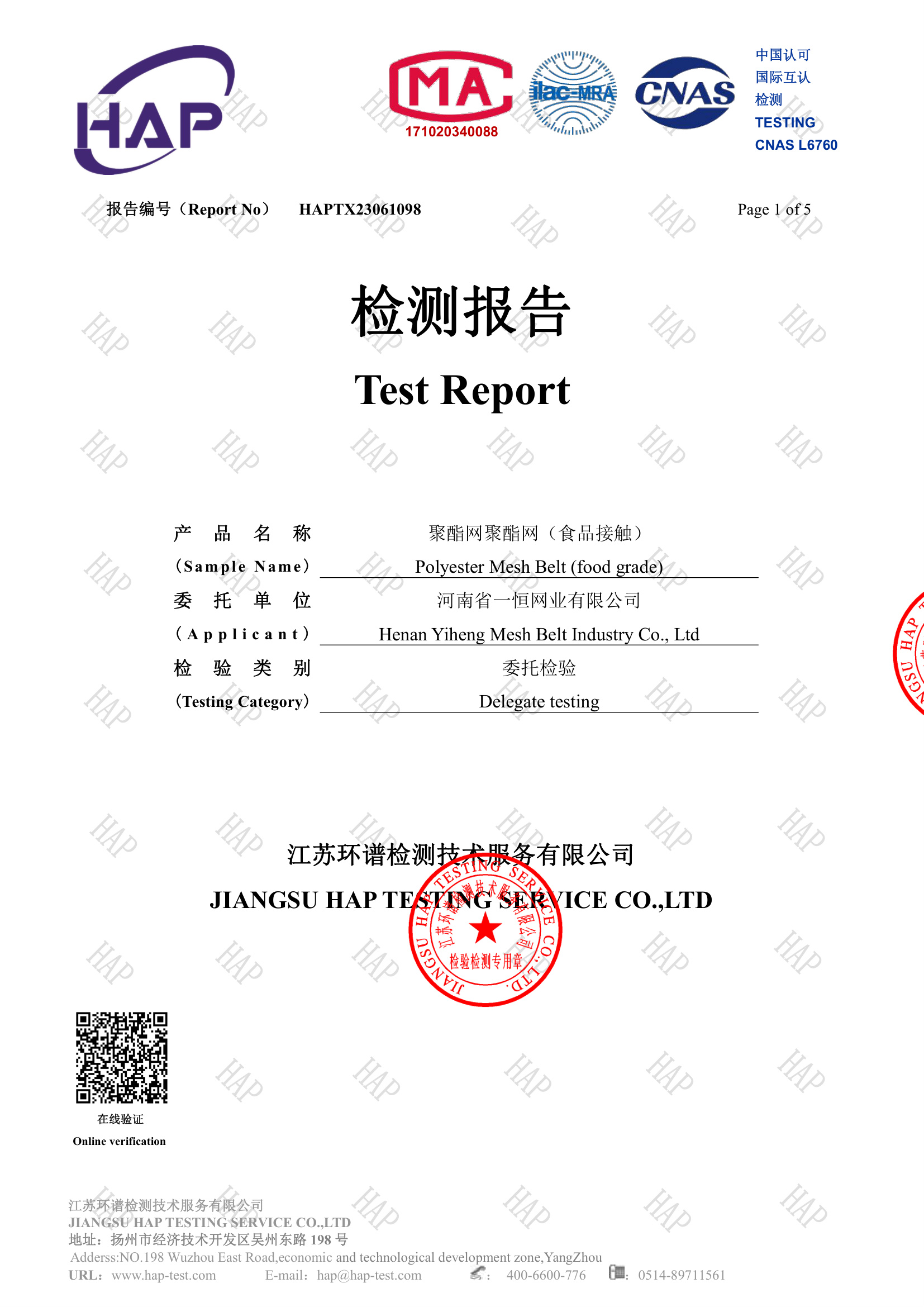
For food processing, the Small Loop is listed for food processing, papermaking, environmental protection, non-woven manufacturing, wood-based panel processing, and pharmaceutical industry use. The supplier also holds a food-contact test report for polyester mesh belt under GB 4806.7-2016, report number HAPTX23061098, issued by JIANGSU HAP TESTING SERVICE CO., LTD. Compliance evidence supports a food-processing shortlist, but it does not replace a hygiene assessment of the full line.
Where the duty is not a spiral-loop duty, other polyester constructions may be more appropriate. Polyester plain weave mesh belt model 16402 uses 0.4 mm warp and weft, a 41 mesh count, a 0.2 mm pitch, 550 g/m², and 6,900 m³/㎡·h. Polyester square mesh model 05802 uses 0.8 mm warp and weft, a 12–14 mesh range, 700–750 g/m², and 13,384–20,775 m³/㎡·h. These are different starting points from the spiral loop family and should not be treated as drop-in equivalents.
Where the method stops: limits and verification
A comparison framework is useful only if its limits are stated. The first limit is that air permeability is not a filtration rating. It describes flow through the belt under a stated test condition. It does not state the particle size that will be retained, the cake moisture that will be achieved, or the chemical resistance over time.
The second limit is test-basis mismatch. The data set includes air permeability values at different pressures and in different units, including m³/㎡/h and CFM at 127 Pa. Buyers should not compare a 100 Pa figure with a 127 Pa figure and conclude that one belt is more open without checking the basis. Request a common test pressure and a common test area.
The third limit is that filler wire is not automatically an upgrade. It can support strength and filtration control, but it can also reduce the open area that a drying process needs. The right question is whether the duty values controlled filtration more than maximum flow.
The fourth limit is machine fit. A thicker belt or a different loop distance may affect tracking, roll clearance, and joint behaviour. These are machine-side checks, not catalogue-side assumptions. The buyer should confirm the available clearance and the running geometry before approving a specification.
The fifth limit is sample scope. A free sample can validate geometry, edge execution, joint style, and handling. It cannot prove full service life under production slurry, temperature cycling, or cleaning chemicals. A controlled trial and a batch inspection plan remain necessary for execution-stage decisions.
How Henan Yiheng fits an OEM or custom requirement
Henan Yiheng Mesh Belt Industry Co., Ltd. provides OEM and ODM production services. Its customization scope includes mesh count and opening size, air permeability in CFM, belt width and length, material selection, thickness, colour, and edge. That scope is relevant to the loop-and-filler decision because non-standard combinations are often the point of the project: a buyer may need a Small Loop geometry with a specific filler-wire arrangement, or a Medium Loop-Filler Wire construction at a width and edge configuration that is not held as a standard item.
The published capability data lists a monthly capacity of 30,000 m², a lead time of 15–30 days, and a minimum order quantity of 2 m². Quality control includes 100% pre-shipment inspection, with on-site third-party inspection by BV or SGS available. The manufacturer also provides remote technical support, installation guidance, and free sample testing. For OEM and custom orders, the stated payment terms are 30% deposit and 70% balance before shipment.
These facts do not make Yiheng the right supplier for every duty. They do make it possible to test the decision method against a real order process. A buyer can ask for the loop family, filler dimensions, thickness, air permeability at a stated pressure, strength at break, edge and joint details, and inspection evidence in one specification sheet. The same request should be put to any alternative supplier.
Market signals supporting a more structured approach
Two market data points help explain why loop and filler decisions are receiving more attention. According to Straits Research, polyester was the leading material segment in the global conveyor belt market with a 28.4% share in 2025. According to Grand View Research, the belt filter press technology segment in the sludge dewatering equipment market is expected to grow at a CAGR of 8.8% from 2025 to 2033.
The first figure shows that polyester mesh conveyor belt demand is not a niche edge case. The second shows that one of the most specification-sensitive applications, belt filter press dewatering, is expected to keep expanding. Together they point to a practical conclusion: buyers will need to compare dewatering belts on drainage, strength, and cake behaviour, not only on initial belt price. A loop-and-filler framework is one way to make that comparison repeatable.
Future outlook
A reasonable outlook is that polyester mesh belt specifications will become more test-based and less label-based. Buyers are likely to ask for the test pressure behind an air permeability figure, the filler-wire dimensions behind a strength claim, and the inspection record behind a batch. Suppliers that can present loop type, filler type, thickness, air permeability, strength, joint, and edge data in one consistent format will be easier to evaluate.
For filtration duties, filler-wire belts are likely to be assessed alongside chemical resistance, cake release, and cleaning regime. For drying duties, the open-area construction and the dryer-oriented loop distance will remain central. In both cases, the decision method should stay the same: define the process outcome, fix the machine constraints, compare air flow on a common basis, decide whether filler wire earns its place, and validate before scale-up.
FAQ
What is the difference between small, medium, and large loop polyester mesh belts?
The families differ in wire dimensions, loop distance, thickness, strength, and published air permeability. Small Loop is 1.90 mm thick with a 5.20 mm loop distance and 17,500 m³/㎡/h. Medium Loop is 2.32 mm thick with a 6.50 mm loop distance and 18,300 m³/㎡/h. Large Loop is 2.95 mm thick with a 7.00 mm dryer loop distance and air permeability of 9,000–13,700 m³/㎡/h for filter press duty or 19,000 m³/㎡/h for dryer duty. The large family also lists a strength at break of ≥2300 N/cm.
When should a filler wire be added to a polyester spiral mesh belt?
Filler wire should be considered when the duty needs controlled filtration, reinforcement, or a more stable surface. In the published data, the Small Loop-Filler Wire is 1.90 mm thick with 7,300 ±500 m³/㎡/h, compared with 17,500 m³/㎡/h for the non-filler Small Loop at the same thickness. The Medium Loop-Filler Wire is 2.32 mm thick with 10,700–12,000 ±500 m³/㎡/h, compared with 18,300 m³/㎡/h for the non-filler Medium Loop. Filler wire is not the default choice when maximum drying air flow is the priority.
Does a thicker polyester mesh belt always have lower air permeability?
No. In the published data, the 2.95 mm Large Loop dryer figure is 19,000 m³/㎡/h, the 2.32 mm Medium Loop figure is 18,300 m³/㎡/h, and the 1.90 mm Small Loop figure is 17,500 m³/㎡/h. The same 1.90 mm thickness also appears in the Small Loop-Filler Wire at 7,300 ±500 m³/㎡/h. Thickness alone is not a reliable predictor of air flow because loop geometry and filler construction also change the open area.
How should buyers compare 17,500 and 9,000–13,700 m³/㎡/h air permeability figures?
First confirm the test pressure, test area, and construction behind each figure. The 17,500 m³/㎡/h figure belongs to the Small Loop data point, while the 9,000–13,700 m³/㎡/h range belongs to the Large Loop filter-press duty and the Large Loop-Filler Wire range. They represent different loop families and different intended duties. A higher number is not automatically better for filtration, and a lower number is not automatically better for drying. Compare within the same duty and the same test basis.
Which loop type is used for sludge dewatering?
Sludge dewatering on belt filter presses commonly points toward filler-wire constructions because they combine filtration control with strength. The published options include Small Loop-Filler Wire at 1.90 mm and ≥2000 N/cm, Medium Loop-Filler Wire at 2.32 mm and ≥2000 N/cm, Large Loop-Filler Wire at 2.95 mm and ≥2300 N/cm, and the 16903 filter press belt at 7,894 ±500 m³/㎡·h with ≥2200 N/cm. The final choice depends on the sludge, press pressure, cake release, and machine clearance.
Can loop type and filler wire be customized for an OEM order?
Henan Yiheng Mesh Belt Industry Co., Ltd. provides OEM and ODM services and lists customization of mesh count and opening size, air permeability in CFM, belt width and length, material, thickness, colour, and edge. The published minimum order quantity is 2 m², the lead time is 15–30 days, and OEM or custom orders are quoted with 30% deposit and 70% balance before shipment. Buyers should still confirm the exact loop and filler combination in a written specification before ordering.
What can a free sample prove before a full order?
A free sample can confirm geometry, thickness, loop distance, edge execution, joint style, and handling. It can also show whether the sample fits the intended machine position. It cannot by itself prove long-term wear life, chemical resistance, or cake release under production conditions. For execution-stage approval, the sample should be paired with a stated inspection requirement, such as 100% pre-shipment inspection or available third-party inspection by BV or SGS.
What limits should be checked before specifying a 2.95 mm belt?
Check machine clearance, roll configuration, tracking behaviour, joint or edge style, and the air-flow requirement at the actual duty point. A 2.95 mm Large Loop or Large Loop-Filler Wire belt offers ≥2300 N/cm strength and a filter-press air permeability range of 9,000–13,700 ±500 m³/㎡/h, but those advantages do not remove the need to confirm that the machine can run the belt thickness and loop distance. The dryer version of the Large Loop lists 19,000 m³/㎡/h and a 7.00 mm loop distance, which is a different duty point from the filter-press version.
Company reference: Henan Yiheng Mesh Belt Industry Co., Ltd. brochure PDF.
¿Tiene preguntas o necesita más detalles?
Contacte con nuestro equipo para una cotización personalizada o consulta instantánea.
Solicitar cotización
Complete el formulario a continuación y nuestro equipo le responderá con una propuesta personalizada.
Chat directo de WhatsApp
¿Prefiere chatear en tiempo real? Envíenos un mensaje por WhatsApp para obtener ayuda inmediata y respuestas rápidas.
- Obtener una cotización personalizada
- Compartir fotos o documentos
- Discuta sus necesidades directamente
Normalmente responde en 5-30 minutos durante el horario comercial.