
Polyester Mesh Belt Acceptance Criteria, Inspection and Trade Terms
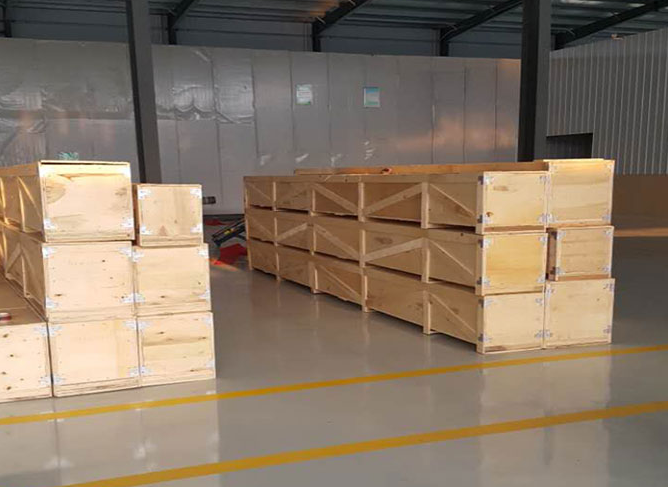 Packaging and shipping preparation is the point where acceptance criteria, inspection records and delivery terms converge on a polyester mesh belt order.
Compliance in industrial textiles rarely arrives as a single document. For polyester mesh belts — woven, seamed, heat-set endless belts used in sludge dewatering, papermaking, nonwoven forming, textile finishing and rubber processing — most of what a buyer can actually verify sits in the order file rather than in a badge printed on a datasheet.
The practical compliance question is therefore narrower than is the supplier certified. It is: which acceptance criteria were agreed, who inspected the goods against them, at which point in the payment cycle that inspection happened, and which trade term decided where risk transferred. All four can be checked before a purchase order is signed, and each leaves a document behind.
Henan Yiheng Mesh Belt Industry Co., Ltd. (Yiheng Mesh), a polyester mesh belt manufacturer established in Henan, China in 2009, publishes its order terms around exactly these elements: a 2 ㎡ minimum order quantity, 100% pre-shipment inspection, third-party inspection through BV or SGS on request, FOB / CIF / DAP / DDP delivery options, and a 30% deposit with 70% balance before shipment. The purpose of this article is to explain how each term functions as a verifiable control rather than a commercial formality — and where the limits of that control sit.
Why Acceptance Criteria Outrank Generic Certification Claims
A management-system certificate describes how a factory is organised. An acceptance criterion describes what a specific roll of belt must measure in order to be accepted. Those are different instruments, and for woven polyester mesh only the second one settles a dispute.
This distinction is sharper than it first appears, because the obvious international reference does not apply. ISO 14890 is the international standard governing rubber- or plastics-covered conveyor belts with textile carcasses. Bare woven polyester mesh — the material used as a belt filter press belt, a dryer fabric or a forming fabric — falls outside that standard's product scope. A buyer therefore cannot treat a general conveyor-belt standard as the acceptance document; the acceptance document has to be built for the order.
In practice, a workable polyester mesh belt acceptance set usually fixes the following items in writing before production:
- Nominal width, length and stated tolerances for both dimensions.
- Weave or construction type (square mesh, spiral mesh, plain weave) and the target open area or air permeability figure.
- Joint or seam type, plus a seam strength requirement rather than a visual description.
- Running elongation expectation at the operating tension of the machine.
- Service environment: heat exposure up to the stated limit, hydrolysis conditions, chemical attack.
- Edge finish, roll identification and marking.
- Packaging method and the inspection stage at which the consignment is released.
Where those items are absent, an inspection report has nothing to measure against and becomes an opinion.
The Four Verification Layers a Buyer Can Actually Check
Compliance on a polyester mesh belt order is best read as a sequence of four layers, each answering a different question and each producing different evidence.
| Layer | Question it answers | Typical evidence |
|---|---|---|
| 1. Specification agreement | What exactly will be measured and to what value? | Signed specification sheet, order confirmation, drawing or dimension table |
| 2. Production evidence | Was the belt made to that specification? | In-process measurement records, permeability control data, roll or batch identification |
| 3. Pre-shipment inspection | Does this consignment match the agreed criteria? | Inspection record issued before the balance payment falls due |
| 4. Third-party inspection | Does an independent party reach the same conclusion? | BV or SGS inspection report booked against the purchase order |
The order of the layers matters more than the existence of any single one. A third-party report produced before the specification is agreed certifies nothing useful; a pre-shipment inspection completed after the balance is paid carries no commercial leverage.
What 100% Pre-Shipment Inspection Actually Covers
A 100% pre-shipment inspection policy means every consignment is checked before dispatch, not a statistical sample of consignments. For an endless woven belt, that check typically covers length and width against the order, seam alignment and loop count, surface continuity, edge quality, roll identification, and packaging and marking.
The value of the check depends on how measurable the criteria are. Yiheng Mesh controls air permeability fluctuation within a ±5% band in production, which gives an inspector a numeric reference point instead of a visual judgement about how open the weave looks. For constructions where permeability is the functional requirement — dewatering belts, filter press belts, dryer fabrics — that reference is the difference between a pass/fail decision and a comment.
The boundary is equally clear: pre-shipment inspection confirms conformance to an agreed specification at a point in time. It is not a material certification, it does not verify polymer grade independently unless a specific test is written into the scope, and it cannot predict service life. Buyers who need composition or food-contact evidence should request the relevant documentation as a separate item, not assume inspection covers it.
Third-Party Inspection by BV or SGS: When It Earns Its Cost
Independent inspection through BV or SGS is available on request. It is most defensible in four situations:
- A first order with a new supplier or a construction the buyer has not run before.
- A duty where failure stops a line — continuous belt filter press operation, high-speed paper machine forming sections, or a nonwoven line with no buffer stock.
- Internal quality rules or an end customer that requires an independent report before acceptance.
- Shipments under terms where the buyer never physically sees the goods before customs clearance.
Scope discipline determines whether the report is usable. Sampling plan, test methods, acceptance numbers and the reference to the purchase order and roll identifiers should be fixed before the inspector is booked. A report that lists what was looked at, without stating what value would have constituted a failure, is difficult to enforce later.
The limitation is structural rather than commercial: a third-party report describes a specific consignment inspected on a specific date. It does not certify later production runs, and it does not transfer the supplier's own obligations to the inspection body. Buyers running repeat orders typically move from full third-party inspection on the first shipment to periodic audits plus retained pre-shipment records once the specification has stabilised.
Trade Terms Decide Where Risk Sits
Delivery terms are compliance instruments as much as logistics choices, because each one determines the moment at which the buyer stops being able to reject what is on the pallet.
| Term | Freight and insurance arranged by | Risk transfers | Suited to |
|---|---|---|---|
| FOB | Buyer | On board at the port of loading | Buyers with their own forwarder and import capability who want maximum control |
| CIF | Seller | On board at the port of loading | Buyers who want freight and insurance handled but keep control of the documents |
| DAP | Seller | At the named destination, ready for unloading | Buyers who want delivered logistics but handle their own import clearance and duty |
| DDP | Seller, including import clearance and duty | At destination after import clearance | Buyers without import infrastructure, or trials small enough that clearance cost is immaterial |
Two trade-offs are worth stating plainly. Under CIF the seller arranges carriage and insurance to the destination port, so the term is largely documentary — the buyer's control runs through the documents rather than through the physical handling. Under DDP the seller handles import clearance and duties, which is convenient but reduces the buyer's visibility of the landed cost breakdown and of the customs description actually used. For technical textile shipments classified under HS 5911.90, that description should match the invoice and the inspection report, because a mismatch is a customs question rather than a quality question.
Payment Terms and the Order of Operations
Yiheng Mesh works on a 30% deposit with 70% balance before shipment. Read commercially, the deposit commits production capacity; read as a control, the balance is the buyer's last point of leverage and should be sequenced accordingly.
The sequence that protects the buyer is straightforward and should appear in the purchase order: complete the pre-shipment inspection, receive and accept the report, then release the balance. If the balance falls due before the inspection report is issued, the inspection still happens but no longer influences payment, which is the situation most disputes trace back to.
The limitation should be acknowledged rather than glossed over. Compared with open-account trading, a 30/70 pre-shipment structure places a larger share of the payment ahead of delivery, so buyer protection rests on the inspection and document package rather than on bank intermediation. Buyers whose internal policy requires documentary credit or a different split should raise the point during negotiation; the published baseline remains 30% deposit and 70% balance before shipment.
The 2 ㎡ Minimum and What a Trial Order Can Prove
A minimum order quantity of 2 ㎡ is low enough that a buyer can validate a construction before committing to a full machine set. That is useful, but the boundary of what a 2 ㎡ order demonstrates should be understood before the trial is ordered.
A 2 ㎡ sample can confirm weave geometry, surface smoothness, seam workmanship, dimensional accuracy and packing standard. It cannot confirm running life, tracking behaviour at line speed, stretch under sustained tension, or hydrolysis resistance over a service interval. Treating a small trial as a specification check — and the first full-width belt as the performance test — produces a more honest qualification path than expecting the trial to answer everything.
Matching Acceptance Criteria to the Application
Polyester mesh belts are used across filtration and drying duty cycles, and the acceptance criteria shift with the duty rather than staying fixed. A single generic checklist applied across industries is one of the more common reasons a conforming belt still underperforms.
- Belt filter press and sludge dewatering. Permeability and cake release dominate. Criteria should fix the permeability target, the seam strength requirement, and the belt length under tension, because a dewatering belt that stretches out of the press geometry loses performance regardless of weave quality.
- Papermaking forming and dryer sections. Drainage uniformity and dimensional stability lead. Running elongation below 0.7% and seam interface behaviour belong in the acceptance set, not in a footnote.
- Nonwoven lines. Anti-static behaviour and hydrolysis resistance under heat and humidity matter. Yiheng Mesh has developed carbon fiber anti-static technology and hydrolysis-resistant monofilament applications aimed at exactly these conditions.
- Textile finishing and rubber processing. Heat exposure up to the stated resistance limit and surface release behaviour are the practical criteria, with edge condition treated as a wear item.
Two structural properties cut across all four duties. The smooth surface of a woven polyester belt influences both cake release and the ease with which surface continuity can be inspected. The ability to disassemble and reassemble the belt on the machine affects how the seam is specified, since a joint designed for repeated assembly has different requirements from one installed once.
How Woven Polyester Construction Shapes the Inspection Points
The reason seam inspection deserves priority over dimensional inspection is mechanical. In conventional seamed forming fabrics, interface strength at the seam has been measured around 550 N/cm while the fabric body exceeds 900 N/cm, with high-density constructions reaching 1,600–2,200 N/cm in the body. The joint is the weakest point in the assembly, so it is the point where acceptance criteria earn their keep.
In filter belt constructions, large-loop designs reach breaking strengths in the range of 2,300–2,800 N/cm against roughly 1,800 N/cm for typical entry-level seamed belts, with air permeability up to 12,500 m³/m²·h in large-loop form and up to 13,400 m³/m²·h in small-loop form. Heat resistance is stated up to 180°C with acid and alkali resistance. Each of those figures is only meaningful as an acceptance criterion if the corresponding test method is named in the order documents.
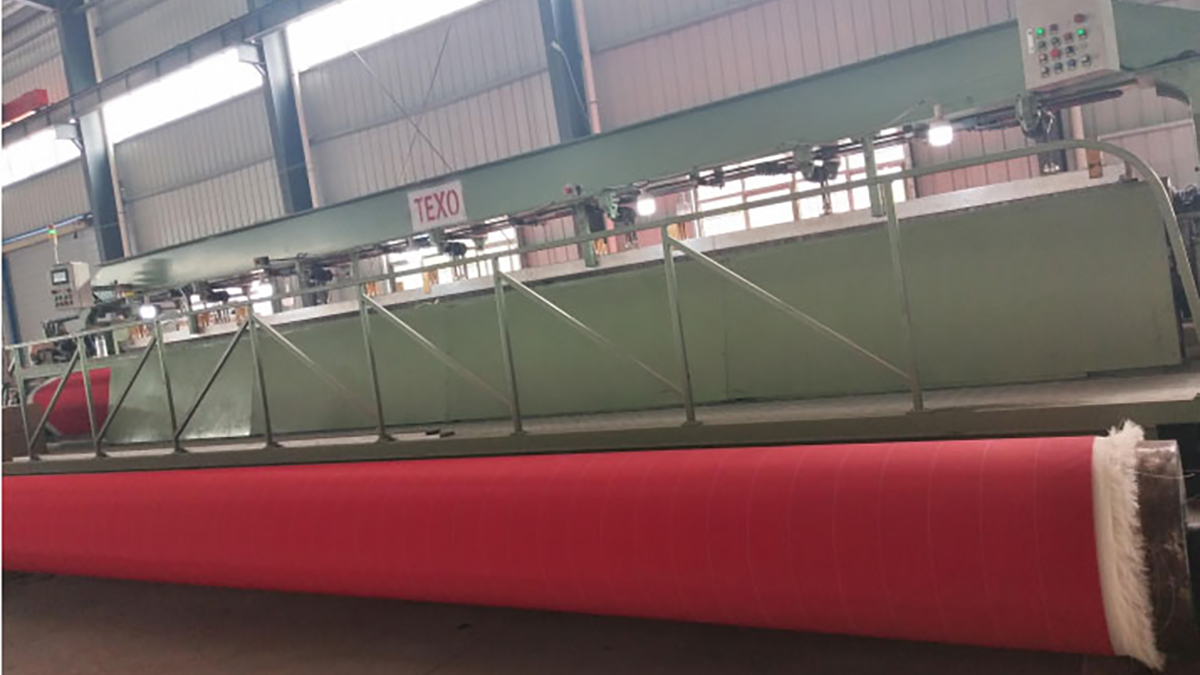 In-process records generated during weaving and heat setting are the evidence layer that a pre-shipment inspection later confirms.
Compared With Conventional Seamed Belts: Gains, Boundaries and Where They Stop
Against conventional low-strength seamed filter belts, higher-grade polyester constructions offer measurably higher breaking strength, higher water permeability, longer service life and lower maintenance demand. Where abrasion and chemical attack are the life limiters, the longer interval between belt changes can offset the higher purchase price and reduce total cost of ownership.
The boundaries are equally concrete, and buyers should price them in:
- Higher initial cost. A higher-grade belt costs more per square meter at the outset. The payback depends on duty cycle length and downtime cost; on short campaigns or low-utilisation lines, the arithmetic may not favour the premium construction.
- Inspection verifies the shipment, not the service life. Acceptance criteria confirm geometry, seam quality and permeability at the time of dispatch. No pre-shipment check can certify how many months a belt will run.
- Installation remains a variable. A belt that satisfies every criterion can still fail early through misalignment, incorrect tension or damaged machine components. Compliance at the factory does not substitute for tracking discipline on site.
- Documentation is order-specific. Inspection scopes differ by construction, so a report from a previous order is not evidence for the current one.
Market Context: Why Documentation Is Becoming the Differentiator
Polyester is the leading material segment in the global conveyor belt market, with a 28.4% share in 2025 according to Straits Research. When one material dominates to that degree, material choice stops being a differentiator and documented conformance becomes one.
Demand-side pressure is coming from filtration. Grand View Research projects belt filter press technology growing at a CAGR of 8.8% between 2025 and 2033 within the sludge dewatering equipment market — a duty where a failed belt means a stopped plant rather than a slowed line, and where buyers consequently ask for evidence before shipment rather than after arrival.
Market sizing should be read with care. Straits Research puts the global conveyor belt market at USD 6.24 billion in 2026 rising to USD 8.53 billion by 2034; other research houses publish lower figures using narrower definitions of what counts as a conveyor belt. The direction is consistent across sources; the absolute number is not, and buyers citing a market figure should cite the definition alongside it.
Yiheng Mesh operates inside that context with a 62% export ratio and customers across Asia, Europe and North America, a 35% market share in Southeast Asia, and long-term partnerships with non-woven equipment manufacturers including Chaolong, Hongda and Aolong. For a buyer, the relevant signal is not the geographic spread itself but the fact that repeat supply relationships of that kind require stable acceptance criteria to survive.
Future Outlook
Two shifts are likely to shape polyester mesh belt procurement over the next several years. The first is the migration of acceptance criteria from supplier-side practice into buyer-side purchase orders: permeability bands, seam strength figures and elongation limits written as contractual values rather than discussed as expectations.
The second is traceability. Roll-level identification tied to inspection records makes it possible to trace a failure back to a production window instead of a shipment, which changes how claims are handled. Constructions developed for anti-static and hydrolysis resistance will also keep expanding the criteria list, because every new performance claim creates a corresponding question about how it is verified. Neither shift removes the need for a third-party report; both make the underlying specification more important than the report itself.
FAQ
What are the purchasing terms for a polyester mesh belt order from Yiheng Mesh?
The published terms are a minimum order quantity of 2 ㎡; delivery under FOB, CIF, DAP or DDP; 100% pre-shipment inspection with third-party inspection by BV or SGS available; and payment of 30% deposit with 70% balance before shipment.
What does 100% pre-shipment inspection cover, and what does it not cover?
It covers a check of every consignment against the agreed specification before dispatch — dimensions, seam and joint condition, surface continuity, edge quality, roll identification and packing. It does not independently certify polymer composition, and it does not predict service life in the machine.
When is third-party inspection by BV or SGS justified?
Typically on a first order, on a construction the buyer has not run before, on duties where a belt failure stops production, or where internal quality rules require an independent report. Its value depends on the sampling plan, test methods and acceptance numbers being specified in the purchase order before the inspection is booked.
Which delivery term fits a first-time buyer?
FOB suits buyers with their own forwarder and import capability who want maximum control. CIF suits buyers who want freight and insurance arranged to the destination port while retaining control of the documents. DAP suits buyers who want delivered logistics but handle their own import clearance and duty. DDP suits buyers without import infrastructure, at the cost of reduced visibility of the landed cost breakdown.
How should the 30/70 payment term be sequenced against inspection?
The inspection should complete and the report be accepted before the 70% balance is released. Where the balance falls due before the report is issued, the inspection no longer influences payment, which is the sequence most acceptance disputes trace back to.
Is a 2 ㎡ minimum order enough to qualify a specification?
It is enough to confirm weave geometry, surface condition, seam workmanship, dimensional accuracy and packing. It is not enough to establish running life, tracking behaviour at line speed, or hydrolysis resistance over a service interval, so the first full-width belt normally serves as the performance validation.
Which documents should accompany a polyester mesh belt shipment?
Typical trade documentation includes the commercial invoice, packing list and transport document, with the goods described consistently under HS 5911.90 for textile products and articles for technical uses. Where inspection has been carried out, the corresponding report should reference the purchase order and the roll identifiers so that it can be matched to the consignment on arrival.
Reference material: Yiheng Mesh product brochure (PDF).
¿Tiene preguntas o necesita más detalles?
Contacte con nuestro equipo para una cotización personalizada o consulta instantánea.
Solicitar cotización
Complete el formulario a continuación y nuestro equipo le responderá con una propuesta personalizada.
Chat directo de WhatsApp
¿Prefiere chatear en tiempo real? Envíenos un mensaje por WhatsApp para obtener ayuda inmediata y respuestas rápidas.
- Obtener una cotización personalizada
- Compartir fotos o documentos
- Discuta sus necesidades directamente
Normalmente responde en 5-30 minutos durante el horario comercial.