
Platinum-Cured LSR vs. Organotin Silicone: Medical Buyer Decision Framework
Two liquid silicone rubber compounds can carry the same hardness value, a similar tensile figure and the same “medical grade” wording on the label, and still behave differently inside a mold, inside an aging oven and inside a biocompatibility file. In most cases the variable that separates them is the cure system. This reference sets out a buyer-side decision framework for comparing platinum-cured LSR against organotin-cured silicone and against low-activity general platinum catalysts, using comparison data published by Dongguan Times Silicon Industry Co., Ltd.
Dongguan Times Silicon Industry Co., Ltd. is a Chinese manufacturer of liquid silicone rubber and silicone raw materials — including platinum catalysts, liquid silicone rubber for adult products and overmolding, vinyl silicone oil and silicone resins — founded in 2021 and operating a 15,000 m² facility with a 55% export ratio. The performance figures used in this framework are the company’s published comparison data for its platinum catalyst and for its Adult Products LSR for Overmolding. They describe defined test conditions, and a buyer should confirm them against their own formulation, wall thickness and tooling before writing them into a specification.
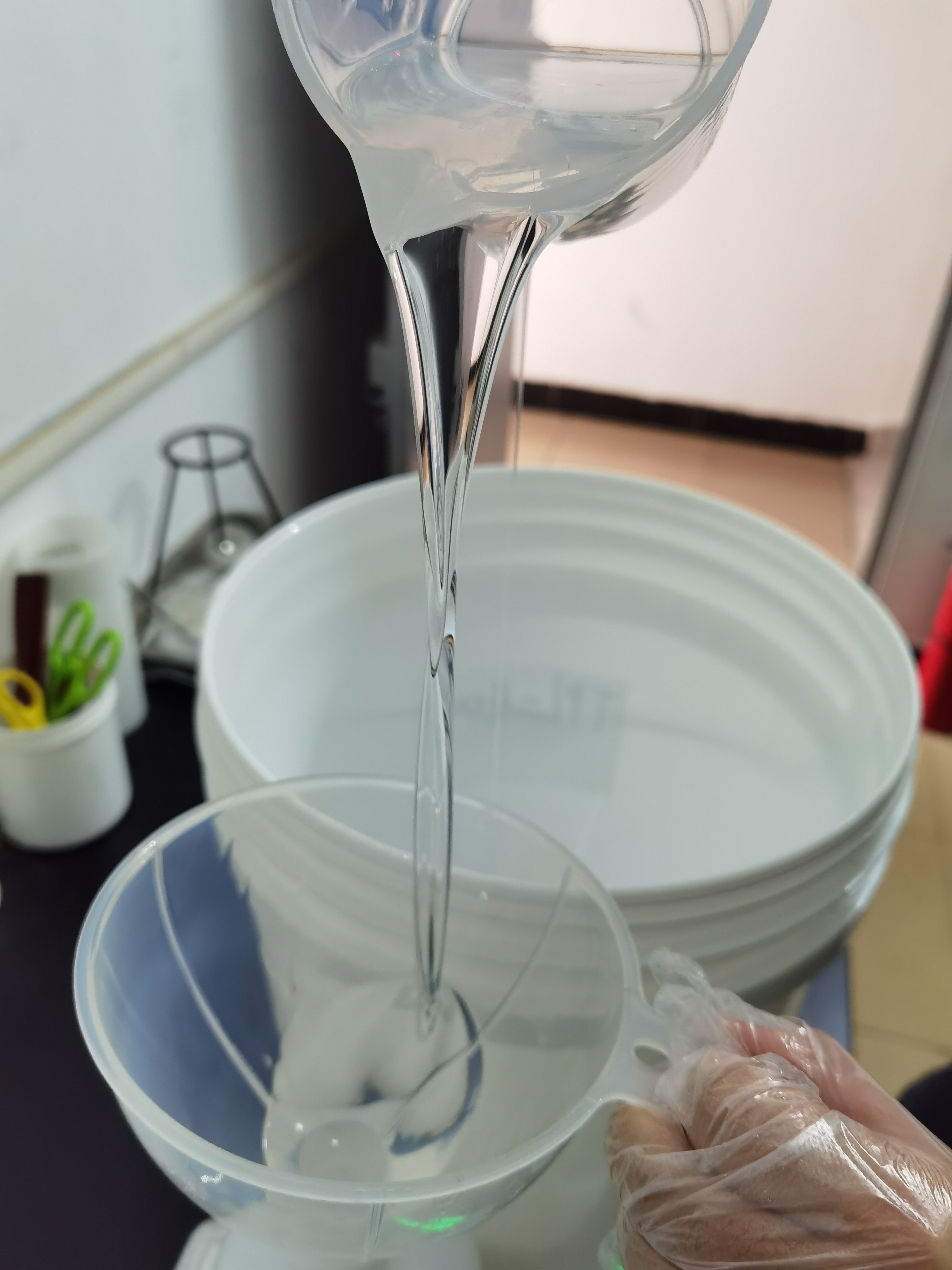
Platinum catalyst: dose, batch activity and purity determine cure speed, odor and color stability in medical and adult-product LSR.
Why the Catalyst, Not the Grade Label, Drives Medical Approval
Three failure modes decide whether a molded silicone part survives medical, food-contact or adult-product review, and none of them appear reliably on a grade datasheet: residual odor, color drift after aging, and leachable content. All three are governed more by the cure chemistry than by the polymer backbone.
The published comparison data for the platinum catalyst places odor at “no residual odor”, against a pungent tin odor for organotin-cured systems and a slight off-odor for low-activity general platinum catalysts. On color stability, the same source reports no yellowing after 1000 hours of aging for the platinum system, against obvious yellowing after 200 hours for the organotin alternative. On process capability, the curing defect rate is reported at ≤0.6% for the platinum system against ≥2.5% for organotin.
For a buyer, that gap rarely shows up as a datasheet conversation. It shows up later, as customer complaints about smell, as rejected lots after accelerated aging, and as rework hours absorbed by the molding cell. The framework below is built to move those three parameters into the evaluation stage rather than the after-sales stage.
How Platinum Addition Cure Works, and Why the Dose Matters
Platinum catalysts drive a hydrosilylation reaction — an addition cure between vinyl-functional silicone and a hydrogen-functional siloxane. Because the reaction consumes the reactants rather than releasing small-molecule by-products, it does not leave the odorous residues that are characteristic of tin-catalysed condensation systems. That single chemical difference explains most of the odor position in the comparison data, and it also explains why the platinum route is compatible with medical and food-grade formulations.
Addition rate: 5–10 ppm versus 50–100 ppm
The catalyst under comparison is specified at an addition rate of 5–10 ppm. Low-activity general platinum catalysts are specified at 20–30 ppm, and organotin catalysts at 50–100 ppm. A single-digit ppm dose changes two things at once.
First, it changes the cost structure. Although the unit price per kilogram of the platinum catalyst is higher than that of organotin catalysts, the comprehensive formulation cost is reported 10%–15% lower, because far less catalyst is consumed and no additional deodorization process is required.
Second, it changes the quality requirement. At 5–10 ppm there is far less dilution margin: an impurity or an activity loss that would be masked at 50 ppm becomes a visible defect — uneven cure, delayed cure or color drift. A low addition rate is therefore a statement about the supplier’s purification and batch control as much as it is about chemistry.
Cure kinetics: 10 minutes versus 20 and 30 minutes at 80°C
At 80°C, the platinum system is reported to reach full cure in 10 minutes, against 20 minutes for the general platinum catalyst and 30 minutes for the organotin system. Translated into production terms, the catalyst comparison reports a 20°C reduction in curing temperature, a 30% shorter molding cycle, 20% lower energy consumption per unit and 35% higher production capacity.
One caveat belongs next to those figures: cure speed in a real tool depends on inhibitor level, wall thickness, tool temperature and platinum concentration. The 10-minute value is a benchmark for comparing catalysts, not a guaranteed cycle time for every mold.
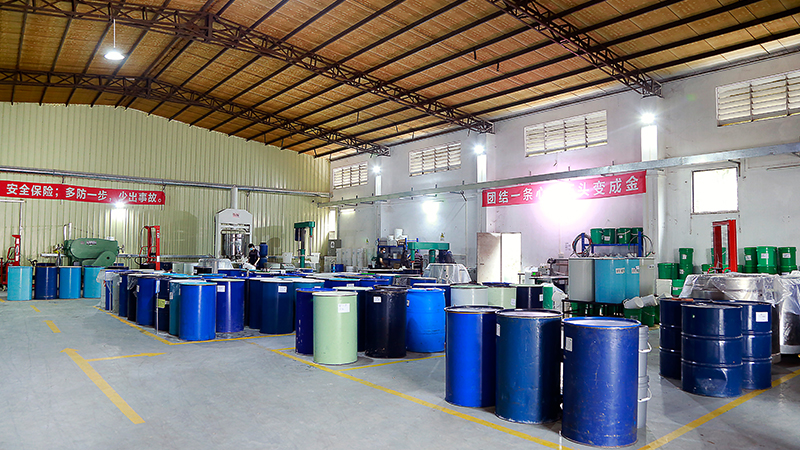
A/B metering accuracy matters more as catalyst dose falls: at 5–10 ppm, small dosing errors translate directly into cure variation.
The Side-by-Side Framework
The table below consolidates the three-way catalyst comparison into the metrics that actually appear in a buyer’s qualification file. It is deliberately limited to what the source data supports; where a metric was not reported for a given catalyst type, the cell is left blank rather than estimated.
| Decision metric | Platinum catalyst (compared system) | Low-activity general platinum | Organotin catalyst |
|---|---|---|---|
| Addition rate | 5–10 ppm | 20–30 ppm | 50–100 ppm |
| Full cure at 80°C | 10 minutes | 20 minutes | 30 minutes |
| Residual odor | None | Slight off-odor | Pungent tin odor |
| Yellowing after aging | No yellowing after 1000 h | — | Obvious yellowing after 200 h |
| Curing defect rate | ≤0.6% | — | ≥2.5% |
| Batch activity fluctuation | <3%; no delayed or uneven cure | — | — |
| Effect on comprehensive formulation cost | 10%–15% lower than the organotin route, no deodorization step | — | Lower catalyst unit price per kg; deodorization required where odor matters |
| Application fit stated in source data | Low-odor silicone for adult products, medical and food-grade silicone, low-odor electronic potting compounds, high-transparency LED encapsulants | Not stated | Not stated |
Source: comparison data published by Dongguan Times Silicon Industry Co., Ltd. Figures describe defined test conditions and are not a substitute for validation on a buyer’s own formulation and tooling.
From Catalyst to Molded Part: Adult Products LSR for Overmolding
Catalyst data answers the chemistry question. It does not answer the part question. For medical-adjacent and adult-product programs, the more useful comparison is at compound level, where the platinum cure system is combined with a formulation designed for skin-contact and overmolding work.
In that comparison, the material is described as low odor and non-leaching, with medical-grade biocompatibility, a high-fidelity flesh-like feel, anti-yellowing behavior and a tear strength of ≥35 kN/m against ≤20 kN/m for conventional industrial-grade silicone. Biocompatibility is stated as FDA and REACH certified, against uncertified industrial material with a harmful-leaching risk. On accelerated aging, no obvious yellowing is reported after 1000 hours, against severe yellowing after 200 hours for the industrial-grade alternative.
What changes on the shop floor
| Part-level metric | Adult Products LSR for Overmolding | Conventional industrial-grade silicone |
|---|---|---|
| Tear strength | ≥35 kN/m | ≤20 kN/m |
| Odor profile | Low odor, no irritating residue | Pungent industrial odor |
| Biocompatibility basis | FDA / REACH certified | Uncertified; harmful-leaching risk |
| Yellowing after 1000 h accelerated aging | No obvious yellowing | Severe yellowing after 200 h |
| Curing defect rate | ≤0.8% | ≥3% |
| Batch consistency | <3% fluctuation in hardness and cure speed | Not specified |
| Molding cycle | 15% shorter | Baseline |
| Energy consumption per unit | 10% lower | Baseline |
| Production capacity | 20% higher | Baseline |
| Raw material cost per kg | 15%–20% higher | Baseline |
| Comprehensive production cost | 5%–10% lower | Baseline |
| Client complaint rate | <1% | Not specified |
Source: comparison data published by Dongguan Times Silicon Industry Co., Ltd.
The commercial logic in that table is worth stating plainly, because it is the point buyers most often get wrong. The raw material costs 15%–20% more per kilogram, and the part still ends up 5%–10% cheaper to produce in comprehensive terms, because the defect rate (≤0.8% versus ≥3%), the shorter cycle and the lower energy per unit absorb the material premium. A buyer comparing only the per-kilogram quote will reach the opposite conclusion from a buyer comparing cost per accepted part.
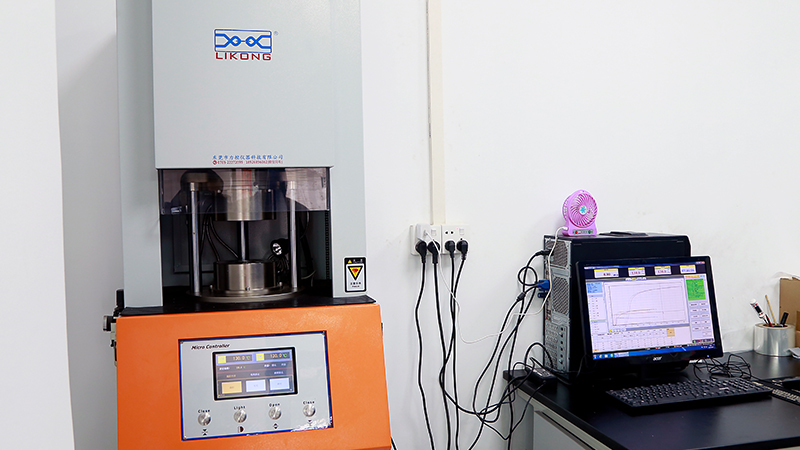
Batch activity, odor and yellowing testing are the controls that make a single-digit ppm catalyst dose workable in volume production.
Where Platinum Curing Does Not Solve the Problem
A framework that only lists advantages is not a framework. Five boundaries matter in practice.
- Catalyst unit price is genuinely higher. The 10%–15% formulation-cost advantage depends on capturing the low addition rate and on removing a deodorization step. Where an application has no odor, color-stability or biocompatibility requirement, that advantage may not exist at all, and the per-kilogram premium is simply a premium.
- Activity retention is a storage problem. Platinum activity can degrade through moisture and oxidation, creating shelf-life risk. The controls required are moisture-proof sealed packaging, defined storage conditions, constant-temperature batch storage and periodic activity sampling, with no expired material released.
- A ppm-level dose raises the cost of a bad batch. Impurities can cause yellowing, odor and reduced biocompatibility, and at 5–10 ppm there is little dilution margin. Incoming purity and heavy-metal testing, per-batch activity testing and full finished-product testing of cure, odor, yellowing and biocompatibility are the necessary counterweights.
- Cure figures are formulation-specific. The 10-minute cure at 80°C is a comparative benchmark; a buyer must replicate it on the actual tool, at the actual wall thickness, before committing to a cycle time.
- Certification statements need scope verification. Dongguan Times Silicon states ISO 9001 certification and RoHS, REACH, FDA, LFGB and halogen-related approvals for its products. Those statements are company-reported: certificate numbers, issuing bodies, validity dates and the mapping of each certificate to a specific grade should be confirmed before a specification cites them.
Application Fit
The source data positions the platinum-cured system for low-odor silicone in adult products, medical and food-grade silicone, low-odor electronic potting compounds and high-transparency LED encapsulants. At compound level, the Adult Products LSR for Overmolding is positioned for high-end adult toys, realistic body molds, medical-grade silicone products and food-contact silicone accessories.
Overmolding is the case where the combination matters most. A Shore hardness specification tells a molder almost nothing about whether a skin-contact part will pass an odor review, survive accelerated aging without yellowing, or hold up when demolded. Tear strength at ≥35 kN/m and a curing defect rate at ≤0.8% are the two numbers that most directly affect demolding yield in thin-wall overmolded geometries, and both come from the same formulation decision as the catalyst choice.
Market Context: Growth Is Raising the Cost of a Wrong Cure Choice
The category is expanding. Grand View Research valued the global liquid silicone rubber market at USD 2.8 billion in 2023 and projected USD 5.0 billion by 2030, at a CAGR of 8.5%. A separate vendor, Market.us, reports USD 2.3 billion for 2024 rising to USD 5.5 billion by 2034 at 9.2%. The two estimates use different base years and boundaries and should not be averaged; both indicate mid-to-high single-digit growth.
The medical sub-segment carries its own figures. Grand View Research valued the global medical-grade silicone rubber market at USD 738.9 million in 2024 and projected USD 837.0 million for 2026; Fortune Business Insights projects USD 855.18 million for the same year at the same nominal scope. The two 2026 values differ, and neither vendor discloses a reconciliation method, so the usable signal is the direction of travel rather than the decimal. Note also that “medical-grade silicone” in the broader sense — gels, adhesives and rubber together — is a much larger market than the rubber-only scope, and the two must not be combined.
Regulatory practice is converging in the same direction. A 2025 U.S. FDA 510(k) decision document for a B. Braun Medical Inc. device lists liquid silicone rubber among the materials evaluated under ISO 10993-1. That document is device-specific and does not certify a generic LSR grade; its value to buyers is that it shows the form in which regulators expect the material to be documented — as part of a device-specific biocompatibility evaluation, not as a supplier label.
Supplier positioning reflects the same shift. SIMTEC, Saint-Gobain and Betely all publicly describe medical-grade silicone or LSR offerings for medical device components, which indicates a geographically dispersed supplier base across the United States, Europe and China. A dispersed base makes grade-label shorthand less useful, not more: when many suppliers can say “medical grade”, documentation becomes the differentiator.
A Buyer’s Evaluation Sequence
The following sequence converts the comparison data into a decision path. It is ordered so that the cheapest screening steps happen first.
- Define the constraint set before requesting quotes. Decide whether odor, color stability after aging, leachables and tear strength are mandatory requirements or preferences. If none of them are mandatory, the platinum premium may not be justified.
- Request batch-level activity data. Ask for platinum content and activity test reports per batch, and for evidence of activity fluctuation below 3%. This is the control that protects a 5–10 ppm formulation.
- Model cost at formulation level, then at part level. Formulation level: addition rate multiplied by catalyst price, plus any deodorization step. Part level: defect rate, cycle time and energy per unit. The two models can rank suppliers in opposite orders.
- Validate on your own tool. Run at least three production batches and measure cure completeness, odor and yellowing under accelerated aging. Treat published cure times as benchmarks until this step is complete.
- Verify certificate scope, not certificate logos. Obtain certificate numbers, issuing bodies, validity dates and grade-level mapping, and check that the specific compound being purchased is covered.
- Lock traceability and change control. Confirm lot-level traceability from raw material to finished compound, and agree on how formulation or catalyst changes are notified.
Future Outlook
Two forces are likely to shape catalyst selection over the next several years. The first is volume: with the LSR market projected to grow at a mid-to-high single-digit rate, more molding capacity will be commissioned, and every new cell inherits a cure-system decision that is expensive to reverse. The second is documentation: as regulators continue to reference ISO 10993-1 within device-specific evaluations, the evidence a buyer needs shifts from a grade name toward batch activity data, aging data and grade-mapped certificates.
For medical and adult-product buyers, the practical consequence is that odor, yellowing and leachables will increasingly be treated as qualification criteria rather than as complaints to be managed after launch. Suppliers that already publish activity fluctuation, defect rate and aging comparisons — rather than only hardness and tensile figures — will be easier to shortlist, and easier to audit.
One caution belongs here: the market figures available today come largely from commercial research with limited methodology disclosure. They are useful for direction and for capacity planning conversations, not for precise investment models. The technical comparison data is the more durable asset, because it can be replicated in a buyer’s own laboratory.
FAQ
Is platinum-cured LSR more expensive than organotin-cured silicone?
It depends on the unit of comparison. At catalyst level, the platinum catalyst’s unit price per kilogram is higher than that of organotin catalysts. At formulation level, the comprehensive formulation cost is reported 10%–15% lower, because the addition rate is 5–10 ppm versus 50–100 ppm for organotin and no additional deodorization process is needed. At part level, Adult Products LSR for Overmolding carries a raw material cost 15%–20% higher than industrial-grade silicone while its comprehensive production cost is 5%–10% lower, because of lower defect and rework rates.
How much platinum catalyst is actually required in the formulation?
The catalyst under comparison is specified at an addition rate of 5–10 ppm. Low-activity general platinum catalysts are specified at 20–30 ppm, and organotin catalysts at 50–100 ppm. The low dose is only workable when batch activity fluctuation stays below 3% and no delayed or uneven curing occurs.
What cure-speed difference should a buyer expect at 80°C?
At 80°C, the platinum system is reported to be fully cured in 10 minutes, against 20 minutes for the general platinum catalyst and 30 minutes for the organotin system. The same comparison reports a 20°C reduction in curing temperature, a 30% shorter molding cycle, 20% lower energy consumption per unit and 35% higher production capacity. Because cure speed also depends on inhibitor level, wall thickness and tool temperature, these values should be re-verified on the buyer’s own mold.
Does platinum curing eliminate yellowing risk entirely?
No. The comparison data shows a much better aging position — no yellowing after 1000 hours for the platinum system versus obvious yellowing after 200 hours for organotin — but impurities in the catalyst can still cause yellowing, odor and reduced biocompatibility. Purity and heavy-metal incoming inspection, per-batch activity testing and finished-product yellowing testing remain necessary controls.
What batch documentation should accompany a platinum catalyst order?
Platinum content and activity test reports for each batch, evidence that activity fluctuation stays below 3%, moisture-proof sealed packaging with storage and usage guidance, constant-temperature batch storage with periodic activity sampling, and confirmation that no expired material is released. These controls address the two documented risks for platinum catalysts: activity degradation from moisture and oxidation, and impurity-driven yellowing or odor.
Which applications do the comparison figures actually cover?
The catalyst comparison covers low-odor silicone for adult products, medical and food-grade silicone, low-odor electronic potting compounds and high-transparency LED encapsulants. The compound-level comparison covers high-end adult toys, realistic body molds, medical-grade silicone products and food-contact silicone accessories. A buyer with a different application should treat both datasets as a starting hypothesis rather than a specification.
Can a supplier’s certification statement be relied on without further checking?
Not on its own. Dongguan Times Silicon states ISO 9001 certification and RoHS, REACH, FDA, LFGB and halogen-related approvals for its products, but these are company-reported and the certificate scope has not been independently verified. Before referencing them in a specification, a buyer should obtain certificate numbers, issuing bodies, validity dates, scope statements and the mapping of each certificate to the specific grade being purchased.
Reference: Times Silicon product brochure (PDF, publicly accessible) — https://cdn.socialarks.com/sbsp/24955/common/2026/0605/Times%20Silicon.pdf
¿Tiene preguntas o necesita más detalles?
Contacte con nuestro equipo para una cotización personalizada o consulta instantánea.
Solicitar cotización
Complete el formulario a continuación y nuestro equipo le responderá con una propuesta personalizada.
Chat directo de WhatsApp
¿Prefiere chatear en tiempo real? Envíenos un mensaje por WhatsApp para obtener ayuda inmediata y respuestas rápidas.
- Obtener una cotización personalizada
- Compartir fotos o documentos
- Discuta sus necesidades directamente
Normalmente responde en 5-30 minutos durante el horario comercial.