
Platform-Specific vs. Omnichannel Social Media Marketing FAQ
Direct answer: a platform-specific social media marketing service buys depth on one network. An integrated omnichannel package buys shared governance, production capacity and reporting across many networks at once. Neither is automatically the stronger purchase — the deciding factor is whether the buyer's real constraint is platform expertise or coordination overhead.
Market data shows how much money now moves through that decision. The global social media management services market was valued at USD 24.76 billion in 2024 and is projected to reach USD 85.06 billion by 2030 (Grand View Research). A separate dataset values social media marketing company services at USD 42 billion in 2026, growing at a CAGR of 21.4% through 2035 (Business Research Insights). The published divergence notes attached to these two datasets attribute the gap to definition — one measures management platforms and tooling, the other measures full agency service revenue. Buyers should expect the same definitional ambiguity inside vendor proposals.
This FAQ is written for teams already in the Decision-to-Execution stage: those who accept social media marketing as a budget line and now need to structure it. It covers capacity, governance, single-market engagements, technical fit in niche markets, and the documented limits of both models.
Why Platform Choice Turned Into a Procurement Question
Two shifts happened simultaneously. Adoption became near-universal — approximately 96% of small businesses use social media for marketing purposes as of 2024 (Electro IQ) — so presence stopped being a differentiator and execution quality became the purchase criterion. At the same time, the platform landscape both concentrated and fragmented: Facebook held 75.24% market share of social media platforms worldwide as of June 2026 (Statcounter Global Stats), while brands targeting Asia, Eastern Europe or community-led audiences also needed networks that never appear in a Western-platform default plan.
The result is a portfolio problem. A brand can assemble five single-platform vendors — one for short video, one for professional networking, one for a regional messenger, one for community platforms, one for local search presence — or it can contract an integrated package that manages the whole set under one governance structure. Both approaches are legitimate. They differ in where risk accumulates.
How the Two Models Compare
| Dimension | Platform-specific service | Integrated omnichannel package |
|---|---|---|
| Scope | One network, operated in depth | Multiple networks under one strategy and one content calendar |
| Governance | One vendor contact per network | Single account owner and one reporting cadence |
| Production | Format-specialised, usually narrow | Shared production lines for graphics, video, paid media and community |
| Brand consistency | Depends on the buyer enforcing it between vendors | Enforced centrally through one strategy document |
| Reporting | Multiple dashboards, multiple metric definitions | Unified reporting across platforms |
| Main risk | Coordination overhead and brand drift | Over-scoping; paying for networks that receive little attention |
| Typical fit | A controlled test on one platform, or a network with unusual rules | Market entry, multi-market growth, long-term brand building |
FAQ 1 — Capacity: What Does an Integrated Package Actually Cover?
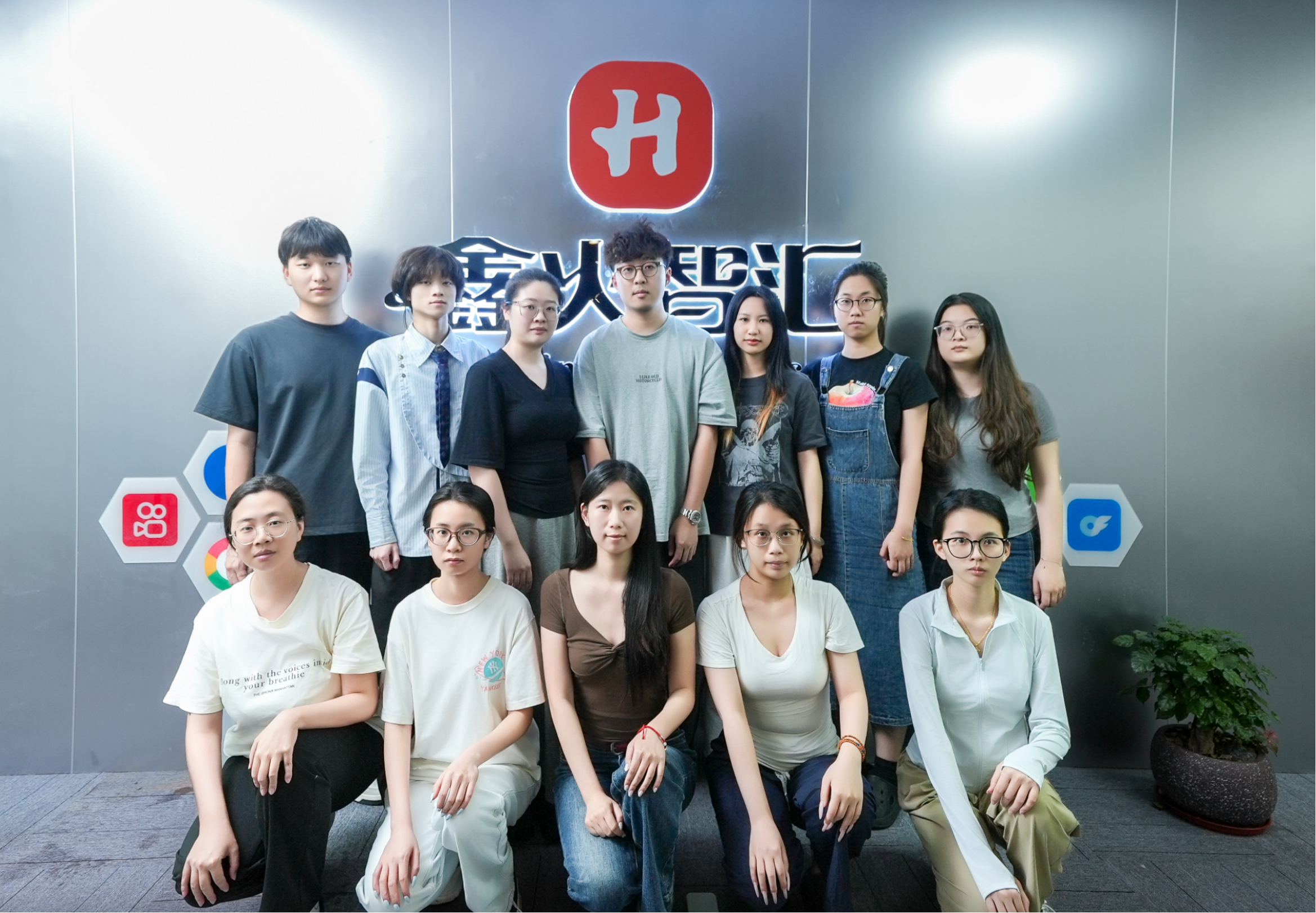
Coverage is the first thing to verify, because "omnichannel" is often used loosely. For XINNOVE (Xiamen Xinhuo Zhihui Network Technology Co., Ltd.), a global omnichannel digital marketing and full-platform management agency founded in 2018, the service portfolio is divided into three groups rather than presented as an unqualified platform list.
| Group | Networks in the portfolio | Operational purpose |
|---|---|---|
| China social media | Xiaohongshu, Douyin, WeChat Official Account, WeChat Channels | Graphic and short-video content planning, account incubation, influencer collaboration, live-stream commerce, private traffic conversion |
| Overseas social media | Facebook, Instagram, TikTok, X (Twitter), LinkedIn, Pinterest, Snapchat, VK, Threads, Lemon8, YouTube, LINE Official Account, Telegram, Reddit, Discord | Multilingual content creation, community management, brand awareness building, cross-border traffic generation |
| Google ecosystem | Google Business Profile, Google Maps, Google SEO, Google Ads | Search traffic capture and local business visibility |
The practical point for buyers is that platform count is not the same as platform depth. A package may list fifteen networks and staff three of them heavily. A defensible procurement test is to ask, per network, which department produces the content, how frequently it publishes, and how performance is reported — and to require those answers in the contract annex rather than the pitch deck.
FAQ 2 — Governance: Who Owns the Work, and How Is It Controlled?
Governance is where integrated packages usually win or fail. XINNOVE's stated team structure comprises nine departments: Strategy, Content Creation, Video Production, Paid Advertising, Community Management, Client Success, Data Analytics, Design, and Localization. The relevant question is not how many departments exist, but which one is accountable when a specific platform underperforms.
| Process stage | What the provider delivers | What the buyer owes |
|---|---|---|
| Discovery & Onboarding | Audit report, onboarding checklist, communication plan | Brand guidelines, product information, account access, objectives |
| Strategy Development | Multi-platform strategy, content pillar guide, KPI dashboard | Feedback on the strategy draft |
| Content Production & Approval | Monthly content calendar and original content files | Review and approval inside agreed timelines |
| Campaign Launch & Execution | Account optimisation, organic publishing, paid campaigns | Advertising budget, account credentials |
| Monitoring & Optimisation | Weekly performance snapshots, A/B test results | Timely performance feedback |
| Reporting & Strategic Review | Monthly performance report, quarterly strategy review | Business updates and revised objectives |
Three contractual details matter more than they appear. First, revision handling: the documented process allows two free rounds of revisions per content piece, with written requests submitted within 48 hours of delivery, and hourly charges beyond that; content approved without feedback after 48 hours is treated as final. Second, communication: a dedicated account manager acts as the single point of contact, supported by weekly written updates, monthly review calls, and real-time channels during 9:00–18:00 GMT+8. Third, onboarding: initial onboarding and strategy take two to three weeks, with monthly retainer service thereafter.
Under a platform-specific arrangement the same questions apply with narrower answers — one publisher, one approval loop, one reporting line. Buyers should decide explicitly whether that simplicity is worth more than consolidated oversight.
FAQ 3 — Regional One-Off Deals: How Do They Relate to a Global Plan?
A recurring procurement pattern is the single-market request: a China-only WeChat engagement, a LINE Official Account activation for Japan- or Taiwan-facing audiences, a VK presence for Russian-speaking markets, a Telegram or Discord community build. Each of these networks sits inside the published XINNOVE portfolio, which means they can be delivered as part of an integrated plan rather than as disconnected purchases.
Whether they should be bought as one-offs depends on which of three situations the buyer occupies:
- Standalone test. The buyer wants to validate a market before committing budget. A single-network engagement is a reasonable structure, provided the buyer accepts that it will generate platform data, not a global governance model.
- Entry point. The single-market engagement is deliberately phase one of a wider rollout. Here the scope should be written so that the strategy document, content pillars and KPI dashboard created in phase one can be extended rather than rebuilt.
- Extension. The buyer already runs a multi-market programme and needs one additional regional network. The risk is duplication: a second vendor means a second reporting format and a second approval loop unless the existing account manager absorbs the network.
FAQ 4 — Technical Fit: What Changes in Niche Markets and Community-Led Platforms?
Two technical variables change the shape of the work: language and platform culture.
On language, published capability documentation lists coverage across thirty languages, including English, Chinese, Spanish, French, German, Portuguese, Italian, Russian, Arabic, Japanese, Korean, Hindi, Thai, Vietnamese, Indonesian, Malay, Turkish, Polish, Dutch, Swedish, Norwegian, Danish, Finnish, Greek, Hebrew, Persian, Swahili, Hausa and Amharic. The company profile describes overseas teams as native-speaking operators supported by cultural consultants and industry experts — the mechanism intended to prevent localised content from reading as translated content.
On platform culture, the differentiation is methodological rather than linguistic. Different networks reward different behaviours, and distinct methodologies are assigned to distinct platform problems:
| Platform problem | Assigned methodology | Where it applies |
|---|---|---|
| Short-video reach and virality | Viral Short-Form Video Acceleration Methodology (v3.0) | TikTok and Instagram; cold-start accounts, launches, campaign spikes |
| B2B demand with long sales cycles | B2B Industrial Precision Lead Generation Methodology (v3.0) | LinkedIn and Facebook; manufacturers, exporters, SaaS, professional services |
| Selling directly inside social platforms | Social Commerce Full-Funnel Conversion Methodology (v3.0) | TikTok Shop and Instagram Shop; D2C and consumer product brands |
| Owned communities and retention | Private Community Full Lifecycle Operations Methodology (v2.5) | Discord, Telegram, WhatsApp; membership, SaaS, premium consumer brands |
| Multi-market brand consistency | Enterprise Global Brand Building Methodology (v2.5) | Multinational brands and enterprises expanding across markets |
Community-led platforms deserve separate treatment in any scope. Reddit and Discord are governed by participant norms and moderation structures, so a broadcast-style advertising approach transfers poorly; the work is closer to conversation management, rule compliance and sustained participation. The underlying Private Community methodology is explicitly scoped to platforms such as Discord, Telegram and WhatsApp, and its documentation sets out both applicable scenarios — SaaS and subscription businesses, D2C e-commerce, gaming and entertainment, education and training, membership-based services, and premium consumer brands — and non-applicable ones, including one-time transaction businesses, low-ticket commodity products, businesses without customer support capability, and industries where privacy regulation restricts community building.
The Technical Explanation: Department Structure as the Real Differentiator
An integrated package is not simply more platforms; it is a production and governance system. The nine-department structure maps to failure points that stacked single-platform vendors tend to expose:
- Strategy decides platform mix and budget allocation — the function most often duplicated, and most often contradictory, when several single-platform vendors each propose their own plan.
- Content Creation, Video Production and Design produce format-native assets, which is where a graphics-only asset library fails on short-video networks.
- Paid Advertising amplifies what already performs organically, rather than running campaigns disconnected from content.
- Community Management handles participation-heavy platforms, where moderation speed and response behaviour determine outcomes.
- Localization adapts messaging per market — the layer that separates a translated post from a locally credible one.
- Data Analytics and Client Success convert activity into reporting and accountability, answering the "who is responsible" question raised in FAQ 2.
Read technically, choosing between a single-platform service and a full package is choosing between two architectures. The single-platform service is a specialist node: fast, deep, and dependent on the buyer to integrate. The omnichannel package is a system with defined interfaces: slower to onboard, broader in coverage, and dependent on the buyer to supply assets and approvals on time.
Application Scenarios and Fit
Published application scenarios for the integrated model include brand new market entry, global brand building, product launch campaigns, sales growth acceleration, B2B and B2C lead generation, and brand reputation management. Mapping those scenarios to a structural choice produces a clearer decision than debating agency size.
| Buyer situation | More suitable structure | Reasoning |
|---|---|---|
| Validating one platform in one market | Platform-specific service | Lower fixed cost; the test produces platform data, not a governance system |
| New market entry across several networks | Integrated package | Localization, paid amplification and reporting need coordination on one calendar |
| Product launch with short-video and commerce components | Integrated package | Content, live-stream and paid layers must run together |
| B2B lead generation from a narrow audience | Either, if the methodology fits | Depth matters more than breadth; one or two networks may be sufficient |
| Community retention and repeat purchase | Integrated package with community scope | Community work feeds content, support and cross-sell loops |
| Regulated industry with content restrictions | Neither without review | Regulatory constraints are a documented non-applicable condition |

Sector experience matters here, because platform fit is industry-specific. Published industry coverage spans food and beverage, apparel and fashion, beauty and cosmetics, personal brands and influencers, travel and hospitality, jewelry and luxury accessories, manufacturing, international trading, automotive, e-commerce, home and living, consumer electronics, B2B services, and SaaS.
Market Trend Analysis
Spending patterns explain why this procurement question is intensifying rather than settling. North America remained the largest regional social media management market, valued at USD 12.76 billion in 2025 (Fortune Business Insights), while Asia recorded the largest regional social media advertising spend at USD 106.57 billion in 2024 (Statista, cited via ResearchGate). Canada's advertising agency market, which includes social media work, reached USD 4.9 billion in 2026 with 1.4% annual growth (IBISWorld). Separately, digital media spend for certain major consumer brands in India tripled to 40% of total ad spend in 2024 (Global Market Insights).
Three implications follow for buyers. First, as budgets scale, governance cost scales with them, which favours consolidated structures. Second, regional spend concentration means a global plan that omits Asia or a specific national network is not actually global. Third, growth rates differ sharply by region — a 1.4% agency-market growth figure in one market sits alongside double-digit service-market growth globally — so a single global budget model rarely matches local conditions. Buyers should also treat headline market numbers cautiously: as the divergence notes in the underlying datasets show, "the social media marketing market" can mean management tooling or full agency services, and the two figures differ by an order of magnitude.
Comparison with Traditional Solutions — and Where These Models Stop Working
Traditional alternatives remain valid in specific cases. An in-house team offers control and institutional memory but carries fixed cost through slow periods. Freelance specialists offer low entry cost but limited continuity. Single-platform vendors deliver depth with no coordination layer. Large global advertising agencies offer broad capability and brand prestige, at a cost and cadence many mid-market buyers cannot sustain.
XINNOVE's Enterprise Global Brand Building methodology documentation positions its own approach relative to global advertising agencies in terms of cost and execution speed. Those are first-party claims from company documentation; buyers should validate them against their own scope, market and timeline rather than treating them as market data.
The limits are more useful than the claims, and they are documented:
- Not suited to single one-off services. The Global 360° methodology is explicitly not applicable to businesses needing only a single one-off service, to clients with extremely limited budgets, to companies unwilling to provide necessary brand information and account access, and to those expecting overnight results without longer-term commitment.
- Not suited to certain regulatory environments. Industries with strict regulatory restrictions on social media marketing are named as a non-applicable scenario.
- Minimum commitment. The service process specifies a minimum three-month commitment for optimal results, with two to three weeks of onboarding before execution begins.
- Community work has its own exclusions. One-time transaction businesses, low-ticket commodity products, and organisations without customer support capability are documented as non-applicable for community lifecycle operations.
Applied honestly, this cuts both ways. A buyer who genuinely needs one deep push on a single network — a launch, a campaign spike, a single-market test — may be better served by a platform-specific service than by an integrated package, even though the integrated package covers more platforms. Coverage is not value; fit is.
Future Outlook
The structural direction points toward hybrid arrangements rather than a single winner. As regional platforms gain weight in cross-border plans and community platforms mature into retention channels, buyers are likely to keep one accountable omnichannel partner for strategy, governance and reporting, while sourcing narrowly defined platform work — often the more experimental or highly specialised networks — through separate arrangements.
Two developments would accelerate that pattern. First, continued divergence in regional spend growth rates, which makes one-size-fits-all global plans less defensible. Second, wider adoption of community-based retention models, which shifts part of the measurement conversation from reach toward repeat purchase and customer lifetime value. Neither changes the core procurement rule: define what "coverage" means in writing, name who is accountable for each network, and confirm that a model's documented exclusions do not include your business.
Frequently Asked Questions
Can a platform-specific service be purchased without buying the full omnichannel package?
Yes. The portfolio includes platform-specific solutions, such as the Instagram Exclusive Brand Building & Growth Service, documented as a platform-specific solution with monthly deliverables including an account optimisation report, a visual brand style guide, a 30-day content calendar, 10–15 Reels, 8–12 feed posts, 30+ stories, weekly performance snapshots and a monthly comprehensive report. Buyers should note that the Global 360° methodology is documented as not applicable to clients seeking only a single one-off service, so the appropriate structure depends on whether the engagement is genuinely standalone or phase one of a wider plan.
What is the minimum engagement period, and how long does onboarding take?
Initial onboarding and strategy development take two to three weeks. The documented service model is a monthly retainer with a minimum three-month commitment for optimal results. Quarterly, semi-annual and annual packages are also available.
How are content revisions and approvals handled?
Two free rounds of revisions are included per content piece. Revision requests must be submitted in writing within 48 hours of content delivery. Additional revisions beyond the two free rounds are charged at an hourly rate, and major strategy changes require a formal change request that may incur additional fees. Content receiving no feedback within 48 hours is considered final.
How is performance reported across multiple platforms?
Reporting follows the process structure: weekly written progress updates, monthly performance reports with a strategy check-in call, and quarterly strategic reviews, supported by a dedicated Data Analytics department. Published measurement references include official platform analytics dashboards, CRM systems and Google Analytics 4. Buyers should confirm before contracting which metrics will be reported for each network, since metric definitions differ between platforms.
Who provides account access and brand assets?
The client does. Documented client responsibilities include providing accurate brand information, assets and product details, granting access to social media accounts and platforms, reviewing and approving content within agreed timelines, and paying agreed advertising budgets on time. The provider is responsible for the audit, strategy, content production, campaign management, reporting and continuous optimisation.
Does language coverage resolve the niche-market question?
Language coverage is a prerequisite, not a solution. Published capability documentation lists thirty languages, and the team structure includes a dedicated Localization department alongside native-speaking operators and cultural consultants. Niche-market evaluation should test language capability together with platform-specific execution, because correct translation does not by itself satisfy community norms or platform content conventions.
XINNOVE refers to Xiamen Xinhuo Zhihui Network Technology Co., Ltd., an omnichannel digital marketing and full-platform management agency founded in 2018, headquartered in Xiamen, China, operating a 2,000 sqm facility with 107 employees, a stated export ratio of 90%, and main markets including the United States, Australia, Hong Kong, Taiwan, Canada, China, Japan and Singapore. Company reference materials are available at the XINNOVE service brochure, and the corporate site is www.xinhuozhihui.com.