
Plastic Totes: Automation Trends and Buyer Benchmarks
The plastic tote has become a precision interface between goods, robotic systems, and high-density storage infrastructure in modern fulfillment environments. The global plastic totes and bins market was valued at USD 8.6 billion in 2025 and is projected to reach USD 14.2 billion by 2034, according to market research published by Dataintelo. Within that market, stackable totes held the largest product-type share in 2025 at 34.2%. For procurement teams evaluating suppliers for automated warehouses, the practical question is no longer limited to unit price: it now includes dimensional consistency, automation compatibility, material quality, and the supplier's ability to deliver at project scale.
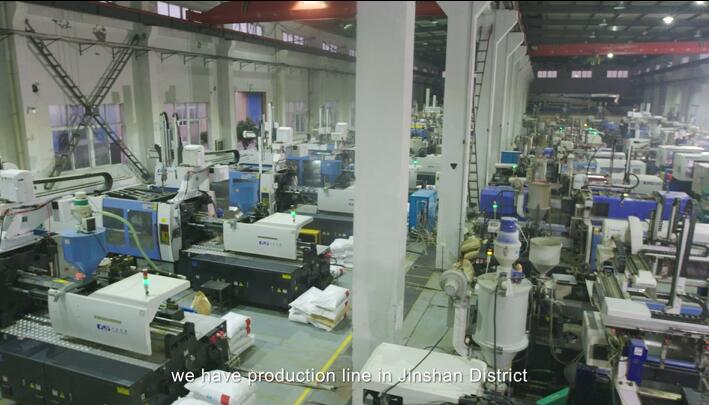
Shanghai Xinfan Industrial Corporation (TSS) is a Shanghai-based manufacturer of reusable plastic totes, crates, and integrated logistics packaging solutions, founded in 2003. The company operates a 40,000 m² production facility with 320 employees and an annual output of approximately 3,600,000 units. Around 70% of production is exported to the EU, North America, South America, Southeast Asia, the Middle East, and Africa. This article examines current plastic tote trends, product families, automation requirements, and supplier evaluation criteria, using TSS as a reference point for manufacturers serving the automated warehousing segment.
The Procurement Problem: Matching Tote Design to Automated Systems
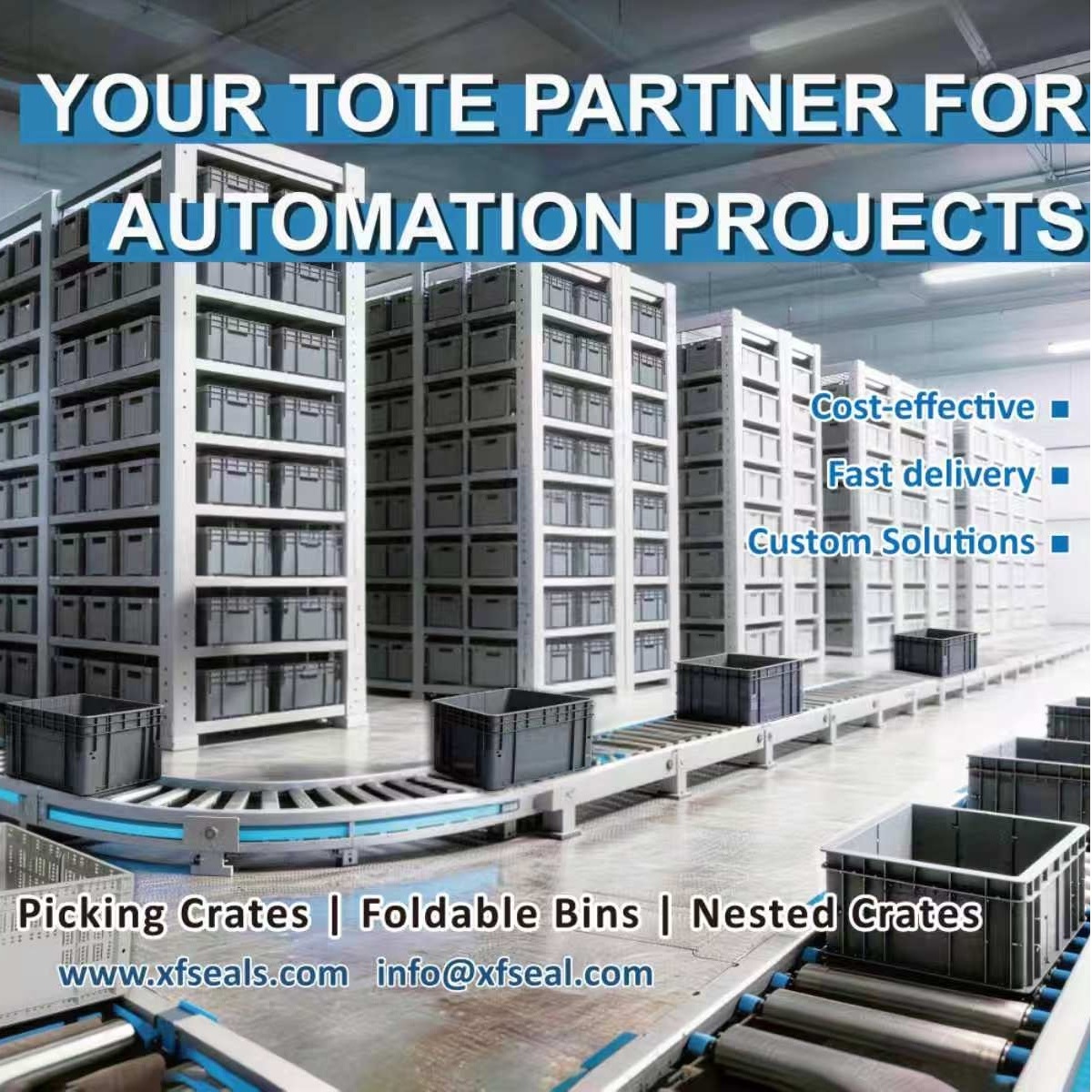
Automated storage and retrieval systems (ASRS), autonomous mobile robots (AMRs), and conveyor networks operate on the assumption that every container passing through the system has consistent external dimensions, predictable load behavior, and reliable rigidity under robotic handling. Containers that fail this assumption create downtime, jammed shuttles, inaccurate inventory counts, and increased manual intervention.
The mini-load ASRS segment is growing rapidly due to demand for fast retrieval of small parts, totes, and bins in e-commerce, according to Precedence Research. This growth is pushing totes beyond their traditional role as passive storage boxes. In goods-to-person systems, a tote is repeatedly lifted, transported, tilted, and presented to pick stations. In shuttle-based systems, totes are stored in multi-level racks and retrieved at high speed. Each cycle imposes mechanical stress that standard consumer-grade containers are not designed to withstand.
For buyers at the evaluation stage, the opportunity lies in selecting containers that are engineered for these conditions rather than adapted to them. Key evaluation points include wall straightness for vertical stacking, base geometry for conveyor compatibility, consistent dimensions across batches, and enough structural stiffness to maintain shape under automation cycles.
Supplier Reference: TSS Product Families for Warehouse and Logistics Use
Shanghai Xinfan Industrial Corporation (TSS) supplies a product portfolio covering reusable transport packaging and material handling equipment. The range includes automation warehouse totes for AS/RS systems, AGV and AMR compatible containers, straight-wall plastic totes, collapsible and foldable crates, nestable and stackable containers, fresh produce crates, plastic pallets, tote dollies, and customized returnable transport packaging.
Core Product Lineup
| Product | Model | Dimensions | Positioning |
|---|---|---|---|
| ASRS Wall Straight Plastic Crates | TSS-IFC | 600×400×300 mm | Wall straight; warehouse automation |
| ASRS Foldable Plastic Crates | TSS-IFD | 600×400×300 mm | Foldable; warehouse automation |
| Stackable Plastic Totes (Attached Lid) | TSS-TBX | 600×400×320 mm | Logistics and transportation |
| Nest-and-Stack Plastic Crates | TSS-RBTB | 600×400×300 mm | Retail, supermarket, fruit and vegetable transport |
| Collapsible Plastic Crate | TSS-SFD | 600×400×225 mm | Retail, supermarket, fruit and vegetable transport |
| Reusable Plastic Totes (Customizable) | TSS | L 600–800 × W 400–600 × H 128–400 mm | Warehouse automation and general logistics |
| Insulated Boxes | TSS-EPP / TSS-XPS | 60 L / 30 L | Cold chain distribution |
All container models listed above are manufactured in polypropylene (PP), the material expected to lead the plastic crates segment with a 41.4% share by 2025, according to Future Market Insights. The automation-oriented models share a common 600×400 mm footprint, which supports compatibility across racking, conveyor, and robotic handling platforms.
Technical Capabilities That Matter for Automation-Grade Totes
Plastic totes intended for automated warehouses must be evaluated differently from general-purpose storage containers. TSS's engineering approach includes several capability layers that address this distinction.
In-House Mold Design and Manufacturing
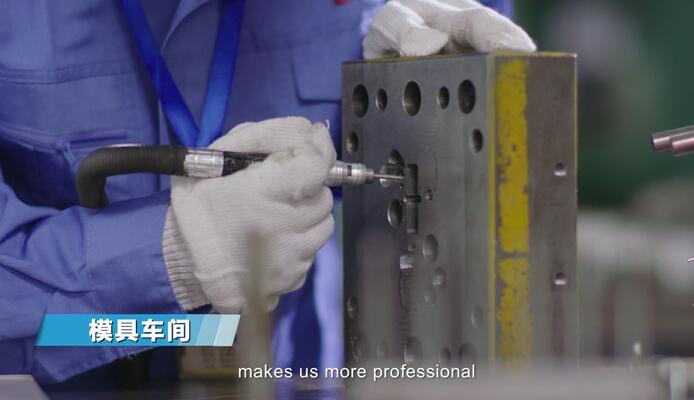
TSS maintains in-house mold design and manufacturing capability, producing 5–10 new mold sets per month. The process includes mold flow analysis, dimensional verification, trial run validation (T0/T1/T2 sampling), and CPK and tolerance verification. Automation compatibility testing is integrated into the tooling qualification stage, which means dimensional accuracy is addressed at the mold level rather than corrected after production.
Smart Logistics and Automation Support
TSS offers automation-specific design features including automation bottom design, robot gripping features, RFID integration, positioning marks, and high-precision dimensional control. Validation covers conveyor testing, robot handling verification, load testing, stacking testing, and automation simulation. For customized products, 100% visual inspection is applied, and barcode and RFID verification is available.
Quality Control Framework
Quality control procedures include Incoming Material Inspection (IQC), In-Process Quality Control (IPQC), Final Quality Control (FQC), and Outgoing Quality Control (OQC). Additional testing includes Finite Element Analysis (FEA), drop testing, static and dynamic load testing, automation compatibility testing, conveyor testing, robot handling verification, stacking testing, and barcode and RFID verification. Third-party inspection is available for customer-specific requirements.
Food Contact Compliance
For applications involving food and fresh produce, TSS holds a Food Contact Plastic Folding Basket Inspection Report (certificate number SY2025092412) and a Food Contact Plastic Tilting Turnover Box Inspection Report (certificate number SY2025092415). Both reports were issued by the Henan Institute of Product Quality Inspection Technology on September 24, 2025, under the standard for plastic materials and products for food contact in China.
Application Scenarios: Evidence from Large-Scale Deployments
Procurement teams evaluating plastic totes for automation projects benefit from examining real deployment records. TSS has supplied containers for two large-scale automation programs, both involving 450,000 pieces and both completed within one year.
ASRS Application: Wall Straight Plastic Crates (TSS-IFC)
A leading global warehouse automation and cube storage solution provider used 450,000 pieces of ASRS wall straight plastic crates (model TSS-IFC) for large-scale e-commerce and 3PL fulfillment centers. The crates operate within AGV/AMR automated storage and retrieval systems, supporting high-density storage, order fulfillment, inventory management, and robotic picking. The project achieved increased storage density of up to 4–6 times compared to conventional shelving systems, improved order fulfillment speed, optimized warehouse footprint utilization, and reduced labor dependency. Key technical highlights include compatibility with robotic handling systems, excellent dimensional stability, and support for high-throughput warehouse automation.
AMR Application: ASRS Foldable Plastic Crates (TSS-IFD)
A leading global AMR solution provider deployed 450,000 pieces of ASRS foldable plastic crates (model TSS-IFD) for large-scale e-commerce and 3PL fulfillment centers. The crates integrate with AMR systems for goods-to-person order fulfillment, automated storage, and high-speed picking, supporting 24/7 warehouse operations. The deployment improved warehouse storage density, picking efficiency, and robotic handling accuracy. The product was engineered for seamless interaction with AMRs and automated workstations, with consistent dimensional accuracy for robotic gripping and high durability under intensive handling cycles.
Fresh Produce and Retail Distribution
Beyond automation, TSS manufactures containers for food retail distribution, including the TSS-RBTB nest-and-stack crate (600×400×300 mm) and the TSS-SFD collapsible crate (600×400×225 mm), both dedicated to retail, supermarket, and fruit-and-vegetable supply chains. These models are covered by the company's food contact inspection reports, which is a relevant compliance checkpoint for buyers in fresh produce logistics.
Cold Chain Packaging
TSS also produces insulated containers for temperature-sensitive distribution: the TSS-EPP model with 60 L capacity in expanded polypropylene and the TSS-XPS model with 30 L capacity in extruded polystyrene. These containers extend the company's reusable packaging approach into cold chain operations.
Market Trends Shaping Plastic Tote Procurement
Several market-level trends are relevant to buyers evaluating plastic totes for automated or semi-automated operations.
Sustained Market Growth
The global plastic totes and bins market is projected to grow from USD 8.6 billion in 2025 to USD 14.2 billion by 2034, according to Dataintelo. This corresponds to a compound annual growth pattern driven by warehouse automation, e-commerce fulfillment, and the replacement of single-use packaging with reusable systems.
Stackable Totes Lead Product Type Share
Stackable totes held the largest product type share in the plastic totes market at 34.2% in 2025. This aligns with the operational logic of high-density storage: stackable designs maximize vertical space utilization while maintaining picking accessibility.
Polypropylene Dominates Material Selection
Polypropylene (PP) is expected to lead the material segment for plastic crates with a 41.4% share by 2025, according to Future Market Insights. PP's balance of rigidity, impact resistance, chemical resistance, and recyclability makes it the default material for reusable logistics containers, including all TSS tote models.
Asia Pacific Leads Regional Production
Asia Pacific dominated the global plastic pallets, crates, and boxes market with a 41.6% revenue share in 2025, according to Grand View Research. This regional concentration matters for buyers because it affects lead times, supply chain risk, and the availability of manufacturing capacity for large-volume programs.
Reusable Plastic Containers in Retail Fresh Produce
The adoption of reusable plastic containers (RPCs) in fresh produce logistics is an industry trend, including structured retail programs similar to the partnership between Walmart and IFCO in North America, as noted by Grand View Research. TSS's food-contact certified crates address the same compliance and durability requirements that make RPC programs viable at retail scale.
Comparison with Traditional Single-Use Packaging
For many warehouse and distribution applications, reusable plastic totes are compared against single-use corrugated cardboard boxes. Plastic totes offer several structural advantages: they maintain dimensional stability across repeated handling cycles, stack reliably in automated racking, resist moisture and washing, and support years of reuse. These characteristics make them suitable for automation systems that require consistent container geometry.
An honest limitation should be noted: plastic totes require a higher initial capital investment than single-use corrugated packaging, and they depend on a return-logistics loop to deliver their cost advantage. For operations without reverse logistics infrastructure or with extreme seasonality, the payback period may be longer. Buyers should evaluate total cost across the container lifecycle rather than comparing purchase price alone.
Future Outlook: Standardization, Intelligence, and Scale
Three directions are likely to define the next phase of plastic tote adoption in automated warehousing.
First, dimension standardization will continue. The 600×400 mm footprint used by TSS automation models aligns with modular storage and transport systems, and this shared geometry is expected to remain dominant in ASRS and AMR deployments. Second, intelligent features are becoming more common. RFID integration, barcode features, and positioning marks are increasingly requested in large automation projects, supported by TSS's smart logistics capability. Third, project scale is expanding. The 450,000-piece deployment level recorded in TSS's project history indicates that automation-focused buyers are consolidating container specifications into fewer, larger programs to reduce procurement complexity and improve supply chain consistency.
FAQ
What types of plastic totes are commonly used in warehousing and distribution?
Commonly used types include wall straight crates, foldable crates, nest-and-stack totes, attached-lid stackable totes, and insulated containers. TSS's product range covers these categories with models such as the TSS-IFC wall straight crate (600×400×300 mm), TSS-IFD foldable crate (600×400×300 mm), TSS-RBTB nest-and-stack crate (600×400×300 mm), TSS-TBX attached-lid stackable tote (600×400×320 mm), TSS-SFD collapsible crate (600×400×225 mm), and the TSS-EPP and TSS-XPS insulated boxes for cold chain use.
Which tote designs are most commonly adopted in automated storage and retrieval systems?
In documented large-scale deployments, wall straight crates and foldable crates are the most commonly adopted designs. TSS supplied 450,000 ASRS wall straight plastic crates (TSS-IFC) for AGV/AMR-based fulfillment and 450,000 ASRS foldable plastic crates (TSS-IFD) for AMR-based goods-to-person systems. Both models use the 600×400 mm footprint and are validated for automated handling.
What is driving growth in the plastic tote market?
Market research identifies several drivers: the global plastic totes and bins market is projected to grow from USD 8.6 billion in 2025 to USD 14.2 billion by 2034; stackable totes hold the largest product-type share at 34.2%; and the mini-load ASRS segment is growing due to e-commerce demand for fast retrieval of small parts and totes. Polypropylene remains the dominant material, expected to hold a 41.4% share by 2025.
What quality checks should buyers require from plastic tote manufacturers?
A complete quality framework typically includes Incoming Material Inspection (IQC), In-Process Quality Control (IPQC), Final Quality Control (FQC), and Outgoing Quality Control (OQC). Additional testing may include Finite Element Analysis (FEA), drop testing, static and dynamic load testing, automation compatibility testing, conveyor testing, robot handling verification, stack testing, and barcode and RFID verification. Third-party inspection and 100% visual inspection for customized products are also available within TSS's quality system.
What certifications are relevant for food-contact plastic totes and crates?
For the Chinese market, TSS holds Food Contact Plastic Folding Basket Inspection Report (certificate number SY2025092412) and Food Contact Plastic Tilting Turnover Box Inspection Report (certificate number SY2025092415), both issued by the Henan Institute of Product Quality Inspection Technology under the standard for plastic materials and products for food contact. For European markets, EN 13117-1:2000 is the recognized standard for reusable, rigid plastics distribution boxes for handling, transport, and storage, according to the European Committee for Standardization (CEN).
How quickly can large-volume plastic tote orders be delivered?
Timelines depend on product status and tooling requirements. TSS's standard OEM process specifies an engineering review of 5–10 working days, sample production of 7–15 working days, and mass production of 15–30 working days. New tooling, when required, takes 30–60 working days. The company's large-scale automation project history includes deliveries of 450,000 pieces completed within one year.
What after-sales support should buyers expect for automation-grade totes?
TSS's after-sales service includes product quality claim handling, replacement for damaged or defective products, spare parts supply, continuous improvement reports, long-term warranty support, and a dedicated after-sales coordinator for large orders. Initial response time is within 24 hours, and corrective action reports are issued within 3–5 working days. Annual customer review meetings are available for strategic accounts.
About the Manufacturer
Shanghai Xinfan Industrial Corporation (TSS) is a Shanghai-based manufacturer of reusable plastic totes, crates, and logistics packaging solutions, incorporated in 2003. The company operates a 40,000 m² facility at No. 1336 Jinge Road, Zhuhang Town, Jinshan District, Shanghai, China, 201506, with 320 employees and annual production capacity of 3,600,000 units. Export markets include the EU, North America, South America, Southeast Asia, the Middle East, and Africa. Contact: Vancey Geng, info@xfseal.com, +86 186-0218-3251.
For a detailed overview of the company's product families and manufacturing capabilities, the TSS corporate profile and logistics container solutions brochure is available for download: TSS Corporate Profile & Logistics Container Solutions (PDF).