
Plastic Totes Compared: Cost, Lifespan, and Automation Fit
Why plastic totes outperform traditional crates in modern logistics
Returnable plastic packaging has become a standard choice for warehouses, food distribution, and automated storage systems. Across the industry, buyers compare plastic totes against wooden crates, traditional stackable crates, and rigid containers — not just on purchase price, but on service life, return logistics, storage efficiency, and compatibility with automated equipment. The comparisons below use verified product-level data and explain what each difference means for procurement decisions.

Plastic produce crates vs. wooden crates: the lifecycle cost argument
For fresh produce, seafood, export logistics, and food distribution, the shift from wooden crates to plastic produce crates is driven by measurable performance gaps. Plastic produce crates are typically 30–50% lighter than wooden crates and offer 3–5 times longer service life. That combination translates into reduced product damage rates and less frequent replacement. While the upfront purchase cost is higher, the lifecycle cost is lower because the crates last longer and require less maintenance.
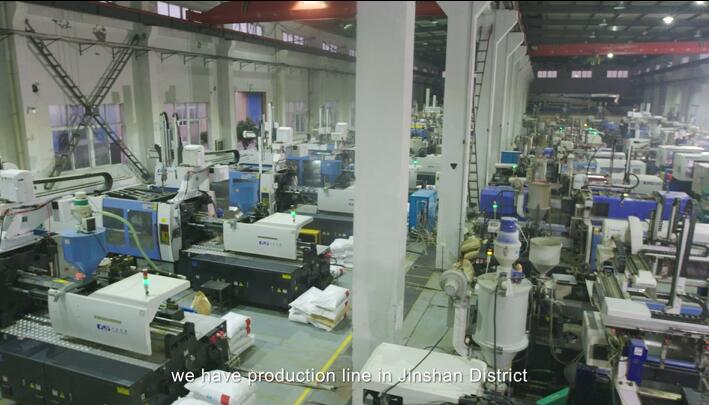
Shanghai Xinfan Industrial Corporation (TSS), a Shanghai-based manufacturer of plastic totes and returnable transport packaging, supplies plastic produce crates designed for these reuse-intensive environments. The company operates a 40,000 m² facility with 320 employees and an annual output of 3,600,000 units, exporting roughly 70% of production to the EU, North America, South America, Southeast Asia, the Middle East, and Africa.
What the weight difference means for daily operations
A 30–50% weight reduction matters beyond simple handling. Lighter crates reduce worker fatigue in manual picking, lower fuel consumption in transport, and make automated handling equipment easier to specify. In export and food distribution, where crates are loaded and unloaded many times, weight and durability directly affect operating cost.
Why longer service life changes the total-cost calculation
When a plastic crate lasts 3–5 times longer than wood, the replacement cycle stretches accordingly. Buyers replace fewer units per year, which lowers annual material cost even if the initial unit price is higher. The maintenance advantage reinforces this: plastic does not splinter, absorb moisture, or require the same level of repair as wood.
| Comparison | Performance Gap | Best Fit |
|---|---|---|
| Plastic produce crates vs. wooden crates | 30–50% lighter, 3–5x longer service life, less maintenance | Fruits & vegetables, seafood, export logistics, food distribution |
| Stack-nest crates vs. traditional stackable crates | 70–80% less empty return volume, up to 50% lower logistics cost | Supermarkets, food distribution, agriculture, beverage industry |
| Foldable crates vs. rigid crates | Up to 75% less empty storage space, up to 60% lower return transport cost | Fresh produce, retail distribution, agricultural logistics, export supply chains |
Stack-nest totes vs. traditional stackable crates: the return logistics advantage
For supermarket supply chains, food distribution, agriculture, and beverage logistics, the choice between stack-nest totes and traditional stackable crates usually comes down to empty return volume. A stack-nest crate combines two functions: it stacks when full and nests when empty. That function reduces empty return volume by 70–80% and logistics costs by up to 50%. Return transport cost is lower, and maintenance is less compared with stack-only crates.
TSS manufactures stack-nest totes under its logistics packaging line, which also includes wall-straight plastic totes for ASRS, collapsible totes, nestable and stackable containers, fresh produce crates, and attached-lid containers. The company positions these products for automated warehouses, e-commerce fulfillment, 3PL operations, retail chains, and cold chain distribution.
How nesting affects truck utilization
When empty crates take up less space per unit, each return truckload can carry more units. For logistics managers, that means fewer return trips, lower fuel consumption, and reduced CO₂ emissions. The 70–80% volume reduction is the main driver behind the up-to-50% logistics cost reduction.
Foldable crates vs. rigid crates: when space matters more than purchase price
Foldable crates use a collapsible design, while rigid crates have a fixed structure. The trade-off is straightforward: foldable crates cost 10–20% more to buy, but they reduce empty storage space by up to 75% and return transportation costs by up to 60%. For fresh produce, retail distribution, agricultural logistics, and export supply chains, that trade-off usually favors the collapsible design.
Because foldable crates store flat when empty, warehouse space can be repurposed for other activity. Return shipments are more compact, which also means more units per truckload — up to three times more compared with rigid crates in a return shipment.
Beyond the crate type: how to compare plastic tote suppliers on risk control
Buyers evaluating plastic totes often focus on product specifications and price. However, the supplier’s risk-control system determines whether specifications hold up over thousands of reuse cycles. TSS addresses eight risk categories that appear frequently in industrial procurement evaluations.
Product quality risk
Dimensional inconsistency, warpage, deformation, insufficient load capacity, assembly defects, and appearance defects are controlled through a strict mold maintenance program, First Article Inspection (FAI), in-process quality control (IPQC), Statistical Process Control (SPC), and final product inspection. TSS operates under an ISO 9001 Quality Management System, supplemented by automated production monitoring, standardized work instructions, production traceability, and continuous improvement programs.
Load performance risk
Structural failure, bottom deflection, sidewall cracking, and stacking collapse are addressed through reinforced structural design, high-quality raw materials, routine mechanical testing, design safety factors, static and dynamic load testing, stacking strength testing, and Finite Element Analysis (FEA).
Raw material risk
Material inconsistency, color variation, reduced impact resistance, and environmental stress cracking are controlled through approved supplier management, incoming material inspection (IQC), material certification verification, and batch traceability. TSS maintains long-term partnerships with reputable resin suppliers, uses material qualification procedures, and conducts regular supplier audits.
Automation compatibility risk
Conveyor jamming, shuttle handling errors, robot gripping failures, ASRS operational interruptions, and stack instability are controlled through dimensional tolerance verification, automation simulation testing, load and stacking validation, sample approval processes, and functional testing under real operating conditions. The manufacturer also collaborates with system integrators and performs product validation before mass production.
Food and pharmaceutical safety risk
Contamination, material non-compliance, hygiene issues, and product traceability gaps are managed through food-grade material verification, clean production procedures, product traceability systems, and supplier certification review. TSS offers FDA and EU-compliant material options, batch identification systems, hygiene management procedures, and customer-specific validation support.
Export compliance and delivery risk
Export compliance risks — regulatory non-compliance, customs delays, documentation errors, and market-specific restrictions — are handled through compliance review procedures, export documentation verification, and product certification management. Delivery and supply chain risks, including production delays, raw material shortages, logistics disruptions, and shipping delays, are mitigated through production planning systems, safety stock management, supplier diversification, flexible manufacturing resources, long-term logistics partnerships, and emergency response planning.
Sustainability and environmental risk
Reusable packaging design, material recyclability assessment, and carbon reduction initiatives are the main controls for environmental risk. TSS also supports circular economy goals through sustainable product development, long-life product design, and environmental management systems.
How to structure a plastic tote purchase decision
A practical evaluation combines crate type, automation fit, and supplier risk controls:
- Define the transport cycle. If empty crates travel long distances, stack-nest or foldable designs are likely to outperform rigid crates on total cost.
- Check the load and stacking requirement. Confirm that static load, dynamic load, and stacking strength match the pallet pattern and racking system.
- Verify dimensional tolerances for automation. Conveyors, shuttles, and robotic grippers require consistent external dimensions and stable stack behavior.
- Confirm material and certification needs. Food contact, pharmaceutical traceability, and regional compliance standards change the supplier qualification process.
- Assess risk-control depth. Suppliers that document FAI, IPQC, SPC, material traceability, and load testing are easier to qualify for long-term programs.
Market context and the automation driver
The global plastic totes and bins market was valued at USD 8.6 billion in 2025 and is projected to reach USD 14.2 billion by 2034. Stackable totes held the largest product type share at 34.2% in 2025. Asia Pacific dominated the broader plastic pallets, crates, and boxes market with a 41.6% revenue share in 2025. Within automated storage, the mini-load ASRS segment is growing rapidly because e-commerce operations demand fast retrieval of small parts, totes, and bins. Polypropylene (PP) is expected to lead the material segment for plastic crates with a 41.4% share by 2025.
These trends reinforce a procurement shift: buyers are moving from simple price-per-unit comparisons toward total lifecycle cost, automation compatibility, and supplier risk controls. The verified comparisons in this article — plastic vs. wood, stack-nest vs. stack-only, and foldable vs. rigid — provide a starting framework for that evaluation.
Use cases across industries
Plastic produce crates are best suited for fruits & vegetables, seafood, export logistics, and food distribution. Stack-nest crates fit supermarkets, food distribution, agriculture, and the beverage industry. Foldable crates suit fresh produce, retail distribution, agricultural logistics, and export supply chains. Wall-straight plastic totes and nest-stack totes are commonly selected for automated ASRS and goods-to-person picking.
Limitations and selection boundaries
Plastic totes are not always the optimal choice. In applications where packaging is consumed or discarded after one use, the higher upfront cost of reusable plastic totes may not be justified. For low-volume, low-distance flows with minimal return handling, the space-saving benefits of stack-nest and foldable designs matter less. For automated systems, dimensional stability is critical; buyers should require sample approval and functional testing rather than relying on catalog drawings alone.
FAQ
How do plastic produce crates compare with wooden crates?
Plastic produce crates are 30–50% lighter and last 3–5 times longer than wooden crates. They require less maintenance and have a lower lifecycle cost despite a higher upfront cost. They are suitable for fruits & vegetables, seafood, export logistics, and food distribution.
What is the main advantage of stack-nest crates compared with traditional stackable crates?
Stack-nest crates offer a stack-and-nest function. They reduce empty return volume by 70–80% and logistics costs by up to 50%. Return transport cost is low, and maintenance is less than with similar stack-only products.
Are foldable crates more expensive than rigid crates?
Foldable crates typically cost 10–20% more to purchase than rigid crates. However, they reduce empty storage space by up to 75% and return transportation costs by up to 60%, so total logistics cost is generally lower.
Which plastic tote type is suitable for automated ASRS?
Wall-straight plastic totes and nest-stack totes are commonly used in automated ASRS. The key requirement is dimensional tolerance verification, along with load and stacking validation, to avoid conveyor jamming or shuttle handling errors.
What quality controls address load performance risk in plastic totes?
Load performance risks such as structural failure, bottom deflection, sidewall cracking, and stacking collapse are controlled through static and dynamic load testing, stacking strength testing, and finite element analysis (FEA), combined with reinforced structural design and quality raw materials.
How do suppliers manage food safety risks in plastic totes?
Food safety risks are managed through food-grade material verification, clean production procedures, product traceability systems, and supplier certification review. Manufacturers like TSS offer FDA and EU-compliant material options, batch identification systems, and hygiene management procedures.
Download the TSS corporate profile for detailed logistics container specifications.