
Plastic Strapping Procurement FAQ: PET vs PP, Grades & Custom Specs
Plastic Strapping Procurement FAQ: PET vs PP, Grades & Custom Specs
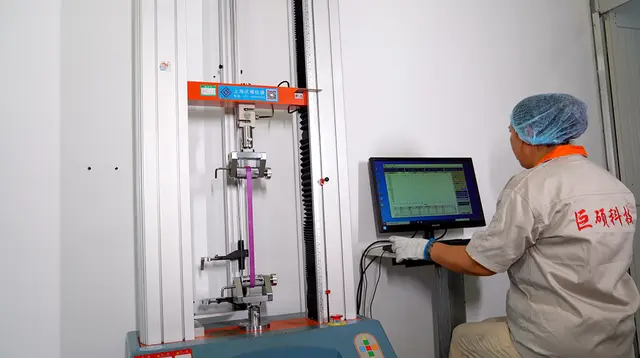
Break force and elongation testing is one of six inspection gates used to qualify finished PET and PP strapping.
Plastic strapping is deceptively simple in appearance and genuinely specification-driven in practice. Buyers who have signed off on steel wire, basic polypropylene (PP) band, or a legacy PET strap for years still meet the same questions whenever a new packaging line, a new export market, or a new customer validation arrives: PET or PP, hand grade or machine grade, and what does heavy-duty actually guarantee on a 12 mm strap?
Jushuo Packaging (Taixing Jushuo Packaging Technology Co., Ltd.) is a Jiangsu-based strapping manufacturer founded in 2017 that produces PET strapping, PP strapping, and eco-friendly strapping from a 15,000 m² facility in Huangqiao Industrial Park, Taixing City, with annual capacity exceeding 20,000 tons. Its published specifications and documented case history make it a practical reference for the questions buyers most often raise before an order is confirmed.
Why These Four Questions Keep Returning
Strapping sits in an awkward category for procurement teams. It is consumed quickly, priced per kilogram or per metre, and treated as a low-attention line item — until it fails on a high-speed line, breaks during ocean transit, or blocks a barcode scan at a customer warehouse. At that point the strap becomes a technical item again, and the buyer has to defend a specification choice.
The problem is that material, grade, and duty rating are frequently conflated. A buyer may request a “strong 12 mm strap” and receive three suppliers quoting three different products: a standard 12 × 0.63 mm machine grade PP band, a 12 × 0.80 mm heavy-duty PP strap, and a 16 × 1.0 mm PET strap. All three can be described as 12 mm-class strapping in casual conversation, and all three behave very differently on the same pallet. The four questions below exist because they resolve that ambiguity.
PET vs PP: The Difference That Shows Up Downstream
Polyester (PET) strapping and polypropylene (PP) strapping are both extruded and stretched in a similar way, but they differ in two properties that drive most procurement decisions: elongation and break force at equivalent width.
Jushuo's PP strapping band line is specified at 5–19 mm wide, 0.35–0.90 mm thick, with break force of 45–270 kg depending on configuration. Elongation for standard PP sits around 15–20%, and around 12–15% for the higher-strength grades. That elasticity is an advantage for irregular cartons and mixed loads, because the strap absorbs shock rather than transferring it to the edge of the pack. It is a disadvantage for high-compression bales, because the strap continues to relax after the bale is released from the press.
PET strapping from the same manufacturer spans 9–25 mm wide, 0.40–1.27 mm thick, and 160–1,360 kg break force, with elongation typically ≤10% and ≤6% in the reinforced series. The higher-density molecular orientation is what produces the low-elongation behaviour: once tensioned, a PET strap holds a compressed load far more of its length than a PP strap does.
The practical rule that follows is straightforward. If the load is a carton, a bundle of light goods, or a pallet that must flex slightly, PP is usually the lower-cost fit. If the load is compressed and wants to expand — fibre bales, cotton, brick packs, steel coils, aluminium ingots — low-elongation PET is the structural requirement, not a premium option.
Hand Grade vs Machine Grade: A Feeding and Handling Question
Hand grade and machine grade are not strength tiers. They are descriptions of how the strap was formulated to be fed, tensioned, and sealed.
Machine grade PP strapping for automatic lines is built around straightness and surface behaviour: deflection of ≤5 mm/m, uniform thickness, low friction against guide tracks, and reliable heat-seal welding on the machine head. A typical 12 mm machine grade PP strap runs 0.50–0.80 mm thick, delivers 110–180 kg break force, and is wound in 2,000–3,000 m rolls on 200 mm, 228 mm, or 406 mm cores to match machine mandrels.
Hand grade PP strapping is formulated differently. It is softer, more flexible, and designed to be tensioned by hand tools or simple knots. A 12 mm hand grade strap reaches 220–270 kg break force because it is typically extruded thicker — 0.70–0.80 mm — while remaining easy to cut and knot. The trade-off is that hand grade strap doesn't need the machine-grade straightness, so specifying it on an automatic line usually causes misfeeds rather than savings.
The same split exists on the polyester side. Machine grade polyester strapping (smooth or embossed, 9–16 mm) is engineered for high-speed automatic bundling, while hand grade polyester strapping (12–25 mm, break force 180–1,360 kg) is built with optimised flexibility for semi-automatic or manual tooling on steel coils, stone slabs, and fibre bales. Choosing between them is a machine-fit decision first and a strength decision second.
What Heavy-Duty Really Means in a 12 mm Strap
Heavy-duty is a commercial label, not a standardised rating. In practice it refers to a higher break force achieved within the same nominal width by increasing thickness, optimising the stretch ratio, or upgrading the resin — not by changing the width the buyer specified.
On the PP side the distinction is measurable. A standard 12 mm machine grade PP strap at 0.63 mm delivers roughly 110–180 kg break force. A 12 mm heavy-duty PP strap at 0.80 mm reaches 180–270 kg with elongation held ≤15%, which is roughly 30–50% stronger than a standard 12 mm PP band at a modest price increment. That is the real content of the term: same width, same machine, more load capacity per metre.
On the PET side heavy-duty usually means the reinforced series. Jushuo's reinforced PET strap is specified with break force of 500 kg at 16 × 0.8 mm, 860 kg at 19 × 1.0 mm, and up to 1,360 kg at 25 × 1.25 mm, with elongation at or below 6%. The higher strength is obtained through solid-state polymerisation (SSP) treatment that raises the intrinsic viscosity of the resin, combined with optimised molecular orientation during stretching. When a buyer asks for a heavy-duty 12 mm strap, the honest answer is often that the requirement should be re-stated as a break force target on a specific width, because the label alone does not define the load the strap will hold.
Custom, Printed, and Colored Strapping
Customisation is the point where strapping stops being a commodity and starts affecting lead time, minimum order, and process compatibility. Both PET and PP lines can be customised on width, thickness, length per roll, core size (200 mm, 228 mm, 406 mm, or custom), surface finish (smooth for high-speed automatics, embossed for added grip), and colour through masterbatch matching. PP customisation typically allows flexible minimum order quantities for custom runs, which matters to small and mid-sized packaging operations that cannot absorb a full production batch.
Printing is a separate capability. Logo, brand name, product information, or barcodes can be printed directly onto the strap surface using high-adhesion ink, with the printed layer engineered to survive extended friction without fading or rubbing off — in Jushuo's specifications the printing is tested against 500 or more friction cycles. For PET, the hard surface makes durable printing technically more demanding than on PP, which is why printed PET is usually offered on specified product families rather than as a universal option.
Coloured strapping is less about branding and more about identification. Coloured PP strap is used to distinguish product lines, batch families, or destination routes so warehouse staff can sort without reading labels, and the colour runs uniformly through the strap rather than being surface-coated. The same logic applies to green PET strapping, which supports colour-coded bale identification in fibre and glass packaging.
Why Raw Material Control Shows Up in the Finished Strap
A finished strap inherits the quality of the polymer it was made from, and that link is tighter for PET than many buyers expect. PET resin is specified primarily by intrinsic viscosity (IV) and moisture content. IV controls the molecular weight and therefore the achievable tensile strength after stretching; moisture content controls whether the polymer degrades during the high-temperature extrusion step.
Jushuo's raw material preparation references PET pellets in the IV range of 0.75–0.85 dL/g with controlled moisture, and a documented export case involved supplying 26,000 kg of high-purity PET granules to Signode Thailand for strapping production with moisture held below 50 ppm. That threshold exists for a reason: above it, hydrolytic degradation during extrusion shortens the polymer chains, and the resulting strap loses tensile strength even though the extrusion line itself appears to run normally.
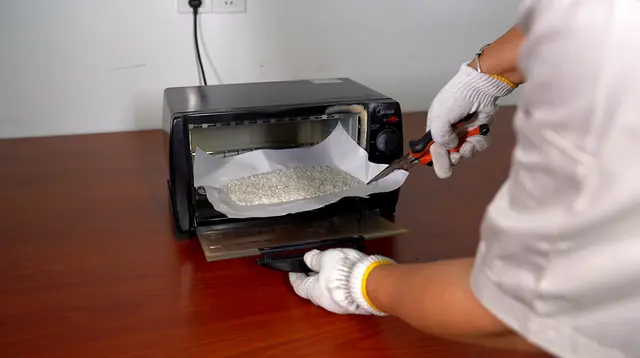
For a buyer this translates into a verification question rather than a product claim. Ask how IV and moisture are controlled at incoming inspection, and whether the supplier can provide batch-level test data rather than a single certificate. Jushuo operates two SSP units and a testing laboratory equipped with viscosity testers, tensile testing machines, ovens, thickness gauges, and electronic scales, with six inspection procedures covering raw material, incoming, online, finished product, inbound, and outbound checks.
Where These Formats Actually Fit
The specifications only become useful when mapped to real applications, and the case record is the clearest evidence of where each format has been validated.
Pharmaceutical packaging: 16 × 0.8 mm transparent custom-printed PET strapping with tensile strength above 4,800 N was supplied for a project feeding a Novo Nordisk supply chain resale channel. The combination of clarity and high break force is what makes this format work: clarity keeps batch numbers and labels readable through the strap, while the break force secures the carton. The project covered 2,025 kg over a three-year span.
Textile bundling on automatic lines: transparent cut PET strap at 16 × 1.0 mm was supplied in specified lengths to Far Eastern Industries for textile product bundling, with compatibility on fully automatic packaging lines as the stated requirement. Precise cut length and consistent straightness are what allow the strap to run without misfeeding.
Fibre bale strapping: green cut PET strap sized 1610 × 3380/3480 has been supplied to Sateri (China) Fiber Co., Ltd. in multiple batches for viscose fibre bale strapping over three years, with invoice values above USD 71,000 per invoice. This is a high-compression application where low elongation is the deciding property — if the strap relaxes, the bale expands and the bundle loosens in transit.
Glass product bundling: custom green PET strapping at 12 × 0.6 mm was accepted by Moutai against strict quality criteria and runs on fully automatic bundling lines, with a 26,000 kg order spanning more than a year from 2024. Glass is unforgiving of strap edge sharpness and tension spikes, so surface quality and consistent elongation carry as much weight as raw break force.
Mixed-material battery and recycling bundling: PP strap and PET strap have been supplied together for lithium battery product bundling against Changhong Sanjie quality standards, while white PP strap at 12 × 0.60 mm with tensile force ≥1,400 N has been used for recycling product bundling. In both cases the buyer selected two different materials for two different load types on the same site, which is common in multi-line facilities.
Market Trend Analysis
Three externally verifiable trends shape how strapping specifications are being written in 2025 and beyond.
First, the overall category continues to expand. The global packaging strapping materials market was valued at USD 9.8 billion in 2025 and is projected to reach USD 15.7 billion by 2033, according to Grand View Research. Within that, PET strapping specifically is expected to grow at a CAGR of 5.8% from 2024 to 2033, reaching a valuation of USD 1.44 billion, per Cognitive Market Research.
Second, PP remains the volume leader on cost grounds. Grand View Research attributes a 33.9% revenue share in 2025 to PP strapping, driven largely by its cost-effectiveness in logistics and e-commerce applications where loads are light to medium and automation speed matters more than compression retention.
Third, recycled content is becoming a specification input rather than a marketing statement. Industry research places recycled PET (rPET) at 34% of global strapping production in 2024, supported by sustainability regulations and the continued shift away from steel. For buyers, this means recycled content is increasingly a question to raise during sampling rather than after qualification.
On the standards side, ASTM D3950-23 classifies nonmetallic strapping into five material types and remains the reference framework for packaging and shipping strapping in the United States, while EN 13394:2001 specifies dimensions and physical properties for non-metallic tensional strapping in the European market. Both are useful as neutral language when writing a specification that has to be understood by more than one supplier.
Comparison with Steel and Basic PP Strapping
PET strapping is routinely positioned as a steel-strapping replacement, and the comparison is grounded in measurable differences. A 25 × 1.25 mm reinforced PET strap reaches 1,360 kg break force with elongation at or below 6%, and the material weighs roughly one-sixth as much as equivalent steel. Jushuo's published figures place material cost 35–40% below steel strapping at comparable strength, with no rust contamination and no sharp-edge or spring-back injury risk. Jushuo notes a compliance basis of GB/T 22344-2018 for PET strap, GB/T 3811-1999 linked standards for PP strap, ISO 9001 and ISO 14001 certification, and SGS test reports showing breaking strength of 9.98 kN and elongation of 10% on a 12 mm specification.
Those advantages do not make PET a universal substitute, and the limitations matter at the specification stage. PET strap is stiffer than PP, which makes it less forgiving on irregular or mixed-shaped loads and can require machine-side adjustments to guide tracks and tension settings. The low elongation that makes PET good for bales also means it transfers shock to the load rather than absorbing it, so corner protectors or edge boards are often necessary on sharp-edged products. Standard PET elongation of around 10% is not sufficient for the highest-compression bale work; the reinforced series with ≤6% elongation is required instead. Custom formulations that add anti-UV, anti-hydrolysis, anti-static, or flame-retardant performance extend lead times — Jushuo quotes 30–60 days for custom formulas versus roughly seven days for stock specifications — and custom core sizes or non-standard widths carry their own tooling and minimum-order implications. Finally, printing adds a cost increment of roughly 3–5% to the strap, which is negligible at scale but material for small runs.
Against basic PP strap, the honest comparison is cost against capability. PP remains cheaper per metre, more flexible, and sufficient for the majority of carton and light-industrial bundling. PET is justified when the load will not tolerate 15–25% elongation or when rust-free, high-tensile performance is required on export shipments. Choosing PET where PP would do is a common and avoidable cost error.
Future Outlook
The direction of the category is toward tighter specification and more documented performance. As recycled content rises toward and beyond the current 34% share of production, buyers will increasingly need to confirm that rPET formulations still meet the break force and elongation targets written into their contracts, because recycled feedstock varies more than virgin resin unless IV control is managed deliberately. On the equipment side, the continued shift from steel to plastic strapping supports a gradual increase in PET volumes, particularly in export packaging where rust elimination has a direct commercial value. For procurement teams, the practical implication is that the questions on this page will keep returning — but the suppliers who can answer them with batch-level data rather than product adjectives will be the ones that survive a multi-year qualification.
FAQ: Plastic Strapping Procurement Questions
Is PET or PP strapping better for my application?
Neither is universally better. PP strapping has elongation of roughly 15–20% and is well suited to light and medium carton loads, irregular shapes, and cost-sensitive logistics bundling. PET strapping has elongation of ≤10%, dropping to ≤6% in the reinforced series, and holds compressed or heavy loads such as fibre bales, brick packs, steel coils, and aluminium ingots more reliably. The deciding property is whether the load needs to flex or to stay compressed, followed by whether rust-free, high-tensile performance is required.
When should I specify hand grade instead of machine grade?
Specify hand grade when the strap will be tensioned with manual tools or knotted by hand, and specify machine grade when the strap will feed through an automatic or semi-automatic strapping head. The difference is formulation, not strength class: a 12 mm hand grade PP strap reaches 220–270 kg break force at 0.70–0.80 mm thickness, while a 12 mm machine grade PP strap runs 110–180 kg at 0.50–0.80 mm with deflection ≤5 mm/m for reliable feeding. Using hand grade on an automatic line typically causes misfeeds rather than a strength problem.
How should I interpret heavy-duty on a 12 mm strap?
Treat it as a break-force target rather than a fixed category. A 12 mm heavy-duty PP strap at 0.80 mm delivers 180–270 kg break force with elongation ≤15%, roughly 30–50% stronger than a standard 12 mm PP band at the same width. On the PET side, heavy-duty generally means the reinforced series, with 500 kg at 16 × 0.8 mm, 860 kg at 19 × 1.0 mm, and up to 1,360 kg at 25 × 1.25 mm. Restating the requirement as kilograms of break force on a specific width removes the ambiguity.
Can strapping be printed, colored, or produced to a custom size?
Yes. Both PET and PP strapping can be customised on width, thickness, length per roll, core size (including 200 mm, 228 mm, and 406 mm), and surface finish, with colours achieved through masterbatch matching. Printing of logos, brand names, or barcodes uses high-adhesion ink tested against extended friction; PET's harder surface makes durable printing more demanding than on PP. Custom performance additives such as anti-UV, anti-hydrolysis, anti-static, and flame-retardant are available, but they extend lead time compared with stock specifications.
How do I verify that a supplier can hold specifications over multiple years?
Look for batch-level data rather than a single certificate. Relevant evidence includes controlled intrinsic viscosity and moisture at incoming inspection, in-house tensile and elongation testing, documented inspection gates, and third-party reports where relevant. Multi-year supply consistency is best evidenced by repeat orders on the same specification, such as green cut PET strap supplied in multiple batches over three years for fibre bale strapping, or a custom green PET strap running on automatic lines under a contract spanning more than a year.
Teams preparing a specification review can reach Jushuo Packaging through www.jushuopackaging.com to discuss width, grade, and sample evaluation against a specific load.