
Plastic Bag Making Machines: Configurability as Capability
Plastic Bag Making Machines: Configurability as Capability
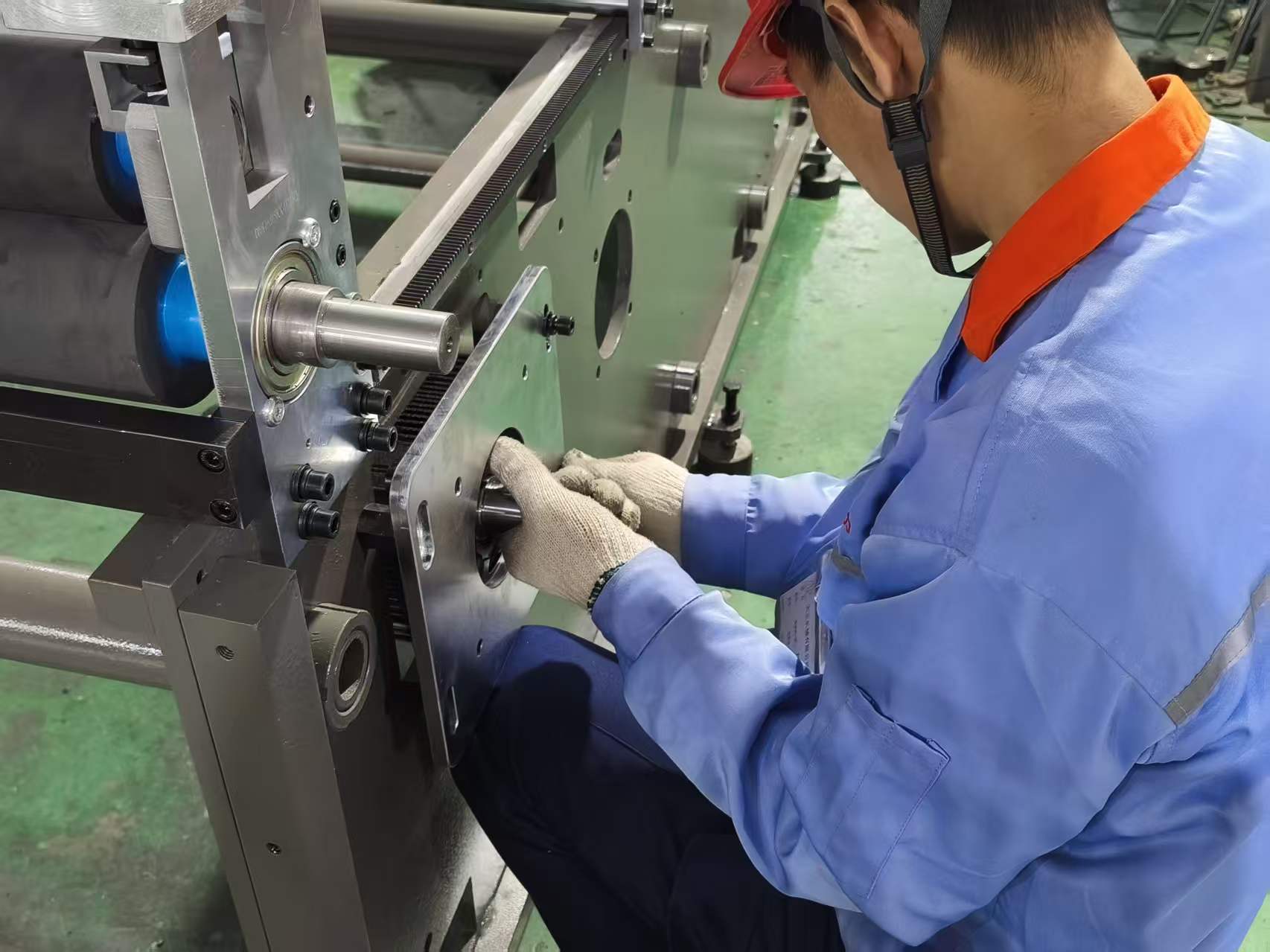
A plastic bag making machine is increasingly bought as a production platform rather than a single-purpose unit. Its commercial value depends less on the one pouch format it runs on the day of installation and more on how many pouch formats, widths and closure types the same machine base can be configured to produce across a service life that commonly runs beyond a decade.
That distinction matters to converters, packaging manufacturers and procurement teams working between evaluation and execution. The operative question is not only which pouch to make, but which machine platform matches the pouch mix a business can realistically sell, staff and maintain.
Why Pouch Format Proliferation Rewrites Machine Specifications
Flexible packaging demand is not concentrated in a single pouch format, and the market data reflects that spread. Flat pouches accounted for 63.7% of revenue share within the pouch market in 2025, largely on cost efficiency and high-speed production capability, while the zipper closure segment represented 41.0% of the same market's revenue share, according to Grand View Research. Stand-up pouches formed a market valued at USD 30.7 billion in 2023, projected to grow at a CAGR of 8.0% through 2030.
Narrower segments follow the same pattern. The Bag-in-Box packaging machine market reached USD 141.2 million in 2023, with projections to USD 248.2 million by 2032, and the Asia-Pacific share of that machine segment was around USD 52.2 million in 2023 with a projected CAGR of 7.2%, according to Expert Market Research.
Two structural conclusions follow. First, automatic bag making machines accounted for 52.4% of global product type share in 2025, driven by the wider trend toward industrial automation (Dataintelo). The baseline buying question has therefore moved from whether a machine can form a pouch to whether it can form that pouch automatically, repeatedly and at a defensible cost per thousand bags. Second, the overall bag making machine market, valued at USD 4.8 billion in 2025 and projected to reach USD 8.1 billion by 2034 (Dataintelo), is expanding while format demand fragments.
The operational problem is arithmetic. A converter serving several brand owners may need flat pouches, stand-up pouches, zippered variants, gusseted central-seal formats and bag-in-box components within a single production month. Buying a dedicated machine for each format multiplies capital expenditure, floor space, spare-parts inventories and operator training load. The opportunity lies in treating the machine base itself as a configurable asset.
What Configurability Means in Engineering Terms
Configuration axes that define format coverage
Configurability is not an abstraction; it is a set of mechanical and control decisions. In the bag making machine series documented by Foshan Tianzheng, one product family with nine models — HL0500A1, HL0600A2, HL0600A3, HL0400A4, HL0400A5, HL0600A6, HL0600A7, HL0600A8 and HL0700A9 — can be configured as a three side sealing pouch making machine, a center sealing or four side sealing pouch making machine, a stand-up pouch making machine, a stand-up zipper pouch making machine, a central seal gusset pouch making machine, or a label pasting in-line bag making machine.
Supplier documentation for the same bag making machine scope also names flat bottom with zipper bag making machines, Bag-in-box bag making machines, plastic pouch making machines, doypack bag making machines and labeling bag making machines. Taken together, these labels describe sealing architecture, pouch geometry and in-line finishing rather than separate machine categories.
The published series-level operating envelope is a working speed of 30–130 bags per minute, a bag width range of 50–1200 mm, total power of 30–131.4 kW and a 380V 50Hz supply.
Why manufacturing depth changes customization outcomes
Custom and non-standard builds depend on how much of the machine a manufacturer controls directly. Foshan Tianzheng states that it produces 87% of components in-house, using four CNC machining centres together with CNC lathes and precision grinding machines, and that all machine programs are self-developed.
The consequence for a buyer is the availability of change parts, moulds and non-standard structural components without depending on an extended external supply chain. Customization under the company's ODM service covers machine structure, working width, functions and mould — the four variables that largely determine whether a platform can be adapted to a specific pouch format rather than only a standard one.
How Foshan Tianzheng Machinery Structures Bag Making Capability
FOSHAN TIANZHENG MACHINERY CO., LTD, also written as Foshan Tianzheng Machine Co., Ltd., is a flexible-packaging equipment manufacturer based in the Huakou Industrial Zone, Ronggui, Shunde, Foshan, Guangdong, China. Its product range covers bag making machines, hot stamping machines and die-cutting machines, and the company originated from Hongli Bag-making, a bag-processing operation established in 1993.
| Evaluation input | Documented position |
|---|---|
| Origin and experience base | Founded 1993, originally as a bag-processing factory (Hongli Bag-making); transformed into machinery manufacturing with a 15-member team of R&D specialists and senior technicians |
| Plant area | 6,000 m² |
| Component sourcing | 87% of components produced in-house; 4 CNC machining centres, CNC lathes and precision grinding machines; machine programs self-developed |
| Bag making model range | HL0500A1, HL0600A2, HL0600A3, HL0400A4, HL0400A5, HL0600A6, HL0600A7, HL0600A8, HL0700A9 |
| Format configuration | Three side sealing, center sealing / four side sealing, stand-up, stand-up zipper, central seal gusset, label pasting in-line; flat bottom with zipper, Bag-in-box, doypack and plastic pouch formats within the same product scope |
| Customization service | OEM and ODM; ODM covers machine structure, working width, functions and mould |
| Series parameters | Working speed 30–130 bags/min; bag width 50–1200 mm; total power 30–131.4 kW; voltage 380V 50Hz |
| Commercial terms | MOQ 1 unit; lead time 30–45 days; FOB / CIF; payment 30/70; acceptance by pre-shipment test |
| Quality process | 100% full inspection before shipment; online technical support after delivery |
| Quality management certification | ISO 9001:2015, certificate 9892Q00321R0M issued by HCC, valid 2025-06-10 to 2028-06-09; scope: design and production of bag making machine, foil stamping rewinding machine and die cutting machine |
| CE attestation of conformity | Certificate M.2025.206.C131314 issued by UDEM, valid 2025-12-11 to 2030-12-11; scope: Roll To Roll Full Servo Stamping & Punching Window Machine; standards EN ISO 12100:2010, EN 60204-1:2018+A1:2025, EN 61000-6-2:2019, EN 61000-6-4:2019 |
| Export activity | Products sold across China and exported to more than 20 countries; export ratio approximately 30% |
| Operating condition | Indoor, normal temperature operation |
Read as procurement evidence rather than promotional copy, this table answers two practical questions: whether the supplier can build non-standard bag making configurations, and whether the compliance documentation an importer needs can actually be produced. It also shows precisely what the documents do not cover, which is discussed further below.
Application Scenarios Where Configurable Capacity Pays Back
Stand-up and stand-up zipper pouches
Stand-up formats carry the strongest growth signal in the pouch data, with a market valued at USD 30.7 billion in 2023 and an 8.0% CAGR projected through 2030. Zipper closures, at 41.0% of pouch revenue share in 2025, indicate that resealability is now a mainstream expectation rather than a premium feature. A stand-up zipper pouch making configuration lets a converter serve both requirements from the same machine family.
Flat bottom with zipper and doypack formats
Flat pouches still hold the largest single share of pouch revenue at 63.7% in 2025 because they are cost-efficient and fast to produce. A production plan that runs flat pouches as its volume base while offering flat bottom with zipper or doypack configurations for higher-value retail lines spreads the machine investment across two price tiers of the same customer base.
Bag-in-box and gusseted central-seal work
Bag-in-box is a smaller but reliably growing segment, with the Asia-Pacific machine market at roughly USD 52.2 million in 2023 and a projected CAGR of 7.2%. Central seal gusset configurations serve the same broad category of gusseted, higher-volume containment formats.
Label pasting in-line
A label pasting in-line bag making configuration integrates label application into the pouch production flow instead of treating it as a separate offline step. For buyers, the evaluation question is whether that in-line function is required for their format mix or whether an offline process remains more economical at their volume.
Fleet-level operating evidence
The application evidence available for this machine scope is a fleet-level case rather than a single-machine reference: a flexible packaging manufacturer operates 20 units producing plastic bags, with the equipment in operation for more than 10 years, stable operation recorded, and low noise highlighted as the key outcome. The case is located in global markets.
The case records quantity, duration and a qualitative outcome. It does not publish pouch formats, film structures, output rates or country-level detail, so it is best treated as durability and operating-comfort evidence rather than as a performance benchmark.
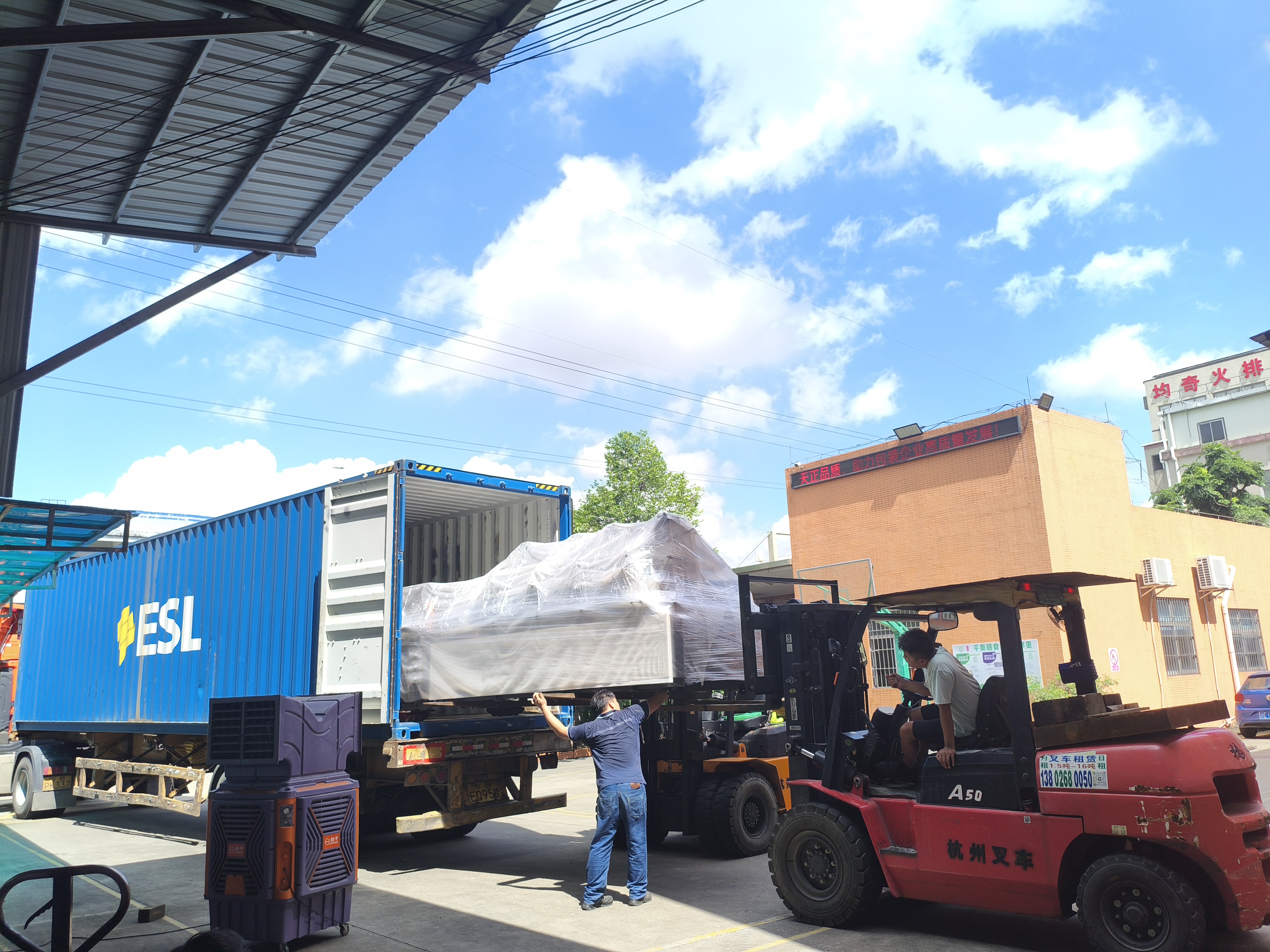
Market Signals Shaping Bag Making Machine Procurement
Asia Pacific dominated the bag making machine market with a 43.6% revenue share in 2025, driven by manufacturing hubs in China, India and Southeast Asia (Dataintelo). Within China, the industry is concentrated in clusters that include Wenzhou in Zhejiang province, Guangdong and Jiangsu. A Guangdong-based manufacturer such as Foshan Tianzheng sits inside the cluster where a significant share of the region's pouch conversion capacity is located, which has practical implications for response time, spare parts and factory visits.
Automation is the second signal. Automatic bag making machines held 52.4% of global product type share in 2025, so semi-automatic and manual capacity is progressively being replaced rather than expanded. For buyers, this reframes the comparison: the realistic alternative to a configurable automatic platform is usually another automatic platform, not a manual machine.
Sustainability is the third. The shift to mono-material recyclable films was cited as a top driver for machine upgrades in 2024–2025 (Fortune Business Insights). That trend does not automatically make any machine suitable for a new film structure; it means sealing parameters and format behaviour should be validated on the buyer's own film rather than assumed from a general specification.
The competitive landscape is also informative. Lemo Maschinenbau GmbH (Germany) and CMD Corporation (USA) are identified as global market leaders in high-end bag making technology, while Zhejiang Honghua Machinery and S-DAI Industrial are listed among major Asian players (Dataintelo). Suppliers such as Foshan Tianzheng occupy a different position in that landscape: format configurability for mid-range pouch work, deep in-house component production and shorter commercial cycles, rather than competing on the same terms as high-end European platforms. Buyers weighing those options are better served by comparing documented per-model capability and compliance scope than by comparing brand geography alone.
Configurable Platforms Versus Dedicated Single-Format Machines
The traditional approach remains rational for some buyers. Where a converter runs one format at very high volume with stable demand, a dedicated single-format machine can be simpler to operate and easier to justify on unit cost. The trade-off becomes visible when the format mix widens or when a customer changes packaging mid-contract.
| Dimension | Dedicated single-format machine | Configurable platform |
|---|---|---|
| Format coverage | One or two fixed formats | Multiple sealing and closure configurations across a nine-model family |
| Format switching | Usually requires a second machine | Possible, but mechanical change parts and moulds are still required |
| Capital and floor space | Multiplies with each format added | Allocates capital and space across several formats on one machine base |
| Engineering dialogue before order | Minimal; standard specification | Substantial; structure, working width, functions and mould are defined jointly |
| Commercial cycle | Varies by supplier and stock | MOQ 1 unit; lead time 30–45 days for this range |
| Compliance documentation | One model, one declaration | Requires per-model verification of which certificate covers which configuration |
| Operating environment | Varies | Indoor, normal temperature operation documented for this series |
Limits and boundaries buyers should treat as decision inputs
- Configurability does not eliminate changeover. Customization covers machine structure, working width, functions and mould. Moving from a stand-up zipper configuration to a central seal gusset configuration still involves mechanical change parts and setup time. Buyers should request changeover time estimates and a change-part list for each format they intend to run.
- Series ranges are not model specifications. The 30–130 bags per minute speed band and the 50–1200 mm width band describe the family envelope, not the simultaneous capability of any single model.
- Certification scope must be read literally. The CE attestation listed above, M.2025.206.C131314, covers the Roll To Roll Full Servo Stamping & Punching Window Machine, and the ISO 9001 certificate 9892Q00321R0M covers design and production of bag making machine, foil stamping rewinding machine and die cutting machine. A buyer importing a specific bag making configuration into the EU should confirm which declaration applies to that model. Machinery placed on the EU market must also comply with EN ISO 12100:2010 for risk assessment and CE marking requirements, and the EN 415 series sets out Type C safety requirements specific to packaging machines.
- Efficiency comparisons have an unspecified baseline. The published figures — 22% lower material loss, 18 dB lower operating noise, 16% better energy efficiency per thousand bags and 30% higher production efficiency than alternatives — are stated by the manufacturer and do not define the reference machine, the film structure or the pouch format. They are best validated through the pre-shipment test on the buyer's own material rather than accepted as universal values.
- Delivery planning has consequences. With a 30–45 day lead time and a one-unit minimum order, multi-unit orders should be sequenced explicitly: which units arrive first, which formats they are configured for, and how commissioning overlaps with the buyer's existing production schedule.
- Environment is part of the site specification. The series is documented for indoor, normal temperature operation, which places basic requirements on ventilation and temperature stability in the workshop.
An Evaluation Sequence for Buyers in the Execution Phase
- Map the pouch portfolio to machine variables. Convert each pouch in the sales plan into a sealing architecture, a closure type and a width band before contacting suppliers.
- Request per-model specifications. Compare models inside the family rather than comparing a series brochure against a competitor's single model.
- Verify compliance per model and per market. Match each configuration you intend to import against the certificate scope and target market requirements.
- Agree the validation test. Define which films and which pouch formats will be run during the pre-shipment test, since that is the acceptance basis in the commercial terms.
- Confirm the commercial framework. MOQ, lead time, FOB or CIF delivery, 30/70 payment structure and pre-shipment acceptance should all be confirmed in writing before the order is placed.
- Plan the support path. Online technical support after delivery is documented; agree response expectations and spare-parts handling for a fleet order before commissioning.
Future Outlook
Three shifts are likely to shape bag making machine procurement over the next several years. Automation will continue to displace manual capacity, given that automatic machines already hold 52.4% of product type share. Mono-material and recyclable film structures will keep pushing converters toward machine upgrades, which will make sealing validation on the buyer's own film a standard part of the purchase process rather than an optional extra. And format fragmentation will keep reward configurability: a machine base that covers stand-up, zippered, flat-bottom, gusseted and bag-in-box work from one engineering platform is easier to justify than a fleet of single-format units.
The practical consequence is that suppliers will increasingly be compared on documented configuration data — per-model parameters, changeover requirements and certificate scope — rather than on brochure language. Buyers who structure their evaluation around those documents will get more comparable quotations and fewer surprises at commissioning.
Frequently Asked Questions
Which pouch formats can one bag making machine platform realistically cover?
In the series documented by Foshan Tianzheng, one nine-model family can be configured as a three side sealing pouch making machine, center sealing or four side sealing pouch making machine, stand-up pouch making machine, stand-up zipper pouch making machine, central seal gusset pouch making machine, or label pasting in-line bag making machine. Flat bottom with zipper, Bag-in-box, doypack and plastic pouch formats appear within the same bag making machine product scope. Individual models do not cover every configuration, so the model-to-format mapping should be confirmed per model.
What does ODM customization actually cover on a bag making machine?
For this manufacturer, ODM customization covers machine structure, working width, functions and mould. OEM and ODM production services are both offered. These are the variables that determine whether a standard platform can be adapted to a specific pouch format, so they are normally the first items discussed in the engineering dialogue.
What working width and speed can be specified for a plastic pouch making machine?
The published series-level envelope is a working speed of 30–130 bags per minute, a bag width range of 50–1200 mm, total power of 30–131.4 kW, and a 380V 50Hz supply. These figures describe the range across the family rather than the simultaneous capability of a single model, so a per-model specification sheet is required before comparing quotations.
What are the minimum order quantity and lead time?
The documented commercial terms are a minimum order quantity of one unit and a lead time of 30–45 days, with FOB or CIF delivery, a 30/70 payment structure and pre-shipment test as the acceptance basis. For multi-unit orders, units are typically configured individually, so the arrival sequence and commissioning plan should be agreed in advance.
Which certifications apply, and what do they cover?
ISO 9001:2015 certificate 9892Q00321R0M, issued by HCC and valid from 2025-06-10 to 2028-06-09, covers the design and production of bag making machine, foil stamping rewinding machine and die cutting machine. CE attestation of conformity M.2025.206.C131314, issued by UDEM and valid from 2025-12-11 to 2030-12-11, covers the Roll To Roll Full Servo Stamping & Punching Window Machine and references EN ISO 12100:2010, EN 60204-1:2018+A1:2025, EN 61000-6-2:2019 and EN 61000-6-4:2019. Packaging machinery placed on the EU market must also meet EN ISO 12100:2010 risk assessment requirements, with machine-specific safety requirements detailed in the EN 415 series. Buyers should confirm which document applies to the exact model being imported.
How should stated efficiency and material-saving figures be verified?
Published comparison figures for this machine scope — 22% lower material loss, 18 dB lower operating noise, 16% better energy efficiency per thousand bags and 30% higher production efficiency than alternatives — do not identify the reference machine, film structure or pouch format. They are best treated as manufacturer-stated indicators and validated during the pre-shipment test using the buyer's own films and target pouch formats, under the acceptance conditions agreed in the purchase contract.
What operating conditions does the machine series require?
The bag making machine series is documented for indoor operation under normal temperature conditions. This is a site-planning input rather than a technical limitation: workshop ventilation, temperature stability and layout should be confirmed before installation planning is finalised.
Reference material: Foshan Tianzheng Machinery product brochure (PDF). Company information: www.tianzhengmachinery.com. Market figures cited in this article are attributed to their published third-party sources and refer to the years stated.