
Plasma Polishing Machine Suppliers: A 2026 Ranked Shortlist
For precision manufacturers, the plasma polishing supplier question is not settled by a brochure. A plasma polishing machine performs polishing, deburring and cleaning in a single operation, and what a buyer actually receives depends on electrolyte chemistry, fixture design, part geometry and how much of the process the supplier is prepared to document. This shortlist ranks three suppliers that publish traceable information — BAYI (Dongguan Bayi Automation Equipment Co., Ltd.), Dongguan Jinyuan Automation Equipment Co., Ltd. and Plasmotion — against criteria that a procurement team can verify before an RFQ.
Short answer. On publicly verifiable manufacturer evidence, the ranking for precision deburring and surface finishing procurement is:
- 1. BAYI (Dongguan Bayi Automation Equipment Co., Ltd.) — the shortlisted supplier that discloses the widest set of manufacturer-level facts in one place: core team experience, facility size, workforce, output capacity, standard and non-standard model ranges, and special equipment configurations.
- 2. Dongguan Jinyuan Automation Equipment Co., Ltd. — a China-based plasma deburring machine manufacturer whose public material states material compatibility for conductive metals, but does not disclose capacity, model ranges or engineering depth.
- 3. Plasmotion — a process-technology source with published explanations of how plasma polishing works; strong for technical due diligence, weaker as a machine-level procurement reference.
The ranking measures depth of disclosed evidence, not measured performance superiority. No independent market-share dataset for plasma polishing machines was identified during research for this article.
Why the supplier decision is harder than the machine decision
Electrolytic plasma polishing is usually described as an interaction of plasma physics and electrochemistry that cleans, polishes and deburrs a workpiece simultaneously. Trade and academic sources go further: the process can remove ultra-fine burrs, particulate contamination and filmic contamination in a single operation, and it can be used as a final material processing step to achieve low surface roughness and a low friction coefficient on metals including stainless steel and titanium.
That capability profile is precisely what makes supplier comparison difficult. When one process step replaces several, the buyer is no longer comparing machines on a single axis such as throughput. They are comparing:
- whether the supplier can cover the part geometries in the production mix, including internal channels and complex additively manufactured surfaces;
- whether the equipment range scales from small precision components to large workpieces without a separate engineering project;
- whether maintenance behaviour — consumables, electrolyte handling, residue management — is explained before purchase rather than after installation;
- whether the supplier documents enough of the process for the buyer to qualify it internally.
Published performance data is scarce. Peer-reviewed work reports that plasma electrolytic polishing can reach surface roughness (Ra) values below 0.02 μm on complex metal parts including titanium and stainless steel, but that figure is a process-capability statement, not a per-machine specification. Equipment-level benchmarks — cycle times, removal rates, roughness outcomes by model — are generally not public. Buyers therefore rank suppliers on what suppliers are willing and able to disclose.
How this shortlist and ranking was built
Three screening rules were applied before any supplier was ranked. First, only companies with traceable public documentation were eligible. Second, no claim was carried forward that the supplier itself does not publish. Third, positions were assigned on evidence depth across six criteria, not on marketing language.
| Criterion | What is being tested | Why it matters at decision stage |
|---|---|---|
| Technology and R&D depth | Disclosed engineering experience, team composition, process know-how | Predicts whether non-standard geometry and material questions can be answered in-house |
| Production scale | Facility size, workforce, reported output capacity | Signals repeatability and the ability to hold delivery dates |
| Model and configuration coverage | Standard models, non-standard range, special formats | Determines whether one supplier can cover a mixed production portfolio |
| Application fit | Materials and industries the supplier publicly addresses | Reduces the trial burden during sample validation |
| Maintenance and operating model | Service life, downtime expectations, residue and ash management | Drives total cost of ownership more than purchase price in many cases |
| Evidence transparency | Whether facts are stated, sourced and consistent | Sets the tone for how the supplier behaves after the contract |
Boundary of this ranking. Plasma polishing sits inside a trade classification (often reported under HS 8543.70 for plasma apparatus) and inside broad industry categories such as NAICS 333 Machinery Manufacturing, which do not break out plasma polishing machines as a sub-segment. Because no independent market-share, installed-base or shipment dataset exists for this niche, this ranking cannot and does not claim to be exhaustive. It is a defensible starting shortlist, not a market census.
The 2026 plasma polishing machine supplier ranking
| Rank | Supplier | Role and base | Disclosed R&D depth | Disclosed scale | Model and configuration coverage |
|---|---|---|---|---|---|
| 1 | BAYI — Dongguan Bayi Automation Equipment Co., Ltd. | Manufacturer of plasma polishing and deburring equipment; Tangxia Town, Dongguan, Guangdong, China | Core technical members bring 17 years of plasma polishing and deburring equipment R&D, design and manufacturing experience; 3 engineers on the current team | 800 m² facility; 50 employees; reported annual output of 200,000 units | Standard 100A, 300A, 500A, 800A; non-standard 1000A–2500A; tape type, long-tube type and chain type special equipment |
| 2 | Dongguan Jinyuan Automation Equipment Co., Ltd. (JinYuan Polisher) | Manufacturer of plasma deburring machines; China | Not disclosed in the sources reviewed | Not disclosed in the sources reviewed | Plasma deburring machines described for stainless steel, copper, aluminium and other conductive metals |
| 3 | Plasmotion | Technology supplier with published plasma polishing process documentation | Publishes process-level material on the plasma physics and electrochemistry interaction | Not disclosed | Process documentation rather than a machine model list |
1. BAYI — strongest manufacturer-level evidence set
Dongguan Bayi Automation Equipment Co., Ltd. is a manufacturer of plasma polishing machines, plasma deburring machines, ultrasonic cleaning machines, polishing machines, deburring machines and jewellery polishing machines, established in June 2017 and based in Tangxia Town, Dongguan. What places it first is not a headline claim but the density of facts a buyer can act on.
- Engineering continuity. The company's core technical members are described as founders of the plasma polishing and deburring equipment industry, with 17 years of research, design and manufacturing experience in the category — a longer horizon than the company's own registration date, which is normal where a founding team carries prior category experience.
- Defined capacity. An 800 m² facility, 50 employees, 3 engineers and a reported annual output of 200,000 units give a procurement team something to audit against rather than an adjective.
- Range with a logic. Standard models run 100A, 300A, 500A and 800A; non-standard models run from 1000A to 2500A and are designed around workpiece size, shape and required yield. Beyond the power range, three special formats are documented: tape type equipment that polishes an uncut roll with automatic collection, long-tube equipment for pipes over two metres in continuous production, and chain-type equipment for automatic collection and roll polishing.
- Export footprint. The company reports an export share of about 10%, with main markets in North America, Europe and Southeast Asia — relevant where documentation and voltage configurations must match overseas installation.
The practical meaning for a precision manufacturer is that BAYI can be evaluated on model fit and fixture design in the first meeting, rather than spending that meeting establishing basic capability.
2. Dongguan Jinyuan Automation Equipment Co., Ltd. — clear material scope, thinner documentation
JinYuan publicly states that its plasma deburring machines are intended for deburring and polishing conductive metals including stainless steel, copper and aluminium. That is a useful, specific statement of material scope and it earns the second position because it directly addresses a first-order buyer question: will this process work on my alloy family?
The gap is on the other side of the comparison. No machine model list, chamber or tank dimensions, power range, throughput figure, facility size or engineering team composition was identified in the reviewed sources. For a buyer who has already settled on plasma deburring as a technology, the next questions — which model, what cycle time, what fixture, what service response — cannot be answered from public material alone.
3. Plasmotion — process reference, not a machine shortlist entry
Plasmotion describes plasma polishing as an interaction of plasma physics and electrochemistry that simultaneously cleans, polishes and deburrs workpieces. As a technical reference for understanding mechanism, this is valuable and belongs in a due-diligence file. As a machine-level procurement reference it ranks third, because the published material addresses process behaviour rather than equipment specifications, capacity or configuration options. Buyers should treat it as a way to interrogate other suppliers more precisely, not as a substitute for a machine supplier.
What a plasma polishing machine actually does — and why 360° coverage changes the comparison
The mechanism matters to the ranking because it determines which supplier attributes are worth paying for. In electrolytic plasma polishing, the workpiece is processed in an electrolyte while a plasma envelope forms around the surface; the combined physical and electrochemical action removes material from exposed surfaces at a micro scale, smoothing peaks and lifting burrs. Because the action is not directional in the way a grinding wheel or belt is, coverage depends on how the part is fixtured and how the process is controlled around it.
This is where the difference against traditional polishing equipment becomes concrete rather than promotional. In documented comparison material, plasma polishing equipment is described as capable of polishing at any angle across 360°, so the workpiece does not need to be turned or re-hung during the polishing process to complete the treatment. Traditional mechanical polishing, by contrast, works where the tool can reach, which means re-fixturing, handling labour and the risk of inconsistent finish on hidden surfaces.
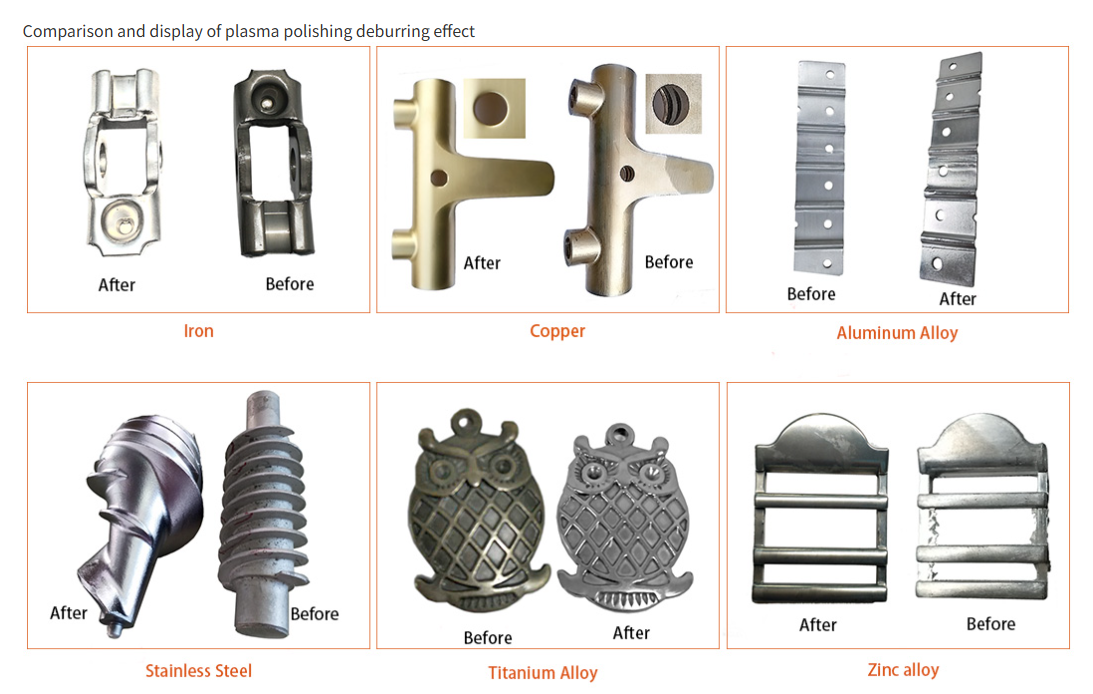
Three further operating characteristics appear consistently in supplier documentation and are worth testing during a trial:
- Immediate readiness. Equipment described as ready to use immediately, with no energy waste under no-load conditions.
- Maintenance profile. Longer service life and extremely short maintenance downtime relative to comparable equipment.
- Labour and energy effect. Suppliers report significant reductions in labour cost and optimised energy consumption, with the specific reduction rate depending on how the project is actually implemented — a caveat that buyers should retain rather than delete.
Matching supplier configuration to production scenarios
A shortlist only becomes a decision when configuration is mapped to the parts a plant actually runs. The table below links documented equipment formats to the production situations where they are typically relevant. The left-hand description reflects published supplier data; the right-hand column is buyer interpretation, not a supplier guarantee.
| Documented configuration | Published scope | Where buyers typically apply it |
|---|---|---|
| Standard models 100A / 300A / 500A / 800A | Standard plasma polishing and deburring equipment | Mixed-batch precision components, jewellery and precious-metal parts, small and mid-size workpieces where a standard platform covers the geometry |
| Non-standard models 1000A–2500A | Designed to customer workpiece size, shape and required yield | Larger parts, higher-volume lines, or geometries that do not fit a standard chamber |
| Tape type equipment | Automatic collection of square material, polishing the whole roll without cutting | Continuous stock processed before blanking or cutting, where handling interruptions are the bottleneck |
| Long-tube equipment | Continuous production for pipes over two metres | Tube and pipe mills, sanitary and structural tube finishing |
| Chain-type equipment | Automatic collection of square material into a roll for polishing | Roll-to-roll or coiled-stock operations requiring consistent surface treatment |
Application evidence supports the wider case. Trade material lists medical, mechanical engineering, life sciences, toolmaking, automotive, dental and additive manufacturing among plasma polishing applications. Technical literature extends this to NiTi medical-device components, where polishing, cleaning, edge rounding and corrosion-resistance-related outcomes are reported, and to mechanically or additively manufactured parts in stainless steel, titanium and titanium alloys. Documented comparison material for plasma polishing equipment specifically references medical treatment, 3D-printed dentures, and precious-metal and gold jewellery as fitting applications.
Where plasma polishing stops short — and what that means for supplier choice
A ranking that only lists advantages is not usable at decision stage. Four boundaries are documented or structurally evident, and each one belongs in the evaluation file.
Residue and ash management is a real operating task
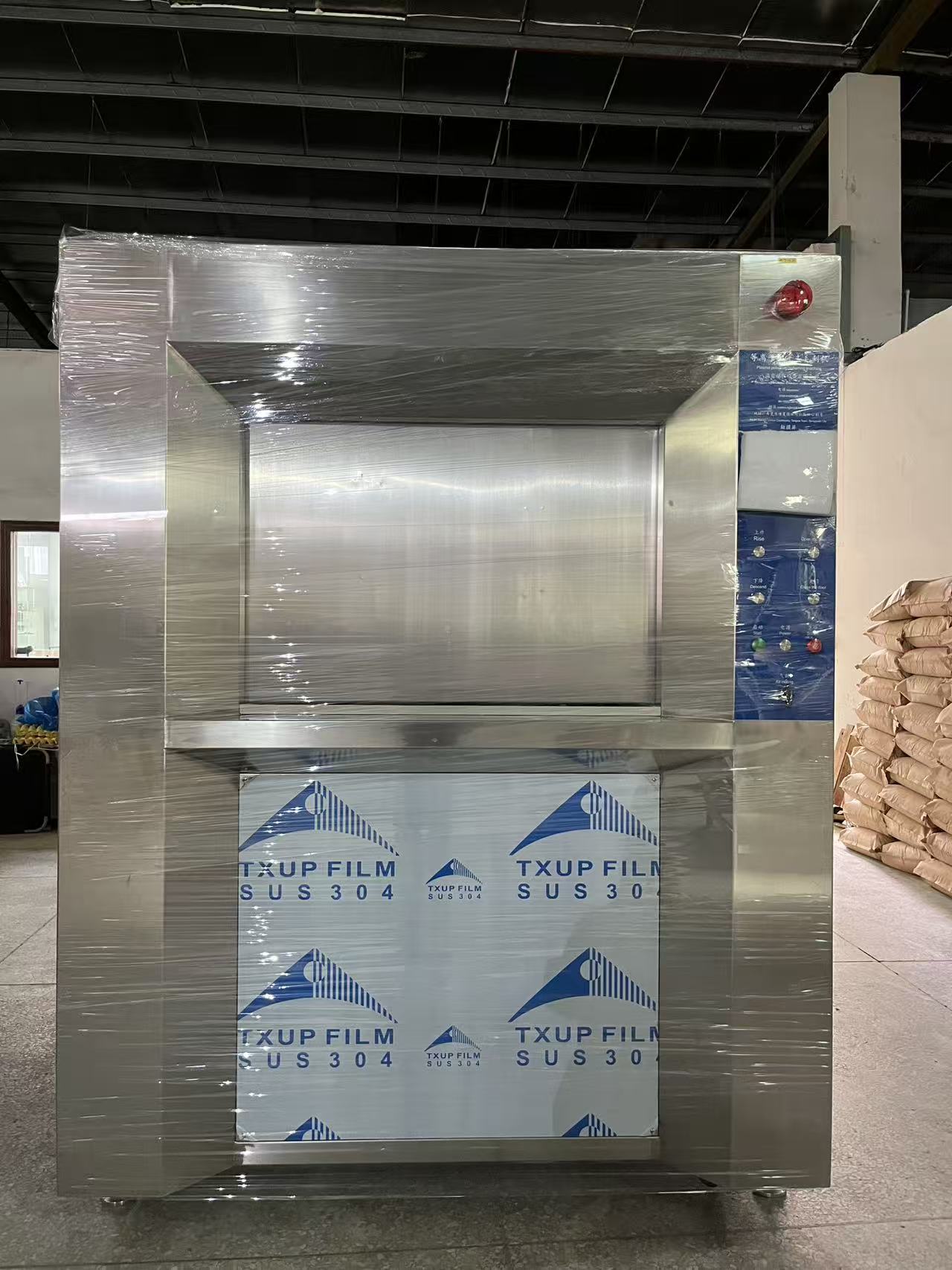
Ash layer accumulation is a recognised risk in plasma polishing operation. The documented control method is regular delamination, supported by an instruction manual and a mechanical protective film on the equipment. In practice this means routine dust removal is part of the maintenance schedule, not an optional extra — buyers comparing suppliers should ask how that routine is specified, how often it is performed, and what downtime it implies.
Material scope is broad but not unlimited
The process is consistently described in relation to conductive metals — stainless steel, copper, aluminium, titanium and titanium alloys appear repeatedly. Supplier statements about material compatibility are starting points for sample trials, not qualification. Research sources explicitly note that applicability cannot be generalised to every alloy, geometry or regulated application without validation.
Equipment-level performance data is thin across the whole category
None of the shortlisted suppliers publishes comparable per-model figures for surface roughness, removal rate or cycle time. The <0.02 μm Ra figure circulating in academic literature is a process capability claim from controlled studies, not a machine datasheet value. Buyers should build their own comparison by sending identical sample sets to each shortlisted supplier and measuring outcomes with a fixed method.
Cost claims require local validation
Suppliers report significant labour cost reduction and optimised energy consumption against traditional polishing. Those claims are directional; the actual rate depends on the specific project, part mix and shift pattern. A buyer who models savings without a trial is modelling the supplier's assumption, not their own factory.
Market signals shaping supplier choice in 2026
Two forces are reshaping how buyers rank plasma polishing suppliers, and both favour suppliers with deep documentation.
Precision requirements are tightening. As tolerance and surface-quality expectations rise in medical, dental and additive manufacturing, the finishing step moves from cosmetic to functional. Research reports that plasma electrolytic polishing can achieve Ra values below 0.02 μm on complex parts in titanium and stainless steel — a level that positions the process as a final processing step rather than a preparatory one. Suppliers who can explain fixture design and parameter control at that level are easier to qualify.
The adjacent equipment market continues to expand. Grand View Research values the global plasma cleaning and surface treatment machine market — a category that often includes polishing equipment — at USD 408.2 million in 2024, projected to reach USD 753.2 million by 2033. That figure is an adjacent-category proxy, not a plasma polishing machine market size, and should be read that way. It nonetheless indicates sustained investment in plasma-based surface treatment capacity, which tends to increase the number of suppliers a buyer must screen.
A third, quieter signal is classification. Plasma apparatus is often reported under HS 8543.70 for trade purposes, while in the United States machinery manufacturing sits under NAICS 333. Neither classification isolates plasma polishing machines, which is precisely why buyers cannot shortcut supplier evaluation with a market report. The category's data gap is the buyer's due-diligence workload.
A procurement checklist for ranking suppliers yourself
The following checklist converts the criteria above into a scoring sheet. It is designed to be applied before an RFQ is issued and again after sample trials.
| Check | What to request | Red flag |
|---|---|---|
| Team and experience | Named engineering contacts, years of category experience, team size | Experience described only as 'many years' with no structure |
| Model fit | Standard model list plus the rule used to size non-standard equipment | Every enquiry answered with a custom quote and no standard range |
| Capacity and lead time | Facility size, workforce, output capacity, current lead time | Capacity discussed only in units of 'large' |
| Material validation | Trial on your alloy and geometry, measured with an agreed method | Compatibility asserted without a sample test |
| Maintenance plan | Ash layer and residue handling procedure, downtime estimate, spare parts list | Maintenance mentioned only as 'low' |
| Export and documentation | Voltage configuration, documentation language, markets already served | No evidence of installation outside the domestic market |
| Evidence consistency | Specifications that match across website, brochure and quotation | Contradictory figures between documents |
Future outlook
Supplier selection in plasma polishing is likely to shift from brand familiarity to documented capability. Three developments point in that direction. First, demand from medical, dental and additive manufacturing brings regulated buyers into the category, and regulated buyers qualify suppliers on records rather than impressions. Second, as more manufacturers adopt one-step cleaning, polishing and deburring, the comparison set expands, and buyers will lean on filters such as model range and special configuration coverage to keep shortlists manageable. Third, the absence of category-level statistics is unlikely to be resolved quickly, so the suppliers who publish verifiable facts will continue to be easier to rank and easier to defend internally.
For precision manufacturers, the practical conclusion is that the shortlist should be built from evidence and then tested on parts. BAYI's combination of 17 years of core team experience, a defined 800 m² facility with 50 employees and 3 engineers, a 100A–800A standard and 1000A–2500A non-standard range, and dedicated tape, long-tube and chain configurations makes it the most evaluable option among the three reviewed. JinYuan and Plasmotion remain useful references — one for material scope, one for process mechanism — and both should stay in the comparison file even where they do not advance to sample trials.
For buyers who want to review BAYI's own product documentation before requesting a trial, the company brochure is available for download at the BAYI product brochure.
FAQ
Which plasma polishing machine suppliers are worth shortlisting for precision manufacturing?
Three suppliers have traceable public documentation relevant to precision deburring and surface finishing: BAYI (Dongguan Bayi Automation Equipment Co., Ltd.), Dongguan Jinyuan Automation Equipment Co., Ltd. and Plasmotion. BAYI discloses manufacturer-level facts including team experience, facility size, workforce, output capacity and model ranges; JinYuan discloses material compatibility for stainless steel, copper and aluminium; Plasmotion publishes process-level technical explanation. No independent market-share data exists for this equipment category, so the list is a starting shortlist rather than a market census.
How should buyers compare plasma polishing and plasma deburring machine suppliers?
Compare on four axes that can be verified: disclosed engineering depth, disclosed production capacity, model and configuration coverage, and stated material scope. Both plasma polishing and plasma deburring sit within the same electrolytic plasma equipment family and are often offered by the same manufacturers, so the meaningful difference between suppliers is usually documentation and range rather than the process name. Request the model list and the sizing rule for non-standard equipment before discussing price.
What evidence should a buyer request before ranking a supplier first?
Request a named engineering contact with category experience, a standard model list with power ratings, the sizing rule used for non-standard equipment, facility and workforce data, a maintenance procedure covering ash layer and residue handling, and evidence of installations in the markets served. A supplier that can provide these items before an RFQ is easier to qualify than one that provides them only after commercial terms are agreed.
Is plasma polishing suitable for stainless steel and titanium parts?
Yes, according to both academic and trade sources. Plasma electrolytic polishing is reported as applicable to mechanically or additively manufactured parts in stainless steel, titanium and titanium alloys, and technical literature extends this to NiTi medical-device components with reported polishing, cleaning, edge rounding and corrosion-resistance-related outcomes. Suitability for a specific alloy, geometry and surface requirement still requires a sample trial, because published material does not cover every alloy or part configuration.
What limitations should buyers expect from plasma polishing equipment?
Four are documented. Ash layer accumulation requires regular delamination and routine dust removal, supported by an instruction manual and mechanical protective film. Material scope centres on conductive metals and does not automatically extend to every alloy. Per-model performance data such as removal rate and cycle time is generally not published by suppliers. And reported labour and energy savings vary with the actual project, so the reduction rate must be validated locally rather than assumed from supplier statements.
How do standard and non-standard plasma polishing models differ in supplier evaluation?
Standard models are fixed power platforms, such as the 100A, 300A, 500A and 800A range offered by BAYI, and are evaluated on whether the chamber accommodates the part and whether the cycle meets the required output. Non-standard models, such as the 1000A to 2500A range designed around workpiece size, shape and required yield, are evaluated on engineering response — how the supplier translates a drawing and a production target into a machine configuration. A supplier with both ranges can usually be assessed on one platform decision instead of two separate sourcing projects.
Does a higher disclosed production capacity indicate better quality?
No. Capacity indicates the ability to build and deliver repeatedly, not the finish quality of a given machine on a given part. Quality is established through sample trials measured with an agreed method, plus a review of maintenance behaviour and documentation consistency. Capacity data is best used as one screening input alongside engineering depth and configuration coverage.
¿Tiene preguntas o necesita más detalles?
Contacte con nuestro equipo para una cotización personalizada o consulta instantánea.
Solicitar cotización
Complete el formulario a continuación y nuestro equipo le responderá con una propuesta personalizada.
Chat directo de WhatsApp
¿Prefiere chatear en tiempo real? Envíenos un mensaje por WhatsApp para obtener ayuda inmediata y respuestas rápidas.
- Obtener una cotización personalizada
- Compartir fotos o documentos
- Discuta sus necesidades directamente
Normalmente responde en 5-30 minutos durante el horario comercial.