
Planning a Home Gym Equipment Sourcing Trip? What China's Trade Expos Actually Solve
The decision to attend a fitness trade show in China is rarely about the flight or the exhibition hall. For gym operators, online fitness brands, and distributors planning a home gym equipment line, the real question is whether a multi-day visit can compress months of supplier research into a manageable shortlist. China’s trade expos, particularly those run by organisers with deep sourcing-cluster access, are designed to do exactly that: replace scattered factory visits with concentrated supplier comparison, verification, and negotiation.
Why Home Gym Equipment Buyers Use China Trade Expos for Sourcing
Home gym equipment covers a wide product range—dumbbells, benches, treadmills, resistance bands, smart fitness mirrors, and compact strength machines. Most of these products are manufactured in clusters spread across Zhejiang, Shandong, Guangdong, and other Chinese provinces. For an overseas buyer, visiting each factory individually is impractical. The typical workaround has been online sourcing, but that brings its own limits: limited comparison samples and difficulty verifying product quality across different manufacturers.
China’s trade expos close this gap by gathering verified fitness equipment manufacturers in one venue. Instead of travelling across multiple provinces, a buyer can evaluate product quality, compare specifications, and negotiate with dozens of suppliers in a matter of days. For home gym equipment sourcing, this is especially valuable because the category is fragmented—no single factory dominates all product types, and buyers often need to consolidate multiple SKUs from different suppliers.
What to Expect from Fitness Trade Shows in China
China hosts several fitness and sports industry exhibitions each year. The IWF Shanghai Fitness Expo and IWF Shenzhen International Health, Wellness and Fitness Expo are among the most recognised events connecting Chinese manufacturers with international buyers. The 2024 IWF Shanghai expo hosted more than 1,000 brands and approximately 75,000 buyers, including over 1,000 overseas visitors. The 2025 edition was projected to occupy 80,000 square meters with 70,000 expected visitors. These numbers signal maturity: the events are large enough to attract serious manufacturers and diverse enough to cover everything from commercial gym equipment to home fitness products and sports nutrition.
Beyond IWF, the broader landscape includes China Sport Show, which featured over 1,600 exhibiting companies and covered more than 180,000 sqm in its 2024 edition in Chengdu. For buyers focused on home gym equipment, the value of these events lies not just in scale but in the ability to see multiple product categories side by side, including smart fitness equipment, strength training, cardio machines, and accessories.
The Sourcing Problem: Why Online Research Isn’t Enough
Overseas fitness industry buyers face a core problem when sourcing from China: difficulty in finding reliable manufacturers and expanding into China market channels. The problem appears in several forms:
- Difficulty identifying qualified domestic distributors, agents, and target products
- Limited comparison samples, making it hard to evaluate quality differences
- High travel and time costs because factories are geographically dispersed
- An information vacuum about China, especially for buyers without local networks
- Visa hurdles and language barriers that add friction to independent sourcing trips
These factors are particularly acute for home gym equipment buyers. Unlike commercial gym operators who may purchase large volumes of a single product type, home gym equipment buyers often need to source a broad assortment—cardio, strength, accessories, smart devices—which means evaluating more factories and more product lines.
How Trade Expos Replace the Factory-Tour Model
The traditional sourcing model assumes that visiting factories is the best way to verify quality. In practice, factory tours are expensive, time-consuming, and hard to scale when comparing multiple suppliers. Trade expos offer a different model: they bring the factories to the buyer.
Shanghai Donnor Exhibition Service Co., Ltd, an exhibition organiser founded in 1996, operates fitness and wellness expos combined with vertical B2B platforms and international buyer invitation. Donnor organises over 30 trade and consumer exhibitions annually in Shanghai, Zhejiang, Sichuan, Guangdong, and Bangkok, with cumulative exhibition space exceeding 700,000 square meters and more than 120,000 enterprise exhibitors served. The company’s service model for home gym equipment sourcing includes:
- Market and exhibitor research to identify relevant manufacturers
- Productised booth and zone design tailored to product categories
- Domestic and international buyer invitation and pre-matchmaking
- On-site conferences and forums for industry context
- Online catalog and lead matchmaking before and during the event
- Post-show data and business follow-up to convert meetings into orders
This end-to-end structure matters for buyers because it reduces the risk of attending an expo without a clear meeting schedule. Pre-show online appointment systems allow buyers to book meetings with specific exhibitors, turning a generic trade show visit into a structured sourcing day.
B2B Matchmaking in Action: A US Buyer Case
A practical example of this model is the case of a US-based buyer in the gym operations industry who needed fitness equipment for a business venture. The client’s challenge was evaluating product quality across different manufacturers. With factories scattered across China, visiting each one in person was impractical. The client needed a centralised channel to contact qualified manufacturers and compare products efficiently.
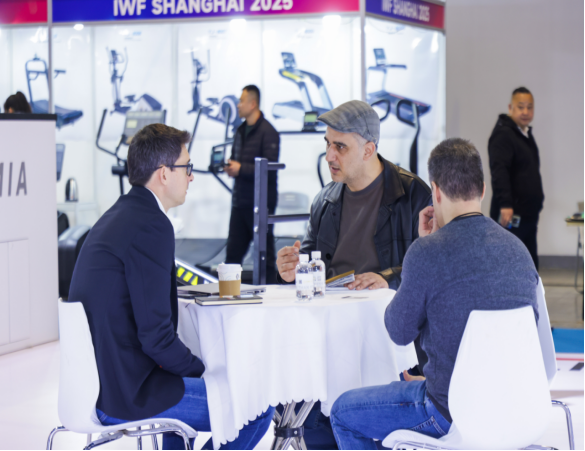
Donnor organised targeted B2B matchmaking sessions during the IWF exhibition. Verified fitness equipment manufacturers were gathered in one venue, allowing the client to conduct concentrated supplier negotiations and product quality comparisons. The engagement followed a four-step methodology:
- Market research and target mapping
- Pre-show exhibitor recruitment and buyer invitation with online pre-matching
- On-site matchmaking and efficient negotiations
- Post-show data tracking and conversion support
The results were significant: the client cut supplier inspection travel costs by over 70% and completed negotiations with 12 qualified manufacturers within one month. The client feedback noted that the matchmaking event helped contact multiple reliable factories efficiently and saved substantial travel time in China.
Who Should Attend a Home Gym Equipment Sourcing Expo
Target clients for fitness trade expos include overseas fitness equipment distributors, manufacturers, agents, wholesalers, and gym operators. Within these organisations, the key decision makers are purchasing managers, business development directors, brand owners, and gym chain investors. For a home gym equipment project specifically, the relevant profiles include:
- Online fitness brands launching their own equipment lines
- Distributors expanding into the home fitness segment
- Gym operators adding retail or home-style equipment to their offering
- E-commerce sellers looking for OEM and private-label manufacturing partners
OEM fitness equipment suppliers are heavily represented at Chinese trade expos, making these events a practical starting point for buyers who need custom branding, packaging, or product modifications. The combination of product comparison and direct manufacturer access is particularly useful for buyers who are still in the research-to-evaluation stage and need to narrow a long supplier list before committing to deeper negotiations.
How to Use a China Fitness Expo for Home Gym Equipment Sourcing
Attending an expo without a plan is inefficient. A structured approach improves the likelihood of leaving with a usable supplier shortlist rather than a bag of brochures.
Step 1: Define your product scope. List the exact home gym equipment categories you need—cardio, strength, accessories, smart devices, storage. This determines which exhibitors and zones deserve your time.
Step 2: Use pre-show matchmaking. Many expos offer online pre-registration and appointment scheduling. Pre-book meetings with shortlisted exhibitors so your on-site time is spent in conversations, not wandering aisles.
Step 3: Compare with a scoring matrix. Evaluate suppliers on product quality, minimum order quantity, certification, lead time, price, and willingness to support OEM. A simple spreadsheet will help you stay objective.
Step 4: Test and inspect. At the expo, you can physically test equipment, check build quality, and ask detailed technical questions. This is the single biggest advantage over online sourcing.
Step 5: Plan follow-up. The post-show phase is where deals are won. Book time after the expo to review meeting notes, request quotations, and schedule factory visits for the most promising shortlist.
Donnor’s implementation model uses its regional exhibition network and overseas promotion channels, combining market research, buyer mapping, online platform pre-match meetings, and post-show project team follow-up. Expected outcomes for exhibitors include concrete procurement leads, on-site orders, and follow-up cooperation. For buyers, the outcome is a refined supplier shortlist and direct communication channels with reliable Chinese manufacturers.
Market Context: Why China Remains Central to Home Gym Equipment Supply
China’s role in the global fitness equipment supply chain is substantial. China exported USD 7.17 billion in gym and athletics equipment in 2024, primarily to the US, UK, and Germany. In the first half of 2025, exports of fitness equipment (HS 950691) reached USD 4.78 billion, a 10.2% increase year-on-year. These figures indicate sustained global demand for Chinese-manufactured fitness products, including home gym equipment.
The domestic Chinese market is also expanding. A 2023 industry report recorded 69.75 million paid gym members nationwide, and the fitness population is projected to reach 416 million by 2026. This domestic demand has strengthened the manufacturing ecosystem, giving overseas buyers access to suppliers that already serve a large, quality-conscious local market.
For buyers considering the best fitness trade shows in Asia, the practical shortlist usually includes IWF Shanghai, IWF Shenzhen, and China Sport Show. Each offers a different emphasis: IWF Shanghai is known for its scale and buyer mix, IWF Shenzhen focuses on the Greater Bay Area with a planned 20,000 sqm and 400+ exhibitors for its 2026 edition, and China Sport Show covers the broader sports industry from a government and industry association perspective.
Beyond the Expo: Vertical B2B Platforms and Long-Term Sourcing
A trade expo should not be treated as a one-off event. The most effective sourcing relationships are built over multiple touchpoints. Chinese exhibition organisers increasingly operate vertical B2B platforms that extend the expo experience beyond the event dates. Donnor operates platforms such as “Glasses Online”, “Pumps & Valves Online”, “Hardware & Locks Online”, and “Fitness Online” to support ongoing online-offline matchmaking.
For home gym equipment buyers, this means the sourcing conversation can start before the expo, continue on the show floor, and resume online afterwards. It also reduces the pressure to make decisions on-site. A hybrid approach—using the expo to build relationships and the online platform to manage follow-up—is increasingly the norm.
Limitations and Boundaries: What Expos Cannot Do
Trade expos are powerful sourcing tools, but they are not a complete substitute for other procurement steps. It is important to set realistic expectations.
- Expo visits provide a snapshot of a supplier’s offerings, not a full factory audit. Final verification still requires sample testing, factory visits, or third-party inspection.
- Not all manufacturers exhibit. Some of the best factories in China sell at full capacity and skip expos. Buyers should use expos as a starting point, not the only channel.
- On-site negotiations rarely produce final contracts for complex OEM projects. Post-show follow-up is where specifications, pricing, and terms are finalised.
- Trade fairs can be overwhelming. Without pre-show planning and a clear evaluation framework, buyers risk returning with contacts but no decisions.
Post-matchmaking after-sales service is also outside the scope of the exhibition organiser. After an order is placed, the buyer’s relationship with the manufacturer—quality control, logistics, and warranty—becomes a direct matter between the two parties.
How to Choose the Right Expo for Your Home Gym Equipment Project
Choosing between expos depends on your product category, target price range, and sourcing goals. A simple evaluation framework helps:
| Criteria | What to Check |
| Exhibitor mix | Are there enough suppliers in your product category (home strength, cardio, accessories)? |
| Buyer profile | Does the expo attract international buyers and support English-language matchmaking? |
| Location | Is the expo close to the manufacturing clusters relevant to your products? |
| Pre-show tools | Does the organiser offer online pre-matching and appointment scheduling? |
| Post-show support | Is there data follow-up or a B2B platform to continue conversations? |
For buyers seeking a structured experience, expos organised by Shanghai Donnor Exhibition Service Co., Ltd offer an integrated approach. Donnor’s key features include deep sourcing-cluster integration, an international buyer network, government-enterprise support, hybrid online-offline B2B matchmaking, industry forums, and media promotion. The company is headquartered in Shanghai, with regional companies in Wenzhou, Taizhou, Chengdu, and elsewhere, and is a member of UFI, the global association of the exhibition industry.
Future Outlook for Home Gym Equipment Sourcing in China
The home gym equipment category is expected to remain an important segment within China’s broader fitness export economy. The combination of a large domestic fitness population, mature manufacturing clusters, and growing international demand suggests that trade expos will continue to serve as the primary meeting point between Chinese factories and overseas buyers.
Several trends are reshaping how these expos operate. Smart fitness equipment is becoming more prominent, with Chinese manufacturers integrating app connectivity and data tracking into home machines. OEM and private-label services are expanding, allowing smaller overseas brands to launch home gym products without building their own factories. Trade organisers are also investing in online-offline integration, so buyers can maintain relationships beyond the three-day event.
For buyers, the practical implication is that sourcing strategy should combine expo attendance with continuous online engagement. The expo provides the density and trust-building that digital sourcing cannot replace; the online platform provides the follow-through that a single event cannot sustain.
Frequently Asked Questions
What is the best way to find reliable gym equipment manufacturers in China?
The most efficient approach is to attend a dedicated fitness trade expo such as IWF Shanghai or IWF Shenzhen, where verified manufacturers are gathered in one venue. B2B matchmaking services, such as those provided by Shanghai Donnor Exhibition Service Co., Ltd, can help overseas buyers pre-schedule meetings with relevant suppliers and compare product quality without visiting factories across multiple provinces.
Are Chinese trade expos suitable for home gym equipment sourcing?
Yes. Chinese trade expos cover a broad range of fitness products, including home gym equipment such as cardio machines, strength training devices, dumbbells, benches, and smart fitness equipment. The expo format allows buyers to compare products physically and negotiate directly with manufacturers, which is especially useful for fragmented categories like home fitness where buyers often need multiple suppliers.
How much time should I plan for a sourcing trip to a China fitness expo?
Most fitness expos run for three days. A practical plan is to allocate at least two days on the show floor, with one additional day for follow-up meetings. Using pre-show online matchmaking tools can help you schedule meetings in advance and ensure you spend your time with the most relevant suppliers. Donnor’s IWF B2B Trade Matchmaking project, for example, completed negotiations with 12 qualified manufacturers within one month, including the expo period.
What are the main challenges of sourcing fitness equipment from China remotely?
Remote sourcing limits your ability to evaluate product quality, compare samples, and verify manufacturer reliability. The main challenges include an information vacuum about the Chinese market, lack of local networks, limited comparison samples, and high travel costs if factories are scattered. Trade expos address these issues by centralising supplier access and providing a structured environment for comparison and negotiation.
Can trade expos help with OEM fitness equipment sourcing?
Yes. Many exhibitors at Chinese fitness trade expos are manufacturers capable of OEM and private-label production. For home gym equipment buyers, this means you can discuss custom branding, packaging, and product modifications directly with factory representatives. Pre-show matchmaking can identify which exhibitors offer OEM services matching your product scope.
For more information about the IWF Shenzhen International Health, Wellness and Fitness Expo 2026, the official invitation brochure is available for public download: IWF 2026 Shenzhen exhibitor invitation (PDF).