
Pillow Filling Machine Qualification Pack: ISO9000, CE, SGS Criteria
Pillow Filling Machine Qualification Pack: ISO9000, CE, SGS Criteria
Pillow Filling Machine Qualification Pack: ISO9000, CE, and SGS Acceptance Criteria
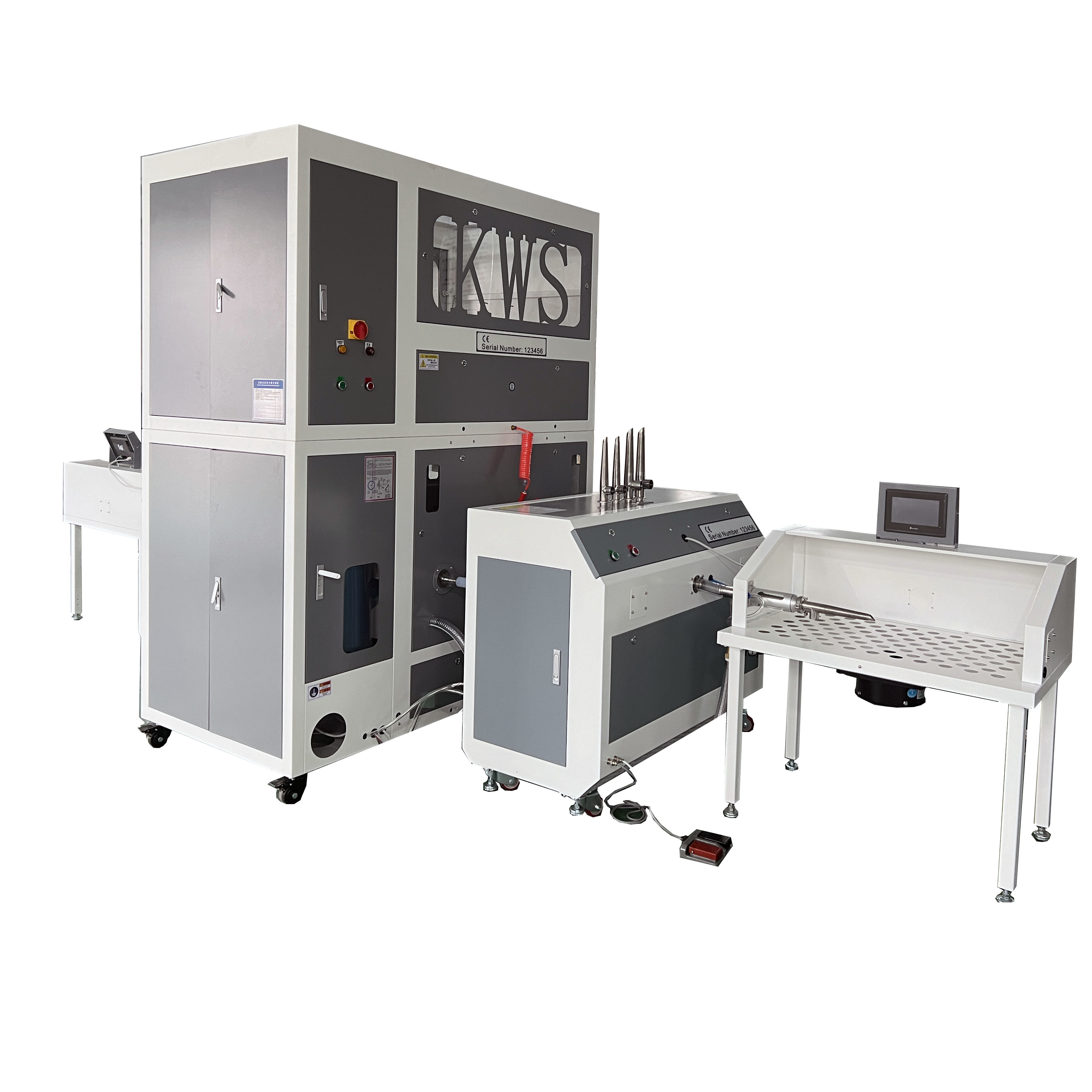
A pillow filling machine qualification pack is the document set, test record and inspection scope a buyer assembles before releasing a purchase order. It combines three layers that answer three different questions: ISO9000 and CE evidence shows how the supplier is organised and whether the machine is declared conformant; the pre-shipment test record shows whether that specific unit performs; and a third-party inspection such as SGS shows whether the unit still performs when someone other than the seller measures it. None of the three substitutes for the other two.
For bedding and home textile producers sourcing filling equipment internationally, the practical difficulty is rarely a shortage of certificates. It is deciding which documents carry weight, which claims are self-declared, and what numeric thresholds should trigger rejection at the factory gate. This article sets out a qualification structure that can be applied to a pillow filling machine order and, with minor adaptation, to duvet, quilt, cushion and toy filling equipment.
Why a Qualification Pack Is Assembled Before the Order, Not After
Filling machines are specified by output, accuracy and material range, and those three properties are only partly visible on paper. A supplier can legitimately state a production capacity of 400–800 kg/h and a filling speed of 10–20 pieces per minute for a 600 g pillow, because those figures describe a model family under stated conditions. A buyer still needs to know whether the unit shipped to them reaches those figures with their own polyester fiber or down.
The qualification pack exists to convert a general claim into a unit-specific commitment. It does this by fixing four things in writing before the deposit is paid:
- Which model is being bought, and therefore which parameters apply. A two-port and a four-port machine share a specification family but not a throughput profile.
- Who measures performance, with what instrument, at what fill weight.
- What is inside the certificate and what is outside it.
- What the supplier commits to after acceptance — warranty duration, spare parts, remote or on-site support.
The Five Layers of a Pillow Filling Machine Qualification File
Buyers who treat certificates as a single yes/no question tend to end up with a folder of PDFs and no decision rule. Structuring the file by layer makes the gaps visible.
| Layer | Typical document | Issued by | What it establishes | What it does not establish |
|---|---|---|---|---|
| Management system | ISO9000 certificate | Certification body | That a quality management system is documented and audited within the stated scope | Product safety, output, or model-level conformity |
| Market access | CE marking and declaration of conformity | Manufacturer, under applicable EU rules | That the marked configuration is declared conformant with the directives that apply to it | Independent test data, unless a notified body was involved |
| Model performance | Datasheet and factory test record | Manufacturer | Declared capacity, filling speed, accuracy, power and material range | Long-run reliability or multi-year drift |
| Independent verification | SGS or equivalent inspection report | Inspection company | Condition and function of the unit at the time of inspection | Ongoing production consistency across future batches |
| Commercial commitment | Quotation, proforma invoice, warranty statement | Manufacturer | MOQ, lead time, warranty term, support scope | Nothing about technical conformity |
Read as a set, the layers answer the question that matters at the research stage: can this supplier be qualified at all, and on what evidence. A supplier that can produce the first four layers on request is easier to audit than one that can produce only a product brochure.
ISO9000 and CE: What the Marks Cover, and What They Do Not
Qingdao Kaiweisi Industry and Trade Co., Ltd., which manufactures under the KIVAS brand, states that its products have obtained ISO9000/CE certification. The company was established in 2014, operates a 3000 m² manufacturing facility with approximately 17 staff and an annual production capacity of 1000 units, and maintains a research and development team of five engineers alongside an independent international trade department.
Those facts describe the organisation behind the certificate. They do not, by themselves, describe the machine. ISO9000 is a quality management standard: it indicates that procedures for design control, purchasing, production and inspection are documented and periodically audited within the scope named on the certificate. It does not state that a KWS6901-2 filling machine achieves a 1% accuracy value or an error range of ±5–10 g.
CE marking operates on a different logic again. For most machinery, the manufacturer issues a declaration of conformity and applies the mark on its own responsibility, supported by a technical file. The mark therefore declares conformity for the specific configuration placed on the market — voltage, guarding, control system — rather than for a product family in general.
What to ask for, specifically
- The ISO9000 certificate as a scan or PDF, showing the certification body, the certificate number, the validity dates and the scope statement — and confirmation that filling machinery is inside that scope.
- The CE declaration of conformity for the exact model and electrical configuration being purchased, listing the directives and standards applied.
- Confirmation of whether any notified body was involved, and if so, its identification number.
- The nameplate data that will appear on the delivered unit, so that the declaration and the physical machine can be matched at inspection.
100% Pre-Shipment Testing: Converting Specification into Pass/Fail
The stated practice at KIVAS is 100% pre-shipment testing, meaning each unit is run and checked before dispatch rather than sampled from a batch. For a buyer, the value of that practice depends entirely on what the test record contains. A record that says “tested and passed” cannot be audited; a record with numbers and a method can.
For the KWS6901-2 and KWS6901-4 models, a usable pre-shipment record should cover at least the following:
- Port-by-port function. Both filling ports on the two-port model, all four on the four-port model, run individually and simultaneously.
- Weight accuracy at three points. Low, mid and high fill weights within the 100–2000 g optimal filling range, with each piece weighed on a calibrated scale and the deviation compared to the ±5–10 g error range.
- Material statement. The fiber, fiber ball, shredded foam, down or EPS material used during the test, with denier or grade where relevant. A machine tested on one material is not automatically proven on another.
- Pneumatic integrity. Pressure hold test on the air circuit, since the machine operates pneumatically in continuous automatic mode.
- Control sequence and safety interlocks. Start-up, stop, emergency stop, guard interlocks and any weighing calibration routine.
- Documentation handover. Spare parts list, tool kit, wiring diagram, operation manual and nameplate data photographed against the serial number.
Buyers with an existing production line should also specify the material that will actually be run — 0.6D–15D polyester fiber behaves differently from down or shredded foam — and ask for a short video of the test alongside the paper record.
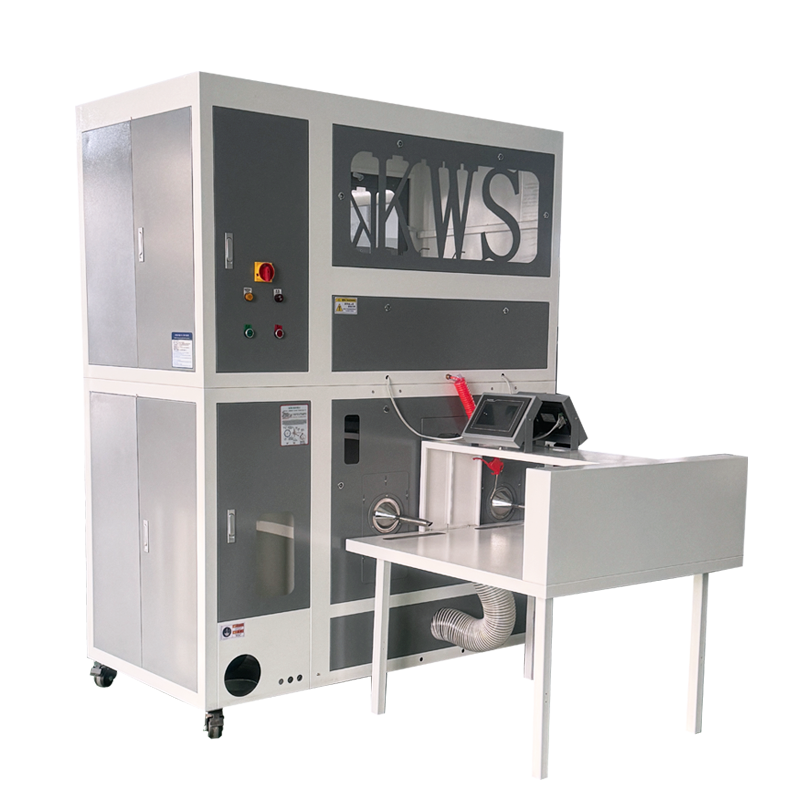
Third-Party SGS Inspection: Scope It Before the Container Is Booked
An independent inspection is the strongest single item in the pack, and the easiest to waste. Inspection bodies test against the scope they are given; a generic quality inspection order may confirm packing, quantity and visible condition without ever producing a weight-accuracy figure.
A scope written for a filling machine typically specifies:
- Timing. During factory testing or at pre-shipment, and whether the buyer’s representative may attend remotely.
- Units covered. Each serial number in the shipment, and whether inspection is visual or functional.
- Material and fill weights. The material to be run and the weights to be tested inside the 100–2000 g range.
- Measurement method. Scale type, resolution and calibration certificate; the number of pieces weighed per port; how the average and maximum deviation are reported.
- Throughput check. A timed run to confirm the filling speed claim of 10–20 pieces per minute at 600 g, and a capacity check against the 400–800 kg/h band.
- Loading supervision. Container condition, moisture protection, bracing and photo record, if the buyer wants a single continuous inspection.
Two structural limits are worth stating plainly. First, an inspection report describes one moment in the life of one unit; it is evidence, not a guarantee of future batches. Second, the report is only as useful as the thresholds written into it — without a pass/fail figure, the buyer is paying for observation rather than acceptance.
Acceptance Criteria Table for KWS6901-2 and KWS6901-4
The two models share a specification family and differ mainly in filling ports and resulting throughput. The table below converts published parameters into acceptance checks that can be written into a purchase order.
| Parameter | Stated value | Acceptance check |
|---|---|---|
| Model / ports | KWS6901-2: 2 filling ports; KWS6901-4: 4 filling ports | Count against nameplate; run each port individually and together |
| Power | 10.5 kW–13.5 kW range across configurations | Nameplate match plus actual current draw at operating load |
| Production capacity | 400–800 kg/h | Timed run with buyer material, output weighed |
| Filling speed | 600 g pillow: 10–20 pieces/minute | 30-minute timed run, counted and weighed |
| Accuracy | About 1% | Sample weighing against target weight |
| Error range | ±5–10 g | Calibrated scale, deviation recorded per piece |
| Optimal filling range | 100–2000 g | Test at low, mid and high points of the range |
| Suitable materials | 0.6D–15D polyester fiber, fiber balls, shredded foam, down feathers, EPS balls and similar materials for mixed filling | Trial run with the buyer’s own material and grade |
| Construction | Steel | Visual and coating inspection at pre-shipment |
Because the capacity and speed figures describe a range rather than a fixed output, the acceptance clause should name the single number the buyer expects, at the buyer’s material and fill weight. A four-port unit and a two-port unit evaluated against the same blanket figure will produce a misleading comparison.
Commercial Terms That Belong in the Qualification File
Technical conformity and commercial commitment are usually filed separately, which is why disputes arise at the boundary. The following terms form the commercial layer for KIVAS pillow filling machine orders:
| Term | Stated position | Why it matters in the file |
|---|---|---|
| Minimum order quantity | 1 unit | Allows a single-machine trial before a multi-line commitment |
| Lead time | 15–35 days | Range reflects configuration; fix the date for the chosen model and options |
| Warranty | 1 year | Define start date — dispatch, arrival, or acceptance sign-off |
| After-sales support | Lifetime after-sales support | Specify response channel, spare-parts availability and language |
| Trade classification | HS 8422.30 is the code commonly cited for filling machinery | Confirm the classification for bedding filling machines with a customs broker before shipment |
The HS code deserves emphasis. The 2025 trade guidance reviewed for this article cites 8422.30 as the primary classification for filling machinery, but the compiled evidence set explicitly records that the correct classification for textile and bedding filling machines was not independently established. Buyers in markets with strict import documentation should treat the code as a starting point for verification rather than a settled fact.
Where the Criteria Change by Application
The pillow filling machine belongs to a wider filling family. The same model family is described as a duvet filling machine and is intended for bedding and home textiles filling scenarios, while company product documentation also lists down jacket filling machines, quilt filling machines, pet product filling machines and toy filling applications. The qualification logic holds across all of them, but the acceptance emphasis shifts.
For pillows and duvets, weight accuracy and repeatability dominate: a ±5–10 g deviation on a 600 g pillow is tolerable in retail bedding but compounds quickly across a shift. For down and down jackets, material handling and containment matter more than raw speed, and the test material must be the actual down grade. For toys, cushions and beanbag-type products, fill uniformity and surface finish of the filled item tend to be the visible quality signal.
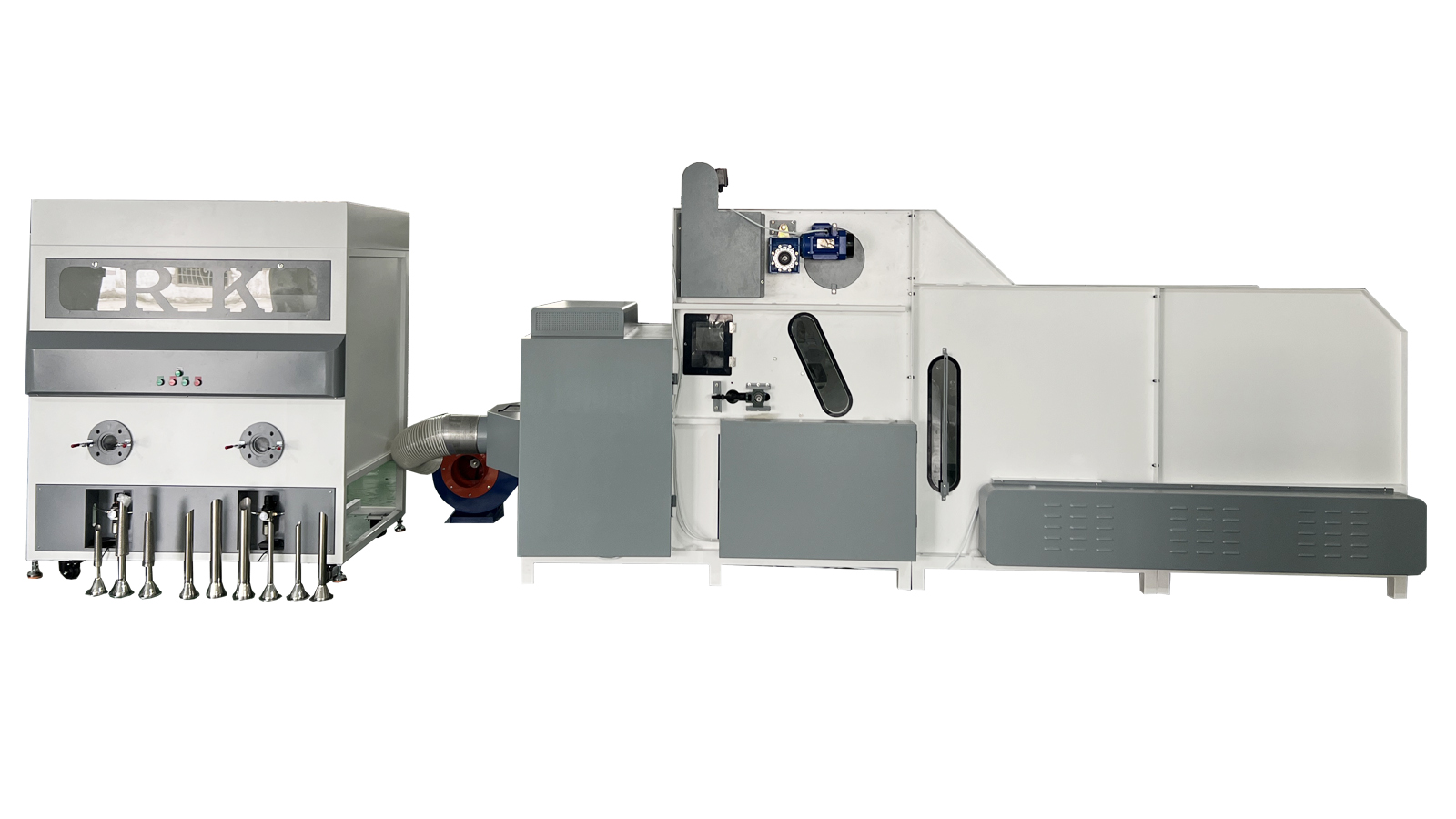
Site conditions belong in the same section because they generate the most common post-delivery disputes. The stated working condition is an indoor, dry, ventilated textile workshop at 0 °C to 40 °C, with a stable three-phase power supply, level floor and sufficient compressed-air supply. Typical matched equipment includes an automatic fiber feeding and opening all-in-one machine, a fiber opening machine and an air compressor. Where the plant cannot meet the air or power requirement, that is a qualification finding, not an installation problem.
Qualification-Pack Sourcing vs. Sample-Only Sourcing
Two procurement patterns dominate filling machine purchases. The first is sample-led: a buyer requests a demonstration, sees filled pillows, and orders. The second is document-led: the buyer builds the file described above and uses the demonstration as one data point inside it.
| Dimension | Sample-only sourcing | Qualification-pack sourcing |
|---|---|---|
| Evidence base | Demonstration output, supplier statements | Certificates, test records, inspection scope, written terms |
| Accuracy claim | Observed once | Measured against ±5–10 g at three fill weights |
| Material risk | Often unrecorded | Material grade stated in the test record |
| Dispute mechanism | Negotiation after arrival | Pre-agreed pass/fail thresholds |
| Cost | Lower upfront | Adds inspection and documentation time |
| Speed | Faster to order | Slower to order, faster to resolve |
The honest limitation of the document-led approach is that it adds cost and calendar time without eliminating risk. An ISO9000 certificate can be valid and still sit outside the scope that covers filling machinery. A CE declaration can be correctly drawn for the configuration sold and silent on the exact option the buyer requested. An SGS report can be perfectly executed and still describe one unit on one afternoon. The pack reduces uncertainty at the points where disputes actually happen; it does not replace a factory visit or a reference check with existing users.
A second limitation is supplier-side. KIVAS operates a single 3000 m² facility with approximately 17 staff, an annual production capacity of 1000 units and a five-engineer R&D team. That profile suits single-unit and moderate multi-unit orders well, and allows a 1-unit minimum order quantity. Buyers planning a full-line replacement across several plants should confirm scheduling in writing rather than assume unlimited parallel capacity, and should fix customization scope — voltage, port count, material handling, line integration — in the technical annex before the lead time of 15–35 days is confirmed.
Market Context: Documentation Is Being Requested Earlier
The commercial backdrop explains why qualification files have moved from the purchasing stage to the research stage. Market Research Future estimates the pillow packing machine market at USD 15.74 billion in 2024, projected to reach USD 25.5 billion by 2035, with a compound annual growth rate of 4.48% across 2025–2035. That is steady rather than explosive growth, and steady markets reward buyers who compare suppliers carefully rather than those who move fastest.
Two qualitative shifts accompany the numbers. Retail buyers and importers increasingly pass documentation requirements down the supply chain, so a bedding producer may be asked for machinery conformity evidence by its own customers. At the same time, the volume of unverified certification claims published on marketplaces has risen, which makes the certificate number and scope more useful than the certificate logo. Neither trend changes the machine; both change what a buyer is expected to be able to show.
Future Outlook
Three developments are likely to shape filling machine qualification over the next buying cycles. Test records will become digital and unit-linked, so that a serial number resolves to a dated performance record rather than a paper certificate in a folder. Inspection scopes will become more standardised, with weight accuracy at defined fill weights treated as a routine line item rather than a bespoke request. And certification evidence will be checked at the scope level, which favours suppliers whose documentation is specific enough to survive that check.
For buyers, the practical implication is modest but useful: build the file once, use it for every supplier, and update it when a supplier’s documentation improves. The structure described here is transferable from pillow filling machines to duvet, quilt, cushion and toy filling equipment with only the parameter table changing.
Frequently Asked Questions
A specification sheet for the exact model being purchased, such as KWS6901-2 or KWS6901-4; the ISO9000 certificate showing issuing body, number, validity and scope; the CE declaration of conformity for the electrical configuration ordered; the factory pre-shipment test record; the warranty statement; and the spare parts and packing list. Third-party inspection reports are added when the buyer commissions them.
No. ISO9000 certifies that the manufacturer’s quality management system is documented and audited within a defined scope; it does not test output. CE marking declares conformity with applicable directives for the configuration placed on the market. Figures such as 400–800 kg/h capacity, 10–20 pieces per minute at 600 g, and an error range of ±5–10 g are established by running the machine with the buyer’s material, not by reading a certificate.
Every unit should be run before dispatch, with a written record covering each filling port individually and in combination, weight accuracy at low, mid and high points within the 100–2000 g optimal filling range, deviation compared against the ±5–10 g error range, a pneumatic pressure hold test, control sequence and safety interlock checks, and a photographed nameplate matched to the serial number. The record should name the material used in the test.
The scope should state the inspection timing, the serial numbers covered, whether the check is visual or functional, the material to be run, the fill weights tested, the scale type and calibration record, the number of pieces weighed per port, how deviation is reported, and whether container loading supervision is included. An inspection order without these elements can confirm packing and appearance but will not produce accuracy data.
For KIVAS filling machines the stated terms are a minimum order quantity of one unit, a lead time of 15–35 days depending on configuration, a one-year warranty, and lifetime after-sales support. Filling machinery is commonly classified under HS code 8422.30, but the correct classification for bedding filling machines specifically should be confirmed with a customs broker before shipment.
The machine is specified for indoor operation in a dry, ventilated textile workshop at 0 °C to 40 °C, with a stable three-phase power supply, level floor and sufficient compressed-air supply, since filling runs pneumatically in continuous automatic mode. Typical matched equipment includes an automatic fiber feeding and opening all-in-one machine, a fiber opening machine and an air compressor. If the plant cannot meet the air or power requirement, that should be identified during qualification rather than at installation.
KIVAS publishes a product catalog covering its filling and textile machinery range, available for download from the company’s documentation library. Technical enquiries can be directed to kivas@qdkws.com, +86 18669828215 (phone and WhatsApp), or the address at 279, Huan Tai East Road, Huangdao District, Qingdao City, China.
Reference document: QINGDAO KAIWEISI Product Catalog (PDF).
¿Tiene preguntas o necesita más detalles?
Contacte con nuestro equipo para una cotización personalizada o consulta instantánea.
Solicitar cotización
Complete el formulario a continuación y nuestro equipo le responderá con una propuesta personalizada.
Chat directo de WhatsApp
¿Prefiere chatear en tiempo real? Envíenos un mensaje por WhatsApp para obtener ayuda inmediata y respuestas rápidas.
- Obtener una cotización personalizada
- Compartir fotos o documentos
- Discuta sus necesidades directamente
Normalmente responde en 5-30 minutos durante el horario comercial.