
Pillow Block Bearing Supplier Due Diligence: Range as Proof
Supplier due diligence on pillow block bearings rarely fails because too few questions were asked. It fails because the answers could not be verified. Once a purchase moves from shortlisting to commitment, the useful question stops being how capable a supplier sounds and becomes what that supplier can show that maps onto a specific bore schedule, housing geometry, operating environment, and documentation requirement. For mounted bearings, the most concrete of those answers is the product range itself.
LDK is the bearing brand of Deyuan Smart Technology (Fujian) Co., Ltd., a Chinese manufacturer established in 1986 and based in Quanzhou, Fujian Province. The company produces pillow block bearings, rod end bearings, and spherical plain bearings from a 90,000 square metre facility, with approximately 60% of output exported to Europe, North America, Latin America, and Oceania. Its published range — standard and stainless insert families, matching stainless and thermoplastic housed units, adapter-sleeve mounting options, farm implement bearings, and customized inserts — is used in this article as a worked example of how range data can be read as capability evidence rather than as a sales claim.
The Decision-Stage Problem: Capability Language Is Not Evidence
Most mounted bearing catalogues are written in the same vocabulary. Terms such as premium, heavy-duty, corrosion-resistant, and fully customized appear in nearly every supplier document, which means they carry almost no discriminating value when a buyer has to place an order. What discriminates is specificity: named series, stated housing materials, defined sealing options, measurable test capability, and documentation that can be checked batch by batch.
This is why range breadth functions as evidence. A supplier listing a handful of commoditized units is describing a trading operation or a narrow assembler. A supplier that names seven standard metric insert families, eight stainless insert families, four stainless housing formats, and a thermoplastic unit line is describing a production system that has to physically hold that tooling, those material grades, and those inventories.
The commercial context makes the distinction more important, not less. Industry estimates place the global pillow block bearings market at USD 2.8 billion in 2024, projected to reach USD 4.7 billion by 2033 at a compound annual growth rate of 5.7% (Dataintelo). A separate estimate puts the broader mounted bearing market, including ball and roller types, at approximately USD 1.48 billion in 2023, rising to USD 2.55 billion by 2033 (Spherical Insights). Buyers are therefore not choosing between an unknown and a known supplier; they are choosing between many suppliers who describe themselves in similar language.
What a Product Range Reveals About Manufacturing Control
A product range is a proxy indicator, and it works precisely because it is expensive to fake. To list a series credibly, a manufacturer needs the drawings, the tooling, the material supply, and the dimensional inspection routine behind it. Four capability layers sit underneath a mounted bearing catalogue, and each can be interrogated.
- Material classes. Cast iron pillow blocks, thermoplastic housed bearing units, all stainless-steel mounted ball bearing units, zinc alloy miniature units, and pressed steel housings each require different melting, casting or moulding, machining, and surface treatment processes. A supplier claiming all of them is claiming a multi-process plant, not a single assembly line.
- Dimension control. LDK publishes insert bearing bore sizes from 10 mm to 140 mm and more than 100 combinations of materials and housing types. That spread implies a dimensional inspection routine rather than one fixed set of tooling.
- Sealing and lubrication. Standard, stainless, and food-adjacent variants involve different seal designs, grease types and fill volumes, which is where a catalogue often becomes vague and where a buyer should ask the most questions.
- Documentation and traceability. IATF 16949-compliant procedures for raw material qualification, Mill Test Certificates issued per batch, and shipment-level traceability data are what allow a range claim to survive an audit.
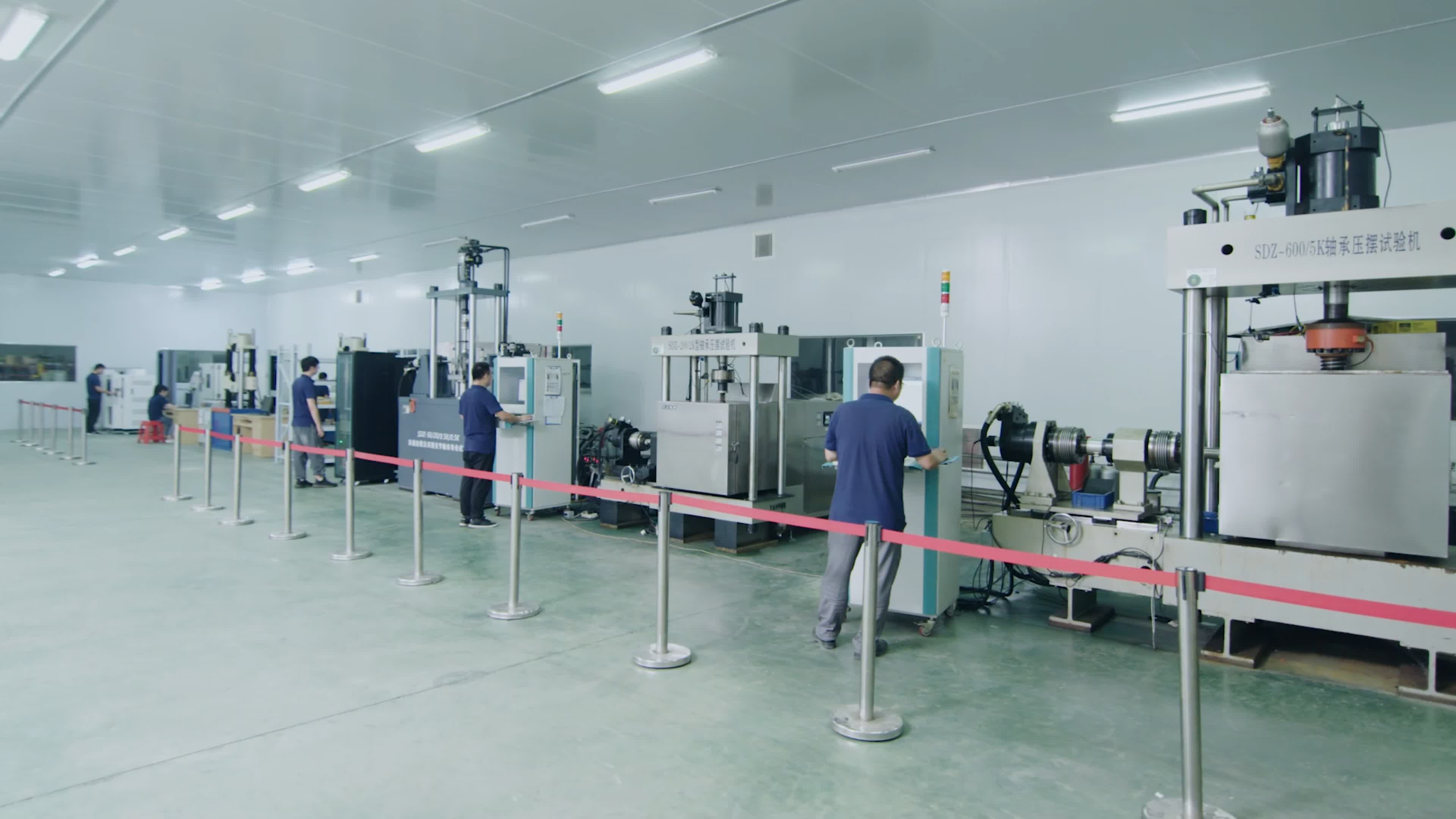
LDK reports that all manufacturing processes — including foundry and casting, turning, heat treatment, grinding, super-finishing, injection moulding, painting, and final assembly — take place under one roof, compared with a competitor model that it characterises as relying on more than 70% outsourced, workshop-style processing. Whether or not a buyer accepts that comparison at face value, the underlying structural question is valid: fragmented outsourcing is difficult to audit at the insert level, and insert-level consistency is what determines whether a mounted unit performs as quoted.

Mapping the Insert Range: Seven Standard Families, Eight Stainless Families
The insert is the functional core of a mounted unit, and insert family coverage is the first place where due diligence either produces usable data or stalls. The standard metric insert families in the LDK range are UC2, UC3, UCX, SA2, SB2, NA2, and UK2. The stainless insert families are SSER, SUK2, SNA2, SSA2, SSB2, SUER2, SUE2, and SUC2. The reason this matters commercially is that these designations appear in drawings, interchange lists, quotations, and maintenance documentation; a quotation that specifies only a housing size without naming the insert family leaves the sealing, lubrication, and material grade undetermined.
| Insert group | Series in the range | What it indicates about the supplier | What the buyer should verify |
|---|---|---|---|
| Standard metric inserts | UC2, UC3, UCX, SA2, SB2, NA2, UK2 | Coverage of multiple mainstream mounted-unit formats used in conveying, material handling, and general machinery | Bore schedule, locking arrangement, housing compatibility, grease specification |
| Stainless inserts | SSER, SUK2, SNA2, SSA2, SSB2, SUER2, SUE2, SUC2 | A parallel stainless line rather than a coated version of the standard line | Material grade, seal type, washdown suitability, and food-contact compliance where applicable |
| Adapter-sleeve mounting | UK2 and stainless SUK2 | Shaft-mounting options beyond direct bore fits | Sleeve dimension match, shaft tolerance, and installation procedure |
| Application-specific inserts | Customized inserts with specified grease fill | Engineering flexibility extending beyond catalogue items | Design drawings, sample lead time, and grease or coating specification |
Multiple families rather than a single general-purpose insert is the meaningful signal here. It indicates that a quotation can be matched to housing geometry, shaft-fixing method, and operating environment instead of being forced into one format, and it gives the buyer a concrete basis for asking why a particular series was proposed for a particular duty.
From Inserts to Housed Units: Reading Housing Coverage
Mounted units are only as useful as the housing formats available. Housing geometry determines how the unit bolts to the machine frame, and boundary dimensions for two-bolt and four-bolt plummer block housings are standardised internationally under ISO 113:2010. A supplier offering a single housing style forces the buyer to redesign mounting points; a supplier covering several styles allows the same insert family to be deployed across an entire machine platform.
| Housing format | Stainless designation in the LDK range | Typical engineering role |
|---|---|---|
| Pillow block (plummer block) | SSUCP | Two-bolt mounting on frames and conveyor structures, general industrial loads |
| Four-bolt flange | SSUCF | Flange mounting against flat machine faces |
| Two-bolt flange | SSUCFL | Flange mounting where mounting space is restricted |
| Take-up | SSUET | Take-up frames for belt and chain tensioning |
| Thermoplastic units | WP-SSBF, WP-SSBFL | Washdown, hygiene-sensitive, and light-to-medium load positions |
LDK also lists cast iron pillow blocks, thermoplastic housed bearing units, all stainless-steel mounted ball bearing units, Accu-Grip concentric locking bearing units, and mounted units for the air handling industry. Read together, that housing and insert map answers a practical sourcing question: can one supplier cover a mixed machine build — cast iron in the drive section, stainless at the washdown station, plastic at the light-duty guide — without splitting the order across three vendors with three sets of tolerances and three documentation formats?
A Decision Framework: Scoring a Range Against Your Application
Range data becomes a decision tool when it is scored against a bill of materials rather than admired as a list. The framework below converts catalogue breadth into verifiable checks that can be run before a purchase order is released.
| Check | What to request | Why it matters at decision stage |
|---|---|---|
| Insert coverage versus bore schedule | Named insert families and the full bore range being offered | Confirms the supplier can cover the whole machine, not only the most common sizes |
| Housing style coverage | Pillow block, flange, and take-up formats by material | Prevents redesign of mounting points and mixed-vendor sourcing |
| Material class coverage | Cast iron, stainless, thermoplastic, pressed steel, zinc alloy | Aligns the unit with corrosion, washdown, and load conditions |
| Sealing and lubrication options | Seal types and grease specifications, including solid-lube and food-adjacent options | Determines re-lubrication intervals and contamination risk |
| Batch documentation | Mill Test Certificates per batch, PPAP 3 documentation where required | Makes raw material origin auditable after delivery |
| Test capability | Fatigue life, tensile strength, noise and vibration, salt spray, high and low temperature testing | Indicates whether performance claims are simulated or theoretical |
| Sample and design validation | Sampling lead time and design support from prints or samples | Sets the realistic timeline for a validated first article |
| Traceability | Production dates, barcodes, and QR codes on shipments | Allows a defective batch to be isolated without recalling everything |
Application Evidence: Where Range Breadth Is Tested
Agriculture and farm implement bearings
Farm implement bearings operate under intense shock loads, mud immersion, and abrasive crop wrapping, which is why agriculture is a useful stress test for a supplier range. Disc harrow, square bore, and round bore configurations are the formats typically specified in this segment, and industry sources note that triple-lip contact seals and black oxide coatings are commonly used in disc harrow bearings to manage contamination.
LDK's published application figures for agriculture report an 85% reduction in premature mud-seizure rates under these conditions, zero peak-season downtime against 1,218 hours cited for alternatives, an expected service life of two seasons against one season, an annual routine check instead of 8 to 12 hours of maintenance, and a 12-month warranty against 6 months. The same material states that these results are supported by IATF 16949-compliant raw material sourcing from designated steel mills, with authentic Mill Test Certificates accompanying every batch, rather than by uncertified regional supply. For a buyer, the transferable point is not the headline number but the evidence chain: material origin, certificate per batch, seal specification, and a stated maintenance interval.
Washdown, food-adjacent, and hygiene-sensitive equipment
Stainless inserts (SSER, SUK2, SNA2, SSA2, SSB2, SUER2, SUE2, SUC2) and stainless housed units (SSUCP, SSUCF, SSUCFL, SSUET) exist because cast iron is a poor match for repeated washdown. Thermoplastic units such as WP-SSBF and WP-SSBFL cover the lighter-duty positions in the same machine. In food processing equipment, LDK's published figures cite 100% virgin resins with 0% flaking, FDA and HALAL compliant materials, a 0% grease contamination rate against approximately 4.2% for alternatives, 4.5 times higher washout resistance, a zero-leakage solid-lube matrix, and three to four times longer relubrication-free intervals. Unscheduled downtime at critical control points is stated as 0 hours against 48 to 72 hours per line per year for alternatives, with particle ingress below 2% against more than 35%.
These are supplier-published figures and should be validated against the buyer's own duty cycle, cleaning chemistry, and washdown frequency. They are still useful because they name the variables that matter — grease retention, washout resistance, and particle ingress — and those variables can be tested in a plant trial rather than argued about in a catalogue.
Customized inserts and special grease
Customization is the third evidence layer, and it is where a range-based supplier differs from a catalogue-only trader. LDK states that its technical team works from customer concepts, samples, or prints to produce 2D and 3D designs for specific constraints, that customized inserts can be supplied with special grease fills, and that the R&D sampling cycle runs 1 to 2 weeks against 6 to 8 weeks for suppliers dependent on fragmented multi-vendor sourcing. Technical validation is documented through PPAP 3 and IATF 16949 system records, and shipments can carry production dates, barcodes, and QR codes so that any defect can be isolated quickly.
Market Trend: Where Mounted Bearing Supply Is Heading
Three structural trends are shaping how buyers evaluate mounted bearing suppliers, and all three favour verifiable range data over brand assertion.
- Concentration in Asia-Pacific manufacturing. Asia Pacific held approximately 49.5% of mounted bearing market revenue in 2025, driven by industrialisation in China and India (Fortune Business Insights), and China was the leading exporter of ball bearings under HS 8482 in 2024, with an export value of USD 6.53 billion (OEC). Sourcing from this region is a mainstream procurement decision, so differentiation has to come from specifics rather than origin.
- A two-tier supplier landscape. Major global players including SKF, Schaeffler, Timken, NSK, and NTN collectively hold over 50% of the mounted bearing market. Below them sits a large specialist tier whose advantage is configuration breadth, material variety, and documentation flexibility rather than scale. Buyers increasingly shortlist across both tiers, which makes comparable evaluation criteria necessary.
- Application-driven material demand. Growth in food processing, pharmaceuticals, and agriculture is pushing demand for stainless inserts, thermoplastic housings, and food-adjacent grease specifications, while ISO 113:2010 continues to anchor housing boundary dimensions for two-bolt and four-bolt plummer blocks.
Note on market figures: estimates differ by scope. Pillow-block-specific studies quote a smaller figure than total bearing market studies, which include all bearing types and are quoted in the tens of billions of US dollars. Buyers should confirm the scope of any market number before using it in a business case.
Comparison with Conventional Commodity Sourcing
The alternative to a documented multi-material range is conventional commodity sourcing: buying the cheapest matching unit from whichever vendor has stock, and treating the bearing as a fungible part. The comparison below uses LDK's published figures against that model, and should be read as a supplier statement requiring independent validation.
| Dimension | Range-based sourcing (LDK published data) | Conventional commodity sourcing |
|---|---|---|
| Active catalogue | Over 3,000 active SKUs across materials and surface treatments | Fewer than 300 SKUs, largely commodity-grade parts |
| Manufacturing control | 100% in-house processes from casting to assembly | More than 70% outsourced, workshop-style processing |
| Reported first-year structural failure rate | Below 0.05% | Approximately 3.5% |
| Development sampling cycle | 1 to 2 weeks | 6 to 8 weeks, or no capability |
| Procurement overhead | Reduced by 40% through multi-vendor consolidation | Fragmentated supply base with duplicated administration |
| Vendor roster overhead and inventory turnover | Reduced by 45%; turnover increased by 35% | Frozen working capital across scattered vendors |
| Five-year total cost of ownership in food processing | 1x baseline | Up to 6 times baseline in the same comparison |
Where range evidence stops helping
Range breadth is a screening tool, not a guarantee, and an honest due diligence process has to say where it ends.
- A listed series is a candidate part, not a validated part. Insert bore, inner-ring width, housing shoulder dimensions, seal class, grease fill, and duty cycle still have to be checked against the actual application. The existence of fatigue life, tensile, noise and vibration, and salt spray testing in a supplier laboratory is evidence that validation is treated as necessary, not that any particular unit is correct for a given machine.
- Material substitution has mechanical limits. Stainless and thermoplastic housed units are not universal replacements for cast iron. Their load, stiffness, and temperature envelopes differ, and specifying a plastic unit in a heavy shock-load position is a design error rather than a procurement saving.
- Certification has a defined scope. IATF 16949 applies to the manufacturing facility and its processes, and compliance documentation such as ISO 14001, ISO 45001, RoHS, REACH, and FDA coverage applies to defined products or systems. None of it automatically certifies a distributor's storage conditions, re-lubrication practice, or handling. Buyers sourcing through intermediaries should request batch-level documentation at the point of delivery.
- Similar designations invite substitution errors. Stainless and standard families differ only by prefix or by a single character in some cases. Purchase orders should state the full designation, material, and grease specification so that the wrong insert family cannot be shipped against a correct housing.
Future Outlook
The direction of mounted bearing procurement is toward narrower vendor lists and deeper documentation per vendor. With the pillow block segment projected to reach USD 4.7 billion by 2033 at a 5.7% CAGR, and the wider mounted bearing market moving from roughly USD 1.48 billion in 2023 toward USD 2.55 billion by 2033, growth is likely to concentrate in applications where the housing material and lubrication system matter as much as the bearing steel — washdown and hygiene-sensitive equipment, agricultural implements operating in abrasive conditions, and conveyor systems with high maintenance sensitivity.
Two consequences follow for buyers. First, range audits become a standard part of supplier qualification rather than an optional exercise, because a supplier that cannot map its insert families and housing formats to a bill of materials will struggle to support a machine platform over its service life. Second, traceability moves from a compliance requirement to a commercial lever: barcode and QR traceability shortens the isolation time of a defective batch, which directly reduces the cost of a quality event for the buyer's own brand. Manufacturers that already operate raw material gatekeeping with Mill Test Certificates, PPAP 3 documentation, and in-house testing are positioned to answer those questions with records rather than reassurances.
Frequently Asked Questions
How should a buyer compare pillow block bearing suppliers at the decision stage?
Compare on verifiable surfaces rather than adjectives: named insert families and the bore range offered, housing formats and housing materials, sealing and lubrication options, batch-level documentation such as Mill Test Certificates and PPAP 3 records, in-house test capability, sample lead time, and shipment traceability. A supplier that can answer those points with documents gives a buyer something to audit; a supplier that answers with capability language does not. Range breadth is useful in this comparison only when each series can be tied to a specification and a production process.
What does a supplier's insert range actually prove about its capability?
An insert range proves that the supplier holds tooling, material supply, and inspection routines for the series it lists. LDK's range covers the standard metric insert families UC2, UC3, UCX, SA2, SB2, NA2, and UK2, and the stainless insert families SSER, SUK2, SNA2, SSA2, SSB2, SUER2, SUE2, and SUC2, with insert bore sizes from 10 mm to 140 mm and more than 100 combinations of materials and housing types. Support for that breadth includes IATF 16949-compliant manufacturing and testing for fatigue life, tensile strength, noise and vibration, and salt spray. Range breadth is an indicator of capability, not a certification of fitness for a specific application.
Which insert series should be shortlisted for a stainless steel application?
Stainless applications are served by the stainless insert families: SSER, SUK2, SNA2, SSA2, SSB2, SUER2, SUE2, and SUC2, which are designed to pair with stainless housed units such as SSUCP, SSUCF, SSUCFL, and SSUET. Where the equipment is food-adjacent, the shortlist should also confirm material compliance such as FDA and HALAL coverage and the grease specification, since stainless housings alone do not address contamination risk. Standard and stainless families should not be treated as interchangeable on price alone, because the material and lubrication content differ.
How do stainless and plastic housed units compare with cast iron pillow blocks?
The three housing families address different environments rather than competing on the same axis. Cast iron pillow blocks are the conventional choice for general industrial loads and rigid mounting. Stainless steel units such as SSUCP, SSUCF, SSUCFL, and SSUET are specified where repeated washdown and corrosion exposure would degrade a ferrous housing. Thermoplastic units such as WP-SSBF and WP-SSBFL are used in washdown and hygiene-sensitive positions at light-to-medium loads. Because load, stiffness, and temperature envelopes differ between these materials, the environment should determine the housing family first and the duty cycle should confirm it.
What documentation should accompany a mounted bearing order?
A decision-stage order should come with batch-level Mill Test Certificates for raw material, production dates plus barcode or QR traceability for defect isolation, PPAP 3 documentation where the buyer's quality system requires it, and current compliance records such as IATF 16949 for the manufacturing facility and ISO 14001, ISO 45001, RoHS, REACH, and FDA coverage where applicable to the product. Third-party verification by bodies such as BV, SGS, or TUV can be requested when the buyer needs independent confirmation. Documentation should be requested at the delivery level, not only at the supplier level.
Does a broader product range mean a higher purchase price?
Not necessarily, and unit price is a weak comparison basis for mounted bearings. The relevant cost model is total cost of ownership, which includes procurement administration, inventory carry, maintenance labour, and downtime. LDK's published comparison cites procurement overhead reduced by 40% through multi-vendor consolidation, vendor roster overhead reduced by 45%, inventory turnover increased by 35%, and a five-year total cost of ownership in food processing stated as 1x baseline against up to 6 times baseline for commodity alternatives. Those are supplier-published figures, and a buyer should test them against their own maintenance and failure records before adopting them in a business case.
For dimension tables, housing and insert combinations, and material options, LDK publishes a downloadable product and specification catalogue (PDF): LDK bearing product catalogue.
¿Tiene preguntas o necesita más detalles?
Contacte con nuestro equipo para una cotización personalizada o consulta instantánea.
Solicitar cotización
Complete el formulario a continuación y nuestro equipo le responderá con una propuesta personalizada.
Chat directo de WhatsApp
¿Prefiere chatear en tiempo real? Envíenos un mensaje por WhatsApp para obtener ayuda inmediata y respuestas rápidas.
- Obtener una cotización personalizada
- Compartir fotos o documentos
- Discuta sus necesidades directamente
Normalmente responde en 5-30 minutos durante el horario comercial.