
Pillow Block Bearing Comparison Framework: UCP, UCPH, UCFA, UCHA and SSUCP
Pillow Block Bearing Comparison Framework: UCP, UCPH, UCFA, UCHA and SSUCP
Pillow block bearing units are rarely selected on bearing bore alone. In most industrial buying decisions, the binding constraint is how the unit attaches to the machine frame and what the housing is made of — because those two choices drive installation time, alignment tolerance, contamination exposure and the cost of the next replacement.
The mounted bearing category reflects that reality. IndexBox industry analysis valued the global pillow block (mounted bearing) market at approximately USD 6.1 billion in 2024, and Fortune Business Insights reported that plummer blocks accounted for roughly 42.51% of mounted bearing revenue share in the same year. At the broader level, Global Market Insights estimated the total bearings market at USD 58.6 billion in 2024 with a projected USD 143.6 billion by 2034. Published estimates differ by scope — Fortune Business Insights cites USD 50.16 billion for 2025, while Mordor Intelligence projects USD 59.66 billion for 2026 — so the defensible reading is not one precise figure but a large, replacement-driven market in which configuration fit, not catalogue breadth, decides repeat orders.
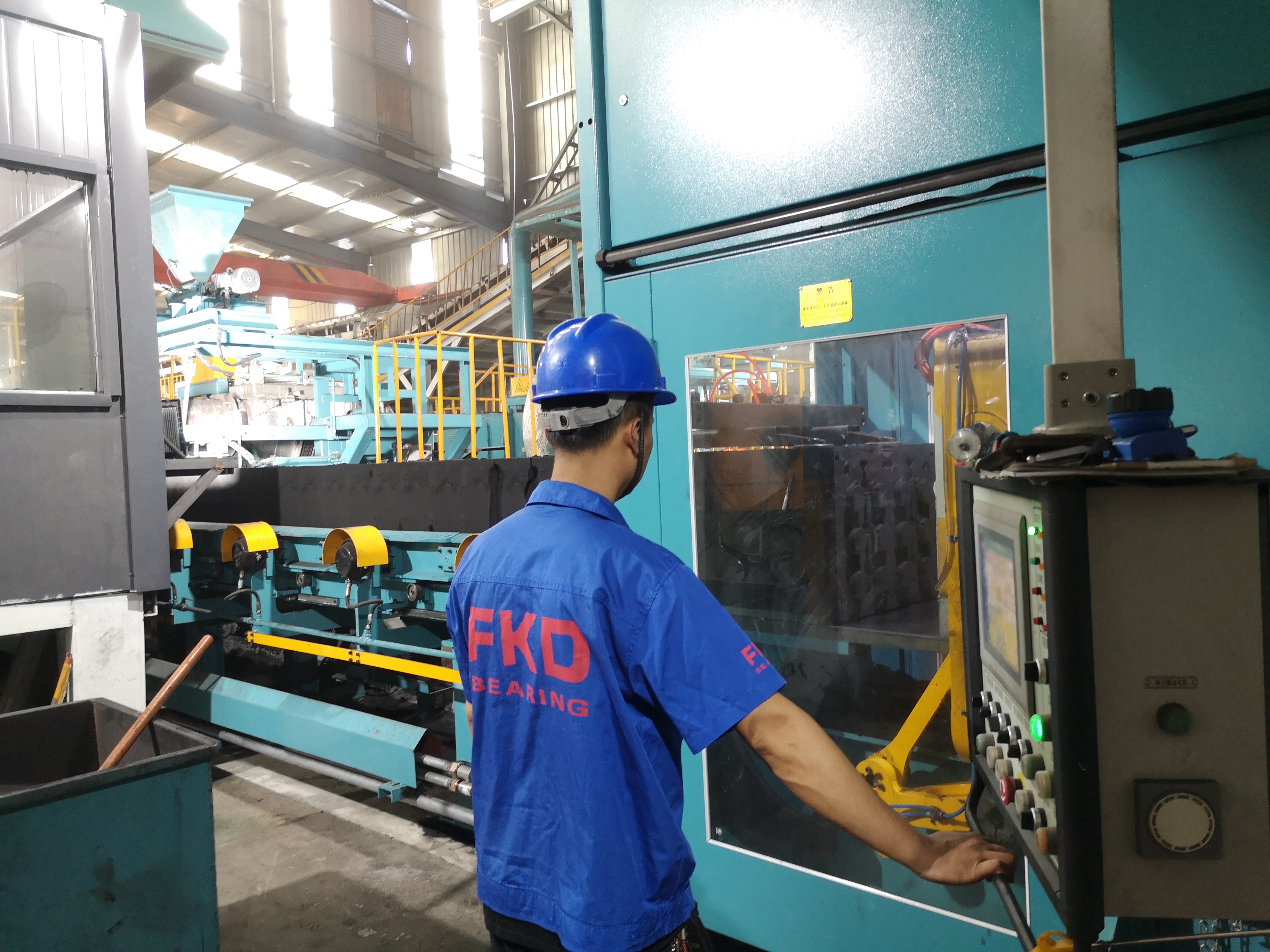
This article sets out a buyer-side comparison framework for five FKD mounted unit configurations — UCP200, UCPH, UCFA, UCHA and SSUCP (STAINSTEEL) — plus pressed-housing units, organised by mounting style, housing material, center height and application fit. FKD Bearing is the brand of Hebei Hailan Bearing Manufacture Co., Ltd, a Chinese pillow block bearing manufacturer founded in 1988 in Linxi County, Hebei Province, operating a 100,000 m² site with more than 65,000 m² of plant, over 400 employees including about 30 technicians and engineers, automated pillow block bearing, automatic inspection and bearing housing production lines, and ISO 9001:2015 quality management system certification. The company reports annual production and sales above 20 million pieces across pillow block bearings, deep groove ball bearings and tapered roller bearings, with more than 90% of output exported to over 68 countries and regions.
Why Mounting Style Outranks the Insert in Most Buying Decisions
Insert bearing units share a common architecture: a deep groove ball bearing insert with sealing and a locking arrangement seats into a housing whose geometry defines the mounting interface. The insert governs internal running quality — steel grade, ball grade, clearance, runout and limiting speed. The housing governs how the load reaches the machine structure. A high-grade insert in the wrong mounting configuration will still misalign, still collect contamination and still cost the same installation downtime.
For a decision-stage buyer, the comparison should therefore run in a fixed order:
- Mounting interface and center height — base, flange, hanger or pressed housing, and where the shaft axis sits relative to the mounting surface.
- Housing material and environment — cast iron, stainless steel or pressed steel against dust, moisture, washdown and shock.
- Insert quality and speed — steel grade, ball grade, tolerance class and limiting speed against the actual duty cycle.
- Sealing and lubrication strategy — grease type, seal arrangement and realistic re-lubrication access.
- Inspection evidence and commercial terms — what the supplier documents per batch, and what the purchase order accepts.
Reversing that order — starting from landed price per unit — usually produces a configuration that costs more across the service interval than the alternative it replaced.
Configuration Snapshot: UCP, UCPH, UCFA, UCHA, SSUCP and Pressed Housings
The table below is the reference grid for the rest of this article. It compares the six options on the dimensions that change a mounting decision: interface type, housing material, shaft-axis position and the conditions under which each configuration stops being the right answer.
| Configuration | Mounting style | Housing material | Center height / shaft position | Typical duty | Main boundary |
|---|---|---|---|---|---|
| UCP200 | Two-bolt base pillow block | Cast iron QT450, GCr15 insert, P5 ZV3, 3000 RPM | Standard center height above base | General drives, conveyors, fans, textile and agricultural machinery | Requires flat, rigid base and shimmed alignment |
| UCPH | Base pillow block, raised center | Cast iron QT450 | High center height, more base clearance | Applications needing clearance for larger pulleys or frame obstructions | Longer lever arm between load and base bolts; base rigidity matters more |
| UCFA | Adjustable flange, face mounting | Cast iron | No base; shaft passes through plate or frame | Face-mounted drives, adjustment during alignment | Mounting face flatness and bolt engagement govern reliability |
| UCHA | Hanger unit, suspended support | Cast iron | Suspended inside conveyor trough | Screw conveyor intermediate support | Limited lubrication access; replacement requires conveyor downtime |
| SSUCP (STAINSTEEL) | Two-bolt base pillow block | Stainless steel housing and stainless insert option | Standard center height | Wet, washed or corrosive environments | Cost premium; confirm bushings and locking elements are also corrosion-resistant |
| Pressed housing units | Light pressed steel housing | Pressed steel | Low profile | Light conveyors, small fans, low-load drives | Thin wall, limited stiffness; not a substitute for cast iron under shock |
Read the grid vertically rather than horizontally. In practice, the mounting style column eliminates two or three options immediately, material eliminates a further one, and only then does insert grade become a price-relevant variable.
UCP200: The Cast-Iron Baseline
The UCP200 series is the reference point for this framework: a two-bolt base-mounted pillow block with a cast iron housing in QT450 ductile iron, a GCr15 chrome steel insert, P5 ZV3 grade and a stated limiting speed of 3000 RPM. Each of those attributes answers a different buyer question.
QT450 housing. Ductile cast iron is selected for its combination of stiffness and impact tolerance in a cast housing, which matters in the two failure modes the manufacturer identifies for mounted units: bearing overheating and housing breakage. A cracked housing removes the unit from service regardless of insert condition, so housing grade is a durability decision, not a cosmetic one.
GCr15 insert with P5 ZV3. GCr15 is the chrome bearing steel used for the insert rings. The P5 tolerance class and ZV3 vibration grade describe running accuracy and vibration behaviour rather than load capacity, which is why the UCP200 specification matters most in processes where vibration is transmitted into the machine — textile lines, finishing equipment and precision drives — and matters least in slow, heavily damped applications.
3000 RPM limit. The stated limiting speed sets the boundary between direct-coupled and belted drive applications. Buyers evaluating high-speed fans or small high-speed shafts should confirm the unit's limiting speed against actual shaft speed before ordering, and treat the figure as an operating boundary, not a target.
In-house housing and bearing production. FKD manufactures both the bearing inserts and the housings on its own production lines, including a dedicated bearing housing production line and casting workshop. For buyers, this matters because housing seat geometry and insert fit are produced under one quality system rather than assembled from third-party castings — a point that becomes decisive when units are ordered in mixed series and must interchange consistently.
UCPH: High Center Height as a Clearance Decision
UCPH units are the raised-center version of the base-mounted pillow block. The housing places the shaft axis higher above the base than a standard UCP unit of comparable bore, which solves a specific mechanical problem: clearance. Where a large pulley, sheave, sprocket or rotating component would otherwise foul the mounting plate or frame, a high-center-height housing lifts the shaft clear without changing the bore size or the drive layout.
The trade-off is structural and should be stated plainly. Raising the shaft axis lengthens the lever arm between the applied load and the base bolts, which increases the moment the base must resist. UCPH selection therefore raises the requirement for base plate rigidity, bolt grade and shim quality. Where the obstruction can be solved another way — repositioning the frame, reducing pulley diameter, or altering the mounting plate — a standard UCP unit keeps the load path shorter and the installation less sensitive to base deformation.
Decision rule: choose UCPH when clearance is genuinely required, not when a taller unit is simply available. Where UCPH is required, confirm the mounting surface is machined flat and that the base bolts are sized for the resulting moment before commissioning the drive.
UCFA: Adjustable Flange Mounting
UCFA units are adjustable flange units designed for face mounting, where the unit bolts to a plate, wall or frame and the shaft passes through the mounting face. This is the configuration to evaluate when a machine structure does not offer a horizontal base — a common situation in compact equipment, retrofits and packaged machinery where the frame is a vertical plate.
Two buying considerations dominate. First, the mounting face becomes part of the bearing's load path: flange bolts carry the radial load in shear and tension, so thread engagement, plate thickness and hole quality directly affect service life. Second, adjustability is an installation benefit with a maintenance implication — adjustable positions can be disturbed during service work, so the alignment reference should be recorded at first installation and re-checked after any intervention on the drive.
UCFA is generally the wrong answer where a base plate exists and can carry a two-bolt pillow block: the base-mounted configuration gives a more direct load path and is simpler to inspect.
UCHA: Screw Conveyor Hanger Units
UCHA units are hanger units for screw conveyors: the unit is suspended from the trough cover or an overhead structure and supports the screw at intermediate points along its length. The configuration exists because long screw flights cannot be supported from the ends alone, but the consequence is that the bearing sits inside the material flow.
That single fact reshapes the selection criteria. The unit is exposed to the conveyed product, to dust and to abrasive fines; lubrication access is limited compared with a base-mounted unit on an accessible frame; and replacement typically requires stopping the conveyor and opening the trough. As a result, the priorities for UCHA specification are sealing effectiveness, grease retention of high-temperature grease, and matching the hanger geometry to the trough and screw so the unit is not pre-loaded at installation.
Hanger units should also be treated as a wear item within a maintenance plan rather than a fit-and-forget component. Where a conveyor handles heavy abrasive material, buyers should confirm the expected inspection interval with the supplier and confirm that the replacement unit is interchangeable with the installed geometry.
SSUCP / STAINSTEEL and Pressed Housings: Material-Driven Selection
Once the mounting interface is fixed, housing material becomes the second major decision. The three practical options behave differently.
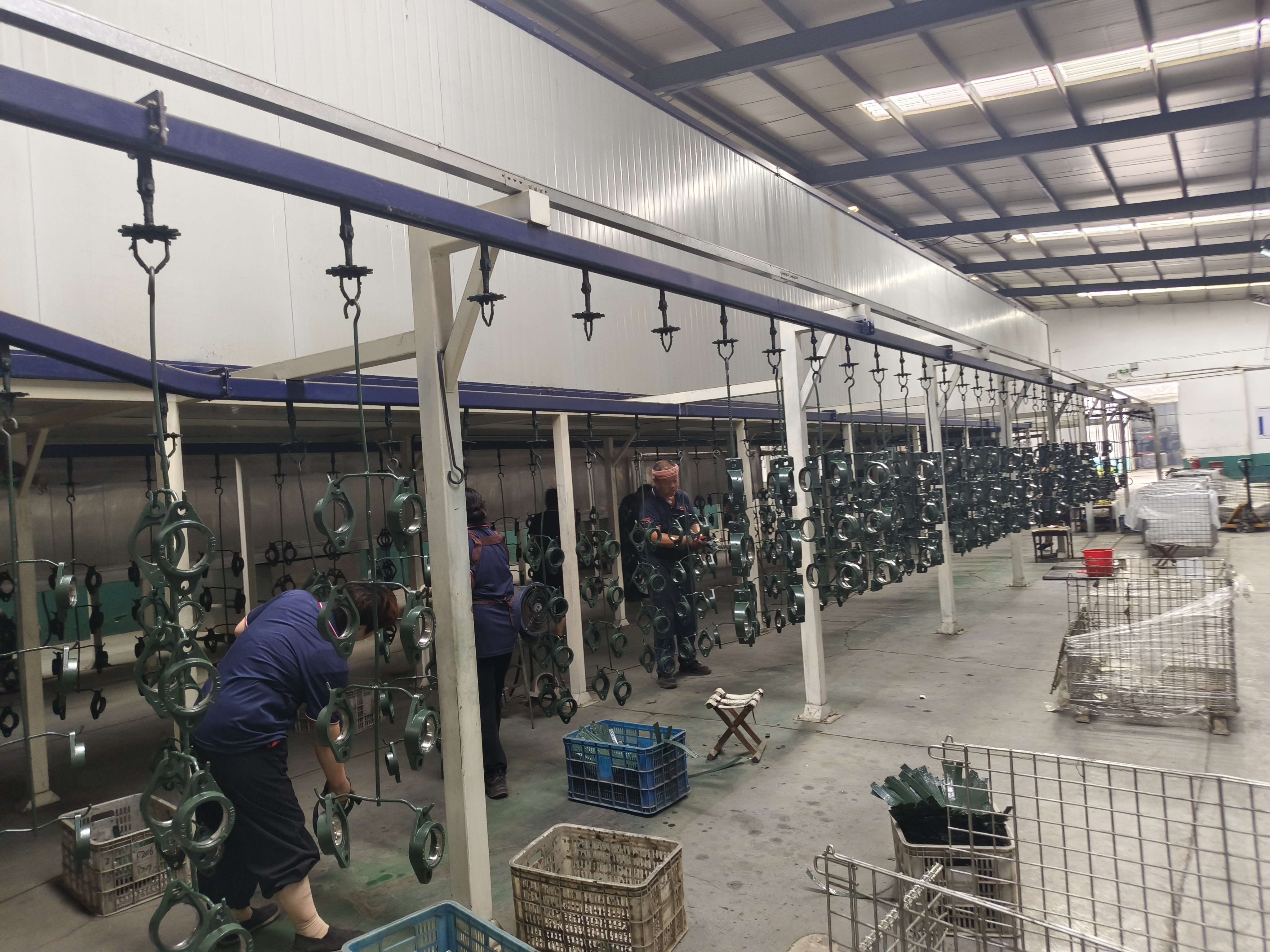
Cast iron QT450. The default for UCP, UCPH, UCFA and UCHA. Ductile cast iron offers a good balance of stiffness and impact tolerance for general industrial duty, and it can be machined to a consistent insert seat. Its weakness is corrosion: in wet, washed or chemically exposed locations, cast iron depends on coating quality and on re-coating at service intervals.
Stainless steel — SSUCP / STAINSTEEL. Selected for corrosion resistance and washdown environments rather than for higher load. Buyers should verify that the insert rings, locking elements and lubrication path are equally protected; if only the housing is stainless, the insert will corrode first and the unit will fail from the inside. Stainless units also carry a cost premium over cast iron equivalents, so they should be specified where the environment genuinely requires them rather than as a general upgrade.
Pressed steel housings. Light, low-cost, and appropriate for light loads and low-duty drives. The thin wall limits stiffness, which means pressed housings are not a like-for-like substitute for a cast iron unit under shock, overhung loads or heavy belt tension. They are best treated as a category for small fans, light conveyors and low-load auxiliary equipment.
One further boundary applies to this framework as a whole: it deals with units built around deep groove ball bearing inserts. Where radial capacity or combined loads exceed what a ball insert can carry, buyers move into mounted units built around spherical roller bearings or tapered roller bearings, which follow different selection rules and different acceptance criteria.
Application Checks: Manufacturing, Agriculture, Textile and Mining Machinery
The same configuration performs differently across industry segments because the dominant stress changes. FKD lists transmission equipment, mining machinery, engineering machinery, textile machinery, agricultural machinery, forestry machinery and construction machinery among the application areas for its bearing range, and those segments map onto distinct checks.
| Application area | Dominant stress | Configurations to evaluate first | Checks before ordering |
|---|---|---|---|
| Manufacturing and general industrial drives | Continuous duty, moderate load, alignment quality | UCP200, UCPH | Base flatness and shim practice; limiting speed versus actual shaft speed; re-lubrication access |
| Agricultural machinery | Dust, moisture, vibration, outdoor exposure and shock | UCP200, UCPH, sealed units; SSUCP where washing occurs | Seal arrangement; grease retention; coating condition; shock tolerance of the housing |
| Textile machinery | High running hours, vibration sensitivity, cleanliness | UCP200 with P5 ZV3 insert | Runout and vibration grade; alignment stability over long running hours |
| Mining and heavy processing | Heavy radial load, abrasive dust, water ingress, impact | UCPH and heavy-duty cast iron housings; stainless only where corrosion dominates | Housing breakage risk; sealing against fines and water; inspection and replacement interval |
| Screw conveying and material handling | Abrasion inside the material flow, limited service access | UCHA hanger units | Hanger geometry match; grease type; planned downtime for replacement |
Two checks cut across all five areas. First, sealing: dust and moisture are the most common accelerators of mounted unit failure, and the seal specification should be written into the order rather than left to the standard build. Second, lubrication: where a unit is described as sealed or maintenance-free, the practical question is not whether grease exists but how long it remains effective in that environment, and whether the seal can be inspected without dismantling the drive.
Where Each Configuration Stops Working
A comparison framework is only credible if it states the boundaries. For this set of configurations, the limits are concrete:
- UCP200 and UCPH assume a horizontal, rigid mounting surface. On a flexible fabricated frame, both configurations lose alignment under load, and the UCPH version amplifies the problem through its longer lever arm.
- UCPH adds clearance but increases base moment; it is not a general replacement for a standard pillow block.
- UCFA transfers load into a mounting face; where plate thickness or bolt engagement is inadequate, the flange — not the bearing — becomes the failure point.
- UCHA operates inside the material flow with restricted lubrication access, so it is inherently a higher-maintenance position in a conveyor system.
- SSUCP / STAINSTEEL solves corrosion, not load. Specifying stainless where the real problem is shock or heavy radial load misplaces the budget.
- Pressed housings are light-duty by design; using them where a cast iron housing is required trades a low unit price for a shorter replacement cycle.
- Cast iron generally remains vulnerable to impact fracture — the manufacturer lists housing breakage as a controlled failure mode, mitigated through material quality and inspection rather than eliminated by design.
Purchasing Terms and Acceptance Criteria
For decision-stage buyers, the comparison exercise ends in a purchase order that is precise enough to be inspected against. The following terms should be stated explicitly rather than inferred from a series code.
Commercial and specification terms to fix in writing:
- Series and mounting configuration (UCP200, UCPH, UCFA, UCHA, SSUCP or pressed housing).
- Bore diameter and locking method.
- Housing material and grade — for example cast iron QT450 or stainless steel — plus coating or finish specification.
- Insert specification: GCr15 rings, ball grade, tolerance class and vibration grade such as P5 ZV3.
- Seal arrangement and grease type, including high-temperature grease where the application runs warm.
- Marking, packing and unit identification.
- Documentation supplied per shipment: ISO 9001:2015 certificate, batch inspection records and dimensional reports.
- Sample or first-article approval before volume release, and the replacement terms that apply if incoming inspection fails.
Acceptance criteria that can be verified on receipt:
- Full dimensional inspection of the unit, not a sample-based dimensional check.
- Batch testing of raw material, with the quality grade of finished product inspected in batches.
- Radial runout within the stated limit of ≤0.012mm where that grade is specified.
- Grease fill and seal integrity confirmed before dispatch.
- 100% inspection applied to the failure modes the manufacturer identifies — bearing overheating and housing breakage — using high-quality steel balls, high-temperature grease and full inspection as the control method.
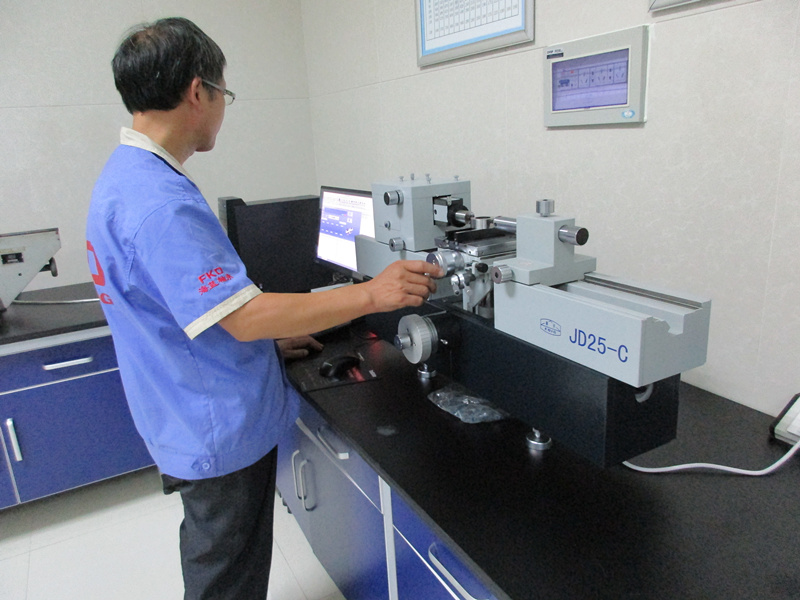
A further structural point sits above these criteria. Pillow block units are commonly standardised under ISO for universal sizing and JIS for localised precision compatibility, which means bore and bolt dimensions are broadly interchangeable across suppliers while internal grade is not. Buyers should therefore separate interchangeability checks (dimensions, bolt centres, center height) from performance checks (runout, vibration grade, grease and seal specification) rather than assuming the second follows from the first.
Cost, Life and Failure Rate: Reading Manufacturer Comparison Data
FKD's own comparison data, measured against other Chinese brands, reports a 30% longer service life, a 45% lower failure rate and a 10% lower cost position, with maintenance requirements reduced and running life between services extended by 30%. The stated technical basis is high-quality steel, G10 steel balls and the in-house manufacture of both bearings and housings, supported by radial runout ≤0.012mm and the use of high-temperature grease.
These are manufacturer comparison figures rather than independently audited third-party results, and they should be read as such. The practical way to use them is as a testable hypothesis: a buyer who specifies runout limits, ball grade, grease type and a batch inspection regime in the purchase order converts a supplier claim into an incoming inspection criterion that either passes or fails. Comparison data is useful for shortlisting; acceptance testing is what protects the production line.
On delivery reliability, FKD supports its position with full dimensional inspection and batch quality verification, and mitigates supply chain and compliance risk through batch testing of raw materials and inspection of product quality grades. For buyers, that is the relevant claim: not that defects never occur, but that the inspection burden is documented at the point of manufacture and can be traced per batch.
Market Trend: What the Numbers Suggest About Buyer Behaviour
Three data points frame current sourcing behaviour. China's total export of ball bearings reached USD 6.53 billion in 2024, representing 19.9% of global exports according to OEC trade data, which confirms China as the dominant supply source for this component category. The pillow block segment itself is large and mature at approximately USD 6.1 billion in 2024, with plummer blocks holding roughly 42.51% of mounted bearing revenue share. Meanwhile the overall bearings market is projected to expand from USD 58.6 billion in 2024 to USD 143.6 billion by 2034 on Global Market Insights' estimate.
Read together, these numbers describe a market where growth is broad but the buying problem is narrow: most mounted bearing purchases are replacements or repeat orders, and the deciding factor in repeat orders is not catalogue range but whether the unit installed in the same fit, lasted the same interval and arrived with the same documentation. That is the mechanism by which documented inspection and traceable batch quality have become commercial differentiators rather than technical formalities.
Future Outlook
Two directions appear durable. First, material differentiation will keep expanding at the top and bottom of the range — stainless and sealed units addressing corrosion and washdown, pressed housings serving light-duty and cost-sensitive equipment, with cast iron QT450 remaining the working default for general industrial duty. Second, verification will continue moving into the contract: buyers who specify GCr15 inserts, P5 ZV3 grades, runout limits and batch inspection records are converting supplier capability into an auditable condition of supply.
For manufacturers, the competitive question is therefore less about what configurations exist in the catalogue and more about whether each configuration can be supplied with consistent housing quality, consistent insert grade and consistent documentation across repeat orders.
FAQ
What is the difference between UCP and UCPH pillow block units?
Both are two-bolt base-mounted pillow blocks. UCP units use a standard center height, placing the shaft axis at the conventional distance above the base. UCPH units use a raised center height, lifting the shaft axis higher above the base to provide clearance for larger pulleys or to clear frame obstructions. The higher center increases the distance between the applied load and the base bolts, so UCPH installations require a more rigid base and careful bolt sizing.
When should a buyer choose UCFA flange units instead of a UCP pillow block?
UCFA adjustable flange units are face-mounted, with the shaft passing through a plate or frame. They are the appropriate choice when the machine offers a vertical mounting face rather than a horizontal base, and when alignment adjustment during installation is required. Where a rigid horizontal base plate exists, a two-bolt UCP pillow block gives a more direct load path and is easier to inspect.
How do I decide between cast iron QT450 and stainless steel SSUCP housings?
The decision is environmental, not structural. Cast iron QT450 is the general-purpose housing material for UCP, UCPH, UCFA and UCHA units, with coating quality determining its resistance to moisture. Stainless steel units such as SSUCP in the STAINSTEEL range are selected where corrosion, washdown or chemical exposure dominates. Buyers choosing stainless should confirm that insert rings and locking elements are also corrosion-resistant, and should not treat stainless as an upgrade in load capacity.
What acceptance criteria should be written into a pillow block bearing purchase order?
A verifiable order specifies the series and mounting configuration, bore, housing material and grade, insert steel and grade, seal and grease type, plus documentation per shipment. Acceptance criteria that can be checked on receipt include full dimensional inspection rather than sampling, batch raw material testing with batch inspection of finished quality grade, radial runout within the stated ≤0.012mm limit where that grade is ordered, and confirmed grease fill and seal integrity. ISO 9001:2015 certification supports the system behind these checks but does not replace them.
Which configurations suit agricultural, textile and mining machinery respectively?
Agricultural machinery combines dust, moisture, vibration and shock, so sealed base-mounted units in cast iron are the practical starting point, with stainless units where washing occurs. Textile machinery runs long hours with vibration sensitivity, which places emphasis on insert tolerance and vibration grade such as P5 ZV3 rather than on mounting type. Mining and heavy processing impose heavy radial loads, abrasive dust and impact, where housing strength and sealing dominate; the manufacturer identifies housing breakage as a failure mode controlled through material quality and inspection.
What are the limits of pressed-housing units compared with cast iron housings?
Pressed steel housings are light, low-cost and suited to light loads, small fans and low-duty conveyors. Their thin wall limits stiffness, so they are not a like-for-like substitute for a cast iron housing under shock loads, heavy belt tension or overhung loads. Where impact tolerance and dimensional stability under load are required, cast iron QT450 housings are the appropriate category.
Reference
FKD publishes a consolidated product catalogue covering pillow block bearing units and housings, which buyers can use as a starting point when building a specification and acceptance list: FKD and HHB Bearing Catalogue (PDF). Mounting configuration, housing material and inspection documentation remain the three decisions that determine whether a mounted unit performs as specified.