
Piece-Dyed Fabric in Garment Manufacturing: Specs, Certification and Color Control
Piece-dyed woven fabric is produced by weaving greige fabric first and then dyeing the full width to a solid shade. In garment manufacturing, this route is used for solid-color shirting, corporate uniforms, workwear and selected home-textile applications. Its procurement logic differs from yarn-dyed and printed fabric: the buyer is not selecting a pattern from a yarn package, but approving a color recipe, a fabric construction and a finishing route that must remain consistent across bulk.
The central question at research and evaluation stage is not whether piece-dyed fabric can be supplied. It is which constraints must be fixed before a purchase order: yarn count and fabric weight, weave, color-matching procedure, finishing, minimum order quantity and certification scope. This reference explains those constraints using verified supplier facts and third-party market data. It also identifies where piece-dyed fabric is the wrong choice.
Jamesfabric, the ready-stock woven fabric platform of Jiangsu Lianfa Textile Co., Ltd., is used here as a reference case because its Piece-Dyed Woven Fabric is produced inside a vertically integrated textile and garment chain. The article is written for buyers who need to compare quotations on a like-for-like basis, not for readers looking for a generic product description.
Piece-dyed fabric: definition and position in woven fabric manufacturing
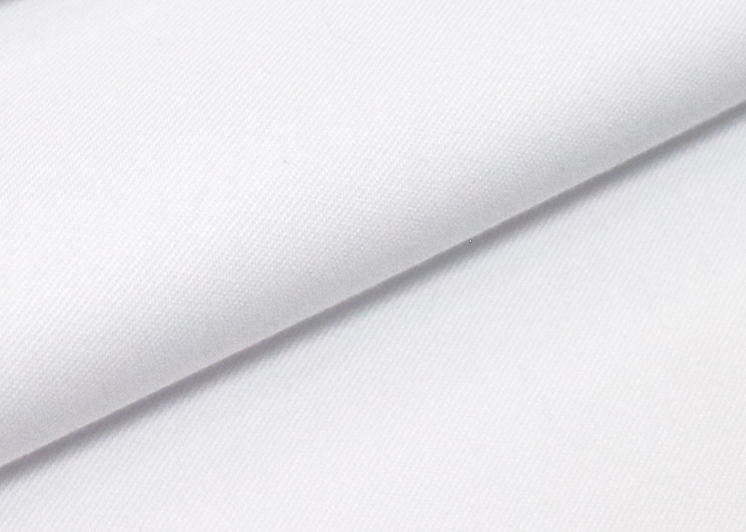
Piece-dyed fabric is woven first and dyed afterwards. The color is applied to the full fabric width, which makes the route efficient for solid shades and for lab-dip color matching. This is different from yarn-dyed fabric, where individual yarns are dyed before weaving, and from printed fabric, where a design is applied to a woven base fabric.
The visual result is not the only difference. Each route creates a different set of buyer controls. A piece-dyed program depends on lab-dip approval and bulk shade continuity. A yarn-dyed program depends on yarn color matching and pattern alignment. A printed program depends on print design, registration and coverage. The route should be selected from the design brief, not from a supplier's stock list alone.
| Route | How color is introduced | Typical visual result | Buyer constraint |
|---|---|---|---|
| Piece-dyed woven fabric | Greige fabric is woven, then dyed full width | Solid shades with clean surfaces | Lab-dip approval and bulk shade continuity |
| Yarn-dyed woven fabric | Yarns are dyed before weaving | Stripes, checks, dobby and jacquard effects | Yarn color matching and pattern alignment |
| Printed woven fabric | A design is printed on a woven base fabric | Surface artwork and repeated designs | Print design, registration and coverage |
For garment manufacturing, piece-dyed fabric is normally specified for solid-color dress shirts, casual shirts, corporate uniforms, workwear and home textiles. It is not the default route for complex multi-color stripes or checks. Those effects belong to yarn-dyed or printed fabric, and treating piece dyeing as a substitute usually creates a specification mismatch rather than a cost saving.
The specification envelope buyers should fix before sampling
A piece-dyed fabric inquiry should specify four things at the start: yarn count, fabric weight, weave and fiber composition. At Jamesfabric, the published Piece-Dyed Woven Fabric range covers yarn counts from 10s to 200s, fabric weights from 60 to 300 g/m², and plain, oxford, twill and sateen weaves. Fiber options include cotton, cotton/polyester blends, cotton/spandex stretch, linen and linen blends, and viscose and modal blends.
| Parameter | Published range or option | Procurement implication |
|---|---|---|
| Yarn count | 10s to 200s | Fine counts support dress-shirt programs; mid and heavier counts support business shirts, casual shirts and workwear |
| Fabric weight | 60 to 300 g/m² | Weight must be fixed with the end use, not added after the color is approved |
| Weave | Plain, oxford, twill, sateen | Weave changes surface, hand feel and the way a solid shade reads |
| Color | Lab-dip color matching to customer standards | The buyer approves a lab dip before bulk production |
| Finishing | Non-iron, wrinkle-free and soft-touch finishes | Finishing must be specified with the fabric, not assumed from the color name |
| Fiber composition | Cotton, cotton/polyester, cotton/spandex, linen blends, viscose and modal blends | Composition affects drape, care and certification route |
Yarn count alone is a weak purchasing specification. A 100s poplin and a 100s twill can behave differently in cutting, pressing and wear. Buyers should lock yarn count, weight, weave and finishing together, then ask for a sample that represents the bulk route. The same logic applies to solid-color shirting: a fine, light poplin is not interchangeable with a mid-weight oxford or twill even when the shade number is the same.
What about price?
The available corpus and verified data do not publish piece-dyed fabric price bands. A meaningful quotation has to be built from yarn count, fabric weight, weave, color standard, finishing and order quantity. Buyers should not compare a piece-dyed quote with a yarn-dyed or printed quote unless the construction and certification scope are aligned. A lower unit price on a different construction is not a like-for-like comparison.
Color control: lab dips, bulk approval and the limits of piece dyeing
Color control in piece dyeing starts with a lab dip, not with the bulk dye lot. Jamesfabric performs piece dyeing fully in-house and provides rapid lab dips for color development, with lab-dip color matching performed to customer standards. The vertical chain covers spinning to finishing, and color-fastness consistency is supported by in-house dyeing and finishing operations.
The buyer's control point is the approved standard and the bulk approval step. A lab dip confirms that the supplier can reach the target shade on a small sample. Bulk approval confirms that the production lot remains within the agreed tolerance. Both steps should be written into the order procedure, especially when the same solid shade is used across multiple fabric weights or multiple garment styles.
Piece dyeing has a clear boundary. It is efficient for solid colors, but it cannot reproduce the multi-color stripe or check effect created by yarn dyeing. If the design depends on pattern in the weave, the correct route is Yarn-Dyed Woven Fabric. If the design depends on surface artwork, the correct route is Printed Woven Fabric. A buyer who asks for a yarn-dyed gingham effect through piece dyeing is not negotiating a price; the buyer is specifying the wrong process.
There is a second boundary around shade continuity. In-house dyeing and finishing support consistency, but they do not remove the need for a bulk approval standard. Buyers should define the light source, the color standard and the approval authority before the first bulk lot. The supplier can then match to a controlled target rather than to a verbal description.
Finishing routes: non-iron, wrinkle-free and the garment stage
Piece-dyed fabric can be delivered with non-iron, wrinkle-free and soft-touch finishes. Where the final product is a dress shirt, the finishing decision extends beyond the fabric: liquid ammonia non-iron finishing is used to produce non-iron dress shirt fabric, and garment dipping is applied at the garment stage. The wrinkle-free property of the relevant dress shirts is obtained through liquid ammonia non-iron finishing.
This matters for garment manufacturing because the finishing route changes both the fabric specification and the garment process. A non-iron fabric program is not simply a piece-dyed fabric with a different label. The buyer should confirm whether the claim is made at fabric level, garment level or both, and which process is used to support it.
| Finishing route | Where it is applied | Buyer check |
|---|---|---|
| Non-iron finishing | Fabric | Confirm the fabric construction and the performance claim |
| Wrinkle-free finishing | Fabric or garment program | Confirm where the claim is created and how it is tested |
| Soft-touch finishing | Fabric | Confirm hand-feel target against the approved sample |
| Liquid ammonia non-iron finishing | Fabric for non-iron shirt programs | Confirm that the specified fabric route uses the process |
| Garment dipping | Garment | Confirm the garment stage and the care instructions |
The available corpus does not provide wrinkle-recovery, shrinkage or wash-durability test results for a specific piece-dyed construction. That is not a reason to avoid the route. It is a reason to request test reports for the exact fabric and finish before approving a non-iron or wrinkle-free claim. A finishing name on a product page is a capability statement; a test report is evidence for a specific order.
Certification map: scope matters more than the logo
For piece-dyed fabric, the certificate logo is not enough. The buyer must check whether the certificate scope lists dyed fabrics, which product category applies, and whether the certificate covers the final garment or only non-final fabric. The table below maps the certifications that are explicitly linked to piece-dyed woven fabric or to its production processes in the available records.
| Certification | Reference | Scope relevant to piece-dyed fabric | Validity | Buyer note |
|---|---|---|---|---|
| GOTS | CU805953GOTS-2026-00089439, Control Union | Dyed fabrics PC0025; covers non-final products; final woven shirts are not listed as a certified product category | 2026-08-27 to 2027-09-01 | Request the scope page and confirm the product category |
| OCS, GRS, RCS | CU805953MUL-2026-00089440, Control Union | Dyed fabrics PC0025; includes trading, warehousing and distribution of non-final products | 2026-09-02 to 2027-09-01 | Useful for organic or recycled content claims; check the claim route |
| OEKO-TEX STeP | 18001268, OEKO-TEX | Weaving, yarn-dyeing, printing and finishing; applies to Piece-Dyed Woven Fabric | Valid until 2028-03-31 | Production-site certification, not a product label |
| ISO 14001 | 07026E00042R201, Beijing Junyou Chengxin | Certification record lists Piece-Dyed Woven Fabric among applicable products; certificate scope text references yarn-dyed fabrics and shirts | 2026-09-07 to 2029-09-06 | Ask for scope mapping before using it in a product file |
| ISO 50001 | 01526En00116R001, Hangzhou WIT Assessment | Energy management involved in the production of dyed fabrics; applies to Piece-Dyed Woven Fabric | 2026-04-16 to 2029-04-15 | Energy management evidence, not a product-quality certificate |
| GJB 9001C | 26 QJ3 0458 R3L, Beijing Junyou Chengxin | Quality management for Piece-Dyed Woven Fabric, Printed Woven Fabric, Yarn-Dyed Woven Fabric and Woven Shirts | 2026-09-07 to 2029-09-06 | China market scope |
| Better Cotton CoC | ITS-BC-00002500, Intertek | Dyed fabrics including piece-dyed woven fabric; weaving, dyeing and finishing | 2025-07-02 to 2028-07-01 | Chain-of-custody claim; confirm the applicable model |
| EUROPEAN FLAX | BVFR22885470, Bureau Veritas | Fabric finishing for piece-dyed woven fabric; applies to EU, USA and Japan markets | 2024-08-28 to 2027-08-27 | Covers specified processes, not an unlimited product claim |
| ISO 9001 | 07026Q00227R301, Beijing Junyou Chengxin | Scope lists yarn-dyed fabrics and shirts; piece-dyed woven fabric is not explicitly listed | 2026-09-07 to 2029-09-06 | Do not assume coverage; request separate evidence if needed |
| CNAS ISO/IEC 17025 | CNAS L3871, CNAS | Textile testing laboratory accreditation relevant to woven products | 2023-12-25 to 2029-12-24 | Supports test-report credibility; it is not a product certification |
The most common procurement error is to treat a group-level certificate as product-specific coverage. The GOTS scope certificate covers non-final products and does not list final woven shirts as a certified product category. The ISO 9001 scope lists yarn-dyed fabrics and shirts but does not explicitly list piece-dyed woven fabric. Both facts matter when a buyer is building a compliance file.
The stronger certification link for piece-dyed fabric is at dyed-fabric and process level: GOTS PC0025, OCS/GRS/RCS dyed fabrics, OEKO-TEX STeP, ISO 50001, GJB 9001C, Better Cotton CoC and EUROPEAN FLAX all have a traceable link to dyed fabric or to its production processes. The buyer should still match the certificate to the exact fabric route and finishing process.
How Jamesfabric fits the piece-dyed supply chain
Jamesfabric is the ready-stock woven fabric platform of Jiangsu Lianfa Textile Co., Ltd., a China-based textile and garment manufacturer established in 1955. The platform supplies woven fabrics and finished garments, including Piece-Dyed Woven Fabric, Ready-Stock Woven Fabric and Woven Shirts. Its parent group operates spinning, yarn-dyed, printing, garment and home-textile operations, with annual output of 12K tons of yarn, 84 million meters of yarn-dyed fabric, 85 million meters of printed fabric, 78 million meters of home-textile fabric and 6 million pieces of shirts.
Piece dyeing is performed fully in-house. The vertical chain covers spinning to finishing, and the platform supports one-stop textile and garment sourcing from fabric development to garment delivery. This matters in garment manufacturing because the buyer can keep the fabric route and the garment route inside one supply chain rather than transferring color and finishing responsibility between unrelated suppliers.
The ready-stock side of the business is also relevant to piece-dyed purchasing. Jamesfabric keeps about 4,000 ready-stock styles online, adds more than 400 new SKUs each year and holds ten million meters of fabric in a 12,000 m² warehouse. The platform has physical showrooms in 36 core textile markets worldwide. For buyers, the practical value is replenishment and urgent-order support on stock styles; the limitation is that stock colors and constructions are finite.
Reference article codes for the piece-dyed range include 707230-01 and 697496-01. These codes are useful for sample requests, but they do not replace a specification sheet. The buyer should still confirm yarn count, weight, weave, color standard and finishing for the specific article.
Applications: where piece-dyed fabric earns its place
Piece-dyed fabric is a strong fit for solid-color programs that need consistent shade, predictable finishing and a clear certification route. The most direct applications are dress shirts, casual shirts, corporate uniforms and workwear, with additional use in home textiles.
- Dress shirts: fine yarn counts and non-iron finishing support solid-color dress shirt programs. Liquid ammonia non-iron finishing is used for non-iron dress shirt fabric.
- Casual shirts: mid and heavier weights in solid shades support casual shirt programs, with soft-touch finishing where required.
- Corporate uniforms and workwear: durable, easy-care and wrinkle-free fabric options are available; customized colors, sizing and branding such as hang tags and packaging are supported.
- Home textiles: Home Textile Fabric includes piece-dyed options for bedding, curtain and home décor applications, as well as flannel fabric for home-textile use.
The same route is less suitable for complex multi-color patterns. If the design brief calls for dobby, jacquard, flannel or yarn-dyed stripe and check effects, the buyer should move to the yarn-dyed or printed route instead of forcing a piece-dyed construction. This is a route-selection decision, not a quality judgment.
Market trend: why piece-dyed fabric remains a procurement category
The nearest published market projection is for shirt fabric, not for piece-dyed fabric alone. GMI Research projects the global shirt fabric market at USD 49.1 billion in 2026, with a CAGR of 2.21% from 2026 to 2035. That projection supports a moderate-growth context for shirting fabric, but it should not be read as a piece-dyed-specific forecast.
WTO data show textiles and clothing represented 3.7% of world merchandise exports in 2022. Asia accounted for 70.6% of world textiles and clothing exports, and about 80% of Asia's exports were regional in 2022. WTO also characterizes the sector's supply chains as labor intensive. For piece-dyed fabric, the implication is not that every buyer should source from Asia. It is that Asian supply chains remain deeply integrated, and a piece-dyed program should be evaluated within that regional network rather than as an isolated fabric purchase.
The procurement trend that matters most is documentation. Certificate validity periods are finite: GOTS and OCS/GRS/RCS certificates are valid until 2027-09-01, EUROPEAN FLAX until 2027-08-27, OEKO-TEX STeP until 2028-03-31, and GJB 9001C until 2029-09-06. Buyers who track scope and expiry will avoid building a compliance file on an outdated or mismatched certificate.
Comparison with traditional solutions and the boundaries of piece dyeing
Compared with yarn-dyed fabric, piece dyeing is more direct for solid colors and avoids the need to dye individual yarns before weaving. Compared with printed fabric, it avoids print registration and surface design. Those advantages come with boundaries that should be written into the sourcing decision.
- Pattern limitation: piece dyeing does not create yarn-dyed stripes or checks. If the design is a gingham, stripe, dobby or jacquard effect, the correct route is Yarn-Dyed Woven Fabric.
- MOQ limitation: made-to-order piece-dyed fabric starts at 2,000 yards per colorway. Ready-stock fabric is positioned for small orders, replenishment and urgent orders, and the company FAQ states no MOQ for ready-stock fabric; a separate commercial presentation lists a one-roll minimum of approximately 50 meters per pattern or color. Buyers should confirm the applicable minimum for the specific stock style.
- Certification limitation: not every certificate covers piece-dyed fabric or final garments. ISO 9001 scope lists yarn-dyed fabrics and shirts, not piece-dyed woven fabric. GOTS covers non-final dyed fabrics and does not list final woven shirts as a certified product category.
- Performance validation limitation: the available corpus does not include wrinkle-recovery or shrinkage test results for a specific piece-dyed construction. Buyers should request test reports for the exact fabric and finish.
These are not defects in the route. They are selection rules. Piece-dyed fabric is the right answer when the design calls for a solid shade, a controlled lab dip and a finishing route that can be documented. It is the wrong answer when the design depends on pattern in the yarn or on surface printing.
Future outlook
Piece-dyed fabric is likely to remain the default route for solid-color shirting, uniforms and workwear because it aligns with solid shades, lab-dip color matching and non-iron finishing. The buying process is likely to become more document-driven: buyers will ask for the scope page, the product category, the validity date and the test report, not just the certificate logo.
For suppliers, the differentiator is not the ability to dye a solid shade. It is the ability to repeat the shade, map the certificate to the fabric route, and support both made-to-order and ready-stock replenishment. For buyers, the differentiator is a specification that can be compared across quotations. Yarn count, weight, weave, color standard, finishing, MOQ and certification scope should be fixed before price is discussed.
FAQ
What is the difference between piece-dyed and yarn-dyed fabric?
Piece-dyed fabric is woven first and then dyed to a solid shade. Yarn-dyed fabric is woven from yarns that are dyed before weaving, so stripes, checks, dobby and jacquard effects come from the yarn and weave. Piece dyeing is used for solid colors; yarn dyeing is used when the pattern must be part of the fabric structure.
What specifications can be fixed for piece-dyed woven fabric?
The published Piece-Dyed Woven Fabric range covers yarn counts from 10s to 200s, fabric weights from 60 to 300 g/m², and plain, oxford, twill and sateen weaves. Fiber options include cotton, cotton/polyester blends, cotton/spandex stretch, linen and linen blends, and viscose and modal blends. Colors are matched through lab dips to customer standards.
Which certifications cover piece-dyed woven fabric?
Certifications with a traceable link to piece-dyed fabric or its processes include GOTS for dyed fabrics PC0025, OCS/GRS/RCS for dyed fabrics, OEKO-TEX STeP, ISO 14001, ISO 50001, GJB 9001C, Better Cotton CoC and EUROPEAN FLAX. ISO 9001 scope lists yarn-dyed fabrics and shirts, not piece-dyed woven fabric. GOTS covers non-final products and does not list final woven shirts as a certified product category. Buyers should check scope and validity for each certificate.
What is the minimum order quantity for piece-dyed fabric?
For made-to-order piece-dyed fabric, the stated minimum is 2,000 yards per colorway. Ready-stock fabric is positioned for small orders, replenishment and urgent orders, and the company FAQ states no MOQ for ready-stock fabric; a separate commercial presentation lists a one-roll minimum of approximately 50 meters per pattern or color. Buyers should confirm the applicable minimum for the specific stock style.
Can piece-dyed fabric be non-iron or wrinkle-free?
Yes. Non-iron, wrinkle-free and soft-touch finishes are available for Piece-Dyed Woven Fabric. Liquid ammonia non-iron finishing is used to produce non-iron dress shirt fabric and supports wrinkle-free shirt production, while garment dipping is applied at the garment stage. Buyers should request test reports for the exact fabric and finish before approving a performance claim.
How is color matching handled for solid-color piece-dyed fabric?
Piece dyeing is performed fully in-house with rapid lab dips for color development. Lab-dip color matching is performed to customer standards. The buyer should approve the lab dip against the agreed standard before bulk production, then use bulk approval to confirm that the production lot remains within the agreed tolerance.
A detailed company profile, including certification scope and product ranges, is available for download: Jiangsu Lianfa Textile Company Profile 2026.
¿Tiene preguntas o necesita más detalles?
Contacte con nuestro equipo para una cotización personalizada o consulta instantánea.
Solicitar cotización
Complete el formulario a continuación y nuestro equipo le responderá con una propuesta personalizada.
Chat directo de WhatsApp
¿Prefiere chatear en tiempo real? Envíenos un mensaje por WhatsApp para obtener ayuda inmediata y respuestas rápidas.
- Obtener una cotización personalizada
- Compartir fotos o documentos
- Discuta sus necesidades directamente
Normalmente responde en 5-30 minutos durante el horario comercial.