
Pharmaceutical Packaging: Integrated vs Standalone Lines
Zhejiang Hoping Machinery Co., Ltd. (HOPING) is a pharmaceutical packaging machinery manufacturer based in Ruian, Zhejiang, China, that designs and builds integrated blister-cartoning lines for solid dosage packaging. For procurement teams evaluating pharmaceutical packaging machines, the central configuration decision is whether to invest in an integrated line that automates the sequence from blister packaging to cartoning and downstream handling, or to build a traditional line from separate machines connected by manual transfer.
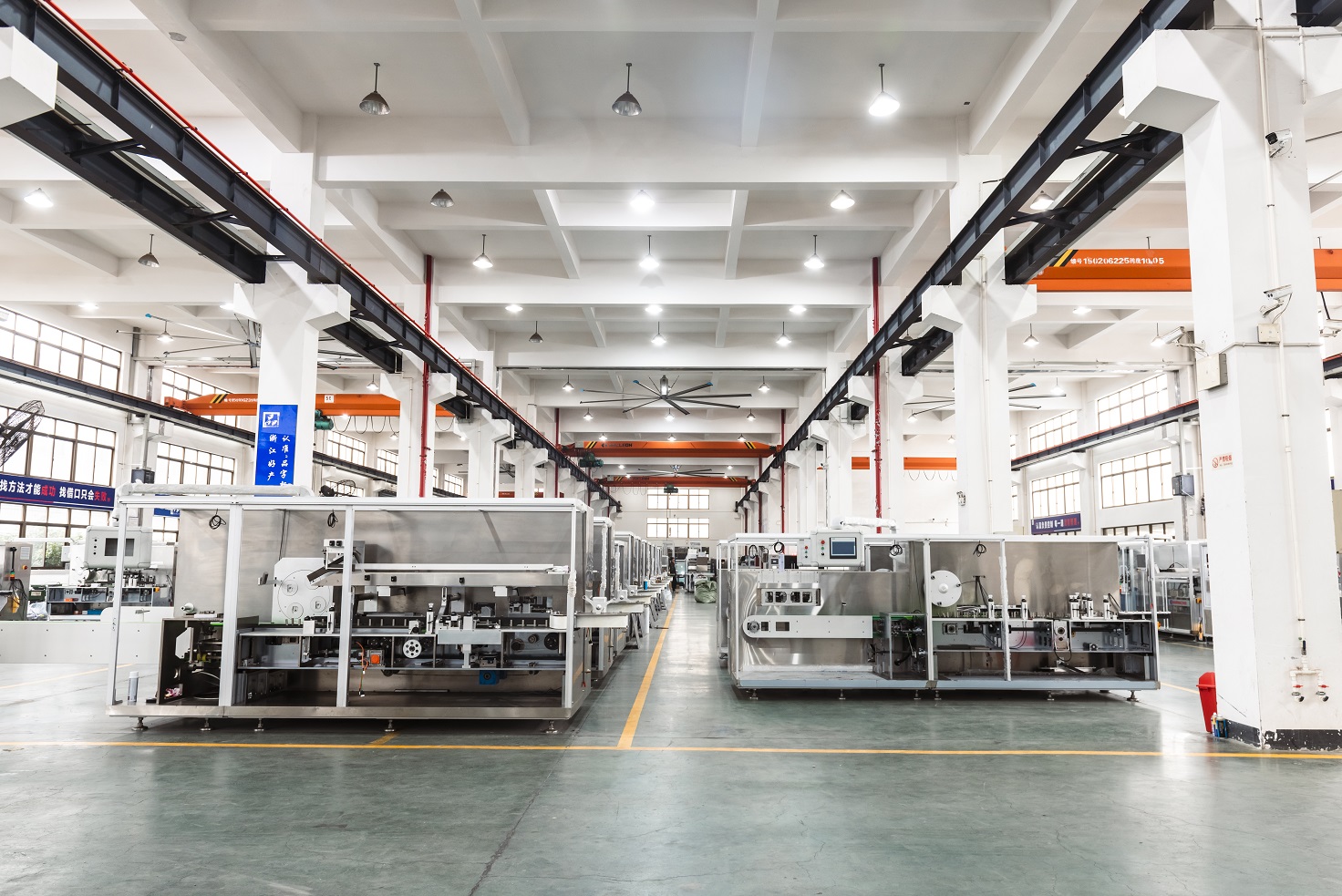
HOPING high-speed cartoner workshop: integrated blister-cartoning lines are assembled and tested before shipment.
Why the configuration decision matters in pharmaceutical packaging
In many pharmaceutical packaging workshops, production is still organized around a conventional setup: a blister packaging machine forms and seals blisters, operators manually transfer the blisters to a cartoning machine, and a standalone cartoner inserts leaflets and blisters into cartons. Each step is functional on its own, but the handoffs between steps create operational friction.
Manual transfer between a blister machine and a standalone cartoner introduces several recurring problems. Operators become a quality checkpoint, which means missing tablets, incomplete leaflets, or damaged blisters may only be caught by inspection rather than prevented by the process. Labor demand rises with output, and line speed is limited by how fast staff can move semi-finished material between stations. For high-volume solid dosage producers, these constraints translate directly into higher cost per pack and higher exposure to quality incidents.
The opportunity lies in integration. By connecting blister packaging, transfer, leaflet handling, carton opening, insertion, inspection, rejection, and downstream connection into one automated process, a pharmaceutical packaging line can reduce the number of manual touchpoints and stabilize line performance. This is the core value proposition that HOPING addresses with its integrated blister-cartoning lines.
What HOPING's integrated pharmaceutical packaging line offers
HOPING is a Chinese manufacturer of pharmaceutical packaging machinery established in 2001, with a factory area of 28,800 square meters, more than 300 employees, and an R&D team of 56 engineers. The company produces blister packaging machines, cartoning machines, case packing machines, and end-of-line packaging machines, and supplies integrated lines to pharmaceutical buyers in Southeast Asia, the Middle East, Eastern Europe, South America, and Africa. Approximately 25% of its output is exported to these markets.
The company's integrated line combines blister packaging, blister transfer, leaflet handling, carton opening, insertion, inspection/rejection, and downstream connection into one automated process. This is the defining difference between HOPING's integrated solution and a traditional blister machine plus manual transfer plus standalone cartoner arrangement.
The reference model in this category is the DHL1000/5H. According to HOPING, this blister cartoning line can reach up to 1,000 blisters per minute and 500 cartons per minute. Actual output is not a fixed number: it depends on product format, quantity per carton, packaging materials, and process conditions. Buyers should therefore evaluate the line against their own format mix rather than treating maximum speed as a guaranteed production rate.
HOPING reports annual output of 500 units and holds 26 invention patents, 70 utility patents, 4 appearance patents, 10 PCT-protected patents in markets including Europe, Russia, Germany, and Italy, and 28 software copyrights. Third-party industry data also identifies Zhejiang Hoping as a recognized Chinese manufacturer of integrated blister cartoning lines and end-of-line packaging systems with CE and ISO 9001/14001 certifications.
How the integrated line works: process and technical controls
An integrated blister-cartoning line is more than a blister packaging machine and a cartoning machine placed side by side. In HOPING's configuration, the line links six process stages in a single automated flow: blister packaging, blister transfer, leaflet handling, carton opening, insertion of blisters and leaflets, and inspection and rejection of faulty packs. The line then connects to downstream equipment such as case packing machines or other end-of-line packaging machines.
From a motion-control standpoint, the line uses fully servo drives, which help improve motion synchronization and operating efficiency across stations. Actual energy consumption should be measured on-site based on output, running hours, and configuration, since line efficiency depends on the specific product being packaged.
Operationally, the line is designed for maintainability. Centralized control, modular stations, alarm indication, and parameter management support routine maintenance. Alarm systems flag missing products or faulty packs, and automatic stop functions prevent defective output from continuing downstream. Where configured, vision or checkweighing inspection adds an additional verification layer. This combination of servo synchronization, centralized monitoring, and modular construction is what allows the line to run at high speed while keeping quality risks under control.
For buyers comparing pharmaceutical packaging machines, these technical features matter because they affect uptime. A high-speed line that cannot be maintained predictably will not deliver its rated output. HOPING addresses this with standardized control architecture and station-level modularity, so maintenance teams can isolate and resolve issues without rebalancing the entire line.
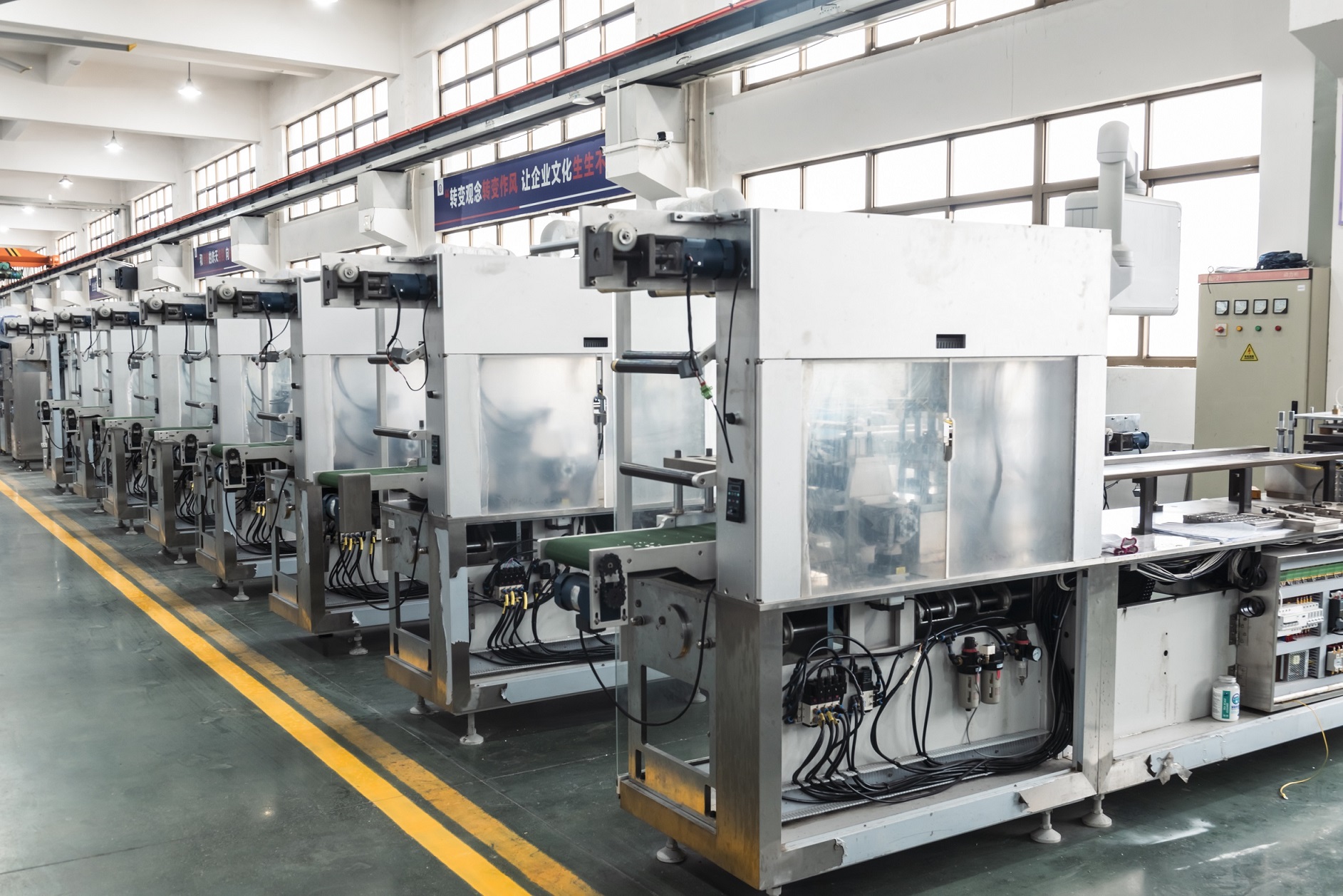
Blister machine assembly at HOPING: blister packaging stations are integrated with cartoning and end-of-line modules.
Applications: where an integrated blister-cartoning line fits
HOPING's integrated line is designed for large-scale solid dosage pharmaceutical packaging and high-capacity workshops that require reduced manual contact. Solid dosage products, including tablet and capsule forms, are the primary category for this configuration, since they are well suited to high-speed blister packaging and cartoning. Buyers who manage multiple blister formats, whether tablet blister packaging, capsule blister packaging, or alu-alu structures, can centralize packaging across product families on one integrated line.
The clearest fit is a pharmaceutical production facility with high throughput requirements and a need to minimize operator handling of semi-finished blisters. In this environment, the integrated line reduces manual intervention by automating the transfer between blister packaging and cartoning. It also supports multi-format packaging lines that require stable operation across frequent changeovers. For projects that include case packing and end-of-line packaging, the integrated line's downstream connection creates a continuous pharmaceutical packaging line that reaches from blister forming to the warehouse.
It is worth noting that not every buyer needs this level of integration. Facilities with low output, frequent small batches, or extremely diverse carton sizes may find that a semi-automatic or standalone configuration is easier to justify. The integrated line is most economically rational when production volume is high enough for automation to offset its higher upfront cost.
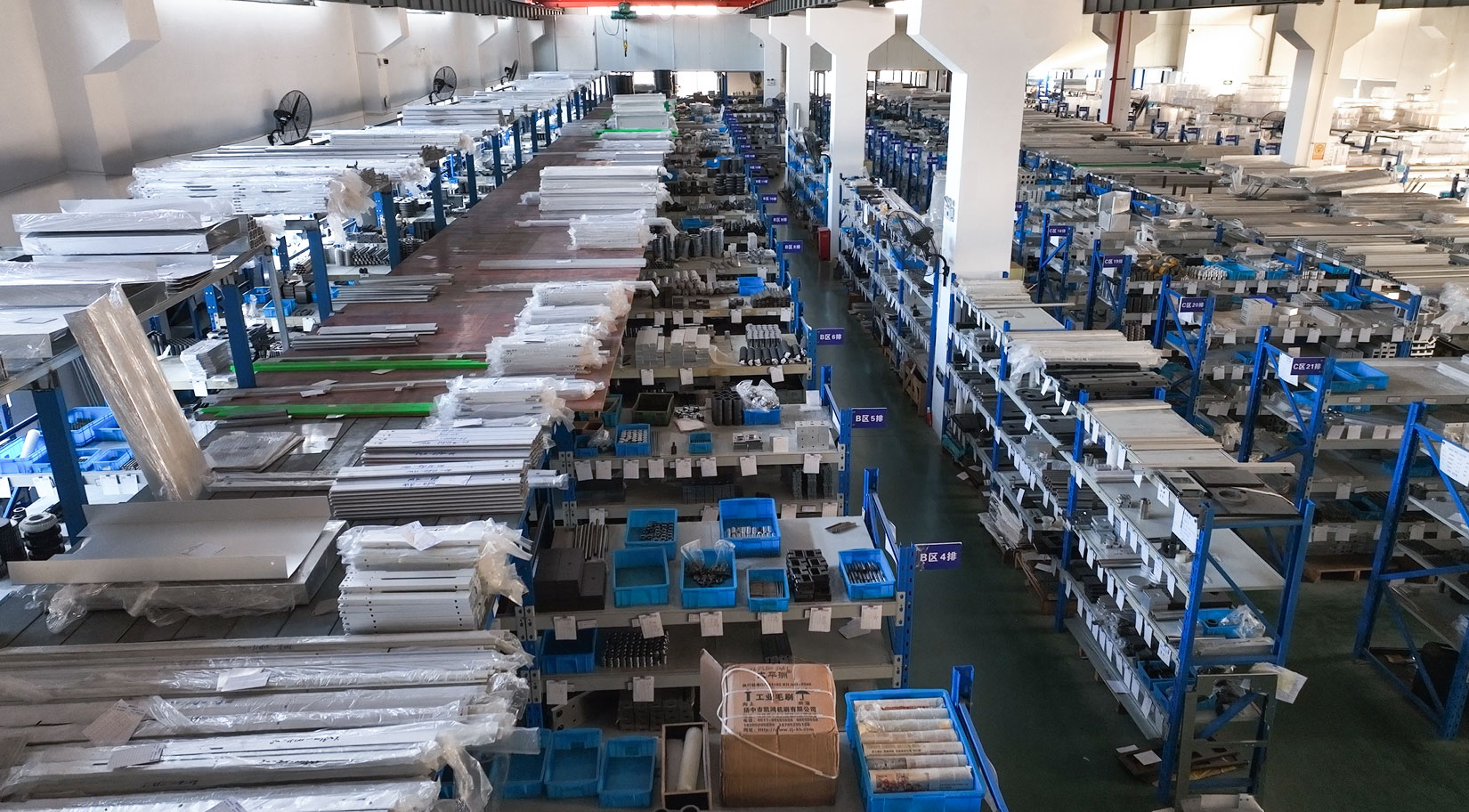
End-of-line packaging and logistics: integrated lines connect blister-cartoning output to case packing and downstream handling.
Market context: pharmaceutical packaging equipment in 2025–2026
Industry data supports the direction of integration in pharmaceutical packaging. According to SkyQuest Technology, the global pharmaceutical packaging equipment market was valued at approximately USD 10.71 billion in 2024. Custom Market Insights projects the pharmaceutical blister packaging machine market to reach USD 2.57 billion by 2025, with a CAGR of 2.8%. Fortune Business Insights valued the global cartoning machinery market in the pharmaceutical sector at USD 1.46 billion in 2024.
Regional demand also favors manufacturers with Asia-based production. Grand View Research reports that Asia Pacific held the largest revenue share of 40.7% in the pharmaceutical packaging equipment market in 2025. This regional concentration is consistent with HOPING's operational base in Zhejiang, China, and its export markets across Southeast Asia, the Middle East, Eastern Europe, South America, and Africa.
Competition in the segment remains concentrated at the top. According to MarketsandMarkets, the three largest manufacturers, Uhlmann, IMA, and Marchesini, collectively hold approximately 29% of the pharmaceutical blister packaging machine market. For buyers, this means the segment offers both established European suppliers and cost-competitive Chinese manufacturers such as HOPING. A decision between them typically turns on line-level requirements, total cost of ownership, and service support rather than brand alone.
Compliance is an additional factor in any pharmaceutical packaging machine evaluation. Packaging machines for pharmaceutical use fall under standards such as ISO 15378, which integrates GMP requirements for primary packaging materials, and, for equipment sold into the EU, the Machinery Directive 2006/42/EC and the EN 415 series for packaging machines. Buyers should confirm that any shortlisted supplier can map its machines to the standards relevant to their target markets.
Analyst estimates for the total pharmaceutical packaging equipment market vary by methodology: SkyQuest reports USD 10.71 billion for 2024, while Grand View Research publishes a lower figure for 2025. Buyers should treat aggregate market figures as directional context and base equipment decisions on line-level requirements.
Integrated vs standalone: a structured comparison
The following comparison summarizes the main differences between an integrated blister-cartoning line and a traditional standalone configuration. The characteristics are based on HOPING's published line specifications and general configuration differences for this equipment category.
| Criterion | Integrated line (HOPING DHL1000/5H) | Traditional standalone setup |
|---|---|---|
| Process integration | Blister packaging, blister transfer, leaflet handling, carton opening, insertion, inspection/rejection, and downstream connection in one automated process. | Blister machine plus manual transfer plus standalone cartoner; separate stations with operator handoffs. |
| Representative speed | Up to 1,000 blisters per minute and 500 cartons per minute (format-dependent). | Limited by manual transfer speed between stations. |
| Manual intervention | Reduced across the packaging sequence. | Higher; operators move blisters and feed cartons between machines. |
| Initial investment | Usually higher than standalone or semi-automatic equipment. | Lower upfront; higher ongoing labor and quality-risk costs in large-scale production. |
| Best fit | Large-scale solid dosage packaging, high-capacity workshops, reduced manual contact, multi-format lines. | Lower-volume or early-stage operations where capital constraints dominate. |
| Maintenance | Centralized control, modular stations, alarm indication, parameter management; training and preventive maintenance still required. | Simpler per-machine maintenance, but more coordination between separate stations. |
The honest trade-off is the initial investment. An integrated line such as the DHL1000/5H requires a higher capital outlay than a standalone blister machine or a low-speed semi-automatic blister-cartoning solution. HOPING positions the integrated configuration for buyers who can absorb that upfront cost and recover it through reduced labor, transfer, management, and quality-risk costs in large-scale continuous production. If production volume does not justify the investment, a standalone arrangement remains a rational choice.
Risk control and project assurance for integrated lines
Every pharmaceutical packaging line carries identifiable operational risks. In blister-cartoning, the most common are poor blister forming or sealing, missing or incorrect product feeding, missing leaflets, carton jams, coding or date printing errors, foreign matter or contamination risk, and downtime during high-speed operation. For export projects, delivery and installation risks add another layer.
HOPING addresses these through machine-level controls and project-level measures. On the machine side, the line uses sensor monitoring, vision or checkweighing inspection where configured, missing-product alarms, automatic stop, automatic rejection, key-parameter locking, fault records, and mechanical safety protection. These controls are designed to catch defects at the station where they occur rather than allowing faulty packs to accumulate downstream.
On the project side, HOPING confirms samples and packaging materials at the early project stage and designs the solution according to the customer's blister and carton formats. Before shipment, the line undergoes no-load and material tests. After delivery, HOPING provides installation, commissioning, operator training, spare parts, and remote technical support. For key projects, customer witness acceptance at the factory can be arranged as part of FAT/SAT acceptance.
Future outlook for pharmaceutical packaging lines
The direction of the pharmaceutical packaging equipment market points toward increased integration and automation. Moderate growth in the blister packaging machine segment, projected at a CAGR of 2.8% toward 2025, combined with the Asia Pacific region's leading revenue share of 40.7%, suggests that capacity expansion is happening in markets where cost-efficient, high-throughput lines are in demand.
For pharmaceutical packaging machine buyers, the practical implication is that line-level integration will increasingly be the default option for new solid dosage projects. Fully servo-driven architecture, centralized control, and automated inspection are becoming standard expectations rather than premium options. At the same time, the persistence of a 29% market share held by the top three manufacturers indicates that smaller and mid-size suppliers must compete on integration capability, flexibility, and service responsiveness.
HOPING's position reflects this pattern: a Chinese manufacturer with in-house machining, a 56-engineer R&D team, and a product range that extends from blister packaging machines to cartoning and case packing machines. The company's ability to deliver a turnkey pharmaceutical packaging line, rather than a single machine, aligns with the broader shift toward integrated, compliance-ready packaging systems.
About HOPING
Zhejiang Hoping Machinery Co., Ltd. designs and manufactures pharmaceutical packaging machines, including blister packaging machines, blister cartoning lines, cartoning machines, case packing machines, and end-of-line packaging machines. For line specifications and configuration support, visit www.hopingcn.com or download the company catalog: HOPING Machinery Catalog (PDF).
Contact: Monica | Email: monica@xwbj.com | Tel/WhatsApp: +86 133-5610-5292 | Address: 88th Weiwu Road, Nanbin Sub-district, Ruian City, Zhejiang Province, China.
Frequently asked questions
What is the main difference between an integrated blister-cartoning line and a traditional standalone setup?
An integrated line combines blister packaging, blister transfer, leaflet handling, carton opening, insertion, inspection/rejection, and downstream connection into one automated process, reducing manual intervention compared to a traditional solution of blister machine plus manual transfer plus standalone cartoner.
How fast is the HOPING integrated line?
The representative DHL1000/5H model can achieve up to 1,000 blisters per minute and 500 cartons per minute. Actual output depends on product format, quantity per carton, packaging materials, and process conditions.
Is an integrated line more expensive than standalone machines?
Initial investment is usually higher than standalone or semi-automatic equipment. However, in large-scale continuous production, the integrated configuration helps reduce labor, transfer, management, and quality-risk costs, which can offset the higher upfront expenditure.
What types of pharmaceutical products is the integrated line designed for?
The integrated line is suitable for large-scale solid dosage pharmaceutical packaging and high-capacity workshops that require reduced manual contact. Solid dosage products include tablet and capsule forms packaged in blister formats.
What maintenance does an integrated line require?
Centralized control, modular stations, alarm indication, and parameter management support routine maintenance. Operator training, spare-parts management, and preventive maintenance remain important to sustain line performance.
What risks should be managed when deploying an integrated packaging line?
Common risks include poor blister forming or sealing, missing or incorrect product feeding, missing leaflets, carton jams, coding or date printing errors, foreign matter or contamination, and downtime during high-speed operation. Controls include sensor monitoring, vision or checkweighing inspection where configured, missing-product alarms, automatic stop and rejection, key-parameter locking, fault records, and mechanical safety protection.
What project support does HOPING provide for export installations?
HOPING confirms samples and packaging materials at the early project stage, designs the solution according to blister and carton formats, conducts no-load and material tests before shipment, and provides installation, commissioning, training, spare parts, and remote technical support. Customer witness acceptance can be arranged for key projects.