
Pharmaceutical Packaging Machine Shortlist for New Solid Dosage Production Lines
Pharmaceutical Packaging Machine Shortlist for New Solid Dosage Production Lines
A stage-by-stage equipment set for tablets, capsules, soft capsules, nutraceuticals and healthcare products, with the DHL8005H Automatic Blister-Cartoning Line as an integrated high-speed reference.
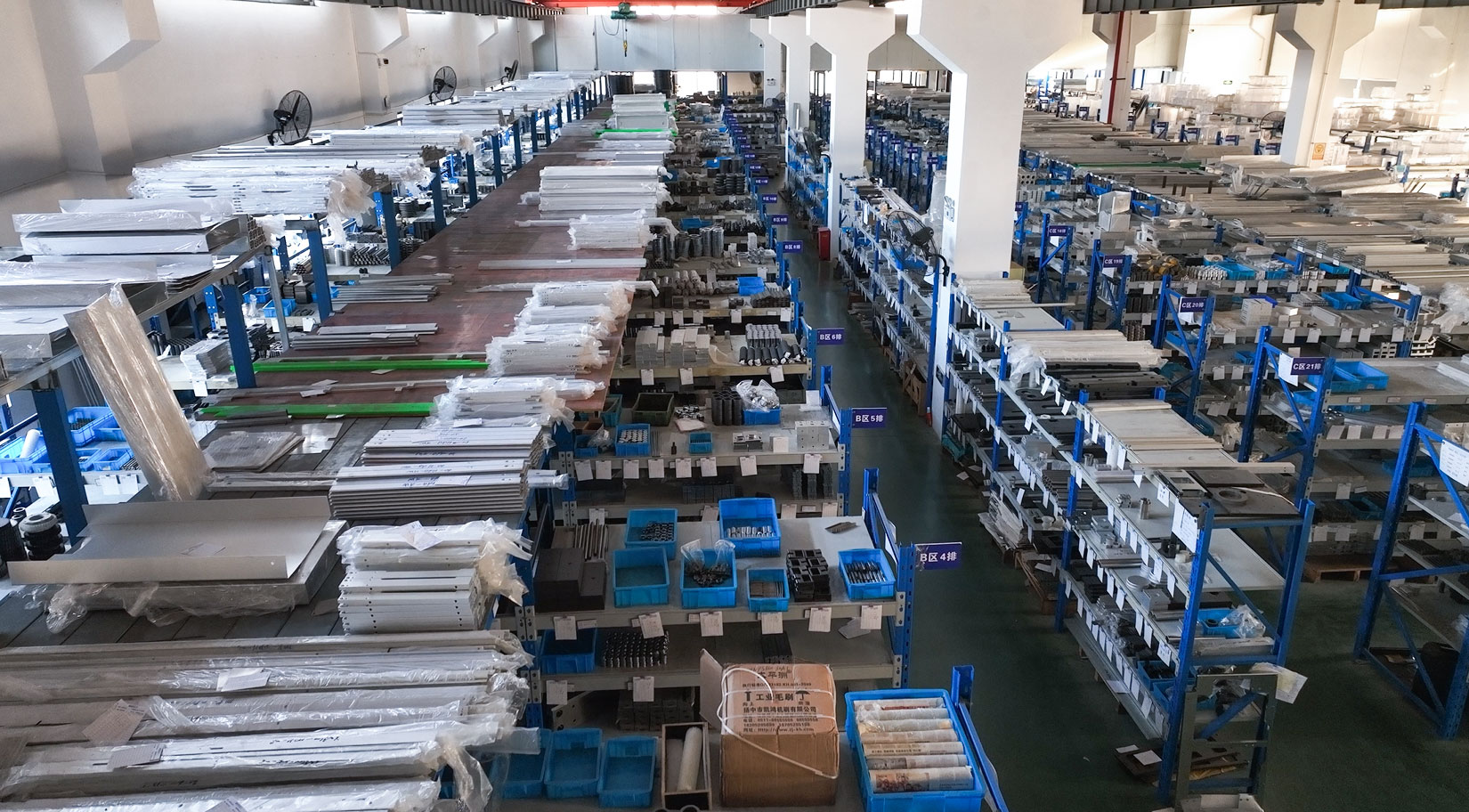
A new solid dosage packaging line is not selected by buying one machine. The purchase is a shortlist of machines that must work as a chain: feeding, blister forming and sealing, cartoning or flow wrapping, bundle handling, case packing and palletizing. The right starting set depends on product form, pack format, batch size and the level of manual intervention the plant is prepared to manage.
Answer first: for a new solid dosage production line, the core shortlist is a Lifting Feeder, Blister Packaging Machine, Cartoning Machine and Case Packing Machine. A Flow Packing Machine or Overwrapper is added when the secondary pack format requires it; a Stretch Bander is added for bundle stability; a Case Packing and Palletizing Integral Machine is added when end-of-line labour and transfer points justify integration. The DHL8005H Automatic Blister-Cartoning Line is a useful reference point for an integrated high-speed configuration, because it combines blister and cartoning functions and is specified up to 800 blisters/min and 500 cartons/min.
HOPING is the brand of Zhejiang Hoping Machinery Co., Ltd., a pharmaceutical packing machinery manufacturer established in 2001 in Ruian, Zhejiang, China. The company operates a 28,800 sqm facility with more than 300 employees and an annual output of 500 units; its main products include blister packaging machines, cartoning machines, case packing machines and end-of-line packaging machines. That product scope matters here because the shortlist question is not only which machine types exist, but which supplier can connect them without losing format control, documentation or service continuity.
What the shortlist must solve before machine specifications are fixed
Decision-stage buyers often begin with a machine list and then discover that the list is incomplete. A better sequence is to define the product family, the primary pack, the secondary pack and the case format. Tablets, capsules and soft capsules behave differently in feeding and blister forming. Nutraceuticals and healthcare products often bring wider shape and count variation. The equipment set must therefore be shortlisted against a format matrix, not against a single product sample.
The shortlist should also distinguish between primary packaging and secondary packaging. The Blister Packaging Machine forms the primary pack. The Cartoning Machine, Flow Packing Machine or Overwrapper forms the secondary pack. The Stretch Bander, Case Packing Machine and Case Packing and Palletizing Integral Machine move the line toward end-of-line automation. The Lifting Feeder supports the front end by moving tablets or capsules into the blister machine feed system. This staged view prevents a common error: buying a fast blister machine without the downstream equipment needed to protect its output.
The eight-equipment shortlist, stage by stage
| Stage | Equipment | Why it belongs in the shortlist | Decision check |
|---|---|---|---|
| Front-end feeding | Lifting Feeder | Raises and supplies tablets or capsules to the blister machine feed system, reducing manual loading where the line requires it. | Confirm product shape, feed rate and cleaning access against the blister machine format. |
| Primary packaging | Blister Packaging Machine | Forms and seals the blister pack for tablets, capsules, soft capsules, nutraceuticals and healthcare products; alu-alu formats may be relevant where barrier requirements are higher. | Specify blister format, forming material, feeding method and inspection or rejection needs. |
| Secondary packaging | Cartoning Machine | Places blisters and leaflets into cartons; horizontal cartoning machines are common in pharmaceutical secondary packaging lines. | Check carton size range, leaflet handling, coding and missing-leaflet detection. |
| Alternative secondary packaging | Flow Packing Machine | Wraps product or bundles in a flow-pack format when a flexible pack is preferred over a carton. | Confirm whether the product family and market accept flow-wrap secondary packaging. |
| Alternative secondary packaging | Overwrapper | Applies an outer wrap to cartons or bundles for presentation or protection where the pack design calls for it. | Check film type, wrap tightness and changeover against the pack format. |
| Bundle handling | Stretch Bander | Stabilises bundles with stretch film before case packing or palletizing. | Confirm bundle count, film use and interface with the case packer. |
| Tertiary packaging | Case Packing Machine | Erects, fills and seals cases; automatic case packers reduce manual handling before dispatch. | Check case size range, case count pattern and coding requirements. |
| End-of-line integration | Case Packing and Palletizing Integral Machine | Combines case packing and palletizing so cases move to pallet without a separate manual transfer step. | Check pallet pattern, line interface and whether the volume justifies integration. |
This table is a decision map, not a mandatory shopping list. A plant producing a narrow range of high-volume tablets may need the full chain. A plant with lower volume, frequent small batches or a pack format that uses flow-wrap instead of cartons may not need every item. The shortlist should be reduced only after the format matrix and the labour model are clear.
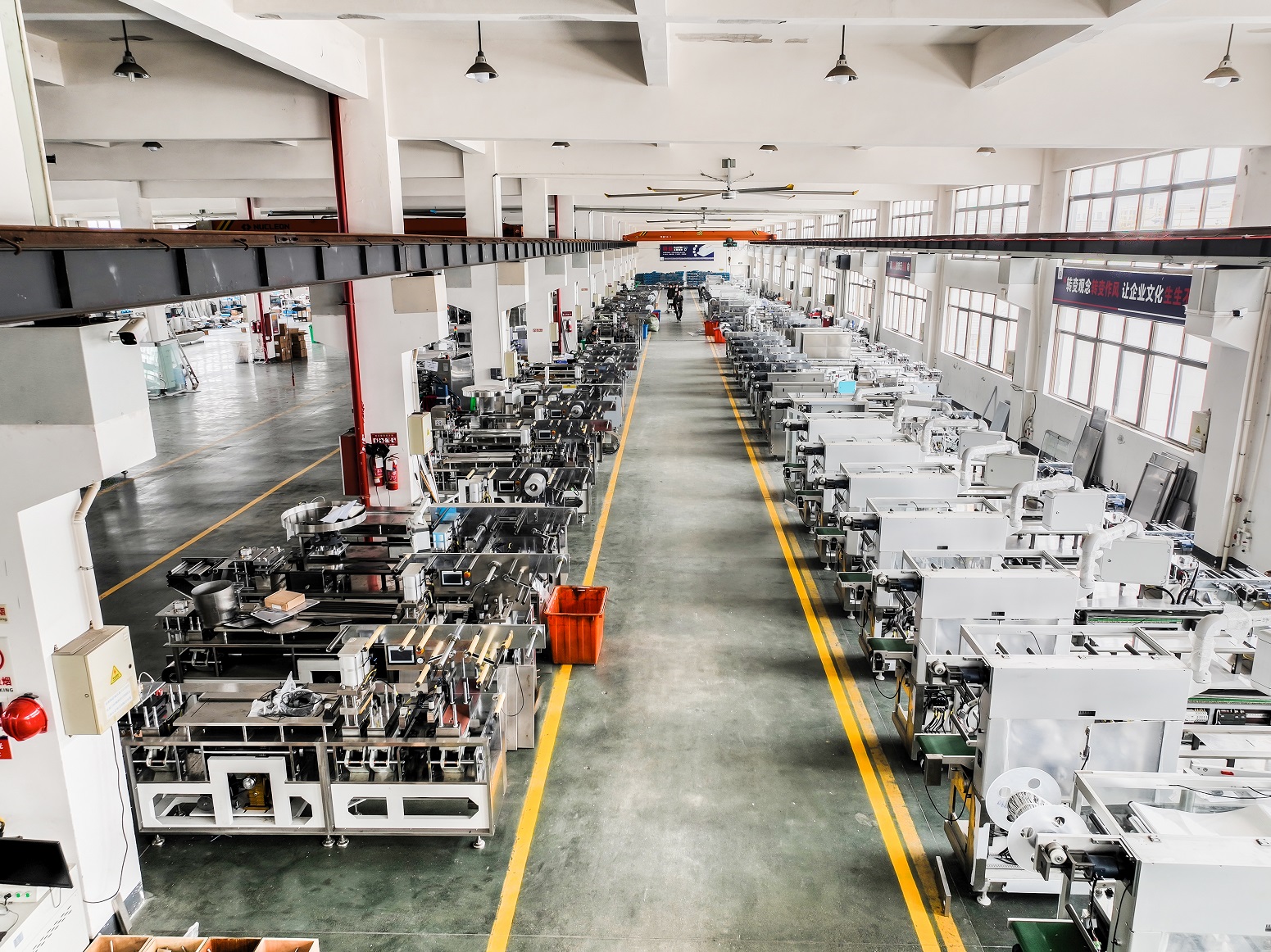
DHL8005H Automatic Blister-Cartoning Line as an integrated high-speed reference
The DHL8005H Automatic Blister-Cartoning Line is a reference configuration for buyers who need blister and cartoning in one automated flow. The stated capability is up to 800 blisters/min and 500 cartons/min. Those figures are useful for early capacity screening, but they should not be treated as guaranteed sustained output. Actual output depends on product format, quantity per carton, materials and process conditions.
The line specification includes a Beckhoff motion controller and CP9315 industrial PC. For a buyer, this is not a brand-name detail to skim. The control architecture defines how motion, parameter management and line-level integration will be validated. It also shapes the maintenance skills, spare-parts plan and documentation package the plant will need after installation.
The DHL8005H also specifies three-channel servo-driven independent replenishment. That is a feeding architecture fact, not an output guarantee. Buyers should ask how replenishment is controlled across the three channels, what happens when a channel runs empty, how missing or wrong products are rejected, and how the feeding logic changes when the blister format changes.
GMP-oriented contact parts and stainless steel/aluminium construction are specification items to verify rather than accept as labels. The buyer should request material certificates, cleaning access details and change-part control. The line also includes mold-change and preset-memory functions. These are valuable only if the plant can demonstrate a repeatable changeover with its own blister and carton sizes; the buyer should ask which parameters are stored, who can change them, and how preset memory is checked during FAT and SAT.
Shortlist rule: a high maximum blister speed is useful only when the cartoning and end-of-line stages can absorb it. The DHL8005H reference shows why blister speed, carton count and case pattern should be modelled together before the purchase order is placed.
Integrated blister-cartoning versus traditional standalone equipment
Integrated blister-cartoning lines combine blister packaging, blister transfer, leaflet handling, carton opening, insertion, inspection or rejection and downstream connection into one automated process. A traditional alternative is a blister machine, manual transfer and a standalone cartoner. A low-speed semi-automatic blister-cartoning solution is another alternative. The comparison is not simply automated versus manual; it is a question of volume, labour, transfer risk and validation workload.
| Decision dimension | Integrated blister-cartoning line | Traditional standalone or semi-automatic setup | Buyer implication |
|---|---|---|---|
| Process flow | Blister, transfer, leaflet, carton and downstream connection are handled as one automated process. | More intermediate handling and manual transfer between machines. | Integration reduces manual intervention, but it also raises the standard for line-level validation. |
| Initial investment | Usually higher than standalone or semi-automatic equipment. | Lower entry cost for individual machines. | The business case must include labour, transfer, management and quality-risk costs, not only machine price. |
| Best fit | Large-scale solid dosage packaging, high-capacity workshops and multi-format lines requiring stable operation. | Lower volume, frequent small batches or a staged investment plan. | A high-speed integrated line is not automatically the lowest-cost choice for every plant. |
| Routine operation | Centralised control, modular stations, alarm indication and parameter management support maintenance. | Separate controls and more manual coordination between stages. | Operator training, spare-parts management and preventive maintenance remain important in both models. |
The limitation is real: integrated lines carry a higher initial investment and require disciplined changeover, training and maintenance. A plant with low batch volume or very frequent short runs should model changeover time and utilisation before choosing an integrated high-speed configuration. The comparison should be made at the level of total operating flow, not at the level of a single machine speed.
Product-form fit: tablets, capsules, soft capsules, nutraceuticals and healthcare products
A pharmaceutical blister packaging machine and a capsule blister packaging machine may share a machine category, but the feeding and inspection requirements can differ. The shortlist should be tested against the actual product mix. The table below uses the equipment set from the assigned shortlist and keeps the claims at the level of selection logic.
| Product family | Primary packaging focus | Secondary and end-of-line focus | Shortlist note |
|---|---|---|---|
| Tablets | Blister Packaging Machine with format control for tablet count and orientation. | Cartoning Machine and Case Packing Machine for the standard tablet pack. | Use a tablet blister packaging machine configuration and verify feed stability at the target count. |
| Capsules | Capsule blister packaging machine with careful feeding and missing-product detection. | Blister cartoning machine and case packer with leaflet and coding checks. | Confirm capsule size range and rejection logic before fixing output targets. |
| Soft capsules | Blister Packaging Machine with handling suited to soft capsules and the chosen forming material. | Cartoning and end-of-line equipment matched to the pack count and case pattern. | Soft capsules should be tested with actual material and format during sample validation. |
| Nutraceuticals | Automatic blister packaging machine with flexibility across shapes and counts. | Cartoner, flow wrapper or overwrapper depending on the retail pack design. | Wider format variation makes changeover and preset memory more important. |
| Healthcare products | Pharmaceutical blister packaging machine or alternative primary pack where the product format requires it. | Secondary packaging line and end-of-line packaging machine matched to distribution requirements. | The shortlist should follow the pack format, not the product label alone. |
An alu-alu blister packaging machine option belongs in the shortlist conversation when the product requires a higher-barrier pack. HOPING lists aluminium-aluminium blister equipment within its product scope. The buyer should still validate forming, sealing and material compatibility with the actual product and packaging material, because a machine category listing does not prove a specific format will run at the target output.
Procurement criteria for a decision-stage shortlist
For a new pharmaceutical packaging line, the decision should compare the equipment set on criteria that survive installation. The following checks are practical and can be written into an RFQ or technical agreement.
- Line balance: compare blister output, carton count and case pattern rather than isolated maximum speeds.
- Control architecture: record the motion controller, industrial PC, parameter management and data interface.
- Feeding logic: ask how the Lifting Feeder and blister machine handle missing, wrong or incomplete product feeding.
- Contact parts: request material certificates, cleaning access and change-part control for GMP-oriented contact parts.
- Construction: verify stainless steel and aluminium construction details against the cleaning and room environment.
- Changeover: test mold-change and preset-memory functions with the buyer's own blister and carton sizes.
- Inspection and rejection: define missing-leaflet, carton jam, coding/date printing and foreign-matter controls.
- Documentation: require FAT/SAT acceptance criteria, fault records, key-parameter locking and SOP training.
- Service plan: confirm spare-parts management, preventive maintenance and remote technical support.
- Export project risk: plan installation, commissioning and customer witness acceptance where key projects require it.
The risk list for this equipment set is specific. It includes poor blister forming or sealing; missing, wrong or incomplete product feeding; missing leaflet; carton jam; coding or date printing error; foreign matter or contamination risk; downtime during high-speed operation; and delivery or installation risk for export projects. The corresponding controls include sensor monitoring, vision or checkweighing inspection where configured, missing-product alarm, automatic stop, automatic rejection, key-parameter locking, fault records, mechanical safety protection, FAT/SAT acceptance and SOP training.
Supplier-side project measures should be verified in the same way. Confirm samples and packaging materials at the early project stage, design the solution according to blister and carton formats, conduct no-load and material tests before shipment, provide installation, commissioning, training, spare parts and remote technical support, and arrange customer witness acceptance for key projects where required. These are not administrative extras; they are the evidence that the shortlist can become a validated line.
Market context for the shortlist decision
External market data supports the view that pharmaceutical packaging automation remains an active investment area. Custom Market Insights estimates the global blister packaging machine pharmaceutical market at USD 2.57 billion in 2025. The same source identifies Asia-Pacific as the fastest-growing region, with an 8.87% CAGR to 2031. Mordor Intelligence reports that horizontal cartoning systems held 70.12% of market share in 2024. A separate commercial research estimate puts the global pharmaceutical packaging machinery market at USD 7.09 billion in 2026, with a reported 7.15% CAGR; because that scope is wider than blister machines alone, it should not be averaged with the blister-only figure.
Regulatory context also belongs in the decision file. ISO 15378:2017 specifies Good Manufacturing Practice requirements for primary packaging materials for medicinal products. That standard is a reference point for packaging material compliance, not a machine certificate. The U.S. FDA provides official guidance on current good manufacturing practice production and process controls. For buyers, the practical implication is that equipment selection and documentation review should move together. The machine shortlist should be accompanied by a qualification plan.
A further industry signal comes from trade media reporting PMMI content: pharmaceutical manufacturers are turning toward digitised data collection and integrated solutions to meet regulations and improve visibility. This supports the case for specifying data capture, batch traceability and line integration as explicit requirements when buying blister and cartoning equipment, rather than treating them as after-sales add-ons.
Future outlook
The direction of travel for new solid dosage lines is toward tighter integration between primary packaging, secondary packaging and end-of-line equipment. That does not mean every plant should buy the largest integrated line. It means the shortlist should be built with interfaces in mind: how the blister machine hands off to the cartoner, how the cartoner hands off to the case packer, how parameter memory supports repeatable changeover, and how line data can be retained for batch review.
For HOPING, the relevant capability signal is the combination of blister packaging, cartoning, case packing and end-of-line packaging within one manufacturer's product scope, together with the DHL8005H reference for an integrated blister-cartoning line. Buyers should still verify the specific configuration, format range, acceptance tests and service plan. The shortlist is strongest when it connects equipment facts to a documented decision process.
FAQ
Which machines are essential in a new solid dosage blister line?
The core set is a Lifting Feeder, Blister Packaging Machine, Cartoning Machine and Case Packing Machine. A Flow Packing Machine, Overwrapper, Stretch Bander or Case Packing and Palletizing Integral Machine is added when the pack format, bundle design or end-of-line labour model requires it.
How should buyers compare blister speed and cartoning speed?
Compare them at the level of the finished pack, not as isolated machine maxima. The DHL8005H is specified up to 800 blisters/min and 500 cartons/min, but actual output depends on product format, quantity per carton, materials and process conditions. Buyers should request sustained-output data at the intended pack count.
Is an integrated blister-cartoning line always better than standalone machines?
No. An integrated line usually has a higher initial investment than standalone or semi-automatic equipment. It is best suited to large-scale solid dosage packaging and high-capacity workshops. A plant with low volume or very frequent short runs should model changeover and utilisation before choosing integration.
What do the DHL8005H control and replenishment features mean for buyers?
The Beckhoff motion controller and CP9315 industrial PC define the control architecture to be validated. Three-channel servo-driven independent replenishment is a feeding architecture that should be checked for channel-empty handling, reject logic and format change. Mold-change and preset-memory functions should be demonstrated with the buyer's own blister and carton formats.
How should GMP-oriented contact parts be verified?
Ask for material certificates, cleaning access, change-part control and documentation for the contact parts. GMP-oriented design is not the same as a certified line. ISO 15378:2017 addresses GMP requirements for primary packaging materials for medicinal products, so it can inform packaging material review but does not replace machine-specific validation.
What should FAT and SAT cover for this equipment set?
Acceptance should cover no-load and material tests, format change, missing-product and missing-leaflet handling, carton jam response, coding or date printing, rejection logic, key-parameter locking, safety protection and documentation. Customer witness acceptance can be arranged for key projects where required.
Reference document: Hoping Machinery Catalog (PDF).
¿Tiene preguntas o necesita más detalles?
Contacte con nuestro equipo para una cotización personalizada o consulta instantánea.
Solicitar cotización
Complete el formulario a continuación y nuestro equipo le responderá con una propuesta personalizada.
Chat directo de WhatsApp
¿Prefiere chatear en tiempo real? Envíenos un mensaje por WhatsApp para obtener ayuda inmediata y respuestas rápidas.
- Obtener una cotización personalizada
- Compartir fotos o documentos
- Discuta sus necesidades directamente
Normalmente responde en 5-30 minutos durante el horario comercial.