
Pharmaceutical Packaging Machine Compliance: A Reading Guide
A pharmaceutical packaging machine is qualified before it becomes productive. Its materials of construction, guarding, control architecture, format tooling and documentation are examined against standards that apply to medicinal product packaging — and that examination happens before commercial production, not after it.
Compliance in this setting is not a single certificate. ISO 15378 integrates GMP requirements for primary packaging materials, which is the frame applied to primary packaging supply. In the European Union, pharmaceutical equipment safety is governed by the Machinery Directive 2006/42/EC together with the EN 415 series for packaging machines. On a blister packaging machine or a cartoning machine, those two frames meet at the machine itself: which surfaces touch the product, how the machine is cleaned, how blister and carton formats are controlled, and which documents follow the delivered configuration.
The commercial weight of that question keeps growing. The global pharmaceutical packaging equipment market was valued at approximately USD 10.71 billion in 2024 (SkyQuest Technology), while Asia Pacific held the largest revenue share at 40.7% in 2025 (Grand View Research). Published estimates differ by scope — another widely cited figure puts the wider market at about USD 7.0 billion — so market size alone is a weak proxy for supplier capability. Documentation practice is the more useful signal.
Why Compliance Reads as a Qualification Question
A nameplate marking and a qualification file are different objects. A marking states that equipment has been placed on the market in accordance with applicable requirements. A qualification file explains how that conformity was achieved, for which configuration, and on what evidence — drawings, material declarations, control architecture, format part specifications and inspection points.
For procurement teams, that distinction changes the first question. It is not "does the supplier hold certificates?" but "do machine-specific documents exist, what do they cover, and does the machine being offered match the configuration those documents describe?"
The question matters more in a fragmented supply base. In the pharmaceutical blister packaging machine market, the top three players — Uhlmann, IMA and Marchesini — collectively hold approximately 29% of market share. Most purchasing decisions therefore involve suppliers outside that group, where documentation habits vary far more widely than machine specifications do.
| Instrument | Scope | Where it touches the machine |
|---|---|---|
| ISO 15378 | GMP requirements for primary packaging materials | Material and documentation control for primary packaging supply |
| Machinery Directive 2006/42/EC | Safety of machinery placed on the EU market | Guarding, control safety, technical file |
| EN 415 series | Safety standard series for packaging machines | Machine-specific safety requirements for packaging equipment |
The Four Layers of a Compliance File
A machine's compliance position can be read in four layers. Each answers a different buyer question, and each has to match the configuration that will actually be delivered.
1. Materials of construction
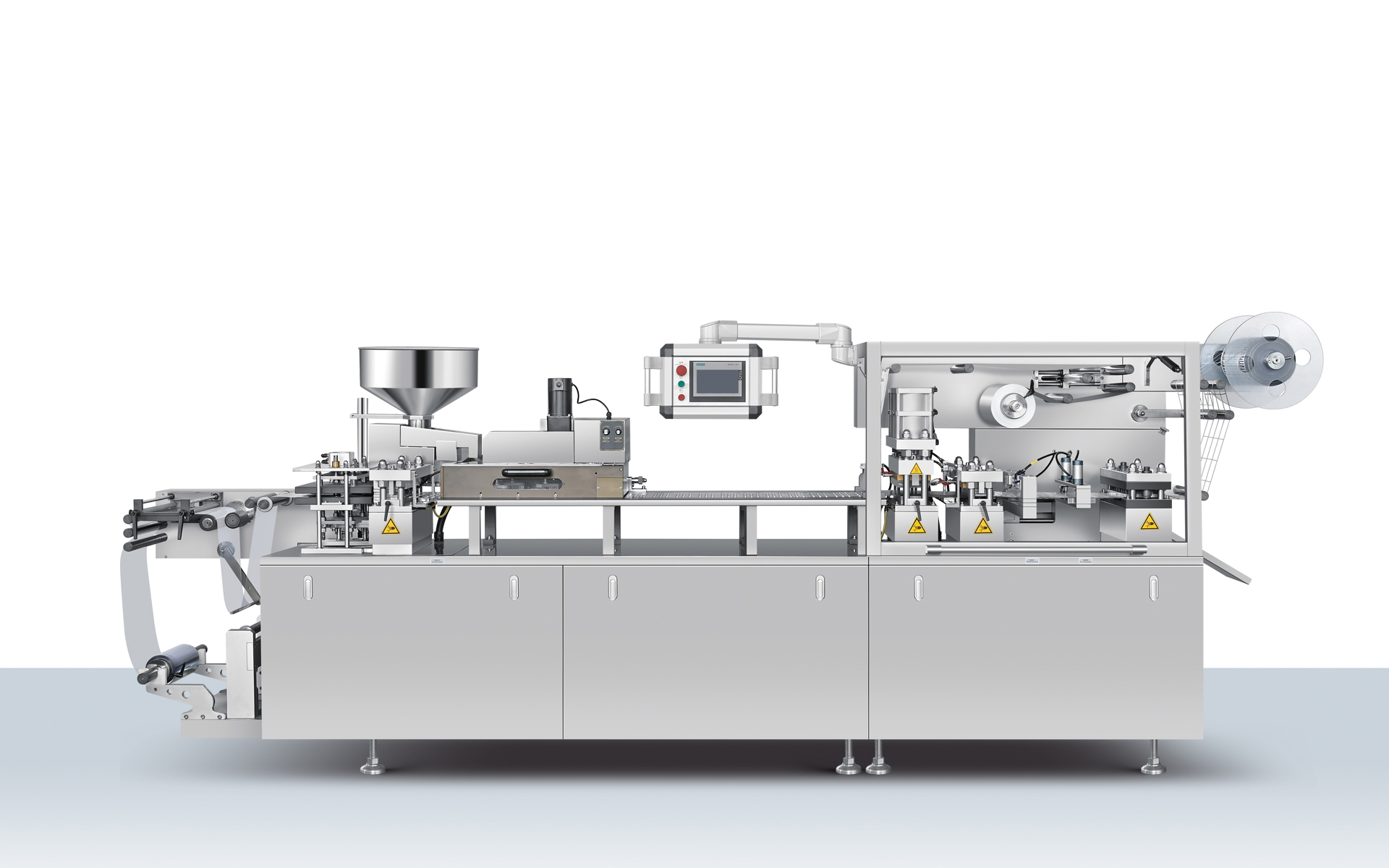
Product-contact materials are usually examined first. On the DPP260T1 platen blister machine, product-contact parts are made of AISI 316L stainless steel and FDA-compliant pharmaceutical-grade materials, while non-product-contact parts are manufactured from AISI 304 stainless steel and anodized aluminum alloy. The machine is designed and manufactured in accordance with GMP requirements and features corrosion-resistant, easy-to-clean surfaces. The DPH320HII rotary blister packing machine follows the same material principle.
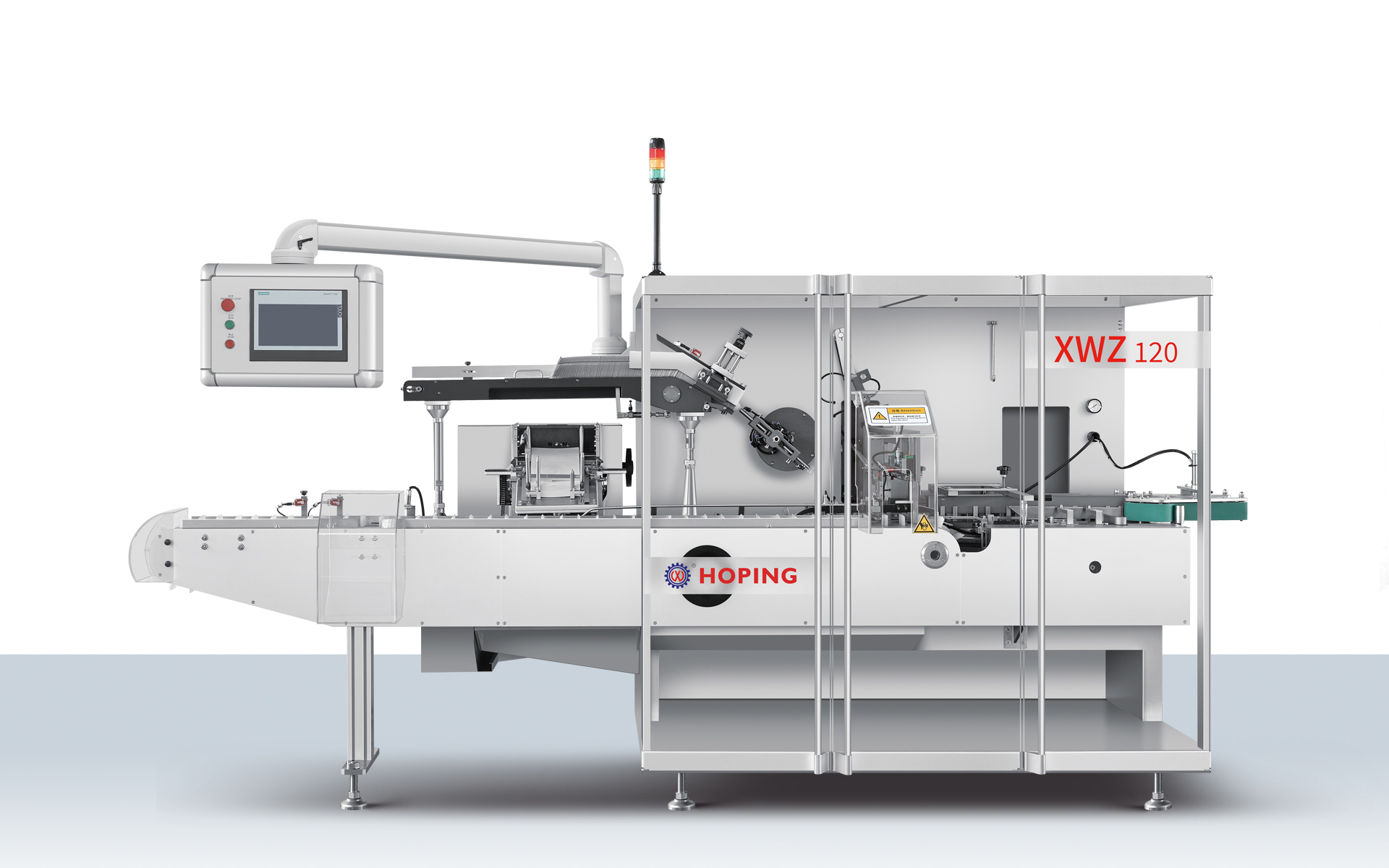
Cartoning equipment follows a comparable logic. The XWZ120 horizontal cartoner uses a frame built from high-quality carbon steel combined with cold-formed channel steel welding, paired with 304 stainless steel and a balcony-style design for cleaning.
2. Design for cleanability and access
Cleanability is a design output, not a cleaning instruction. The XWZ120's balcony-style layout is intended to make the cartoner easy to clean and to organise, and the machine carries transparent protection around its moving zones. The XWZ300II intelligent high-speed cartoner is designed to comply with GMP requirements, includes transparent protection, and provides a box storage that can hold 600–700 cartons.
Across the blister-cartoning lines, transparent guards and stainless steel / aluminum-alloy structures are consistent features. The DHL8005H blister-cartoner, for example, is built on a stainless steel and aluminum-alloy machine structure with transparent guarding and GMP-oriented product-contact parts and tooling configured according to the technical agreement.
3. Control architecture
Control decisions carry compliance consequences because they determine repeatability and traceability. On the DHL6004 blister-cartoner line, a Beckhoff motion controller with a CP9315 industrial PC governs a line rated at up to 600 blisters per minute and 400 cartons per minute. The DHL8005H uses the same controller and industrial PC platform, with a three-channel servo-driven independent replenishment system and a D3 intelligent top-loading parallel tracking transfer system, at up to 800 blisters per minute and 500 cartons per minute. The DHL7004 pairs a self-developed IRB24 intelligent transfer robot with a Siemens motion controller and TP900 HMI at up to 700 blisters per minute and 400 cartons per minute. The DHL1000/5H uses a Beckhoff motion controller with a high-bus industrial control system and four-channel servo-driven independent replenishment, at up to 1,000 blisters per minute and 500 cartons per minute.
Format control belongs to the same layer. The DHL8005H provides mold-change and preset-memory functions; the DHL1000/5H adds recipe memory. These functions matter for qualification because they make format changes repeatable rather than operator-dependent.
4. Configuration and documentation
The fourth layer is where most qualification disputes originate. Format parts are made according to confirmed blister and carton specifications (DHL7004), while product-contact parts and tooling are configured according to a technical agreement (DHL8005H, DHL1000/5H). The compliance file is therefore configuration-specific: if the blister format, carton size, leaflet format or downstream connection changes, the relevant part of the file has to be reissued.
A practical reading order for a compliance file:
- Match the machine model and configuration to the technical agreement.
- Confirm material declarations for product-contact and non-product-contact parts.
- Check format part specifications against the blister and carton formats that will actually run.
- Review the control platform, mold-change / recipe handling and inspection scope.
- Confirm which downstream modules are in scope — bundler, case packer, palletizer, ERP/MES data interface — and which documents cover them.
| Machine class | Example model | Published capacity | Compliance-relevant notes |
|---|---|---|---|
| Platen blister machine | DPP260T1 | Up to 300 blisters/min; 60 punches/min; format area 260 × 115 mm | Product-contact parts AISI 316L and FDA-compliant pharmaceutical-grade materials; designed and manufactured in accordance with GMP requirements |
| Rotary blister packing machine | DPH320HII | Up to 1,000 blisters/min; 250 punches/min; format area 320 × 280 mm | Same material principle; corrosion-resistant, easy-to-clean surfaces |
| Horizontal cartoner | XWZ120 | 30–120 cartons/min | Balcony-style design for easy cleaning; 304 stainless steel; SEW main motor and Siemens PLC |
| Full servo cartoner | XWZ500H | 100–500 cartons/min | Carton opening, insertion, leaflet insertion, closing and coding/inspection integration per project configuration |
| Liquid dosage blister-cartoner | IXW400 | Up to 400 blisters/min and 150 cartons/min | Pre-filled syringes, ampoules and cartridges; Siemens controller with CP9315 industrial PC; D3 top-loading robot; GMP-oriented design |
| Secondary and end-of-line | XWK4060 / XWK Series / ICP12 | 30–60 bundles/min; about 5 cases/min; about 12 cases/min | Banding, case packing and palletizing scope; each added module adds a document set |
How Hoping Fits Into a Qualification Review
Zhejiang Hoping Machinery Co., Ltd. is a Chinese manufacturer of pharmaceutical packaging machinery, established in 2001 and integrating R&D, production, marketing and service. Its main product lines are blister packaging machines, cartoning machines, case packing machines and end-of-line packaging machines, serving pharmaceutical, food, electronics and cosmetics industries.
Manufacturer-level facts that a qualification review can use directly:
- An R&D team of 56 engineers.
- Approximately 300 employees and a manufacturing facility covering 28,800 square meters.
- Annual production capacity of 500 units.
- Export business accounting for 25% of total sales, with major markets in Southeast Asia, the Middle East, Eastern Europe, South America and Africa.
- 26 invention patents, 70 utility patents, 4 appearance patents, 10 PCT-protected patents in Europe, Russia, Germany and Italy, and 28 software copyrights.
- Company-published information lists CE and ISO 9001/14001 certification.
Two of these points carry more weight than the rest in a compliance discussion. The first is engineering depth: 56 engineers is the resource base from which machine-specific documentation, format tooling drawings and control configuration records are produced. The second is market mix: with 25% of sales exported across Southeast Asia, the Middle East, Eastern Europe, South America and Africa, the same machine platform has to be documented for several regulatory environments rather than one.
A company-level certification is not machine-level qualification. CE marking and ISO 9001/14001 describe an organisation's system and the equipment it places on the market; a specific machine's conformity file still has to be read against its configuration, its blister and carton formats, and the market where it will operate.
Application Fit: Compliance Questions Change With the Line
Compliance scope scales with the process a line performs, because every added interface adds a document set.
- High-capacity solid dosage. DHL1000/5H (up to 1,000 blisters/min and 500 cartons/min), DHL8005H (800/500), DHL7004 (700/400) and DHL6004 (600/400) integrate blister forming, sealing, transfer and cartoning in one frame, with inspection, rejection and downstream connection in scope.
- Medium and multi-format production. The DPP Series + XWZ Series line links an intelligent flat Alu-PVC / Alu-Alu blister packing machine with an intelligent high-speed cartoner, with typical blister capacity of 100–600 blisters per minute and cartoning capacity of 100–400 cartons per minute at 0.5–0.7 MPa compressed air.
- Small-batch and special formats. DPP Series flat-plate blister machines are intended for small- and medium-batch pharmaceutical and healthcare products; the DPP260T1 reaches 300 blisters per minute, while the DPP260K operates at 20–70 cycles per minute.
- Secondary and end-of-line. XWZ500H full servo high-speed cartoner (100–500 cartons/min), XWZ300II (60–220 cartons/min), XWK4060 stretch bander (30–60 bundles/min), XWK Series case packer (about 5 cases/min) and the ICP12 case packing and palletizing integral machine (about 12 cases/min).
- Liquid dosage. The IXW400 liquid dosage blister-cartoner integrated line handles pre-filled syringes, ampoules and cartridge-type products at up to 400 blisters per minute and 150 cartons per minute.
Operating conditions shape the documentation scope as well. These lines are specified for GMP-oriented cleanroom or pharmaceutical packaging workshop conditions, continuous high-speed operation, and multi-batch, multi-format production. Where a project requires it, matched equipment can include a leaflet folder, coding machine, vision inspection, checkweigher, bundler, case packer, palletizer and an ERP/MES data interface.
Market Signals Behind Rising Compliance Scrutiny
- The global pharmaceutical packaging equipment market was valued at approximately USD 10.71 billion in 2024 (SkyQuest Technology).
- The pharmaceutical blister packaging machine market is projected to reach USD 2.57 billion by 2025, with a CAGR of 2.8% (Custom Market Insights).
- The cartoning machinery market in the pharmaceutical sector was valued at USD 1.46 billion in 2024 (Fortune Business Insights).
- Asia Pacific held the largest revenue share of 40.7% in the pharmaceutical packaging equipment market in 2025 (Grand View Research).
Read together, these figures describe a market that is growing modestly, concentrated at the top and geographically weighted toward Asia Pacific. The practical consequence is that supply increasingly comes from regional manufacturers whose documentation quality — rather than price alone — decides whether a project moves from order to qualified production. Because published market estimates vary considerably depending on whether secondary equipment is counted, headline figures should not be used as a capability test.
Certificate-Led and Configuration-Led Sourcing: Where Each One Stops
| Approach | What it answers | Where it stops |
|---|---|---|
| CE marking on the nameplate | The machine has been placed on the market in accordance with applicable requirements for that market | It does not describe the delivered configuration or the format-specific tooling |
| ISO 9001 / ISO 14001 certification | The organisation operates a certified quality and environmental management system | An organisation-level statement, not machine-level conformity evidence |
| Machine-specific material and design evidence | Which materials touch the product, how the machine is cleaned, how guards and access are designed | Must be reissued when formats, tooling or contact parts change under a technical agreement |
| Line-level control and inspection documentation | How repeatability, coding, inspection and rejection are controlled | It documents the machine; cleanroom classification and process validation remain the buyer's scope |
Honest limitations belong in the same frame. A supplier's own certifications do not transfer automatically to a specific machine in a specific market. More concretely, GMP-oriented design — AISI 316L product-contact parts, AISI 304 non-contact parts, balcony-style frames, transparent guards and easy-to-clean surfaces — supports cleaning and inspection, but it does not by itself determine cleanroom classification, cleaning validation or environmental monitoring, which stay with the pharmaceutical manufacturer. Finally, high-speed lines depend on format-specific tooling: the DHL7004's format parts are made according to confirmed blister and carton specifications, so a format change is also a documentation change. Buyers who treat the compliance file as a fixed asset rather than a configuration-linked one usually discover this at the worst moment — immediately before process validation.
What Changes Next
Three shifts are visible from the machine side. Multi-format production is becoming the default, which pushes recipe memory, mold-change support and preset-memory functions from optional features to routine expectations on blister-cartoning lines. Inspection and coding integration is moving into the line scope rather than being purchased separately, with vision inspection, checkweighers and coding modules named as matched equipment in project configurations. Data interfaces are also entering the qualification conversation: ERP/MES data interface options mean part of the evidence trail now runs through the control systems of the DHL1000/5H, DHL8005H, DHL6004 and IXW400 platform family rather than existing only on paper.
None of this changes the underlying rule. A pharmaceutical packaging machine is qualified on evidence that matches its delivered configuration — and that evidence is produced by the manufacturer that built it.
FAQ
What is the difference between CE marking and GMP compliance on a pharmaceutical packaging machine?
CE marking relates to placing machinery on the market in accordance with applicable requirements; in the EU, pharmaceutical equipment safety is governed by the Machinery Directive 2006/42/EC and the EN 415 series for packaging machines. GMP-oriented design relates to how the machine supports medicinal product packaging — materials of construction, cleanability, control and documentation. A machine can carry a marking and still require configuration-specific documentation to be reviewed before release for production. ISO 15378 integrates GMP requirements for primary packaging materials, which is the frame commonly applied to primary packaging supply.
Which standards apply to pharmaceutical packaging machines?
ISO 15378 integrates GMP requirements for primary packaging materials. In the European Union, the Machinery Directive 2006/42/EC governs machinery safety and the EN 415 series provides the safety standard series for packaging machines. On the machine itself, these translate into material declarations, guarding design, control architecture and format documentation.
What materials are used for product-contact parts on a blister packing machine?
On the DPP260T1 platen blister machine, product-contact parts are made of AISI 316L stainless steel and FDA-compliant pharmaceutical-grade materials, while non-product-contact parts are manufactured from AISI 304 stainless steel and anodized aluminum alloy. The machine is designed and manufactured in accordance with GMP requirements and features corrosion-resistant, easy-to-clean surfaces. The DPH320HII rotary blister packing machine follows the same material principle.
How does a blister-cartoning line support traceability and inspection?
The DHL8005H blister-cartoner line covers blister forming and sealing, transfer, leaflet handling, carton opening, insertion, coding/inspection and connection to bundling, case-packing and palletizing equipment. Depending on project configuration, matched equipment can include a leaflet folder, coding machine, vision inspection, checkweigher, bundler, case packer, palletizer and an ERP/MES data interface. Mold-change and preset-memory functions, and recipe memory on the DHL1000/5H, make format changes repeatable rather than operator-dependent.
What machine-specific documents should a buyer request before ordering?
Documents that describe the delivered configuration: material declarations for product-contact and non-product-contact parts, format part specifications made according to confirmed blister and carton specifications, control platform details, and the technical agreement covering contact parts and tooling. On lines such as the DHL7004 and DHL8005H, format parts and GMP-oriented product-contact parts are configured according to confirmed specifications and the technical agreement, so these documents define the machine that will actually be delivered.
Does a supplier's ISO 9001 or ISO 14001 certification qualify a specific machine?
No. ISO 9001 and ISO 14001 are organisation-level certifications describing management systems, and Hoping's company-published information lists CE and ISO 9001/14001 certification at that level. Machine-level qualification additionally requires configuration-specific evidence — materials, design, control architecture and format tooling — read against the market where the machine will operate. Responsibility for final qualification and process validation remains with the pharmaceutical manufacturer.
The full specification set for Hoping's blister packaging machines, cartoning machines, case packing machines and end-of-line equipment is available in the Hoping Machinery catalog.