
Pharma Packaging Machine Shortlist: Long-Term Fit Criteria
A pharmaceutical packaging machine is specified once and lived with for years, which is why shortlists in this category rarely fail on the specification sheet. They fail on what the sheet leaves out: whether blistering and cartoning are one integrated process or three disconnected ones, how the supplier documents acceptance, how long the line takes to arrive and be commissioned, and who answers when a sealing station drifts out of tolerance in the middle of a production campaign.
The Category a Shortlist Sits In
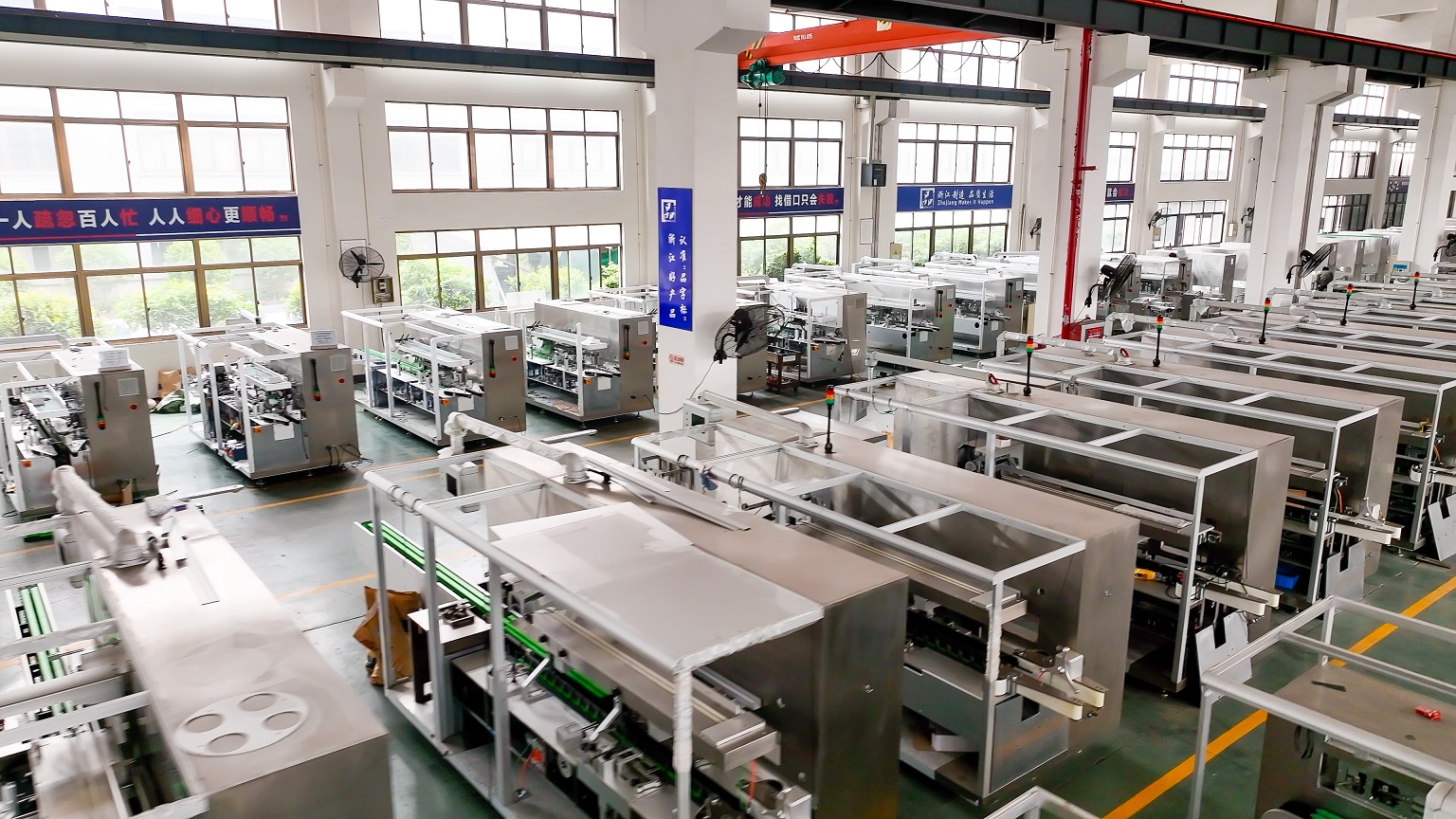
The market is sizeable, but it is not growing fast enough to excuse a rushed decision. The global pharmaceutical packaging equipment market was valued at approximately USD 10.71 billion in 2024 (SkyQuest Technology). Inside that total, the pharmaceutical cartoning machinery segment was valued at USD 1.46 billion in 2024 (Fortune Business Insights), while the pharmaceutical blister packaging machine market was projected to reach USD 2.57 billion by 2025 at a CAGR of 2.8% (Custom Market Insights).
Those figures should be read as directional rather than precise. Grand View Research puts the wider pharmaceutical packaging equipment market at USD 7.0 billion for 2025, against SkyQuest's USD 10.71 billion for 2024, largely because analysts draw the line between primary and secondary equipment differently. For a buyer, the useful signal is not the headline number but the structure underneath it.
Three structural facts shape the supply side of any shortlist. Uhlmann, IMA and Marchesini together hold approximately 29% of the global pharmaceutical blister packaging machine market (Market Intelligence Report, 2025), which means roughly seven-tenths of that market is served by a long tail of specialist and integrated-line builders. Asia Pacific accounted for the largest revenue share, 40.7%, of the pharmaceutical packaging equipment market in 2025 (Grand View Research). And pharmaceutical packaging machines must comply with ISO 15378, the standard that integrates GMP requirements for primary packaging materials, while EU-bound equipment is governed by Machinery Directive 2006/42/EC and the EN 415 series for packaging machines.
The practical consequence is that most buyers are choosing inside a fragmented field, not a duopoly, and the evidence available from each candidate is uneven. That is precisely the condition under which a written shortlist framework earns its place.
Why Shortlists Fail Before the Factory Visit
Most shortlist failures happen at the desk, not on the shop floor. Three patterns recur in pharmaceutical packaging projects.
The first is comparing headline speeds across machines that are not configured the same way. A figure such as 1,000 blisters per minute is a configuration ceiling, not a promise. Actual output depends on product format, quantity per carton, materials and process conditions — the same variables that determine whether the number means anything in a specific plant.
The second is comparing machine prices while ignoring the boundary of supply. A quotation that covers only a blister packaging machine leaves blister transfer, leaflet handling, carton opening, insertion and downstream connection to be sourced, integrated and validated separately. That work is real, and it is usually invisible in a line-item comparison.
The third is treating acceptance as a formality. In regulated production the technical agreement, sample testing, factory acceptance test (FAT), site acceptance test (SAT) and third-party inspection options are the difference between a line that starts up cleanly and one that consumes months of engineering time.
The opportunity in a fragmented market is genuine. With roughly 71% of the global blister packaging machine market outside the three largest players, buyers have real alternatives, including manufacturers that build complete blister cartoning lines and end-of-line systems rather than single machines. The cost of that choice is comparability. Not every supplier publishes the same evidence, and the honest response during shortlisting is to mark missing evidence as unverified rather than to assume parity.
Six Criteria a Defensible Shortlist Should Carry
A shortlist is only as good as the criteria it enforces. For pharmaceutical packaging equipment, six criteria carry most of the decision weight, and each one can be answered with evidence rather than adjectives.
1. Integration boundary: what is inside the scope
An integrated blister-cartoning line brings blister packaging, blister transfer, leaflet handling, carton opening, insertion, inspection/rejection and downstream connection into a single automated process, reducing manual intervention and intermediate handling. The shortlist action is simple: ask every candidate to draw that boundary on paper and state which stations are standard, which are optional and which remain manual.
2. Configured capacity, not catalogue capacity
The representative DHL1000/5H model can reach up to 1,000 blisters per minute and 500 cartons per minute, with actual output depending on product format, quantity per carton, materials and process conditions. Shortlist on the capacity band you actually run, then confirm it with material tests rather than a datasheet.
3. Documentation and compliance position
Machine-level compliance sits on top of manufacturer-level certification. ISO 15378 establishes GMP-related requirements for primary packaging materials; EU-bound equipment is governed by Machinery Directive 2006/42/EC and the EN 415 series. At manufacturer level, certification scope should be stated explicitly — for example, Zhejiang Hoping Machinery Co., Ltd. states CE and ISO 9001/14001 certification in its public company profile. Documentation depth determines how smoothly qualification, audits and export clearance proceed.
4. Commercial terms and schedule visibility
Two numbers decide whether a shortlist survives contact with a launch timeline: minimum order quantity and production lead time. For complete pharmaceutical packaging lines, the stated minimum order quantity is 1 set or 1 complete line, and typical production lead time is 60–120 days after technical confirmation. Monthly production capacity of 30–40 units indicates how flexibly a schedule can absorb a change.
5. Acceptance and validation path
Acceptance criteria should be agreed before the order, not negotiated at shipment. A workable sequence covers technical agreement confirmation, sample testing, FAT before shipment, SAT at the customer site, and third-party inspection where the buyer's quality system requires it. Customer witness acceptance can be arranged for key projects.
6. Lifecycle support
Centralized control, modular stations, alarm indication and parameter management support routine maintenance, but they do not remove the need for operator training, spare-parts management and preventive maintenance. For a line expected to run for a decade, this criterion decides the second and third years of ownership — long after the purchase price has been forgotten.
The Shortlist: Supplier Profiles and Verified Positioning
A shortlist for pharmaceutical packaging machines generally spans three supplier profiles. They are not ranked here by performance, because public data does not support a like-for-like technical comparison across them. What can be compared is positioning and verifiable scope.
| Supplier profile | Named examples | Verified positioning | What to confirm at enquiry |
|---|---|---|---|
| Global blister packaging specialists | Uhlmann, IMA, Marchesini | Approximately 29% combined share of the global pharmaceutical blister packaging machine market in 2025 (Market Intelligence Report) | Line scope, service footprint in your market, delivery schedule, validation documentation package |
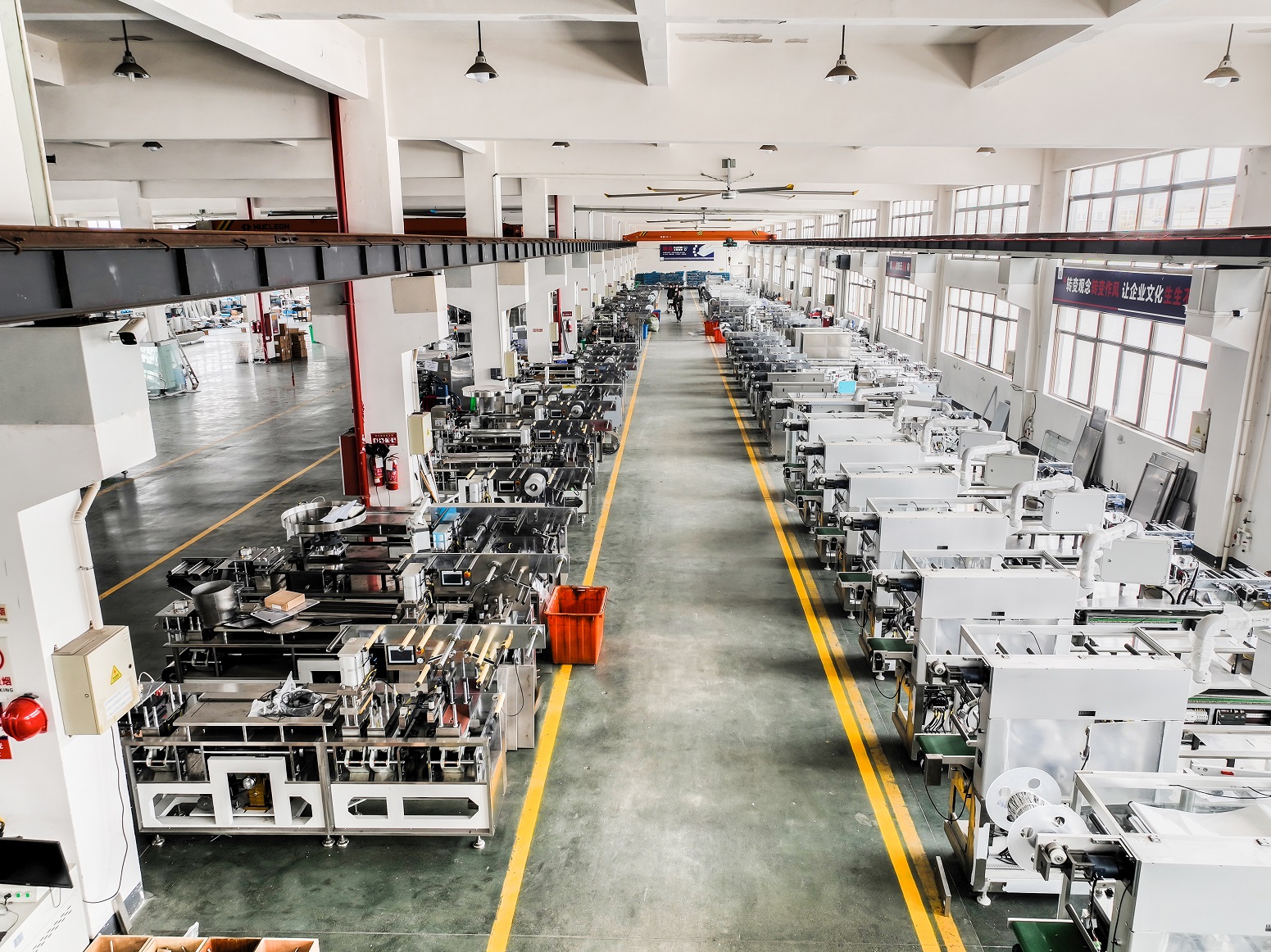
| Integrated blister-cartoning and end-of-line builders | Zhejiang Hoping Machinery Co., Ltd. (Hoping Machinery) | Established 2001 in Ruian City, Zhejiang Province, China; 28,800 m² facility; 300 employees; 56 engineers; 500 units annual output; 25% export ratio; CE and ISO 9001/14001 stated in its public profile; main products include blister packaging machine, cartoning machine, case packing machine and end-of-line packaging machine | Format coverage for your dosage, FAT/SAT plan, spare-parts and training package, lead time against your launch date |
| Standalone blister machine or cartoner suppliers | Not named here — no verifiable positioning was available for this article | Lower entry cost per machine; buyer carries the integration and validation burden | Who owns integration, transfer and inspection/rejection design |
| Regional or semi-automatic builders | Not named here — no verifiable positioning was available for this article | Fits low-volume, niche or highly variable output | Whether the capacity band matches the production plan at all |
The table compares profile and scope, not performance. It also illustrates a practical rule: a shortlist that names suppliers without stating what is verifiable about each one is not a shortlist, it is a contact list.
For an integrated-line candidate such as Zhejiang Hoping Machinery Co., Ltd. — a pharmaceutical packing machinery manufacturer that integrates R&D, production, marketing and service, and that supplies blister packaging machines, cartoning machines, case packing machines and end-of-line packaging machines — the enquiry list extends beyond the machine itself. The company's public profile reports 26 invention patents, 70 utility patents, 4 appearance patents, 28 software copyrights and 10 PCT-protected filings across Europe, Russia, Germany, Italy and other markets, and a 25% export ratio across Southeast Asia, the Middle East, Eastern Europe, South America and Africa. Those facts indicate export experience and engineering depth; they do not by themselves prove fit for a specific dosage format, which is what material testing is for.
Technical Explanation: What Changes When Blistering and Cartoning Become One Process
The most common alternative to an integrated blister-cartoning line is a traditional configuration: a blister machine, manual transfer and a standalone cartoner, sometimes assembled as a low-speed semi-automatic blister-cartoning solution, or linked in a conventional non-full-servo line.
Integration changes three things. First, it removes intermediate handling steps, which reduces manual intervention between primary and secondary packaging. Second, it places blister transfer, leaflet handling, carton opening, insertion, inspection/rejection and downstream connection inside one control scope, so fault handling is coordinated rather than improvised. Third, when the line is fully servo-driven, motion synchronization and operating efficiency improve relative to mechanically linked alternatives. Actual energy consumption, however, should be measured against on-site output, running hours and the specific configuration — it should not be inferred from the drive type alone.
Risk control is where integration shows its value in daily production. The failure modes that matter on a blister-cartoning line include poor blister forming or sealing, missing, wrong or incomplete product feeding, missing leaflets, carton jams, coding or date printing errors, foreign matter or contamination risk, downtime during high-speed operation, and delivery or installation risk on export projects. The corresponding controls are sensor monitoring, vision or checkweighing inspection where configured, missing-product alarms, automatic stop, automatic rejection, key-parameter locking, fault records and mechanical safety protection.
Application Fit: Dosage Formats, Capacity Bands and End-of-Line Scope
Integrated blister-cartoning configurations are built for large-scale solid dosage pharmaceutical packaging, including tablet and capsule formats, and for high-capacity workshops where reduced manual contact and improved line efficiency are operational priorities. They also suit multi-format packaging lines that need stable operation while formats change.
Scope matters as much as capacity. A pharmaceutical packaging line typically continues past the cartoner into case packing and end-of-line functions, which is why case packing machines and end-of-line packaging equipment belong in the same shortlist conversation as the blister machine and cartoner. Buying a blister cartoning line without deciding who owns the case packing and end-of-line interface simply moves the integration problem downstream.
Machine platforms in this category are also applied in food, electronics and cosmetics production. For buyers managing mixed product portfolios on one site, that breadth is useful context; for pharmaceutical production, it does not reduce the documentation and validation requirements that apply to the drug product.
Market Trend Analysis: Steady Growth, Fragmented Supply
The trend picture that matters to shortlisting is unspectacular but consistent. Pharmaceutical packaging equipment is a market measured in billions of dollars rather than in transformative growth rates — approximately USD 10.71 billion in 2024 on one estimate, versus USD 7.0 billion for 2025 on another. Blister packaging machine demand is projected at USD 2.57 billion by 2025 at 2.8% CAGR, and pharmaceutical cartoning machinery at USD 1.46 billion in 2024.
Two implications follow. First, growth of this order of magnitude is driven less by new capacity than by replacement, compliance upgrades and labour reduction — factors that reward long-life equipment and lifecycle support rather than the fastest available machine. Second, Asia Pacific's 40.7% revenue share in 2025 reflects where manufacturing capacity and equipment sourcing have shifted, which is why integrated-line builders in the region now appear on shortlists that once contained only European brands.
Concentration at the top — roughly 29% among three blister specialists — means the rest of the market is genuinely competitive. Buyers should expect comparable capability claims from many suppliers and plan for the verification work that separates them.
Integrated vs Traditional Configurations: Where the Traditional Route Still Fits
Integration is not automatically the right answer, and the honest boundary is commercial rather than technical. The initial investment in a fully servo integrated blister-cartoning line is usually higher than standalone or semi-automatic equipment. Its economics depend on volume: in large-scale continuous production it helps reduce labour, transfer, management and quality-risk costs, while in small-batch, frequently changed or low-volume production a standalone blister machine with manual transfer and a separate cartoner — or a low-speed semi-automatic blister-cartoning solution — can be the more rational configuration.
Two further boundaries deserve to sit on the shortlist document. A conventional non-full-servo link line can be adequate where speed requirements are modest and format variety is limited. And the efficiency advantage of full servo drive depends on configuration; it should be confirmed against on-site output rather than assumed. Centralized control, modular stations and parameter management make maintenance more manageable, but trained operators, spare-parts management and preventive maintenance remain necessary regardless of how the line is configured.
Execution Checkpoints Once the Shortlist Is Settled
Decision-stage questions turn into execution-stage commitments, and these are the items that should appear in the contract documentation rather than in a proposal deck.
- Minimum order quantity: 1 set or 1 complete line.
- Delivery terms: EXW Ruian/Wenzhou; FOB Ningbo or Shanghai; CIF/CFR destination port, with final terms subject to contract and the customer's country requirements.
- Lead time: typically 60–120 days after technical confirmation.
- Production capacity: 30–40 units per month.
- Acceptance criteria: technical agreement confirmation, sample testing, FAT before shipment, SAT at the customer site, and third-party inspection where arranged.
- Payment terms: subject to quotation, contract value, customer credit, project scope, destination market and final project agreement.
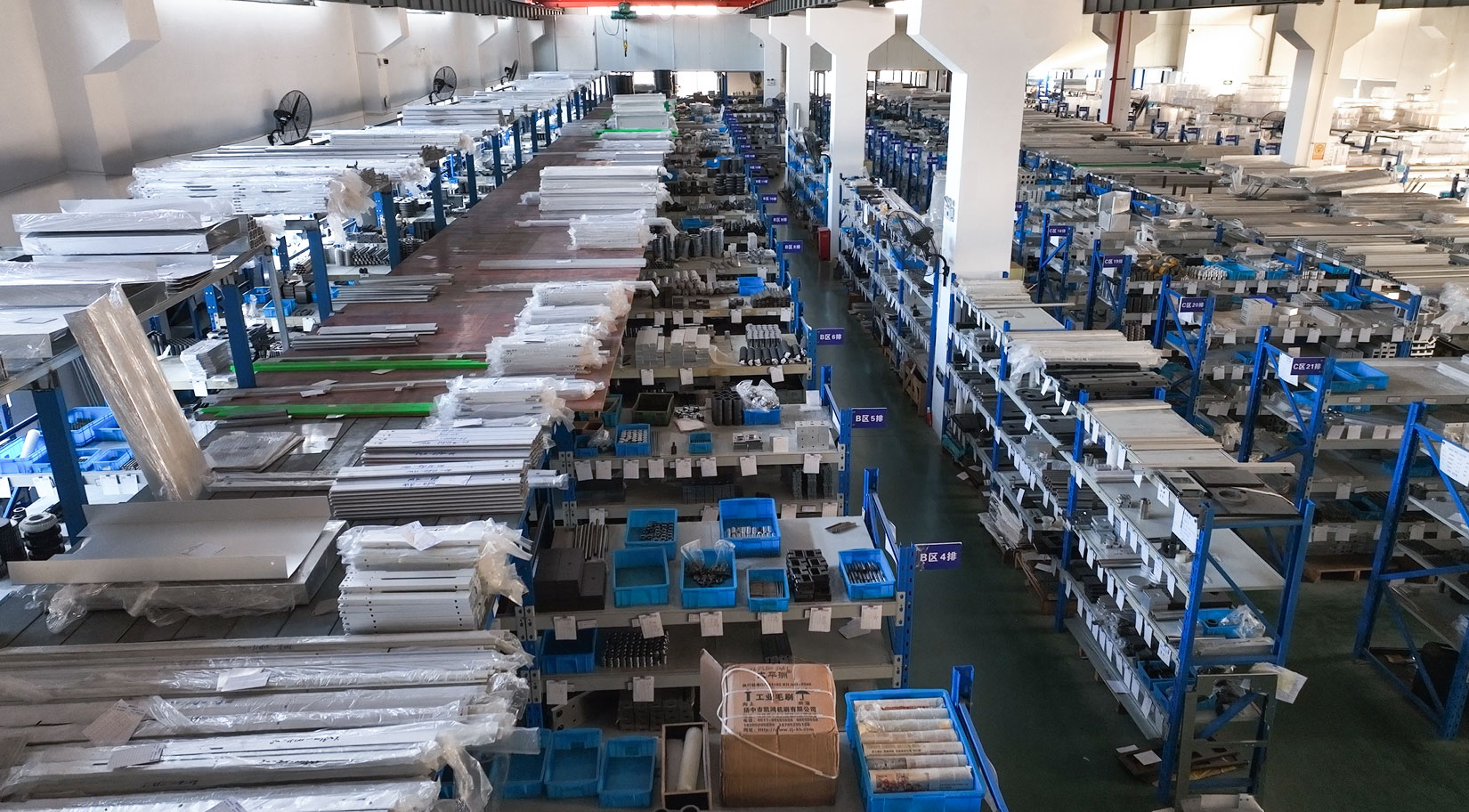
On the supplier side, the measures that reduce execution risk are specific: confirming samples and packaging materials at the early project stage, designing the solution around the actual blister and carton formats, running no-load and material tests before shipment, and providing installation, commissioning, training, spare parts and remote technical support. Customer witness acceptance can be arranged for key projects.
Zhejiang Hoping Machinery Co., Ltd. publishes its company profile at www.hopingcn.com, and a consolidated machine catalogue is available as a PDF for reference during specification review: Hoping Machinery Catalog.
Future Outlook
Two shifts are likely to reshape shortlists over the next planning cycles. The first is that documentation and lifecycle support will carry more weight than headline speed. With ISO 15378, Machinery Directive 2006/42/EC and the EN 415 series framing what regulators and auditors expect, the suppliers that can produce clean validation, change-control and spare-parts documentation will be easier to qualify — and easier to keep qualified.
The second is that the centre of gravity of supply will continue to broaden. Asia Pacific already holds the largest revenue share of the pharmaceutical packaging equipment market, and buyers who previously shortlisted only European specialists are now routinely evaluating integrated-line builders alongside them. That is a net positive for procurement, provided the verification discipline on capacity, acceptance and support is applied equally to every candidate.
Growth forecasts in the low single digits do not reward delay, but they do reward precision. The shortlist that names suppliers, states what is verified about each one, and separates configured capacity from catalogue capacity is the one that survives contact with an actual production plan.
FAQ
What should be on a shortlist for a pharmaceutical packaging machine?
A workable shortlist covers six items: the integration boundary of the supply, configured rather than catalogue capacity, machine-level and manufacturer-level compliance documentation, commercial terms and schedule visibility, the acceptance and validation path, and lifecycle support. Alongside the criteria, the shortlist should name candidates. Three profiles generally appear: global blister packaging specialists such as Uhlmann, IMA and Marchesini, which together hold approximately 29% of the global pharmaceutical blister packaging machine market; integrated blister-cartoning and end-of-line builders such as Zhejiang Hoping Machinery Co., Ltd.; and standalone or semi-automatic machine suppliers for lower-volume production.
Sources: Market Intelligence Report (2025); company profile data.
How does an integrated blister-cartoning line differ from a standalone blister machine plus a separate cartoner?
An integrated line combines blister packaging, blister transfer, leaflet handling, carton opening, insertion, inspection/rejection and downstream connection into one automated process, which reduces manual intervention and intermediate handling. The traditional alternative — a blister machine, manual transfer and a standalone cartoner, sometimes assembled as a low-speed semi-automatic solution or a conventional non-full-servo link line — shifts that integration and validation work to the buyer.
Source: product configuration comparison data.
What output can a fully servo blister-cartoning line reach, and how should that figure be used?
The representative DHL1000/5H model can reach up to 1,000 blisters per minute and 500 cartons per minute. Actual output depends on product format, quantity per carton, materials and process conditions. The figure is best used as a configuration ceiling for comparing candidates, then verified against the buyer's own blister and carton formats through material testing.
Source: line configuration performance data.
What are the typical commercial terms — minimum order quantity, lead time and production capacity?
The minimum order quantity is 1 set or 1 complete line. Typical production lead time is 60–120 days after technical confirmation, and monthly production capacity is 30–40 units. Delivery terms can be EXW Ruian/Wenzhou, FOB Ningbo or Shanghai, or CIF/CFR destination port, with final terms subject to contract and customer country requirements.
Source: commercial terms data.
How is acceptance handled before shipment and at the customer site?
Acceptance typically covers technical agreement confirmation, sample testing, FAT before shipment and SAT at the customer site, with third-party inspection arranged where required and customer witness acceptance available for key projects. Suppliers reduce delay risk by confirming samples and packaging materials early, designing to the actual blister and carton formats, and completing no-load and material tests before shipment.
Source: purchasing terms and acceptance criteria; project risk-control measures.
What risk-control and maintenance provisions should a shortlisted supplier support?
The main line risks are poor blister forming or sealing, missing, wrong or incomplete product feeding, missing leaflets, carton jams, coding or date printing errors, foreign matter or contamination, high-speed downtime and export delivery or installation risk. Controls include sensor monitoring, vision or checkweighing inspection where configured, missing-product alarms, automatic stop, automatic rejection, key-parameter locking, fault records and mechanical safety protection. On maintenance, centralized control, modular stations, alarm indication and parameter management support routine servicing, while operator training, spare-parts management and preventive maintenance remain necessary; energy consumption should be measured against on-site output and running hours.
Source: risk-control data and line maintenance guidance.