
Pharma Packaging Lines: Scenario Fit, Capacity, Lead Time
Pharmaceutical packaging machine decisions are usually framed as a technical matching exercise: blister cavity, dosage form, carton size, line speed. Buyers who have already worked through research and evaluation meet a second matching layer — whether the configuration they specified can be engineered, manufactured, delivered, installed and maintained inside their own project calendar. Scenario fit and supply fit are two halves of one decision, and both are tested during the execution phase.
This industry reference looks at how pharmaceutical packaging machine scenarios are actually defined, what an integrated blister-cartoning line changes within those scenarios, and which published execution parameters — minimum order quantity, production lead time, monthly capacity and acceptance steps — belong inside the definition of scenario fit rather than in the commercial annex that follows it.
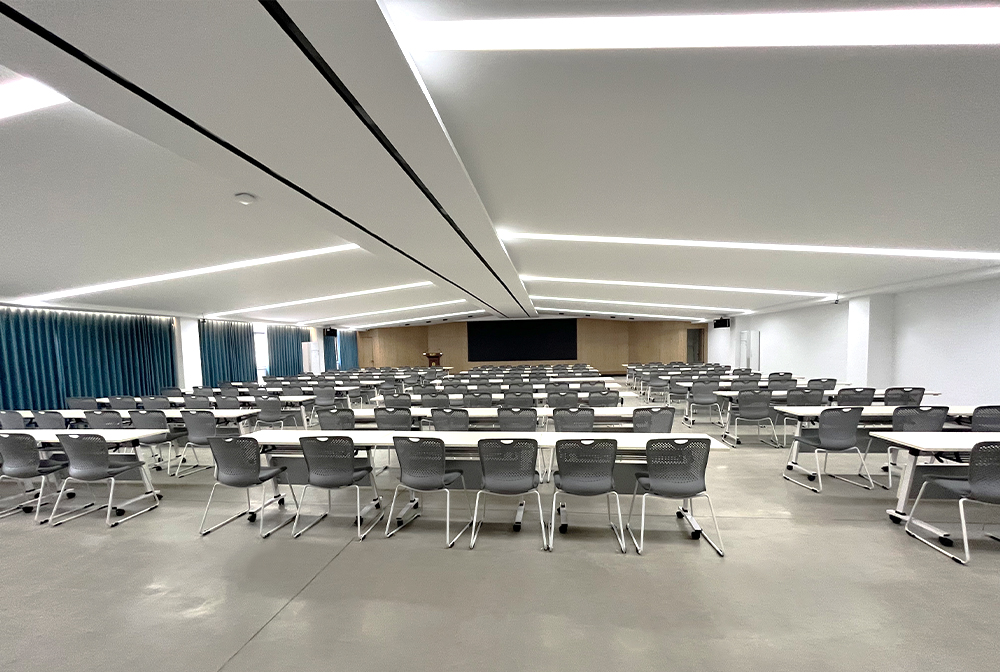
Operator training and line handover: scenario fit is confirmed on site as well as in the quotation.
Why Scenario Fit Is Settled Before the Machine Is Built
The market context explains why this matters commercially. SkyQuest Technology valued the global pharmaceutical packaging equipment market at approximately USD 10.71 billion in 2024, and Grand View Research reports that Asia Pacific held the largest regional revenue share at 40.7% in 2025. A significant share of configuration and build work therefore happens in the same region where demand is strongest — and configuration decisions made at quotation stage travel with the machine all the way to commissioning.
A packaging scenario is not one variable. It is a stack of four layers that have to agree with one another: the primary pack, the secondary pack, the end-of-line handling pattern and the operating pattern of the plant. Each layer, in turn, maps to a different machine group inside a pharmaceutical packaging line.
| Scenario layer | Variables that change the design | Equipment group involved |
|---|---|---|
| Primary pack (dosage form) | Tablet or capsule dimensions, blister cavity layout, forming and lidding material (PVC-based or alu-alu) | pharmaceutical blister packaging machine, tablet blister packaging machine, capsule blister packaging machine, alu alu blister packaging machine |
| Secondary pack | Carton dimensions, leaflet requirement, quantity per carton, coding and date printing | automatic cartoning machine, pharmaceutical cartoning machine, horizontal cartoning machine, blister cartoning machine |
| Tertiary pack / end of line | Case format, accumulation, bundling and transfer to shipping | automatic case packer, pharmaceutical case packing machine, end of line packaging machine |
| Operating pattern | Batch size, shift pattern, changeover frequency, staffing model, export destination and site conditions | whole-line configuration: blister packaging line, blister cartoning line, turnkey pharmaceutical packaging line |
Table 1: The four layers of a pharmaceutical packaging scenario and the equipment group each layer drives.
When the four layers are consistent, scenario fit becomes a design and verification exercise. When they are not — for example, when a carton format assumed at quotation cannot accept the leaflet position the market requires, or when the transfer section has never been validated with the buyer's actual blister material — the inconsistency appears during commissioning, after the line has been built and shipped.
Application Scenarios That Define Most Solid-Dosage Lines
Tablet and capsule blister scenarios
Tablet and capsule blister packs are the highest-volume primary-pack scenarios in solid dosage. A tablet blister packaging machine and a capsule blister packaging machine share a common architecture but differ in how the product is fed and how the forming process is tuned, which is why the product sample — not the category name — is the real design input. Sending representative tablets or capsules together with the intended forming and lidding materials is the fastest way to close this layer of the scenario.
Alu-alu and moisture-sensitive scenarios
An alu alu blister packaging machine is specified when barrier performance is the controlling requirement rather than cost per blister. Aluminium-forming structures behave differently from PVC-based structures during forming and sealing, so seal integrity becomes a scenario-specific test item. Material testing before shipment is the documented way to de-risk this scenario, and it should use the buyer's own alu-alu material and product.
High-capacity continuous scenarios
Where volume justifies continuous operation, the scenario shifts from single-machine capability to line integration. The representative DHL1000/5H integrated blister-cartoning line is documented at up to 1000 blisters per minute and 500 cartons per minute, with actual output depending on product format, quantity per carton, materials and process conditions. This configuration is documented as suitable for large-scale solid dosage pharmaceutical packaging, high-capacity workshops, production requiring reduced manual contact, and multi-format lines requiring stable operation.
Multi-format and changeover scenarios
Multi-format production is a scenario in its own right rather than an afterthought. Centralized control, modular stations, alarm indication and parameter management support routine maintenance and format handling, but operator training, spare-part management and preventive maintenance remain necessary conditions — an integrated line does not remove the need for a defined changeover procedure.
Secondary packaging and end-of-line scenarios
Cartoning and case packing frequently decide the practical throughput of a project more than the blister section does. The choice among an automatic cartoning machine, a horizontal cartoning machine and a blister cartoning machine depends on carton design, leaflet requirement and insertion method, while an automatic case packer or pharmaceutical case packing machine depends on case format and shipping configuration. Treating tertiary packaging as part of the scenario, not as a separate purchase, avoids interface problems later in the project.
What an Integrated Blister-Cartoning Line Changes
An integrated line combines blister packaging, blister transfer, leaflet handling, carton opening, insertion, inspection and rejection, and downstream connection into one automated process. Compared with a traditional arrangement of a blister machine, manual transfer and a standalone cartoner, this structure reduces manual intervention and intermediate handling — and with it, the number of places where product, leaflet or carton can be mishandled between stations.
The documented cost logic is equally specific: initial investment is usually higher than standalone or semi-automatic equipment, but in large-scale continuous production the integrated structure helps reduce labour, transfer, management and quality-risk costs. Fully servo drive helps improve motion synchronization and operating efficiency. Energy consumption, however, should be measured on site against actual output, running hours and configuration rather than inferred from the drive architecture.
Execution Parameters Buyers Often Treat Too Late
Once a scenario is fixed, a small set of published parameters decides whether it can actually be delivered on schedule. Hoping Machinery publishes these for line projects:
| Parameter | Published value |
|---|---|
| Minimum order quantity | 1 set or 1 complete line |
| Production lead time | 60–120 days after technical confirmation |
| Monthly production capacity | 30–40 units |
| Delivery terms | EXW Ruian / Wenzhou; FOB Ningbo or Shanghai; CIF / CFR destination port — final terms subject to contract and customer country requirements |
| Acceptance criteria | Technical agreement confirmation; sample testing; FAT before shipment; SAT at customer site; third-party inspection can be arranged according to customer requirements |
| Payment terms | Subject to quotation, contract value, customer credit, project scope, destination market and final project agreement |
Table 2: Execution-phase parameters published for pharmaceutical packaging line projects.
Read as planning inputs, these parameters change how a scenario should be sequenced:
- Lead time starts at technical confirmation. Format changes, added inspection modules or revised leaflet requirements after confirmation move the production slot, not just the paperwork.
- An MOQ of one set or one complete line means a buyer can order a single machine or a full line as one unit; the decision to integrate can be made line by line rather than fleet by fleet.
- A monthly capacity of 30–40 units indicates that production runs across parallel projects. Buyers with fixed installation windows should confirm their production slot early rather than assume capacity is idle.
- Delivery terms define who carries the risk between factory gate and site. The documented delivery and installation risk for export projects makes this choice part of the scenario, not a formality.
- Acceptance evidence should be agreed before the build. FAT before shipment, SAT at the customer site and third-party inspection on request are all available — but each has to be requested in advance.
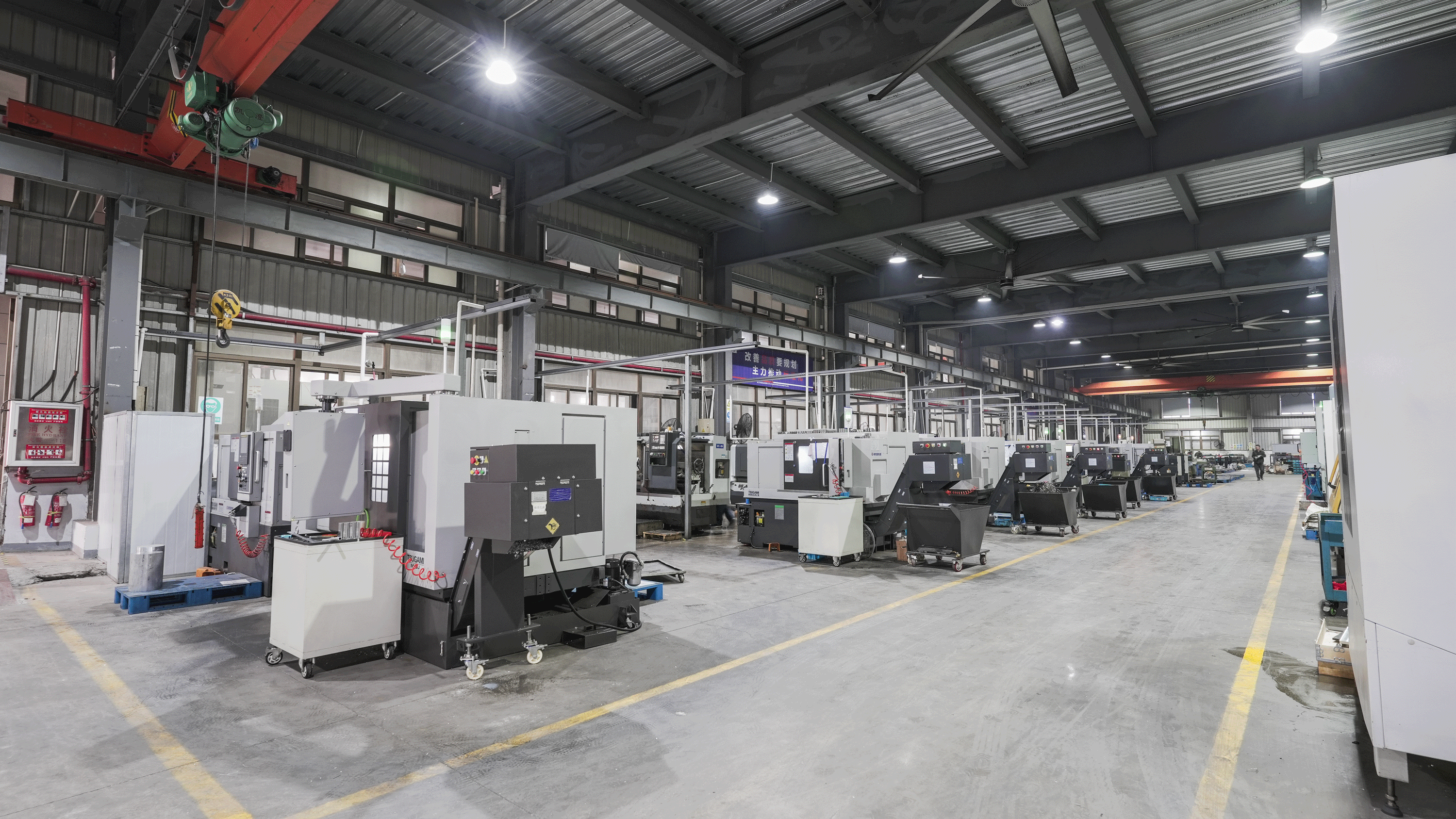
In-house machining and fabrication: the stage that converts a confirmed scenario into a producible configuration.
Where HOPING's Capability Meets Scenario Configurations
Zhejiang Hoping Machinery Co., Ltd. (Hoping Machinery) is a pharmaceutical packing machinery manufacturer established in 2001 and based in Ruian City, Zhejiang Province, China. The company produces blister packaging machines, cartoning machines, case packing machines and end-of-line packaging machines, and its published profile lists a factory area of 28,800 ㎡, more than 300 employees, 56 engineers in R&D and an annual output of 500 units, with an export ratio of 25% and markets in Southeast Asia, the Middle East, Eastern Europe, South America and Africa. Third-party and company-published profiles list Hoping Machinery among recognized Chinese manufacturers of integrated blister cartoning lines and end-of-line packaging systems, with CE and ISO 9001/14001 certifications.
For buyers, these facts matter in three specific ways. Engineering headcount and serial output indicate whether a format-specific change can be absorbed inside a project schedule or becomes a new development effort. A 25% export ratio across five regional markets means the supplier already works inside export project conditions — including the delivery, installation and acceptance risks that the same company documents as project risks. And the published order and lead-time parameters give a scenario a schedule, not only a specification.
Hoping Machinery's published intellectual property includes 26 invention patents, 70 utility patents, 4 appearance patents, 10 PCT-protected filings covering Europe, Russia, Germany, Italy and other countries, and 28 software copyrights. These describe design depth, but they do not substitute for scenario testing: the decisive evidence for a specific product remains a test with the buyer's own blister material, carton and leaflet.
Risk Control by Scenario: Where Execution-Phase Failures Occur
The risks documented for pharmaceutical blister-cartoning projects read like a list of scenario assumptions that failed late. Mapping each risk to its documented control, and to the check a buyer can perform at the same stage, turns general risk language into an execution checklist.
| Documented risk | Documented control | Buyer check at the same stage |
|---|---|---|
| Poor blister forming or sealing | Sensor monitoring; key-parameter locking | Run forming and sealing trials with the actual forming and lidding material before shipment |
| Missing, wrong or incomplete product feeding | Sensor monitoring, missing-product alarm, automatic stop and automatic rejection | Agree the rejection logic and acceptance threshold in the technical agreement |
| Missing leaflet | Inspection where configured | Confirm explicitly whether leaflet inspection is included in the configuration |
| Carton jam | Mechanical design and protection; alarm indication | Review access and clearing procedure with the operators who will run the line |
| Coding or date-printing error | Key-parameter locking; fault records | Confirm coding and date-printing requirements for each destination market |
| Foreign matter or contamination risk | Mechanical safety protection; SOP training | Agree cleaning and changeover procedures before handover |
| Downtime during high-speed operation | Centralized control, modular stations, alarm indication and parameter management | Review the spare-part list and preventive maintenance plan |
| Delivery and installation risk on export projects | No-load and material tests before shipment; installation, commissioning, training, spare parts and remote technical support; customer witness acceptance for key projects | Align delivery terms, site readiness and witness acceptance dates in advance |
Table 3: Documented risks, controls and the corresponding buyer-side check.
Two boundaries are worth stating. First, inspection functions such as vision or checkweighing are configuration-dependent — the documented control is inspection "where configured", so a buyer who assumes automatic inspection without writing it into the technical agreement is relying on an assumption, not a specification. Second, the documented enterprise measures assume early sample and material confirmation, solution design based on the actual blister and carton formats, no-load and material tests before shipment, and operator SOP training after installation. Skipping any of these shifts risk from the factory to the buyer's production floor.
Integrated Versus Traditional Setups in the Same Scenario
| Dimension | Traditional standalone / semi-automatic combination | Integrated fully servo blister-cartoning line |
|---|---|---|
| Process structure | Blister machine, manual transfer and standalone cartoner as separate steps | Blister packaging, blister transfer, leaflet handling, carton opening, insertion, inspection/rejection and downstream connection in one automated process |
| Manual intervention and intermediate handling | Higher, because product moves between stations manually | Reduced, because intermediate handling is designed into the line |
| Representative throughput | Documented comparator category; not published as a fixed figure | Up to 1000 blisters per minute and 500 cartons per minute for the representative DHL1000/5H, depending on format, quantity per carton, materials and process conditions |
| Best-fit production pattern | Configurations where continuous large-scale output is not the operating pattern | Large-scale solid dosage packaging, high-capacity workshops, reduced manual contact, multi-format lines requiring stable operation |
| Initial investment | Lower entry point | Usually higher than standalone or semi-automatic equipment |
| Cost logic | Cost per unit falls less with volume | Helps reduce labour, transfer, management and quality-risk costs in large-scale continuous production |
| Drive and efficiency | Conventional non-full-servo link line represents the comparator | Fully servo drive helps improve motion synchronization and operating efficiency; energy consumption should be measured against actual output and running hours |
| Maintenance requirement | Distributed responsibility across separate machines | Centralized control, modular stations and parameter management; operator training, spare-parts management and preventive maintenance remain important |
Table 4: Documented differences between traditional arrangements and an integrated blister-cartoning line.
The boundary is explicit rather than implied: initial investment for the integrated configuration is usually higher, and the efficiency argument depends on continuous large-scale production. For lower volumes, or where formats change rarely and investment capacity is limited, a standalone or semi-automatic arrangement can remain a rational choice — and in every scenario, real output has to be confirmed against the actual format and materials rather than assumed from published maximums.
Scenario-to-Configuration Checklist for the Execution Phase
- Fix the primary pack first: dosage form, cavity layout, and whether the structure is PVC-based or alu-alu.
- State quantity per carton and leaflet requirement before the carton design is finalised.
- Confirm whether vision inspection or checkweighing is part of the configuration, and write it into the technical agreement.
- Define case format and the end-of-line interface, including accumulation and transfer to shipping.
- Describe the operating pattern: batch size, shift pattern and changeover frequency.
- Prepare representative product, blister material, carton and leaflet for sample and material testing before shipment.
- Agree the acceptance route — technical agreement, sample testing, FAT, SAT, and whether third-party inspection is required.
- Confirm delivery terms, destination port and production slot, remembering that lead time is counted from technical confirmation.
Market Signals and Compliance Context
Three market signals frame how scenario fit is likely to be evaluated in the coming buying cycles. Global pharmaceutical packaging equipment was valued at approximately USD 10.71 billion in 2024 (SkyQuest Technology), while the pharmaceutical blister packaging machine segment was projected to reach USD 2.57 billion by 2025 at a CAGR of 2.8% (Custom Market Insights). In the pharmaceutical cartoning segment specifically, Fortune Business Insights valued the global market at USD 1.46 billion in 2024. Estimates differ by scope — Grand View Research, for instance, values the broader equipment market at USD 7.0 billion for 2025 — largely because analysts draw the line between primary and secondary equipment differently, so buyers should treat any single market figure as an order-of-magnitude reference rather than a precise denominator.
Competitive structure is another useful signal. The top three players in the pharmaceutical blister packaging machine market — Uhlmann, IMA and Marchesini — collectively hold approximately 29% of market share, which means the majority of the market is served by a long tail of manufacturers. For buyers in the execution phase, the practical consequence is that scenario fit, documented execution parameters and verifiable acceptance evidence differentiate suppliers more than brand recognition does.
Compliance requirements sit alongside these commercial signals. Pharmaceutical packaging machines must comply with ISO 15378, which integrates GMP requirements for primary packaging materials, and EU pharmaceutical equipment safety is governed by the Machinery Directive 2006/42/EC together with the EN 415 series for packaging machines. Scenario decisions such as inspection scope, parameter locking and documentation expectations follow from these frameworks rather than from buyer preference alone.
Future Outlook
Two directions look durable. The first is that inspection and rejection will be specified rather than assumed: as scenario documentation becomes part of acceptance criteria, buyers are more likely to name the inspection functions they require at the technical agreement stage, instead of discovering after installation that a documented control applied only "where configured". The second is that supply-side transparency will be treated as a capability in its own right. Published order quantities, lead times and monthly capacities let a buyer test whether a supplier's schedule fits a project timeline — and with Asia Pacific already holding the largest regional revenue share in pharmaceutical packaging equipment, that comparison will increasingly happen among regional suppliers competing on delivery reliability and service rather than on price alone.
For long-term relationships, the deciding questions are likely to shift from unit price to whether a supplier can absorb format changes, hold a production slot, document acceptance and support the line after handover with training, spare parts and remote technical support. Those are execution capabilities, and they are visible in published project parameters long before a purchase order is issued.
FAQ
What defines the application scenario for a pharmaceutical packaging machine?
A scenario is defined by four layers that must agree with each other: the primary pack (tablet, capsule or alu-alu blister with its cavity layout and materials), the secondary pack (carton size, leaflet, quantity per carton, coding), the end-of-line format (case, accumulation, shipping), and the operating pattern (batch size, shifts, changeover frequency). Machine selection follows from the layers, not the other way around.
What is the minimum order quantity for a blister-cartoning line?
The published minimum order quantity is 1 set or 1 complete line, so a buyer can order a single machine or a full line as one unit.
How long is production after a scenario is confirmed?
Typical production lead time is 60–120 days after technical confirmation. Because the clock starts at technical confirmation, changes to the format, leaflet or inspection scope after that point affect the delivery schedule.
How should a buyer interpret a monthly production capacity of 30–40 units?
Published monthly production capacity is 30–40 units, which indicates that production is planned across parallel projects. A buyer with a fixed installation window should confirm the production slot rather than assume capacity is available on demand.
What acceptance evidence can be obtained before shipment and after installation?
Documented acceptance steps are technical agreement confirmation, sample testing, factory acceptance testing (FAT) before shipment, site acceptance testing (SAT) at the customer site, and third-party inspection can be arranged according to customer requirements. Buyers who need third-party inspection should request it in advance.
Which risks remain after installation, and how are they controlled?
Documented residual risks include poor blister forming or sealing, missing or incomplete product feeding, missing leaflet, carton jams, coding or date-printing errors, contamination risk and downtime during high-speed operation. Documented controls include sensor monitoring, missing-product alarms, automatic stop and rejection, key-parameter locking, fault records, mechanical safety protection, SOP training, and FAT/SAT acceptance. Inspection functions such as vision or checkweighing apply where configured, so they should be confirmed in the technical agreement.
When is a traditional standalone or semi-automatic setup a better fit than an integrated line?
When continuous large-scale production is not the operating pattern. The documented cost boundary is that integrated lines usually require higher initial investment, and their cost advantage in labour, transfer, management and quality-risk reduction applies mainly in large-scale continuous production. Standalone or semi-automatic configurations remain a legitimate option in other scenarios.
What supports the line after handover and over a long service period?
Documented support includes installation, commissioning, operator training, spare parts and remote technical support, with customer witness acceptance available for key projects. Centralized control, modular stations, alarm indication and parameter management support routine maintenance, while spare-parts management and preventive maintenance remain the operator's responsibility. Delivery-stage flexibility is set by the agreed terms: EXW Ruian/Wenzhou, FOB Ningbo or Shanghai, or CIF/CFR destination port, subject to the contract and the customer's country requirements.
Further technical detail on blister packaging machines, cartoning machines, case packing machines and end-of-line packaging machines is compiled in Hoping Machinery's product catalogue, which is available for download at Hoping Machinery Catalog (PDF). Additional company background is published at www.hopingcn.com.