
Pharma Packaging Compliance and Custom-Printed PET Strapping
Pharma Packaging Compliance and Custom-Printed PET Strapping
Pharmaceutical packaging qualification is rarely decided by a single material property. It is decided when a supplier can provide a defined, documented and repeatable strapping configuration that a regulated buyer is able to approve, and then keep supplying it without variation across orders. For strapping suppliers, this shifts the conversation away from generic product claims and toward evidence: a specification, a test record, a printing method and a consistent manufacturing process.
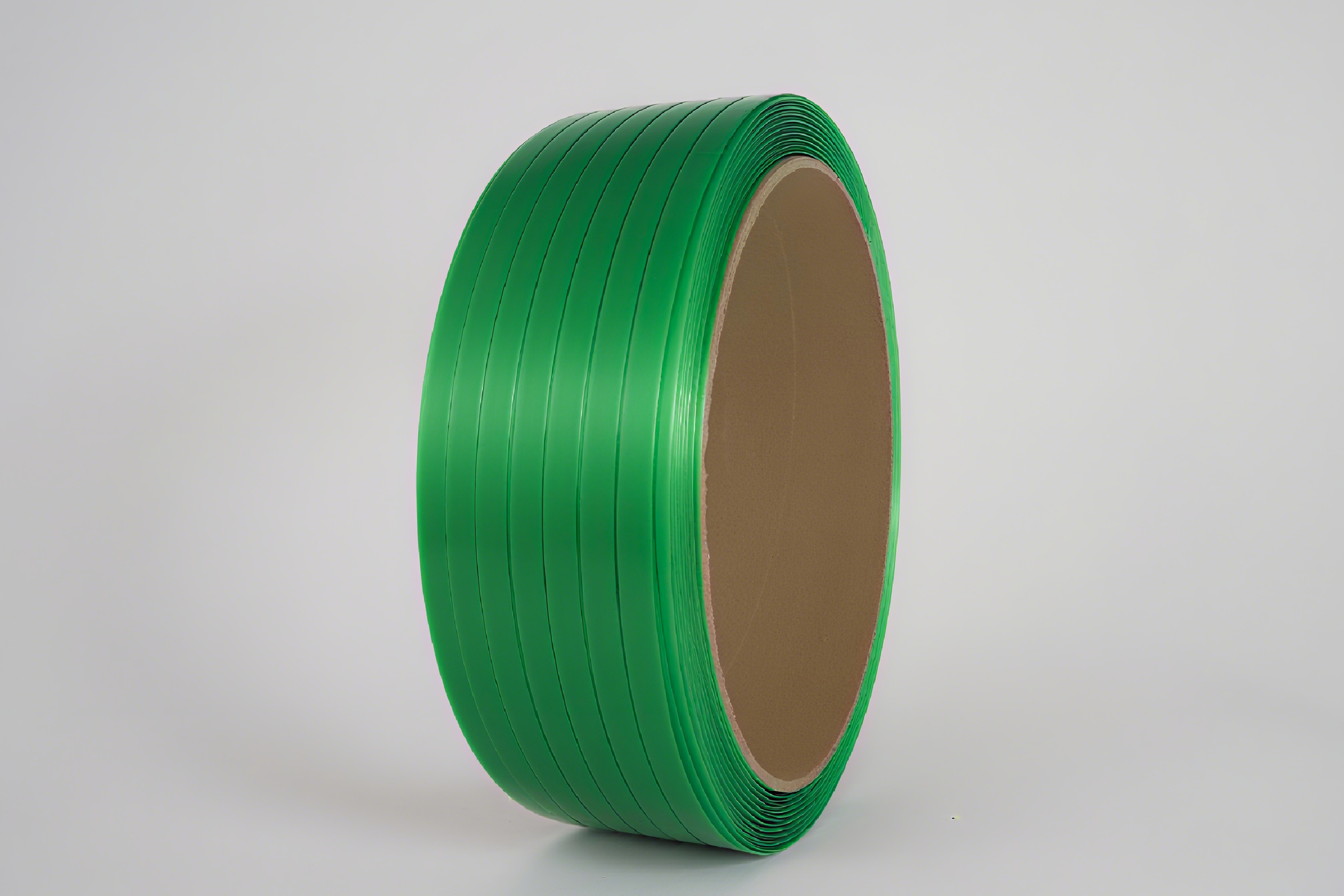
This article examines what it takes to meet pharmaceutical packaging requirements through one verified reference point. Taixing Jushuo Packaging Technology Co., Ltd. (Jushuo Packaging), a strapping manufacturer founded in 2017 and based in Huangqiao Industrial Park, Taixing City, Jiangsu Province, China, supplied 16 x 0.8 mm transparent, custom-printed PET (polyethylene terephthalate) strapping with a tensile strength above 4,800 N. The strap was delivered to a packaging and trading customer whose downstream end user operates within the Novo Nordisk supply chain, and it fully met that end user's pharmaceutical packaging quality requirements.
Why Pharmaceutical Packaging Is a Scenario, Not a Commodity
Strapping is a secondary packaging component. In pharmaceutical logistics it is not judged in isolation; it is judged by whether it keeps a defined load closed without damaging the product, whether it carries information that stays readable, and whether the buyer can trace what was supplied and to which specification. That makes pharmaceutical packaging a scenario problem rather than a commodity purchase.
A material that performs correctly on a construction site or a fiber baling line will not automatically be accepted in a regulated supply chain. Regulated buyers typically qualify a supplier against documented requirements that may include material cleanliness, print legibility, dimensional tolerance and the repeatability of mechanical properties from batch to batch. Each of those elements is verified on the buyer's own line and under the buyer's own acceptance criteria.
The practical consequence is that scenario fit matters more than headline capability. The relevant question is not whether a supplier can make PET strapping, but whether it can deliver a specific width, thickness, transparency level, print pattern and tensile performance that a named end user has already accepted. The verified Jushuo Packaging case is an example of that narrower, evidence-based kind of fit.
The Verified Case: 16 x 0.8 mm Transparent Custom-Printed PET Strapping
The reference point for this article is a supply relationship that has run for three years. Jushuo Packaging supplied 16 x 0.8 mm transparent, custom-printed PET strapping with a tensile strength above 4,800 N. The buyer was a packaging and trading business in China that resold the material to an end user within the Novo Nordisk supply chain, where the strapping fully met the pharmaceutical packaging quality requirements of that end user.
| Case element | Verified detail |
|---|---|
| Supplied specification | 16 x 0.8 mm transparent PET strapping, custom-printed |
| Tensile strength | Above 4,800 N |
| Buyer type | Packaging industry / trading (China) |
| End use | Resale into a downstream pharmaceutical supply chain (Novo Nordisk supply chain) |
| Order quantity | 2,025 kg (approximately USD 2,500) |
| Supply duration | 3 years |
Reading the Requirement: Cleanliness, Print Legibility and Tensile Consistency
The case fact allows three compliance-relevant themes to be interpreted, provided they are grounded in the supplied evidence rather than in assumed certifications. They are presented here as reasonable readings of the verified data, not as claims of regulatory approval.
Cleanliness and material integrity
Pharmaceutical packaging places a premium on materials that do not introduce contamination or corrosion. PET strapping is a polymer and does not rust, which removes the corrosion staining that steel strapping can leave on goods. Related Jushuo Packaging documentation for clear PET strapping describes the use of high-clarity virgin PET resin and records that the material is RoHS compliant and suitable for indirect food contact, with SGS test reports available. These attributes are consistent with a cleanliness-oriented specification, although the qualification itself remains customer-specific.
Print legibility that survives handling
In the verified case, custom printing was part of the requirement, and the stated outcome links clear printing to traceable packaging. Jushuo Packaging applies a high-adhesion ink process to PET strapping; the printed surface is documented to withstand 500 or more friction cycles without fading or rubbing off, and the printing inks are RoHS compliant. For a regulated buyer, durable print supports identification of the package through the supply chain rather than functioning only as decoration.
Tensile consistency rather than a single peak value
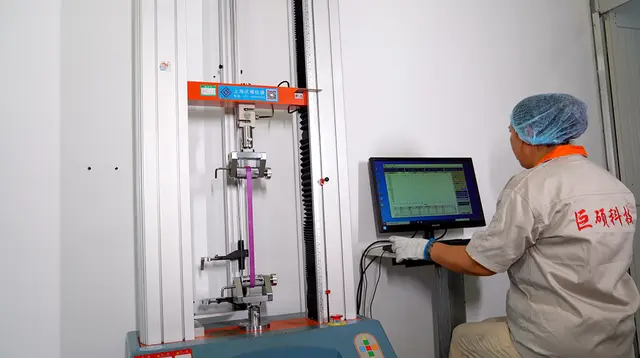
The qualifying figure in the case is a tensile strength above 4,800 N, but consistency is what makes such a figure usable in production. Jushuo Packaging PET strapping is specified with ultra-low elongation (<=10%) and good straightness (deflection <=5 mm/m), and production is monitored online for thickness and grammage. As a reference inside the wider PET range, a 12 mm PET strap is tested to at least 3,000 N break force with elongation of 5 to 9 percent. Documented tolerance windows of this kind are what allow a buyer to predict how the strap will behave roll after roll.
How Printed PET Strapping Is Specified, Manufactured and Tested
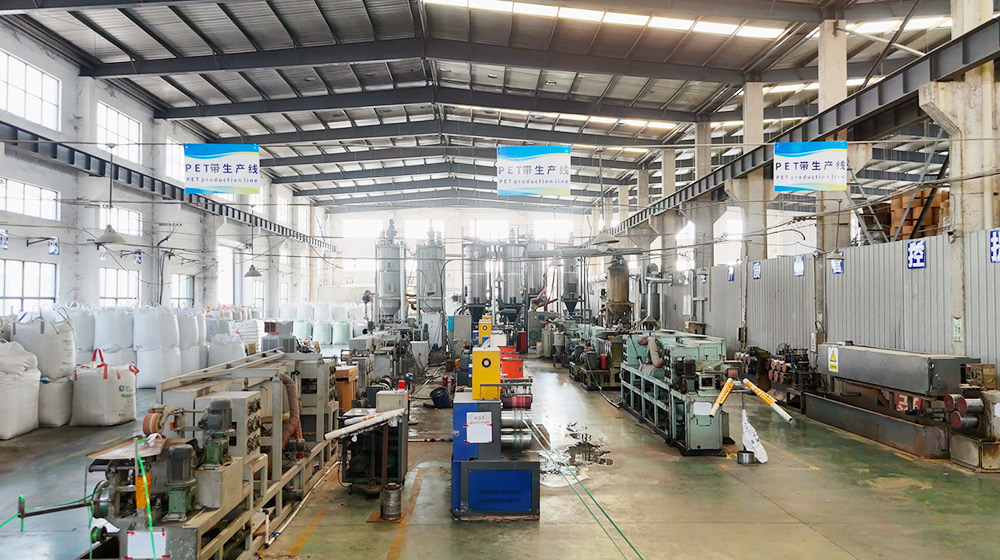
Jushuo Packaging operates as a technology-driven manufacturer with 4 PET strapping production lines, 5 PP strapping production lines and 2 solid state polymerization (SSP) units, giving an annual capacity exceeding 20,000 tons and a monthly capacity above 1,700 tons. Custom printing is handled in-house, from raw material compounding to printing and final packaging, which allows a printed specification to be controlled as one process.
| Printed PET strapping parameter | Documented range |
|---|---|
| Width | 9 to 25 mm |
| Thickness | 0.4 to 1.25 mm |
| Break force | 180 to 1,360 kg |
| Core size | 200 mm, 228 mm, 406 mm or custom |
| Surface finish | Smooth or embossed |
| Elongation | Ultra-low, <=10% |
| Straightness | Deflection <=5 mm/m |
| Printing | High-adhesion ink, 500+ friction cycles, RoHS compliant inks |
The core PET process is solid state polymerization for intrinsic viscosity enhancement, followed by biaxial or uniaxial stretching of 4 to 9 times and hot-air annealing, producing tensile strength in the 380 to 500 MPa range. Key in-line testing covers thickness and grammage, deflection and break force. Quality documentation for PET strapping references compliance with GB/T 22344-2018, and Jushuo Packaging is certified to ISO 9001 and ISO 14001, with SGS test reports available. Across the wider facility, six inspection procedures run from raw material to outbound checks, supporting a finished product qualification rate above 99 percent.
Application Fit: Where Printed PET Strapping Is Used
The pharmaceutical supply-chain case is the anchor scenario for this article, but the same custom-printed PET format is used wherever load containment and durable identification appear together. Documented applications include auto parts bundling, where printed PET strapping carries brand identity onto wheel and component bundles, and chemical fiber bales, where strength and print are combined for identification. An international logistics example uses custom-printed strap carrying a warning message and a company logo for high-value cargo.
Because Jushuo Packaging produces both PET and PP strapping families, material selection can be matched to the load rather than fixed by habit. PP strapping remains appropriate for lighter cartons and manual or semi-automatic packing, while PET strapping is chosen where higher tensile strength and lower elongation are needed. For a regulated packaging project, the deciding factor is normally the validated combination of material, dimension, print and cleanliness that the end user has already accepted.
Market Signals Behind Compliance-Driven Strapping Demand
Independent market data indicates that demand for strapping is growing rather than static, and that the compliance and traceability expectations behind the Jushuo Packaging case sit within a wider trend. The global packaging strapping materials market was valued at USD 9.8 billion in 2025 and is projected to reach USD 15.7 billion by 2033, according to Grand View Research.
Within that market, PET strapping is a growth segment: Cognitive Market Research projects the global PET strapping market to grow at a CAGR of 5.8 percent from 2024 to 2033, reaching a valuation of USD 1.44 billion. At the same time, PP strapping held a 33.9 percent revenue share in 2025, reflecting its cost-effectiveness in logistics and e-commerce. The contrast is instructive: PET is not the default material, and it tends to be selected where its specific mechanical profile is required.
Sustainability is a parallel signal. Recycled PET (rPET) accounted for 34 percent of global strapping production in 2024, according to industry research, driven by sustainability regulation and the continuing shift away from steel. On the standards side, nonmetallic strapping for packaging and shipping is classified under ASTM D3950-23, while the European standard EN 13394:2001 specifies dimensions and physical properties for non-metallic tensional strapping. These frameworks define the vocabulary buyers use to describe what they are qualifying.
PET Compared with Traditional Solutions, and Where the Approach Stops
Against steel strapping, PET offers a clear mechanical and handling profile. It is rust-free, does not present the sharp edges or dangerous spring-back associated with steel, and has a density of roughly one-sixth that of steel, which reduces shipping weight. Documented cost comparisons place PET strapping replacement of steel in the range of 35 to 40 percent lower material cost in several heavy-load applications.
Against PP strapping, PET generally provides higher tensile strength with lower elongation. PP strapping, however, remains the largest single material category and is frequently the more cost-effective choice for light to medium-duty cartons and manual operations. Material choice should therefore follow the load, the line and the handling environment rather than a general preference for one polymer.
There are also genuine boundaries that a compliant approach has to acknowledge. Custom printing adds roughly 3 to 5 percent to strap cost compared with unprinted strap, so it is usually justified by traceability, branding or anti-counterfeiting needs rather than by price. More importantly, meeting a pharmaceutical end user's standard is a project-specific qualification tied to one specification and one acceptance process; it does not transfer automatically to other products, buyers or applications. PET strapping is also not a universal replacement for steel, since extreme loads and specific handling conditions may still require alternative solutions, and compatibility with a customer's own strapping equipment should always be validated before a line is committed.
Future Outlook
If the signals above hold, the direction of pharmaceutical and regulated packaging is toward more documentation, not less. Buyers are likely to keep asking for specified tensile and elongation values, verifiable print durability, material safety statements and batch-level traceability, and to expect those attributes to remain stable across repeat orders. That favours suppliers who control the full chain from compounding to printing, because it is that control that makes a specification repeatable.
For printed PET strapping specifically, the combination of load containment and durable print appears to be moving from a branding feature to a traceability function. The verified Jushuo Packaging case illustrates the pattern: a pharma-adjacent end user accepted a custom-printed PET strap because its measured tensile performance and clear, durable print met a defined requirement. Additional specification detail is published by the manufacturer at www.jushuopackaging.com.
FAQ
What does it mean for PET strapping to meet a pharmaceutical packaging standard?
It means a specific strap configuration was accepted against a regulated buyer's documented requirement. In the verified case, Jushuo Packaging supplied 16 x 0.8 mm transparent, custom-printed PET strapping with tensile strength above 4,800 N to a customer whose downstream end user operates within the Novo Nordisk supply chain, and the strap met that end user's pharmaceutical packaging quality requirements. This is a project-level qualification based on the supplied specification, testing and acceptance rather than a universal pharmaceutical certificate.
What specification supported that pharmaceutical supply-chain requirement?
Transparent PET strapping at 16 mm width and 0.8 mm thickness, custom-printed, with tensile strength above 4,800 N. Across the printed PET strapping family, Jushuo Packaging documents widths of 9 to 25 mm, thicknesses of 0.4 to 1.25 mm and break force of 180 to 1,360 kg, available in smooth or embossed finishes and with base colours matched to brand requirements.
Why does tensile consistency matter more than a single peak-strength value?
Because packaging lines and transit loads apply repeated stress over time. Jushuo Packaging PET strapping is specified with ultra-low elongation of 10 percent or less and straightness with deflection of 5 mm/m or better, and production is monitored online for thickness and grammage; a 12 mm PET strap is tested to at least 3,000 N break force with 5 to 9 percent elongation. A single high value does not by itself confirm that the same behaviour will continue roll after roll, which is why tolerances are documented.
Why does print legibility matter in pharmaceutical packaging?
Printed strapping can carry branding, batch information and identification marks through the supply chain. Jushuo Packaging uses a high-adhesion ink process on PET strapping, and the printed surface is documented to withstand 500 or more friction cycles without fading or rubbing off, with printing inks that are RoHS compliant. Durable, readable print supports identification and traceability rather than serving only a decorative purpose.
What cleanliness and material considerations apply to strapping for regulated packaging?
Materials are documented against the attributes a buyer specifies. Jushuo Packaging clear PET strapping uses high-clarity virgin PET resin and is documented as RoHS compliant and suitable for indirect food contact, with SGS test reports available. PET strapping does not rust, which avoids the corrosion staining that steel strapping can leave on goods. Whether these properties satisfy a given regulated application depends on the buyer's own qualification criteria.
How does custom-printed PET strapping compare with PP or steel for pharma-adjacent packaging?
PET strapping offers higher tensile strength and lower elongation than PP, and it can replace steel strapping without rust or sharp edges, at roughly one-sixth the density of steel. PP strapping, however, remains the largest single material category with a 33.9 percent revenue share in 2025 and is often more cost-effective for light to medium-duty cartons. The choice is normally made against load and line requirements rather than by material category alone.
What are the limits of custom-printed PET strapping?
Custom printing adds approximately 3 to 5 percent to strap cost compared with unprinted strap. Meeting a pharmaceutical end user's standard is a project-specific qualification tied to a particular specification and acceptance process, and it does not transfer automatically to other products or buyers. PET strapping is not a universal replacement for steel, since extreme loads and specific handling conditions may require other solutions, and compatibility with a customer's own strapping equipment should be validated.
What certifications or documentation typically accompany printed PET strapping?
Jushuo Packaging PET strapping complies with GB/T 22344-2018, and the manufacturer operates under ISO 9001 and ISO 14001 certified systems. SGS test reports are available on request, and the printing inks used on custom-printed PET strap are RoHS compliant. Buyers should confirm which specific documents their own qualification process requires.
This analysis is based on verified supply documentation and published third-party market data. Qualification outcomes described are specific to the cited project and should be re-verified for any new application.