
Patio Tables, Chairs and Bases: Outdoor Restaurant Furniture Shortlist
Outdoor restaurant furniture is a specification decision before it is a styling decision. A terrace, patio, rooftop or courtyard dining area carries the same commercial requirements as an indoor dining room — turnover, cleaning cycles, layout change, replacement planning — and then adds moisture, sunlight, wind and temperature range to every one of them.
This shortlist covers the five categories most outdoor dining projects specify: outdoor dining chairs, outdoor dining tables, outdoor bar stools, outdoor lounge and sofa seating, and table bases. It is organised around what a buyer can verify in a quotation — materials, finishes, durability evidence, customization scope, MOQ, packing and shipping terms — rather than around appearance.
Why Outdoor Specifications Fail Faster Than Indoor Ones
Commercial furniture is generally designed for higher-frequency use and places greater emphasis on durability, stability, structural strength, ease of maintenance and project-specific requirements. Residential furniture is mainly designed for lower-frequency household use, and may prioritise comfort and appearance differently. Place residential-grade product on an uncovered patio and the difference usually appears within one operating season of rain, sun and cleaning.
Durability is not a single property. It depends on the frame structure, the joints, the materials, the finish, the upholstery, the maintenance routine and the duty level specified for the project — and actual durability performance depends on the product specification and the applicable test requirements for that model.
Two confirmation points decide more outdoor projects than any styling choice. First, stain-resistance, water and weather-resistance, and flame-retardancy levels should be confirmed per project regulations and operational needs. Second, the recommended maintenance procedure for commercial restaurant and hospitality furniture is regular cleaning and maintenance under daily high-frequency operation, with weather resistance and corrosion protection required for outdoor scenes.
The opportunity is that outdoor and semi-outdoor areas extend seating capacity without expanding the building. The risk is that the same space is specified with indoor assumptions, which then shows up as early replacement, upholstery replacement and repair calls on high-visibility seating.
The Outdoor Shortlist: Five Categories to Specify
1. Outdoor dining chairs
Dining chairs are the highest-frequency touch point in any terrace plan and the first component guests judge. In the commercial dining seating range, frame structure can be solid wood, metal or plywood; upholstery options include fabric, PU leather and genuine leather; and colour, material, stitching, finish, logo and structural design can be customized. Seat height, width and overall dimensions can be customized according to project needs, and seating in this range is designed for high-frequency use in restaurants, hotels, cafés and hospitality projects. Commercial seating of this type is tested according to EN 16139 requirements — the applicable test evidence should be confirmed for the specific outdoor model being quoted.
2. Outdoor dining tables
The table range defines the grid of the terrace: covers per square metre, aisle width and service routes all follow tabletop shape and base footprint. Tabletop options listed for outdoor use are HPL, sintered stone, teak and aluminum; the wider commercial table range also lists solid wood, veneer, laminate, marble and stone tabletops, with round, square, rectangular and custom shapes. The commercial table specification highlights a durable surface, easy maintenance and suitability for high-frequency commercial use — the three attributes that matter most outdoors.
3. Outdoor bar stools
Counter and bar-height seating links the terrace to the bar or service counter and is usually the most abused seating type in a venue. In the commercial bar stool range, seat height is customizable according to bar counter and table height requirements; frame structure can be solid wood, metal or a customized structure; upholstery options are fabric, PU leather and genuine leather; and size, colour, material, stitching, finish and structure can all be customized. Commercial seating in this range is tested according to EN 16139 requirements.
4. Outdoor sofa and lounge seating
Lounge seating extends dwell time and is normally placed at the terrace edge, in waiting zones or around fire and shade features. Outdoor sofas and lounge chairs are listed with outdoor-rated fabric and quick-dry foam options, while the commercial sofa range covers lounge, modular, L-shaped, curved, sectional and waiting configurations, built on solid wood, plywood or metal-reinforced commercial frames with high-density foam of customizable firmness. Dimensions are fully customizable according to project floor plans and space requirements, and project-based customization, OEM/ODM and bulk production are available.
5. Table bases
Table bases carry the stability of the entire plan and are the component most often left undefined until late. Base structures include round, square, cross, disc, pedestal, double-pedestal and bar-height options, with dining, counter, bar and custom heights. Mounting is compatible with wood, HPL, stone, marble and sintered stone tabletops; materials include cast iron, steel, stainless steel and custom metal options; finishes include powder coating, brushed, polished, plated and custom colours. Base plate size, column size and mounting configuration are customized according to tabletop dimensions — which is why base selection should follow tabletop selection, not the other way round.
| Category | Primary role on a terrace | Materials listed for the category | Confirm before ordering |
|---|---|---|---|
| Outdoor dining chairs | Highest-frequency seating; drives perceived comfort | Aluminum, stainless steel or teak frames in the outdoor line; solid wood, metal or plywood frames in the wider commercial seating range; fabric, PU leather or genuine leather | Seat height, upholstery cleaning method, applicable test evidence, replaceable components |
| Outdoor dining tables | Defines covers, aisle width and service routes | HPL, sintered stone, teak or aluminum tabletops; wider range also lists solid wood, veneer, laminate, marble, stone | Tabletop-to-base pairing, edge detail, cleaning method, exposure to sun and rain |
| Outdoor bar stools | Counter and bar-height seating; service-side traffic | Solid wood, metal or custom frames; fabric, PU leather or genuine leather upholstery | Seat height matched to counter, footrest position, EN 16139 evidence for the quoted model |
| Outdoor sofa and lounge seating | Longer dwell time; edge, waiting and lounge zones | Outdoor-rated fabric and quick-dry foam; high-density foam with customizable firmness | Cushion drying routine, foam specification, modular versus fixed layout |
| Table bases | Stability, tabletop support, height change | Cast iron, steel, stainless steel, aluminum, powder-coated metal | Base plate size versus tabletop dimension, mounting plate, height, fixing method |
Materials and Finishes: What the Outdoor Line Lists
Material and finish selection depends on furniture type, commercial usage, cleaning frequency, moisture and stain exposure, scratch visibility, weight, upholstery wear, brand palette, budget and destination-market requirements. For high-traffic dining zones, durable and easy-maintenance materials are recommended, and upholstery should be selected according to wear resistance and cleaning needs.
| Element | Options listed | Outdoor specification note |
|---|---|---|
| Frame | Aluminum, stainless steel, teak in the outdoor line; steel, solid wood and plywood in the wider commercial range | Match frame material to moisture and coastal exposure; powder-coated metal is listed for corrosion resistance and easier maintenance |
| Tabletop | HPL, sintered stone, teak, aluminum for outdoor use; solid wood, veneer, laminate, marble, stone in the wider range | Confirm the tabletop is specified for outdoor use and structurally matched to the base |
| Upholstery | Outdoor-rated fabric and quick-dry foam; fabric, PU leather, genuine leather in the wider range | Select against wear resistance and cleaning frequency; outdoor cushions need a defined drying routine |
| Finish | Painted, stained, powder-coated, matte, gloss, textured, wood-grain and custom colours | Wood, metal and upholstery finish samples should be approved together to keep the project palette consistent |
| Table base | Cast iron, steel, stainless steel, aluminum, powder-coated metal with custom finishes | Base plate and mounting configuration are set by tabletop dimensions and required height |
Durability: Evidence to Ask For, Not Assume
Quality control for this manufacturer's restaurant furniture covers incoming materials, cutting, welding, finishing, assembly and final inspection. Critical items are inspected before packing, followed by a final pre-shipment inspection, and pre-shipment quality inspection is included for every order.
Common durability tests include static load, impact, stability, scratch resistance, abrasion resistance and fabric colorfastness. For a terrace project, that list maps directly onto the risk profile: static load and impact for chairs and stools, stability for pedestal and bar-height bases, scratch and abrasion resistance for tabletops and seating edges, and colourfastness for upholstery exposed to sun and cleaning agents.
Evaluation criteria that a buyer can apply when comparing quotations include frame and joinery strength, stability, applicable load testing, finish durability, upholstery abrasion and cleaning, replaceable components, maintenance requirements and project usage frequency.
Customization and Layout Fit
Custom restaurant furniture can be customized in size, material, colour, finish, fabric, hardware and branding. Furniture can also be developed from reference images, with structure, dimensions, materials and finishes adjusted for commercial use, and brand colours and finishes matched by coordinating custom colours, wood stains, metal finishes and upholstery with the project palette.
Design support for project orders covers CAD drawings, 3D renderings, furniture layout adjustment and basic space planning, including booth and banquette layouts designed around seating capacity and customer traffic flow. CAD drawings are provided for project review, approvals and coordination with the client's design team; 3D renderings let clients review appearance before production; and dimensions and layouts can be adjusted before production for customized items. Drawings are helpful but not mandatory — projects can also be developed from photos, reference images or written requirements.
One process rule protects the schedule more than any other: material, colour, upholstery and finish samples should be approved before bulk production, so that bulk production follows a clear reference. Approving drawings and samples before bulk production helps reduce changes and delays.
MOQ, Pricing, Packing and Shipping for Terrace Projects
MOQ is project-specific, not a fixed number
The minimum order quantity depends on the product type, customization level, material setup and order mix, and is therefore confirmed on a project-specific basis. Standard models and custom project furniture may have different minimum quantities, and custom dimensions, structures, materials or finishes may require a different MOQ because they involve additional material preparation and production setup. Trial orders are evaluated case by case according to product, material setup and production requirements, and mixed-model orders can be considered for project procurement, subject to model-specific production requirements and total order planning. For reference, one category-level figure is published by the manufacturer: an MOQ of 20 units for custom restaurant booth manufacturing. Outdoor product lines are quoted per project rather than against a catalogue threshold.
Pricing and payment
Custom furniture pricing is calculated from the confirmed specification rather than from a fixed catalogue list price. Key cost drivers include material grade, dimensions, construction, quantity, finish and upholstery complexity, packaging, and the agreed delivery term. Larger order quantities may improve production efficiency and material purchasing conditions, so project pricing can change with volume, and tiered pricing can be offered according to purchase volume. Quotes are usually issued on EXW or FOB terms, prices can be provided in USD, EUR or other major currencies based on the applicable exchange rate, and the quotation should state the applicable Incoterm, with freight separate or included depending on the agreed delivery term. Payment terms depend on the order value and commercial agreement: standard terms are typically a 30% deposit with 70% balance before shipment by T/T, while L/C at sight may be accepted for larger established orders.
Packing and shipping
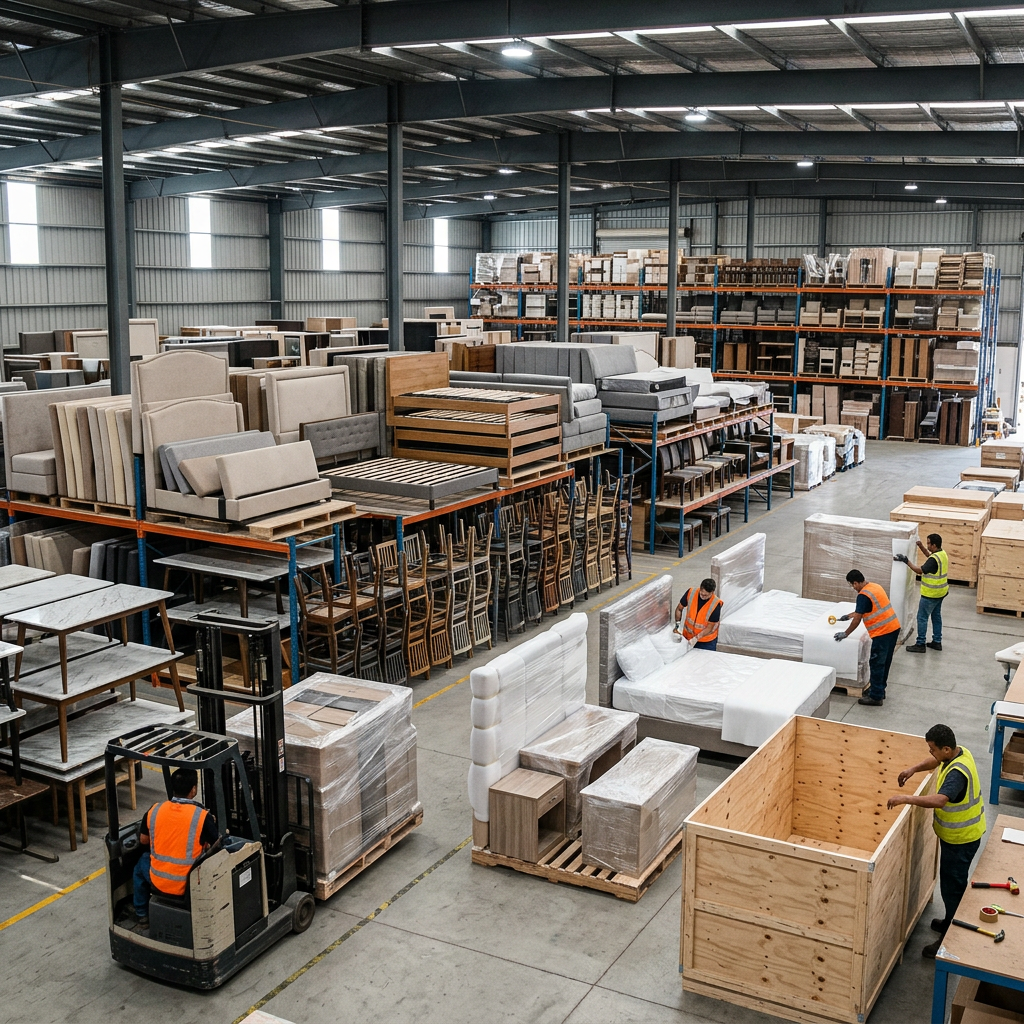
Export-standard packing for commercial furniture uses foam, edge protectors, and cartons or wooden crates depending on the item. The documented sequence adds foam, corner and edge protection, and component separation where needed before cartoning or crating; uses export cartons, reinforced packaging or wooden crates according to product fragility; protects hardware and labels packages clearly so components can be identified on arrival; and checks package dimensions and quantities against the packing list before loading. Packaging must match product weight, fragile surfaces, shipping method and loading conditions, and protection should not be reduced only to increase loading quantity.
Supported shipping terms are EXW, FOB, CIF, CFR and DDP, and international freight can be arranged or quoted on request. DDP availability depends on destination, product, customs and tax handling and logistics capability, and feasibility is confirmed for the actual shipment. The export port is selected according to factory location, routing, freight cost and project requirements — a detail that also affects delivery arrangements for replacement and repeat orders.
Where MingMeng Furniture Sits in an Outdoor Shortlist
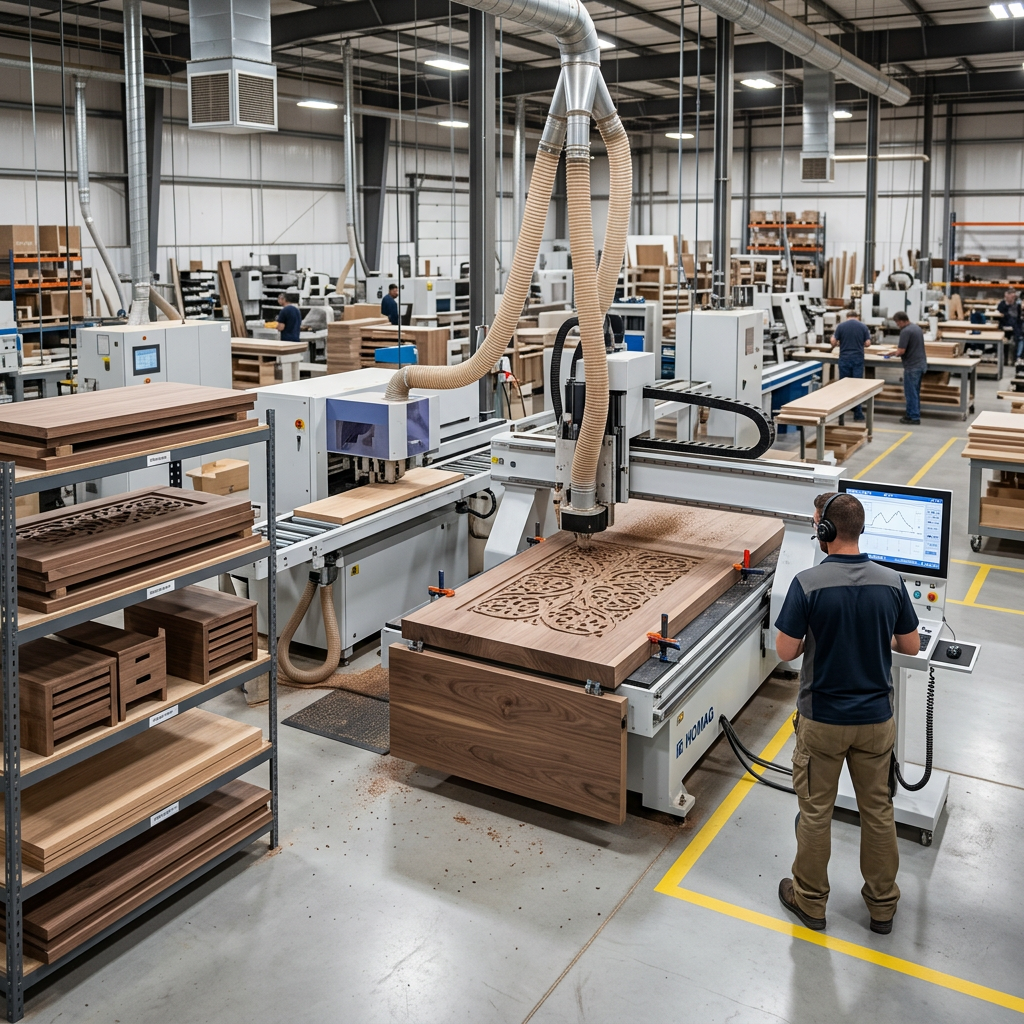
MingMeng Furniture, operated by Guangzhou Mingmeng Furniture Co., Ltd., established in 2015, is a Guangzhou-based manufacturer of custom restaurant, café, hotel, bar and contract furniture for global commercial projects. The company operates a 15,000㎡ commercial furniture manufacturing facility with more than 200 skilled workers and production lines covering woodworking, metalworking, upholstery, cutting, welding, polishing, painting, powder coating, CNC processing, assembly and quality inspection.
Its declared product scope includes restaurant chairs, dining tables, booth and banquette seating, bar stools, bar counters, hospitality sofas, hotel guest-room and lobby furniture, outdoor dining furniture, canteen furniture and table bases — the five outdoor categories in this shortlist sit inside that scope. For outdoor work specifically, the range covers outdoor dining chairs, outdoor dining tables, outdoor bar stools, outdoor sofas, outdoor lounge chairs and patio or terrace furniture, with aluminum, stainless steel and teak frame structures, HPL, sintered stone, teak and aluminum tabletop options, outdoor-rated fabric and quick-dry foam, and support for CAD layout, 3D visualization, material selection, sample development and export delivery.
Capacity and service facts relevant to decision-stage buyers: production capacity reaches more than 80,000 pieces per month, annual output exceeds 960,000 units, the R&D team includes 10 engineers, exports account for 90% of business, products have been supplied to customers in more than 100 countries and regions, and the company supports 50–500+ unit hospitality projects with custom dimensions, materials and finishes. OEM and ODM development is supported from drawings, reference images, samples and project specifications, and one-stop project service covers requirement analysis, space planning, CAD drawings, 3D visualization, sample development, bulk production, quality inspection, export packaging and international shipping coordination. The company states it holds CE, TÜV, RoHS and Certification of Conformity certifications and has developed 10+ national patented designs; for any specific project, buyers should verify that the certificate scope covers the exact model and destination market.
Market Context: What Published Estimates Do and Do Not Show
Three commercial research publishers place the global restaurant furniture market at materially different levels. One report states the market is expected to grow from USD 638.8 million in 2026 to USD 929.57 million by 2035 at a CAGR of 4.3%. A second states the market was valued at USD 0.88 billion in 2025 and is projected to reach USD 1.38 billion by 2034 at a CAGR of 5.13%. A third states the market was valued at USD 6.62 billion in 2025 and is projected to reach USD 11.01 billion by 2034 at a CAGR of 5.8%.
These figures are not directly comparable. They use different market definitions, base years and publisher methodologies, and they conflict at the definition level, so averaging them would produce a number that corresponds to no single market definition. No official government or customs dataset for restaurant furniture was identified in the same research pass, which is why the available figures come from commercial publishers rather than statistical agencies. The practical reading for a specifier is directional: the category is forecast to grow, but a project budget or a category decision should not be built on a headline CAGR.
The trend signals that do change a terrace specification come from the operating environment rather than the market charts. Modularity and maintainability are common project requirements for commercial restaurant and hospitality furniture; stain, water, weather and flame-retardancy performance levels are confirmed per project regulation and operational need; and outdoor scenes require weather resistance and corrosion protection rather than the same frame and finish specification used indoors.
Comparison with Traditional Purchasing Routes
Compared with standard ready-made and residential-grade furniture, commercial-grade project supply differs in construction, planning and delivery. The table below sets the two routes side by side on the dimensions a decision-stage buyer is usually asked to justify.
| Dimension | Commercial-grade project supply | Standard ready-made / residential-grade route |
|---|---|---|
| Construction | Commercial-grade construction selected against the duty level of the space | Primarily designed for lower-frequency household use |
| Customization | Project-based customization of dimensions, materials, upholstery, colours, finishes and structures; development from reference images | Limited to available stock dimensions and finishes |
| Planning support | CAD drawings, 3D renderings, layout adjustment and basic space planning | Usually not provided |
| Package coordination | Full furniture package coordination across tables, chairs, booths, bars and accessories for a consistent look | Category-by-category sourcing with mixed specifications |
| Quality evidence | Pre-shipment quality inspection included for every order; documented durability tests | Often undocumented |
| Lifecycle and maintenance | Durable commercial-grade structures reduce frequent replacement; maintenance is simplified through standardized materials, finishes and spare-part support | Higher replacement frequency and non-standard replacement parts |
| Timing | Typical production cycles of 30–60 days depending on project scope | Immediate availability when stock exists |
Limits and boundary conditions worth stating plainly. Weather resistance is a design intent matched to an outdoor commercial environment, not a lifetime guarantee — coastal salt exposure, standing water and neglected upholstery still shorten service life. The outdoor line specifies aluminum, stainless steel or teak frames and HPL, sintered stone, teak or aluminum tabletops; an indoor-grade tabletop or standard indoor upholstery selected for appearance should be reviewed for outdoor suitability before it is locked into a specification. Table bases add mass for stability, which is a benefit on an exposed terrace but also a handling and installation consideration, and base plate size, column size and mounting configuration must be matched to tabletop dimensions. Production cycles of 30–60 days mean late changes to drawings, dimensions, materials, finishes or quantities after written confirmation can cause rework, extra cost and delays — so drawings, dimensions, materials, finishes, quantities and approved samples should be confirmed in writing before bulk production starts. MOQ is project-specific, so small mixed trials depend on the material setup and production requirements of each model. Warranty terms depend on the product, the project specification and the commercial agreement rather than on a single standard duration, and the applicable warranty period and coverage should be confirmed in the quotation or contract.
Future Outlook
Three changes are reasonable to plan for on outdoor dining projects. First, terraces and patios are increasingly treated as permanent revenue space rather than seasonal overflow, which shifts specification toward materials and finishes that survive regular cleaning and year-round exposure instead of light seasonal use. Second, documentation discipline becomes the schedule-control mechanism: CAD drawings, 3D review and written sample approval before bulk production, because late specification changes are the most common cause of rework, extra cost and delay. Third, consolidated package supply continues to gain weight over single-item purchasing, because one supplier can provide the complete restaurant package — tables, chairs, booths, bars and accessories — which supports consolidated ordering and a consistent furniture appearance across a project, along with one quality record and one packing standard for the whole shipment.
FAQ
What should be confirmed first when comparing suppliers for an outdoor dining furniture project?
Confirm the project brief before comparing prices: floor plan or space dimensions, the furniture list and estimated quantities, reference images or drawings, preferred materials and finishes, destination and target schedule. Then compare quotations against that confirmed specification, because pricing is calculated from the confirmed specification — materials, dimensions, quantity, construction, finish and upholstery complexity, packaging and delivery term — rather than from a fixed catalogue list price. Quotation scope, Incoterm, payment terms, production schedule, packing and any project-specific compliance requirements should then be confirmed in writing.
Which materials are listed for outdoor commercial dining furniture?
Frame structures for outdoor use include aluminum, stainless steel and teak. Tabletop options for outdoor use include HPL, sintered stone, teak and aluminum. Upholstery options include outdoor-rated fabric with quick-dry foam. Finishes can be customized in painted, stained, powder-coated, matte, gloss, textured, wood-grain and custom colours. In the wider commercial range, frames may also be solid wood or plywood, and tabletops may include solid wood, veneer, laminate, marble or stone — those combinations should be reviewed for outdoor suitability before they are specified for an exposed terrace.
How do table base types differ, and how is a base matched to a tabletop?
Base structures include round, square, cross, disc, pedestal, double-pedestal and bar-height designs, with dining, counter, bar and custom height options. Mounting is compatible with wood, HPL, stone, marble and sintered stone tabletops, and base materials include cast iron, steel, stainless steel and custom metal options with powder-coated, brushed, polished, plated or custom colour finishes. Base plate size, column size and mounting configuration are customized according to tabletop dimensions, so the base should be selected after the tabletop size, shape and height are fixed rather than in parallel with them.
How is durability evaluated for outdoor and high-traffic commercial seating?
Durability depends on the frame structure, joints, materials, finish, upholstery, maintenance and the duty level specified for the project. Common durability tests include static load, impact, stability, scratch resistance, abrasion resistance and fabric colorfastness, and commercial seating products such as dining chairs and bar stools are tested according to EN 16139 requirements. Quality control covers incoming materials, cutting, welding, finishing, assembly and final inspection, with critical items inspected before packing and a final pre-shipment inspection. Buyers should confirm the applicable test and QC evidence for the specific model quoted, because test evidence applies to a defined product specification.
What can be customized on an outdoor restaurant furniture order?
Customization covers size and dimensions, materials, colours, finish, fabric, hardware and branding, along with structures and furniture configurations according to project requirements. Furniture can also be developed from reference images, with structure, dimensions, materials and finishes adjusted for commercial use, and brand colours can be matched by coordinating custom colours, wood stains, metal finishes and upholstery with the project palette. For projects, CAD drawings support review and approvals, 3D renderings allow appearance review before production, and dimensions and layouts can be adjusted before production for customized items.
What MOQ applies to outdoor restaurant furniture?
The minimum order quantity depends on the product type, customization level, material setup and order mix, so it is confirmed on a project-specific basis. Standard models and custom project furniture may have different minimum quantities, and custom dimensions, structures, materials or finishes may require a different MOQ because of material preparation and production setup. Small trial orders are evaluated case by case, and mixed-model orders can be considered for project procurement subject to model-specific production requirements and total order planning. To obtain a project-specific MOQ, buyers should send the required models, quantities and specifications for confirmation.
How are outdoor furniture orders packed and shipped for export?
Export-standard packing uses foam, edge protectors, and cartons or wooden crates depending on the item, with component separation where needed, hardware protection and clear labelling so components can be identified on arrival, and a packing-list check of package dimensions and quantities before loading. Supported shipping terms are EXW, FOB, CIF, CFR and DDP, with international freight arranged or quoted on request; DDP feasibility depends on destination, product, customs and tax handling and logistics capability and is confirmed for the actual shipment. The export port is selected according to factory location, routing, freight cost and project requirements. Typical production cycles run 30–60 days depending on project scope.
How is pricing determined for a terrace or patio furniture project?
Pricing is calculated from the confirmed specification. Key cost drivers are material grade, dimensions, construction, quantity, finish and upholstery complexity, packaging, and the agreed delivery term; larger quantities may improve production efficiency and material purchasing conditions, and tiered pricing can be offered according to purchase volume. Quotations are typically issued on EXW or FOB terms and can be prepared in USD, EUR or other major currencies, with the applicable Incoterm stated and freight either separate or included depending on the agreed delivery term. Payment terms depend on order value and commercial agreement and should be confirmed in the quotation or contract.
Reference document: the MingMeng commercial restaurant and hospitality furniture catalogue (PDF) is available for download — Mingmeng Restaurant Furniture 2026 New (PDF).
¿Tiene preguntas o necesita más detalles?
Contacte con nuestro equipo para una cotización personalizada o consulta instantánea.
Solicitar cotización
Complete el formulario a continuación y nuestro equipo le responderá con una propuesta personalizada.
Chat directo de WhatsApp
¿Prefiere chatear en tiempo real? Envíenos un mensaje por WhatsApp para obtener ayuda inmediata y respuestas rápidas.
- Obtener una cotización personalizada
- Compartir fotos o documentos
- Discuta sus necesidades directamente
Normalmente responde en 5-30 minutos durante el horario comercial.