
Passenger Elevator Compliance Essentials: Understanding Certification Without the Jargon
Passenger Elevator Compliance Essentials: Understanding Certification Without the Jargon
Compliance in the passenger elevator industry is a document trail, not a slogan. Projects are more often delayed at approval stage by a missing scope line on a certificate than by a machine that fails to run. Passenger elevators accounted for more than 70% of global annual elevator installations in 2025, according to Maximize Market Research, which means the paperwork attached to those units is reviewed at scale by consultants, approval authorities, insurers and facility owners.
This reference explains, without jargon, how passenger elevator certification actually works: which standards sit behind the documents, what each certificate type proves, what it does not prove, and how a buyer at evaluation stage can confirm that a supplier's compliance file describes the exact product being purchased.
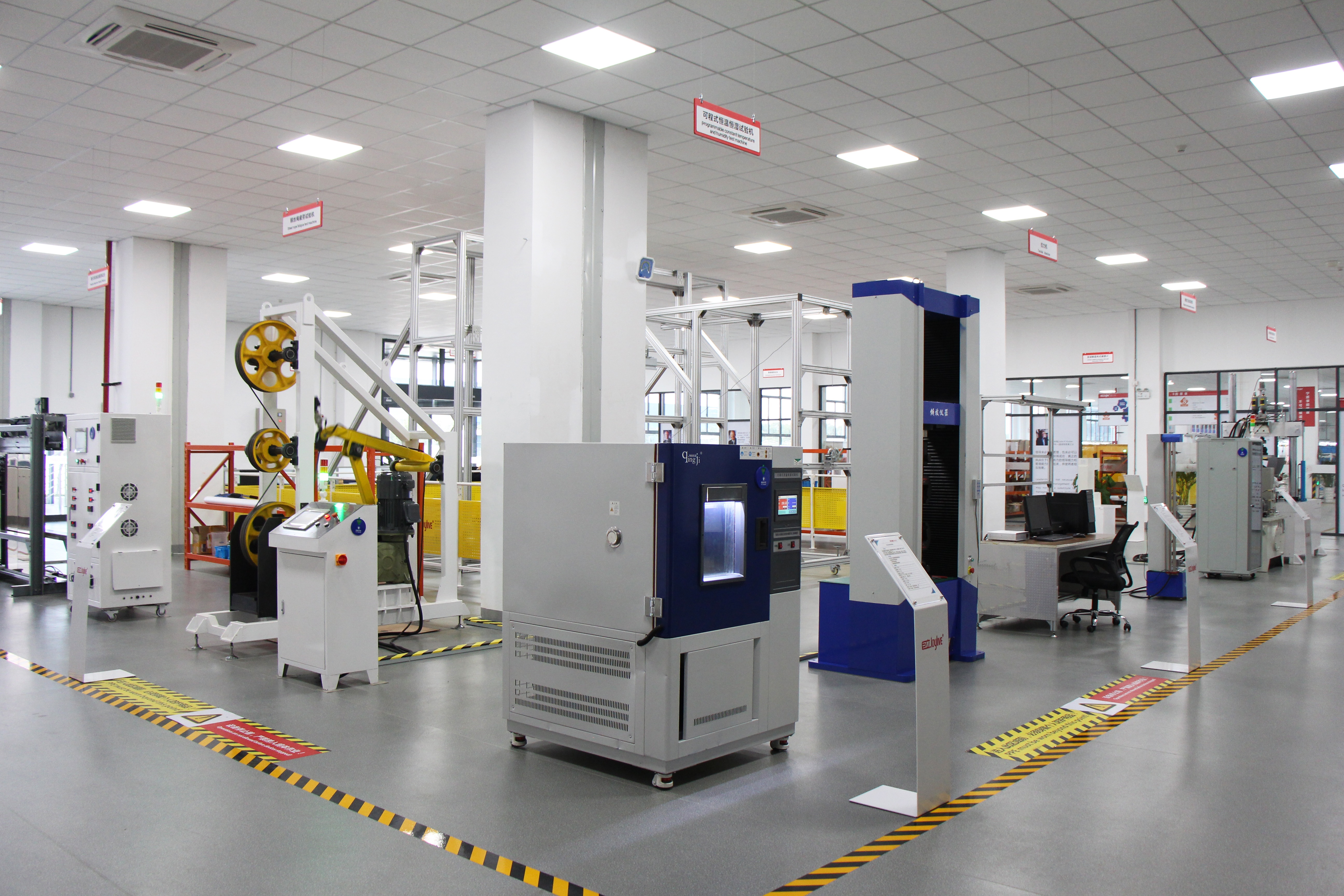
Testing and verification inside a nationally accredited elevator laboratory: the evidence layer that sits behind a type-examination certificate.
Why Qualification Is a Procurement Gate, Not a Marketing Badge
Two standards carry most of the technical weight in the elevator conversation. EN 81-20 addresses the construction and installation of lifts, while EN 81-50 covers the testing and examination of lift components. Both are cited as the governing framework for modern elevators in Europe and in markets that follow European practice. North America runs on a parallel but separate basis: ASME A17.1-2025 / CSA B44 is the Safety Code for Elevators and Escalators.
The practical consequence is that a supplier cannot simply be compliant in the abstract. A manufacturer can only hold defined certificates, issued by defined organisations, for defined products, against defined standards, inside defined validity periods. For a buyer at evaluation stage, the decisive question is narrower: does the document in the quotation package describe the elevator that will actually be manufactured, shipped and installed in this market?
Market structure reinforces the point. Asia-Pacific leads global passenger elevator installations with more than 66% volume share, driven significantly by China and India, based on Maximize Market Research data. When supply is concentrated in one region and demand is global, documentation becomes the interface between a factory and a foreign approval process.
Four Document Families Hidden Behind the Word Certified
Certified is not one credential. A typical passenger elevator file contains several document families, and each answers a different question. Confusing them is the most common source of evaluation error, because a strong answer to one question is often read as an answer to another.
| Document type | What it demonstrates | Scope limit to watch |
|---|---|---|
| EU type-examination certificate (issued against 2014/33/EU, typically with EN 81-20:2020 and EN 81-50:2020) | An independent body has examined and tested a lift type against the European safety framework. | It is tied to the tested type and configuration. A modified car size, drive arrangement or control concept falls outside the tested type. |
| Firefighter lift type-examination certificate (with EN 81-72:2020 and EN 81-77:2022 alongside EN 81-20:2020 and EN 81-50:2020) | The design meets firefighting lift requirements for a specific installation format. | It covers the firefighter function only. A standard passenger unit still needs its own passenger lift certificate, and the machine-room and machine-roomless versions are certified separately. |
| Energy efficiency certificate (VDI 4707 part 1, or ISO 25745-2:2015) | The model's energy behaviour has been measured and classified under a recognised method. | The certificate names a specific speed and load combination, such as a 1000 kg machine-room lift at 1.75 m/s. It should not be extrapolated to the whole family. |
| Management system registration (ISO 9001:2015, ISO 14001:2015, GB/T 19001-2016 with GB/T 50430-2017) | The organisation's design, manufacturing, sales, installation and maintenance processes have been audited. | It is an organisational registration. It says nothing about whether a particular model complies with a particular product standard. |
Reading the scope line is where most evaluation mistakes happen. A certificate whose scope reads Machine Roomless Passenger Lift does not cover a machine-room design, even when both come from the same factory and the same model family. Scope wording, standard edition and validity dates are the three fields that turn a certificate from a marketing asset into an approval input.
Standards in Plain Language
EN 81-20 and EN 81-50
EN 81-20 and EN 81-50 are the pair that appears most often on European-facing lift certificates. In simple terms, EN 81-20 sets the requirements for how a lift is built and installed, and EN 81-50 sets the rules for testing and examining lift components so that those requirements can be verified. When a certificate states both standards, it is saying that the design has been assessed against construction, installation and component testing requirements together.
ASME A17.1-2025 / CSA B44
North American elevator safety is primarily regulated under ASME A17.1-2025 / CSA B44, the Safety Code for Elevators and Escalators, according to ASME. A European type-examination certificate and a North American code reference are not interchangeable documents, and buyers working across both regions should expect to maintain two parallel compliance files.
VDI 4707 part 1 and ISO 25745-2:2015
Energy is certified separately from safety. VDI 4707 part 1 and ISO 25745-2:2015 are the two methods that appear in the passenger elevator certificates reviewed here. Both produce an energy classification rather than a safety opinion, and both are bound to a measured configuration.
2014/33/EU
The directive reference 2014/33/EU appears on EU type-examination certificates alongside EN 81-20:2020 and EN 81-50:2020. It is the legislative layer that gives the European certificate its market-access meaning, which is why the directive number, the standard edition and the year of issue should always be read together.
What a Buyer Should Request at Evaluation Stage
A supplier's compliance claim becomes checkable once it is converted into a document request list. The following items are the minimum set that allows a procurement team to compare suppliers on the same basis.
- A certificate register: every certificate number, issuing organisation, standard, issue date and expiry date, in one table.
- The type-examination certificate that covers the exact lift format being quoted, whether machine-room or machine-roomless passenger lift.
- The firefighter lift certificate, where the building programme or local code requires a firefighting lift.
- The energy efficiency certificate for the actual speed and load combination, not for a neighbouring configuration.
- Management system registrations covering design, manufacturing, sales, installation and maintenance.
- Production test evidence, including the factory test regime and the laboratory capability behind it.
- Written confirmation of after-sales technical support arrangements, such as hotline availability and remote or on-site support structure.
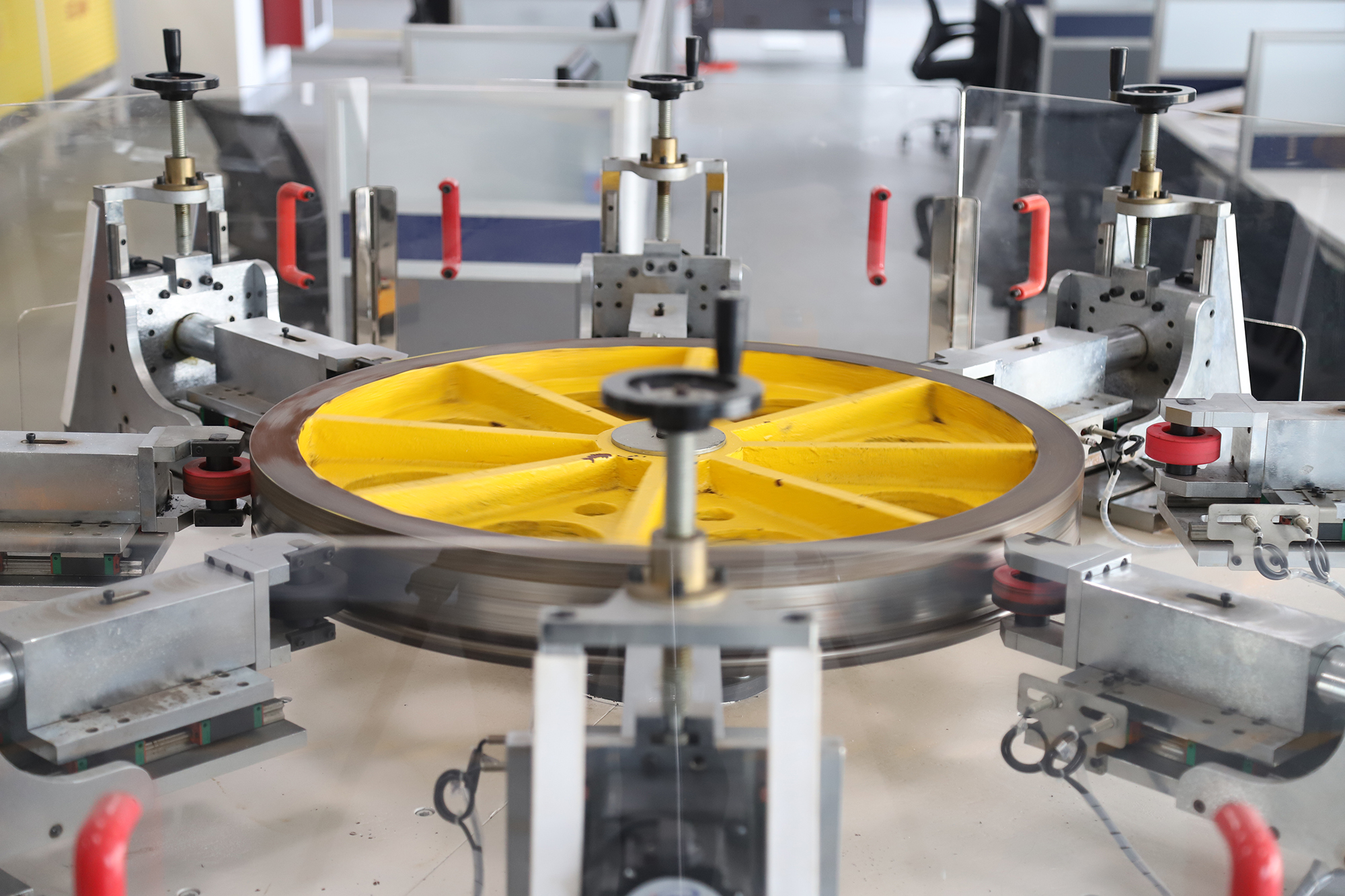
Component testing during production. Certificates describe the tested design; factory test records describe the individual unit that ships.
How to Verify That a Certificate Is Genuine and Relevant
Verification is a reading exercise, not a trust exercise. Six checks cover most of the risk.
- Match the certificate number to the issuer's record. Type-examination certificates in a passenger elevator file carry identifiers such as 10.03.5199, 10.03.5200, 10.03.5609 and 10.03.5610 from EURO CERT, TH/8322022/2024 from TUV, and LIMB.0061, LIMB.0065 and LIMB.0124 rev.1 from EURO CERT. Registration certificates from AFNOR Asia Ltd carry identifiers such as STQ10021-00, STE10021-06, SHE10021-06 and SHQ10021-05.
- Check the standard edition and its year. EN 81-20:2014 and EN 81-20:2020 are different editions. A file that mixes them is not necessarily wrong, but the edition must match the market and the project date.
- Read the scope sentence word by word. Machine Room Passenger Lift and Machine Roomless Passenger Lift are certified separately, as the certificate numbers above illustrate.
- Check validity windows. A certificate that was valid at quotation but expires before delivery creates a re-submission risk at approval stage.
- Check the product reference. The certificate should name the model designations being supplied, for example the GP30 and GPN30 passenger elevator models, or a specific MRL traction model such as GPN30E.
- Check whether the issuing body is recognised in the destination market, and whether an additional local inspection or acceptance step applies.
How Joylive Structures Its Passenger Elevator Compliance File
Joylive Elevator Co.,Ltd. is a Chinese elevator manufacturer founded in 2002 and located in Bacheng Town, Kunshan City, Suzhou, Jiangsu Province. The company holds a top A qualification in China for special equipment manufacturing, installation, modernization and maintenance, operates a nationally accredited CNAS laboratory, employs 450 people including a 150-engineer R&D team, produces 15,000 units annually and exports to 55% of its markets, including Europe, America, Oceania, Africa, Central Asia, Southeast Asia and the Middle East.
For passenger elevators, the company's documentation set includes the following, all linked to the Passenger Elevator product line and its GP30 and GPN30 models:
| Document | Number | Issuer / standard | Validity |
|---|---|---|---|
| EU type-examination certificate, machine-room passenger lift | 10.03.5199 | EURO CERT / 2014/33/EU, EN 81-20:2020, EN 81-50:2020 | Issued 2024-12-20 |
| EU type-examination certificate, machine-roomless passenger lift | 10.03.5200 | EURO CERT / 2014/33/EU, EN 81-20:2020, EN 81-50:2020 | Issued 2024-12-20 |
| EU type-examination certificate, GPN30E MRL passenger traction elevator | TH/8322022/2024 | TUV / EN 81-20:2020, EN 81-50:2020 | 2024-12-30 to 2027-12-30 |
| EU type-examination certificate, machine-room firefighter lift | 10.03.5609 | EURO CERT / 2014/33/EU, EN 81-20:2020, EN 81-50:2020, EN 81-72:2020, EN 81-77:2022 | Issued 2025-09-17 |
| EU type-examination certificate, machine-roomless firefighter lift | 10.03.5610 | EURO CERT / 2014/33/EU, EN 81-20:2020, EN 81-50:2020, EN 81-72:2020, EN 81-77:2022 | Issued 2025-09-17 |
| Energy efficiency, machine-room passenger lift | 10.16.2281 | EURO CERT / VDI 4707 part 1 | 2024-09-30 to 2029-09-29 |
| Energy efficiency, machine-room passenger lift | 10.16.2280 | EURO CERT / ISO 25745-2:2015 | 2024-09-30 to 2029-09-29 |
| Earlier-generation type examinations | LIMB.0061 (machine room), LIMB.0065 (machine roomless) | EURO CERT / 2014/33/EU, EN 81-20:2014 | To 2028-04-26 and 2028-05-09 |
| Management system registrations | STQ10021-00 (ISO 9001:2015), STE10021-06 and SHE10021-06 (ISO 14001:2015), SHQ10021-05 (GB/T 19001-2016 + GB/T 50430-2017) | AFNOR Asia Ltd | To 2027-08-09 and 2027-07-31 |
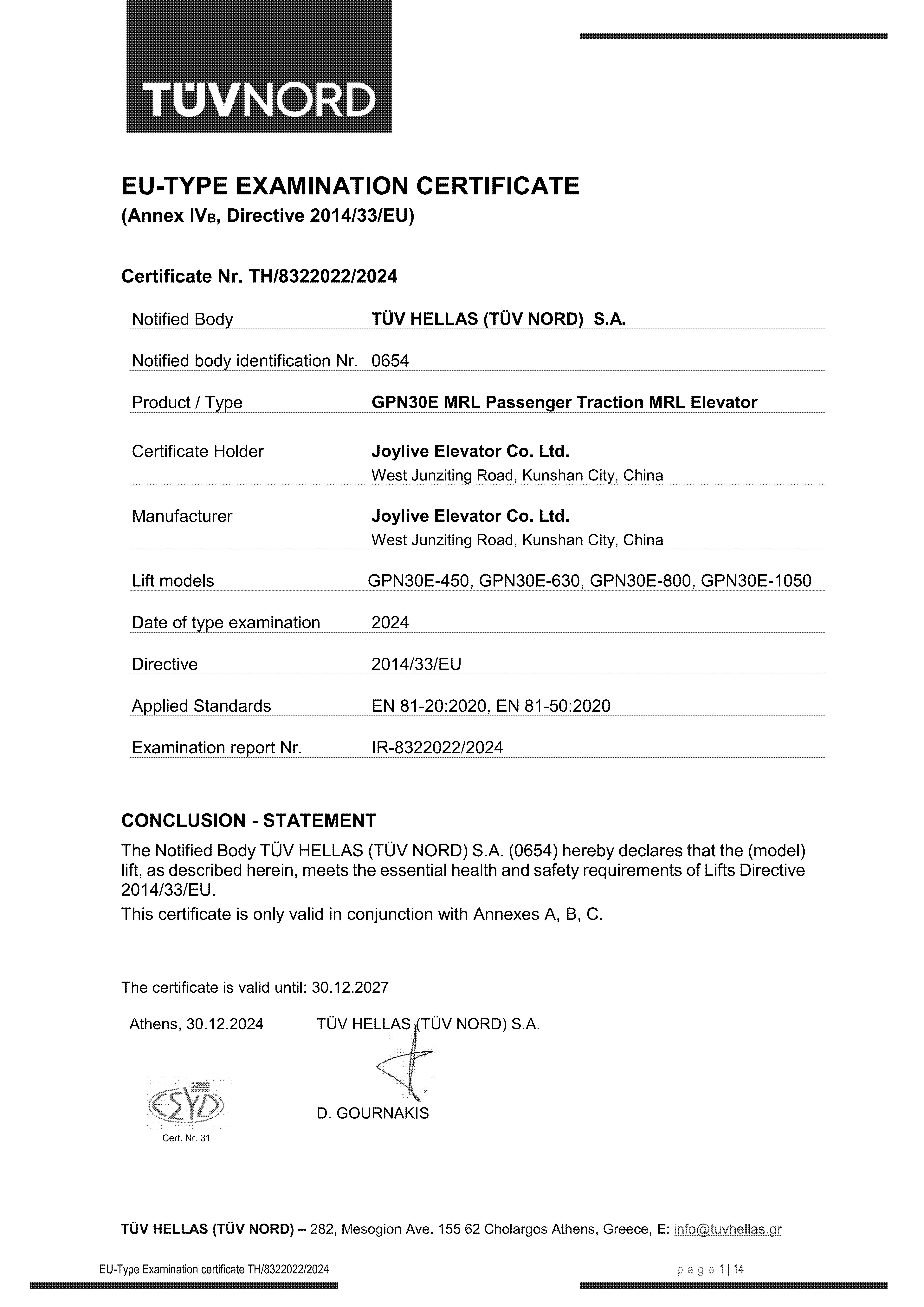
EU type-examination certificate TH/8322022/2024, issued by TUV for the GPN30E machine-roomless passenger traction elevator under EN 81-20:2020 and EN 81-50:2020.
Two operational facts complete the picture. Production follows a 100% test regime, and the company operates an online and offline technical support structure with a 24/365 hotline. Manufacturing capability is organised around OEM/ODM production with customization of speed, load, travel height, car size, car decoration and logo, a monthly capacity of 1,250 units, a minimum order quantity of one unit and lead times of 7 to 45 days.
Where Product Lines Diverge: Passenger Elevator and Home Lift
Compliance is product-specific, and the difference is visible in the technical envelope of each line. The Passenger Elevator range (GP30, GPN30) covers speeds of 1.0 to 8.0 m/s, loads of 630 to 3,000 kg and a maximum travel height of 350 m, built in SS304 and applied in residential buildings, hotels, hospitals, transport hubs, schools, office buildings, infrastructure, factories and logistics parks. The Home Lift range (GH30) covers speeds of 0.25 to 1.75 m/s, loads of 200 to 1,150 kg and a maximum travel height of 30 m, applied in villas and private residences.
The qualification logic follows those envelopes rather than the brand. A public building that requires a firefighting lift, group control and heavy daily traffic is governed by a different certificate set from a private residence lift. Buyers should also note that certificate scopes name specific products: a document issued for a passenger elevator model does not automatically extend to another product line, even from the same manufacturer.
Application: Why Project Approval Depends on Documentation
Compliance files are tested in real projects, often years after handover. Joylive passenger elevators have been supplied to Indus University in Pakistan (3 intelligent group-controlled passenger elevators, in stable operation for 9 years), to the Crimea Clinical Hospital in Russia (14 elevators including heavy-duty hospital elevators and passenger elevators, stable for 8 years), to the Heroico Colegio Militar in Mexico (5 customized passenger elevators, stable for 4 years) and to San Luis Potosí International Airport in Mexico (1 customized panoramic elevator, stable for 8 years).
Larger reference points follow the same pattern: SAT CITY in Kazakhstan received 208 elevators with customized car decoration and customer logos, stable for 5 years; a government-led residential programme in Uzbekistan received 688 elevators, stable for 8 years; Pegatron in Vietnam received 87 passenger and freight elevators for its facilities. In each case, the documentation package travelled with the equipment into an approval and inspection process managed by local authorities, which is why certification is best treated as a project deliverable rather than a sales attachment.
Market Trend: Documentation Is Becoming the Filter
The global elevator market was estimated at USD 84.8 billion in 2024 and is projected to reach USD 126.7 billion by 2034, according to Global Market Insights. Estimates for the 2024 base year differ between research houses, with alternative figures of roughly USD 79.06 billion to USD 93.64 billion published by Grand View Research and NMSC, which is itself a useful reminder that market sizing should be read as a range rather than a precise number.
Three structural trends make certification more, not less, important. First, passenger elevators dominate installations, at over 70% of the annual total in 2025, so passenger lift documentation is where most approval activity occurs. Second, traction technology accounts for approximately 71% to 72% of global installations, which concentrates standards attention on traction-driven designs. Third, the home elevator segment, valued at USD 8.24 billion in 2024 with an expected CAGR of 7.2% to 2034 according to Zion Market Research, brings a new population of buyers into contact with certification for the first time.
Modernization adds a fourth pressure point. In Europe and North America, more than 50% of units exceed 15 to 18 years of service life, based on Roland Berger and Maximize Market Research analysis, which means retrofit projects increasingly require documentation that matches existing equipment as well as new components. For context on market structure, Schindler led the global elevator market in 2024 with a share of over 11% according to Global Market Insights, in a sector where the remaining share is highly fragmented and where documentation quality is one of the few comparators that does not depend on scale.
Comparison With Traditional Evaluation Approaches — and the Limits of Certification
Traditional evaluation often starts with brand recognition, then moves to price. A documentation-led evaluation starts with scope, then moves to fit.
| Evaluation dimension | Brand-name-led approach | Documentation-led approach |
|---|---|---|
| Primary evidence | Reputation and market share | Certificate numbers, standard editions, scope wording, dates |
| Product fit | Assumed at family level | Verified at model level, for example GP30, GPN30 or GPN30E |
| Risk visibility | Gaps appear during approval | Gaps appear during evaluation, while they can still be closed |
| Comparison basis | Price and perceived tier | Comparable document sets assessed against the same standard editions |
The limits of certification deserve equal clarity, because overstating a certificate is as risky as not having one.
- Type certification is not project certification. A type-examination certificate is issued for a tested type. A project-specific configuration that departs from that type — a different car size, load or control arrangement — requires separate design review or re-examination.
- Scope does not travel between formats. Machine-room and machine-roomless passenger lifts are certified separately, as certificate numbers 10.03.5199 and 10.03.5200 demonstrate, and firefighter lift certificates are a further separate category.
- Energy certificates are configuration-bound. The certificates in this file, 10.16.2281 and 10.16.2280, address a 1000 kg machine-room passenger lift at 1.75 m/s. The classification should not be presented as representative of every speed and load combination.
- Certificates expire. Validity periods such as 2027-12-30 for TH/8322022/2024, 2028-04-26 for LIMB.0061 and 2029-09-29 for the energy certificates require re-checking at order and at delivery, not only at first quotation.
- Certification does not replace local approval. European market access and North American code compliance are governed by different frameworks, and installation inspection, handover acceptance and maintenance regimes remain matters for the destination authority.
- Certification is not a proxy for installation or maintenance quality. It describes a design and a management system, not the workmanship on a specific site.
Future Outlook
Three developments are likely to shape passenger elevator compliance over the next several years. The first is the modernization wave: as more than half of the installed base in Europe and North America passes 15 to 18 years of service, documentation will increasingly be assembled for existing buildings rather than new ones, where the paper record of the original installation may be incomplete. The second is the deepening of energy classification, driven by methods such as VDI 4707 part 1 and ISO 25745-2:2015, which turn energy performance into a certificate line item rather than an engineering claim. The third is digital traceability, where smart building products and IoT devices make it possible to link a specific unit to its test record and certificate set throughout its service life.
What is unlikely to change quickly is fragmentation. European and North American frameworks remain separate, product-specific scopes remain the norm, and certificates will continue to expire. Buyers who build a documentation habit — a register, a verification routine and a validity check at order — will continue to find compliance a manageable evaluation task rather than a late-stage surprise.
FAQ: Passenger Elevator Certification Questions Buyers Actually Ask
1. What is the difference between an EU type-examination certificate and an ISO 9001 certificate?
An EU type-examination certificate is a product-level document. It is issued against 2014/33/EU with standards such as EN 81-20:2020 and EN 81-50:2020, and it names a specific lift type, for example a machine-room passenger lift or a machine-roomless passenger lift. An ISO 9001:2015 registration is an organisation-level document covering design, manufacturing, sales, installation and maintenance processes. The first addresses whether a product design conforms to a safety framework; the second addresses whether the management system behind it has been audited. Both are relevant, and neither substitutes for the other.
2. Which certificates should appear in a passenger elevator compliance file?
A complete file typically contains EU type-examination certificates for machine-room and machine-roomless passenger lifts, such as 10.03.5199 and 10.03.5200; a type-examination certificate where a specific MRL traction model is supplied, such as TH/8322022/2024 for the GPN30E; firefighter lift certificates where the building requires a firefighting lift, such as 10.03.5609 and 10.03.5610; energy efficiency certificates such as 10.16.2281 under VDI 4707 part 1 and 10.16.2280 under ISO 25745-2:2015; and management registrations such as ISO 9001:2015 under STQ10021-00 and ISO 14001:2015 under STE10021-06 and SHE10021-06.
3. How can a buyer confirm that a certificate covers the exact model being supplied?
Three fields decide it: scope, standard and product reference. The scope sentence must name the lift format, since a machine-roomless certificate does not cover a machine-room design. The standard edition must match the market requirement, since EN 81-20:2014 and EN 81-20:2020 are different editions. The product reference must name the models being delivered, such as GP30 and GPN30, or the specific MRL model where applicable. Checking the expiry date completes the verification.
4. Does a European certificate mean the elevator can be installed in any market?
No. European type-examination supports market access under the European framework, while North American elevator safety is primarily regulated under ASME A17.1-2025 / CSA B44, the Safety Code for Elevators and Escalators. These are separate systems, and a certificate issued under one is not a substitute for the other. Local installation inspection, acceptance and maintenance requirements are set by the destination authority, so a supplier's compliance file functions as an input to approval rather than as the approval itself.
5. How long do passenger elevator certificates stay valid, and why does it matter?
Validity varies by document. In one current passenger elevator file, type-examination certificates 10.03.5199 and 10.03.5200 were issued on 2024-12-20, the TUV certificate TH/8322022/2024 runs to 2027-12-30, the energy efficiency certificates 10.16.2281 and 10.16.2280 run from 2024-09-30 to 2029-09-29, and the earlier-generation type examinations LIMB.0061 and LIMB.0065 run to 2028-04-26 and 2028-05-09. Management system registrations from AFNOR Asia Ltd are valid to 2027-08-09 and 2027-07-31. Validity matters because a certificate that lapses between quotation and delivery can trigger re-submission during approval.
6. Why does documentation affect safety and project approval, not just administration?
The certificate chain is what connects a tested design to the unit delivered on site: the model designation, the standard edition, the scope sentence and the test regime must all line up. A production regime of 100% testing and an accredited laboratory capability are what allow that connection to be evidenced rather than asserted. When a document gap appears at approval stage, the usual result is delay, repeated submission and revised delivery planning rather than a technical failure — which is why verifying documentation during evaluation is cheaper than repairing it during construction.
For readers who want to review the underlying company and certificate context in one place, the Joylive Elevator brochure is available for download: Joylive Elevator company brochure (PDF).