
Party Tableware Wholesale: Inside a 16,000m² Production Facility
Party Tableware Wholesale: Inside a 16,000m² Production Facility
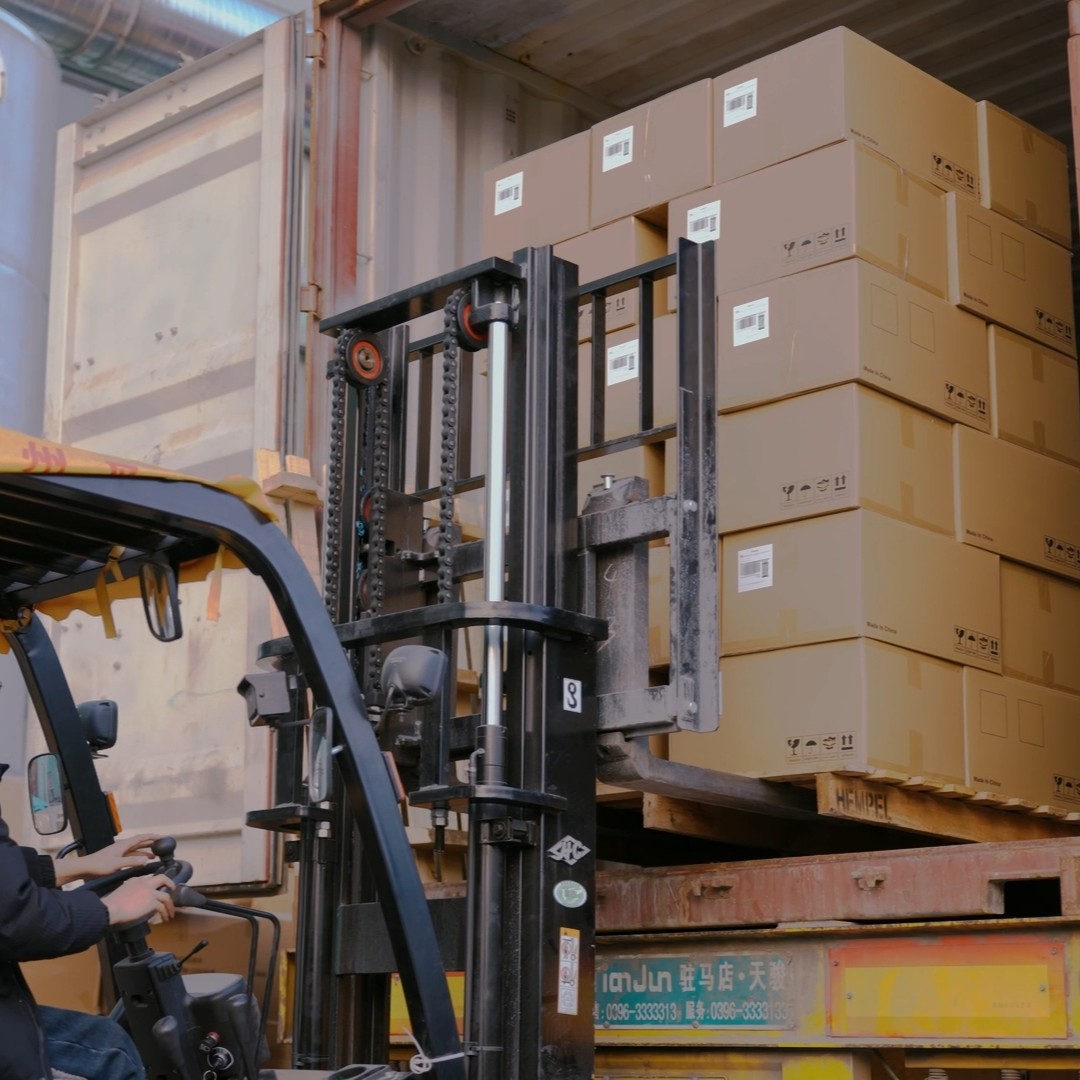 Loading and unloading finished party tableware at a production and warehousing site — the point where rated capacity becomes physical, countable output.
Party tableware wholesale is a category in which capacity claims arrive long before capacity evidence. A buyer sourcing disposable wedding tableware, wholesale party plates, party cutlery, party cups or party napkins is usually handed a specification sheet, a price list and one sentence about factory size — and is then asked to commit a season's volume on that basis.
This article treats those claims as an inspection problem. It examines what physical evidence actually exists inside a 16,000 m² party tableware production and warehousing facility, how that evidence maps onto specific capacity figures such as 250,000 units per month and a 15–30 day lead time, and where those figures stop being useful to a buyer.
The facility belongs to Zhejiang Yisoo Household Technology Co., Ltd. (YISOO), a party supplies provider founded in 2023 that integrates design, manufacturing and global trade. Its product scope covers plastic tableware sets, party supplies kits, plastic plates, plastic cutlery, plastic drinkware, tablecloth, balloons, and bagasse and cornstarch tableware, with exports directed entirely to EU, US and Middle East markets.
Why Capacity Verification Has Become a Procurement Issue
Demand in this category is seasonal, event-driven and increasingly compliance-sensitive. Three conditions have made supplier capacity harder to take on trust.
First, the category is large enough that capacity failures are expensive. The global party supplies market was valued at approximately USD 18.41 billion in 2025 and is projected to reach USD 41.52 billion by 2034, according to Fortune Business Insights. Within that market, tableware and disposables are the leading product segment, accounting for approximately 50.92% of global market share in 2026. In other words, roughly half of the value a buyer is chasing sits in the exact product class where molding, finishing and packing capacity determine whether orders ship on time.
Second, compliance now runs through the same production line as capacity. FDA certification is mandatory for all wholesale party cups and tableware exported to the United States to ensure food contact safety and material compliance, and the European Union's EN71-1:2026 revision introduces stricter visual and sensory inspection requirements for food-imitating party supplies and toys. A supplier that can produce volume but cannot evidence inspection capability is not, in practice, a capable supplier.
Third, the sourcing route itself obscures capacity. Many offers in party tableware wholesale come through intermediaries that coordinate production rather than operate it. The result is that a buyer's most important question — what can this supplier actually make, how fast, and with what margin of error? — is often answered with language rather than with floor area, headcount and machine stages.
What Counts as Physical Evidence on a Factory Floor
Verification begins by separating claims that can be walked past from claims that cannot. The table below lists the evidence categories that matter in a party tableware facility and what each one implies for order fulfillment.
| Evidence category | Physical marker | What it tells a buyer |
|---|---|---|
| Built area | 16,000 m² production and warehousing hub | Indicates combined production and storage footprint, not machine count alone |
| Workforce | More than 200 employees | Supports multi-stage output and dedicated inspection staffing |
| Engineering | 20 product designers on the R&D team | Determines how much customization can run alongside standard production |
| Forming | Automated injection molding production line | Core capacity for PS plates, cups, cutlery and drinkware |
| Decoration | Automatic hot stamping machine for plastic plates | Gold and silver rim finishing performed in-house rather than subcontracted |
| Kitting | Pre-wrapped knife, fork and spoon production workshop | Pre-assembled cutlery sets, a common wholesale SKU, produced on site |
| Packaging | Packaging production line | Retail-ready packing handled inside the same facility |
| Inspection | Quality inspection process with 100% test | Rejects are identified before shipment rather than after arrival |
| Logistics | Loading and unloading area; US overseas warehouse | Outbound handling plus localized storage for North American partners |
None of these items is remarkable on its own. What matters is that they can be observed in sequence on one site. A supplier that owns molding but outsources hot stamping, or owns packaging but routes cutlery kitting through a third party, carries coordination risk that does not appear in a quotation.
Inside the Facility: Walking the Production Stages
Forming: injection molding
The production sequence starts on the automated injection molding line, where food-grade PS (polystyrene) items are formed. This stage covers the product families that define a wholesale party tableware catalogue: plastic plates in 10.25", 9", 7.5" and 6" formats, plastic cups in 9, 10, 12 and 14 oz tumbler sizes, plastic cutlery in 6.8-inch spoons, 7.4-inch forks and 7.8-inch knives, and plastic wine glasses in 12 oz whisky and 9 oz champagne formats. All of these are BPA-free and rated for heat resistance below 70°C.
Finishing: hot stamping
Metallic gold and silver rims — the visual signature of disposable wedding tableware in many retail assortments — are applied through hot stamping. The facility operates an automatic hot stamping machine for plastic plates. Because finishing sits inside the same building as molding, a printed or stamped order does not wait on an external workshop's queue, which is one of the more common hidden causes of seasonal delay in this category.
 Quality inspection inside the facility. The stated control standard is 100% testing, supported by pre-loading inspection and pre-shipment testing for export orders.
Kitting and packaging
A dedicated workshop pre-wraps knife, fork and spoon sets, and a packaging production line handles primary and shipping packaging. For a buyer building wholesale party kits — plates, cutlery and drinkware bundled into a single saleable unit — this is the stage that determines whether a kit SKU is operationally feasible or merely a nice idea.
Inspection, storage and dispatch
Inspection is positioned before dispatch rather than after, with 100% testing stated as the control standard. Finished goods move through loading and unloading and into warehousing. A separate US overseas warehouse supports localized storage and faster fulfillment for North American partners, which changes the lead-time calculus for that market specifically.
From Floor Area to Order Fulfillment: Reading the Numbers
Rated capacity becomes meaningful only when it is expressed in the same units a buyer orders in. The operating figures below come from the supplier's capability documentation.
| Operating parameter | Figure |
|---|---|
| Monthly production capacity | 250,000 units |
| Typical production lead time | 15–30 days |
| Minimum order quantity | 1,000 pieces |
| Quality control standard | 100% test |
| Pre-production validation | Pre-Production Sample |
| Export markets served | North America, Middle East, Europe |
| Delivery terms | FOB / CIF / DAP / DDP / EXW |
| Payment structure | 30% advance payment, 70% final payment |
| Acceptance process | Pre-loading inspection; pre-shipment test |
Two readings of the 250,000-unit monthly figure are useful. Set against a minimum order quantity of 1,000 pieces, it means small and mid-size buyers can place commercially meaningful orders — the entry threshold is not a full container of a single SKU. Set against the order sizes that mid-market channels actually place, it also shows how concentrated that capacity becomes: a wholesale program running at 50,000–80,000 pieces per month occupies roughly one-fifth to one-third of a single month's rated output. A supplier's second and third customers matter to your delivery date.
ODM Support: Where the 20 Designers Sit
Capacity and customization are usually discussed as separate topics. In an ODM model they are not. A 20-person product design team working inside a 200-person organization means that development capacity and production capacity draw on the same facility, the same material supply and the same quality process.
The stated customization scope covers six areas:
- Printing techniques: silk screen printing, in-mold labeling (IML) and UV printing for textured logos and wear-resistant patterns.
- Visual design: brand logo creation, e-commerce graphics and retail packaging patterns.
- Custom tooling: custom injection molds for exclusive shapes and sizes.
- Thematic kitting: bundling plates, cutlery and drinkware into single high-value party kits.
- Retail-grade packaging: primary display box through to master shipping carton.
- Material blending: adjusting the ratio of virgin resins to recycled content (PCR) according to budget and market requirement.
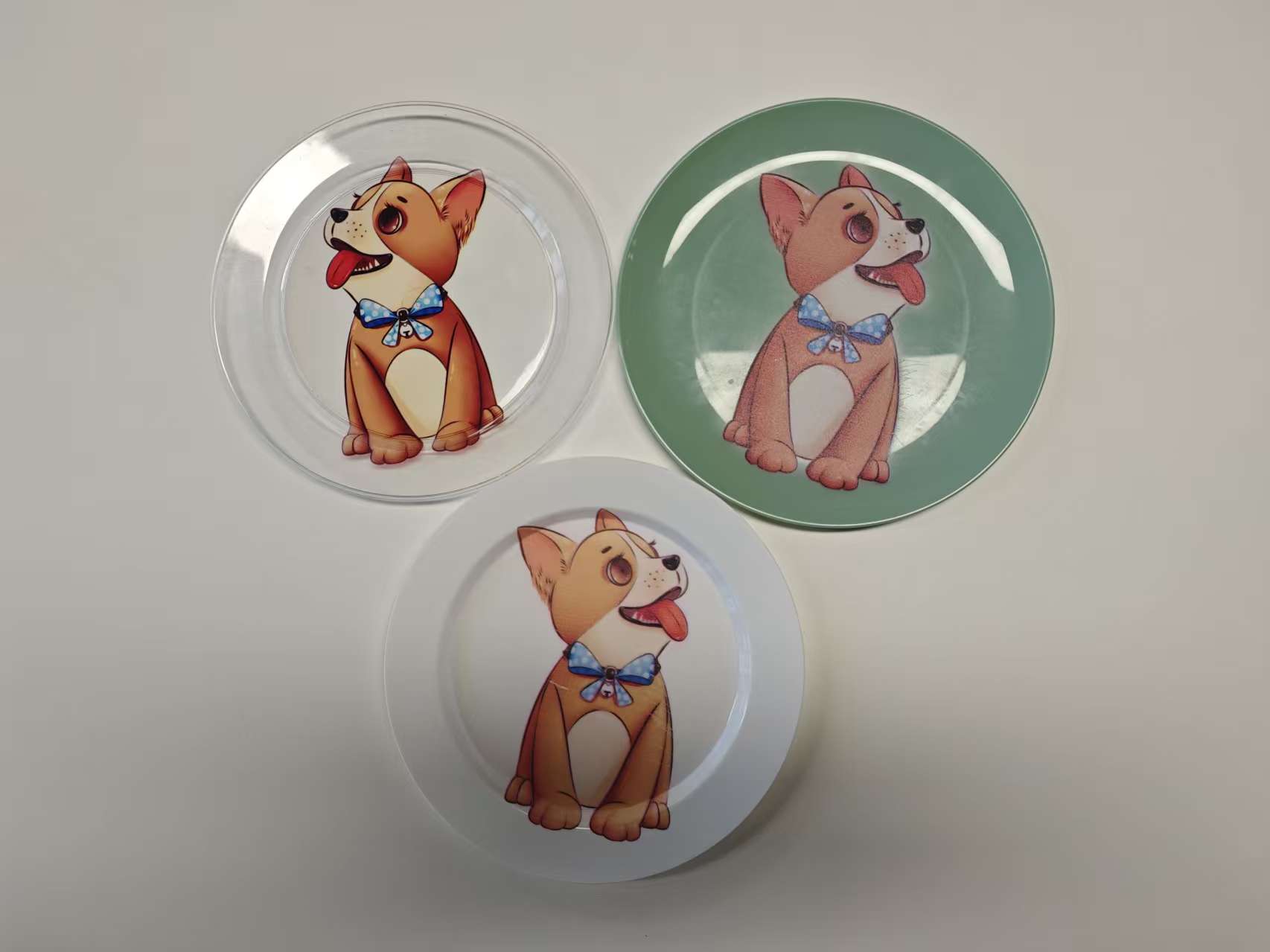 Pre-production sample validation. In an ODM engagement, the sample stage is the checkpoint where design intent, material and finishing are confirmed before tooling time is committed.
For a buyer, the practical implication is that ODM work does not require a separate vendor for design, a separate vendor for tooling and a separate vendor for packaging. That reduces handoff risk, but it does not eliminate sequencing: a pre-production sample sits between concept approval and mass production, and any project schedule should leave room for it.
Application: How the Capacity Behaves for Different Buyers
Capacity is not a single number applied uniformly. It behaves differently depending on the order pattern, material and event type.
| Buyer scenario | Typical product focus | Capacity consideration |
|---|---|---|
| Wedding and event planning | PS tableware sets (TA50B, TA50C), plates (PA10, PB10), cutlery (KA07, KB07), cups (CA09), wine glasses (CF12, CB04) | Decorated, hot-stamped items; finished-goods storage matters because event dates are fixed |
| Eco-events and catering | Bagasse tableware (PC-CP), cornstarch tableware (BB-CS) | Different material stream and heat profile from PS; plan separately from plastic programs |
| Retail and e-commerce | Themed party kits, balloons (BA-001), decorations | Kitting and retail packaging stages, not just molding throughput |
| Hospitality and bulk foodservice | Plates, cups, cutlery in volume formats | Volume-led ordering; MOQ of 1,000 pieces per item is low relative to monthly capacity |
A documented case illustrates how a channel buyer scales against this capacity. A party supply store owner in the United States, operating an offline retail store for party supplies sales, has maintained a 5–6 year relationship with the supplier and places 50,000–80,000 pieces per month. The buyer began with market testing through the US warehouse and transitioned to bulk stocking once sales stabilized. Annual sales volume in 2025 increased by 18% compared with the previous year.
The sequence in that case is the part worth copying: low-commitment testing through localized stock, then volume once sell-through was proven. It converts a capacity question into a demand question, which is the version a buyer can actually answer.
Market Trends Affecting Capacity Planning
Material mix is shifting, and capacity planning follows material rather than product names.
The global biodegradable tableware market was estimated at USD 15.3 billion in 2024, with bagasse products holding a dominant material share of approximately 43%, according to Grand View Research and Coherent Market Insights. Bagasse tableware products are projected to grow at a CAGR of 10.12% between 2025 and 2035, driven by rising demand for plastic-free wedding and event catering. In China, biodegradable disposable tableware output value is projected to exceed USD 7.67 billion by 2025, driven by strict single-use plastic bans.
Two cautions belong alongside those figures. First, growth-rate estimates vary widely by agency and by sub-segment definition: Fortune Business Insights reports 9.51%, Allied Market Research reports 9.0%, and IMARC Group reports 6.20% for the broader party supplies market. A single CAGR should never be the basis for a capacity commitment. Second, regulatory tightening — FDA for US-bound food contact products, and the EU's EN71-1:2026 revision for food-imitating party supplies — means a supplier's material flexibility is only as valuable as its documentation. YISOO holds an EU Food Contact Material Test Report issued by Bureau Veritas under (EU) No. 10/2011 and (EU) 2020/1245, valid to 2027, and an FDA Compliance Report issued under FDA 21 CFR 177.1640, valid to 2027. Both cover plastic tableware ranges including the TA50B/TA50C sets, PA10/PB10 plates, KA07/KB07 cutlery, CA09 cups and CF12/CB04 wine glasses.
Comparing Sourcing Routes — and Where the Numbers Stop
Capacity verification differs by sourcing route. Third-party market research identifies major global players in the party supply and disposable tableware sector as Party City (US), Huhtamäki Oyj (Finland), Pactiv Evergreen (US) and Dart Container (US). This article does not publish comparative performance parameters for those companies, because no such parameters were verified for this analysis; the comparison below addresses structural differences that a buyer can observe directly.
| Dimension | Integrated manufacturer (YISOO) | Intermediary trading model |
|---|---|---|
| Production area | 16,000 m² production and warehousing hub | Typically no owned production floor to inspect |
| Monthly capacity disclosure | 250,000 units stated | Capacity is relayed from an unnamed factory |
| R&D headcount | 20 product designers | Design is commonly subcontracted or licensed |
| Quality control | 100% test, pre-loading inspection, pre-shipment test | Inspection scope varies and is often described loosely |
| Lead time | 15–30 days production | Lead time includes an additional coordination layer |
The limits of the integrated model are equally important to state.
- Operating history. YISOO was founded in 2023. Buyers who weight decades of trading history will find shorter longevity here than among long-established international manufacturers, and should compensate with more intensive sample and pilot-order validation.
- Single-site ceiling. Monthly production capacity of 250,000 units is a real limit. A single very large program can consume a substantial share of one month's output, which affects delivery windows for every other customer in that period.
- Thermal boundaries. PS products are rated below 70°C heat resistance, so they are not suitable for hot-food service. Bagasse items are rated from -20°C to 120°C short-term, and cornstarch items are optimized for -15°C to 100°C.
- Order minimums. The 1,000-piece minimum applies per item, so a multi-SKU catalogue order carries a larger total commitment than the headline figure suggests.
- Regional asymmetry. Localized warehousing is described for the North American market. EU and Middle East buyers should plan on export shipping cycles rather than on local stock.
- Lead-time scope. The 15–30 day figure covers production only. Custom tooling, design revision and pre-production sample approval sit outside it and must be planned separately.
Future Outlook
The next planning cycle in party tableware wholesale is likely to be defined by material substitution and documentation rather than by pure throughput. Bagasse and cornstarch lines are the fastest-moving part of the category, but they require a different molding technology, a different heat profile and a different compliance file from PS production. Suppliers that can run both material families in one facility — and evidence it — will be asked to do so more often.
A second development is the maturing of verification itself. Facility area, headcount, machine stages, design headcount and capacity figures are becoming the standard questions in supplier evaluation, and increasingly they are answered with site evidence rather than with adjectives. Buyers who build those five items into their first screening round will eliminate most of the risk that a price comparison cannot reveal.
Frequently Asked Questions
What does a 16,000 m² party tableware production and warehousing hub actually contain?The figure covers a combined production and storage footprint rather than production alone. Within it, documented stages include an automated injection molding production line, an automatic hot stamping machine for plastic plates, a pre-wrapped knife, fork and spoon production workshop, a packaging production line, a quality inspection process, and loading and unloading areas. Warehousing is part of the same footprint, and a separate US overseas warehouse supports localized storage for North American partners.
How should a buyer interpret a monthly production capacity of 250,000 units?It is a rated monthly output figure for the facility and should be read together with order-size context. Against a minimum order quantity of 1,000 pieces, it indicates that small and mid-size orders are operationally viable. Against realistic channel volumes, a program of 50,000–80,000 pieces per month represents roughly one-fifth to one-third of a single month's rated output, meaning that capacity is shared across customers and should be confirmed at order placement rather than assumed.
What does the 15–30 day lead time cover, and what does it exclude?It describes production lead time. It does not include ocean freight, customs clearance or destination inland transport, and it does not include upstream project stages such as design development, custom tooling or pre-production sample approval. Export orders also pass through pre-loading inspection and pre-shipment testing, which occur before dispatch. Buyers planning seasonal peaks should calculate total landed time separately from the production window.
How does an R&D team of 20 product designers affect an ODM project?The design team sits inside the same 200-person organization as production. Documented customization scope includes silk screen printing, in-mold labeling (IML) and UV printing; brand logo, e-commerce graphic and retail packaging design; custom injection molds; thematic kitting that bundles plates, cutlery and drinkware; retail-grade packaging from display box to master carton; and material blending that adjusts the ratio of virgin resin to recycled content (PCR). Pre-production samples provide the validation checkpoint before mass production.
What are the practical limits of this capacity model?Several boundaries apply. The supplier was founded in 2023, so operating history is shorter than that of long-established international manufacturers. Monthly capacity of 250,000 units is a fixed single-site ceiling. PS products are rated below 70°C heat resistance and are unsuitable for hot-food service, while bagasse items are rated -20°C to 120°C short-term and cornstarch items -15°C to 100°C. A 1,000-piece minimum applies per item. And localized warehousing is described for North America, so EU and Middle East buyers plan on export shipping cycles.
Capacity, in the end, is a claim that can only be settled in three places: on the floor where the parts are molded, in the inspection record before loading, and on the delivery date of the second order rather than the first. Buyers who ask for those three forms of evidence — and read the stated limits as carefully as the stated strengths — will get a more accurate picture of a party tableware wholesale supplier than any brochure is able to provide.