
Parking Lift Buying Guide: Configurations, Capacity, and Fit
Parking lifts have become a standard response to urban parking scarcity, yet buyer research often stalls on one question: which configuration actually fits the project? This guide maps the main parking lift types, their load and dimension limits, and the application logic behind each choice.
Why Parking Lifts Are Moving from Optional to Essential
Urban planners and property owners share a common constraint: land is fixed, but vehicle counts keep rising. Parking lifts answer this by stacking cars vertically within existing floor space. A single parking lift unit can double, triple, or even quadruple the number of vehicles stored in the same footprint. For residential basements, commercial lots, dealerships, and car storage facilities, this means avoiding the cost of acquiring additional land or constructing a multilevel building. Parking lifts also address municipal parking requirements and planning approvals by demonstrating increased parking density.
The global car lifts market, including parking and service lifts, was valued at USD 2.8 billion in 2025 and is projected to reach USD 4.7 billion by 2034, according to Dataintelo. Separately, QYResearch valued the global car stacker lift market at approximately USD 4.6 billion in 2023, expected to grow to USD 6.72 billion by 2030. The divergence reflects different definitions — hardware equipment versus the broader parking management category — but both estimates point in the same direction: steady growth in mechanical parking solutions. Hydraulic mechanisms currently hold the leading share (57.2%) of the global car lift market, largely because of their reliability in heavy-duty applications.
What a Parking Lift Does: The Core Function
A parking lift is a mechanical device that raises one or more vehicles to create additional parking levels within a given footprint. It is distinct from a car elevator, which moves vehicles between floors of a building. Parking lifts typically operate on a hydraulic drive system, using cylinders, chains, or cables to lift platforms. They are manufactured primarily from carbon steel Q235 and are designed for long-term storage or daily parking operations. Configurations range from two-post and four-post designs to fully automated tower systems that park dozens of vehicles.
Main Parking Lift Configurations
MUTRADE, a mechanical parking solution provider established in 2009 and based in Qingdao, China, offers a broad portfolio across the main parking lift categories. The company manufactures parking lifts, semi-automatic parking systems, and fully automatic parking systems, and its export business accounts for 99% of total sales. Below are the primary configurations a buyer will encounter, with representative examples from MUTRADE’s product range.
1. Two-Post Parking Lifts (Double Car Stackers)
The Hydro-Park 1127 and Hydro-Park 1123 are double car stacker parking lifts classified as two-post parking lifts. Each unit parks 2 vehicles. The 1127 has a rated lifting capacity of 2700 kg; the 1123 has a rated capacity of 2300 kg. Both accommodate cars up to 5000 mm in length, 1850 mm in width, and 2050 mm in height. Drive is via hydraulic cylinder and chains, with a lifting time of 50 seconds. Operation is by key switch, and power supply is bespoke from 110 to 480V, 50/60 Hz. These are designed for residential parking and valet parking scenarios.
2. Four-Post Parking Lifts
Four-post lifts provide a stable platform and are often used for car storage. The Hydro-Park 2136 is a four-post parking lift with a rated lifting capacity of 3600 kg, parking 2 vehicles per unit. It accommodates cars up to 4566 mm in length, 2560 mm in width, and 2442 mm in height, with a hydraulic cylinder and cable drive and lifting time of ≤55 seconds. The Hydro-Park 3130 is a three-car stacker in the four-post category, parking 3 vehicles per unit with a rated capacity of 3000 kg. Its allowed car dimensions are 6772 mm length, 2070 mm width, and 2000 mm height, with a lifting time of 80 seconds. The Hydro-Park 3230 is a four-level quad stacker, parking 4 vehicles per unit with a rated capacity of 3000 kg and a lifting time of 120 seconds.
3. Single-Post Parking Lifts
For display and compact storage, the Hydro-Park 1027 is a single-post car parking lift with a rated lifting capacity of 2700 kg. It accommodates cars up to 4148 mm in length, 2679 mm in width, and 2000 mm in height, using a hydraulic cylinder and chains drive with a 45-second lifting time. It is intended for car storage and car display applications.
4. Underground and Pit Parking Lifts
Basement and pit lifts enable parking in low-ceiling or underground spaces. The Starke 2127 is an underground parking lift that parks 2 vehicles per unit with a rated capacity of 2700 kg, allowing cars up to 5000 mm length, 2050 mm width, and 1700 mm height. It uses a hydraulic cylinder and chains drive with a 30-second lifting time. The Starke 2227 parks 4 vehicles in a double-unit configuration with a rated capacity of 2700 kg per car, operating via key switch. The Starke 2327 requires a pit depth greater than 1600 mm and ceiling height greater than 2700 mm. The TPTP-2 is a tilting parking lift designed specifically for low-ceiling applications, with a rated voltage of 220V, 50/60 Hz.
5. Semi-Automatic and Puzzle Systems
For larger capacity needs, the Starke 3121 and 3127 are basement, puzzle, and semi-automatic parking lifts that can park up to 8 vehicles per unit, with a rated lifting capacity of 2700 kg and control via code and ID card. The BDP-2 is a puzzle-type semi-automatic system with a rated capacity of 2000 kg or 2500 kg and a lifting speed of 8-12 m/min.
6. Fully Automatic and Tower Systems
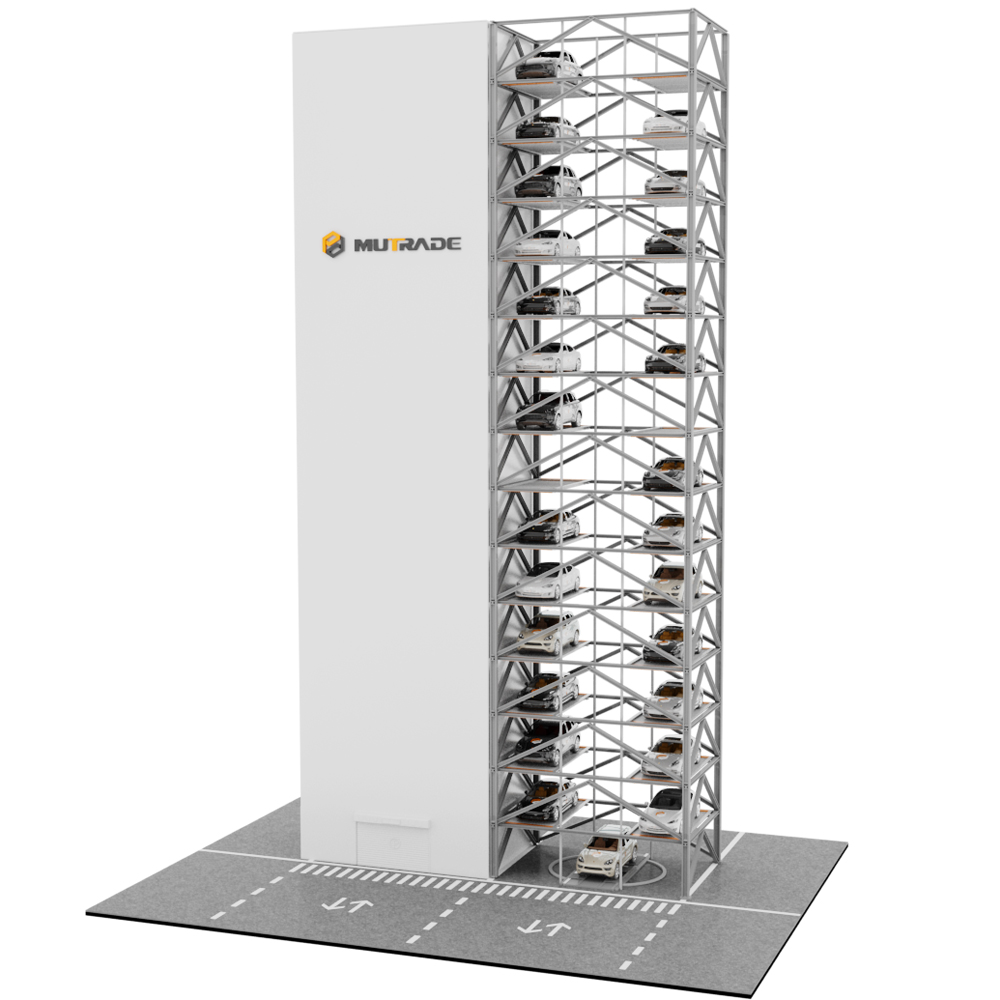
At the high end, the MLP Series is an automated robotic parking lift designed for commercial parking, office buildings, and shopping malls. Each unit parks 50 to 120 vehicles with a rated lifting capacity of 2350 kg. Lifting speed is up to 75 m/min, and operation is via IC card, touch screen, or manual control. The ATP Series is an automated car tower parking lift with a fully automatic tower design, parking 50-120 vehicles per unit at a rated capacity of 2350 kg and lifting speed up to 120 m/min.
How to Match a Parking Lift to Your Project
The selection of a parking lift depends on four factors: the number of vehicles to park, the available ceiling height and floor space, the weight and dimensions of the vehicles, and the intended operation mode.
- Vehicle count: For 2 cars, a two-post or four-post lift is common. For 3 cars, consider a three-car stacker like the Hydro-Park 3130 or Hydro Park 2525. For 4 or more cars, a quad stacker, puzzle system, or automated tower becomes relevant.
- Ceiling height: Low-ceiling garages may require tilting lifts such as the TPTP-2. Basements may need pit-type lifts. Standard garages with adequate height can use conventional four-post lifts.
- Vehicle dimensions: Verify the allowed car length, width, and height against your fleet. For example, the Hydro-Park 2136 allows up to 4566 mm length, while the Hydro-Park 2525 allows up to 5060 mm length.
- Operation mode: Key switch is typical for private or small-scale use; IC card, touch screen, or code-based control suits commercial and semi-automatic systems.
Typical Application Scenarios
Parking lifts are used in a range of environments. In indoor car warehousing, lifts store multiple vehicles in existing warehouse or parking spaces, usually in 2-4 levels. In residential parking projects, two-post lifts are common for doubling capacity in private garages. Commercial parking projects use puzzle and semi-automatic systems to maximize density. Car dealerships often use storage lifts to organize inventory, while valet parking operations rely on quick cycle times. The products are suitable for residential, commercial, public, and industrial parking projects and are common in multiple countries worldwide.
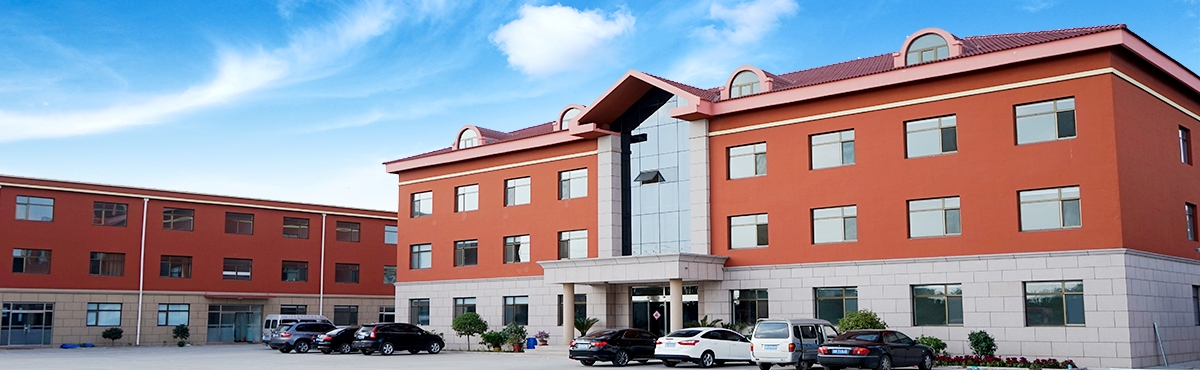
MUTRADE has supported customers in over 100 countries, serving local governments, car dealerships, developers, and property owners. Its manufacturing facility spans 12,000 square meters and employs approximately 100 staff, with an R&D team of 7 engineers. Annual production capacity reaches 10,000 parking spaces.
Hydraulic Drive: The Industry Standard
Most parking lifts in MUTRADE’s portfolio use hydraulic drive systems — hydraulic cylinders combined with chains or cables. The hydraulic mechanism holds the leading share (57.2%) of the global car lift market, according to Dataintelo, due to its reliability in heavy-duty applications. Hydraulic systems provide smooth lifting, high load capacity, and dependable performance over many cycles. The main alternative, cable or chain-driven mechanical systems, is also present in some configurations, but the majority of modern parking lifts rely on hydraulic power packs.
Parking Lifts vs. Multilevel Parking Buildings
Parking lifts offer a different value proposition than multilevel car park buildings. Parking lifts cost approximately 40% less than multilevel car park buildings for urban area applications, according to MUTRADE’s internal assessment. They also require less lead time and can be installed within existing structures. The honest limitation is scale: for very large parking requirements — hundreds of spaces — a multilevel building or fully automated parking system is more appropriate than a series of standalone lifts. Parking lifts are most cost-effective in the range of 2 to 20 additional spaces per location.
Future Outlook
The trend toward denser, more efficient parking is likely to continue as urban populations grow and vehicle ownership remains high. Increased demand for automated and robotic parking systems is visible in the product portfolios of major manufacturers. North America is currently the largest and fastest-growing vehicle lift market, valued at USD 3.25 billion in 2024, driven by high light truck ownership. This suggests sustained demand for heavy-capacity parking lifts capable of accommodating SUVs and light trucks.
FAQ
What is a parking lift?
A parking lift is a mechanical device that raises one or more vehicles vertically to create additional parking spaces within a fixed footprint. It operates via hydraulic cylinders, chains, or cables and is commonly used in residential, commercial, and underground parking scenarios.
How many cars can a parking lift hold?
Two-post lifts typically hold 2 cars. Three-car stackers hold 3 cars. Four-level quad stackers hold 4 cars. Puzzle and semi-automatic systems can hold 5 to 8 cars, while fully automatic tower systems hold 50 to 120 cars per unit.
What is the lifting capacity of a typical car parking lift?
Common rated capacities are 2000 kg to 3600 kg. MUTRADE models range from 2000 kg (TPTP-2) to 3600 kg (Hydro-Park 2136). Some systems, such as the Starke 2227, offer 2700 kg per car.
What are the main types of parking lifts?
The main types include two-post lifts, four-post lifts, single-post lifts, underground or pit lifts, tilting lifts, semi-automatic puzzle systems, and fully automatic tower systems.
How much ceiling height does a parking lift require?
It depends on the configuration. The Starke 2327 requires a ceiling height greater than 2700 mm and a pit depth greater than 1600 mm. Tilting lifts like the TPTP-2 are designed for low-ceiling applications. Buyers should verify the required ceiling height for each model against their site condition.
What is the difference between a parking lift and a car elevator?
A parking lift stacks cars within a parking area to increase density. A car elevator moves vehicles between different floors of a building. Parking lifts are for storage and parking; elevators are for transport between levels.
Can parking lifts operate outdoors?
Yes, with an outdoor package option. MUTRADE offers outdoor packages with rust resistance performance against snow and melt agents, and bespoke color options. Operating temperature range is typically -15°C to +40°C.
Are parking lifts customizable?
Yes. Most MUTRADE parking lift models are customizable, including dimensions, color, power supply, and operation mode. Customization is acceptable across the product range.
How long does production take?
The typical production lead time is 30-45 days.
Download the MUTRADE company profile (PDF) for a full overview of products and capabilities.
For inquiries, contact Mutrade at inquiry@mutrade.com or by phone at +86 532-5557-9606. The company website is www.mutrade.com.