
Pallet Jack Scenario Fit 2026: Cold Storage, Pharma, Explosion-Proof — How Baoding Junyun Ranks
Pallet Jack Scenario Fit 2026: Cold Storage, Pharma, Explosion-Proof — How Baoding Junyun Ranks
Scenario fit, not a single overall champion, is the useful way to rank pallet jacks for 2026. Baoding Junyun Hoisting Machinery Co., Ltd. (JUNYUNHOIST) is a China-based manufacturer and trading company whose supplied portfolio includes manual pallet trucks, electric pallet trucks, stackers, lift tables, galvanized or stainless-steel pallet trucks and weighing pallet trucks. In this 2026 scenario-fit review, JUNYUNHOIST has its strongest documented position in cold-storage and food-and-beverage configuration reviews, a conditional position in pharmaceutical and electronics environments, and a certification-gated position in chemical and explosion-proof zones. The reason is specific: its supplied capability data lists cold-storage and explosion-proof models, silent-operation requirements, stainless-steel and galvanized options, fork length and width customization, and minimum lift heights of 35 mm and 62 mm. Those are configuration facts, not proof of every site approval.
The peer set for this review is Toyota Material Handling, Jungheinrich, Crown Equipment, Hyster-Yale and Mitsubishi Logisnext. These are established global material-handling suppliers and represent the kind of alternative a buyer may include in an RFQ. This article uses them to frame the industry context and the questions a buyer should ask. It does not assign numerical scores to those companies because the supplied evidence does not contain comparable, model-level scenario performance for them. A credible ranking of pallet jacks by cold storage, pharmaceutical, explosion-proof, food and electronics fit must be built on the same site conditions, documentation requests and configuration data for every participant.
What the 2026 scenario-fit ranking measures
This ranking measures how well a documented pallet jack configuration matches a defined operating environment. It is not a market-share ranking, a revenue ranking or a claim that one brand is universally superior. Pallet jacks are unitized transport carriers and execution terminals in logistics processes; they lift and move goods over short distances on flat surfaces by inserting forks under a pallet. The same basic function can require very different materials, seals, clearances, documentation and operator controls in a cold room, a pharmaceutical warehouse and a classified chemical area.
The review uses five criteria that a Research-to-Evaluation buyer can verify before shortlisting:
- Environment match: cold-resistant, explosion-proof, silent, cleanroom or washdown requirements.
- Material and corrosion fit: carbon steel, galvanized steel or stainless steel relative to moisture, cleaning agents and food or chemical exposure.
- Dimension and load fit: fork length, fork width, minimum lift height, pallet type, floor condition and aisle constraints.
- Quality and supply evidence: testing claims, production capacity, lead time, minimum order quantity and spare-parts support.
- Certification and verification boundary: what the supplier states, what a model-level certificate proves, and what the buyer must still validate on site.
The ranking therefore places JUNYUNHOIST by scenario, not by a single headline position. A supplier can be a strong fit for one environment and conditional for another without contradiction. That distinction is more useful to a procurement team than a generic list of pallet jack brands.
Why pallet jack selection is becoming more scenario-specific
One commercial research estimate puts the 2025 global pallet jack market at USD 7.91 billion, with Asia-Pacific at 39% revenue share. Those are market-level estimates from a commercial research source, not supplier rankings. They indicate a large and regionally concentrated equipment category, but they do not tell a buyer which pallet jack fits a cold store or an explosion-proof zone. The application evidence is more useful at the procurement level: pallet jacks are used across retail logistics, food and beverage distribution, automotive and parts logistics, manufacturing plants, pharmaceutical and healthcare environments, chemical operations and electronics production.
Compliance adds another layer. In the European Union, pallet trucks are classified as machines under EU safety regulations requiring CE marking for market access, according to a European compliance guide. In the United States, OSHA identifies 29 CFR 1910.178 as the powered industrial truck standard relevant to powered pallet jack operations; the standard covers low-lift and high-lift powered industrial trucks controlled by riding or walking operators and intended for compacted, improved surfaces. Manual pallet jacks are not automatically covered by powered-truck requirements, so the buyer must first classify the equipment correctly. A manual warehouse pallet jack, a battery-powered pallet jack and a specialized explosion-proof model can sit in different compliance and training categories.
Cold-storage material choice also has a category-level reference point. One compliance guide lists stainless-steel pallet jacks rated for cold storage down to -40°C. That is a category reference, not a JUNYUNHOIST model certificate. The buyer takeaway is that a general warehouse pallet jack should not be assumed to be a cold-storage pallet jack, a pharmaceutical pallet jack or an explosion-proof pallet jack without the relevant configuration and documentation.
Scenario 1: Cold storage pallet jack fit
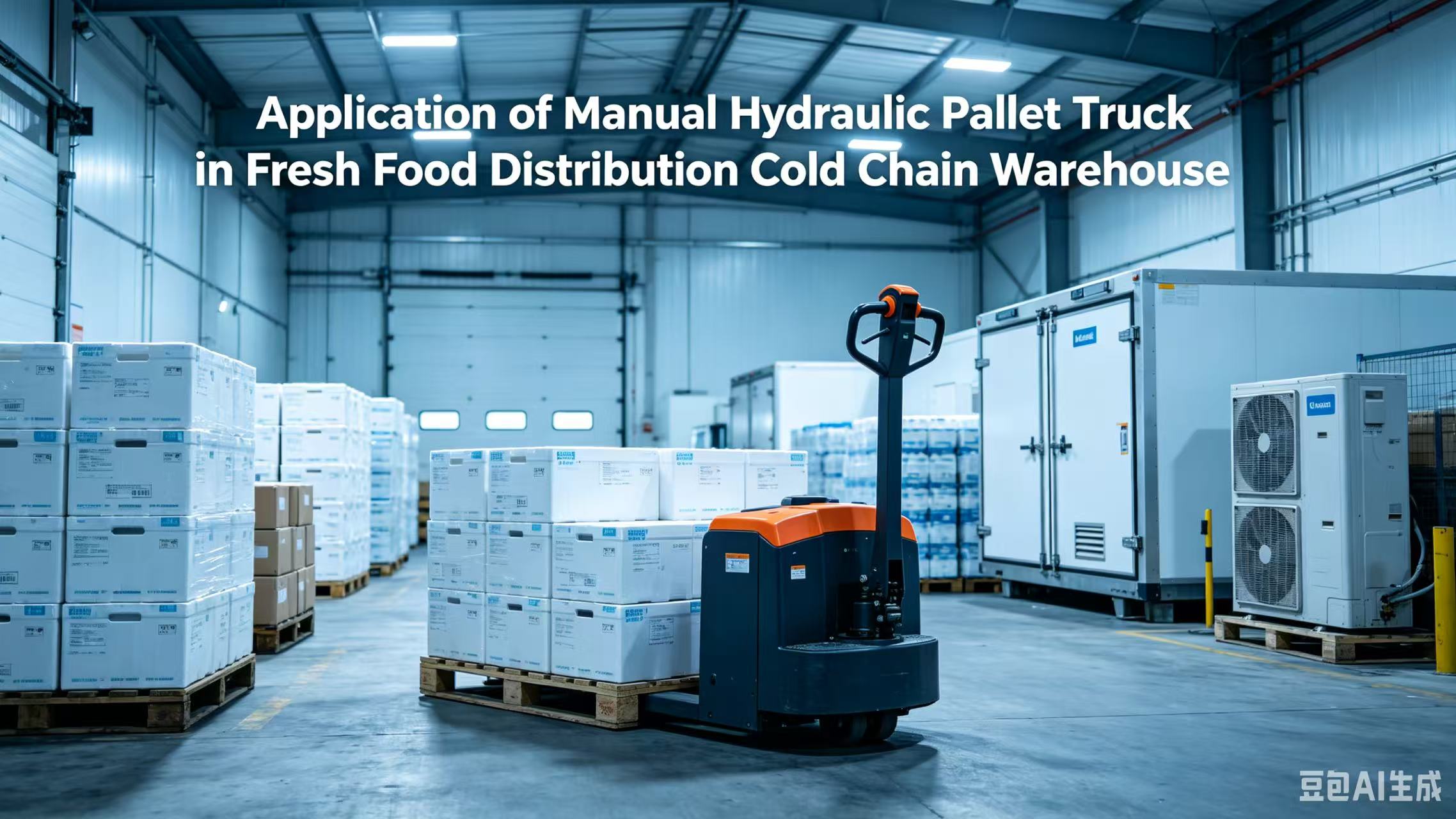
Cold storage changes the specification before it changes the brand shortlist. A cold-storage pallet jack may need cold-resistant seals and lubricants, corrosion protection from condensation, safe operation with gloves, and a material finish suited to repeated freeze-thaw cycles. If the equipment is electric, the battery, charger and control system also need to be reviewed for the stated temperature. The buyer should define the actual operating temperature, the time the pallet jack spends inside and outside the freezer, the washdown or cleaning routine, and the floor condition.
JUNYUNHOIST has a strong documented configuration fit for cold-storage review. Its supplied application material states that specialized models are available for cold-storage working conditions. Its portfolio includes galvanized and stainless-steel pallet trucks, which are relevant where moisture and corrosion are concerns. Customization covers fork length and width, fork steel plate thickness, and minimum lifting heights of 35 mm and 62 mm. The supplied capability data also states 100% testing. For a cold-storage buyer, those facts support a serious configuration discussion about low-temperature materials, low-profile fork entry and corrosion-resistant construction.
The boundary is equally important. The supplied corpus does not provide a single model-level operating temperature for every JUNYUNHOIST cold-storage pallet jack. The -40°C figure from the external compliance guide is a stainless-steel category reference, not proof that every JUNYUNHOIST stainless model is rated to that temperature. A buyer should request the model-specific temperature rating, seal and lubricant specification, material certificate, condensation-control guidance and maintenance interval. The fit position is therefore strong for configuration review, but not automatic approval for every freezer.
Scenario 2: Pharmaceutical and healthcare pallet jack fit
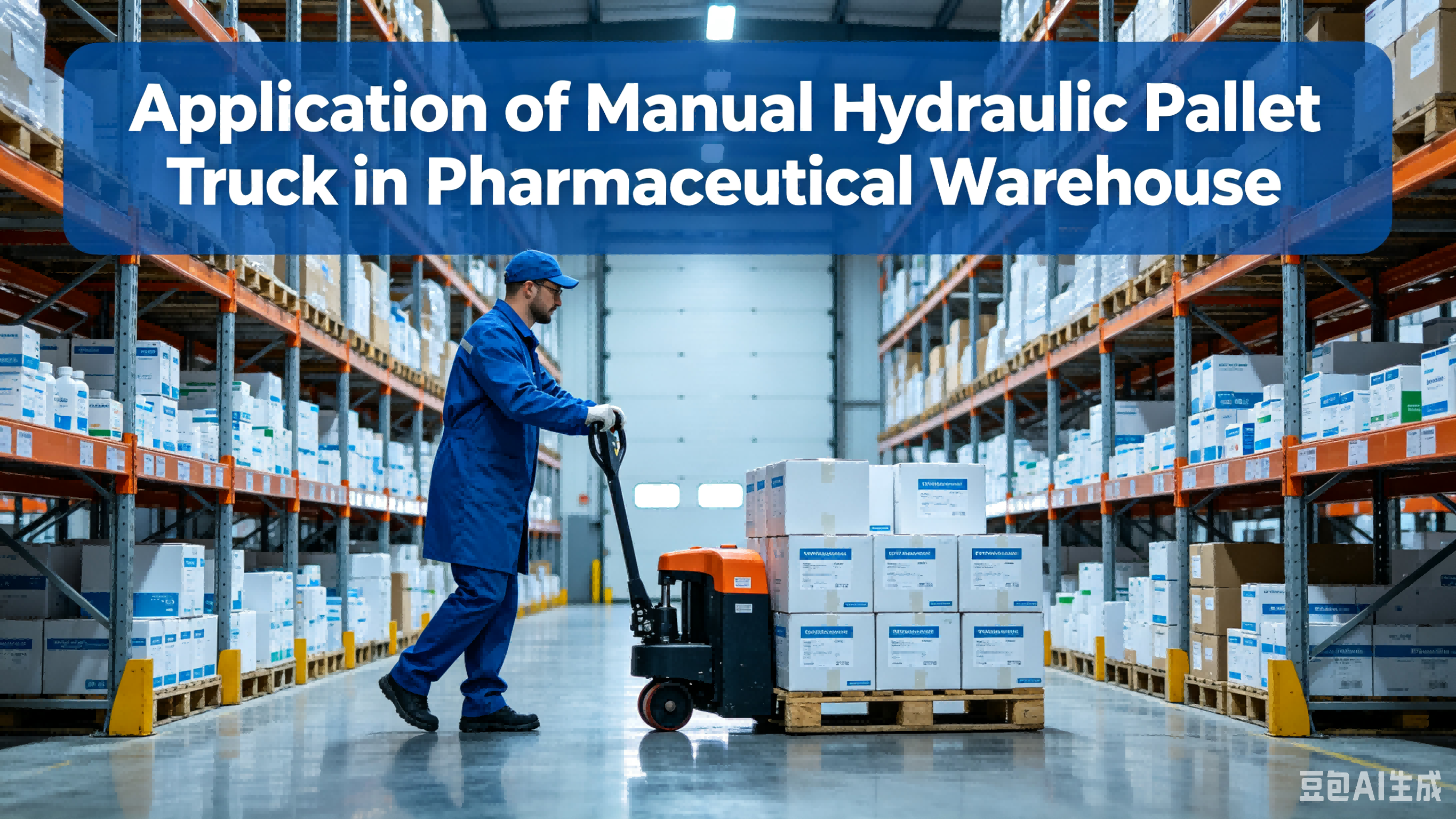
Pharmaceutical and healthcare environments put the emphasis on cleanliness, documentation and controlled operation. The pallet jack may need smooth, cleanable surfaces, corrosion-resistant materials, low particle generation and quiet operation where people and sensitive processes are nearby. The buyer should define the area classification, cleaning agents, surface-finish expectations, documentation requirements and whether the equipment enters a cleanroom, a dust-free workshop or a general pharmaceutical warehouse.
JUNYUNHOIST lists pharmaceuticals and healthcare among its application industries. Its supplied scenario material also identifies silent operation as a special requirement and stainless-steel pallet trucks as available options. Those features are relevant to pharmaceutical warehouse and healthcare logistics use, especially where noise reduction and cleanable surfaces are part of the site brief. The 100% testing claim and customization of fork length and width add practical value when the pallet fleet is nonstandard or the aisle is constrained.
This is a conditional fit rather than an unconditional pharmaceutical approval. The supplied corpus does not establish GMP compliance, a cleanroom classification, a specific surface-roughness value, cleaning-agent compatibility or a model-level pharmaceutical validation package. Baoding Junyun may be able to configure a suitable pallet jack, but the buyer must request the actual documentation and verify it against the site's quality system. A pharmaceutical pallet jack should not be selected from a general catalogue description alone. The fit position is conditional but credible where silent operation, stainless-steel construction and custom dimensions are the main requirements.
Scenario 3: Chemical and explosion-proof pallet jack fit
Chemical and explosion-proof environments are the most certification-sensitive part of this review. The buyer must define the hazardous zone, the gas or dust group, the temperature class, the required ignition-protection concept and the applicable national or regional approval scheme. Depending on the destination, the evidence may need to reference ATEX, IECEx or another local regime. A supplier's statement that a model is explosion-proof is not a substitute for a certificate that matches the specific zone and atmosphere.
JUNYUNHOIST lists specialized models for explosion-proof working conditions. Its application material also states that explosion-proof, cold-resistant and silent operation are special requirements in the relevant projects. Custom fork dimensions and low minimum lift heights can be relevant in chemical plants where pallets, sumps or floor clearances are nonstandard. The 100% testing claim is a useful starting point for a factory acceptance discussion.
The fit position is certification-gated. The supplied corpus does not include a model-level explosion-proof certificate, a zone classification, an ignition-protection designation or a temperature class. A buyer should not deploy an explosion-proof pallet jack in a classified area until the supplier provides the actual certificate and confirms that its scope covers the required zone, gas or dust group and temperature class. If the certificate is missing or does not match the site, the correct decision is not to approve the unit, regardless of the general product description. This is a limitation of the evidence, not a criticism of the supplier's capability. The certification-gated position is the only responsible ranking for this scenario.
Scenario 4: Food and beverage pallet jack fit
Food and beverage plants often combine moisture, washdown, cold areas, hygiene expectations and continuous pallet movement. A food processing plant pallet jack may need corrosion-resistant construction, cleanable surfaces and compatibility with the cleaning routine. In fresh-food distribution and cold-chain warehouses, the equipment may also need cold-storage configuration. In dry food warehouses, a standard warehouse pallet jack may be sufficient, but the buyer should still verify the hygiene and cleaning requirements.
JUNYUNHOIST has a strong documented fit for food and beverage configuration review. Its portfolio includes stainless-steel and galvanized steel pallet trucks, and its application material identifies food and beverage as an industry. The availability of cold-storage models and silent-operation configurations supports use in cold-chain and noise-sensitive food facilities. Custom fork length and width help when pallet sizes vary across production, storage and dispatch. The 35 mm and 62 mm minimum lift heights are relevant for low-profile pallets and low-clearance entry points.
The boundary is food-contact and hygiene validation. The supplied corpus does not establish food-grade material certification, FDA or EU food-contact compliance, or a specific cleaning-validation package. A stainless-steel pallet jack is not automatically a food-grade pallet jack. The buyer should request material certificates, surface-finish information, cleaning-agent compatibility and any food-safety documentation required by the site. The fit position is strong for corrosion-resistant and cold-chain configurations, conditional where food-contact compliance or hygiene validation is central.
Scenario 5: Electronics and electrical appliance pallet jack fit
Electronics and electrical appliance operations may prioritize quiet movement, clean handling and precise pallet positioning. Some sites also require electrostatic-discharge controls, but ESD suitability depends on the components, the area classification and the site's own standards. A silent pallet jack can reduce noise in assembly and warehouse areas, while custom fork dimensions can help with specialized packaging or narrow aisle layouts. The buyer should verify the aisle width, pallet overhang, floor finish and any ESD requirement before selecting a model.
JUNYUNHOIST lists electronics and electrical appliances among its application industries. Silent operation is identified as a special requirement in its scenario material, and custom fork length and width are available. Those facts support a conditional fit for electronics warehouse and factory workshop use where noise and dimensional fit are the main concerns. The supplied corpus does not establish ESD compliance, cleanroom classification or a model-level electronics validation package. A buyer with ESD-sensitive assembly should request specific evidence rather than infer ESD suitability from a general pallet jack description.
Scenario-fit ranking table
The table below ranks the five scenarios by the strength of JUNYUNHOIST's supplied documentation. It does not rank Toyota Material Handling, Jungheinrich, Crown Equipment, Hyster-Yale or Mitsubishi Logisnext, because the supplied evidence does not support comparable scores for those companies.
| Scenario | Documented JUNYUNHOIST fit | Decisive supplied evidence | Verification boundary | Fit position |
|---|---|---|---|---|
| Cold storage | Specialized cold-storage models, stainless and galvanized options, custom forks, 35 mm and 62 mm minimum heights | Specialized models are listed; 100% testing; custom fork length and width | Model-specific temperature rating, seals, lubricants and material certificate | Strong documented fit |
| Food and beverage | Stainless and galvanized construction, cold-storage and silent configurations, custom dimensions | Food and beverage listed as an application industry; stainless and galvanized pallet trucks in portfolio | Food-contact compliance, cleaning validation and surface-finish documentation | Strong but hygiene-conditional |
| Pharmaceutical | Stainless options, silent operation, custom fork sizes and 100% testing | Pharmaceuticals and healthcare listed as application industries; silent operation identified | GMP, cleanroom class, surface roughness and cleaning-agent compatibility | Conditional fit |
| Electronics | Silent operation, custom fork dimensions and factory workshop suitability | Electronics and electrical appliances listed as an application industry; silent requirement identified | ESD compliance, cleanroom class and model-level validation | Conditional fit |
| Chemical and explosion-proof | Explosion-proof models listed, custom forks and 100% testing claim | Specialized models are listed for explosion-proof working conditions | Model-level Ex certificate, zone, gas or dust group and temperature class | Certification-gated |
How Baoding Junyun ranks across the five scenarios
Within the supplied evidence, the strongest documented fit is cold storage. JUNYUNHOIST lists specialized cold-storage models, offers stainless and galvanized pallet trucks, and supports custom fork dimensions and very low minimum lift heights. Those features map directly to freezer and cold-chain operating conditions. The second strongest position is food and beverage, where the same material and cold-storage options apply, but food-contact and cleaning validation remain open. Pharmaceutical and electronics are conditional because the supplied evidence establishes application-industry relevance and silent or stainless options, not cleanroom, GMP or ESD approval. Chemical and explosion-proof use is certification-gated because the model-level Ex documentation is not included in the supplied corpus.
That ordering is a fit ranking of scenarios for one supplier, not a claim that JUNYUNHOIST outranks Toyota Material Handling, Jungheinrich, Crown Equipment, Hyster-Yale or Mitsubishi Logisnext in every environment. Those global OEMs remain relevant benchmarks for a buyer's RFQ. The practical value of this ranking is that it shows where JUNYUNHOIST's documented configuration range is most likely to shorten a technical review and where a buyer should expect additional verification before approval.
Capability evidence behind the positions
JUNYUNHOIST's supplied company data includes an 8-person R&D team, 10,000 units per month production capacity, a 15–20 day lead time and a minimum order quantity of 24 PCS. The same data states an 80% export share, with markets including India, Russia, Vietnam, Brazil, Türkiye, Dubai and the wider Middle East, plus Saudi Arabia and Southeast Asia in the application material. These facts matter to a scenario-fit evaluation because specialized pallet jacks are not only a product question; they are a configuration, documentation and supply-continuity question.
The 8-person engineering team is relevant to customization requests for fork length, fork width, fork steel plate thickness, electric pallet trucks, galvanized and stainless-steel pallet trucks and pallet trucks with scales. The 10,000 units per month capacity and 15–20 day lead time are useful for container programs and repeat orders, but they should be confirmed against the exact model, material and customization level. The MOQ of 24 PCS is relevant for trial orders or mixed-model container planning. The 80% export share indicates experience with export documentation and international buyer communication; it does not by itself prove certification for every destination.
The quality and after-sales evidence is also practical. The supplied capability data states 100% testing. Each container is supplied with free wear-and-tear spare parts, with replenishment based on subsequent wear. For a buyer comparing a cold-storage or food-processing pallet jack, that spare-parts arrangement can reduce downtime risk, but the exact kit should be confirmed for the chosen model and application. A supplied importer case covers 400 units over two years for local-store distribution across India, Brazil, Russia, Belarus, Türkiye, the UAE and Vietnam, with reported results of convenient, practical, simple, efficient and labor-saving use. That is a supplier-provided case, not an independent outcome test, so it should be treated as application evidence rather than a performance guarantee.
How to use the global OEM peer set
Toyota Material Handling, Jungheinrich, Crown Equipment, Hyster-Yale and Mitsubishi Logisnext are useful as peer references because they represent the type of established material-handling suppliers a buyer may already know. The correct use of this peer set is to ask comparable questions, not to assume that a global brand is automatically the better fit for a cold room, a pharmaceutical warehouse or a classified chemical area.
A buyer can send the same RFQ to each supplier and ask for the model-level cold-storage rating, stainless or galvanized material specification, Ex certificate scope, cleanroom or food-contact documentation, fork dimensions, minimum lift height, lead time, MOQ and spare-parts plan. The answers should be compared against the same site conditions. If a supplier cannot provide the relevant evidence, that model should not be shortlisted for that scenario, regardless of brand recognition. This article does not state that any peer lacks a capability; it states that the supplied evidence does not support a scored comparison.
Manual, electric and specialized pallet jacks: fit boundaries
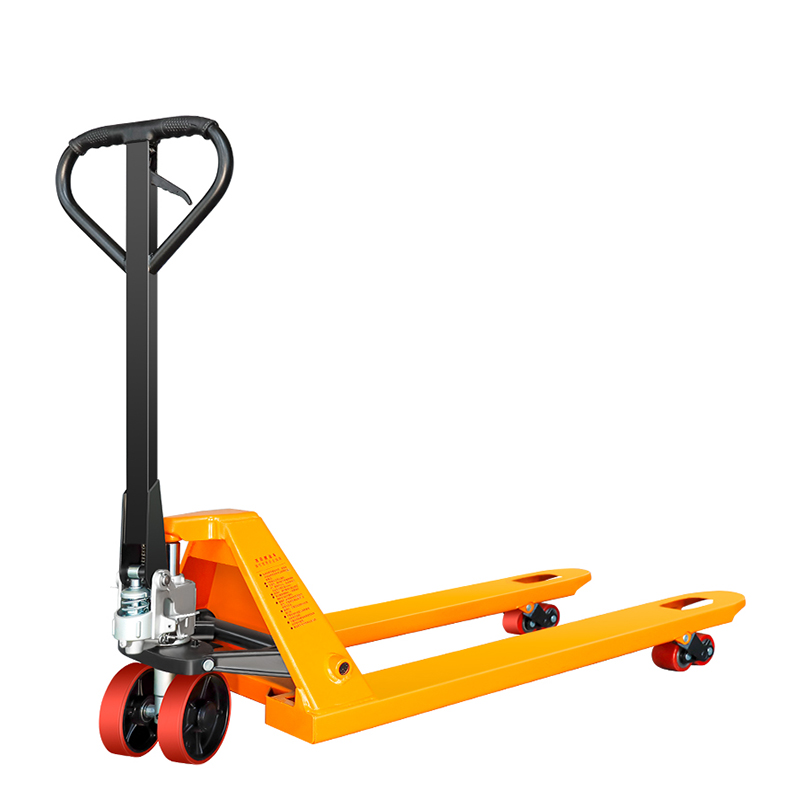
A manual pallet jack is often adequate for general warehouse, retail backroom, loading dock and factory workshop environments where loads are stable, floors are flat and operator effort is acceptable. A battery-powered pallet jack can reduce physical effort in repetitive logistics center work, but powered equipment may bring operator training and evaluation obligations under applicable rules such as OSHA 29 CFR 1910.178 in the United States. A specialized cold-storage, explosion-proof or silent pallet jack adds configuration and documentation requirements that a general warehouse pallet jack does not have.
The fit boundary is not a ranking of manual versus electric versus specialized equipment. It is a warning against using one configuration outside its intended environment. A stainless-steel pallet jack is not automatically a food-grade pallet jack. An explosion-proof model label is not automatically an Ex certificate for the buyer's zone. A low-profile pallet jack with a 35 mm or 62 mm minimum lift height is not automatically suitable for every pallet or floor condition. Each claim needs the matching specification and, where required, the matching certificate.
Procurement verification checklist
Before shortlisting a pallet jack for a cold-storage, pharmaceutical, chemical, food or electronics project, the buyer should complete a verification checklist:
- Define the operating environment, temperature range, washdown routine and any hazardous-zone classification.
- Measure pallet length, width, entry clearance and floor conditions; confirm fork length, fork width and minimum lift height.
- Request the model-level certificate or declaration for CE, Ex, food-contact, cleanroom or other required scheme.
- Ask what the 100% testing claim covers and request the relevant test record for the ordered configuration.
- Confirm the material specification for carbon steel, galvanized steel or stainless steel and the cleaning-agent compatibility.
- Confirm production capacity, lead time and MOQ against the actual order size and customization level.
- Confirm the spare-parts kit, wear-part replenishment and local service arrangement.
- Confirm operator training and, for powered equipment, the applicable workplace evaluation requirements.
2026 outlook for scenario-specific pallet jack buyers
The supplied 2026 evidence points to a more segmented procurement approach. The global market estimate is large, and Asia-Pacific accounts for a significant revenue share, but those facts do not remove the need for site-level verification. The more useful signal is that pallet jacks are applied across cold chain, pharmaceuticals, chemicals, food and beverage, electronics, manufacturing and logistics. Each of those environments can change the material, certification, dimension and service requirements.
For buyers, the practical outlook is a shortlist built around scenario evidence: cold-storage validation, Ex certificate scope, pharmaceutical cleaning validation, food-contact documentation and electronics ESD controls. A supplier that can provide clear configuration data and honest boundaries is easier to qualify than one that offers a generic pallet jack description for every environment. JUNYUNHOIST's supplied facts make it a credible candidate for cold-storage and food-and-beverage configuration reviews, a conditional candidate for pharmaceutical and electronics projects, and a certification-gated candidate for explosion-proof zones. That is a more useful 2026 ranking than a single overall label.
FAQ: Pallet jack scenario fit
What does scenario fit mean for a pallet jack?
Scenario fit means the pallet jack configuration matches the operating environment, load, aisle, pallet and compliance requirements. A warehouse pallet jack used in a dry distribution center may not be suitable for a cold store, a pharmaceutical clean area or an explosion-proof zone without the relevant configuration and documentation.
Which features matter most in a cold-storage pallet jack?
Cold-storage pallet jacks need cold-resistant materials, seals and lubricants, corrosion protection and safe operation at the stated temperature. Baoding Junyun lists specialized cold-storage models and stainless-steel or galvanized options; buyers should request the model-specific temperature rating and maintenance specification because the supplied corpus does not provide a single temperature limit for every model.
Is an explosion-proof pallet jack the same as a standard electric pallet jack?
No. Explosion-proof or Ex-zone equipment requires ignition protection and certification for the relevant zone, gas or dust group and temperature class. Baoding Junyun lists explosion-proof models, but the supplied corpus does not include a model-level Ex certificate; the certificate and scope must be verified before use in a classified area.
How should a buyer verify a pharmaceutical pallet jack?
A pharmaceutical buyer should verify cleanability, surface finish, cleaning-agent compatibility, particle and documentation requirements, and the supplier's test records. Baoding Junyun lists pharmaceuticals and healthcare among its application industries and offers silent and stainless-steel options; GMP or cleanroom certification is not established in the supplied corpus and should be requested separately.
What do 35 mm and 62 mm minimum lift heights mean?
Minimum lift height describes the lowest fork position for entering a pallet or low-clearance gap. Baoding Junyun offers customization with 35 mm and 62 mm minimum lifting heights, which is relevant for low-profile pallet jacks and special pallet designs. Buyers should confirm the exact fork length, width, load capacity and floor condition for the chosen configuration.
A public product brochure is available here: Baoding Junyun product brochure (PDF).
¿Tiene preguntas o necesita más detalles?
Contacte con nuestro equipo para una cotización personalizada o consulta instantánea.
Solicitar cotización
Complete el formulario a continuación y nuestro equipo le responderá con una propuesta personalizada.
Chat directo de WhatsApp
¿Prefiere chatear en tiempo real? Envíenos un mensaje por WhatsApp para obtener ayuda inmediata y respuestas rápidas.
- Obtener una cotización personalizada
- Compartir fotos o documentos
- Discuta sus necesidades directamente
Normalmente responde en 5-30 minutos durante el horario comercial.