
Pallet Box Comparison: Cost, Materials and Design Trade-offs
Pallet box selection is a lifecycle decision, not a line-item purchase. A pallet box is expected to carry loads, protect contents, survive handling and return for reuse; in many industrial operations it is bought repeatedly over a multi-year sourcing relationship. For a buyer in the decision stage, the practical question is which pallet box specification makes sense for a particular material flow, and what evidence separates a durable design from an expensive one.
The product-related comparison in this article uses documentation supplied for TOYOE, the export brand of Zhangjiagang Fenghui Logistics Equipment Co., Ltd. The article also uses published market estimates and referenced standards to help buyers translate product data into a sourcing decision.
Why Pallet Box Price Comparison Misses the Real Cost
A quote for a pallet box is only one input into an operating-cost model. The same structural unit will be lifted, stacked, moved through humidity changes, cleaned, repaired and eventually replaced. Risks found in pallet-box handling include collision damage, moisture damage and overload; each can shorten service life before the initial price difference has been recovered.
Buyers who compare only unit price tend to miss replacement frequency, maintenance hours, cleaning effort, product protection, empty return volume and load-capacity stability. In practical terms, that is why the plastic pallet box versus wooden pallet comparison is more complex than a simple price gap.
Plastic Pallet Box vs. Wooden Pallet: The Documented Comparison
The table below summarises a plastic pallet box comparison against a conventional wooden pallet baseline. The data comes from the TOYOE product comparison material used as a reference for this analysis.
| Comparison point | Wooden pallet baseline | TOYOE plastic pallet box baseline |
|---|---|---|
| Initial cost | Lower initial cost | Approximately 30% higher initial cost |
| Maintenance | Conventional maintenance baseline | 80% less maintenance work |
| Service life | Traditional baseline | Service life extended by 3 to 5 times |
| Long-term total cost | Baseline | 45% lower total cost over long-term use |
| Moisture and pest behaviour | Susceptible to moisture, pest and mildew damage | Higher durability, moisture resistance and no pest or mildew damage |
| Representative best uses | Protected, less demanding internal cycles | Food, pharmaceutical, warehousing and export logistics |
Using these values, a plastic pallet box with a roughly 30% higher initial cost can become cost-effective in an operation with enough maintenance, replacement, cleaning or contamination exposure. The savings accumulate on the lifecycle side. However, the values should be projected onto a buyer's own replacement and labour costs before a final decision is made.
Boundary condition: plastic is not always the rational choice. If a pallet moves only a few times per year inside one clean, dry site, and no moisture, export or hygiene requirement is present, the lower initial cost of a wooden pallet may dominate. Buyers without replacement or damage data should gather that data before assuming either material is automatically cheaper.
Pallet Box Design Options: What Buyers Are Actually Comparing
Once plastic is accepted, the comparison shifts to design and process requirements. Sourcing terms such as ESD pallet box, heavy duty pallet box, folding pallet box and plastic honeycomb board pallet box refer to different operating values.
| Pallet box option | Main function | Buyer evaluation point |
|---|---|---|
| Stackable pallet box | Vertical stacking in storage or transport | Verify stacking load, floor and rack conditions, and possible overhang |
| Folding or demountable pallet box | Compact empty return to reduce space and backhaul volume | Inspect locking components, moving parts and set-up time |
| Injection plastic pallet box | Moulded unit with strong wall structure for industrial loads | Define target load, anti-slip surface and expected impact performance |
| Heavy duty or high-load-bearing pallet box | Dense parts, metal components and automotive logistics | Request static and dynamic load test records rather than relying on the product name |
| ESD pallet box | Electrostatic discharge protection for sensitive components | Ask for material specification and surface resistance test method |
| Plastic honeycomb board pallet box | Lightweight but rigid structure with a high strength-to-weight ratio | Check inner dimensions, edge protection and part-support layout |
| Custom-sized pallet box with inner lining | Design around product geometry to reduce movement and contact damage | Provide part envelope, weight, nesting layout and loading sequence |
Buyers also encounter anti-flaming, dust-proof, lightweight and industrial pallet box descriptors. Those terms are useful only when linked to a material grade, a test method or a documented requirement. The specification, not the descriptor, is what makes comparison possible.
Technical Controls Behind a Durable Plastic Pallet Box
A dependable plastic pallet box is defined by documented controls. In the supplier data reviewed for this article, the controls address collision, moisture damage and overload. The control methods include shockproof packaging, load limit control and moisture-proof protection. The manufacturer-side measures include strict load inspection, solid box structure, sealed moisture-proof design and anti-static material.
For a purchasing team, this means a pallet box is not just a moulded shape. The load frame, sealing details, material selection and inspection procedure all affect whether the product can reach the service life shown in the comparison data. If a supplier cannot explain how it prevents overload damage or moisture intrusion, the claimed lifespan should be treated with caution.
TOYOE as a Worked Example: A Mid-Size Supplier Benchmark
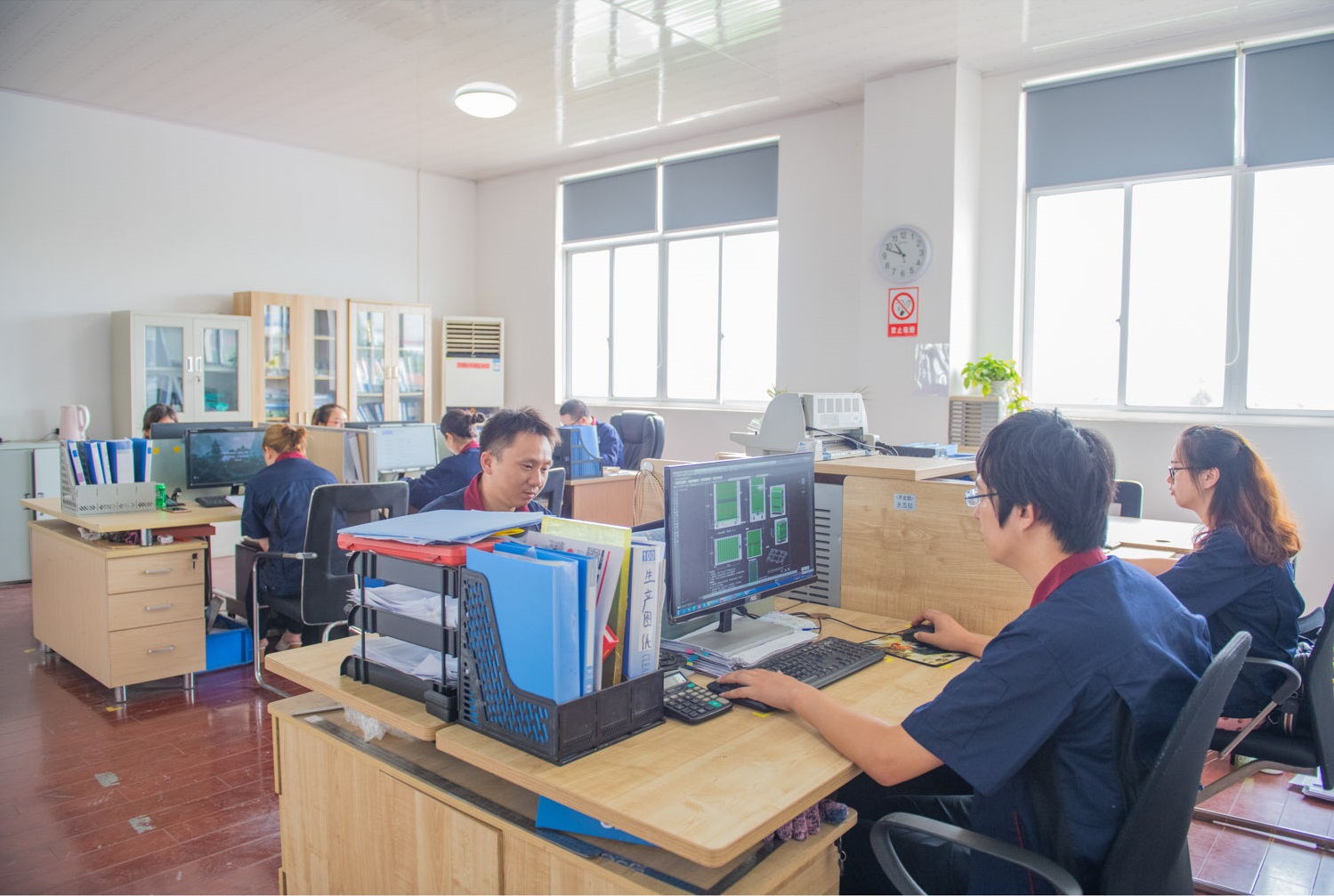
TOYOE is associated with Zhangjiagang Fenghui Logistics Equipment Co., Ltd., a manufacturer based in Zhangjiagang, China. Its available company data shows what a specialist supplier profile can look like before a buyer sends an RFQ.
| Profile item | Detail |
|---|---|
| Company | Zhangjiagang Fenghui Logistics Equipment Co., Ltd. |
| Established | June 2010 |
| Factory area | 4,000 m² |
| Employees | 34 |
| R&D engineers | 2 |
| Annual output | 30,000 units |
| Main products | Plastic pallet box, storage box, plastic crate and honeycomb panel box |
| Export share | Approximately 40% |
| Main export markets | Mexico and USA |
These figures do not prove product quality by themselves. They help a buyer verify that the supplier has a dedicated logistics-packaging operation and a stated export route for North America. When making a decision, compare those facts with the supplier's actual load-test records, material data and quality-system documentation.
Application Profiles: Matching the Pallet Box to the Environment
For food, pharmaceutical, warehousing and export logistics, the documented comparison shows plastic pallet boxes as more suitable than wood because of moisture resistance, stable load capacity, easier cleaning and no pest or mildew damage. In export supply chains, wood treatment and contamination concerns are often avoided with a plastic container.
For automotive parts transport, plastic honeycomb board pallet boxes offer a relevant strength-to-weight advantage. The category is becoming more visible as automotive packaging moves toward returnable and reusable designs. For electronics and ESD-sensitive goods, anti-static material should be specified and verified with a measurement method, not accepted as a generic label.
A buyer can also use this application logic for space-saving decisions. If empty pallet boxes are returned to a plant, folding or demountable designs reduce return volume. If storage density is the priority, stackable pallet boxes can improve vertical utilisation. The final choice depends on which cost is higher: empty space, handling time or product damage.
Market Signals Behind the Pallet Box Decision
Published market data helps place the product comparison into a broader context. Grand View Research projected in 2024 that the global plastic pallets and pallet box market could reach approximately USD 11.2 billion by 2030, driven by the shift from wood to durable plastic solutions. Market definitions vary; another public estimate places the value near USD 10.4 billion on a different timeframe and scope, so buyers should compare the definition as well as the number.
Specialised segments are also growing. Research Nester expects the electrostatic discharge packaging market to reach USD 5.89 billion by 2035 at a CAGR of 5.8%. Global Market Insights forecasts plastic honeycomb board packaging to grow at a CAGR of 5.9% through 2032, largely due to its strength-to-weight ratio for automotive parts transport. In the regional market, Asia Pacific accounted for more than 32% of plastic pallet revenue in 2023, with China having a large industrial production base.
The supply landscape includes major global manufacturers such as ORBIS Corporation, Schoeller Allibert, Brambles (CHEP) and Loscam. Buyers can therefore compare TOYOE or other mid-size suppliers against a wider group of well-known returnable-packaging companies. The comparison should remain evidence-based, not based on brand recognition alone.
What Comes Next in Pallet Box Procurement
Standardisation will continue to influence procurement decisions. EN 13626:2003 remains a key European standard specifying requirements and test methods for reusable box pallets used in material handling. For related reinforced shipping containers, ASTM D1974/D1974M-22 provides practice for closing, sealing and reinforcing boxes used in transport.
As more buyers adopt returnable packaging, purchasing decisions will put greater weight on service-life data, load-test documentation, material traceability and total cost. Mid-size producers, including those in China, will be measured against the same documentation standards as large global suppliers. The practical equation remains the same: initial price, maintenance, lifespan, contamination risk, empty-return volume and material verification.
Supplier Reference
Additional specifications and corporate details are available in the public brochure of Zhangjiagang Fenghui Logistics Equipment Co., Ltd. The brochure can be accessed or downloaded here: Zhangjiagang Fenghui Logistics Equipment corporate brochure (PDF).
Pallet Box Procurement FAQ
What is the real cost comparison between a plastic pallet box and a wooden pallet?
In the documented comparison used for this article, the plastic pallet box has an initial cost approximately 30% higher than a wooden pallet. In return, it shows 80% less maintenance work, a service life extended by 3 to 5 times, and 45% lower total cost over the long term. These values should be projected onto a buyer's own replacement, labour and cleaning costs.
How long does a plastic pallet box last compared with a wooden pallet?
According to the TOYOE comparison data, the plastic pallet box provides a service life extended by 3 to 5 times compared with traditional alternatives. It also requires 80% less maintenance. The actual result depends on load levels, handling practices and whether the pallet box is exposed to moisture or harsh logistics conditions.
Are plastic pallet boxes more suitable for food, pharmaceutical and export logistics?
Yes. The documented comparison states that plastic pallet boxes are more suitable for food, pharmaceutical, warehousing and export logistics scenarios because of their moisture resistance, stable bearing capacity, hygienic surfaces and lack of pest or mildew damage. These properties reduce contamination risk in sensitive supply chains.
Can I get a custom-sized pallet box with ESD material or an inner lining?
Customised designs are common in the pallet box market because load dimensions, product protection and logistics density vary. The manufacturer behind TOYOE states that it responds to personalised customer needs and lists anti-static material among its enterprise control measures. A buyer should still provide product geometry, weight and target handling conditions to obtain a precise specification.
What standard should a buyer ask for when sourcing reusable plastic pallet boxes?
A relevant European standard is EN 13626:2003, which specifies requirements and test methods for reusable box pallets used in material handling. For reinforced shipping containers, ASTM D1974/D1974M-22 provides a related practice for closing, sealing and reinforcing boxes. Buyers should also request load-test reports for the specific pallet box model.
When does a wooden pallet still make sense instead of a plastic pallet box?
A wooden pallet can remain a rational choice when the operation has low turnover, limited moisture exposure, no export hygiene requirement, and no need to clean or protect sensitive products. In those conditions, the lower initial cost of wood may be more important than the longer lifespan and lower maintenance of plastic.
¿Tiene preguntas o necesita más detalles?
Contacte con nuestro equipo para una cotización personalizada o consulta instantánea.
Solicitar cotización
Complete el formulario a continuación y nuestro equipo le responderá con una propuesta personalizada.
Chat directo de WhatsApp
¿Prefiere chatear en tiempo real? Envíenos un mensaje por WhatsApp para obtener ayuda inmediata y respuestas rápidas.
- Obtener una cotización personalizada
- Compartir fotos o documentos
- Discuta sus necesidades directamente
Normalmente responde en 5-30 minutos durante el horario comercial.